You’ll find several Midwest ghost towns that’ve doubled as film sets, including Fergus Falls State Hospital in Minnesota, featured in *Real Haunts 3* with its haunting 1885 Kirkbride architecture. Whiting, Iowa’s abandoned main street became the eerie town of Gatlin in *Children of the Corn*, while Thurmond, West Virginia’s decaying structures showcase authentic urban decay. These locations offer filmmakers ready-made atmosphere without expensive set construction—their preserved historic buildings, overgrown landscapes, and genuine deterioration create unsettling backdrops that CGI can’t replicate. Below, you’ll discover specific addresses, filming details, and visiting information for each site.
Key Takeaways
- Fergus Falls State Hospital in Minnesota served as a filming location for *Real Haunts 3*, featuring preserved 1890s architecture.
- Nelson Ghost Town’s deteriorating infrastructure provides natural eerie atmospheres for film productions seeking authentic abandoned settings.
- Whiting, Iowa portrayed the abandoned town of Gatlin in *Children of the Corn*, using its main street for eerie scenes.
- Thurmond, West Virginia showcases urban decay with overgrown hills and boarded-up structures depicting economic decline in films.
- Abandoned Midwest asylums with ghostly legends offer atmospheric backdrops that eliminate expensive set-dressing needs for horror productions.
Fergus Falls State Hospital: Minnesota’s Abandoned Asylum Featured in Real Haunts 3
When Minnesota’s legislature authorized construction in 1885, they intended Fergus Falls State Hospital to relieve overcrowding at the state’s two existing mental institutions in St. Peter and Rochester.
You’ll find this abandoned architecture rising above Interstate 94—three distinctive spires marking what became the state’s largest mental hospital by 1917.
The facility operated under the Kirkbride Plan design, emphasizing therapeutic environments through strategic light and ventilation.
After serving 40,000 patients, it closed in 2005, leaving behind massive brick structures that caught filmmakers’ attention for Real Haunts 3.
The main building earned National Register listing in 1986 for its historic preservation value.
Architect Warren Dunnell crafted the structure with influences from Beaux Arts, Romanesque, and Chateauesque architectural styles.
Patients participated in occupational therapy programs, with women engaged in knitting while men worked the institution’s 500-acre farm.
Today you’ll discover Fergus Falls battling between demolition and restoration, with $8.9 million in state funding potentially saving its iconic tower.
Whiting, Iowa: The Cornfield Setting That Brought Stephen King’s Horror to Life
You’ll find Stephen King’s isolated Nebraska town of Gatlin wasn’t filmed in cornfields of the Great Plains—it was constructed across multiple small Iowa communities, with Whiting serving as the primary downtown location.
The 1984 adaptation of *Children of the Corn* transformed Whiting’s main street, particularly the intersection at Whittier and Blair Streets, into the abandoned agricultural community where children worship a malevolent entity lurking in the crops.
Director Fritz Kiersch’s location choices turned the sparse rural landscape itself into a character, using the endless cornfields surrounding these Iowa towns to amplify the story’s themes of isolation and religious fanaticism.
The filming also extended to nearby Hornick, with a bus tour now available to visit the iconic “Children of the Corn” house and other locations beyond Whiting’s downtown area.
The town now celebrates its cinematic legacy with an annual July weekend event, where horror fans can attend screenings at Whiting City Hall Community Center and take guided walking tours of downtown filming sites.
Stephen King’s Chilling Vision
While most ghost town film locations fade into obscurity, Whiting, Iowa’s transformation into the fictional Gatlin, Nebraska remains one of horror cinema’s most recognizable settings. Director Fritz Kiersch’s 1984 adaptation captured Stephen King’s vision through Whiting’s naturally abandoned appearance, requiring minimal set dressing.
You’ll find the yellow flagpole at Whittier and Blair Streets intersection still marking where Malachai screamed “Outlander!”
Hansen’s Café at 613 Whittier Street, existing since the 1930s, provided authentic period architecture for Burt and Vicky’s arrival scene. Though the café’s exterior was used for filming, the interior scenes featuring Isaac at the window were shot 10 miles away in Hornick.
Historical preservation efforts have maintained these locations, enabling cinematic nostalgia tours that let you walk through genuine filming spots. The production utilized multiple Iowa towns for different shots, with key scenes filmed within a few hours of Hornick, Iowa.
The town’s eerie atmosphere during production wasn’t manufactured—Whiting’s quiet streets naturally embodied King’s deserted Midwestern nightmare, making it horror’s perfect standalone filming location.
Rural Landscape as Character
The cornfields surrounding Whiting’s downtown streets function as more than backdrop in Children of the Corn—they create the film’s oppressive atmosphere through their physical presence.
You’ll notice how the vast cornfields integrate directly into Whiting’s abandoned streetscapes, amplifying the isolation that fuels urban legends about possessed children.
The filming logistics leveraged western Iowa’s open rural expanses and loess hills terrain to establish a foreboding setting where corn itself becomes supernatural threat.
Production crews captured these authentic Midwest landscapes to emphasize desolation—your eye tracks endless rows stretching toward horizons, mirroring the ghost town’s emptiness.
Whiting’s natural decay in the early 1980s required minimal set dressing, allowing filmmakers to shoot uninterrupted cornfield and street sequences that transformed rural geography into psychological dread.
Key scenes near Hansen’s Café anchored the film’s ghost town arrival sequence, where the protagonists first encounter Gatlin’s eerie abandonment.
Wabasha, Minnesota: Riverside Charm in the Grumpy Old Men Films
Although Wabasha served as the fictional hometown for feuding neighbors Max Goldman and John Gustafson in *Grumpy Old Men*, most exterior shots were actually filmed 90 minutes northwest in St. Paul on Hyacinth Avenue East.
You’ll find the actual houses at 1122 and 1133 Hyacinth Avenue—private residences requiring respectful visits. The film’s riverfront charm comes from Wabasha’s Mississippi River bluffs and Slippery’s bar at 10 Church Avenue, which remains accessible.
Ice fishing sequences utilized Lake Rebecca in Rockford, while railroad depot scenes were filmed in Faribault at 311 Heritage Place. Soldiers Memorial Park in Red Wing provided the scenic snowy backdrop for the memorable snow angel scene.
For film tourism enthusiasts, these locations span a two-hour radius from Rochester. The Wabasha motel features movie-dedicated painted murals, and preserved 1993-era architecture maintains authentic small-town atmosphere throughout multiple filming sites. The motel entrance showcases painted benches depicting Max Goldman and John Gustafson, offering visitors a colorful tribute to the beloved characters.
Plainview, Nebraska: Alexander Payne’s Portrait of Rural America
When Alexander Payne scouted northeast Nebraska in 2012, he chose Plainview as the fictional Hawthorne—the hometown where Bruce Dern’s character returns to claim his supposed sweepstakes winnings in the black-and-white film *Nebraska*.
You’ll find Payne changed little except adding a “Monster Tan” salon and newspaper office, preserving the town’s authentic urban decay. He specifically rejected more polished period towns like Hooper, seeking layered architecture mixing old and new.
The 35-day shoot from October to December employed 227 local extras and twenty-one Nebraskans in speaking roles, transforming farmers and shopkeepers into community storytelling participants. Security personnel remained on location for 36 days throughout the production.
Shot on Arri Alexa cameras with anamorphic lenses, the $13.5 million production captured mottled fields, implement dealerships, and weathered bars that defined rural Heartland authenticity.
Ishpeming, Michigan: Upper Peninsula Backdrop for Classic Courtroom Drama
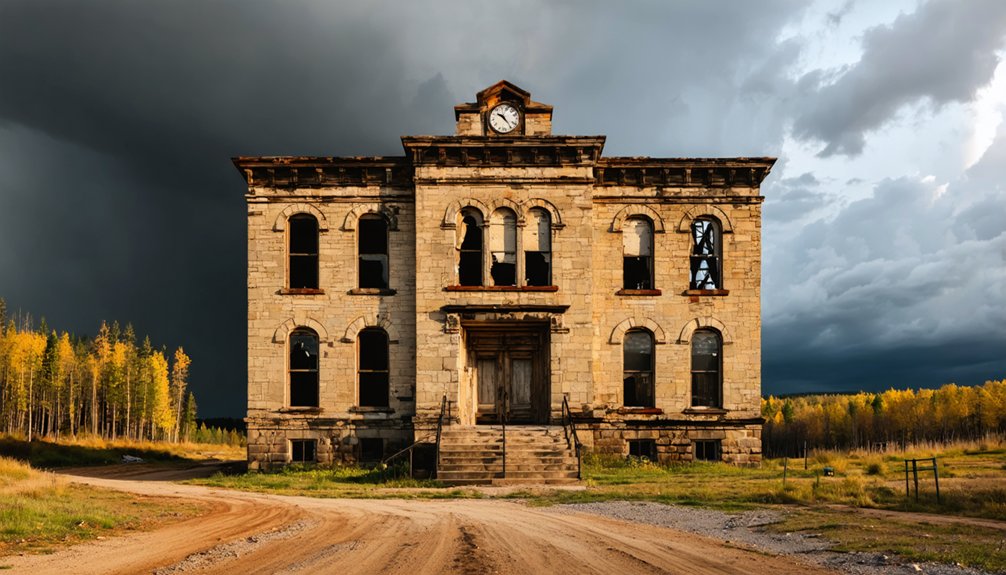
You’ll find Ishpeming, Michigan transformed into a working film set when director Otto Preminger shot “Anatomy of a Murder” throughout the Upper Peninsula town in 1959.
The production converted the 1905 Marquette County Courthouse‘s entire second floor into a studio while filming authentic courtroom scenes at 234 West Baraga Avenue.
Local landmarks including the Ishpeming Public Library, Tripoli Bar, and author John Voelker’s personal residence served as functioning locations that brought the Michigan Supreme Court Justice’s murder novel to screen.
Anatomy of a Murder Filming
The 1959 courtroom drama *Anatomy of a Murder* transformed Ishpeming and surrounding Marquette County locations into a cinematic record of Upper Peninsula life. Director Otto Preminger’s filmmaking techniques prioritized authentic settings over studio construction, utilizing the 1905 red sandstone courthouse at 234 West Baraga Avenue and converting its second floor into temporary production facilities.
You’ll find author John Voelker’s actual Ishpeming home doubled as protagonist Paul Biegler’s residence and law office, while the Tripoli Bar’s interior recreated the murder scene.
Local community impact extended beyond Ishpeming—Big Bay’s Thunder Bay Inn and Lumberjack Tavern, Michigamme’s Mt. Shasta Restaurant featuring Duke Ellington, and Marquette’s waterfront lunch stand all contributed locations.
Secretary Donna Anderson Snider’s recommendations guaranteed regional authenticity for Michigan’s first major Hollywood production.
Historic Town’s Cinematic Legacy
Nestled 15 miles west of Marquette along Michigan’s Upper Peninsula, Ishpeming transformed from a blue-collar mining town into Hollywood’s stand-in for the fictional ‘Iron City’ during *Anatomy of a Murder*’s 1959 production.
You’ll find authentic Midwest architecture preserved throughout: John Voelker’s house doubled as defense attorney Paul Biegler’s home and law office, while Ishpeming Public Library at 317 North Main Street served as the legal research facility.
The Tripoli Bar‘s interior depicted Barney Quill’s establishment, complete with preserved bullet holes.
Small town charm pervades the Cliffs Shaft Mine Museum—now on the National Register of Historic Places—visible in the film’s opening highway scene.
Mather Inn, where Duke Ellington composed the jazz soundtrack, earned Michigan State Historic Site designation in 1976.
Walking tours connect these filming locations for visitors.
Stillwater, Minnesota: Historic Riverfront in Grumpier Old Men
While Grumpier Old Men primarily unfolds in Wabasha, the production team ventured 90 miles north to capture Stillwater’s riverfront charm for a pivotal Oktoberfest sequence.
You’ll find Lowell Park at 201 Water St N, where Melanie and Jacob’s heated argument plays out against festival scenes featuring German music and beer gardens.
The eight-acre park offered practical advantages: electricity hookups, open spaces for crowd control, and restrooms for cast and crew during extended shoots.
The historic lift bridge and river views across to Wisconsin frame the tension-filled exchange, with the St. Croix River providing natural backdrop depth.
Production crews utilized the park’s walking paths for equipment access and its picnic shelters for staging.
Today, you can explore this accessible downtown location where cinematic drama met Midwestern authenticity.
Exploring the Eerie Atmosphere of Midwest Filming Locations
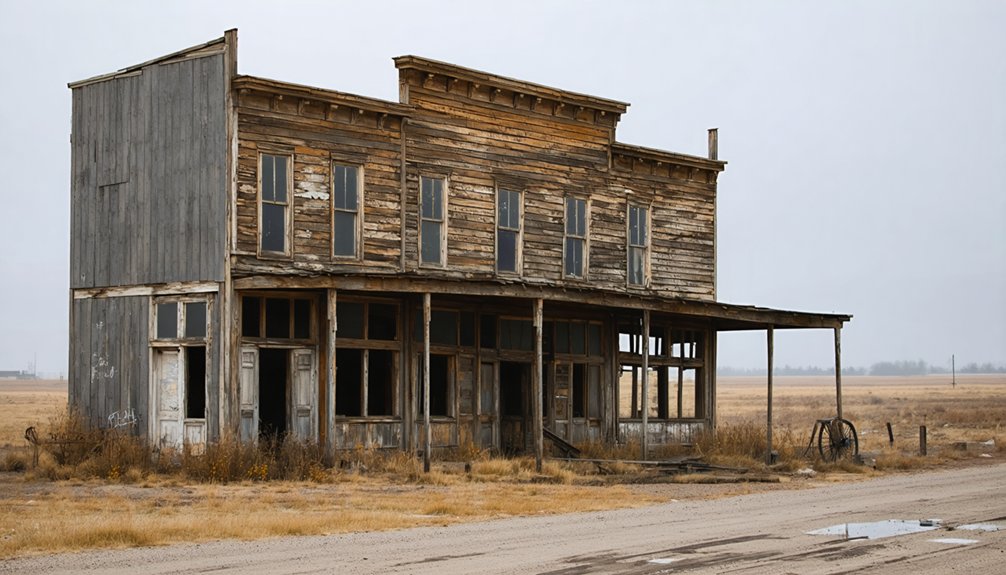
Beyond Stillwater’s festival-filled riverfront, Midwest filming locations take on darker characteristics when production teams seek abandoned structures and decaying landscapes.
You’ll find historical preservation working in filmmakers’ favor at sites like Fergus Falls State Hospital in Minnesota, where 1890s-era architecture remained intact through its 2007 closure for *Real Haunts 3* documentary production.
The environmental ambiance of riverside Minnesota locations along the Mississippi creates isolated backdrops that amplify dramatic tension without constructed sets.
Iowa’s cornfield settings deliver sprawling agricultural emptiness that horror productions exploit for psychological unease.
You’re accessing authentic decay at locations like Nelson Ghost Town, where boarded-up commercial buildings and deteriorating infrastructure provide naturally eerie atmospheres.
These sites eliminate set-dressing expenses while delivering genuine historical credibility that constructed environments can’t replicate.
From Asylums to Cornfields: Diverse Midwest Movie Settings
- Abandoned asylums with ghostly legends like Fergus Falls
- Iowa cornfields providing unsettling agricultural expanses
- Historic small towns preserving authentic Main Streets
- Industrial ruins offering preserved coal-town facades
These locations deliver authentic backdrops without restrictive permissions, giving you access to genuine Midwestern character for horror, drama, or documentary projects.
Small-Town America Preserved on the Silver Screen
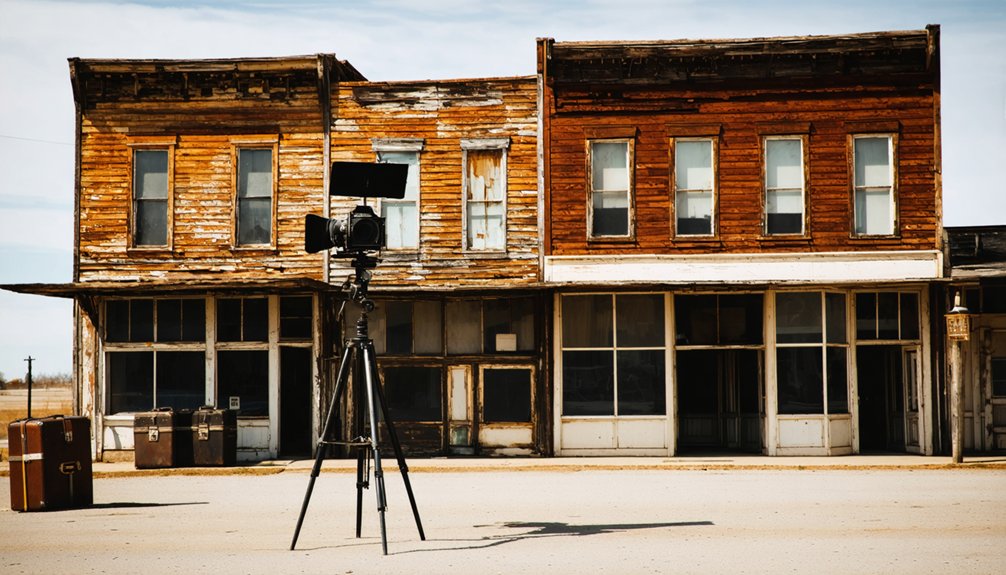
You’ll find authentic Midwest architecture serving as time capsules in films like *Grumpy Old Men*, where Stillwater and Wabasha’s preserved Main Streets and riverfront buildings created genuine small-town backdrops.
Rural landscapes define atmospheric tension in movies such as *Children of the Corn*, filmed in Whiting’s expansive cornfields that stretch endlessly across Iowa farmland.
Directors select these locations specifically for their unchanged streetscapes and natural settings that require minimal modification to portray America’s heartland on screen.
Authentic Midwest Architecture Featured
When filmmakers scout Midwest locations, they’re hunting for architectural time capsules that cameras can’t find on studio backlots. You’ll discover genuine 19th-century commercial facades in Stillwater’s Main Street, untouched by modern architecture’s sterile influence.
Wabasha’s riverside buildings and Plainview’s quiet streets showcase structures that survived urban redevelopment pressures plaguing coastal cities.
These preserved locations offer freedom from CGI artifice:
- Ishpeming’s Upper Peninsula streets maintained authentic courtroom-era facades for James Stewart’s 1959 legal drama
- Stillwater’s antique-lined Main Street provided Grumpier Old Men with legitimate Midwest commercial architecture
- Wabasha’s 19th-century buildings doubled as comedic backdrops along Mississippi fishing scenes
- Plainview’s everyday structures symbolized rural heritage in Alexander Payne’s Nebraska
You’re witnessing real architectural history, not Hollywood reconstruction.
Rural Landscapes Define Atmosphere
Midwest filmmakers capitalize on rural landscapes that studio sets can’t replicate—cornfields stretching beyond camera range, riverside towns hugging weathered banks, and plains that swallow protagonists in geographical isolation.
You’ll find Whiting’s endless cornfields creating *Children of the Corn*’s unsettling atmosphere, while Dyersville’s preserved baseball diamond surrounded by crops enhanced *Field of Dreams*’ magical tension.
Wabasha’s Mississippi riverside and Stillwater’s historic Main Street captured authentic small-town backdrops for the *Grumpy Old Men* films.
Thurmond’s overgrown hills and boarded-up structures showcased urban decay in *Matewan*’s coal town narrative.
Plainview’s expansive plains defined *Nebraska*’s Midwestern isolation.
These locations offer cultural symbolism that connects viewers to America’s fading rural identity—landscapes you can’t fake on soundstages.
Visiting These Historic Midwest Film Sites Today
Each of these historic film locations offers distinct logistical considerations for visitors planning their Midwest road trip. You’ll find most sites accessible year-round, though seasonal weather impacts rural access roads.
Cultural preservation efforts have maintained authentic structures at locations like Thurmond’s abandoned coal town, where you can walk through actual filming sites from *Matewan*. Urban transformation hasn’t touched these remote destinations, preserving their cinematic character.
Planning Your Visit:
- Dyersville’s baseball diamond welcomes free public access during daylight hours.
- Wabasha’s riverside filming locations cluster within walkable downtown blocks along the Mississippi.
- Ishpeming’s Upper Peninsula courthouse and surrounding streets remain accessible public spaces.
- Thurmond requires National Park entry, with limited services demanding advance preparation for extended exploration.
Frequently Asked Questions
Are Guided Tours Available at These Midwest Filming Locations?
Guided tours aren’t formally offered at most locations. You’ll find open access at Field of Dreams and Ghost Town Findlay during events, but tour safety and visitor amenities remain minimal at abandoned sites like Fergus Falls, requiring independent exploration.
Which Location Attracts the Most Visitors Annually?
Specific visitor numbers aren’t publicly tracked, but you’ll find Ghost Town Findlay draws considerable crowds through its haunted legends attractions and festivals. You’ll need filming permissions there, though Nelson Ghost Town reportedly sees heavier cinematic traffic for location shoots.
Do Local Businesses Offer Movie-Themed Souvenirs or Experiences?
Yes, you’ll find local souvenir shops at each location selling themed merchandise like jerseys, posters, and apparel. Movie experience packages include guided tours, cornfield walk-throughs, and riverside excursions that let you explore actual filming sites independently.
Can You Film Personal Projects at These Historic Sites?
You’ll need filming permits for personal projects at most historic ghost towns, though requirements vary by site ownership. Contact property managers directly about private access policies—some locations allow casual filming while others restrict all production activities.
Exploring abandoned movie sets in the Midwest can also provide unique backdrops for personal film projects. Many of these sites come with their own histories and stories, adding depth to your visuals. Just remember to respect the space and adhere to any guidelines set by the property managers to ensure an enjoyable and proper filming experience.
What’s the Best Time of Year to Visit These Locations?
Visit during spring or fall for prime seasonal weather—mild 50-70°F temperatures and manageable crowds. You’ll capture stunning photography with dramatic lighting, accessible roads, and minimal restrictions. Avoid summer’s humidity peaks and winter’s closures that’ll limit your exploration freedom.
References
- https://www.motionpicturevideo.com/top15locations
- https://www.homestratosphere.com/best-small-towns-in-the-midwest-for-visiting-famous-small-film-locations/
- https://www.caseybarber.com/thurmond-wv/
- https://www.youtube.com/watch?v=tZmA_VF6cm8
- https://www.youtube.com/watch?v=o9MTF3S_-Uk
- https://www.travelawaits.com/2702819/most-haunted-places-midwest/
- https://www.atlasobscura.com/lists/abandoned-places-midwest
- https://twifc.substack.com/p/what-are-the-midwests-coolest-ghost
- https://www.communicatingpsychologicalscience.com/blog/history-of-psychology-fergus-falls-if-the-walls-could-talk
- https://en.wikipedia.org/wiki/Fergus_Falls_Regional_Treatment_Center