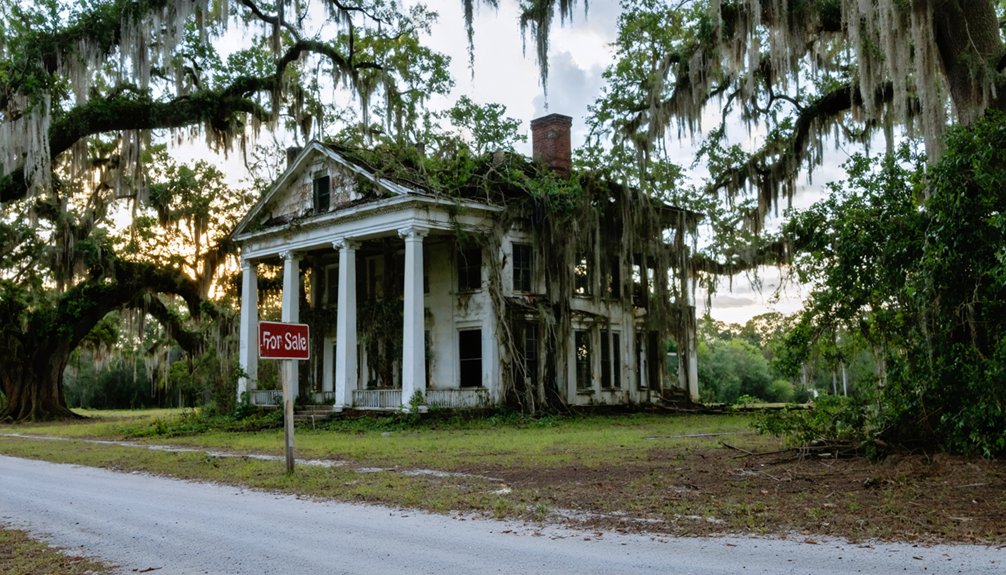
You won’t find entire Mississippi ghost towns listed for sale like Western mining settlements, but you can acquire properties in abandoned communities through tax-forfeited land programs and historic structure purchases. Rodney, reduced from 4,000 residents to eight after an 1870 river shift, offers acreage near crumbling antebellum buildings, with nearby land parcels averaging $8,915-$13,266 per acre. The state maintains 482 fixer-upper listings, while properties in the 39063 ZIP code average $49,376, presenting unique investment opportunities for those interested in Mississippi’s architectural heritage and preservation potential.
Key Takeaways
- Mississippi ghost town properties range from $49,376 average homes in rural areas to $750,000 historic estates with extensive acreage.
- Tax-forfeited lands are available through state application processes, with 482 fixer-upper opportunities listed statewide for potential buyers.
- Rodney, once home to 4,000 residents, now has eight inhabitants and features crumbling structures with documented paranormal activity.
- Historic properties feature original craftsmanship including hand-hewn timber framing, Greek Gothic Revival architecture, and Spanish architectural elements.
- Properties near Natchez Trace Parkway offer tourism potential through historic preservation combined with proximity to regional attractions.
Rodney: Mississippi’s Most Famous Ghost Town
Rodney stands as Mississippi’s most haunting example of a once-thriving river town reduced to ruins by forces beyond human control.
Mississippi’s once-prosperous river town, Rodney, fell from 4,000 residents to ruins through disease, fire, and nature’s unstoppable forces.
You’ll find a settlement that peaked at 4,000 residents in the 1860s, serving as the busiest river port between New Orleans and St. Louis.
Rodney history reveals systematic destruction: yellow fever epidemics in 1843 and 1847, three devastating fires, and an 1870 sandbar that shifted the Mississippi River two miles west.
The railroad’s bypass sealed its fate. By 1930, Governor Theodore Bilbo officially proclaimed it no longer a town.
Today, eight residents remain among crumbling structures. The town sits in Jefferson County, identified as the most food insecure county in the nation by Feeding America in May 2018. The Presbyterian Church still stands with visible damage from when the USS Rattler shelled the town during a Civil War gun battle in the 1860s. Ghostly sightings persist near the cemetery and abandoned jailhouse, where an 1890 lynching victim reportedly walks the overgrown streets at night.
King’s Tavern: a Haunted Property With Serial Killer History
While Rodney’s abandonment came from natural forces and economic shifts, Mississippi’s darker history emerges at King’s Tavern in Natchez, where violence and bloodshed stained the oldest standing structure in the Mississippi territory.
Built in the 1760s from salvaged ship beams and flatboat boards, this three-story establishment served Natchez Trace travelers as an inn and stage stop from 1789 onward.
Its haunted history includes Madeline, a mistress of owner Richard King, allegedly stabbed by his jealous wife—her spirit reportedly still walks the halls.
The tavern’s association with notorious bandits like the Harpe brothers adds to its dark legacy.
After Richard King sold the property around 1817, it transitioned into a private residence, ending its era as a public establishment. The Postalwaith family occupied the building for 150 years after 1837, maintaining it as their home well into the 20th century.
Today you’ll find ghostly encounters mixed with farm-to-table dining, where 228 years of murders and mysteries permeate every corner.
What Causes Towns to Become Abandoned
Mississippi’s ghost towns didn’t simply fade away—they collapsed under waves of catastrophic forces that compounded over decades. Understanding abandonment causes reveals how swiftly prosperity vanished.
Yellow fever epidemics in 1843, 1847, and 1898 killed residents by the hundreds, forcing survivors to flee. Civil War raids destroyed food supplies and infrastructure—Union gunboats bombarded Rodney’s church in 1863, leaving shell marks you’ll still see today. Union soldiers burned Bankston’s factories on December 30, 1864, devastating the town’s industrial base.
Devastating fires in 1852 and 1869 reduced towns to charred ruins. The Mississippi River’s 1870 course change proved fatal, shifting two miles west and transforming Rodney’s shipping channel into worthless swampland. Before disaster struck, Rodney had reached a peak population of 4,000 residents by 1860, supported by the thriving steamboat and cotton trade.
Economic decline accelerated through Reconstruction’s aftermath and catastrophic floods in 1912, 1927, and 1935. These compounding disasters stripped communities of their viability, leaving ghost towns scattered across Mississippi’s landscape.
Ghost Town Properties Across America: Pricing and Features
Across the United States, ghost town properties command prices ranging from under $50,000 for individual historic structures in eastern states to $6.6 million for extensive parcels like Campo with its hot springs and multiple sites.
You’ll find the highest concentration of these abandoned settlements in western states—Nevada, Colorado, Montana, and California—where mining booms, railroad expansions, and lumber operations once sustained entire communities.
These properties typically include authentic late 1800s and early 1900s architecture such as saloons, general stores, and banks on acreage that varies from small-town lots to hundreds of acres in remote locations. Many of these towns were abandoned due to economic decline or resource depletion, leaving behind structures that now attract investors and entrepreneurs. Potential buyers should note that property information is deemed reliable but not guaranteed, and verification of all details is recommended before purchase.
Typical Ghost Town Prices
Ghost town properties in Mississippi present a stark contrast to conventional real estate markets, with pricing structures that reflect both abandonment and opportunity.
Typical ghost town values range dramatically across the state’s forgotten settlements:
- Durant and surrounding rural areas offer complete homes averaging $51,814, representing authentic abandoned town characteristics.
- Historic structures like the 15,000 sq ft Mt. Holly mansion command $750,000 with 30+ acres, demonstrating premium pricing for architectural preservation.
- Tax-forfeited lands become available through state application processes, providing access to properties lost through non-payment.
You’ll find fixer-upper opportunities statewide with 482 listings available.
The 39063 ZIP code averages $49,376 per home, while unrestricted land parcels average $8,915-$13,266 per acre, offering flexibility beyond municipal constraints. Properties remain on the market for an average of 156 days, reflecting the specialized nature of these investments. Many properties feature soaring ceilings and oversized windows that showcase original architectural character despite years of neglect.
Historic Structures and Acreage
Surviving structures from Mississippi’s abandoned settlements offer tangible connections to 19th-century commerce and settlement patterns, with King’s Tavern in Natchez standing as the state’s oldest building dating to 1798.
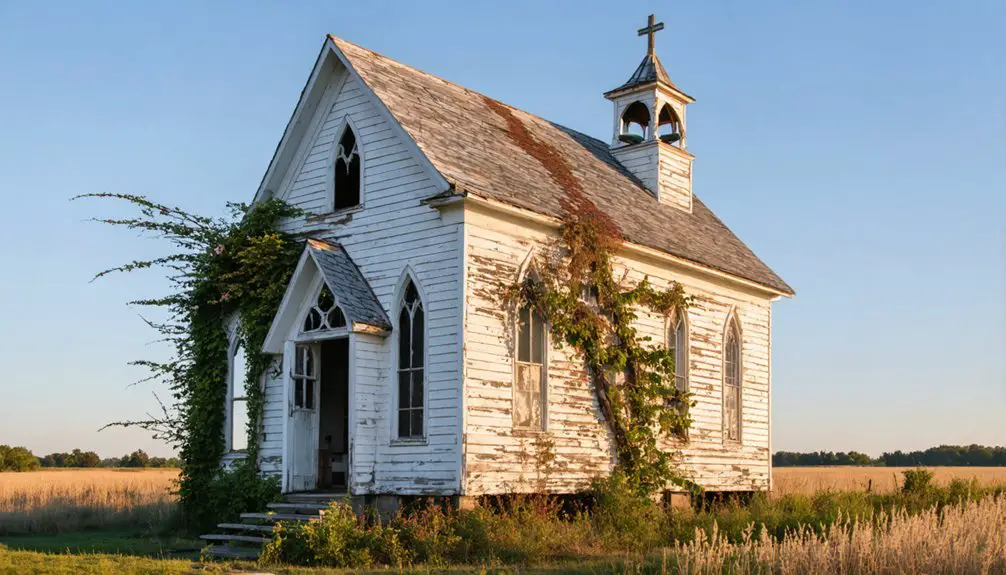
You’ll find authentic architectural elements throughout Rodney Ghost Town, where the circa-1850 Baptist church blends Greek Revival and Gothic Revival styles within the restored Rodney Center Historic District.
Historic preservation efforts have maintained these structures’ original character while enabling contemporary use. Available properties range from 10-acre parcels to 33.9-acre lots, with tax-forfeited lands providing acquisition opportunities.
The Mississippi Delta region offers plantation homes and estate properties spanning 1910-1940, typically on 2.5-acre tracts.
Land conservation considerations apply to properties near the Natchez Trace Parkway, balancing development rights with heritage protection requirements.
Mississippi Land Listings Near Historic Ghost Town Sites
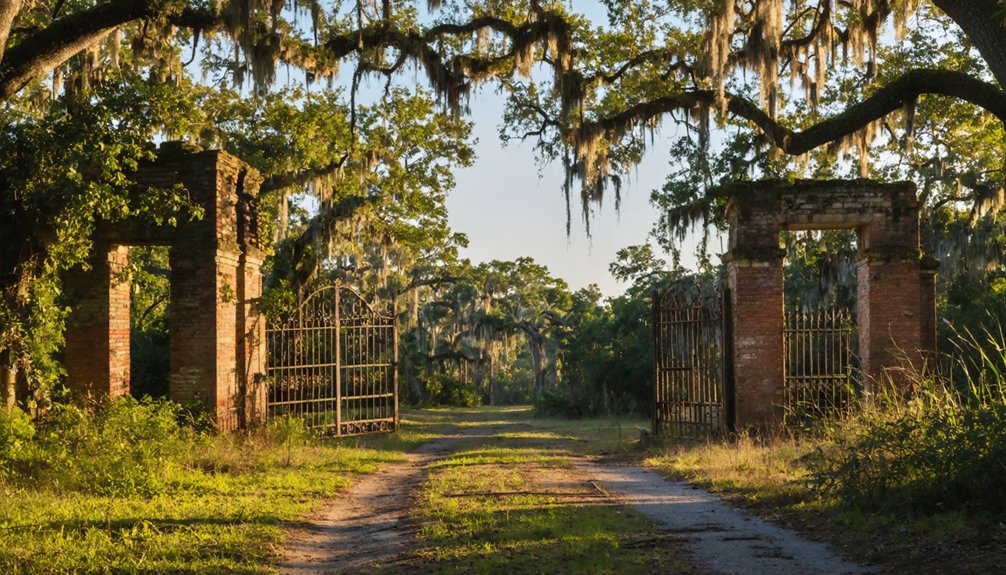
The Rodney ghost town vicinity in Jefferson County presents undeveloped land parcels within proximity to one of Mississippi’s most documented abandoned settlements, where structures from the 1800s remain as architectural evidence of the town’s antebellum prominence.
You’ll find the Lorman area offering rural acreage opportunities that border multiple historic sites, with properties ranging from modest residential lots to expansive tracts exceeding 100 acres.
Property values near these documented ghost towns typically reflect both agricultural land rates and heritage tourism potential, with listings spanning from $19,000 for smaller parcels to several hundred thousand dollars for developed properties with historic structures.
Rodney Ghost Town Vicinity
While Rodney itself no longer functions as a viable community, the surrounding Jefferson County countryside retains the fertile characteristics that once drew French settlers and American planters to this Mississippi River corridor.
Understanding Rodney history reveals how natural forces and infrastructure decisions triggered economic decline—a sandbar shifted the river three miles away by 1870, while railroads bypassed the steep terrain entirely.
Available land near this historic site offers distinct advantages:
- Proximity to Natchez Trace Parkway provides direct access to regional tourism traffic
- Rich bottomland soil that supported productive cotton plantations like Zachary Taylor’s 1,923-acre Buena Vista
- Strategic location 32 miles northeast of Natchez, connecting modern buyers to established infrastructure while maintaining rural character
These parcels represent opportunities where historical significance meets agricultural potential.
Lorman Area Land Opportunities
Positioned along the Highway 61 corridor in Jefferson County, Lorman offers modern land buyers access to substantial acreage once dominated by cotton plantations and antebellum estates.
You’ll find Lorman properties ranging from 537-acre agricultural parcels to expansive 3,000-acre tracts priced around $400,000. These holdings combine hunting privileges with farming potential, mirroring the region’s historical land-use patterns.
Recreational land opportunities here attract those seeking autonomy from urban constraints. The median home value of $148,959 reflects affordability compared to developed markets, while raw acreage provides unrestricted development possibilities.
You can access these parcels via blacktop and dirt roads branching from Highway 61, requiring navigation skills that filter casual visitors. Multiple listing platforms feature over 76 available properties, offering everything from small residential lots to multi-thousand-acre estates near Rodney’s abandoned riverfront.
Historic Site Property Values
Mississippi’s historic property market concentrates premium listings around preserved settlements and documented ghost town sites, with 38 properties averaging $972,368 statewide.
You’ll find historic property appreciation driven by National Register status, which provides tax incentives and demolition protection while imposing no restrictions on private use. Over 1,300 registered sites anchor investment opportunities in ghost town revitalization projects.
Current listings demonstrate value ranges:
- Entry-level c.1940 properties on 2.5 acres start at $49,000
- Mid-range c.1910 cottages available under $167,000
- Premium estates like the 1798 King’s Tavern command top-tier pricing
Land costs average $14,957 per acre near documented historic sites.
Natchez alone offers 107 historic properties, with tourism-driven demand supporting long-term appreciation. You’ll access grant assistance and preservation resources while maintaining complete ownership autonomy unless federal funding triggers compliance requirements.
Unrestricted Land Opportunities in Mississippi
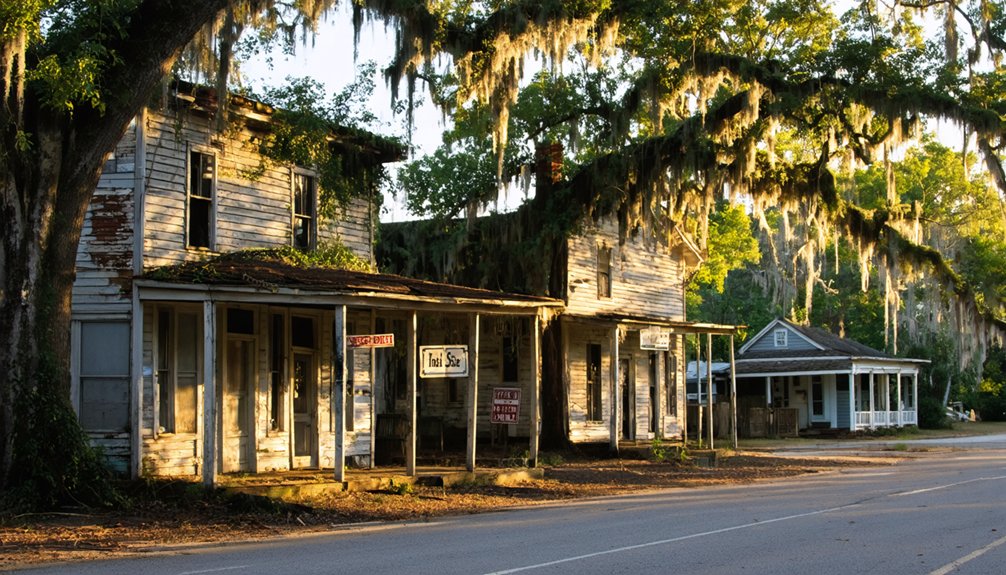
Spanning 30 million acres statewide, Mississippi’s total land inventory includes approximately 200,000 acres of undeveloped property valued at $1 billion, with current listings ranging from 3,107 to 4,146 properties across 125,490 acres.
You’ll find 26 unrestricted land properties in North Mississippi alone, with average lot sizes measuring 92 acres. Investment strategies favor counties like Rankin, Marion, Panola, Monroe, and Scott, where fewer restrictions enable diverse land development projects.
Per-acre pricing ranges from $2,400 to $5,500 statewide, influenced by commodity cycles affecting timber and agricultural values.
With 63% of Mississippi’s land classified as forestland and 5 million acres designated for crops, you’re positioned to pursue hunting retreats, timber ventures, or agricultural operations without maneuvering through excessive governmental oversight in select rural markets.
Tax-Forfeited Properties: Hidden Gems for Buyers
Beyond the conventional unrestricted land market, Mississippi’s tax-forfeited property inventory presents acquisition opportunities at substantial discounts to assessed values.
You’ll find hidden opportunities through the state’s Public Lands Division, where properties enter inventory after owners fail to pay taxes and redemption periods expire.
The pricing structure reveals compelling investment prospects:
- Blighted properties sell at 25% of market value (or back taxes if higher)
- Non-blighted parcels available at 50% of market value
- Legislative incentives including tax credits and cleanup funds support development
Applications require filing fees and complete documentation through the online portal.
County assessors certify market values, establishing your baseline acquisition costs.
These forfeited lands represent tangible assets returning to productive use, offering you direct ownership without restrictive zoning constraints or government oversight.
How to Access Rodney Ghost Town and Nearby Areas
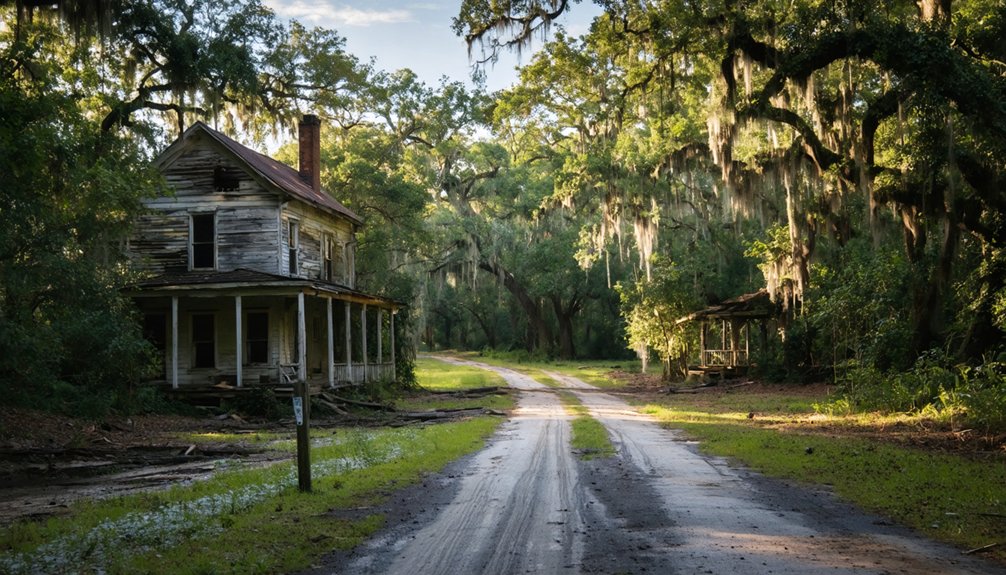
Reaching Rodney requires traversing thirty-two miles of rural Jefferson County roads northeast from Natchez, where the ghost town sits two miles inland from the Mississippi River’s east bank.
Your Rodney access journey follows MS-553 North, then Rodney Road—a challenging thirty-to-forty-minute drive through twelve miles of alternating blacktop and dirt. You’ll need high-clearance vehicles for potholed, muddy conditions, especially after heavy rains when cell signals fail.
Alternative routes include unmarked roads from Lorman’s Old Country Store or MS-552 west from Natchez Trace Parkway’s milepost 37.
Once there, ghost town exploration centers on Commerce Street, where you’ll find the Presbyterian Church’s Civil War cannonball, Mt. Zion Baptist Church, hillside cemeteries, and Confederate earthworks.
No tours exist—just unregulated access to Mississippi’s abandoned riverfront history.
Historic Structures Available in Mississippi
You’ll find King’s Tavern standing since 1798 as Natchez’s oldest documented structure, predating Mississippi’s statehood by nineteen years.
The building retains its original brick construction and hand-hewn timber framework, while nearby Baptist church remains mark the settlement patterns of early river communities.
These properties preserve architectural evidence of territorial-era construction methods, including cypress beam systems and handmade hardware that predate industrial manufacturing in the region.
King’s Tavern: 1798 Landmark
The oldest building standing in Natchez, Mississippi traces its origins to 1769, when British forces constructed a block house to defend the nearby Fort Panmure outpost.
Built from scrapped sailing ship beams and sun-dried bricks, this frontier structure’s architectural significance includes Spanish territorial elements like beaded siding and chamfered gallery posts.
Richard King transformed the building‘s tavern history when he purchased it in 1789 and obtained a public house license in 1799.
Located at the Natchez Trace terminus, it became a crucial refuge for flatboat merchants returning from New Orleans.
Historic Timeline:
- Operated as tavern until 1817 when steamboats diminished business
- Served as Postalwaith family residence from 1823-1973
- Reopened commercially in 1973; closed and listed for sale in 2022
Listed on the National Register since 1971.
Baptist Church Remains Standing
Architectural preservation challenges converge at two distinct Mississippi church buildings that represent different eras and communities.
First Christian Church Jackson, a Gothic Revival structure constructed in 1950 by N.W. Overstreet & Associates, stands at High and North State Streets downtown. After the congregation’s 2002 relocation, First Baptist Church acquired ownership. Despite Mississippi Department Archives History approving demolition, public outcry halted initial plans. The building remains secured with manicured grounds, though no open market listing exists.
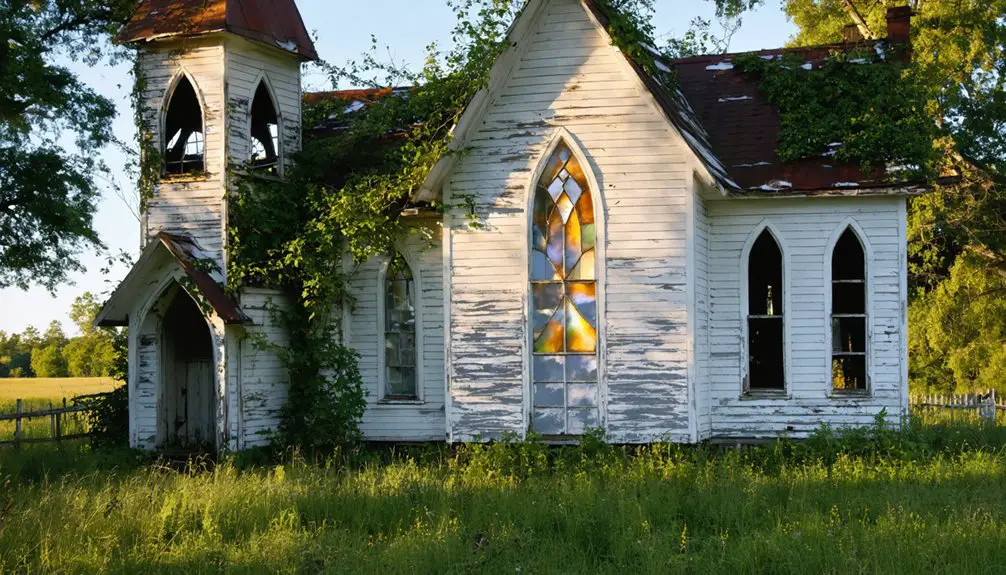
Meanwhile, Rodney Baptist Church‘s Greek Gothic Revival structure with its silver dome serves rural African American heritage. This striking unused remnant symbolizes community endurance in the ghost town founded 1828.
Both properties demonstrate historic preservation needs. Each represents significant church architecture worth saving, offering you opportunities supporting Mississippi’s architectural legacy through restoration investment.
Original Features Still Intact
Several abandoned Mississippi structures retain remarkable original architectural elements despite decades of neglect.
You’ll discover properties where time hasn’t completely erased the craftsmanship of previous generations. While thorough documentation of available ghost towns remains limited, individual historic structures demonstrate what preservation efforts could protect.
When exploring abandoned architecture across Mississippi, you’ll find:
- Hand-hewn timber framing and mortise-and-tenon joinery in forgotten rural settlements
- Original heart pine flooring and interior millwork surviving in shuttered plantation dependencies
- Intact brick chimneys and foundation systems marking former community centers
These remnants represent tangible connections to Mississippi’s past.
Each weathered beam and crumbling wall tells stories of communities that once thrived. Documentation remains incomplete, but existing structures prove original features can survive abandonment when conditions align favorably.
Investment Potential of Ghost Town Real Estate
While Mississippi’s ghost town market remains relatively modest compared to western states, investment opportunities in historic properties demonstrate substantial entry costs with average listings approaching $1 million.
Mississippi’s ghost town investments require substantial capital, with historic property listings averaging nearly $1 million despite a modest market size.
You’ll find tax-forfeited lands offering alternative entry points through the Secretary of State’s online application system, returning abandoned properties to productive tax rolls. These parcels include rare forested tracts in Bienville National Forest and working ranches like the 30-acre Circle N Ranch.
The state’s cultural heritage presents opportunities through Greek Revival and Folk Victorian structures from the late 1800s.
You can leverage tourism potential similar to western ghost towns, where authentic architecture generates year-round revenue. Historic preservation coupled with urban revitalization strategies transforms abandoned properties into viable enterprises, particularly when proximity to natural attractions enhances commercial appeal.
Frequently Asked Questions
Can You Legally Live in a Ghost Town Property Full-Time?
You can legally establish full-time residency in ghost town properties if you’ve secured valid title, the structure’s habitable, and you comply with local zoning regulations and property taxes while demonstrating intent to remain indefinitely.
What Are Typical Insurance Costs for Historic or Haunted Properties?
You’ll pay $5,346 annually for standard Mississippi historic preservation insurance coverage, though guaranteed replacement cost policies protecting original materials run 20% higher. Building code compliance and restoration costs drive premiums above typical homeowner rates considerably.
Do Ghost Town Properties Have Access to Utilities and Internet?
Ghost towns stand as silent witnesses to infrastructure’s retreat. You’ll find utility access severely limited or nonexistent, with flooding and abandonment destroying underground systems. Internet availability remains virtually impossible without restored electrical service and modern telecommunications infrastructure.
Are There Restrictions on Demolishing or Renovating Historic Ghost Town Structures?
You’ll need renovation permits if structures fall under local historic preservation ordinances or Mississippi Landmarks designation. Voluntary enrollment grants MDAH oversight authority, while municipalities enforce district regulations through local commissions reviewing exterior alterations and demolitions.
What Financing Options Exist for Purchasing Abandoned or Ghost Town Properties?
You’ll face unique challenges since traditional lenders won’t finance without property appraisal. Hard money loans, cash purchases, or NACA’s no-down-payment program offer freedom. Fix-and-flip loan types work if structures remain salvageable for rehabilitation.
References
- https://mississippifolklife.org/articles/haunted-by-a-ghost-town-the-lure-of-rodney-mississippi
- https://www.youtube.com/watch?v=44IX-_5H6l0
- https://www.ezhomesearch.com/blog/towns-for-sale-in-the-usa/
- https://www.zillow.com/ms/land/
- https://www.landsearch.com/unrestricted/mississippi
- https://www.land.com/Mississippi/all-land/60-70-acres/
- https://www.mossyoakproperties.com/land-for-sale/mississippi/
- https://www.oldhousedreams.com/state/mississippi/
- https://www.sos.ms.gov/public-lands/tax-forfeited-lands
- https://sethparker.net/rodney-mississippi-the-ghost-town-youve-probably-never-heard-of/