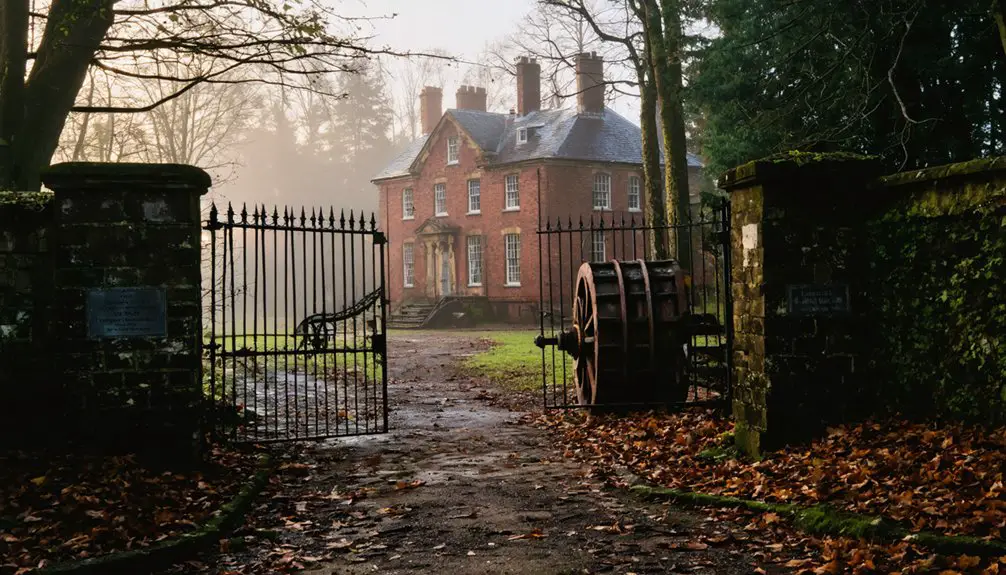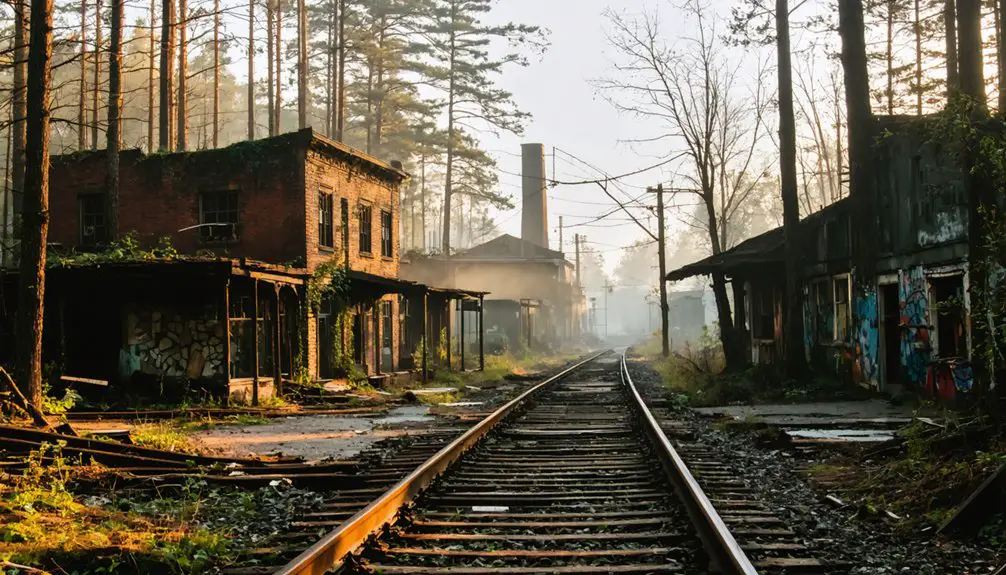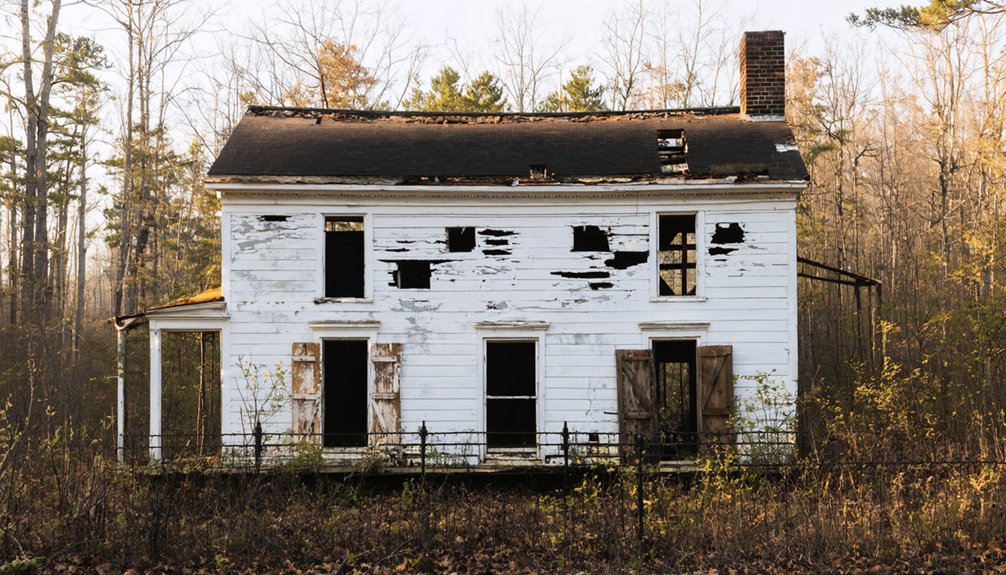
You won’t find complete ghost towns for sale in New Jersey, as the state’s approximately 100 abandoned settlements have been converted into protected wildlife refuges and state-owned historic sites. Notable locations like Feltville, Sea Breeze, and Harrisville remain permanently off-market under government control. However, New Jersey’s historic real estate market currently offers 577 vintage homes ranging from $299,900 to $1,599,000, featuring architectural styles like Gothic Revival and Italianate. Understanding the distinction between preserved ghost towns and available historic properties will help you navigate your investment options.
Key Takeaways
- Complete ghost towns in New Jersey are not available for purchase as most are state-owned and protected as wildlife refuges.
- Cape May is New Jersey’s only purchasable ghost town among limited options, with most abandoned settlements controlled by government agencies.
- New Jersey offers 577 historic homes ranging from $299,900 to $1,599,000, providing alternatives to actual ghost town purchases.
- The distressed property market lists 28 historic properties averaging between $261,082 and $481,329 for those seeking abandoned-style investments.
- Notable locations like Feltville and Sea Breeze remain publicly owned, preventing private acquisition despite their historic ghost town status.
Understanding New Jersey’s Historic Ghost Town Heritage
New Jersey harbors a surprising concentration of abandoned settlements, with approximately 100 ghost towns scattered throughout the Pine Barrens region—a vast wilderness comprising nearly one-fourth of the state’s total land area.
These ghost town origins trace back to the mid-1600s, when European settlers established communities centered around bog iron mining, paper mills, and textile manufacturing. Batsto Iron Works, founded in 1766, produced Revolutionary War munitions before eventual abandonment.
The economic decline that created these ghost towns accelerated between the 1840s and 1890s as industrial facilities shuttered operations. Harrisville’s paper mill closure in 1891 directly triggered the village’s desertion. The Pine Barrens also supported cranberry and blueberry farming operations, with New Jersey becoming the third-largest cranberry producer in the United States.
You’ll find these settlements concentrated across Burlington, Cape May, Ocean, and Sussex counties, representing tangible remnants of New Jersey’s industrial heritage now available for exploration and potential acquisition. Local historians have documented these sites extensively, preserving oral histories and photographs that capture the communities’ final decades before abandonment.
The Deserted Village of Feltville: A Preserved 19th Century Settlement
Among New Jersey’s most accessible ghost towns, Feltville stands as a preserved 19th-century industrial settlement that’s transformed from David Felt’s 1845 printing factory village into a National Register Historic District within Union County’s Watchung Reservation.
Feltville transformed from David Felt’s 1845 industrial village into a preserved National Register Historic District within Watchung Reservation.
The Feltville history reveals a complete industrial community where 175 workers once occupied double houses, attended the Union Church, and powered Felt’s stationery business through water-driven mills.
After the 1857 financial panic forced Felt’s retirement, the village endured failed ventures in sarsaparilla, cigars, and silk before abandonment in the 1870s.
Warren Ackerman transformed the property into Glenside Park summer resort in 1882, purchasing it for $11,450 before it closed in 1916 as vacationers favored Jersey shore destinations.
Current preservation efforts maintain original structures including an 1776 headstone and worker housing.
The site features architectural landmarks such as a historic church, mill complex, general store, and schoolhouse that provide glimpses into 19th-century village life.
You’ll find the grounds open dawn to dusk daily, with the Visitor Center operating weekends noon-5 p.m., offering unrestricted access to this authentic ghost town experience.
Current Market Availability of Ghost Towns and Historic Properties
Sea Breeze stands as Cumberland County‘s most notable abandoned resort town, though you won’t find it listed on traditional real estate markets.
The Department of Environmental Protection now controls these properties after Hurricane Gloria’s 1985 devastation forced private residents to abandon preservation efforts. This ghost town investment opportunity doesn’t exist—the government converted these parcels into protected wildlife refuge status rather than offering them for sale.
Historic preservation challenges include ongoing flood risk, EPA demolition orders, and environmental restrictions that prevent conventional development. The area once thrived with ferry service from Philadelphia starting in the late 1880s, establishing it as a popular destination before its eventual decline.
You’ll encounter similar constraints throughout New Jersey’s abandoned settlements, where government agencies typically acquire distressed properties rather than allowing private ownership. These abandoned communities often resulted from economic decline that made maintaining infrastructure and services financially unsustainable for residents.
For authentic ghost town investment opportunities, you’ll need to look beyond New Jersey toward Nevada, Colorado, Montana, and California’s mining settlements.
Alternative Historic Real Estate Options in the Garden State
While complete ghost towns rarely appear on New Jersey’s market, you’ll find numerous historic homes and preserved properties that capture similar character and heritage.
The state’s distressed property market currently lists 28 historic and neglected properties averaging $261,082 to $481,329, offering renovation opportunities for buyers interested in restoration projects. Newark’s programs provide move-in ready homes specifically designed for first-time home buyers looking to enter the market with already-renovated properties.
Additionally, preserved villages like Feltville in the Watchung Reservation demonstrate how historic structures can be maintained through public ownership, though private farmsteads and century-old homes periodically become available through traditional real estate channels. With 45 acres of distressed land currently available, buyers have options ranging from small parcels to larger development opportunities.
Historic Homes Currently Available
New Jersey’s historic real estate market currently offers 577 homes matching historic criteria statewide, with prices spanning from $299,900 to $1,599,000 for featured properties.
You’ll find exceptional opportunities in Gloucester County’s 348 historic listings and Sussex County’s 176 vintage properties, where the median price sits at $425,000.
Key Market Indicators:
- Inventory Movement: Vintage homes average 55 days on market, typically receiving one offer before sale.
- Architectural Diversity: Victorian-era properties feature Gothic Revival, Italianate, and Romanesque Revival styles with preserved historic architecture.
- Property Conditions: Many listings include updated amenities while maintaining original hardwood floors and period-specific details.
These properties present preservation challenges but offer character and craftsmanship unavailable in modern construction. Notable examples include a 5-bedroom Victorian home at 127 Chelsea Ave in Long Branch, situated just 1.5 blocks from Pier Village and the beach.
Listings refresh every 15 minutes, allowing you to act quickly on opportunities. Sellers can add a listing to showcase their historic property to interested buyers seeking authentic period homes.
Preserved Villages and Farmsteads
Beyond individual historic homes, preserved villages represent a unique segment of New Jersey’s heritage landscape that won’t reach the private market but offers substantial educational and cultural value.
Feltville/Glenside Park exemplifies this through historic preservation efforts totaling $6.5 million in infrastructure and restoration. Unlike privately sold properties such as Story, Indiana ($3.8 million), these sites remain publicly accessible within the Watchung Reservation.
The Union County Park System maintains original workers’ dwellings featuring Adirondack-style cedar posts and 19th-century gravel walkways. Archaeological findings reveal distinct economic patterns between eastern and western residents.
This rural heritage site, listed on State and National Registers, demonstrates how preserved communities serve educational purposes rather than commercial ventures, offering you insight into New Jersey’s mill town and resort history without private ownership constraints.
Comparing New Jersey to Notable Ghost Town Sales Across America
Unlike the active ghost town markets in Great Barrington, Massachusetts, Oxford, Mississippi, and Healdsburg, California, New Jersey’s most notable abandoned settlements aren’t available for purchase.
Sea Breeze transferred to the Department of Environmental Protection after Hurricane Gloria’s devastation, while Harrisville remains fenced and protected in the Pine Barrens.
These ghost town comparisons reveal distinct market trends separating New Jersey from national sales.
New Jersey’s ghost towns follow different ownership patterns than the active abandoned-settlement markets emerging across America.
Key differences in availability include:
- State ownership: New Jersey’s DEP controls Sea Breeze as wildlife refuge, preventing private acquisition
- Protection status: Harrisville’s ruins are preserved with restricted access, not marketed to buyers
- National alternatives: Cape May represents New Jersey’s sole entry among purchasable ghost towns nationwide
You’ll find 577 historic New Jersey properties listed, but authentic ghost towns remain off-limits, contrasting sharply with America’s expanding abandoned-settlement market.
Key Factors to Evaluate Before Purchasing Abandoned Historic Properties
While New Jersey’s authentic ghost towns remain unavailable, purchasers considering abandoned historic properties in other markets face significant evaluation requirements before committing capital.
You’ll need to assess financial viability by calculating purchase prices ($250,000-$6.6 million), renovation expenses, and revenue potential through commercial operations or vacation rentals.
Restoration challenges include preserving original late 1800s architecture, ensuring structural soundness, and meeting modern safety codes while maintaining historical authenticity.
You must verify zoning regulations, historic designation restrictions, and environmental contamination risks before purchase.
Properties with existing tourist infrastructure, proximity to natural attractions, and documented historical significance offer stronger investment prospects.
Limited financing options and ongoing maintenance obligations require substantial capital reserves beyond initial acquisition costs.
Frequently Asked Questions
What Are the Property Tax Implications for Ghost Town Purchases?
You’ll inherit outstanding tax liabilities from previous owners and face property tax assessments based on ghost town valuation. Transfer taxes apply at purchase, while delinquent properties incur higher rates until you restore them.
Do Historic Preservation Laws Restrict Renovations on Abandoned New Jersey Properties?
Yes, historic preservation laws impose renovation restrictions on abandoned New Jersey properties. You’ll need approval from local preservation commissions for exterior changes, demolitions, or alterations in designated historic districts, potentially delaying your development plans considerably.
Can Ghost Towns Be Rezoned for Commercial or Residential Development?
Yes, you can rezone properties through municipal zoning regulations under MLUL. Planning and zoning boards evaluate development potential for commercial or residential use, though Mount Laurel doctrine requires accommodation of affordable housing in residential zones.
What Insurance Coverage Is Available for Deteriorating Historic Structures?
You’ll find surprisingly robust insurance policies for deteriorating structures, including Actual Cash Value coverage accounting for depreciation, Functional Replacement Cost options, and specialized Restoration Coverage designed specifically for historic preservation requiring skilled craftsmen and authentic materials.
Are There Grants for Restoring Abandoned Historical Properties in New Jersey?
Yes, you’ll find historical grants through New Jersey’s Historic Preservation Fund offering up to $750,000 in restoration funding for eligible properties. You’ll need matching funds and properties must qualify for the state’s historic register.
References
- https://www.ezhomesearch.com/blog/towns-for-sale-in-the-usa/
- https://circaoldhouses.com/old-houses-for-sale-in-new-jersey-nj/
- https://www.zillow.com/nj/in-historic_att/
- https://ucnj.org/parks-recreation/deserted-village/
- https://www.oldhousedreams.com/state/new-jersey/
- https://www.realtor.com/news/unique-homes/5-for-friday-the-13th-ghost-towns-for-sale/
- https://en.wikipedia.org/wiki/List_of_ghost_towns_in_New_Jersey
- https://rsftripreporter.net/gone-goner-ghost-towns-new-jersey-pine-barrens-part/
- https://www.youtube.com/watch?v=ZIp3AYb0ulw
- https://nj1015.com/the-creepiest-ghost-town-in-the-country-is-right-here-in-new-jersey/