You’ll discover remarkable ghost town opportunities across New Mexico, from Gabriella’s fully-equipped 1880s movie studio at $850,000 to Cedarvale’s entry-level lots starting at just $1,900. Fort Wingate’s complete military base commands $11 million, while Lake Valley offers historic mining acreage and Madrid provides Victorian-era cabins in a thriving artist community. Each property presents unique preservation challenges and revenue potential, from wedding venues to cultural tourism. Understanding legal requirements, restoration costs, and heritage protections will help you determine which historic investment aligns with your vision.
Key Takeaways
- Gabriella movie studio town offers 111 acres with 24 furnished buildings for $850,000, hosting weddings and film productions annually.
- Cedarvale provides affordable entry at $1,900-$3,500 per lot with owner financing and minimal closing fees near Vaughn.
- Madrid features Victorian-era miners’ cabins converted to artist studios, with strict protections against corporate development since the 1970s.
- Fort Wingate military base town, established 1849, spans significant acreage east of Gallup for $11 million after 1993 decommissioning.
- Lake Valley preserves 10-12 original silver mining structures with historic railroad remnants 17 miles south of Hillsboro.
Gabriella: An Authentic 1880s Movie Studio Town
Currently listed at $850,000, down from $1.2 million, Gabriella offers you serious historical preservation potential.
This distinctive property has dropped $350,000 in price, creating a unique opportunity for restoration enthusiasts and history buffs alike.
The 2,200-square-foot living quarters complement the commercial structures, while the ranch continues hosting weddings, reenactments, and international productions.
Located three hours from Albuquerque at 205 High Plains in Datil, it’s proven its appeal by attracting 1,000 annual visitors.
The property spans 111 acres and includes 24 fully furnished set pieces designed to recreate an authentic 1880s western town.
The town features period-authentic buildings including a hotel, log cabin, dance hall, saloon, and billiard hall.
Contact Sue Garfitt at Santa Fe Properties: (970) 673-5845.
Cedarvale: Affordable Ghost Town Lots With Owner Financing
While most ghost towns command six-figure prices, Cedarvale offers you entry-level ownership starting at $3,500 for three adjoining lots totaling 0.48 acres.
You’ll find this settlement 31 miles southwest of Vaughn on State Road 42, sitting at 6,390 feet elevation in Torrance County.
Cedarvale history began in 1908 when settlers from Cedarvale, Kansas established this homestead community.
Cedarvale agriculture centered on pinto bean production shipped to distant markets until 1930s drought ended that prosperity.
The town’s 1917 schoolhouse—expanded by WPA in 1935—still stands as a monument to this vanished era.
Owner financing makes acquisition straightforward with $115 closing fees and minimal annual taxes.
Individual lots like Block 9, Lot 2 are available for as little as $1,900 for 0.16 acres.
You’ll access dirt roads immediately, with power and phone service nearby.
Well water and septic become necessary only when you’re ready to build.
The level terrain suits placement of camp structures, RVs, or permanent homes without extensive site preparation.
Monticello: a Historic Settlement With Churches and Cemeteries
You’ll discover Monticello 25 miles northwest of Truth or Consequences—a settlement that’s endured since 1856 when Hispanic ranchers first established Cañada Alamosa (“Canyon of the Cottonwoods”) on the 35,516-acre Rancho Las Putas land grant.
Monticello architecture centers on a traditional plaza with thick adobe walls featuring defensive gun holes, reflecting the community’s Apache treaty relationship.
The plaza’s gun holes tell a complex story of defense and coexistence between Hispanic settlers and Apache peoples.
San Ignacio Catholic Church (1869) and San Lorenzo Church (1916) anchor the historic district, alongside a hillside cemetery.
The town’s Monticello history includes serving as Southern Apache Agency headquarters and housing approximately 500 Apaches in 1870.
From its peak of 1,000+ families, fewer than 100 remain today.
The WPA schoolhouse stands in ruins, while San Ignacio—recently transferred to the Monticello Canyon Association—continues hosting Mass despite requiring significant structural repairs.
The settlement experienced a catastrophic flood in 1862 that prompted relocation to higher ground, transforming Cañada Alamosa into what would become Monticello.
Postmaster John Sullivan, originally from Monticello, New York, renamed the community in 1881, giving it the name it carries today.
Madrid: From Coal Mining Past to Thriving Artist Community
You’ll find Madrid’s transformation from coal mining town to artist colony reflected in its Victorian-era miners’ cabins, now converted into galleries and studios lining Highway 14.
Properties in this 200-household community remain accessible, with historic homes selling for considerably less than comparable Santa Fe real estate while maintaining strict anti-corporate development protections through the Landowners Association.
Each purchase represents an opportunity to preserve a building from Madrid’s 1869 founding era, when these structures housed the 3,000 workers who once produced 180,000 tons of coal annually.
The town’s revival began in the early 1970s when Joe Huber started renting old company houses to artists and craftsmen, establishing Madrid’s creative identity. Madrid’s mining heritage includes anthracite coal discovery by William Keesee in 1886, which distinguished the area’s resources from typical bituminous deposits.
Victorian Homes Turned Galleries
The transformation of Madrid’s coal mining architecture into a thriving gallery district represents one of New Mexico’s most successful adaptive reuse stories.
You’ll discover Victorian-era company houses, once home to miners, now showcase artist transformations that preserve historical character while serving contemporary creative purposes. The Landowners Association’s corporate ban guarantees these spaces remain independently operated, protecting the community’s authentic spirit.
Gallery exhibitions fill former worker residences along streets that once bustled with coal industry activity. Properties that sold for $1,500-$2,000 in 1975 now anchor a tourism-driven economy supporting 200 households. The area’s mining heritage stretches back to operations like the Albuquerque and Cerrillos Coal Company, which dominated the landscape with industrial structures and smoke-filled skies during the Depression era.
You’re witnessing preservation through purpose—each converted building maintaining its mining-era facade while offering creative freedom to artists who’ve chosen Madrid’s affordable alternative to Santa Fe’s premium market. Perched at 6,020 feet elevation in the high desert, Madrid’s location provides both dramatic mountain vistas and the crisp air that has attracted artists seeking inspiration beyond the typical gallery settings.
Available Properties and Pricing
Properties in Madrid’s former company town rarely reach the open market, presenting challenges for buyers drawn to this artist enclave’s creative economy.
When opportunities emerge, you’ll discover pricing reflects Madrid’s transformation from $250 down payment cabins in the 1970s to today’s competitive market.
Current listings typically include:
- Historic company houses requiring significant renovation costs, preserving original mining-era character
- Commercial spaces along the busy main street, positioned among 40+ galleries and shops
- Residential properties in quiet zones, balancing property taxes against artistic community benefits
You’ll need to account for restoration expenses honoring Madrid’s architectural heritage while meeting modern building codes.
The unincorporated status means fewer regulatory constraints but requires self-reliance.
Original 1970s settlers understood: freedom here demands commitment to preserving this creative refuge’s shared vision.
Fort Wingate: An Entire Military Base Town for $11 Million
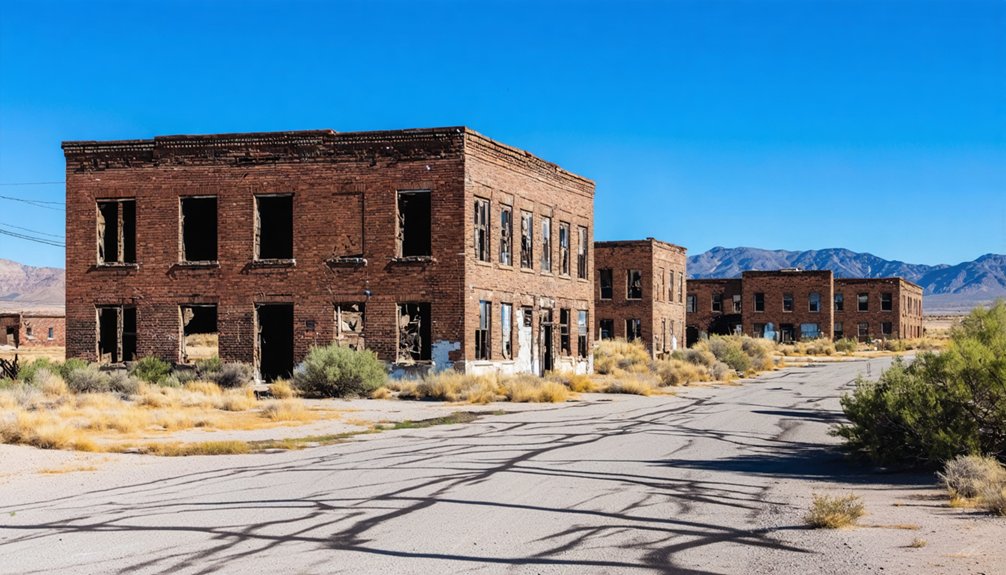
Nestled in the foothills of the Zuni Mountains east of Gallup, this 22-acre military installation carries one of New Mexico’s most complex and controversial histories.
Fort Wingate’s military history spans three locations over 150 years, from its 1849 establishment during Army-Navajo conflicts through its role in the tragic Long Walk, to its World War II service housing Code Talkers and supplying the Manhattan Project.
Decommissioned in 1993, the entire ghost town now sells for $11 million, offering you earth-covered igloo magazines, historic buildings, and infrastructure once critical to American military operations.
While Buffalo Soldiers, General Pershing, and General MacArthur walked these grounds, the site’s preservation presents opportunities to honor both its military significance and the Indigenous communities profoundly affected by its operations.
Lake Valley: a Deserted Mining Town With Acreage Opportunities
Seventeen miles south of Hillsboro on State Road 27, Lake Valley offers you a rare chance to own acreage in one of New Mexico’s most productive silver mining sites, where the legendary Bridal Chamber mine yielded two and one-half million ounces of silver between 1881 and 1893.
Today’s Lake Valley preserves its mining heritage through:
Lake Valley stands as a monument to silver mining prosperity, with original structures and railroad remnants telling stories of frontier wealth.
- 10-12 original structures including former boarding houses, general stores, and churches
- Railroad grade remains from the 1884 Atchison, Topeka, and Santa Fe spur line
- Protected historic status within the mineral-rich Black Range Mountains
The town’s last resident departed in 1994, leaving behind authentic Western infrastructure ready for preservation-minded investors.
Property opportunities here give you direct access to documented mining history, established transportation corridors, and the freedom to develop acreage shaped by genuine frontier enterprise.
What to Consider Before Buying a Ghost Town Property

While Lake Valley and similar sites present compelling opportunities, you’ll need to navigate complex legal and practical considerations before committing to any ghost town purchase.
Legal considerations demand thorough verification—confirm ownership through county clerk records, check for liens or back taxes, and review zoning laws specific to New Mexico historic sites.
Property inspections become critical for these distressed structures; hire professionals to assess foundations, identify environmental hazards like asbestos, and evaluate restoration feasibility.
Budget realistically. Median fixer-uppers run $200,000, but restoration premiums reach 30% for authentic preservation.
Factor remoteness affecting emergency access, utilities connection costs, and water availability in desert climates.
Consider alternative revenue streams through tourism ventures, retreats, or historic preservation incentives that enhance long-term value while honoring these sites’ cultural significance.
Frequently Asked Questions
Can I Legally Change the Name of a Ghost Town After Purchasing It?
You can’t change a property name through the court name-change legal process—that’s for individuals. However, you’re free to market your ghost town under any name, though historical designations and official records may retain original names.
Are Ghost Town Properties Eligible for Historical Preservation Tax Credits?
You’ll need State Register listing to access New Mexico’s 50% tax credit and federal registration for 20% federal credits. These preservation incentives reward your investment in maintaining historical significance while restoring freedom-era properties.
What Internet and Cell Phone Coverage Exists in Remote Ghost Town Locations?
You’ll find internet availability and cell coverage severely limited or nonexistent in remote ghost towns. It’s no coincidence that these properties offer freedom from digital connectivity—you must bring physical maps and plan self-sufficiently before purchasing.
Do Ghost Town Purchases Include Mineral Rights Beneath the Property?
Mineral rights aren’t automatically included with property ownership. You’ll need to examine title documents carefully, as previous owners often reserved these rights. Many New Mexico ghost towns have severed minerals, limiting your subsurface control and development freedom.
Are There Restrictions on Commercial Filming in Privately Owned Ghost Towns?
You’ll need filming permits and must follow commercial regulations even on your private ghost town property. Neighboring landowners, county ordinances, and historical preservation laws can restrict your filming activities, limiting complete autonomy over commercial use.
References
- https://www.10news.com/ghost-towns-sale-us/
- https://www.landresellers.com/properties/ghost-town-of-cedarvale-new-mexico-3-adjoining-lots
- https://prerealinvestments.com/monticello-an-intimate-exploration-of-a-new-mexico-ghost-town/
- https://cindysheff.com/madrid-cerrillos-village/
- https://www.loveproperty.com/gallerylist/120982/new-mexico-town-with-an-abandoned-military-base-for-sale-for-11-million
- https://www.zillow.com/abiquiu-nm/ghost-ranch_att/
- https://www.realtor.com/news/unique-homes/1880s-replica-old-west-town-in-new-mexico/
- https://www.landsearch.com/distressed/new-mexico
- https://www.youtube.com/watch?v=iMdDFwPX9Cg
- https://www.land.com/property/275-acres-in-sierra-county-new-mexico/13080845/