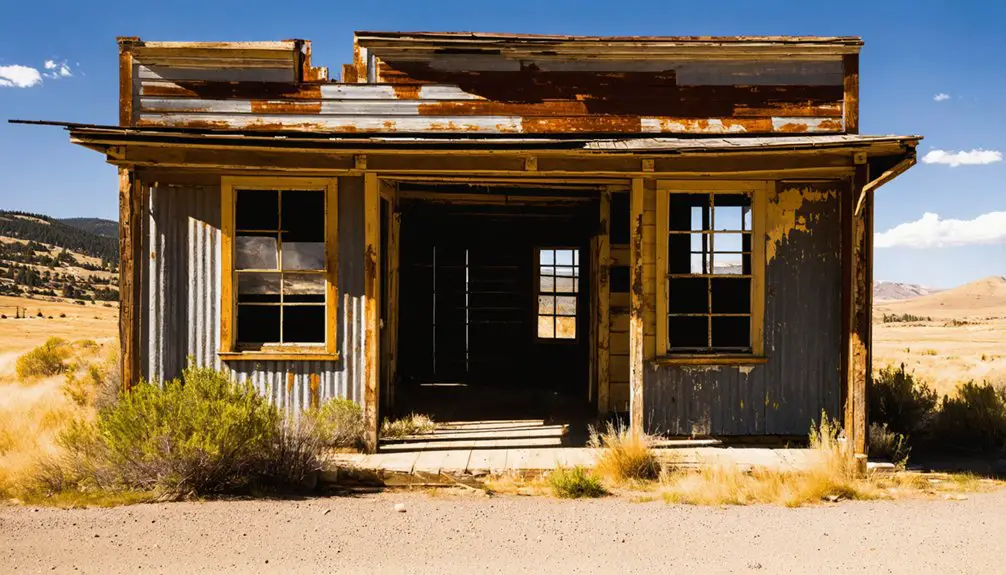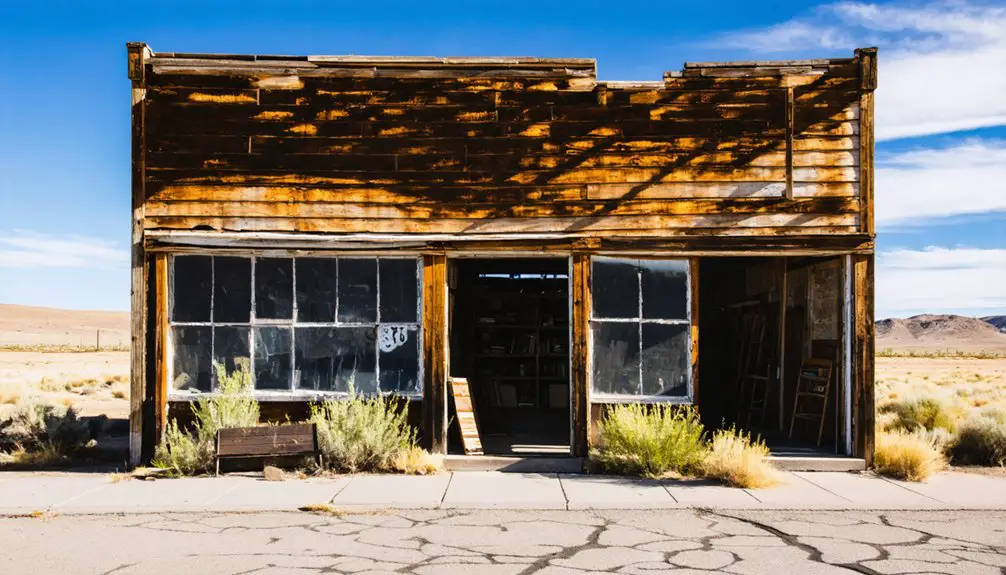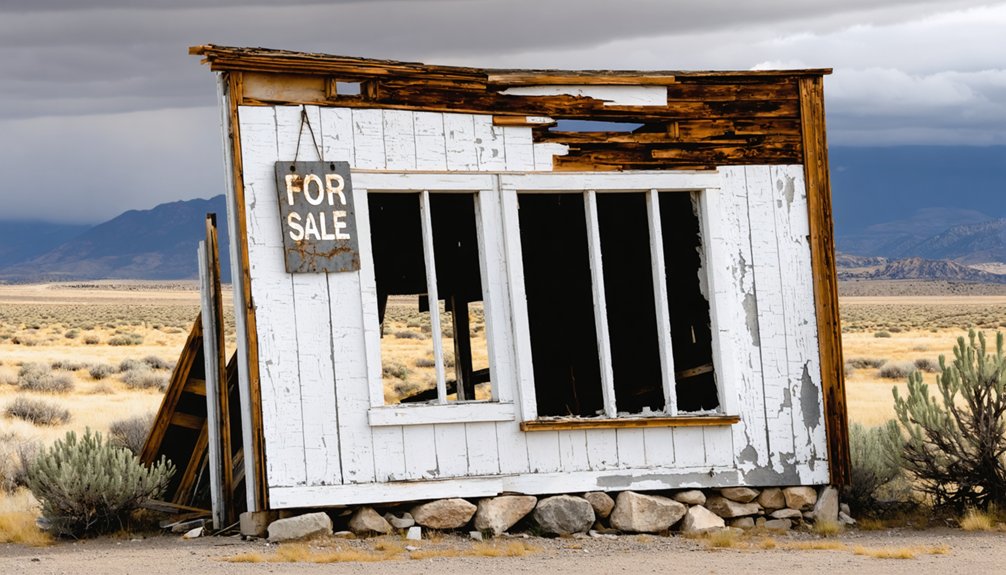
You’ll find limited options for ghost town properties in Oregon, with the most notable being a 74.54-acre site in Millican listed at $1,499,000 featuring a general store and RV infrastructure. In Shaniko, parcels start at just $14,500 for 0.11 acres near major highways. These properties attract up to 400 weekend visitors due to scenic byway proximity, though you’ll face water rights complications under Oregon’s prior appropriation system and potential regulatory obstacles. The sections below detail specific investment considerations and market comparisons.
Key Takeaways
- Shaniko offers limited inventory with two parcels: 0.46-acre and one-acre lots at $35,000, plus 0.11-acre parcels at $14,500.
- Millican ghost town features 74.54 acres at $1,499,000, including a residence, defunct general store, and RV park infrastructure.
- Oregon has approximately 200 documented ghost towns available for exploration and potential investment opportunities.
- Properties are accessible via highways, with Millican 30 minutes from Bend and 45 minutes from Redmond Municipal Airport.
- Investment risks include regulatory obstacles, water rights complications under Oregon’s prior appropriation system, and infrastructure restoration costs.
Shaniko: Oregon’s Historic Wool Capital Turned Ghost Town
Businessmen from The Dalles transformed a remote Oregon landscape in 1900 when they established Shaniko as the terminus for the Columbia Southern Railroad.
You’ll find Shaniko history reveals a meteoric rise—by 1903, the town claimed the title “Wool Capital of the World” after record-breaking sales. The wool economy generated $5 million in 1904 alone, with warehouses holding 4 million pounds and serving 20,000 square miles of territory.
Population peaked at 600 residents in 1910 before rival rail lines diverted commerce to Bend in 1911. Devastating fires that same year destroyed the business district without insurance for rebuilding.
Shaniko’s prosperity collapsed as swiftly as it rose when rival railroads and uninsured fires gutted the thriving wool capital in 1911.
The old Shaniko Livery Barn now serves as a museum featuring antique cars for visitors exploring Oregon’s ghost town heritage. The Columbia Southern Hotel, built in 1902, has functioned as a community gathering place throughout the town’s history and earned listing on the National Register of Historic Places in 1979.
Today’s population stands at 30, with the 1900 Shaniko Hotel and water tower remaining as preserved relics of frontier prosperity.
Available Land Parcels in Shaniko
You’ll find limited inventory in Shaniko, with just two land parcels currently listed on major real estate platforms.
The available properties include a 0.46-acre lot and a one-acre parcel priced at $35,000, both offering entry points into this historic ghost town‘s real estate market.
These lots present investment opportunities in a community once known as Oregon’s wool capital, where property values average $67,961 per acre for the single-acre listing.
The average listing age of properties in Shaniko stands at 528 days, reflecting the specialized nature of this rural market.
All information about these listings is deemed reliable but not guaranteed, and independent verification is recommended before making any purchasing decisions.
Historic 0.17-Acre Lots
Several parcels of historic land in Shaniko remain available for purchase, offering buyers a chance to own a piece of Oregon’s wool boom heritage.
These 0.17-acre lots sit within the town’s original grid, surrounded by century-old brick warehouses and wooden storefronts from the 1901 incorporation era. You’ll find properties near the restored Shaniko Hotel and operational post office, positioning you within an active ghost town community of 23 residents.
Before investing, you’ll need to understand wastewater limitations that restrict large-scale development.
However, these constraints haven’t stopped seasonal businesses operating April through September. The Shaniko Preservation Guild welcomes community engagement from new property owners, organizing annual events like Wool Gathering festivals.
Historic preservation guidelines protect the town’s authentic character while allowing owner modifications. The town’s weathered jailhouse and barns stand as reminders of Shaniko’s prosperous past as a wool shipping center. Given Shaniko’s location in a rural area with limited amenities, prospective buyers should plan for self-sufficient living arrangements.
Investment Potential and Location
Positioned at the intersection of U.S. Route 97 and Oregon Route 218, Shaniko’s 0.11-acre parcels offer strategic placement along a well-traveled highway corridor.
You’ll find these $14,500 lots ideal for implementing diverse investment strategies, from commercial ventures to off-grid retreats. The location sits 69 miles north of Redmond and along the Journey Through Time Scenic Byway, attracting up to 400 visitors on peak August weekends.
Tourism opportunities have expanded since the hotel’s August 2023 reopening following nonprofit refurbishment. Owner financing makes entry accessible for independent investors pursuing commercial development or RV park concepts.
The town’s designation as Oregon’s Ghost Town of the Year in 1959, combined with ongoing events like the annual Wool Gathering, creates foot traffic potential. Shaniko’s history as a booming commercial center adds depth to the investment appeal, with remnants of its prosperous past still visible throughout the area. The Historic Shaniko Hotel, built in the early 1900s, offers complimentary coffee and pastries in its lobby, drawing visitors who explore surrounding commercial opportunities.
You’re buying into a historic corridor with proven visitor interest and minimal zoning restrictions.
The Revival Underway in Shaniko
The small town of Shaniko, once the Wool Capital of the World with 600 residents in the early 1900s, has transformed from a declining railroad hub into a semi-ghost town undergoing active preservation.
From 600 souls in its wool-trading heyday to a mere 30, Shaniko now preserves its past through determined community revival.
After railroad operations ceased in 1966, the population plummeted to just 30 residents. However, community engagement has sparked a determined revival through tourism and cultural events.
Current revitalization efforts include:
- The historic 1902 Shaniko Hotel reopened in August 2023 after 15 years dormant
- Annual Shaniko Days festival celebrating 50 years of Old West heritage
- Ragtime music festival in October and Hoot & Holler bluegrass event scheduled for 2026
- Seven Directions cafe serving highway travelers
This historical preservation approach attracts visitors seeking authentic experiences over reconstructed attractions, ensuring the town’s stories survive. The hotel features handmade red brick walls that are 18 inches thick, showcasing the sturdy construction typical of early 1900s architecture. Local engagement has proven essential to the town’s transformation, with community initiatives focusing on both tourism development and heritage preservation to restore vibrancy to what was once a major hub for wool shipments over a century ago.
Highway 20 Ghost Town Near Bend
You’ll find Millican approximately 20-25 miles southeast of Bend along U.S. Highway 20, positioned between the city and the Oregon Badlands Wilderness.
This ghost town, which peaked at 60 residents in the early 1900s before declining after a 1930 highway relocation, currently features a deteriorating general store and remnants of an old gas station.
The property recently appeared on the market with a $1.5 million listing price, attracting interest from investors and history enthusiasts exploring Oregon’s approximately 200 documented ghost towns.
Highway 20 Location Details
Roughly 25 miles southeast of Bend via U.S. Highway 20, you’ll find this remote outpost positioned where civilization meets high desert. The Highway History tells of relocation in 1930 when the town shifted north to align with the new US 20 corridor—one of just three east-west arteries crossing Oregon.
Desert Accessibility defines your journey here:
- 30-minute drive from Bend along isolated highway stretches
- 45-minute connection to Redmond Municipal Airport
- Direct route serving as artery toward Boise and eastern destinations
- Elevation sits at 4,752 feet in arid high desert terrain
The 74+ acre property straddles this vital transportation corridor, surrounded by dirt bike trails, shooting ranges, and campgrounds.
You’re positioned where Oregon’s Badlands Wilderness begins, offering both solitude and strategic highway frontage.
1.5M Listing Overview
Listed at $1,499,000, this 74.54-acre ghost town property at 28155 Highway 20 encompasses both commercial opportunity and Oregon history.
You’ll find a 2,358-square-foot residence with 4 beds and 3 baths built in 1990, alongside a defunct general store and RV park infrastructure.
The property features extensive commercial zoning across its expansive acreage, positioning you for immediate development along this major east-west corridor.
The historical significance traces back to Andrew J. Millican’s era, when the site operated one of the world’s smallest post offices serving 12 patrons.
The Millican Store closed in 2005, leaving behind authentic Central Oregon artifacts.
Currently off-market after 50 days of listing, this investment offers pull-through RV spots with Cascade sunset views, proximity to recreational trails, and restoration potential for freedom-seeking entrepreneurs.
Pricing and Property Details
When you’re shopping for a ghost town in Oregon, expect to pay premium prices compared to similar properties elsewhere in the West.
Property valuation in Oregon runs considerably higher, with Millican listed at $1,499,000 for just 14 acres. Market demand drives these elevated prices, as demonstrated by Tiller selling for under $4 million in 2018.
Millican’s asking price includes:
- Small general store building
- Commercial zoning designation
- RV park infrastructure
- Highway 20 frontage access
Compare this to ghost towns nationally, where you’ll find properties ranging from $89,000 to $2,900,000 depending on acreage and structures.
Oregon’s 200 ghost towns represent unique investment opportunities, though restoration costs and tourism potential heavily influence final pricing. The state’s desirable location commands premium rates.
What Makes Oregon Ghost Towns Unique
Oregon’s ghost towns stand apart from other Western states through their remarkable geographic diversity, spanning from high desert plains to mountain peaks above 6,000 feet.
You’ll find over 200 abandoned settlements shaped by distinct economic shifts—from gold rush fever to lumber operations, then farming ventures. Unlike California’s purely mining-focused sites, Oregon’s ghost towns reflect varied industries including transportation hubs and agricultural communities.
Golden exemplifies this uniqueness as a dry settlement featuring two churches with zero saloons, banning alcohol and prostitution since 1890.
You’re investing in properties ranging from Classification B sites with structural debris to Classification C locations preserving intact buildings.
These time capsules offer National Register status potential, interpretive signage opportunities, and authentic architectural remnants spanning frontier history through mid-20th-century commerce.
Comparing Oregon to Other U.S. Ghost Town Sales
The Pacific Northwest’s ghost town market operates at a premium compared to most regional competitors, with Millican’s $1.95 million listing for 62 acres and 20 buildings setting it apart from bargain properties elsewhere.
When evaluating ghost towns across America, you’ll notice stark differences in property values:
- South Dakota’s Swett dropped from $399,000 to $250,000 for just 6 acres with a tavern
- California’s Bridgeville sold for $1.25 million in 2006 but lacked mining infrastructure
- New Mexico’s film town listed at $1.2 million with 24 buildings designed for productions
- Montana’s Frontier Town recently sold as a tourist attraction with modern amenities
Oregon’s authentic mining remnants and substantial acreage command higher prices than prairie foreclosures or theme-park replicas, reflecting genuine Western heritage rather than constructed nostalgia.
Investment Risks and Considerations
Before committing capital to Oregon’s ghost town market, prospective buyers face a web of regulatory obstacles that can transform a $1.95 million purchase into an unmarketable asset.
Zoning laws restricting alterations at historic sites eliminate development flexibility, while rezoning to industrial classification blocks mortgage financing entirely.
You’ll encounter investment pitfalls including environmental cleanup costs from mining operations, coal fires, and toxic waste requiring expensive remediation.
Market volatility intensifies through insurance premiums that triple near wildfire zones, forcing 25% of sellers to withdraw listings.
Infrastructure restoration—water, electricity, roads—often exceeds initial property costs.
Financiers won’t underwrite loans for properties in non-viable zones, demanding cash purchases.
With home values inflated 55% beyond local wage growth and 89% crash risk scores in economically detached communities, restoration financial exposure becomes unsustainable.
Water Rights and Maintenance Challenges
Beyond structural and environmental liabilities, water access creates separate legal complications that frequently derail ghost town acquisitions. Oregon’s prior appropriation system means you’ll inherit existing water rights attached to the property, but these come with strict maintenance challenges you can’t ignore.
Critical water rights obligations include:
- Five-year use requirement – You must actively use water for permitted purposes or face automatic forfeiture.
- Permit transfers – All changes require Oregon Water Resources Department approval and recording.
- Priority hierarchy – Senior rights holders get full allocation before your junior rights receive anything during scarcity.
- Certification compliance – Inactive systems need complete surveys from certified examiners before reactivation.
Abandoned infrastructure compounds these issues. Restoring non-functional wells, diversions, or irrigation systems demands substantial capital before you can satisfy beneficial use requirements.
Frequently Asked Questions
Can I Operate a Commercial Business in an Oregon Ghost Town?
You’ll need appropriate business licenses and operational permits from local government authorities. Commercial operations in historic ghost towns face unique zoning restrictions and permitting requirements that vary based on location and building size limitations.
Are Oregon Ghost Town Properties Eligible for Historic Preservation Tax Credits?
Potentially profitable properties qualify for historic preservation tax credits if they’re National Register-listed and income-producing. You’ll need substantial rehabilitation investments meeting federal standards, plus Oregon’s Special Assessment program offers additional property tax relief opportunities.
What Zoning Restrictions Apply to Ghost Town Properties in Oregon?
You’ll face zoning classifications based on your property’s location and designation. Rural residential restrictions typically require 10-acre minimum parcels, limiting property usage. Historic ghost towns may qualify for different regulations, though development depends on available public facilities and existing exception areas.
Do Ghost Town Purchases Include Mineral Rights Beneath the Property?
What’s actually included in your purchase? Ghost town mineral ownership typically isn’t included—Oregon’s State Land Board policy retains mineral rights separately from surface property rights, so you’ll likely only acquire what’s above ground.
How Far Are Oregon Ghost Towns From Essential Services and Hospitals?
Ghost town accessibility varies greatly—you’ll find emergency services availability ranging from 25 miles in Buncom to 70 miles from Shaniko. Most require 30-60 minute drives for hospitals, with essential supplies typically closer at 10-30 miles.
References
- https://www.10news.com/ghost-towns-sale-us/
- https://www.islands.com/1922510/shaniko-oregon-former-wool-capital-once-abandoned-ghost-town-reborn-shops-hotel/
- https://www.youtube.com/watch?v=TkPliUZRi74
- https://www.land.com/property/Shaniko-Oregon-97037/20269821/
- https://www.bobvila.com/articles/towns-for-sale/
- https://www.buyingsouthernoregon.com/blog/southern-oregon-old-money-estates
- https://www.youtube.com/watch?v=gN2ltOIcxGI
- https://www.realtor.com/news/unique-homes/ghost-towns-for-sale/
- https://www.legendsofamerica.com/or-shaniko/
- https://www.oregonencyclopedia.org/articles/shaniko/