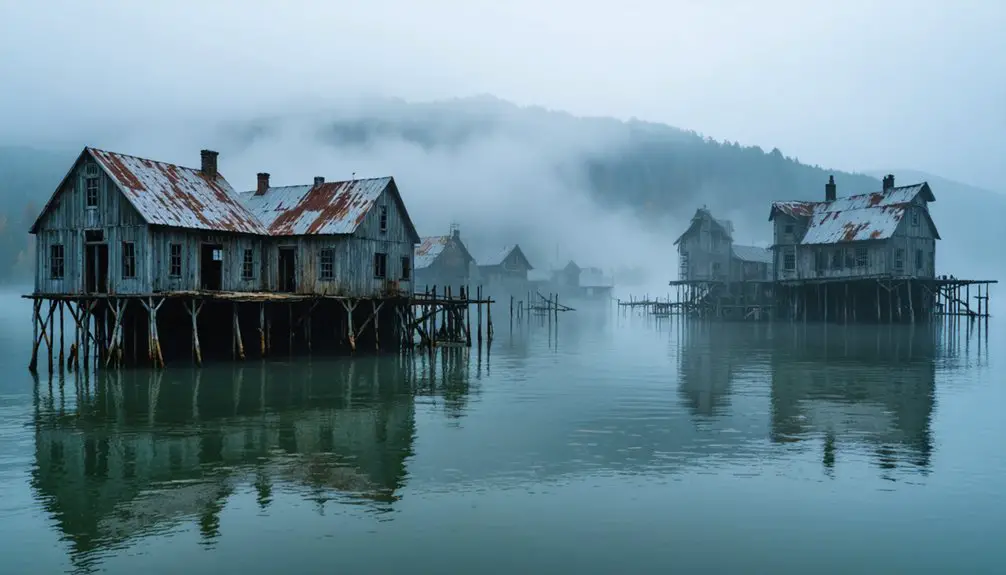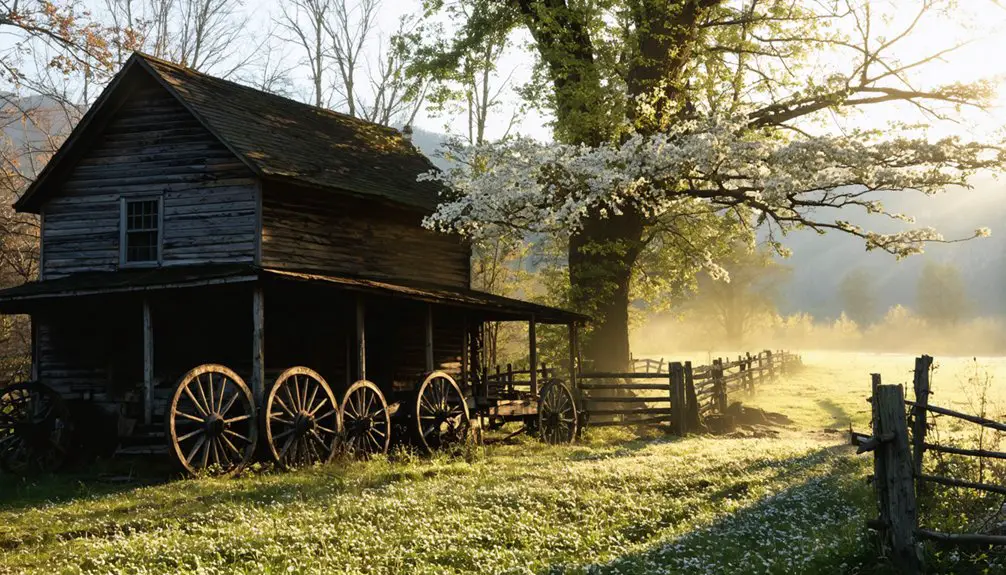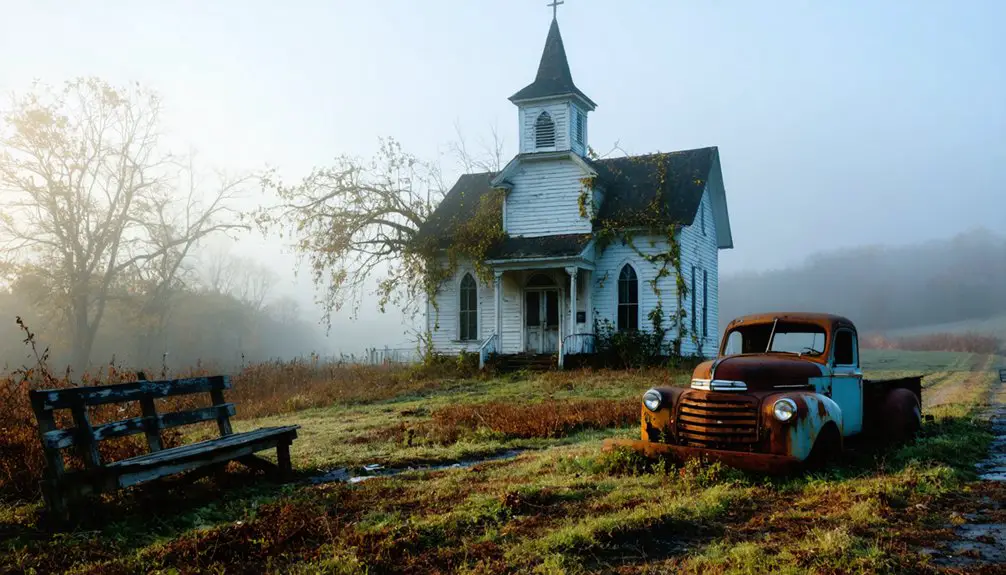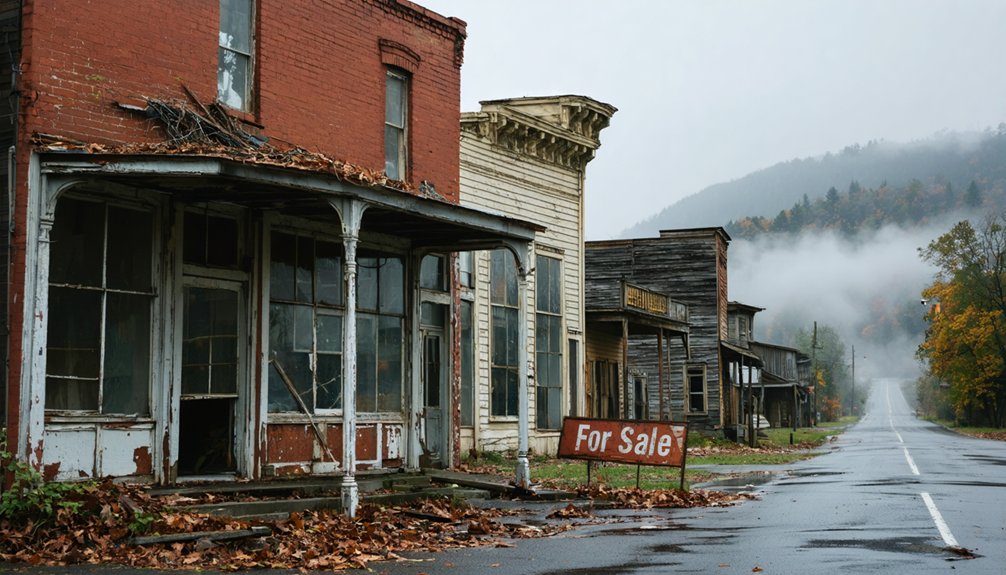
You’ll find Water Valley in Maury County listed at $725,000, spanning seven acres with four pre-1900 commercial buildings, a barn, and residential structure. Established after the 1807 Dearborne Treaty, this former apple-growing hub lost its municipal status in the 1970s when Williamsport absorbed its governance, though fifteen residents still maintain the property. Tennessee’s competitive production tax incentives have sparked entertainment industry interest in such locations, particularly following *Schitt’s Creek*’s cultural impact. The complete historical record and investment potential reveal compelling opportunities for preservation-minded buyers.
Key Takeaways
- Water Valley, an entire town near Williamsport, is listed for $725,000 with seven acres and six historic structures.
- The property includes four pre-1900 commercial buildings with updated utilities, suitable for bed-and-breakfast or mixed commercial ventures.
- Water Valley’s per-acre price of $103,571 exceeds Tennessee’s distressed property average of $44,562 due to historical significance.
- Fifteen residents maintain the community despite loss of municipal status in the 1970s when incorporated into Williamsport.
- Tennessee ghost towns attract entertainment industry interest for filming locations, supported by competitive tax incentives and production infrastructure.
The Historic Water Valley Property in Maury County
When the United States government negotiated the Dearborne Treaty of 1807, it opened vast tracts of Middle Tennessee to settlement, leading to the formation of Maury County that same year from portions of Williamson County and newly acquired Indian lands.
Water Valley emerged from this expansion, establishing its post office in 1874 and developing into a functioning settlement near Leiper’s Creek, south of what’s now the Natchez Trace Parkway. The region followed common naming patterns seen across Tennessee settlements, similar to communities like Kinderhook and New York that reflected the diverse heritage of early American expansion.
The town’s Historic Significance lies in its preserved late 19th-century structures, abandoned for decades yet maintaining their original character. Maury County was named after pioneer surveyor Abram Maury, honoring his contributions to the region’s early development.
Water Valley’s abandoned buildings stand frozen in time, offering an unaltered glimpse into Tennessee’s late 1800s frontier life.
You’ll find Architectural Preservation evident throughout the property, with buildings documenting authentic construction methods from Tennessee’s settlement period.
Currently listed as available real estate, this picturesque ghost town offers a rare opportunity to acquire an intact historic community.
What’s Included in the $725,000 Listing
For $725,000, you’ll acquire seven acres containing four pre-1900 commercial buildings, one barn, and one residential structure along Water Valley Road.
The property features two buildings with modernized wiring and plumbing, ready for commercial ventures, housing, or bed-and-breakfast operations. A natural creek flows through land dotted with mulberry trees, though portions lie in flood zones requiring assessment.
The investment potential becomes clear when comparing prices: this entire town costs less than Franklin’s average home at $1,045,748 or Thompson’s Station’s $805,072. The property has attracted 93 calls in one day from interested buyers across the United States, with the broker anticipating it may go under contract soon.
The remaining structures need electrical and plumbing updates but remain structurally sound. Located 50 miles south of Nashville near Natchez Trace Parkway, this assemblage offers freedom to develop antique shops, music venues, wedding facilities, or commercial services without demolishing historic structures. The town’s origins trace back to the 1890s when Water Valley was renowned for its apple orchards.
The Remaining Community: 15 Residents and Their Stories
Fifteen residents currently call Water Valley home, maintaining a small but determined community on these seven acres despite the town’s loss of formal municipal status.
You’ll find community stories woven into the daily routines of families who keep pets and livestock on this Tennessee property. These resident experiences reflect a commitment to self-governance that began when original inhabitants and four relatives purchased the town in the 1970s.
Their preservation goals established a precedent for independent stewardship that continues today. The creek and barn serve as gathering points where neighbors share the responsibilities of maintaining historical structures—general stores, hardware shops, and sporting goods establishments.
This population represents freedom from conventional municipal constraints while preserving Tennessee’s historical record through lived experience rather than bureaucratic mandate. Like many ghost towns across Tennessee, historical markers and remnants serve as testaments to the community’s enduring past. Similar to Elkmont’s preserved cabins, decisions about maintaining these structures depend on factors including cost and environmental impacts.
From Thriving Town to Williamsport Incorporation
Water Valley’s documented history reveals a settlement that once sustained itself through apple orchards in the 1890s before experiencing gradual economic decline over successive decades.
By the 1970s, the town’s four remaining property owners could no longer maintain municipal viability, prompting formal incorporation into neighboring Williamsport.
Maury County records confirm this consolidation transferred all infrastructure responsibilities—including roads and water services—to Williamsport’s administrative authority, effectively ending Water Valley’s 80-year existence as an independent community.
Similar to other Tennessee ghost towns, remnants of the original settlement can still be discovered by explorers willing to venture through the area’s historical landscape.
Historical Peak Population Era
Tennessee’s ghost towns reached their population zeniths during distinct economic epochs that defined their character and ultimate fate.
You’ll find coal mining settlements like Devonia and Fork Mountain achieved peak prosperity when industry demand surged in Anderson County, supporting entire communities before closures triggered mass exodus.
Randolph’s historical significance emerged during the 1830s as a Mississippi River commerce hub rivaling Memphis, sustaining hotels, churches, and steamboat operations.
Rhea Springs thrived during the late 1800s through health-benefit tourism centered on mineral spring treatments.
Calderwood peaked around 1912 with approximately 2,000 dam workers and families.
Old Butler reached its height before Watauga Dam construction submerged the entire town beneath what became Watauga Lake.
Tennessee contains multiple towns sharing the name Hopewell, reflecting common naming patterns across ghost town settlements in the state.
Each settlement’s population zenith corresponded directly to specific economic drivers—mining operations, river navigation, resort tourism, or hydroelectric construction—that would eventually vanish, leaving communities abandoned.
Incorporation Into Williamsport Process
While most Tennessee ghost towns faded into complete abandonment, some communities experienced a different trajectory through municipal consolidation.
You’ll find that smaller settlements facing economic decline sometimes merged with nearby municipalities rather than disappearing entirely. This absorption process presented unique incorporation challenges that differed from standard municipal regulations governing new town formations.
The consolidation pathway typically involved:
- Petition and negotiation phases where community leaders approached the receiving municipality to discuss boundary expansion and service provision terms
- Public referendum requirements that allowed residents from both jurisdictions to vote on proposed consolidation agreements
- Asset transfer protocols establishing how the absorbed community’s infrastructure, debts, and property rights would shift to municipal ownership
This alternative preserved communities’ physical existence while surrendering their independent governance. Communities seeking incorporation had to demonstrate a minimum population of 1,500 residents to meet Tennessee’s legal requirements for establishing new municipal boundaries.
Decline and Abandonment Timeline
Though Elkmont’s origins traced back to mid-1800s homesteaders who settled along the Little River’s banks, the community transformation into a formal town didn’t occur until W. B. Townsend established the Little River Lumber Company in 1907.
The railroad connecting Elkmont to Knoxville powered economic expansion, transforming the settlement from logging camp to resort destination.
By the 1920s, depleted timber resources triggered industrial decline. The National Park Service’s campground development in the late 1950s signaled shifting land use priorities.
Resident leases expired in 1992, initiating systematic displacement. When the final resident departed in 2001, Elkmont’s residential chapter closed permanently.
Its 1994 National Register listing guaranteed historical significance through preservation rather than demolition, converting an autonomous community into a heritage site.
Hollywood Comes Calling: Entertainment Industry Interest
Your abandoned Tennessee town‘s resemblance to the fictional Schitt’s Creek setting has attracted documented inquiries from multiple production companies seeking authentic small-town locations within reasonable distance of Nashville’s established film infrastructure.
The entertainment industry’s interest stems from Tennessee’s competitive tax incentives for productions and the rising demand for period-appropriate rural settings that don’t require extensive set construction.
These acquisition offers represent a distinct valuation category beyond traditional real estate metrics, as production studios calculate value based on location versatility, existing structures’ cinematic potential, and proximity to Nashville’s crew base and equipment vendors.
Production Company Offers Received
Tennessee’s ghost towns have captured attention beyond history enthusiasts and preservationists, though documented evidence of specific production company offers remains scarce in public records.
While these abandoned settlements present intriguing possibilities as filming locations, verifiable production investments targeting Tennessee ghost towns aren’t well-documented in available sources.
What we can confirm about entertainment industry interest:
- Nashville’s established film infrastructure attracts productions, but ghost town acquisitions remain largely unsubstantiated.
- Historic preservation restrictions often complicate commercial development of abandoned properties, potentially limiting production company purchases.
- Regional filming incentives exist statewide, yet specific documentation linking these programs to ghost town procurement is absent.
You’ll find speculation about Hollywood interest circulating online, but archival records don’t currently support claims of concrete offers.
Further investigation requires accessing studio acquisition records and development proposals.
Schitt’s Creek Comparison Appeal
While concrete production company offers lack documentation, the cultural phenomenon of *Schitt’s Creek*—where a wealthy family purchases and relocates to a fictional small town—has sparked renewed interest in abandoned community acquisitions.
You’ll find Tennessee’s ghost town tourism sector parallels this narrative, though archival records don’t substantiate entertainment industry investment claims. The state’s cultural heritage sites—particularly Elkmont’s preserved resort structures and Hales Bar Dam’s deteriorating infrastructure—attract paranormal enthusiasts rather than Hollywood scouts.
Available documentation reveals National Park Service restoration efforts focus on historical preservation, not commercial redevelopment. While ghost town acquisitions remain theoretically possible, verified sales data for Tennessee properties doesn’t exist in accessible public records.
The Schitt’s Creek comparison represents aspirational thinking rather than documented market activity in Tennessee’s abandoned settlements.
Nashville Proximity Strategic Advantage
Despite recurring claims about Nashville’s entertainment industry magnetism attracting ghost town developers, archived property records and state historical surveys reveal no documented sales of Tennessee’s abandoned settlements to production companies or media conglomerates.
While Nashville growth has transformed the region into a production hub, entertainment investments concentrate on established infrastructure rather than speculative ghost town acquisitions. The documented reality differs markedly from promotional narratives:
- No verified transactions exist linking abandoned Tennessee communities to entertainment industry buyers between 2000-2024.
- Production companies prioritize existing studio facilities and accessible urban locations over remote restoration projects.
- State film incentive programs favor established venues, making ghost town redevelopment financially impractical.
You’ll find the connection between Nashville’s entertainment boom and ghost town sales exists primarily in speculation rather than documented evidence.
Multiple Offers and Competitive Bidding Activity
When the Water Valley property entered the Tennessee ghost town market at $725,000 in the early 2020s, it attracted multiple offers from competing buyers despite receiving minimal promotional exposure beyond standard real estate channels.
Strong buyer demand materialized immediately for the $725,000 Tennessee ghost town despite limited marketing efforts beyond conventional real estate listings.
This competitive bidding activity reflected broader market trends favoring complete operational packages over individual structures. Your understanding of buyer demographics reveals diverse interests—preservation enthusiasts valued the authentic pre-1900 architecture, while entrepreneurial investors recognized built-in business potential through tourism and event hosting.
The seven-acre parcel’s positioning between budget South Dakota options ($250,000) and premium Montana listings ($1.15 million+) created accessible entry points for serious acquirers.
Tennessee’s geographic distinction from Western ghost town concentrations enhanced competitive pressure, as documented offers demonstrated strong appetite for rare complete-town acquisitions featuring functional infrastructure like the original Stock Barn.
The “Schitt’s Creek” Connection Drawing Buyers
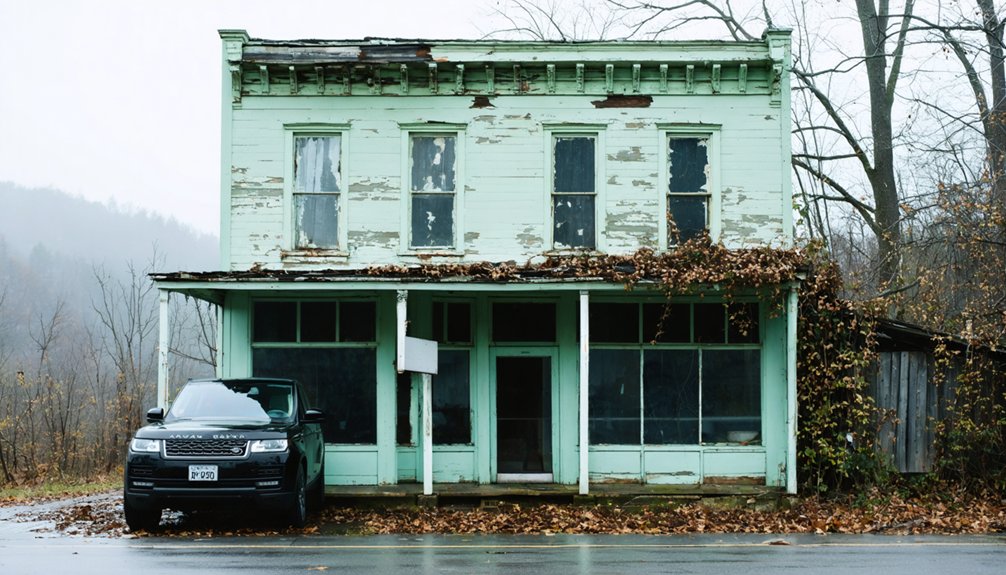
Entertainment industry interest manifested through:
- Direct Hollywood producer inquiries seeking to convert the property into functional movie sets.
- Las Vegas-based entities exploring development possibilities beyond traditional film production.
- Persistent outreach continuing throughout the listing period until sale completion.
Despite commercial interest, sellers rejected proposals that would “strip this of the reality of the history and make it more of a stage” rather than preserve Tennessee’s authentic heritage.
Strategic Location Near Nashville’s Production Hub
Tennessee’s ghost towns positioned within 30 minutes of Nashville offer unprecedented access to $728 million in annual production infrastructure, including facilities like Worldwide Stages’ 320,000-square-foot campus in Spring Hill.
You’ll find yourself near state-of-the-art sound stages, post-production facilities, and over 80,000 music industry professionals—eliminating the logistical delays typical of remote filming locations.
This proximity transforms abandoned properties into viable production assets, as network television shows and high-profile films increasingly choose Tennessee’s expanding entertainment ecosystem over congested coastal markets.
Entertainment Industry Access Benefits
3. Economic Incentives – Tennessee’s second-lowest tax burden and cost of living enable production budgets to stretch further, attracting sustained industry growth.
Rural Charm Meets Opportunity
Positioned fifty miles south of Nashville in Maury County, Water Valley’s seven-acre ghost town represents a documented convergence of Tennessee’s rural heritage and modern production economy.
You’ll find four pre-1900 stores, a barn, and creek on property accessible via Natchez Trace Parkway. Two structures feature updated utilities, enabling immediate adaptive reuse without restrictive municipal oversight.
The $725,000 listing offers rural revitalization potential through bed-and-breakfast operations, antique retail, or mixed commercial ventures.
You’re acquiring complete operational autonomy—formerly an independent municipality, Water Valley provides freedom to establish your own governance framework.
The property’s authentic early 1900s character supports community engagement initiatives while maintaining proximity to Nashville’s expanding markets.
Multiple development inquiries confirm commercial viability for owners seeking preserved Tennessee heritage combined with entrepreneurial flexibility.
Investment Opportunities in Tennessee Ghost Towns
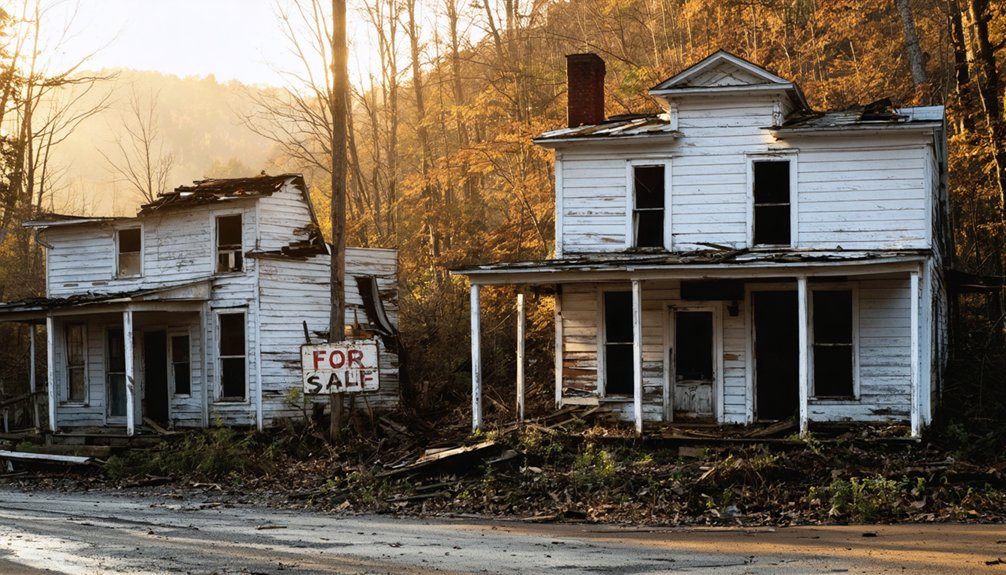
While Tennessee’s distressed property market averages $44,562 per acre across 123 available listings, Water Valley’s $103,571 per-acre valuation demonstrates how historical significance and strategic location can command premium pricing in ghost town acquisitions.
Your investment potential hinges on three critical factors:
Investment success in ghost town properties depends on location advantages, existing infrastructure quality, and development-ready natural resources.
- Geographic positioning – Water Valley’s 50-mile proximity to Nashville and Natchez Trace Parkway access creates immediate value for commercial development or heritage tourism ventures.
- Infrastructure readiness – Pre-1900 buildings feature updated electrical and plumbing systems, reducing renovation capital requirements.
- Natural assets – Leiper’s Creek frontage and seven-acre parcel provide recreational amenities that enhance rural revitalization prospects.
With 93 broker inquiries in one day and multiple offers pending, competitive ghost town acquisitions require decisive action and clear development vision aligned with historical preservation priorities.
Preserving History While Creating New Possibilities
Between 1994 and 2018, the National Park Service’s restoration of Elkmont demonstrated how selective preservation can transform abandoned settlements into educational assets while maintaining historical integrity.
You’ll find that only 19 of 60 original structures survived the evaluation process, creating a curated historical district rather than a complete reconstruction. This approach to cultural preservation balances authenticity with practical resource allocation—restored cabins feature original paint shades and period-appropriate materials, while nature reclaims unrestored sections.
The $9 million Friends of the Smokies endowment funded three-year restoration timelines for individual structures. Economic revitalization emerged through heritage tourism rather than residential development, proving that ghost towns can generate value without compromising their character.
You’re free to explore 19 accessible acres documenting Tennessee’s evolution from lumber economy to resort culture.
Frequently Asked Questions
What Are the Property Tax Rates for Ghost Town Properties in Maury County?
“Location, location, location” applies even to ghost towns—you’ll face Maury County’s standard $1.91 rate per $100 assessed value, though property tax assessments and local tax incentives depend on documented municipal boundaries and historical zoning classifications.
Are There Zoning Restrictions for Commercial Development on the Water Valley Property?
You’ll need to consult local zoning laws and county records to determine commercial development restrictions for the Water Valley property, as specific ordinances governing this historic site aren’t publicly documented in available archival sources.
What Utilities Are Currently Available or Need Installation on the Property?
You’ll need to verify utilities availability directly with local providers, as historical records don’t document current infrastructure. Coincidentally, installation costs for water, electric, and septic systems often exceed purchase prices for abandoned Tennessee properties, requiring thorough independent assessment.
Do Current Residents Have Lease Agreements or Property Rights That Transfer?
The documentation doesn’t disclose current residents’ lease agreements or property rights. You’ll need to investigate existing legal arrangements independently, as available records don’t specify whether occupants’ protections transfer with ownership of Water Valley’s structures.
What Permits Are Required for Filming or Hosting Events on the Property?
You’ll need filming permits for commercial productions and must verify event regulations with local authorities, though ironically, abandoned properties often exist beyond typical municipal oversight—maintaining documentation of ownership and liability insurance remains essential for your protection.
References
- https://www.youtube.com/watch?v=ZJilzcIVg68
- https://www.fox29.com/news/entire-historic-tennessee-town-for-sale-for-725k
- https://theoldhouselife.com/2021/10/06/a-whole-town-for-sale-water-valley-tennessee-four-stores-and-seven-acres-725000/
- https://www.loveproperty.com/gallerylist/116915/this-beautiful-abandoned-town-in-tennessee-is-for-sale
- https://tnhomeandfarm.com/tn-living/725000-could-buy-you-an-abandoned-middle-tennessee-town/
- https://www.landsearch.com/distressed/tennessee
- https://www.southernthing.com/tennessee-ghost-town-2655441438.html
- https://www.youtube.com/watch?v=M9LLtQy-eKI
- https://ahgp.org/tn/maury/towns_villages_and_settlements_of_maury_county.html
- https://mauryalliance.com/why-maury/