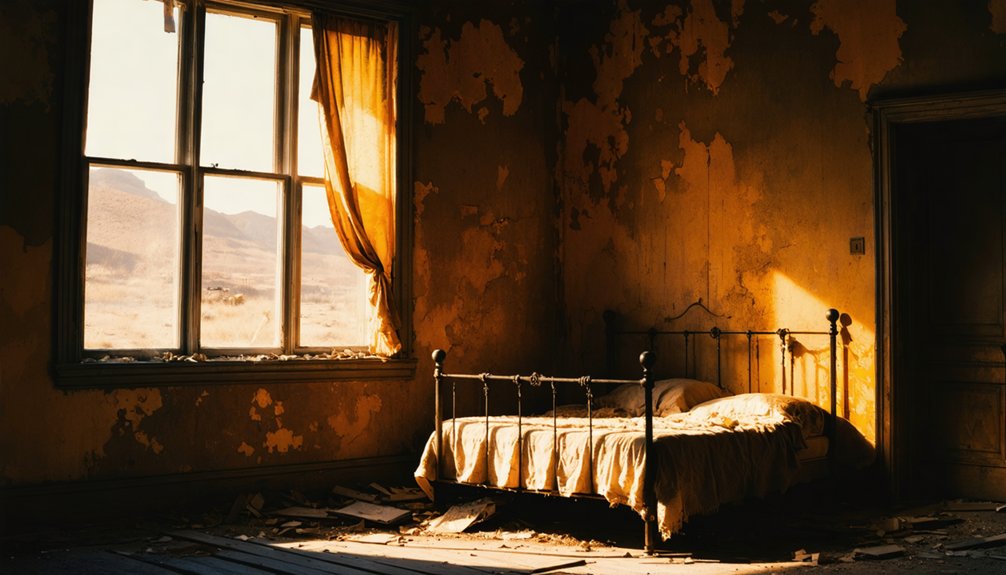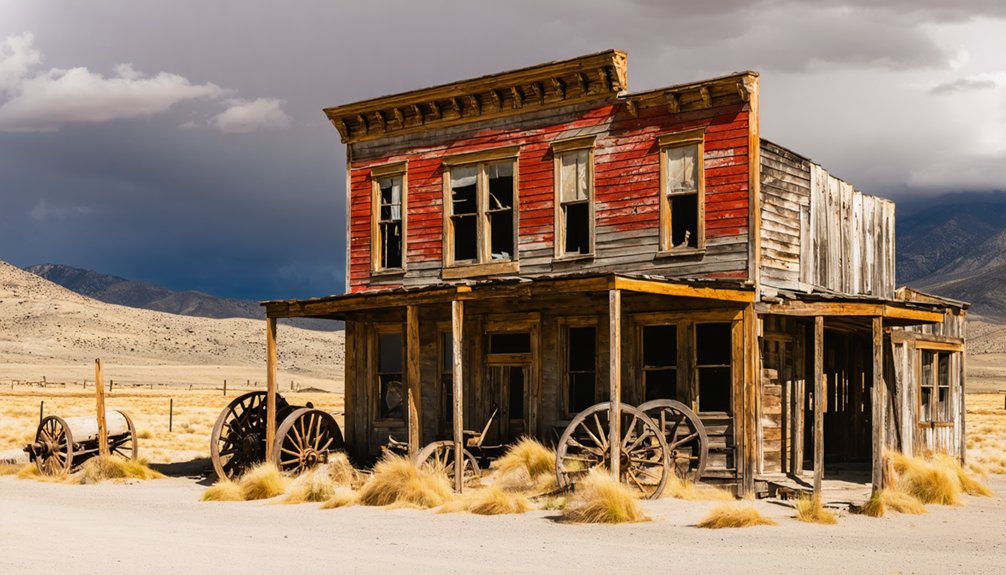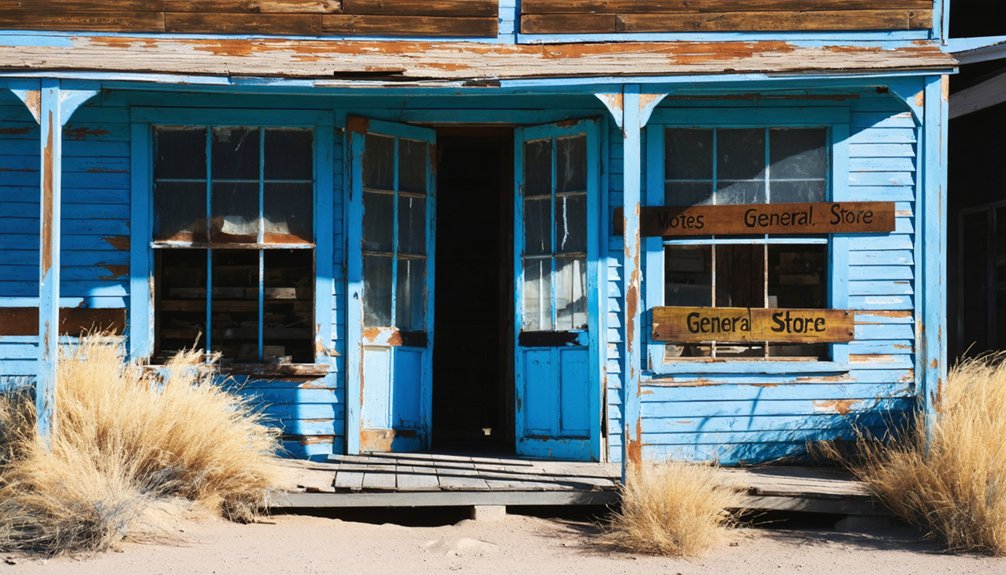
Ghost towns for sale across the United States range from $99,000 prairie settlements to million-dollar historic properties. You’ll find abandoned mining communities in Colorado, desert outposts in California, and frontier towns throughout the West. These properties offer unique investment opportunities but require substantial infrastructure development and navigation of historical preservation requirements. The most successful conversions generate revenue through tourism and hospitality ventures that celebrate America’s frontier past. The full landscape of ghost town ownership reveals much more complex considerations.
Key Takeaways
- Ghost towns in the U.S. range from $99,000 for small properties to $1.8 million for fully restored historical sites.
- Available properties include a six-acre South Dakota prairie town with tavern ($99,000) and an Arizona bed-and-breakfast ($599,800).
- Buyers face challenges including utility installation, legal complexities, and historic preservation restrictions that often exceed initial purchase costs.
- Ghost towns offer dual revenue potential through tourism, boutique accommodations, themed experiences, and sometimes mining claims.
- Most successful ghost town purchases involve unincorporated land with existing structures that can be transformed into hospitality venues.
America’s Most Fascinating Ghost Towns Currently on the Market
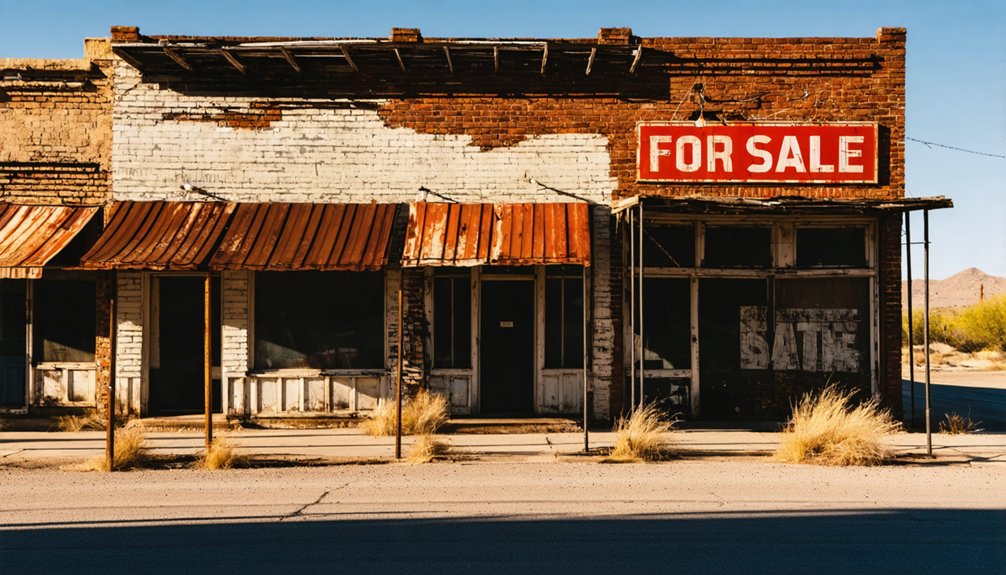
While abandoned towns once bustled with the promise of fortune and prosperity, today’s real estate market offers the rare opportunity to own these historical time capsules.
From Colorado’s 305-acre mountain haven near Telluride ($925,000) to Arizona’s fully restored ghost town museum ($1.1 million), these properties preserve America’s frontier spirit.
America’s forgotten towns now stand as monuments to frontier ambition, awaiting visionaries to breathe life into their historic foundations.
You’ll discover hidden treasures like the six-acre prairie town of Swett, South Dakota, where the tavern still stands as proof of bygone revelry.
For $99,000, claim your California desert getaway near Cerro Gordo—though you’ll need four-wheel drive to access the property where ghost stories linger in the arid air.
Whether seeking Arizona’s desert paradise functioning as a bed-and-breakfast ($599,800) or Colorado’s mining claims, these towns await your vision to resurrect their faded glory. Most ghost towns originated as mining communities that thrived until natural resources were depleted. History enthusiasts will appreciate Silverton’s property featuring a photo studio and gallery that captures the essence of the Wild West while providing modern living accommodations.
The Price Range and Investment Considerations for Owning Historical Towns
Beneath the romantic allure of owning a piece of America’s past lies a complex investment landscape that spans both financial and historical considerations.
Ghost town price evaluations range dramatically—from modest $99,000 parcels to meticulously restored properties commanding $1.8 million. Mid-range options ($400,000-$600,000) typically include some standing structures and infrastructure. Successful town purchases typically involve unincorporated land with existing structures rather than municipal governance rights.
Your investment extends beyond acquisition costs. Most ghost towns lack modern utilities, requiring substantial capital for water, electricity, and access roads. Many owners seek private investors to help fund these extensive infrastructure improvements.
Historical significance dictates both opportunity and constraint—buildings may require preservation according to strict guidelines, while fragmented ownership and unclear titles demand thorough legal due diligence.
The potential for tourism ventures must be weighed against ongoing maintenance costs, remote locations, and zoning restrictions that might limit your vision for these enchanting historical remnants.
From Mining Claims to Tourist Attractions: Redevelopment Possibilities
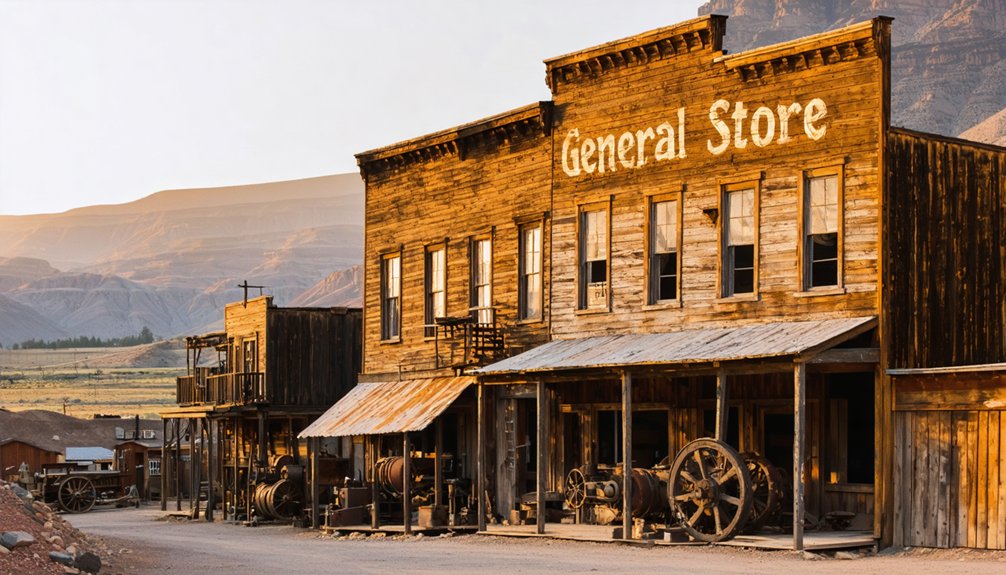
Once abandoned to the elements and receding into distant memory, ghost towns now present compelling redevelopment pathways for entrepreneurial investors.
You’ll find these historical settlements offer dual revenue streams—mining claims with extractable resources alongside tourism potential. The weathered saloons, mills, and general stores that once served frontier communities can be transformed into boutique accommodations or thematic experiences that transport visitors to bygone eras.
Consider Villa de la Mina in Texas or Old Cisco in Utah, where historic structures now generate income through hospitality ventures while maintaining cultural preservation. Many of these properties were originally mining or railroad towns that lost populations due to economic decline. Similarly, Johnsonville in Connecticut represents a unique opportunity with its Victorian-era charm and mixed-use development potential.
Your ownership could extend beyond buildings to include mining shafts convertible into educational attractions or festival venues. The intersection of commerce and heritage creates sustainable economic models—whether you envision Airbnb rentals, film production locations, or mixed-use developments combining residential spaces with commercial enterprises.
Geographical Distribution and Architectural Heritage of Available Ghost Towns
Across the American landscape, ghost towns cluster in distinct geographical patterns that reveal the nation’s economic and industrial evolution.
From abandoned mining camps to deserted factory towns, America’s ghost towns map the rise and fall of industrial dreams.
You’ll find the highest concentrations in Nevada, Colorado, Montana, and California—remnants of 19th-century mining booms with their historical significance preserved in weathered wood-framed storefronts and rustic saloons.
The Midwest and Rust Belt offer different architectural styles, with industrial-era ghost towns in Detroit, Birmingham, Gary, and St. Louis showcasing brick factories and worker housing from America’s manufacturing heyday. Recent data shows these areas have some of the highest vacancy rates, with over 14% of homes sitting empty in ZIP codes like 63133 in Saint Louis and 35224 in Birmingham.
Prairie states like South Dakota feature simpler vernacular structures—general stores, post offices, and frontier cabins—often selling for as little as $250,000. Modern enthusiasts can explore these locations using interactive satellite maps that pinpoint and provide historical context for over 125 abandoned towns across the country.
These properties, whether late-1800s Western saloons or early-1900s commercial blocks, represent tangible fragments of American frontier spirit, preserved in time yet available for your ownership.
Practical Challenges of Restoring and Maintaining an Abandoned Town
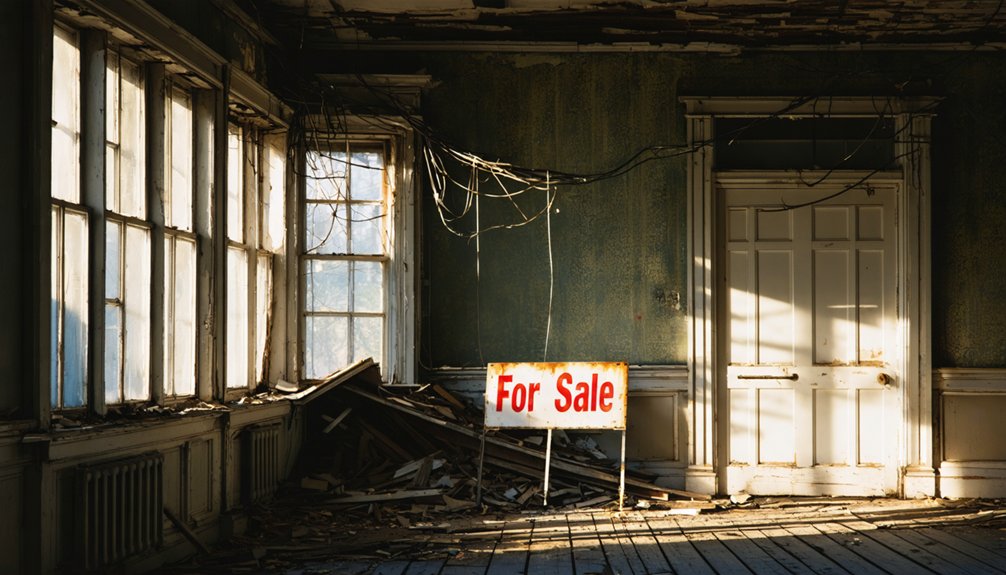
While the romanticized notion of purchasing an abandoned town conjures visions of historical redemption and entrepreneurial possibility, the practical realities present formidable challenges that extend far beyond the initial acquisition.
You’ll immediately confront legal complexities including fractured property titles, historic preservation restrictions, and zoning limitations that can paralyze restoration efforts before they begin.
Infrastructure challenges compound these obstacles—absent utilities like water and electricity require rebuilding from scratch, often at costs that dwarf the purchase price. As evidenced in Cerro Gordo, maintaining daily operations may require trucking in water due to diverted water supplies or depleted resources.
Financial hurdles await as conventional lenders retreat from such high-risk ventures.
Many of these abandoned towns suffered from top-down regulations that forced closures of mines and energy companies, leaving community economies devastated.
Physical deterioration accelerates relentlessly; structures that withstood decades succumb to nature’s persistent reclamation.
Environmental hazards lurk in abandoned mines and industrial remains.
Your vision may promise freedom, but regulatory constraints—conflicting federal, state and local requirements—will demand patience measured not in months but years.
Frequently Asked Questions
Do Ghost Towns Come With Documented Paranormal Activity or Haunting Histories?
Yes, many ghost towns include documented paranormal activities. You’ll discover haunting legends tied to epidemics, mining disasters, and violent deaths that paranormal investigations have explored across centuries of settlement and abandonment.
What Legal Permits Are Required for Hosting Public Events in Ghost Towns?
You’ll need special event permits, recreation/special use permits, and public safety plans. Submit applications 30-60 days ahead with site plans detailing your temporary intrusions into these once-thriving, now-liberated spaces.
Are There Tax Incentives for Preserving Historical Structures in Ghost Towns?
You can access ENORMOUS tax advantages through historical preservation. You’ll score 20% federal tax credits plus potentially another 20% from state programs when rehabilitating income-producing structures in your freedom-defining ghost town adventure.
How Do Seasonal Weather Conditions Affect Accessibility to These Properties?
Your seasonal access fluctuates dramatically with the terrain’s natural cycles. Winter snow isolates northern properties, while spring floods wash out desert roads—these weather challenges demand adaptable transportation and self-reliant planning year-round.
What’s the Typical Timeline for Making a Ghost Town Habitable?
You’ll face 1-3 years of renovation challenges before achieving basic habitability, with full transformation requiring 5-10 years. Community involvement accelerates this timeline, as you’ll uncover layers of infrastructure needs through each restoration phase.
References
- https://www.10news.com/ghost-towns-sale-us/
- https://www.ezhomesearch.com/blog/towns-for-sale-in-the-usa/
- https://sunrisecapitalgroup.com/would-you-buy-a-ghost-town-here-are-some-charming-options-for-brave-investors/
- https://www.realtor.com/news/unique-homes/buy-a-ghost-town-or-live-near-one/
- https://www.youtube.com/watch?v=ByFK4-CAbgs
- https://www.accio.com/biz-cheap/abandoned-towns-for-sale-cheap
- https://www.loveproperty.com/gallerylist/51810/entire-villages-and-towns-for-sale-that-you-can-actually-buy
- https://www.texasescapes.com/TexasGhostTowns/Ghost-Towns-for-Sale.htm
- https://www.youtube.com/watch?v=PMV4cjyukaQ
- https://txprobatelawyer.net/the-rise-of-ghost-towns-can-you-own-a-piece-of-abandoned-texas/