You’ll find authentic overnight experiences at several Desert Southwest ghost towns, from Terlingua, Texas, where you can camp among crumbling adobe ruins, to Dunton Hot Springs, Colorado, offering restored luxury cabins with natural hot springs. Ruby, Arizona provides basic camping amid 25 preserved 1870s buildings, while Rhyolite, Nevada serves as your gateway to Death Valley exploration. Kentucky Camp’s adobe structures along Arizona’s backcountry trails offer primitive camping opportunities. Each location presents unique combinations of preserved architecture, stargazing opportunities, and immersive historical atmospheres that transform your visit into something far beyond typical tourism.
Key Takeaways
- Dunton Hot Springs, Colorado offers restored 1885 mining cabins with luxury lodgings and natural hot springs for overnight guests.
- Ruby, Arizona provides basic camping amenities across 350 acres with 25 preserved original buildings from the 1870s mining era.
- Swansea, Arizona features restored worker cabins and dispersed camping opportunities in a remote copper mining camp from 1907–1937.
- Gold Point and Terlingua ghost towns offer various accommodations including rustic lodgings, yurts, cabins, and luxury resort suites.
- Most overnight locations require essential gear including tents, cold-rated sleeping bags, water supplies, and provisions for self-sufficient camping.
Terlingua, Texas: Sleep Under Desert Stars Among Historic Ruins
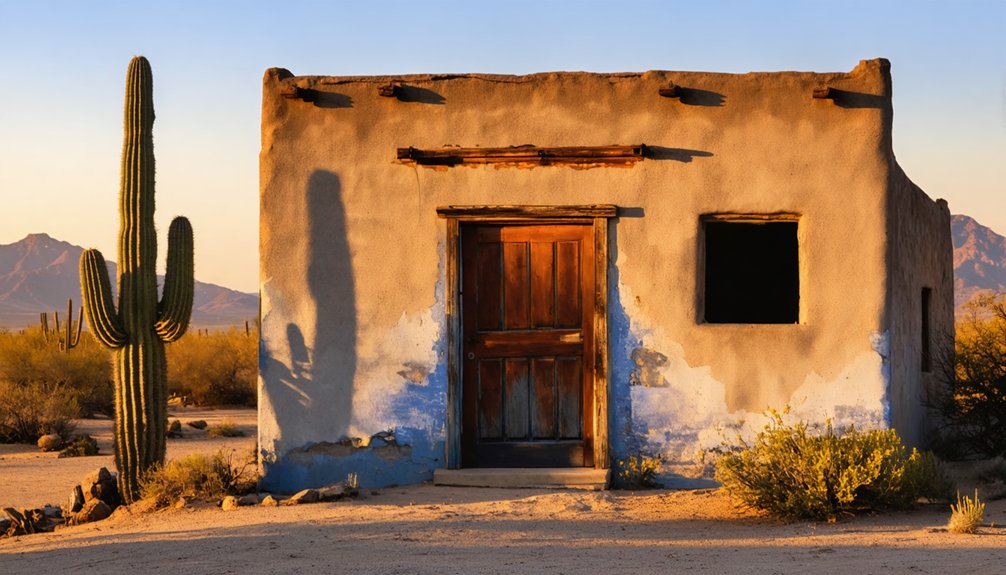
Deep in the Chihuahuan Desert, where jagged mountains meet endless sky, the sandstone ruins of Terlingua rise from the earth like monuments to a bygone era. You’ll find two dozen crumbling buildings where mercury miners once lived—now yours to explore freely.
Two dozen crumbling mercury mining structures stand frozen in time, waiting for modern explorers to wander their abandoned corridors.
Thanks to historic preservation efforts by Bill Ivey and his father, you can sleep among these authenticated ruins in rustic lodgings carved from the original ghost town structures.
The off-grid experience delivers pure desert solitude. Pitch your tent near abandoned 1930s cars and mine shafts, or claim a room in the former company store.
Local legends whisper through St. Agnes Church‘s roofless walls while rattlesnakes patrol the cemetery’s 400 graves. Each November, Dia De Los Muertos transforms the graveyard into a vibrant celebration with offerings at gravesites, colorful altars, and live music stretching into the night.
Three miles from the Rio Grande, you’re untethered from civilization’s grip. Underground, a network of shafts and caverns remains from the mining era, where men once chased veins of cinnabar ore through cool, damp passages beneath the desert heat.
Rhyolite, Nevada: Gateway to Death Valley’s Preserved Mining Heritage
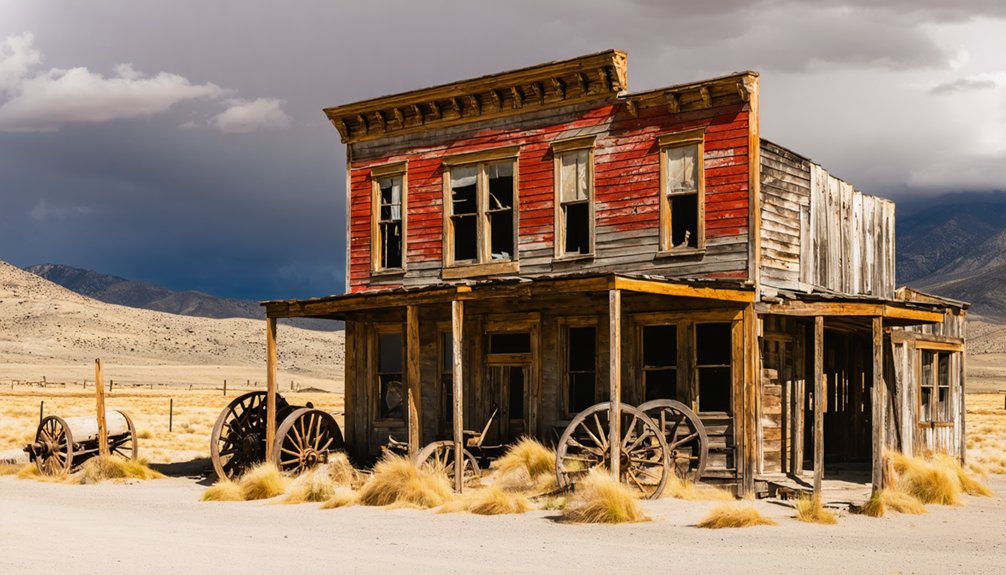
When prospectors Shorty Harris and Ed Cross struck gold in Nevada’s western desert hills in 1904, they sparked one of the most spectacular booms—and busts—in American mining history. Rhyolite exploded from two tents to 5,000 residents within months, boasting electric lights, stock exchanges, and fifty saloons.
Mining techniques advanced rapidly as the Montgomery Shoshone Mine produced over $1 million in three years.
Today, you’ll find the Bureau of Land Management battles preservation challenges while maintaining this photogenic ghost town just outside Death Valley National Park. Explore the iconic Bottle House built from 50,000 beer bottles, remnants of the Cook Bank, and a restored railroad depot. The Cook Bank, which opened in 1908, featured a marble staircase, mahogany finishes, and indoor plumbing before closing in 1910 after the financial panic. The nearby Goldwell Open Air Museum features modern art installations including Belgian artist Albert Szukalski’s “The Last Supper” sculpture, blending contemporary creativity with historic ruins.
As Death Valley’s gateway, Rhyolite served neighboring mines while embodying the Southwest’s untamed spirit—freedom seekers chasing fortune across unforgiving terrain.
Kentucky Camp, Arizona: Adobe Headquarters Along the Arizona Trail
You’ll find Kentucky Camp nestled in the Santa Rita Mountains foothills, where five 1904 adobe buildings stand as remnants of an ambitious hydraulic mining venture that ended abruptly after just one year of operation.
The preserved headquarters, assay office, and cabins now serve as an interpretive site along the Arizona Trail, offering you a rare chance to explore authentic mining-era structures in their original desert setting.
Whether you’re hiking through or staying overnight in the rental cabin, you’ll experience the isolation that defined these remote mining operations over a century ago.
The site once served as the headquarters for the Santa Rita Water & Mining Company, which was established to support placer mining operations in the Greaterville Mining District after gold was discovered in the area in 1874.
The ten-room headquarters building is among the largest surviving adobe structures from this era, showcasing the scale of the original mining operation.
Historic Adobe Mining Headquarters
Tucked into the Santa Rita Mountains foothills nine miles northwest of Sonoita, Kentucky Camp stands as one of Arizona’s best-preserved early 20th-century mining headquarters. Built in 1904 by the Santa Rita Water and Mining Company, five adobe structures showcase Mexican construction techniques merged with Anglo designs.
You’ll discover a ten-room headquarters building, gold assay facilities, and cabins where engineers once lived. Desert flora surrounds these weathered walls, while wildlife viewing opportunities abound in this remote location accessible via the Arizona Trail.
The Forest Service maintains two restored buildings available for overnight stays through their “Rooms with a View” program. Listed on the National Register since 1995, Kentucky Camp offers you an authentic glimpse into Arizona’s hydraulic mining era without modern intrusions.
Trail Access and Activities
The Arizona Trail passes directly through Kentucky Camp, making this historic site one of the most accessible ghost towns in southern Arizona. You’ll find multiple trailheads nearby, with Oak Tree Canyon accommodating up to 40 vehicles.
The 7.5-mile round-trip hike follows well-marked paths through Kentucky Gulch, where desert flora like alligator junipers, yuccas, and grama grasses line your route. Along the way, you’ll encounter low mounds and shallow pits marking locations where small-scale mining operations once extracted ore from the hillsides.
Mountain terrain offers diverse adventures beyond the main trail. Steep paths climb toward 9,453-foot Mt. Wrightson, while gentler options wind through oak-studded canyons. The landscape transitions from grasslands to dense forests of juniper, oak, and manzanita as elevation increases.
You’re welcome to explore on foot, mountain bike, or horseback—the Arizona Trail accommodates all three. Endurance riders and mountain bikers have carved loops ranging from 7.8 to 48.5 miles through surrounding forest roads, giving you unlimited options for extended exploration.
Remote Desert Camping Options
Rising 4,400 feet above sea level in the Santa Rita Mountains, Kentucky Camp offers a rare blend of historic preservation and modern comfort for overnight visitors. You’ll find five adobe buildings from the 1902-1906 mining era, maintained through careful historical preservation efforts by the Forest Service and Friends of Kentucky Camp.
The main cabin sleeps five with basic amenities—electricity, propane heat, and kitchen facilities—while you’ll supply your own water and sleeping gear. Reservations cost $75 per night and can be made through the Nogales Ranger District office during weekday business hours.
Wildlife conservation thrives here across four life zones, where you might spot:
- White-tailed and mule deer roaming the rolling hills
- Wild turkeys foraging through desert vegetation
- Over 256 bird species, including 15 hummingbird varieties
For complete solitude, dispersed camping awaits on surrounding government land, though tent camping’s prohibited within the historic site boundary. The historic mining settlement once served as headquarters for the Santa Rita Water and Mining Company during the early 1900s gold rush.
Dunton Hot Springs, Colorado: Luxury Lodging in an 1885 Mining Camp
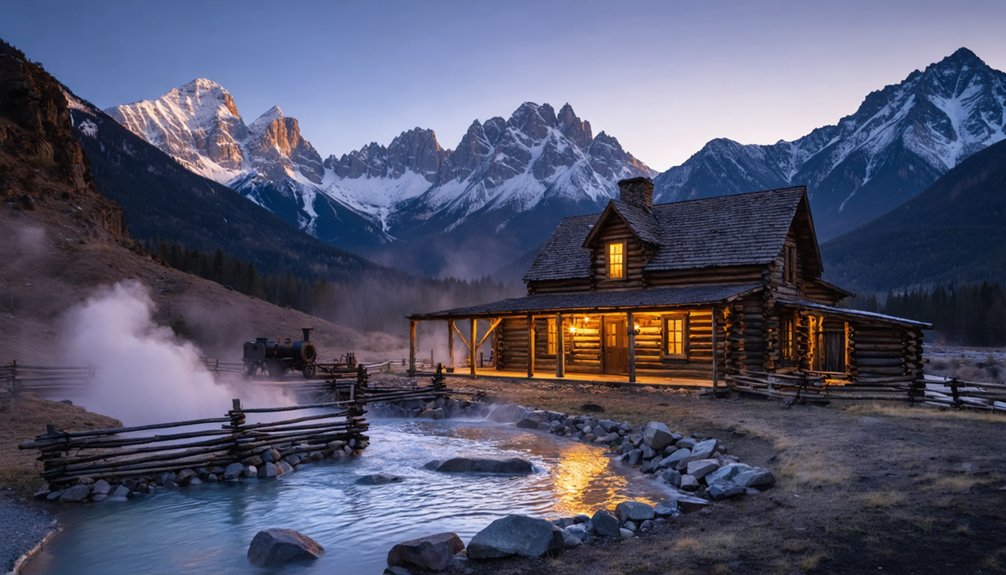
Deep in Colorado’s San Juan Mountains, where the West Dolores River carves through alpine wilderness, a ghost town pulses with unexpected life. Dunton Hot Springs transforms an 1885 mining settlement into freedom you can touch—no velvet ropes, no museum glass between you and history.
You’ll sleep in hand-restored log cabins where miners once collapsed after twelve-hour shifts. The restoration challenges were immense: bullet-riddled roofs, wildlife encounters with bears claiming abandoned structures, decades of vandalism erasing what Eastern investors built when 300 people called this isolated camp home.
Austrian entrepreneur Bernt Kuhlmann acquired the deteriorating property in 1994, preserving original buildings while adding luxury amenities.
The hot springs that attracted homesteader Joe Roscio in the 1880s still flow, unchanged, undomesticated—your reward for venturing twelve miles beyond civilization.
Ruby, Arizona: Arizona’s Most Preserved Mining Ghost Town
Tucked in the shadow of Montana Peak near the Mexican border, Ruby preserves over twenty original structures from its 1870s origins as a lead and zinc mining camp. You’ll explore adobe buildings and cement foundations where 1,200 residents once lived terraced up hillsides during the town’s early 20th-century heyday.
During this period, 350 miners worked round-the-clock shifts extracting Arizona’s richest ore deposits. The 362-acre site now stands privately owned and closed to public access, though its preserved schoolhouse-turned-museum and legendary mercantile ruins continue to anchor one of the Southwest’s most intact ghost towns.
Mining Camp History
At the foot of Montana Peak in Santa Cruz County, a humble mining camp emerged around 1877, taking its name from the mountain that loomed above it. Montana Camp would later become Ruby when postmaster Julius Andrews honored his wife, Lille B. Ruby Andrews, in 1912.
The Montana Mine’s wealth transformed this remote outpost into Arizona’s powerhouse. Eagle-Picher Mining Company revolutionized operations with advanced mining techniques and ore processing that extracted gold, silver, lead, zinc, and copper from the mountain’s depths.
Peak operations showcased industrial might:
- Over 350 miners working round-the-clock shifts
- $10,000,000 in mineral production from 1934-1940
- Arizona’s leading lead and zinc producer, third in silver
- Water and firewood – the rainwater catchment system won’t sustain your stay; pack charcoal during dry seasons
- Complete provisions – you’re 12 miles from groceries, so bring local cuisine ingredients for lakeside picnics
- Fishing gear – no bait shop exists; arrive self-sufficient
- Rustic camping at Swansea Ghost Town delivers isolation among foundry ruins and dark skies, while Gold Point offers cabins beautifully appointed inside despite weathered exteriors.
- Mid-range retreats like Terlingua’s luxury yurts feature plush king beds, rain showers, and dome skylights for stargazing.
- Premium escapes at Dunton Hot Springs transform 1885 mining buildings into rainforest-showered suites with heated floors.
- Hydration systems: Carry 3 liters minimum per person, with collapsible bottles and filtration like the Sawyer Mini
- Safety equipment: First aid kit with snake bite supplies, headlamp with extra batteries, multi-tool for emergencies
- Fire prevention: Keep extinguishers in your vehicle and near campfires
- Temperatures exceeding safe limits for exposed overnight stays
- Flash floods threatening arroyos during monsoon season
- Heat exhaustion risks multiplying in waterless ghost towns
- https://www.frommers.com/slideshows/848476-9-ghost-towns-to-explore-during-road-trips-through-the-american-west/
- https://www.hipcamp.com/journal/camping/arizona-ghost-towns/
- https://guide.michelin.com/us/en/article/travel/the-remarkable-history-of-dunton-hot-springs
- https://www.visittucson.org/blog/post/8-ghost-towns-of-southern-arizona/
- https://www.tripadvisor.com/Attraction_Review-g31301-d7645184-Reviews-Swansea_Ghost_Town-Parker_Arizona.html
- https://swexpeditions.com/ghost-tours
- https://travelzone.bestwestern.com/southwest-ghost-towns-road-trip/
- https://www.bon-voyage.co.uk/activities/jerome_the_largest_ghost_town_in_america
- https://www.dallasites101.com/blog/post/terlingua-texas-ghost-town-guide/
- https://www.youtube.com/watch?v=fnk7SotJgq4
A 15-mile pipeline lifted Santa Cruz River water 1,500 feet uphill, powering this desert enterprise until ore depletion forced closure in 1940.
Buildings and Attractions
Ruby stands as one of Arizona’s most intact ghost towns, with approximately 25 structures still sheltered beneath their original roofs. You’ll find the historic adobe jail, old schoolhouse, and numerous homes that you can actually enter—a rarity among preserved ghost towns.
Preservation efforts have stabilized these weathered buildings while maintaining their authentic character.
The on-site museum showcases mining artifacts and historic photos that bring local legends to life. You’ll discover vintage mine machinery, exposed mine shafts, and even playground remnants scattered across the landscape.
Interpretive signs detail the lives of former residents as you explore 350 acres of self-guided trails.
The caretaker provides maps and historical context upon entry, enhancing your journey through this remarkably preserved piece of Arizona’s mining heritage.
Camping and Fishing Amenities
Beyond exploring historic buildings, overnight visitors can establish their base camp directly within the ghost town’s boundaries. Ruby’s campground accommodates both RVs and tents Thursday through Sunday, with a caretaker greeting arrivals.
While historical preservation remains the primary focus, you’ll find excellent fishing opportunities at on-site lakes stocked with bluegill and trophy bass for $20 per person.
Essential preparations include:
The sandy beach picnic area provides perfect spots for preparing meals after landing your catch, though leave-no-trace protocols require packing out all waste.
Swansea, Arizona: Remote Copper Town With Pristine Night Skies
Deep in the Arizona desert east of Parker, Swansea rises from the sunbaked landscape as one of the state’s most intact ghost towns—a copper mining camp that burned bright and brief between 1907 and 1937.
You’ll navigate unpaved roads through BLM-managed terrain to reach this remote sanctuary, where restored worker cabins stand alongside reverberatory furnaces and the manager’s house.
Local folklore whispers of the town’s 700-ton smelter—built to dazzle investors but too inefficient to save operations that lost three cents per pound on every copper sale.
Today’s ecological restoration efforts preserve scattered ruins: covered mine shafts, oxidized pipes, and dust collectors spreading across the valley.
At night, zero light pollution transforms the site into a stargazer’s paradise, offering unobstructed views of celestial phenomena that miners once witnessed during their desert exile.
Choosing Your Ghost Town Adventure: Rustic Camping vs. Comfortable Accommodations
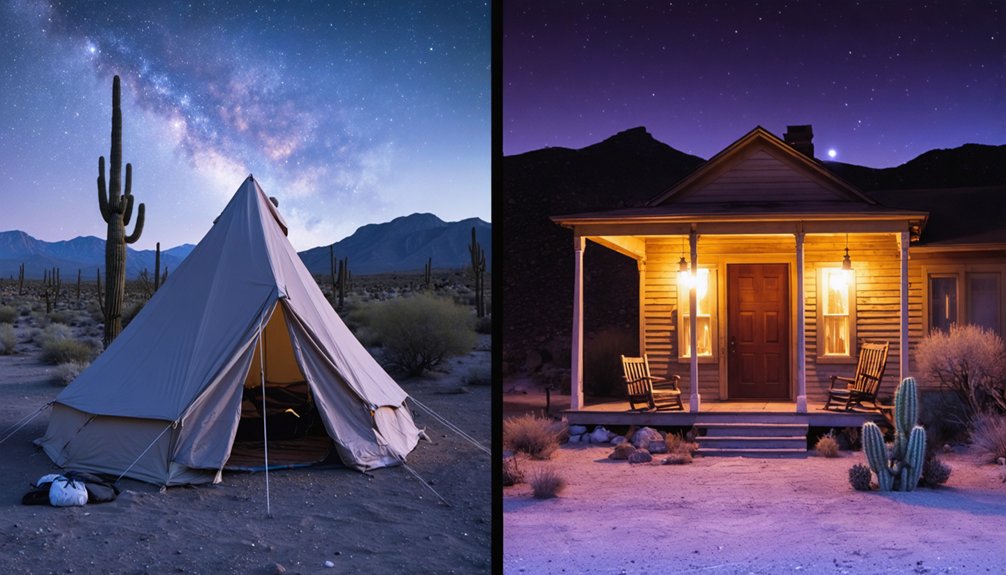
Whether you crave raw desert solitude beneath canvas or prefer soaking in a clawfoot tub after exploring abandoned smelters, ghost town adventures across the Southwest accommodate both wilderness purists and comfort seekers.
Historical authenticity meets modern comfort through diverse options:
You’ll find Terlingua properties within walking distance of restaurants, bars overlooking the Chisos Mountains, and Starlight Theatre‘s live music.
Choose your adventure based on desired disconnection level.
What to Bring for an Overnight Ghost Town Experience
Whether you’re pitching a tent under starlit skies at Gold Point or settling into a rustic cabin in Terlingua, packing the right gear transforms your ghost town overnight from survival exercise into memorable adventure. Your essentials fall into two categories: the camping and safety equipment that keeps you comfortable and protected in the harsh desert environment, and the specialized tools that help you explore the region’s legendary dark skies and haunting landscapes.
From layered clothing for 40-degree temperature swings to headlamps for steering through crumbling structures after sunset, each item serves a purpose in these remote outposts where cell service vanishes and the nearest supply store lies hours away.
Essential Camping and Safety Gear
When night falls across the desert Southwest’s abandoned settlements, temperatures can plummet forty degrees from their daytime highs, transforming sun-scorched ghost towns into frigid outposts where preparation means the difference between memorable adventure and miserable ordeal. Your shelter becomes critical—pack a sturdy four-season tent with rainfly, a sleeping bag rated 20°F or lower, and insulating pads against the cold ground.
Essential gear for remote exploration includes:
Understanding camping regulations and practicing wildlife safety guarantees your freedom to explore responsibly.
Stargazing and Photography Equipment
As darkness blankets the abandoned structures of desert ghost towns, the sky transforms into a celestial theater where the Milky Way stretches across the horizon with startling clarity—a spectacle visible only where civilization’s glow hasn’t yet penetrated.
You’ll need a DSLR or mirrorless camera mounted on a sturdy tripod to capture star trail techniques that transform the night into swirling light paths.
Pack astrophotography filters to cut through any residual haze and sharpen stellar definition.
Remote shutter releases eliminate vibration during long exposures, while extra batteries combat the cold desert night’s power drain.
Bring binoculars for wide-field scanning and a red flashlight to preserve your night vision.
Stargazing apps on your phone identify constellations overhead, helping you compose shots with crumbling buildings framing infinite cosmic vistas.
Best Times of Year to Visit Desert Southwest Ghost Towns
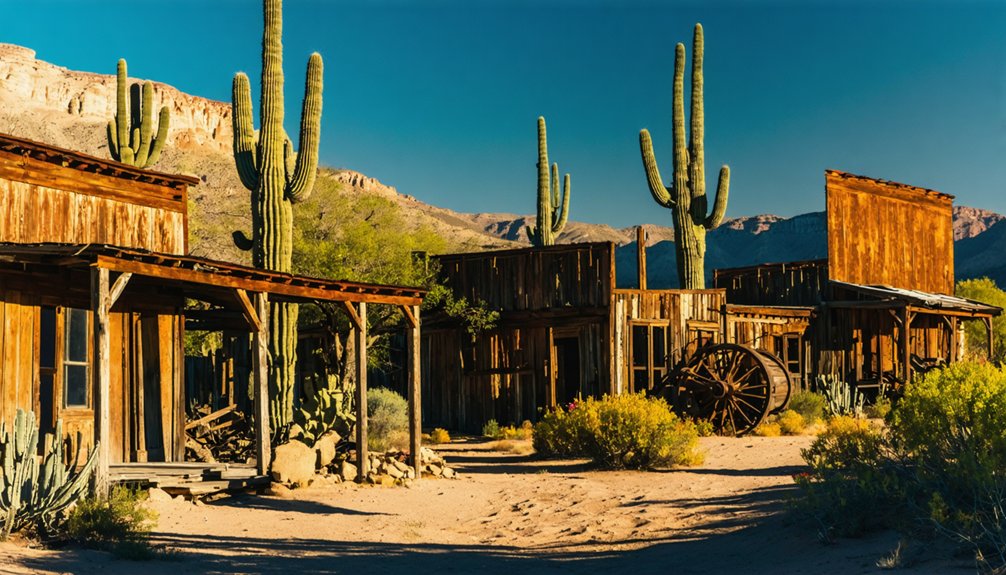
The desert’s unforgiving extremes dictate when you’ll find these abandoned settlements at their most explorable. Winter through spring delivers ideal conditions—cooler temperatures transform brutal landscapes into comfortable terrain for overnight adventures. You’ll discover historical preservation efforts more apparent when you’re not battling 110-degree heat, and locals share their legends more freely during pleasant evenings around campfires.
Desert ghost towns reveal their secrets best when winter’s cool embrace replaces summer’s deadly heat, inviting deeper exploration and storytelling.
Fall’s mild weather supports extended exploration of remote sites, with October offering Halloween-themed excursions. Avoid summer’s dangerous extremes entirely:
Skip Christmas week’s crowds. Most sites remain accessible year-round, though high-elevation locations require four-wheel drive regardless of season.
Respecting History: Ghost Town Etiquette and Preservation Guidelines
Standing among weathered timber frames and sun-bleached adobe walls, you’ll find yourself not merely sightseeing but serving as a temporary guardian of irreplaceable history. Respect “No Trespassing” signs—many structures remain on private land despite abandonment.
Cultural sensitivities matter: seek permission before photographing residents or occupied buildings, as some ghost towns still harbor communities.
Navigate safely around collapsing mines, unstable floors, and rattlesnakes lurking along trails. Crumbling walls aren’t invitations to enter. Support preservation techniques through programs like SiteWatch, where volunteers monitor archaeological sites, or apply for Southwest Intervention Fund grants funding stabilization and fencing projects.
Prepare thoroughly with detailed maps showing public-private boundaries—cell service proves unreliable.
Your documentation and advocacy protect these nonrenewable resources from looting while ensuring future wanderers can experience the same untamed authenticity you’re discovering today.
Frequently Asked Questions
Are Ghost Town Overnight Stays Safe for Families With Young Children?
While historical preservation attracts adventurous families, overnight safety remains questionable. You’ll face structural instability, scorpions, extreme heat, and zero emergency services. Unless your children handle rustic danger well, choose established accommodations instead.
Do Any Ghost Towns Require Advance Reservations for Camping or Lodging?
Yes, you’ll need advance reservations for most ghost town accommodations, especially during peak seasons. Properties offering campground amenities and historical tours book quickly, so secure your spot early to guarantee access to these unique desert destinations.
What Cellphone Coverage Can Visitors Expect at These Remote Desert Locations?
You’ll find cell phone coverage vanishes like water in the desert at these remote locations. Signal strength drops to zero throughout Joshua Tree’s interior and along ghost town routes, forcing you to embrace true off-grid freedom and disconnection.
Are Pets Allowed at Ghost Town Campsites and Historic Properties?
You’ll find most ghost town campsites welcome pets, though historic preservation sites may restrict access to protected buildings. Keep your companions leashed during wildlife encounters, and always verify specific pet policies before booking accommodations.
Which Ghost Towns Are Wheelchair Accessible for Visitors With Mobility Limitations?
Rolling through dusty history becomes reality at Goldfield, Vulture City, Bisbee, and Jerome. You’ll find accessible tours with concrete pathways, ADA restrooms, and mobility equipment-friendly routes letting you explore authentic Old West adventures independently.