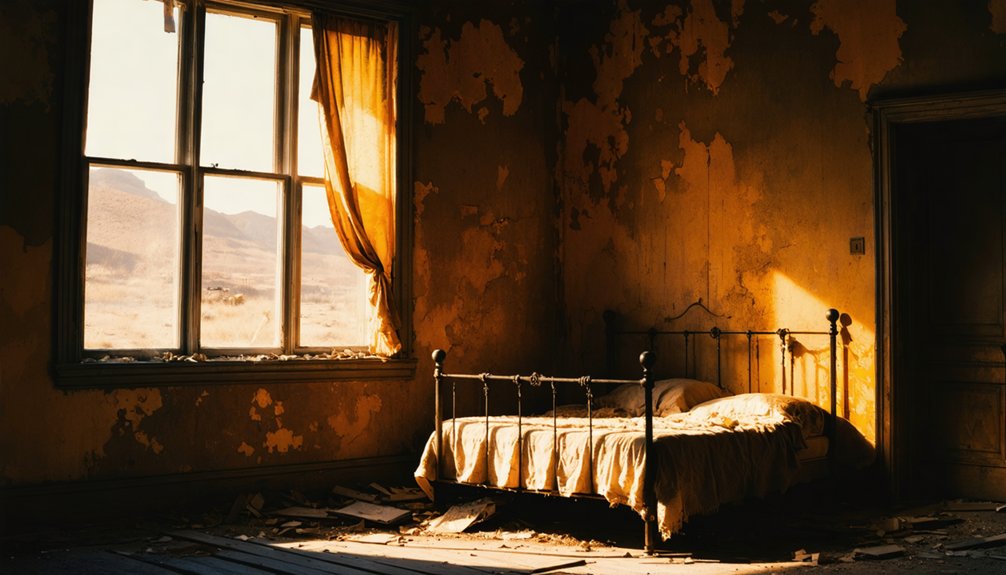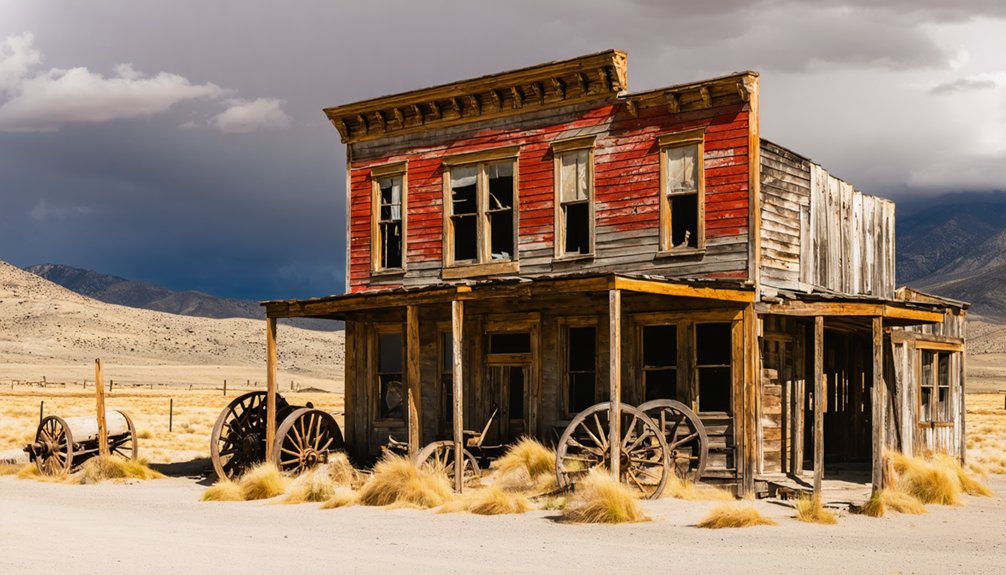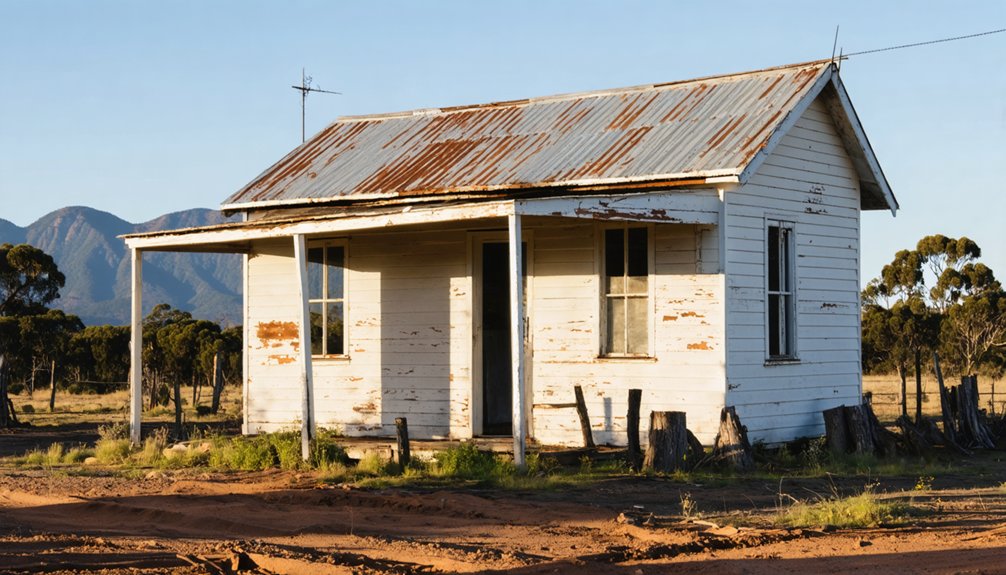
You’ll find over 200 abandoned settlements across eastern Australia, from Queensland’s Ballara copper town (peak population 1,000) to NSW’s Yerranderie silver-mining community. These ghost towns emerged when mineral deposits depleted, railways converted to diesel, or farms exceeded Goyder’s Line rainfall boundaries. Cooktown once housed 30,000 gold rush residents with 65 hotels, while Hill End sparked miner riots in 1851. Sites like Farina now operate restoration projects with volunteer stonemasons and archival research, while remote locations such as Mount Mulligan require careful expedition planning to explore further.
Key Takeaways
- Hill End and Hartley in NSW are urban-proximate ghost towns located 160-175 km from major cities, ideal for accessible visits.
- Cooktown in Queensland once supported 30,000 residents during the gold rush with 65 hotels before decline and a devastating 1918 fire.
- Farina in South Australia now houses a community restoration project with volunteers and operates a seasonal bakery for visitors.
- Yerranderie preserves historic silver-mining structures including the post office, general store, and bank from its 1899 prosperity period.
- Remote destinations like Arltunga require careful preparation, with satellite imagery review recommended before visiting vanished or deteriorated sites.
New South Wales Forgotten Mining Settlements
Archival records reveal New South Wales harbored dozens of mining settlements that thrived during Australia’s nineteenth and early twentieth-century resource booms before succumbing to economic collapse and abandonment.
You’ll find Yerranderie settlement exemplifies silver-mining prosperity from 1899, where British Protestant owners extracted wealth while Irish Catholic workers endured harsh conditions until WWI losses and strikes devastated operations by 1947.
Historic structures including the post office, general store, and bank remain carefully preserved at this authentic ghost town.
Joadja preservation showcases 1870s shale-oil extraction, housing 1,200 Scottish migrants until 1911’s abandonment.
Joadja’s crumbling infrastructure preserves the memory of 1,200 Scottish workers who extracted shale-oil before economic forces triggered complete abandonment in 1911.
Glen Davis operated 1940-1952, supporting 2,000 residents through wartime oil production.
Hill End marks the 1851 gold rush‘s earliest chapter, where diggers paid steep government fees that sparked riots. Similar patterns emerged in Western Australia, where Broad Arrow once housed over 2,400 people before declining to a single tavern.
Silverton’s 1880s silver strikes and Hartley’s ruins complete this landscape of resource-driven ambition and inevitable decline.
Queensland’s Deserted Outback Outposts
You’ll find Queensland’s ghost towns reveal distinct patterns of resource exploitation and geographical isolation that shaped their rapid rise and decline.
When examining Ballara’s copper operations, Betoota’s remote pastoral economy, and Cooktown’s gold rush infrastructure, archival records demonstrate how transportation limitations and mineral depletion determined settlement viability across the state’s inland regions.
These outposts, scattered from the coastal ranges to the Channel Country, represent Queensland’s experimental colonization of environments that proved economically unsustainable beyond initial extraction phases.
Mount Mulligan witnessed Queensland’s worst mining disaster in 1921 when coal mine explosions claimed 75 lives, marking a turning point in the state’s mining safety regulations.
Acland’s population fluctuated between 200 and 400 residents before the closure of Queensland’s oldest coal mine in 1984, ultimately leaving just one inhabitant by 2009.
Ballara’s Copper Mining Legacy
When railway tracks reached Ballara in 1914, the remote Queensland outpost transformed into an essential copper mining hub that would support operations at the higher-grade Wee MacGregor deposits located further inland.
The town’s copper transportation infrastructure connected Afghan camel trains from Bulonga with railway services moving ore to Kuridala’s smelters.
You’ll find Ballara heritage reflected in its extensive civic planning from 1913, which included:
- Store, hotel, baker, butcher, police station, and post office
- Ore transfer station linking tram and railway systems
- Three weekly trains during peak operations in May-June 1914
The Cloncurry field produced 63.2% of Queensland’s copper output by 1918, supporting 7,795 regional workers.
At its zenith, Ballara’s demountable buildings housed over 1,000 residents before the settlement’s rapid decline.
The tramway infrastructure included nine bridges and a tunnel, transporting approximately 15,000 tons of ore annually between 1915 and 1919.
Railway services ended in 1927, and the township emptied as Mount Isa’s massive reserves superseded these smaller operations.
Betoota’s Outback Isolation
Perched on a vast gibber plain 170 kilometres east of Birdsville, Betoota represents one of Queensland’s most isolated colonial outposts, established in 1887 when the Queensland Government designated the site as a customs post for stock tolls crossing the Channel Country.
This Betoota isolation didn’t prevent frontier development—three hotels, a police station, store, and post office emerged during the 1880s.
The settlement’s outback heritage persists through the sandstone Betoota Hotel, which operated twenty years without beer before closing in 1997.
You’ll find archival records showing the 1915 police station functioned until 1930, serving Karuwali country’s pastoral operations.
Today’s ghost town awakens twice yearly for gymkhanas and races, when visitors traverse 227 kilometres from Windorah to experience this remnant of Queensland’s frontier expansion across the gibber plains.
In addition to the lively events, exploring ghost towns near Moab region reveals fascinating remnants of history, where the echoes of past lives linger in the air. The stark beauty of the landscape adds a unique charm to these abandoned places, drawing adventurers and history enthusiasts alike. Each site tells a story, inviting exploration and reflection on the lives that once thrived in these now-silent communities.
Cooktown’s Gold Rush Ruins
James Venture Mulligan’s 1873 discovery of payable alluvial gold at Palmer River transformed Cooktown from a nascent port into Queensland’s second-largest township within a decade, generating nearly one million ounces through rudimentary sluicing pans and cradles during the initial five-year rush.
Cooktown history reveals a complex infrastructure supporting over 30,000 residents by century’s end:
- 65 registered hotels, 20 eating houses, and 32 general stores serviced miners
- 250 bullock teams transported supplies across three-week journeys to Palmer River
- Chinese prospectors re-worked European claims, becoming primary producers as reserves diminished
Gold mining operations extracted over 40 tons total before claims failed in the late 1880s.
The First World War drew many men into the Australian Army, further depleting Cooktown’s already declining population.
The 1918 fire destroyed remaining main street buildings, completing Cooktown’s transformation into Queensland’s most significant gold rush ruin. Town wells ran dry during the blaze, preventing effective firefighting efforts and allowing the flames to consume multiple commercial structures.
Tasmania’s Abandoned Industrial Relics
Tasmania’s industrial heritage survives in scattered ghost towns and abandoned settlements that mark the colony’s transformation from penal outpost to mining frontier.
You’ll find Port Arthur’s convict-era infrastructure alongside the Coal Mines Historic Site at Saltwater River, where re-offending prisoners worked Australia’s only surviving penal coal operations from 1833.
The west coast mining boom created short-lived communities like Pillinger, where North Mount Lyell Company built three wharves and extensive processing facilities before forest reclaimed the townsite after 1943.
Williamsford’s 500-meter Hercules haulage system still stretches toward Mt Read’s slopes, abandoned since 1986.
Dundas collapsed from 1,000 residents to desertion by 1895, though crocoite miners continue extracting Tasmania’s mineral emblem from these haunted hills.
Historic Ghost Towns of South Australia
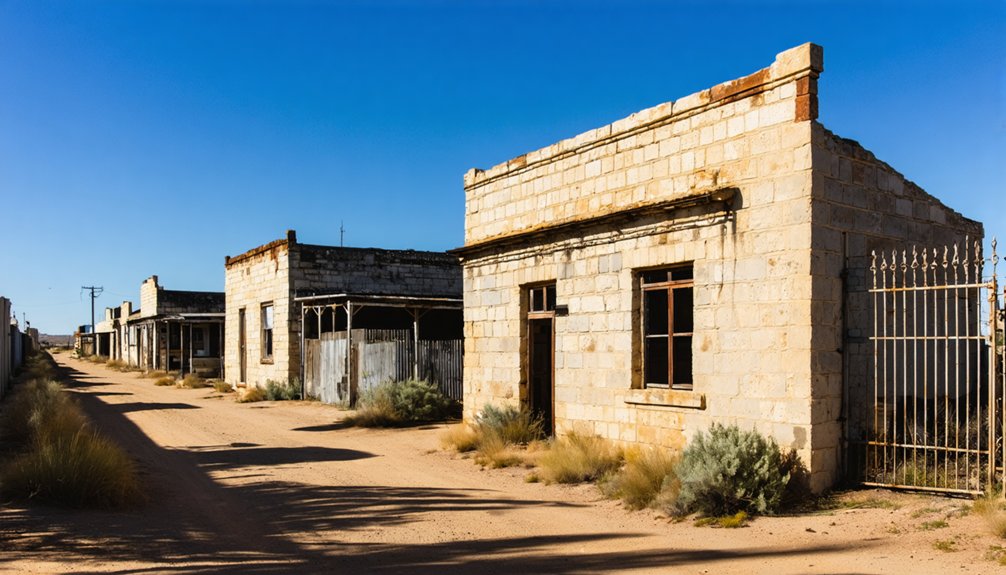
South Australia’s ghost towns trace a geography of miscalculation and resource exhaustion across landscapes where colonial optimism collided with environmental reality.
Where settler dreams met desert truth, abandoned towns map the collision between colonial ambition and an unforgiving landscape.
You’ll find settlements abandoned when wheat farming pushed beyond Goyder’s Line, when mineral deposits depleted, or when railways shifted to diesel technology.
The Farina Restoration project exemplifies preservation efforts, where volunteers rebuild structures and operate seasonal bakery services in a town drought destroyed.
Radium Hill Heritage sites remain inaccessible on pastoral leases, though Peterborough’s museum archives the uranium mining era.
Consider these patterns:
- Mining communities like Waukaringa and Inneston vanished with ore exhaustion
- Railway towns including Cook emptied when steam engines became obsolete
- Agricultural settlements failed where environmental limits exceeded ambition
Preservation and Restoration Efforts
Across Australia’s ghost towns, volunteer-led restoration initiatives demonstrate how grassroots movements preserve material heritage when government resources prove insufficient.
Farina’s transformation from abandoned settlement to restoration site exemplifies effective community engagement. Retired travelers, caravaners, and trades people converge annually, contributing specialized skills to stabilize deteriorating structures.
Professional stonemasons work alongside volunteers to preserve the post office, hotels, and underground bakery—architectural remnants of a town that once housed 600 residents. This model of historical preservation relies on archival research from South Australia State Library, guiding authentic restoration while documenting multicultural narratives visible in cemetery headstones.
You’ll find interpretive walking trails now enhance visitor understanding, transforming ruins into accessible heritage sites. Despite ongoing challenges from environmental deterioration, sustained volunteer participation prevents complete structural collapse.
Visiting Eastern Australia’s Ghost Towns Today
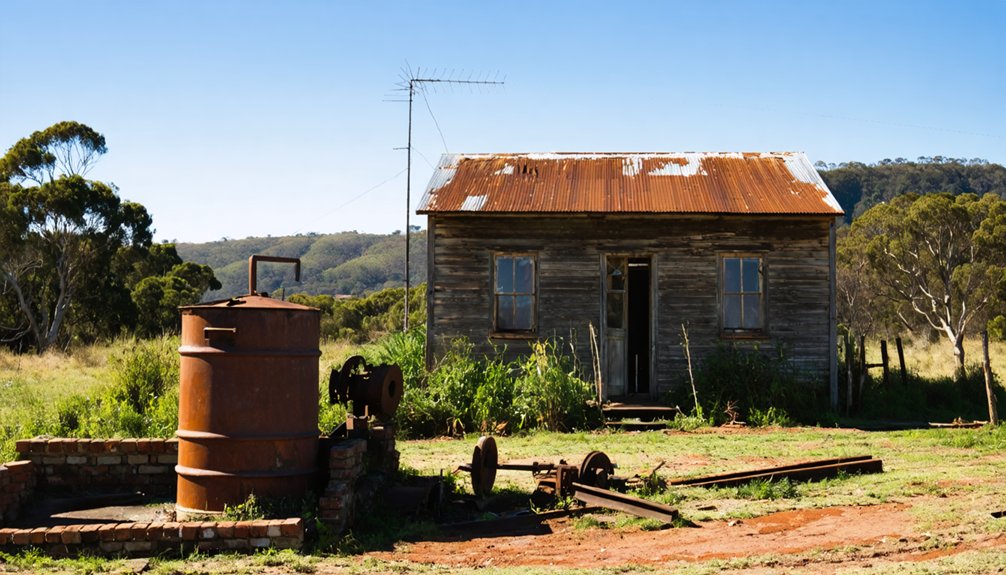
While preservation efforts maintain structural integrity at key sites, contemporary visitors encounter ghost towns ranging from accessible heritage destinations to remote ruins demanding significant planning.
Your ghost town exploration depends on location and accessibility:
- Urban-proximate sites: Hill End and Hartley offer multiple historic buildings within 160-175km of major cities, providing structured exploration without extensive bush navigation.
- Remote outback destinations: Arltunga and Mount Mulligan demand careful preparation for isolated conditions, while Stony Creek requires 8km bush travel from Talbot.
- Guided versus independent access: Goldfields Historical and Arts Society provides curated tours near Dunolly, whereas Gunbar necessitates extensive walking between scattered structures.
Essential visiting tips include satellite imagery review for vanished sites like Niagara, verification of remaining structures (Waukaringa retains none), and evaluating physical demands before departure.
Frequently Asked Questions
What Caused Most Ghost Towns in Eastern Australia to Be Abandoned?
Mining booms fueled rapid economic growth, but you’d see populations migrate away once resources depleted. Gold rushes in Hill End and Mathinna created temporary prosperity before inevitable economic decline triggered mass abandonment, leaving empty settlements behind.
Are There Any Ghost Towns From Industries Other Than Mining?
All roads don’t lead to mines. You’ll find timber towns like Poimena and railway settlements such as Pillinger Port dotting Eastern Australia’s landscape. These communities thrived on logging operations and transportation networks before abandonment claimed them.
Which Eastern Australian Ghost Town Is the Best Preserved Today?
You’ll find limited evidence identifying a single best-preserved eastern Australian ghost town, as most lack Gwalia’s restoration investment. Historical significance varies regionally, though systematic preservation efforts remain scarce compared to western counterparts.
Can Visitors Legally Enter Buildings in These Ghost Towns?
You’ll find the red carpet rolled out differently at each site—Walhalla and Arltunga permit building exploration without legal restrictions, while East Pillinger’s ruins allow self-guided access. Visitor safety remains your responsibility, as archival records confirm minimal supervision exists.
How Long Did Most Gold Rush Towns Survive Before Abandonment?
Most gold rush towns survived no more than a decade before abandonment, though gold rush timelines varied. You’ll find population decline accelerated once alluvial deposits exhausted, with archival records showing only exceptional sites like Sofala enduring permanently.
References
- https://www.australiangeographic.com.au/history-culture/2016/06/australias-top-10-ghost-towns/
- https://www.odysseytraveller.com/articles/western-australia-ghost-towns-goldfields/
- https://ariverofroses.com/abandoned-ghost-towns-australia/
- https://en.wikipedia.org/wiki/List_of_ghost_towns_by_country
- https://www.loveexploring.com/gallerylist/90787/australias-eeriest-abandoned-towns-and-villages
- https://www.youtube.com/watch?v=r5erDSnMdxk
- https://www.nationalparks.nsw.gov.au/things-to-do/historic-buildings-places/yerranderie-private-town
- https://www.youtube.com/watch?v=7xbAo3_YdYU
- https://www.youtube.com/watch?v=z-gWSxwiPYE
- https://en.wikipedia.org/wiki/New_South_Wales_gold_rush