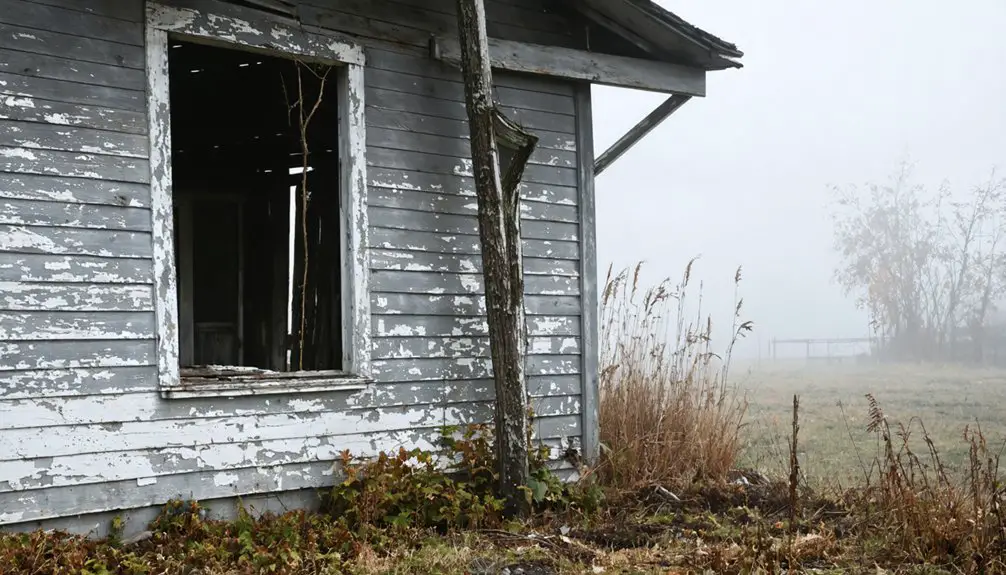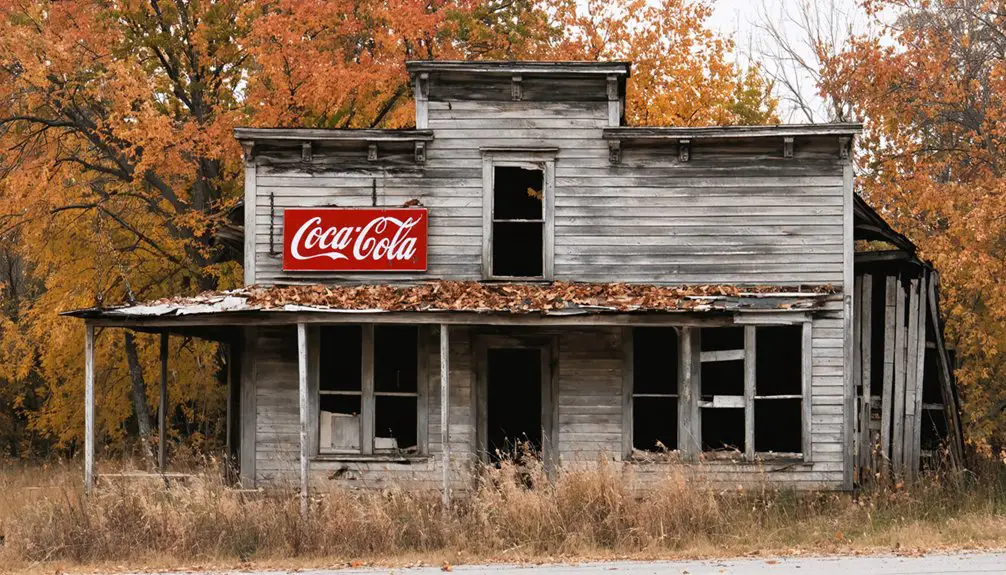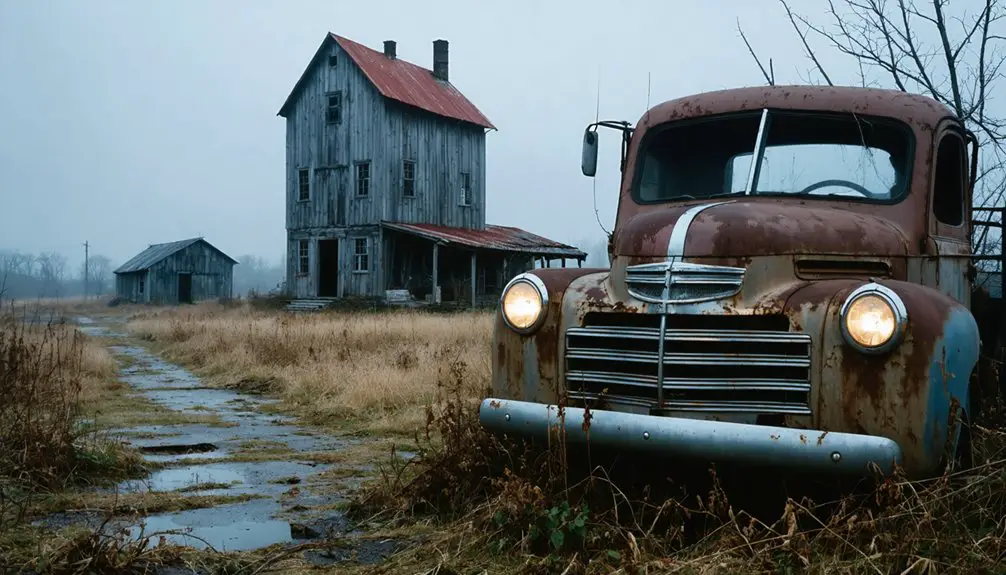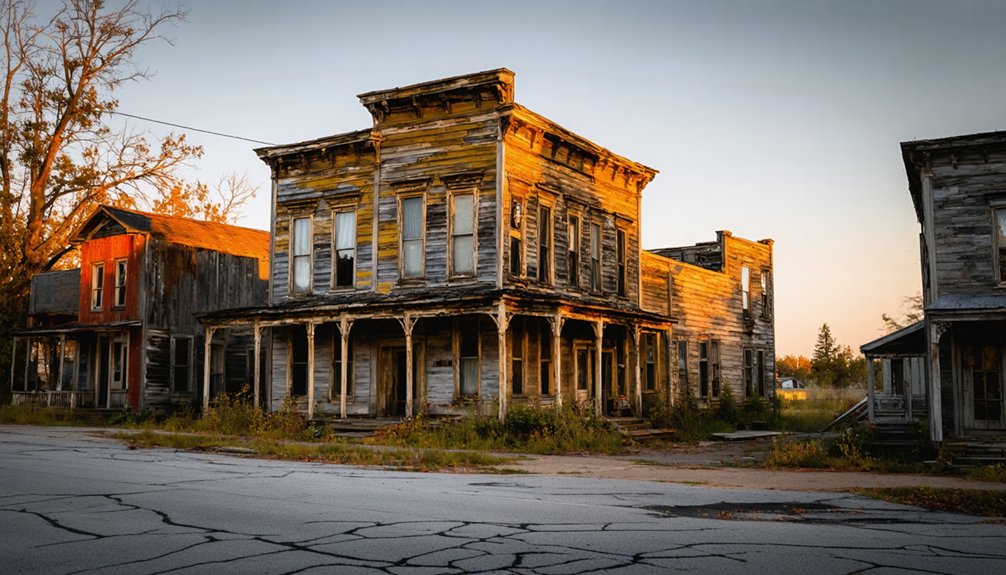
You can’t actually sleep inside Michigan’s ghost towns, but you’ll find authentic accommodations nearby that serve as perfect base camps for exploration. Birch Lodge, a restored 1911 tuberculosis sanitarium between Trout Lake and Little Trout Lake, offers themed rooms just minutes from abandoned sites. From here, you’ll access Central Ghost Town‘s 13 restored houses from the 1890s copper era, Fayette Historic State Park‘s preserved iron furnaces and worker homes, and North Unity‘s logging remnants within Sleeping Bear Dunes—each revealing Michigan’s mining and timber heritage through weathered structures and interpretive exhibits.
Key Takeaways
- Birch Lodge, a restored 1911 tuberculosis sanitarium near Trout Lake, offers 12 themed rooms and eight lakeside motel units since 2019.
- Central Ghost Town in Keweenaw Peninsula provides self-guided tours through 13 restored houses but operates as a day-visit historical site only.
- Fayette Historic State Park along Snail Shell Harbor is accessible year-round but functions as a preserved industrial ghost town without overnight accommodations.
- North Unity Ghost Town within Sleeping Bear Dunes features historic cabins and schoolhouses but serves as a day-exploration heritage site.
- Most Michigan ghost towns are preserved for day visits; nearby historic lodges like Birch Lodge offer overnight stays for exploration bases.
Central Ghost Town: Step Back to the 1890s Mining Era
Deep in Michigan’s Keweenaw Peninsula, the abandoned settlement of Central stands frozen in time, its weathered buildings whispering stories of copper-fevered dreams and hardscrabble frontier life.
Central’s weathered structures stand as silent witnesses to Michigan’s copper boom, preserving the raw ambition of frontier mining life.
You’ll discover authentic mining history as you wander through 13 restored houses and the 1868 Methodist church on this 38-acre site.
From 1855 to 1898, Central’s miners extracted 52 million pounds of copper from the fissure vein below Greenstone Bluff, making it the most productive operation of its kind.
The community heritage remains palpable in every corner—from the three-story schoolhouse to homes built by Cornish immigrants starting in 1856.
Today’s Keweenaw County Historical Society preserves this settlement where 1,200 residents once thrived, offering you unrestricted exploration of Michigan’s copper rush era through self-guided tours and period antiques. The site operates a visitors center in a preserved old house, providing educational context for your journey through this historic mining community. Each year on the last Sunday of July, the ghost town comes alive again as descendants gather at the Methodist church for a reunion tradition that began in 1907.
Fayette Historic State Park: A Complete Ghost Town Experience
Along the rocky shores of Snail Shell Harbor, where turquoise waters lap against limestone cliffs, Fayette Historic State Park preserves Michigan’s most intact industrial ghost town.
From 1867 to 1891, this iron smelting community housed 500 residents and produced 500 million pounds of iron ingots before closure left it frozen in time.
You’ll explore over 20 original structures through artifacts conservation and powerful storytelling techniques that bring the 1890s to life:
- Massive stone furnaces still loaded with charcoal from their final firing
- Workers’ homes furnished with period dishes, beds, and personal belongings
- Beehive-shaped kilns and the superintendent’s house overlooking the harbor
- Machine shop and town hall with interpretive exhibits
Visit during October when vibrant fall foliage creates an atmospheric backdrop that enhances the town’s surreal, spooky character.
Camp overnight, wander dirt roads at dusk, and experience authentic solitude where industry once roared.
The park welcomes visitors 365 days a year, allowing you to explore this haunting landscape in every season from snowy winters to warm summers.
Birch Lodge: Your Gateway to Michigan’s Abandoned Past
Between the pristine waters of Trout Lake and Little Trout Lake, the 10,000-square-foot Birch Lodge stands as your comfortable basecamp for exploring Michigan’s forgotten places.
This 1911 tuberculosis sanitarium-turned-resort underwent a $1 million restoration in 2018, earning federal historic preservation tax credits for authentic local architecture restoration. You’ll discover original birch flooring, vintage-style furnishings, and Michigan’s second-largest front porch stretching 100 feet along 1,200 feet of private beach.
Choose from 12 themed rooms in the main inn or eight lakeside motel units with panoramic views.
The property places you within an hour’s drive of abandoned ghost towns, forgotten lighthouses, and shipwreck sites. The area surrounding the lodge has been inhabited since approximately 500 A.D., with archaeological evidence of Native American camps revealing stone tools, pottery, and flints around Trout Lake. The lodge welcomed its first guests in June 2019, marking a new chapter for this historic property. After exploring the Upper Peninsula’s haunting remnants, you’ll return to this meticulously preserved retreat where history meets modern comfort in Michigan’s wilderness.
Ozark Ghost Town: Modern Amenities Near Historic Sites
Hidden among the forests of Moran Township in Mackinac County, Ozark’s weathered town sign marks what little remains of an 1875 lumber settlement that once thrived along the Duluth, South Shore and Atlantic Railroad corridor. Unlike preserved ghost towns, Ozark offers no overnight accommodations within its boundaries—you’ll need to base yourself in Saint Ignace or Sault Ste. Marie for modern amenities while exploring this atmospheric site.
What you’ll discover:
- Railroad grade ruins cutting through wilderness, revealing transportation infrastructure from the 1882 arrival.
- Handful of structures, with some rehabilitated as seasonal residences.
- Historic charcoal kiln sites from Martel Furnace Company operations (now vanished).
- Facebook archive documenting the community’s lumber-era prosperity through vintage photographs.
Historic preservation here means nature reclaiming civilization—a raw, unfiltered glimpse into Michigan’s abandoned past. The town’s post office operated from 1884 until its closure in 1966, marking the end of an era for this once-bustling settlement. Originally named Johnson when founded, the community later adopted the Ozark moniker as it developed into a regional lumber hub.
North Unity Ghost Town: Sleeping Bear Dunes’ Logging Legacy
You’ll find North Unity’s logging legacy preserved within Sleeping Bear Dunes National Lakeshore, where remnants of an 1881 sawmill operation tell the story of unsustainable timber harvesting.
The original settlement site stands barren today, but you can visit John Shalda’s restored log cabin and the old schoolhouse along M-22 at the relocated community of Shalda Corners. The community was founded in 1855 by Bohemian immigrants seeking a new life in the Michigan wilderness.
These structures offer tangible connections to the Bohemian settlers who transformed this wilderness into a thriving lumber town before forest fires and resource depletion forced its abandonment. The Plat River served as a vital transportation route, where workers floated logs downstream to the sawmill for processing into lumber.
Historic Logging Camp Structures
Deep within what’s now Sleeping Bear Dunes National Lakeshore, the logging camps of North Unity once hummed with the rhythmic sounds of axes and sawblades transforming Michigan’s virgin forests into lumber. These timber harvesting operations created a self-sufficient wilderness infrastructure that sustained loggers through brutal winters.
The camps featured:
- Massive sleighs hauling 3,000 board feet along 14-mile iced roads from Kasson Township.
- The Kropp farm boarding station where horses rested between grueling hauls on M-22.
- Two-story steam-powered sawmill on Otter Creek with dammed mill pond and log ramp.
- Upstream river camps floating timber down Platte River to Platte Lake.
Around evening campfire stories, loggers shared tales of conquering Michigan’s wilderness—before 1871’s devastating fires erased their legacy forever.
Restored Cabin Viewing Locations
Where can modern visitors witness the tangible remnants of North Unity‘s pioneering spirit? You’ll find the restored 1856 log schoolhouse just north of M-22, accessible via the Sleeping Bear Heritage Trail near Narada Lake’s wooden bridge. This authentic Czech and Bavarian structure showcases traditional dove-tail joinery and horizontal log construction.
John Shalda’s original cabin remains visible along M-22, while St. Joseph’s Church stands on County Road 669, earning National Register recognition in 1992. These preserved sites offer exceptional sunset photography opportunities across open farmland vistas.
The Heritage Trail connects these locations, winding through terrain perfect for wildflower hikes during spring and summer months. The National Park Service maintains interpretive exhibits throughout, letting you explore this Bohemian settlement’s story at your own pace.
White City Ghost Town: Exploring Copper Country’s Forgotten Community
Brilliant white buildings once gleamed against the rugged Keweenaw Peninsula landscape, drawing thousands of visitors to White City’s amusement park in the early 1900s. You’ll discover this ghost town’s mining history stretches back millennia, with Ojibwe communities extracting copper long before the 1840s boom created unprecedented regional wealth.
The resort emerged from Copper Country’s prosperity, featuring attractions that rivaled Chicago’s famous expositions.
Today’s remnants include:
- Crumbling powerhouse foundations where a roller coaster once thrilled riders
- Weathered cottage structures available for adventurous camping
- Sandstone walkways from nearby Jacobsville quarries
- Wildflower-covered pavilion sites where dance halls entertained miners
This Native heritage site transformed from indigenous territory to bustling resort before WWI ended the revelry. You’re free to explore these haunting ruins alongside towering trees reclaiming what prosperity built.
Frequently Asked Questions
What Is the Best Season to Visit Michigan’s Ghost Towns?
Summer and fall offer you the best ghost town experiences, with ideal seasonal weather patterns for exploration. You’ll capture stunning photography during fall’s golden light, while summer provides comfortable temperatures and full accessibility to Michigan’s abandoned sites.
Are Michigan Ghost Towns Safe for Children to Explore?
Michigan’s ghost towns are absolutely treacherous for kids. Haunted legends aside, abandoned structures pose serious dangers—rotted floors, open mine shafts, and crumbling foundations threaten safety. You’ll find family-friendly guided tours at places like Ozark, but unsupervised exploration risks disaster.
Do I Need Special Permits to Photograph at Ghost Town Sites?
You won’t need special permits for casual photography at Michigan’s ghost towns. Historic preservation sites like Fayette and Keweenaw locations welcome standard photography during open seasons. However, check photography regulations if you’re planning commercial shoots or using drones.
What Should I Pack for an Overnight Stay at a Ghost Town?
Pack campsite essentials like a sleeping bag, tent, and portable stove for remote locations. Don’t forget safety gear including a first aid kit, bear spray, offline maps, and headlamp—cell service is unreliable in these isolated areas.
Are Pets Allowed at Michigan Ghost Town Accommodations?
Exploring pet policies is like exploring uncharted territory—these accommodation options don’t explicitly mention furry companions. You’ll need to contact each location directly to discover if your four-legged adventure buddy can join your ghostly Michigan getaway.
References
- https://www.michiganhauntedhouses.com/real-haunts/hotels.aspx
- https://www.orbitz.com/Ozark-Ghost-Town-Hotels.0-l6338197-0.Travel-Guide-Filter-Hotels
- https://www.visitkeweenaw.com/blog/post/our-top-7-keweenaw-ghost-towns-to-explore/
- https://www.nps.gov/slbe/learn/historyculture/ghosttowns.htm
- https://www.birchlodge.com
- https://www.uptravel.com/things-to-do/attractions/fayette-historic-state-park-townsite/
- https://www.michigan.org/article/trip-idea/incredibly-haunted-places-upper-peninsula
- https://www.vrbo.com/en-ca/vacation-rentals/united-states/michigan/chippewa-county/superior/fibre/ozark-ghost-town
- https://www.smithsonianmag.com/history/once-a-year-this-19th-century-michigan-ghost-town-comes-to-life-180982695/
- https://lostinmichigan.net/central-mine-ghost-town/