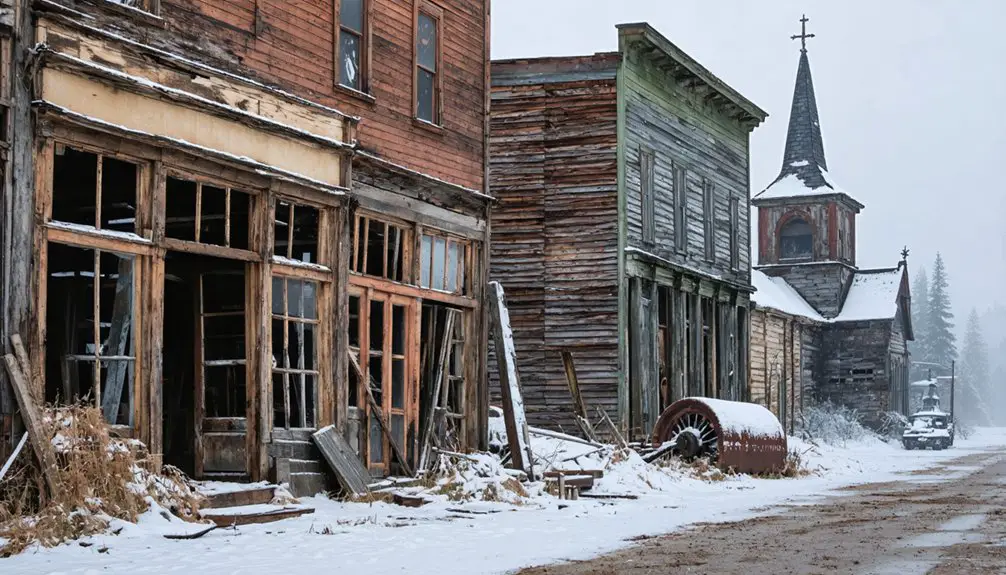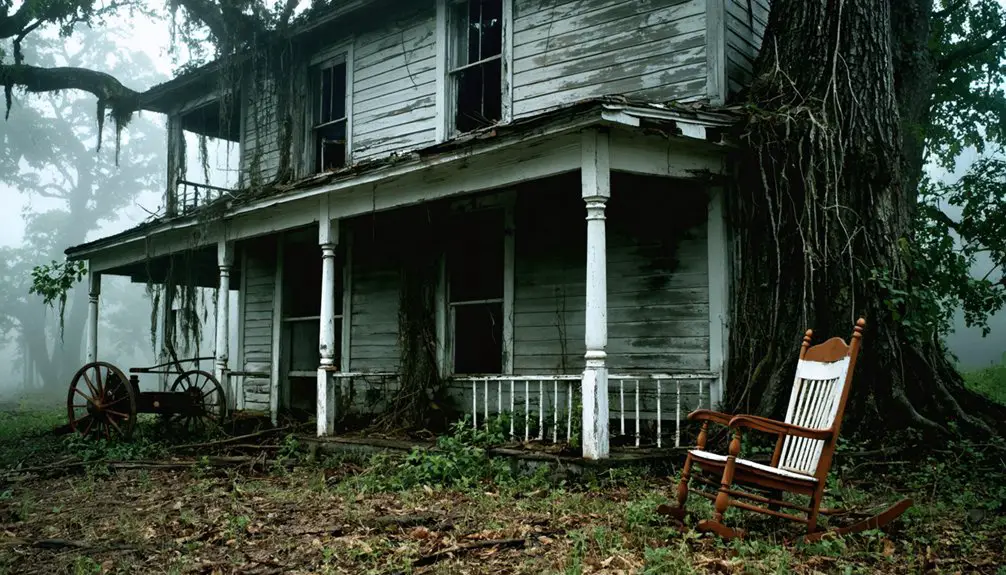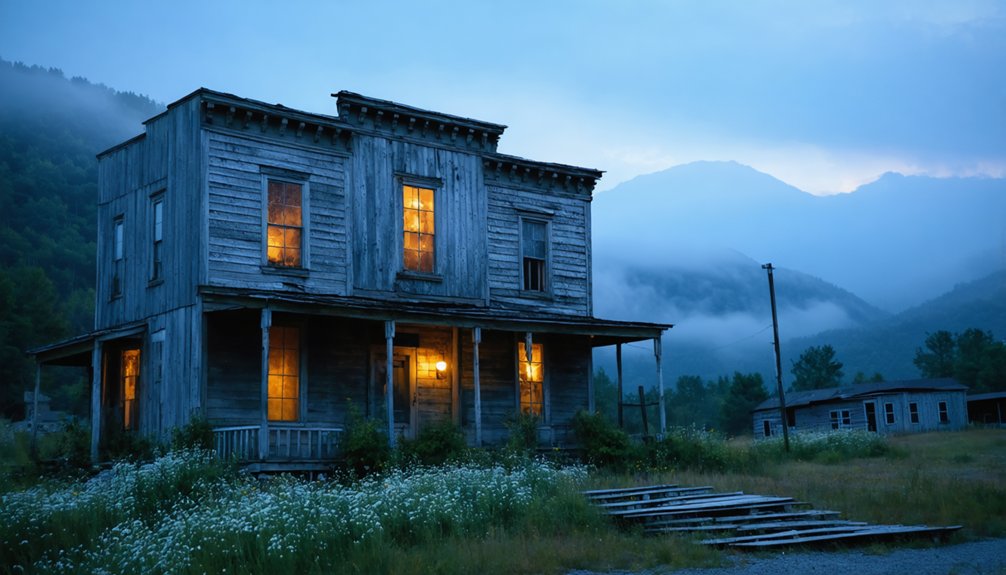
You can sleep overnight at Erskine Ghost Town, where tent platforms sit among crumbling coal mine ruins and operational machinery, or book a room at Glen Ferris Inn, where “the Colonel” still roams since 1815. Thurmond’s National Park Service grounds let you camp near abandoned depot buildings where only five residents remain, while the Blennerhassett Hotel’s Room 409 offers furniture-moving spirits and fragmented portraits. Each location provides authentic ghost town atmosphere with documented paranormal activity, preserved industrial structures, and detailed histories that’ll transform your understanding of Appalachian heritage.
Key Takeaways
- Erskine Ghost Town offers tent platforms for camping among coal town ruins, waterfalls, and preserved underground tunnels managed by ACE Adventure Resort.
- Glen Ferris Inn provides 15 guest rooms overlooking Kanawha Falls in a historic 1815 building haunted by “the Colonel.”
- The Blennerhassett Hotel in Parkersburg features overnight lodging in West Virginia’s oldest haunted hotel with reported ghostly encounters throughout.
- The General Lewis Inn in Lewisburg offers antebellum-style rooms furnished with 1800s antiques and ties to Civil War history.
- Thurmond allows exploration as a preserved National Park Service site, though overnight stays require nearby camping arrangements rather than on-site lodging.
Glen Ferris Inn: Meet the Friendly Colonel
Perched on the banks of the Great Kanawha River, the Glen Ferris Inn has welcomed weary travelers since 1815—and some guests, it seems, have never checked out.
You’ll find the most famous resident is “the Colonel,” a polite Confederate soldier who roams the halls of this historical preservation gem. Staff report harmless encounters with this gentlemanly ghost, possibly Aaron Stockton himself, the inn’s original owner and War of 1812 veteran. Stockton was the grandson of Richard Stockton, Signer of the Declaration of Independence, connecting this haunted inn directly to American history.
Book one of fifteen rooms and experience this paranormal hotspot firsthand. The building’s Federal-style architecture lies beneath an elegant 1910 Classical Revival renovation, adding layers of history to your stay. Between ghost hunting, you’ll enjoy stunning views of Kanawha Falls and explore nearby New River Gorge National Park.
The inn’s twin dining rooms serve excellent meals, making it among West Virginia’s most unique tourist attractions—where history, hospitality, and the supernatural converge along historic Route 60.
Erskine Ghost Town: Camp Among the Coal Mining Ruins
While most ghost towns force you to admire their ruins from behind fences, Erskine invites you to pitch your tent among them. This abandoned coal town along the New River lets you sleep where miners once lived, with crumbling foundations and abandoned machinery scattered throughout your campsite.
Sleep among the ruins where miners once worked—Erskine turns an abandoned coal town into your authentic camping experience.
You’ll explore underground tunnels and building remnants that ACE Adventure Resort has preserved as an authentic overnight experience.
Set up on provided tent platforms, then wander freely through the ruins while waterfalls cascade down surrounding mountainsides.
Across the river, Thurmond’s ghost town completes the haunting landscape. The Erskine Company once controlled 8,600 acres here before coal’s decline emptied these mountains. The family-owned enterprise operated from its Staunton, Virginia headquarters until its dissolution in 1996.
Now you’ve got the freedom to explore this boom-and-bust history on your own terms, sleeping where prosperity turned to dust. The campsite features a developed kitchen area with scenic views overlooking the ancient New River.
Thurmond: America’s Smallest Ghost Town
Five residents call Thurmond home today—down from the 500 who once crowded this narrow strip of land where the railroad tracks pin buildings against the mountainside.
You’ll find historical preservation efforts breathing life into this National Park Service site, where the restored train depot now welcomes Amtrak passengers and curious explorers.
The town’s haunted legends draw ghost hunters twice yearly, armed with EMF meters and spirit boxes to investigate reported black mass sightings in hillside houses.
What Makes Thurmond Unforgettable:
- The Banker’s Club restaurant operates inside the former National Bank building—once among West Virginia’s wealthiest
- Active railroad tracks still rumble through town, just as they did when 75,000 passengers passed through annually
- You’re walking the same streets where “Big John” Ash patrolled against ruffians in America’s “wild west” coal boom era
- The Dunglen Hotel once hosted the longest poker game in history, running continuously for 14 years
- A local newspaper once described the rowdy town’s contrast starkly: the only difference between hell and Thurmond is a river running through it
Blennerhassett Hotel: West Virginia’s Oldest Haunted Lodging
You’ll find West Virginia’s oldest haunted lodging rising five stories on Parkersburg’s riverbank, where the Blennerhassett Hotel has sheltered guests since 1889. I remember pressing my palm against the grand staircase’s polished bannister, imagining oil barons who climbed these same spirals before vanishing into rooms where unexplained footsteps still echo at midnight. The hotel’s visionary creator, Colonel William Nelson Chancellor, served as both mayor and bank president, integrating his banking operations directly into the hotel’s daily business. The building took six years to construct, a testament to the ambition of creating West Virginia’s most opulent accommodation of its era. Visit during off-peak weekdays when room rates drop and you’re more likely to encounter the lingering presences that survived fires, neglect, and over a century of Appalachian winters.
Built in the 1800s
Standing at the corner of Market and Fourth Streets since 1889, the Blennerhassett Hotel emerged during Parkersburg’s oil and gas boom as Colonel William Nelson Chancellor’s crowning achievement—a Queen Anne masterpiece designed to outshine every lodging establishment in West Virginia.
The vintage architecture tells stories through ornate details: specialists from Cincinnati crafted intricate fresco work while local artisans installed cutting-edge electric elevators and steam heating. You’ll discover haunted legends around every corner of this five-story monument to Gilded Age excess.
Chancellor spared no expense creating luxury accommodations:
- 50 guest rooms surrounding a grand spiral staircase
- Electric lighting installed before most of the city had power
- Fifth-floor kitchen designed to minimize fire risks
Listed on the National Register of Historic Places since 1982, this restored Victorian sanctuary offers adventure-seekers authentic encounters with history. The hotel takes its name from Harman and Margaret Blennerhassett, whose Palladian-style mansion once graced an Ohio River island before their involvement with Aaron Burr’s controversial expedition forced them to flee. The hotel has welcomed prominent political figures including John F. Kennedy during his 1960 Parkersburg visit and Hillary Clinton with her daughter Chelsea.
Industrial Era Hauntings
Beyond the architectural splendor and gilded fixtures, something far more unsettling lingers within the Blennerhassett’s walls—a collection of restless spirits who’ve refused to check out for over a century.
You’ll encounter William N. Chancellor himself, whose cigar smoke precedes his appearances on upper floors. Remove his portrait, and disturbances escalate until historical preservation prevails and it’s returned.
In Room 409—West Virginia’s most haunted—furniture relocates itself while a bowler-hatted figure materializes. One guest reported an invisible force attempting strangulation.
Local legends describe a 1920s newspaper boy tugging employees’ clothing near the kitchen, while a smiling bellboy in a blue cape vanishes after greeting startled visitors.
The ballroom hosts phantom vaudevillians rearranging table settings, and microphones capture disembodied voices greeting unsuspecting staff.
Surviving History’s Disasters
When Colonel William Nelson Chancellor broke ground in 1883, he envisioned more than West Virginia’s grandest hotel—he was building a monument to an era of unprecedented wealth.
Six years later, the Blennerhassett opened with revolutionary amenities: electric elevators, gas lighting, and steam heat serving oil barons who’d struck it rich.
But surviving meant weathering disasters. The 1979 fire nearly destroyed everything, reducing this Queen Anne masterpiece to vacant ruins.
Historical preservation efforts rescued it from demolition, earning National Register status in 1982.
Disaster recovery highlights:
- 1986 restoration brought original grandeur back
- 2002-2006 overhaul modernized while preserving character
- Current owners maintain century-old craftsmanship
You’ll find West Virginia’s oldest operating hotel standing defiantly, its five stories testament to resilience.
Those reported ghosts? They’ve watched this survivor refuse to disappear.
General Lewis Inn: Triple the Ghosts, Triple the Adventure
Tucked into the heart of Lewisburg, the General Lewis Inn doesn’t just offer a place to rest your head—it promises an encounter with West Virginia’s layered past, where antebellum elegance meets sobering historical truths. You’ll sleep among 1800s antiques in rooms designed by Walter Martens, the architect behind the Governor’s Mansion, while hand-carved mantels from Sweet Springs whisper stories of bygone eras.
This historical architecture shelters darker memories: the slave quarters behind the east wing, where Uncle Reuben was hanged in 1861, and Confederate battle lines once stood. The ghostly legends aren’t mere marketing—they’re woven into foundation stones likely fashioned by enslaved hands.
After exploring vacant rooms, you’ll savor scratch-made Southern cuisine in the Jefferson Dining Room, contemplating freedom’s complicated journey.
Nuttallburg: Exploring the Abandoned Mining Complex
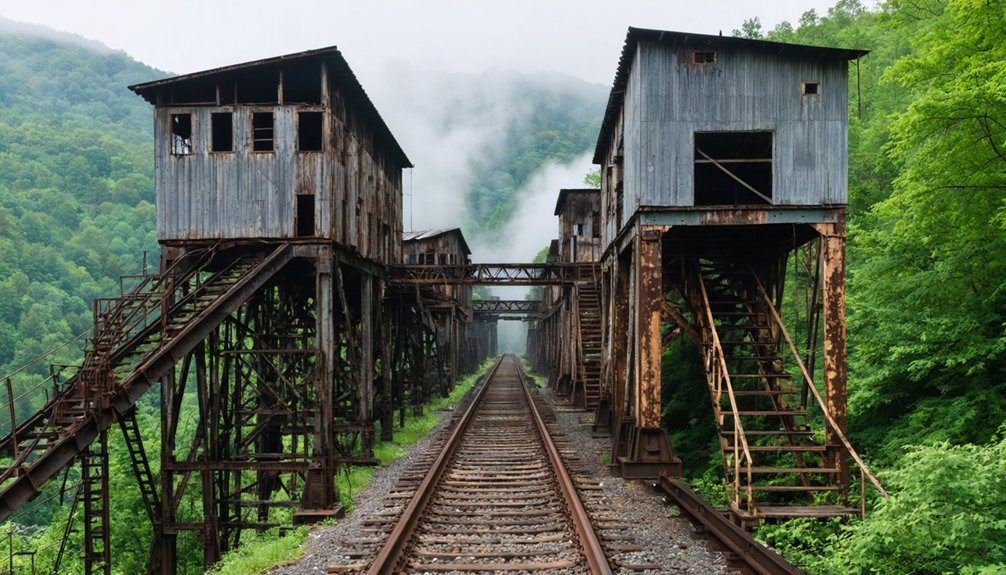
From haunted inns to industrial graveyards—West Virginia’s ghost towns tell stories through different specters. Nuttallburg’s abandoned mining complex stands as West Virginia’s most intact coal town, where historical preservation meets raw adventure.
You’ll navigate a treacherous drive into New River Gorge (four-wheel drive recommended) to reach structures frozen since 1958’s abrupt closure.
The National Park Service’s stabilization work lets you explore genuine industrial architecture:
- Massive conveyor system stretching 500 feet down the gorge
- Headhouse, tipple, and 80 coke ovens clinging to impossible terrain
- Seldom Seen neighborhood where hastily abandoned housewares remain scattered
Unlike sanitized museums, Nuttallburg demands physical engagement—scrambling slopes where 342 residents once lived.
Henry Ford’s modernization legacy persists in steel structures overlooking New River, offering unfiltered access to Appalachia’s coal heritage.
Planning Your Ghost Town Road Trip Through West Virginia
Your ghost town adventure deserves careful planning—I learned this the hard way after arriving at Thurmond in pouring rain with dead flashlight batteries.
Start by mapping a route that connects multiple sites like Erskine and Glen Ferris Inn. Ideally, plan your trip during spring or fall when overgrown paths are more manageable.
Doing so will help you avoid both summer’s oppressive heat and winter’s impassable roads.
Pack essential gear including a reliable flashlight, extra batteries, a first-aid kit, and if you’re hoping to catch paranormal evidence, consider borrowing investigating equipment like the kind provided at Erskine’s campsite.
Map Your Haunted Route
Whether you’re a skeptic or a true believer, plotting a ghost town road trip through West Virginia demands more strategy than simply following your GPS to the nearest abandoned coal camp. The state’s paranormal hotspots cluster along distinct corridors where local ghost legends and haunted folklore converge with striking mountain scenery.
Start building your route around these proven paths:
- Midland Trail Route 60 connects New River Gorge’s Erskine ruins to Glen Ferris Inn, where the bearded Colonel still roams
- Northern Loop via Route 219 links Harpers Ferry’s spectral sightings to Huttonsville’s haunted bed and breakfast
- Central Paranormal Corridor stretches from Weston’s Trans-Allegheny Asylum through Morgantown’s Hotel Morgan
Download the digital passport system to collect check-ins and disclose exclusive prizes as you traverse these ghost-laden backroads.
Best Seasons to Visit
Once you’ve mapped your haunted route through West Virginia’s ghostly corridors, timing becomes your most powerful planning tool. Late spring through early fall delivers ideal conditions—clear roads, operational facilities, and comfortable exploration weather.
Summer brings extended daylight for maximum discovery time, though you’ll share the experience with peak-season crowds.
Spring and fall offer solitude seekers milder temperatures and intimate encounters with abandoned structures, especially during September’s golden foliage.
Winter’s snow transforms these ghost towns into dangerous territory requiring specialized vehicles and survival skills.
Visitor tips: Download maps before departing since cell service vanishes in remote locations. Check facility schedules online—some sites maintain weekend-only hours during shoulder seasons.
Seasonal weather dictates your freedom here; respect nature’s boundaries or risk becoming another cautionary tale whispered among the ruins.
Essential Ghost Hunting Gear
While documenting paranormal activity in West Virginia’s crumbling structures might seem like Hollywood fantasy, serious investigators rely on specific equipment that separates compelling evidence from wishful thinking. Your historical preservation efforts require reliable tools that capture both architectural decay and unexplained phenomena.
Essential gear for overnight investigations:
- Digital cameras with night vision document apparitions while capturing photography techniques that reveal structural details lost to time
- EMF meters and infrared thermometers detect electromagnetic fluctuations and temperature drops in abandoned rooms
- Audio recorders capture EVP responses echoing through forgotten hallways
Pack extra batteries, weatherproof notebooks, and sturdy flashlights.
I’ve learned that comfortable boots matter more than expensive gadgets when you’re exploring unstable floorboards at 2 AM. Your smartphone doubles as backup equipment, keeping you connected while chasing shadows through West Virginia’s abandoned past.
What to Expect During Your Haunted Overnight Stay
As darkness falls over West Virginia’s abandoned coal towns, your haunted overnight stay transforms from curiosity into visceral experience. You’ll sleep on tent platforms overlooking the New River, where full-body apparitions of miners materialize among crumbling foundations.
Historical preservation meets adrenaline when you’re handed paranormal equipment to communicate with spirits lingering in these tourist attractions.
Expect voices echoing through the woods at Erskine’s abandoned structures, strange lights piercing the campground darkness, and the unsettling sensation of being watched.
Your night includes dinner riverside before setting out on scavenger hunts through haunted trails, collecting clues about ancient curses.
At Glen Ferris Inn, the Colonel’s friendly presence closes doors throughout your stay.
Come morning, costumed characters serve breakfast—assuming you’ve survived the supernatural encounters intact.
Best Times to Visit West Virginia’s Ghost Towns
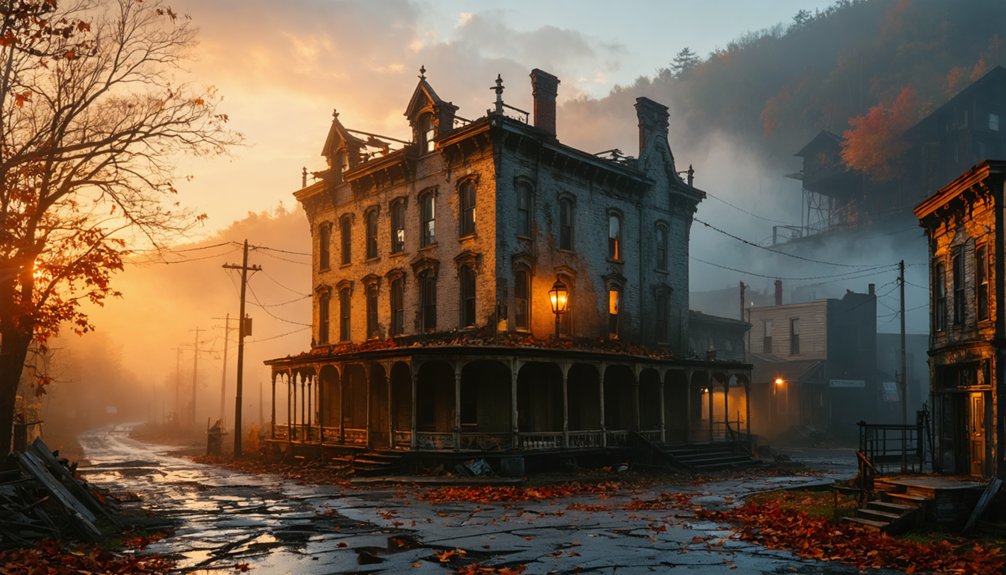
Your calendar choice dramatically shapes which ghost towns reveal their secrets. Spring’s mild temperatures let you explore Nuttallburg’s mine complexes without crowds, while fall’s vibrant foliage adds atmosphere to folklore traditions surrounding abandoned coal camps.
Summer offers extended daylight for investigating Winona’s structures and ideal river access to Thurmond’s empty storefronts.
Seasonal highlights include:
- March-November: Ghost tours run regularly in Charles Town, with October expanding to six nights weekly for urban legends enthusiasts
- Summer peaks: Longest days support paranormal equipment setups at haunted campsites with comfortable overnight temperatures
- Fall adventures: Dry trails improve access to remote sites while special events like Nightmare in the Gorge offer curated experiences
You’ll find year-round paranormal investigations at Trans-Allegheny, though spring through fall provides unrestricted access to mountainous ghost town regions.
Essential Gear for Ghost Town Camping and Exploration
When I explored Thurmond after sunset last October, my headlamp died just as I reached the crumbling depot—a mistake I’ll never repeat in these remote hollows where cell service vanishes and the nearest help sits miles away.
Beyond your standard camping setup of weatherproof shelter and warm sleeping gear, ghost town exploration demands reliable orientation tools, sturdy boots for traversing debris-filled structures, and proper lighting that won’t quit when you’re deep inside abandoned coal tipples.
If you’re drawn to the paranormal side of West Virginia’s deserted towns, you’ll want specialized equipment like EMF detectors and digital recorders alongside your survival essentials.
Before you step through the sagging doorframe of an abandoned coal town church or duck under the rotted beams of a forgotten company store, you’ll need gear that stands between you and serious injury. Historical preservation demands respect for crumbling structures, while wildlife conservation means you’re sharing these spaces with creatures reclaiming what civilization left behind.
Your essential loadout:
- Headlamp with backup batteries – both hands free for climbing through collapsed floors
- N95 respirator – asbestos lurks in every pre-1980s building you’ll encounter
- Offline GPS and marking chalk – cell towers don’t reach ghost towns, and identical ruins become mazes fast
Pack cut-resistant gloves, a first aid kit, and pepper spray. Tell someone your exact location and return time. Solo exploration isn’t freedom—it’s recklessness.
Camping Essentials for Ruins
The adrenaline from exploring a crumbling mine superintendent’s house fades fast when night drops over West Virginia’s hollows like a black curtain. You’ll need shelter basics: a weatherproof tent, sleeping bag rated for mountain temperatures, and insulated pad.
Pack your Jetboil stove—open fires near decaying structures invite disaster. Campfire safety means keeping flames contained in designated areas, away from unstable buildings and dry timber.
Your multi-tool, duct tape, and paracord become lifelines when gear fails miles from civilization. Bring water filtration since ghost town wells ran dry decades ago.
Leave no trace etiquette isn’t optional here—pack out every wrapper, bury waste properly, and respect these forgotten places. Tomorrow’s adventurers deserve the same raw discovery you’re experiencing tonight.
Paranormal Investigation Tools
After you’ve pitched your tent in the shadow of an abandoned coal company store, the real work begins—documenting what lingers in these forgotten spaces. Your investigation tools serve dual purposes: capturing paranormal evidence while maintaining historical accuracy of these preservation efforts.
Essential equipment for overnight ghost town documentation:
- K2 EMF Meter detects energy fluctuations near old wiring and potential spirit manifestations—verify natural sources first.
- Spirit Box P-SB7 scans radio frequencies for disembodied voices cutting through static layers.
- FLIR ONE Gen 3 thermal camera attachment reveals cold spots and anomalies your eyes can’t detect in total darkness.
Pack digital voice recorders for EVP sessions and dowsing rods for battery-free communication.
The Kestrel 5500 logs environmental data overnight, providing scientific baseline measurements that separate genuine phenomena from explainable atmospheric changes in these decaying structures.
Frequently Asked Questions
Are Children Allowed at These Haunted Overnight Locations in West Virginia?
Yes, you’ll find family-friendly accommodations at these locations. While they offer haunted experiences, there aren’t age restrictions. However, consider your children’s comfort with ghost stories and prioritize haunted safety when exploring ruins or dimly-lit trails after dark.
Do I Need Reservations in Advance for Ghost Town Accommodations?
Yes, you’ll need advance reservations for these historical preservation sites. Safety precautions limit guest capacity, and popular haunted spots like ACE’s campout sell out fast. Book early—don’t let spontaneity cost you an unforgettable ghost town experience.
Are Pets Permitted at the Haunted Inns and Camping Sites?
Picture your furry companion exploring alongside you—but hold on. Pet policies aren’t specified for these haunted locations, meaning pet restrictions likely exist. You’ll need to contact each inn and campsite directly before bringing your four-legged adventure buddy along.
What Cell Phone Coverage Can I Expect in These Remote Areas?
You’ll find zero cell coverage in Green Bank’s Quiet Zone—signal strength drops miles before arrival. For freedom to stay connected, bring satellite communication devices as backup, since traditional networks won’t reach these remote, radio-silent ghost towns.
Are There Restaurants Nearby or Should I Bring My Own Food?
Ironically, these “ghost towns” won’t leave you starving. Glen Ferris Inn and Blennerhassett Hotel offer on-site dining, while Erskine provides meals during events. You’ll find local dining options and nearby eateries accessible, though packing snacks guarantees total freedom.
References
- https://newrivergorgecvb.com/explore-the-spooky-side-of-the-new-river-gorge/
- https://aceraft.com/2021/07/20/campout-in-a-real-ghost-town/
- https://www.youtube.com/watch?v=4bbfsZ6tVxI
- https://frightfind.com/state-frights/west-virginia/c/real-haunted-houses/real-haunted-hotels/
- https://booktheb.com/oldest-hotel-in-west-virginia-haunted-by-several-ghosts/
- https://wvtourism.com/5-wv-ghost-towns/
- https://www.airbnb.com/rooms/20000145
- https://www.tripadvisor.com/ShowUserReviews-g59251-d114436-r209322842-Historic_General_Lewis_Inn-Lewisburg_West_Virginia.html
- https://www.wvencyclopedia.org/entries/2058
- https://lloydslensphotographyllc.com/2020/03/25/a-brief-history-of-the-glen-ferris-inn/