You’ll find several authentic ghost towns within an hour of Bakersfield, with Silver City Ghost Town being the closest at just 45 minutes away in Bodfish. This haunted collection preserves over 20 structures from seven mining camps, including the valley’s oldest building and a jailhouse that once held notorious gunslingers. Further northeast, Calico Ghost Town near Yermo offers self-guided mine tours through 1,000 feet of tunnels where miners extracted $86 million in silver. The historic Keyesville and Havilah settlements reveal Kern County’s gold rush heritage through restored cabins and frontier landmarks waiting for your exploration.
Key Takeaways
- Silver City Ghost Town, 45 minutes from Bakersfield, features over 20 preserved structures and is Kern County’s most haunted location.
- Keyesville, established after an 1854 gold strike, once housed 6,000 miners and includes historic Walker Cabin and Rankin Ranch.
- Havilah, founded in 1864, peaked with 147 buildings including 13 saloons, though many structures were lost in 2024.
- Calico Ghost Town near Yermo offers self-guided mine tours, gold panning, and twenty-three original and reconstructed structures from California’s Silver Rush.
- Johannesburg, established in 1896, retains 200 residents and connects to nearby Randsburg’s operational 1904 soda fountain and historic mining sites.
Silver City Ghost Town: Kern County’s Most Haunted Location
When Dave Mills and his family began rescuing weathered buildings from doomed mining camps in the 1970s, they didn’t just save structures—they preserved the soul of Kern Valley’s gold rush era.
You’ll find Silver City Ghost Town at 3829 Lake Isabella Blvd in Bodfish, where over 20 structures from seven different camps now stand in arrested decay. The Corlew family invested 20,000 man-hours restoring this non-commercial museum after acquiring it in 1992.
The historical significance runs deep—these buildings witnessed the extraction of over 1 million ounces of gold following the 1850s rush. Among the notable structures is the jail from Isabella, complete with rings for shackles that once held prisoners. The site operates as an outdoor museum open year-round, offering self-guided tours that let you explore at your own pace.
Today, it’s listed in the National Directory of Haunted Places as Kern County’s most haunted location. Ghost stories swirl around relocated miners’ cabins and the jailhouse that once held gunslinger Newt Walker, drawing visitors seeking both history and paranormal encounters.
Exploring the Historic Structures of Silver City
As you walk among Silver City’s weathered structures, you’re stepping through a carefully curated timeline of Kern Valley’s mining heritage.
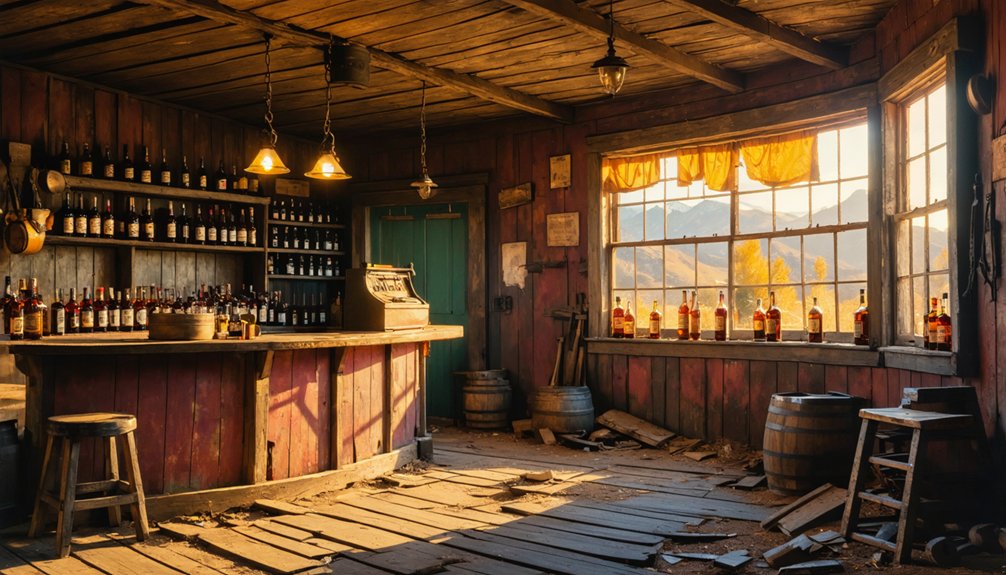
The Apalatea/Burlando House stands as the valley’s oldest structure, hand-hewn lumber and square nails marking its authentic construction. You’ll find the jailhouse where gunslinger Newt Walker spent time in 1905—it’s open for exploration. The rustic church holds a weathered piano, Bible, and coffin that tell their own stories.
Step inside authentic 1800s structures where outlaws once sat behind bars and frontier faithful gathered beneath weathered timber beams.
Over 20 buildings rescued from seven mining camps like Keyesville and Whiskey Flat now occupy this site.
Dave Mills began relocating these structures in the 1970s, saving them from Lake Isabella’s flooding. The historic architecture represents mid-19th century mining camps, with stamps from stamp mills and ore carts preserved among the cabins. The old Marshall building came from the Big Blue Mine, a significant gold discovery location. The site follows a policy of arrested decay to maintain the authentic weathered appearance of these historic structures.
It’s genuine mining heritage you can touch.
Calico Ghost Town: California’s Official Silver Rush Destination
The mountains’ distinctive coloring—bands of rust, pink, and cream—caught prospectors’ eyes long before April 6, 1881, when they struck silver and changed everything.
You’ll discover Calico history runs deep here, where over 500 mines once extracted $86 million in silver using mining techniques that evolved with the district’s needs. By 1884, nearly 80% of California’s state silver production flowed from these hills.
When silver prices crashed to $0.57 per troy ounce in 1896, families packed up and left. The town sat empty until Walter Knott—whose uncle prospected the original Silver King Mine—bought it in the 1950s.
He restored buildings using 1880s photographs before donating everything to San Bernardino County. His restoration efforts preserved five original buildings that still reflect the town’s 1880s appearance. The site earned recognition as State Historical Landmark 782 for its role in California’s mining heritage. Governor Schwarzenegger made it official in 2005: California’s Silver Rush Ghost Town.
What to See and Do at Calico Ghost Town
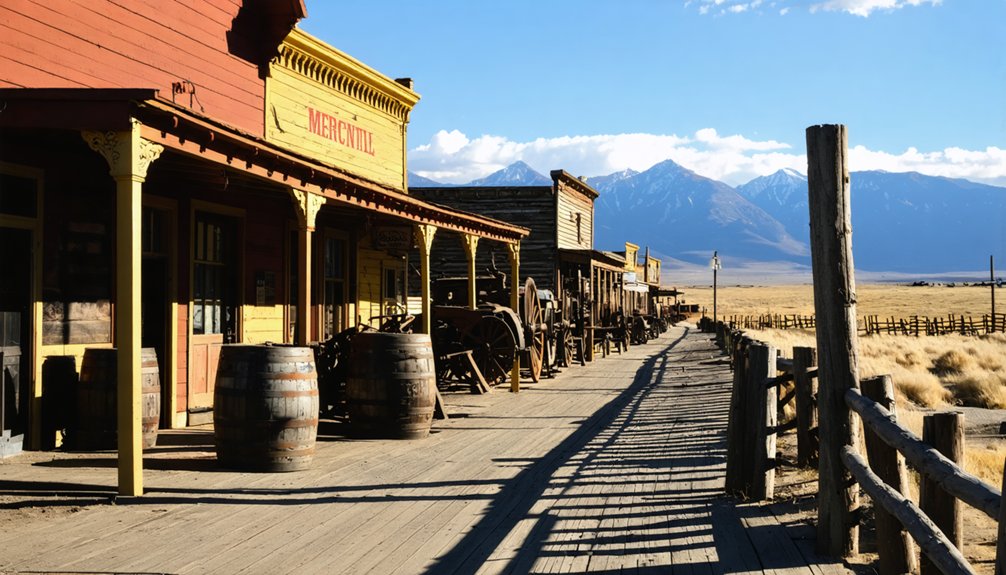
Stepping through Calico’s wooden gates transports you into an 1880s mining camp where twenty-three original structures and reconstructed buildings now house attractions that locals call “living history.”
Your adventure starts 200 feet underground in Maggie Mine, where miners once chipped away at silver veins by candlelight—today’s self-guided tour stretches 1,000 feet through tunnels fitted with blacklight displays that make minerals glow just like they did when prospectors first identified ore deposits.
Descend 200 feet into Maggie Mine’s candlelit tunnels where blacklight displays illuminate glowing minerals along 1,000 feet of underground passages.
Above ground, you’ll explore Calico attractions showcasing mining history through Lucy Lane Museum’s photographs and the reconstructed assay office.
The narrow-gauge Calico Odessa Railroad recreates supply runs miners depended on.
Try gold panning where prospectors once worked—you’re guaranteed to find iron pyrite.
Nine shops sell everything from handcrafted wood art to fossils, keeping the commercial spirit alive.
For optical illusions and gravity-defying tricks, the Mystery Shack creates a disorienting experience that challenges your perception of reality.
Mountain bikers can tackle trails ranging from two to thirty miles across varying terrain and skill levels.
Keyesville and the Kern Valley Mining Camps
You’ll find Keyesville’s story written in the silences beneath Lake Isabella’s waters, where Richard Keyes’s 1854 gold strike once drew 6,000 miners to scatter their tents and shacks along the Kern River.
The settlement that grew around his mine never became more than a helter-skelter collection of wooden stores, a saloon, and crude hotel—50 to 60 permanent souls serving thousands of transient prospectors working claims up and down the valley.
Walking the relocated townsite today, you’re tracing the footsteps of miners who processed ore through five water-driven stamp mills while living in dirt-floored shacks perched in the hills above what’s now the reservoir.
By 1857, the community had established enough permanence to warrant a post office, marking Keyesville’s transition from rough mining camp to recognized settlement.
The Tubatulabal Indians had inhabited this area for generations before the miners arrived, known for their peaceful nature and skilled craftsmanship.
Keyesville Historical Mining Settlement
When Captain Richard Keyes struck gold in 1832, he couldn’t have imagined the rough-and-tumble settlement that would bear his name two decades later.
You’ll find Keyesville emerged alongside the 1854 Kern River Gold Rush, where independent prospectors transformed wild country into a bustling mining hub.
The town’s evolution mirrors changing mining techniques—from simple placer panning before 1855 to sophisticated hard rock operations afterward.
Abia Lightner revolutionized local extraction when he hauled the region’s first stamp mill to his Mammoth Mine in 1855.
Today’s historic landmarks include the meticulously restored Walker Cabin, where marksmen practiced their craft between prospecting runs.
The Rankin Ranch still operates, connecting you directly to those gold-fevered pioneers who carved freedom from unforgiving terrain.
Kern Valley Camp Remnants
Keyesville wasn’t alone in the wilderness—it anchored a constellation of rowdy camps that sprouted across the Kern Valley through the 1850s and ’60s. Whiskey Flat and Claraville rose alongside it, rough-and-tumble settlements chasing placer gold that shifted to hard-rock lodes after 1855.
Claraville’s story captures the era’s boom-and-bust rhythm. When miners struck gold in Ticknor Basin in 1861, the Kelsoe camp emerged, later renamed for Clara Munckton—the first white girl born there.
By 1867, it boasted twelve houses, a hotel, and a blacksmith shop. Two years later? Deserted.
Today, Silver City preserves this Mining Heritage. The Corlew family spent 20,000 hours relocating over twenty decaying structures from forgotten Kern Valley camps, creating a composite ghost town that honors the frontier spirit without sanitizing its weathered authenticity.
Havilah: a Glimpse Into Kern County’s Gold Rush Past
In the spring of 1864, a small group of miners struck gold along Clear Creek, and though they desperately tried to keep their discovery quiet, prospectors flooded the area within weeks.
Asbury Harpending—previously convicted of plotting to seize California’s gold for the Confederacy—named the settlement Havilah after the biblical “land of gold.”
Havilah took its name from the biblical land of gold, christened by a Confederate plotter turned California prospector.
You’ll find this Havilah history fascinating: by late 1865, Main Street lots sold for $50 per front foot, and 147 buildings packed the boomtown, including 13 saloons and gambling halls.
Gold mining made it Kern County’s seat from 1866 to 1872. Harpending walked away with $800,000 in two years.
Today, you can visit the 1966 replica courthouse, though the 2024 Borel Fire tragically reduced many historic structures to ash.
Johannesburg and Other Desert Ghost Towns
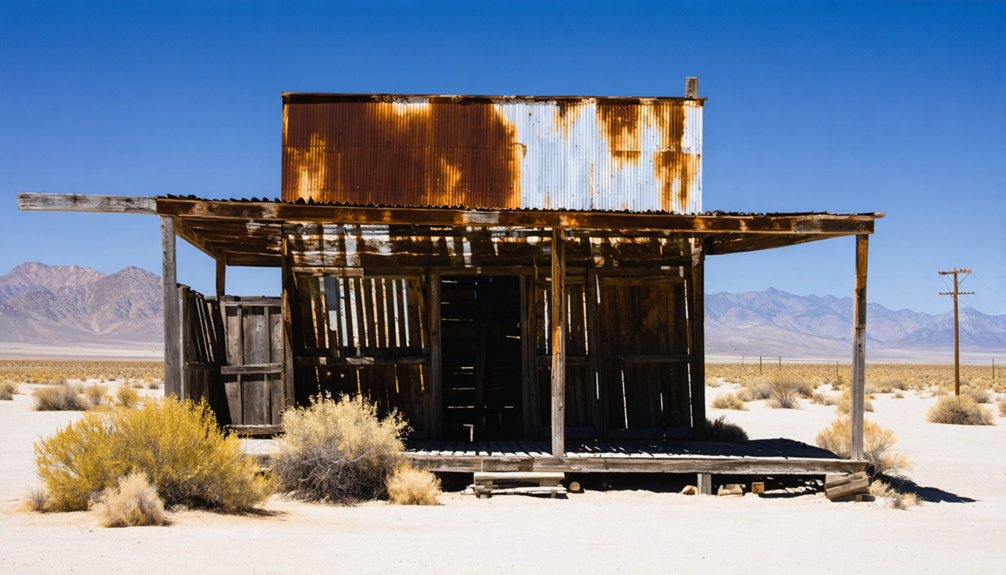
While Havilah’s gold drew miners to Kern County’s western slopes, another rush unfolded in the Mojave Desert’s eastern reaches.
You’ll find Johannesburg history began in 1896 as a supply town for nearby Randsburg, where the Yellow Aster mine sparked dreams of fortune. At its peak, this bustling settlement offered everything from telegraph lines to the Owl Cafe—a Prohibition-era gambling den you’d have visited discreetly.
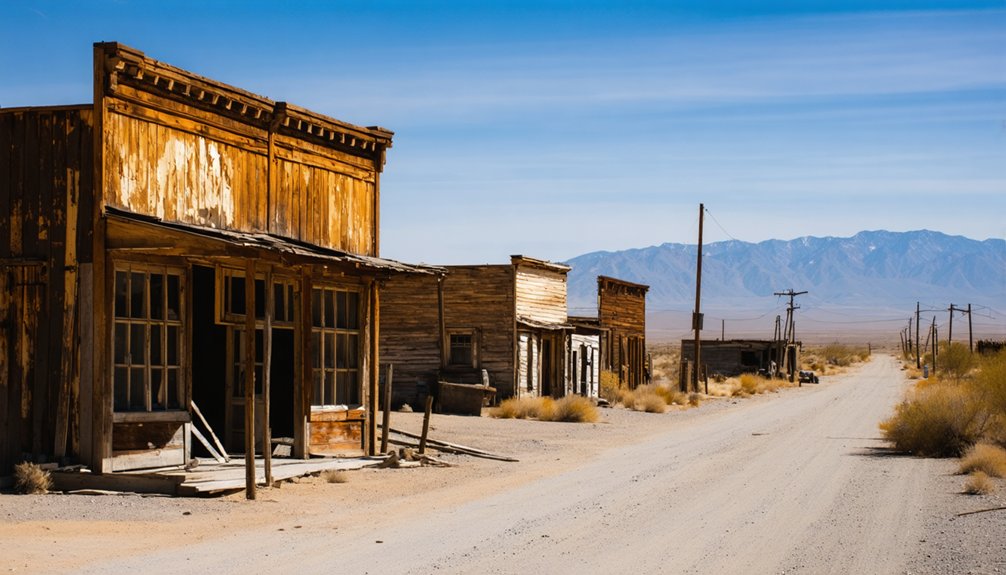
Today’s ghost town preservation efforts maintain remnants from the 1920s and 1930s, though only 200 residents remain.
Explore neighboring Red Mountain and Atolia, where tungsten once fueled World War I steel production. Randsburg’s 1904 soda fountain still serves malts, while bottle trees dot the landscape.
Watch for open mine pits as you wander these desert monuments to perseverance.
Planning Your Ghost Town Road Trip From Bakersfield
You’ll want to map your route carefully before heading out, since these ghost towns span from Ballarat 150 miles northeast to Calico along I-15 toward Las Vegas.
Pack extra water, snacks, and a full tank of gas—places like Ballarat offer no services, and you’ll be driving rugged dirt roads through remote desert terrain.
The most popular circuit runs from Silver City near Lake Isabella through Randsburg and Barstow’s Route 66 museum before ending at Calico, giving you a full day of mining history and Old West relics.
Best Routes and Distances
Planning your ghost town adventures from Bakersfield means you’re sitting at an ideal hub for exploring California’s mining heritage, with options ranging from a quick 45-minute jaunt to full-day expeditions into remote desert corners.
Exploring the abandoned sites in California’s deserts can uncover fascinating stories of the past, where remnants of gold rush history still linger. As you venture further into these arid landscapes, you’ll encounter unique wildlife and breathtaking vistas that add to the adventure. Each ghost town holds its own secrets, waiting to be discovered by intrepid explorers eager to connect with the area’s rich heritage.
Silver City’s your closest bet—just 45 minutes toward Lake Isabella on Highway 178. You’ll find ghost town photography opportunities among twenty authentic structures without burning daylight.
Calico sits 2-3 hours northeast in the Mojave, offering the most developed experience with its historical significance as California’s largest silver strike.
Ballarat rewards patient explorers willing to invest 3-4 hours reaching Panamint Valley’s isolation, where seven saloons once served five hundred prospectors.
For multi-day freedom seekers, Bodie’s 4-5 hour drive north opens epic routes extending to Shasta State Historic Park.
Essential Items to Bring
Desert exploration teaches harsh lessons to the unprepared—I learned this watching a family’s Subaru overheat near Randsburg, their single gallon of water already gone by noon.
Your essential gear list determines whether you’ll capture stunning photographs or need roadside rescue.
Pack these travel tips into your vehicle:
- Water and nutrition: Three days’ worth of water minimum, plus non-perishable snacks like trail mix and jerky for sustained energy during remote exploration.
- Sun protection: Wide-brimmed hat, sunscreen, and sunglasses—desert glare reflects mercilessly off abandoned buildings.
- Emergency supplies: First-aid kit, tire repair tools, and physical maps since cell reception vanishes between ghost towns.
Layer clothing for temperature swings—morning chill transforms into afternoon heat.
Closed-toe hiking shoes handle uneven terrain around collapsed structures safely.
Paranormal Activity and Ghost Tours in Kern County
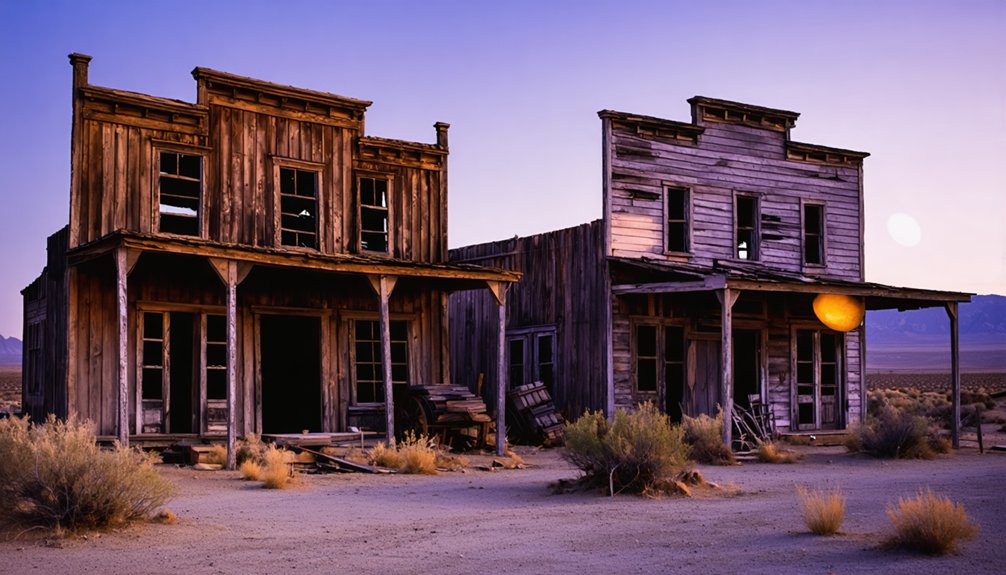
When darkness settles over Kern County’s abandoned settlements, the region transforms into one of California’s most active paranormal hotspots. Bakersfield leads the state with 85 documented paranormal sightings among 400,000 residents, according to Ghosts of America records.
You’ll find ghost hunting opportunities at Silver City’s lantern tours, where investigators have collected compelling paranormal evidence. The Padre Hotel reports ghostly figures and moving objects, while downtown’s old post office echoes with a Prohibition-era bootlegger’s presence.
At Kern County Museum’s Pioneer Village, you’ll hear residual sounds of forgotten birthday parties.
Calico offers guided ghost tours through Main Street and Maggie Mine, letting you explore these documented supernatural encounters firsthand. Each location preserves both historical authenticity and unexplained phenomena.
Frequently Asked Questions
Are Ghost Towns Near Bakersfield Safe to Visit With Children?
Ghost town safety varies—Calico’s theme park setup works great for families, while Ballarat’s extreme isolation demands serious children precautions. You’ll find Silver City strikes a nice middle ground. Pack water, prepare your vehicle, and you’re set for adventure.
What Should I Bring When Visiting Ghost Towns in the Desert?
You’ll need essential gear like water, sunscreen, sturdy boots, and offline maps—safety tips locals swear by. Notably, these same supplies miners carried generations ago still protect desert explorers today.
Can I Camp Overnight at Any Kern County Ghost Towns?
No, you can’t camp overnight at Kern County ghost towns due to camping regulations prohibiting overnight stays outside designated campgrounds. These historic sites lack ghost town amenities like facilities, and they’re protected to preserve our shared heritage for future explorers.
Are There Guided Tours Available at All Ghost Town Locations?
Guided tour options aren’t universal—you’ll find organized experiences at Calico’s railroad and Silver City’s ghost hunts, while Ballarat’s historical significance reveals itself through self-guided exploration. Pioneertown offers architectural discovery without formal tours, letting you roam freely.
Which Ghost Town Is Closest to Bakersfield by Driving Time?
Silver City Ghost Town’s your closest option at just 45 minutes from Bakersfield. You’ll find abandoned buildings with real historical significance there—structures rescued from mining camps that’d otherwise be lost to time forever.
References
- https://www.lakeisabella.net/silvercity/
- https://parks.sbcounty.gov/park/calico-ghost-town-regional-park/
- https://www.tripadvisor.com/Attraction_Review-g32092-d1049785-Reviews-Silver_City_Ghost_Town-Bodfish_California.html
- https://nvtami.com/kern-county-california-ghost-towns/
- https://www.ghosttowns.com/states/ca/cakern.html
- https://www.visitbakersfield.com/directory/silver-city-ghost-town/
- https://www.flyingdawnmarie.com/new-blog/silver-city-ghost-town
- https://www.avoidingregret.com/2025/04/photo-essay-silver-city-ghost-town-made.html
- https://hiddenca.com/silver-city-ghost-town/
- https://www.youtube.com/watch?v=rkl-3LeYx1A