You’ll find Liberty, Washington’s oldest mining town, waiting just 35 miles north of Ellensburg along Highway 97—a genuine ghost town where five original 1870s buildings still stand among the ponderosa pines of Swauk Creek. This National Register site preserves crystalline wire gold history, complete with working arrastras and mining sheds from the placer boom that extracted over 3¼ tons of gold. Forgotten settlements like Rye also dot Kittitas County’s landscape, marked only by cemetery stones and fading wagon roads that tell stories worth discovering.
Key Takeaways
- Liberty Ghost Town, Washington’s oldest mining town from 1873, is 35 miles north of Ellensburg via US-97.
- Liberty features five preserved historic buildings including the 1903 Nighthawk hotel, schoolhouse, mining office, and old mill.
- Rye exists as a ghost town with minimal remains, abandoned due to failed dryland wheat farming and rail shifts.
- Scenic routes combine Liberty with nearby resource towns Roslyn and Cle Elum for comprehensive day trips.
- Mining artifacts, interpretive signs, and original 1870s structures offer authentic exploration of Central Washington’s gold rush legacy.
Liberty: Washington’s Oldest Mining Town in the Cascades
Tucked into the forested foothills east of Blewett Pass, Liberty stakes its claim as Washington’s oldest mining townsite—a distinction rooted in the 1873 gold discovery along Swauk Creek.
You’ll find Liberty history woven through its name changes—from Williams Creek to Meaghersville, finally becoming Liberty in 1912. The district yielded over 3¼ tons of placer gold, famous for crystalline wire nuggets tumbled smooth by the ancient Columbia River.
Early mining techniques evolved from simple panning to hydraulic operations and dredging that persisted through the 20th century. Listed on the National Register in 1974, this “living ghost town” maintains authentic character with five historic buildings still standing.
The Assay Office building, constructed before 1895, exemplifies early architecture using local materials and later served as a miner’s residence. Local homesteading families worked these claims for three generations, creating stability uncommon in frontier camps. This family-centered community tolerated no excessive frontier behavior, distinguishing Liberty from the lawless mining camps that characterized much of the American West.
Rye and Other Forgotten Settlements of Kittitas County
Beyond the well-documented camps like Liberty, dozens of Kittitas County settlements have faded so completely that even their names survive only in county plat books and land office records.
Rye history exemplifies this pattern—a ghost town reduced to a single line in archival indexes, with no post office dates or population figures preserved.
A ghost town reduced to a single archival line, its post office dates and population figures erased from official record.
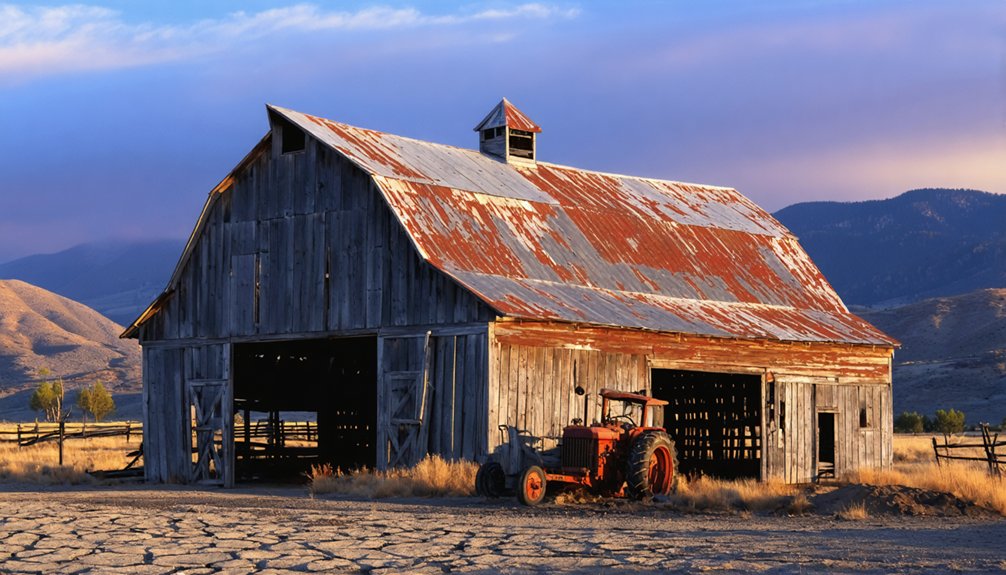
You’ll find its story mirrored across the valley: homesteads abandoned after dryland wheat ventures failed, rail sidings bypassed when routes shifted, one-room schools consolidated into Ellensburg’s district.
Kittitas decline followed economic centralization relentlessly.
Today you can trace these lost communities only through cemetery stones, lilac hedges marking vanished dooryards, and faint wagon roads visible in aerial surveys—fragile evidence of lives lived beyond official memory. Some settlements persisted longer due to mining operations continuing into the 1960s, though most had already succumbed to abandonment decades earlier. Liberty itself achieved National Register recognition in 1974, distinguishing it from the completely forgotten camps that lacked even basic infrastructure to preserve.
The Gold Rush Legacy of Central Washington Ghost Towns
While Kittitas County’s wheat towns vanished through quiet economic attrition, the mining camps died louder—and left more behind.
Central Washington’s gold rush transformed the Swauk District and Liberty—Washington’s oldest mining town—into legendary boomtowns. You’ll find rare crystalline wire gold here, tumbled by ancient Columbia River currents 15 million years ago.
The legacy you can still touch includes:
- Working arrastras demonstrating 19th-century ore processing methods
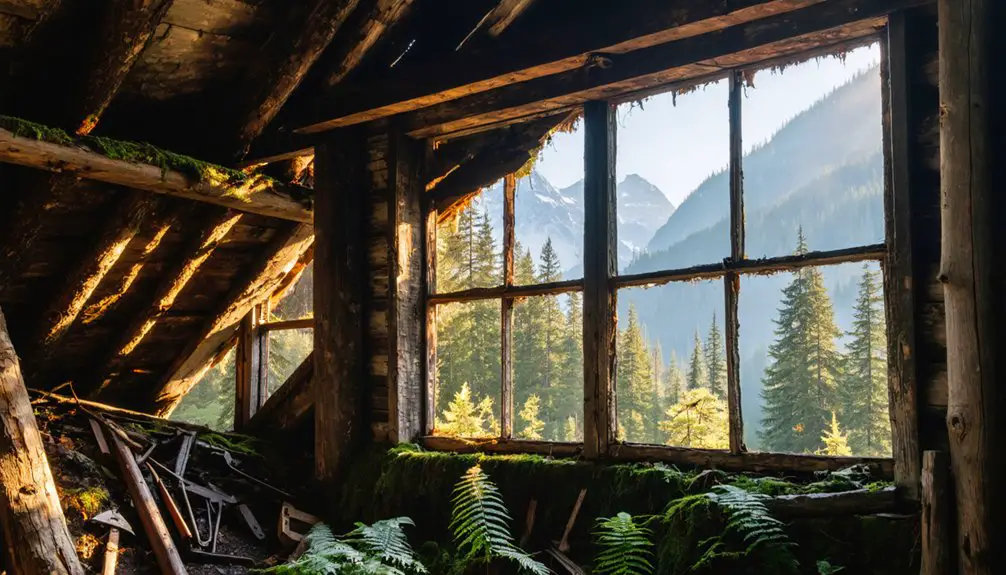
- Original cabins and mining sheds frozen in time since the 1870s
- Wagon roads that became today’s mountain highways
- 0.3 ounces per ton assays proving profitable strikes
- Ellensburg blue agates—among Earth’s rarest gemstones—sharing the gold fields’ geology
Liberty’s dozen residents guard authentic mining technology and structures, preserving freedom-seeking prospectors’ raw ambition. Located about 80 miles east of Seattle, this Congressional-designated historic site attracts visitors from as far as Europe who sign the town’s guest book. Like other preserved ghost towns in Washington, local volunteers provide guided tours that bring historical context to the remaining structures.
Day Trip Ghost Town Routes From Ellensburg
How do you transform a weekend morning in Ellensburg into a journey through Central Washington’s mining past?
You’ll take US-97 north toward Blewett Pass, where Liberty Ghost Town awaits 35 miles out. This designated National Register site offers authentic ghost town explorations—weathered cabins, rusted mining equipment, and interpretive signs dot the Swauk Creek valley.
You can walk freely through the townsite, photographing what remains of the 1870s gold rush settlement.
For broader scenic driving routes, combine Liberty with Roslyn’s coal-mining district and Cle Elum’s timber heritage in a 110-mile loop.
The Swauk Pass corridor delivers ponderosa pine forests and Stuart Range views. Old Blewett Pass Road adds seasonal mountain vistas. Informational signs at Liberty detail stories of former residents, bringing the mining community’s daily life into focus.
Most trips run three to six hours, letting you compare different resource towns within one day. Liberty’s mining legacy includes rare wire gold deposits found in local streams, distinguished by their crystalline structure.
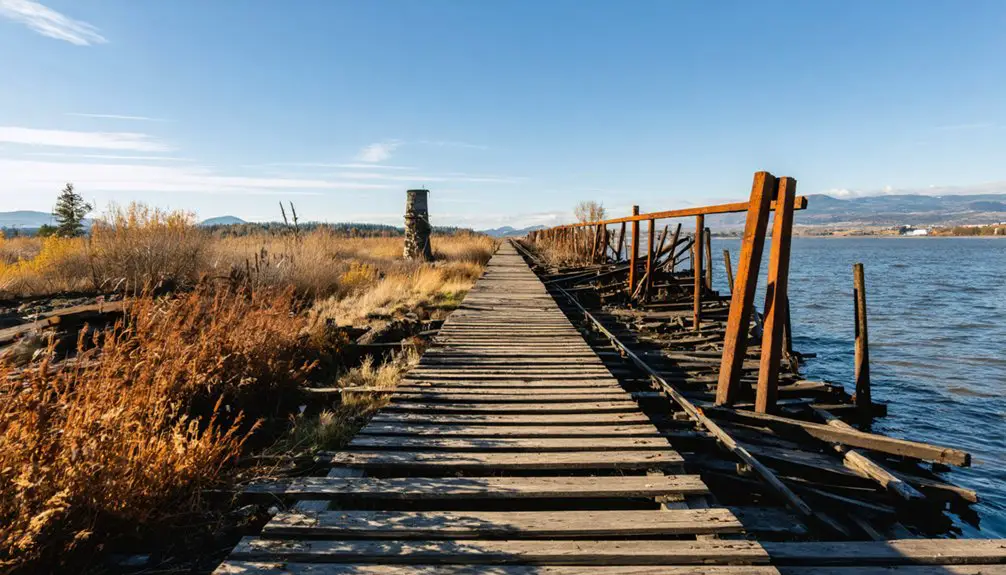
What Remains: Buildings, Mining Equipment, and Historic Markers
When you arrive at Liberty, the Nighthawk hotel stands as the most photogenic remnant—a two-story false-front structure with weathered siding that’s held firm since 1903.
The original schoolhouse, mining office, and old mill complete this cluster of building preservation that earned National Register status in 1974.
Beyond Liberty, you’ll discover mining artifacts scattered throughout the region:
- Rusting ore carts and cable systems frozen mid-operation at Melmont
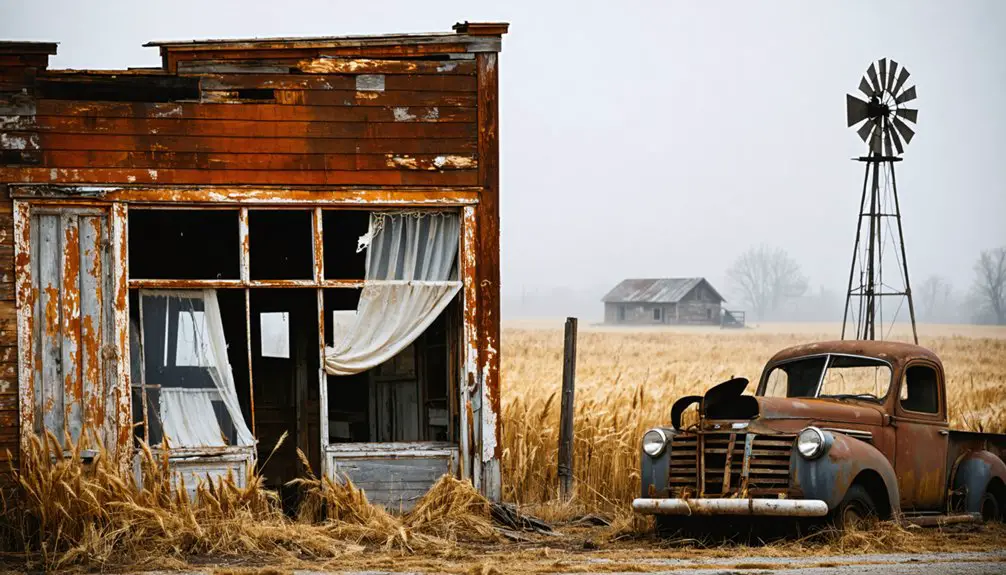
- Decaying Model-T trucks reclaimed by moss along abandoned rail grades
- Wagon bridge abutments marking routes miners traveled daily
- School basement foundations where children once studied between shifts
- Interpretive signs revealing stories bureaucrats rarely tell
At Monte Cristo, you’ll find functioning structures alongside collapsing facades.
The Carbon River Ranger Station incorporates recycled schoolhouse lumber—tangible proof these settlements adapt rather than disappear completely.
These sites exist primarily on public lands, making them accessible for exploration while requiring visitors to respect their historical fragility.
Just as Ellensburg’s Davidson building symbolizes resilience after the devastating 1889 fire that reduced ten blocks to ashes, these ghost town remnants stand as monuments to communities that refused to vanish without trace.
Frequently Asked Questions
Are Ghost Towns Near Ellensburg Safe to Visit With Children?
Yes, they’re safe with proper supervision—like old mining equipment becoming outdoor classrooms instead of jungle gyms. You’ll need safety precautions for uneven terrain and rusty artifacts, but Liberty offers child-friendly activities through easy roadside access and interpretive displays.
Do I Need Permits to Explore Ghost Town Sites?
You’ll need permits for commercial activities or group tours, but casual day visits on public land generally don’t require them. Always follow exploration guidelines and historical preservation rules—disturbing artifacts or structures risks fines and damages irreplaceable heritage.
Can I Camp Overnight Near Liberty or Other Ghost Towns?
Yes, you can camp overnight at Liberty Recreation Site—one of 15 free, first-come campsites with no fees or reservations. Check current camping regulations and fire restrictions before visiting, then explore nearby attractions like historic mining ruins independently.
What Cell Phone Coverage Exists in Ghost Town Areas?
You’ll find cell service availability extremely limited in most ghost town areas near Ellensburg. Coverage limitations stem from remote locations and mountainous terrain—I’ve experienced complete dead zones at Liberty, forcing reliance on offline maps and self-sufficiency.
Are Dogs Allowed at Ghost Town Historic Sites?
Dogs do depend on leash laws; most ghost towns require physical restraint protecting historical significance. You’ll find dog friendly policies vary—Forest Service sites typically permit leashed pets, while private parcels near Liberty restrict roaming completely.
References
- https://en.wikipedia.org/wiki/List_of_ghost_towns_in_Washington
- https://okanogancountry.com/ghost-towns
- https://stateofwatourism.com/ghost-towns-of-washington-state/
- https://www.cascadeloop.com/ghost-towns-and-haunted-places-in-the-washington-cascades
- https://explorewashingtonstate.com/tim-nyhus-ghost-towns-abandoned-mines-and-the-thrill-of-discovery-in-washington/
- https://www.onlyinyourstate.com/experiences/washington/wa-abandoned-places
- https://westernmininghistory.com/towns/washington/liberty/
- https://revisitwa.org/waypoint/liberty/
- http://www.ghosttownsusa.com/liberty.htm
- https://explorewashingtonstate.com/visiting-the-historic-liberty-township/