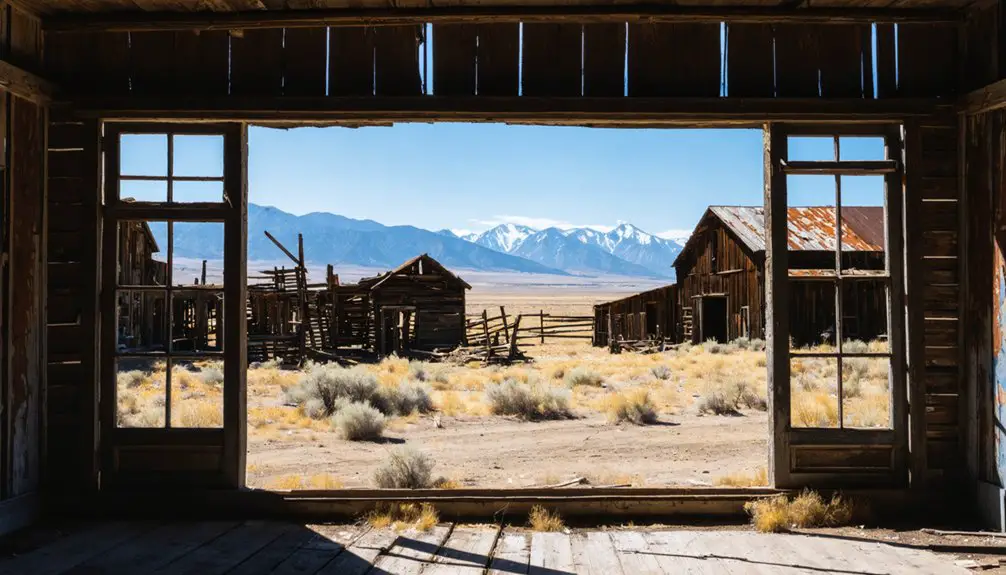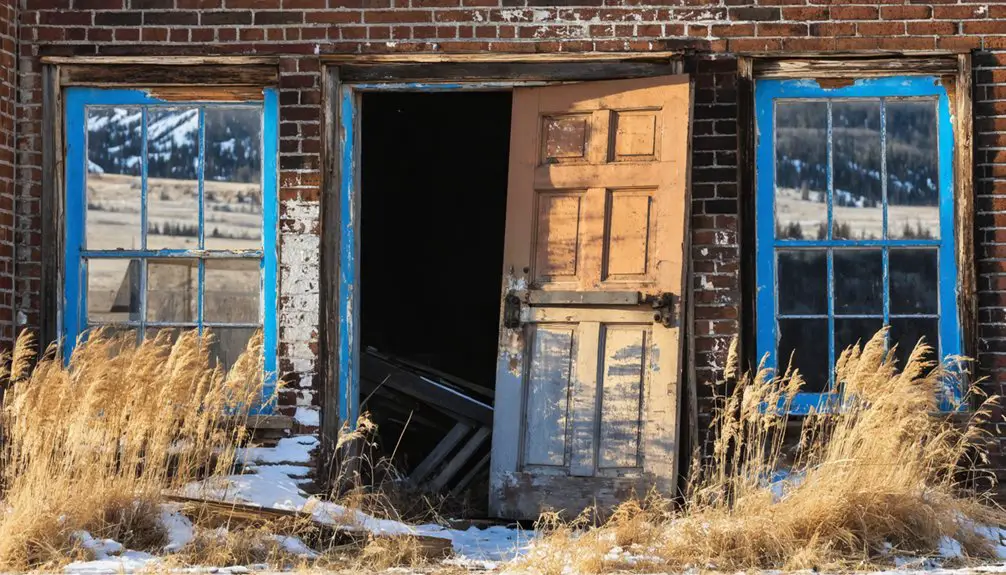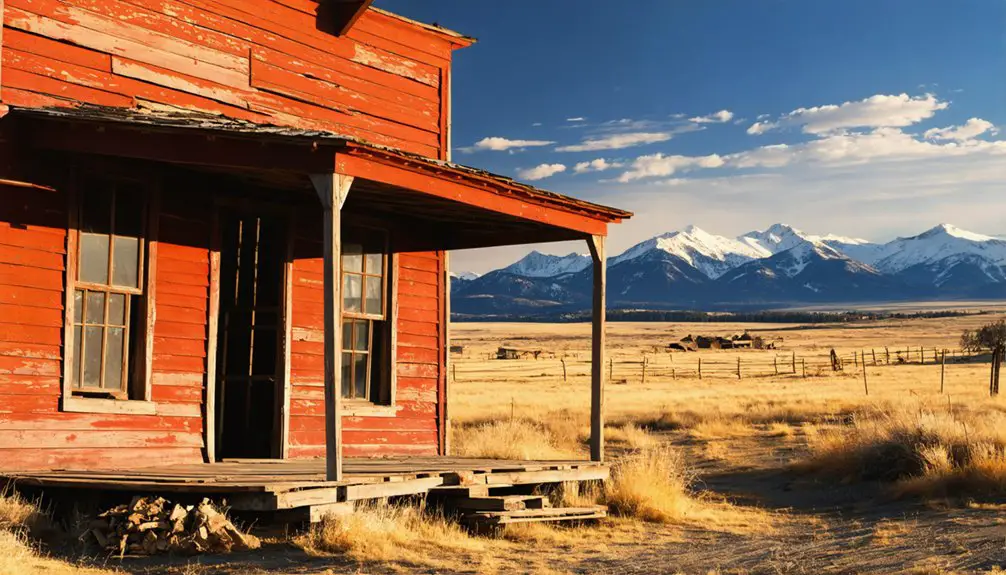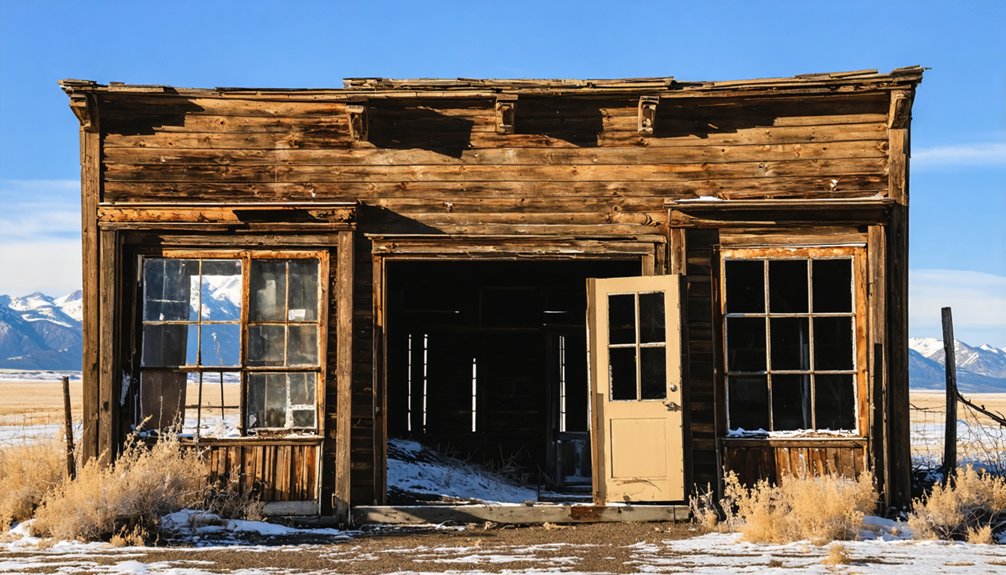
You’ll find Montana’s best-preserved ghost towns within 90 miles of Ennis, forming a rich concentration of 1860s mining history. Virginia City and Nevada City sit just 14 miles west, featuring over 250 authenticated buildings from Montana’s territorial capital era. Bannack State Park, 52 miles southwest, preserves the state’s first major gold rush site with more than 50 original structures from 1862. Granite Ghost Town, perched on a mountaintop 75 miles north, showcases Montana’s silver boom legacy. The article ahead reveals detailed visiting strategies for each historic site.
Key Takeaways
- Virginia City, Montana’s territorial capital from 1865-1875, features 150 authenticated buildings and wooden boardwalks from the 1860s gold rush era.
- Nevada City, established in 1863, operates as Montana’s premier living history museum with over 100 historic buildings and 1.2 million artifacts.
- Bannack State Park preserves Montana’s first boomtown with over 50 authentic buildings, including Governor Sidney Edgerton’s territorial-era cabin from 1862.
- Granite Ghost Town State Park showcases “Montana’s Silver Queen,” featuring remnants including the three-story Miners’ Union Hall from the 1880s silver boom.
- All four ghost towns near Ennis offer self-guided exploration of preserved structures, authentic artifacts, and insights into Montana’s mining history.
Nevada City Living History Museum
Gold seekers who rushed to Alder Gulch in 1863 established Nevada City simultaneously with its more famous neighbor, Virginia City.
What began as one of seven communities along a 14-mile stretch nearly vanished before the Bovey family’s restoration efforts between 1945 and 1978 transformed it into Montana’s premier living history museum.
You’ll discover over 100 historic buildings housing 1.2 million artifacts—North America’s second-largest Old West collection after the Smithsonian.
Artifact Preservation extends beyond static displays: Historic Interpreters demonstrate authentic 1860s trades like blacksmithing and tin smithing on weekends from Memorial Day through Labor Day. The buildings showcase authentic antiques including period firearms and blacksmithing tools from Montana’s frontier era.
Living history comes alive through skilled craftspeople demonstrating period-authentic trades every weekend throughout the summer season.
Visitors can participate in hands-on experiences such as basket weaving, yarn making, and learning about wagon repairs and wood stove cooking.
The Nevada City Music Hall showcases North America’s most extensive collection of automated music machines.
You can even ride the 1910 Baldwin Steam Locomotive connecting both ghost towns along a 1.5-mile historic rail line.
Virginia City: Montana’s Territorial Capital
You’ll discover Montana’s most significant ghost town just fourteen miles up the road from Ennis, where Virginia City served as territorial capital from 1865 to 1875.
For those looking to explore more of Montana’s rich history, there are several intriguing ghost towns near Bozeman Montana worth visiting. Each location offers a glimpse into the past, showcasing remnants of mining operations and the stories of those who once called these towns home. A trip to the area wouldn’t be complete without experiencing the eerie yet fascinating atmosphere that these ghost towns provide.
The town’s 150 authenticated buildings and wooden boardwalks stand as preserved evidence of the 1860s gold rush that drew 10,000 residents to Alder Gulch.
Unlike abandoned ruins, Virginia City operates today as a living museum where you can walk through Montana’s territorial government offices and explore structures verified by the Montana Historical Society. The discovery of gold occurred on May 26, 1863, when prospectors including William Fairweather found promising deposits that would transform the gulch into the richest placer gold strike in the Rocky Mountains. The preserved buildings feature historical merchandise and implements that transport visitors back to the territorial era.
Territorial Government & History
When Virginia City claimed the territorial capital designation in 1865, it displaced Bannack and anchored Montana’s political operations at the heart of the Alder Gulch mining district.
You’ll find that territorial governance evolved here for a decade, with legislators shaping mining legislation and infrastructure policy for the entire Rocky Mountain frontier.
The executive offices, courts, and legislature met in this boomtown of 5,000 residents, making decisions that affected scattered settlements across Montana Territory.
By 1866, Virginia City’s telegraph connected frontier lawmakers to broader communication networks.
The capital’s influence lasted until 1875, when Helena’s richer gold discoveries shifted political power northward.
This ten-year tenure established legal frameworks and governmental precedents that defined Montana’s evolution from lawless mining camps to organized territorial administration.
The town’s prominence began when gold was discovered in Alder Creek in 1863, triggering the rush that would ultimately lead to its selection as the territorial seat of government.
Virginia City’s significance in Montana’s early development positioned it as the natural choice for territorial governance during the mining boom era.
Preserved Buildings & Boardwalks
Virginia City’s political legacy remains physically tangible through more than 200 preserved buildings and their connecting boardwalks, a streetscape that survived where most Montana boomtowns succumbed to fire, salvage, and abandonment.
You’ll walk cottonwood-plank boardwalks along Wallace and Main Streets, where false-front commercial façades rise directly from the wooden pathways, creating an unbroken 1860s street wall.
The boardwalk architecture preserves authentic frontier-era circulation patterns:
- Original log structures like the Harness Shop display weathered board siding and period false fronts
- Stonewall Hall’s 1864 masonry anchors a $2 million restoration project launched in 2022
- Twenty-six documented Wallace Street buildings contain period displays of territorial-era hotels, saloons, and shops
Montana Heritage Commission’s historic preservation work since 1997 maintains this National Historic Landmark district, stabilizing endangered wooden buildings that lesser jurisdictions would’ve demolished. The Commission acquired Stonewall Hall through a 2022 donation from the Neal C. LaFever Trust, correcting a clerical error that had excluded this significant building from earlier preservation transfers. Many structures still house original items and artifacts from the 1860s gold rush era, providing authentic glimpses into territorial life.
Living Ghost Town Today
Between 1865 and 1875, Virginia City held Montana’s territorial reins—a decade when legislature convened in Alder Gulch boardrooms and government officials walked plank sidewalks between frame buildings that still stand today.
You’ll find 148 residents maintaining this living ghost town alongside seasonal visitors who pack the Virginia City Players’ melodramas and Brewery Follies performances.
Historic preservation began when Charles and Sue Bovey bought collapsing structures in the 1940s, preventing total abandonment after population crashed from 5,000 to mere hundreds. The Montana Heritage Commission acquired the Bovey holdings to ensure continued preservation of the town’s historical significance.
The Montana Heritage Commission now oversees what the Boveys saved. Cultural events like the Grand Victorian Ball for Peace 1865 resurrect frontier social life each August, while the Alder Gulch Short Line connects you to Nevada City’s living history demonstrations—freedom to walk streets where $40 billion in gold changed hands.
Bannack State Park and National Historic Landmark
On July 28, 1862, prospector John White and his companions struck gold at Grasshopper Creek, setting off Montana’s first major gold rush and establishing what would become the state’s original territorial capital.
Bannack history began with over 3,000 miners flooding the area by 1863, creating Montana’s first boomtown. After the capital moved to Virginia City in 1865 and richer strikes emerged elsewhere, the town steadily declined until its last residents departed in the 1960s–1970s.
Ghost town preservation efforts transformed Bannack into a state park in 1954.
Montana designated Bannack as a state park in 1954, preserving this authentic gold rush settlement for future generations.
You’ll find:
- More than 50 authentic log and frame buildings lining Main Street
- Original wooden boardwalks and false-front commercial façades
- Governor Sidney Edgerton’s territorial-era cabin
The site maintains its National Historic Landmark status through authentic preservation rather than commercialization. A visitor center operates seasonally from Memorial Day through Labor Day, providing information about the town’s fascinating gold rush heritage.
Granite Ghost Town State Park
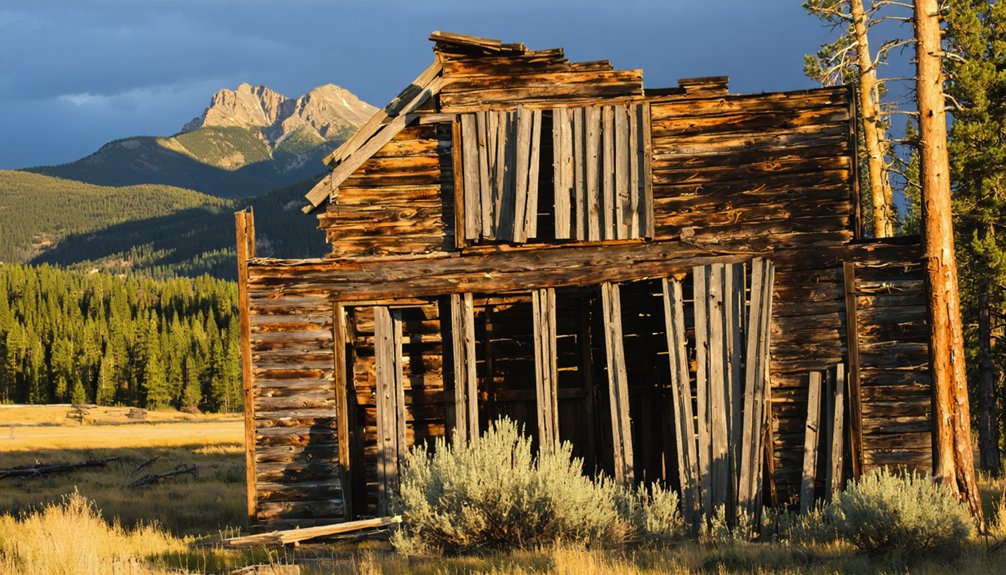
Granite Ghost Town earned its title as “Montana’s Silver Queen” after the 1872 discovery led to a bonanza producing $40 million in silver, but the Silver Panic of 1893 emptied the town within days.
You’ll find Montana State Parks now preserves the ruins above Philipsburg, including the skeletal three-story Miners’ Union Hall and the Superintendent’s house documented in the Historic American Buildings Survey.
The park’s network of trails connects you to scattered building foundations, mine ruins, and remnants of a community that once housed 3,000 residents and produced over $250,000 in metals monthly.
Silver Boom and Bust
Silver first glimmered in the Granite area when prospector Hector Horton made the initial discovery in 1865, though the formal claim wouldn’t come until autumn 1872 when Holland relocated the site.
Charles Clark and partners capitalized the operation at $10,000,000, investing $130,000 in development before the 1882 bonanza strike changed everything.
That final blast uncovered ore assaying at 1,700 ounces per ton, transforming Granite into earth’s richest silver mining operation. The economic impact was staggering:
- Single discovery yielded $40,000,000 between 1885-1892
- Monthly production exceeded $250,000 by 1889
- Population peaked at 3,000 miners around 1890
The 1893 silver panic ended it all. Plummeting prices forced immediate shutdown, and the camp never recovered its former glory.
Visiting the Park Today
Perched on a windswept mountaintop 4 miles east of Philipsburg, Granite Ghost Town State Park preserves Montana’s most dramatic silver camp ruins across several hundred acres of alpine terrain.
You’ll navigate a steep, winding road to reach the site—passable late spring through fall, with high-clearance vehicles recommended during wet conditions.
The Visitor Experience centers on self-guided exploration of scattered foundations, stone walls, and the towering shell of the three-story Miners’ Union Hall. Informal trails connect residential areas to the commercial core and outlying mine structures.
All buildings remain structurally unstable; don’t enter ruins or climb walls. Sturdy footwear is essential on uneven ground riddled with hidden holes and loose rock.
Artifact collection violates state preservation laws protecting this Granite Ghost townsite.
Exploring Southwest Montana’s Ghost Town Corridor
Stretching through the Tobacco Root, Gravelly, Pioneer, and Beaverhead ranges, Southwest Montana’s Ghost Town Corridor links a cluster of historic mining camps that trace the region’s 1860s gold rush and early-1900s silver boom.
You’ll find a drivable loop connecting Ennis to Virginia City, Nevada City, Bannack, and Coolidge via U.S. 287, MT 41, and the Pioneer Mountains Scenic Byway.
The corridor’s cultural heritage follows river valleys—Madison, Beaverhead, Big Hole—where placer deposits sparked territorial development:
- Virginia City/Nevada City: Montana’s territorial capital and its twin camp, 14 miles from Ennis
- Bannack State Park: Sixty-plus structures preserving mining history and outlaw legends
- Coolidge: Trail-accessible silver ghost town reclaimed by forest
This network showcases boom-and-bust economics across multiple decades, with transportation routes threading through mountain passes where ore once moved freely.
Planning Your Ghost Town Adventure From Ennis
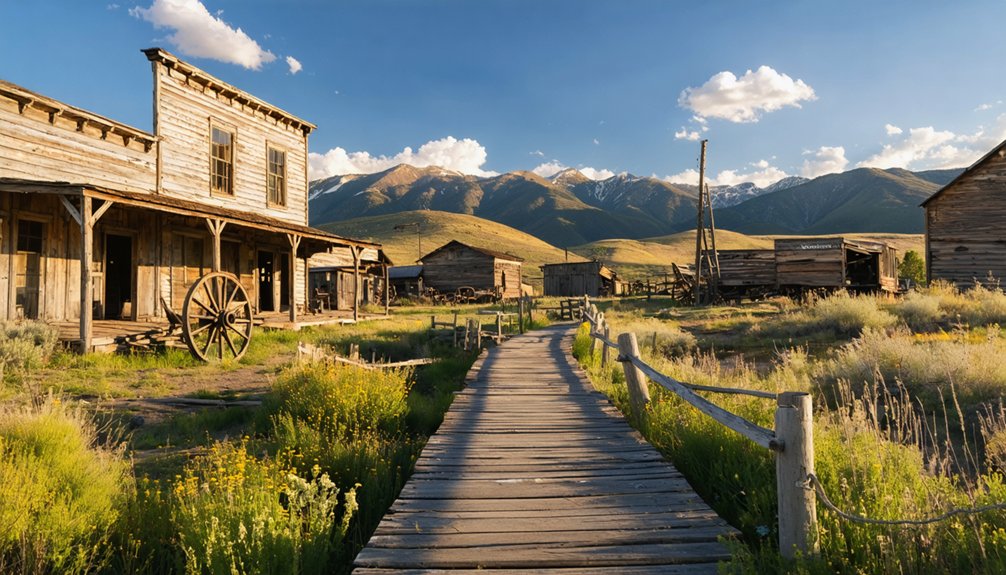
Because Ennis sits at the geographic center of Southwest Montana’s ghost town network, it functions as the most practical staging point for multi-day exploration of the Madison Valley’s historic mining corridor.
Ennis serves as the ideal base camp for exploring the ghost towns scattered throughout Southwest Montana’s Madison Valley mining region.
You’ll find lodging, fuel, and supplies here before heading 14 miles southwest on MT-287 to Virginia City and Nevada City. Reserve accommodations well ahead—June through August books solid, especially during fishing season.
Plan a minimum 2–3 nights to cover Virginia City’s boardwalks, Nevada City’s museum complexes, and the Alder Gulch “Fourteen Mile City” sites without rushing.
Summer brings daytime highs in the 70s–80s°F, staffed attractions, historical reenactments, and ideal ghost town photography light.
Shoulder seasons offer fewer crowds but reduced services and potential snow at elevation. Check Montana DOT road reports before departure.
Frequently Asked Questions
Are Ghost Towns Near Ennis Safe to Explore With Young Children?
Ghost town safety varies considerably—managed sites like Virginia City and Nevada City offer designated walkways and facilities for children exploration, while remote locations present structural hazards, unstable ground, and limited services requiring careful supervision and preparation.
Can You Camp Overnight at Any Ghost Town Sites Near Ennis?
Yes, you’ll find dispersed camping available on BLM lands near Garnet Ghost Town, though camping regulations prohibit sites within half-mile of the historic town. Ghost town amenities include drinking water and toilet facilities at designated areas.
What’s the Best Season to Visit Ghost Towns Around Ennis?
The best season is late spring through early fall when roads remain passable and museums operate daily. You’ll enjoy warm, dry weather for exploring, though summer afternoons bring thunderstorms requiring weather considerations at exposed sites.
Do Ghost Towns Near Ennis Offer Guided Tours or Self-Guided Options?
You’ll find both guided experiences and self exploration options—wander weathered boardwalks independently through Nevada City and Virginia City’s preserved 1860s streetscapes, or join costumed interpreters during summer living history programs for structured storytelling.
Are Pets Allowed at Ghost Town State Parks Near Ennis?
Pet policies vary by location, so you’ll need to check specific state park regulations before visiting. Montana’s ghost town state parks typically allow leashed pets outdoors but restrict them from historic buildings for preservation purposes.
References
- https://www.gonomad.com/232995-ghost-towns-of-montana
- https://visitmt.com/trip-ideas/small-towns-ghost-towns
- https://www.asthemagpieflies.com/blog/2022/9/19/the-living-ghost-town-of-montana
- https://southwestmt.com/ghosts/ghost-towns/
- https://www.tripadvisor.com/ShowUserReviews-g482943-d4825218-r508865978-Nevada_City_Ghost_Town-Nevada_City_Montana.html
- https://destinationyellowstone.com/day-trip-ghost-towns-virginia-nevada-city-montana/
- https://fwp.mt.gov/stateparks/granite-ghost-town
- https://southwestmt.com/blog/the-nevada-city-museum-music-hall-a-historic-gem/
- https://www.youtube.com/watch?v=Eh-qE1r83C4
- https://www.legendsofamerica.com/mt-nevadacity/