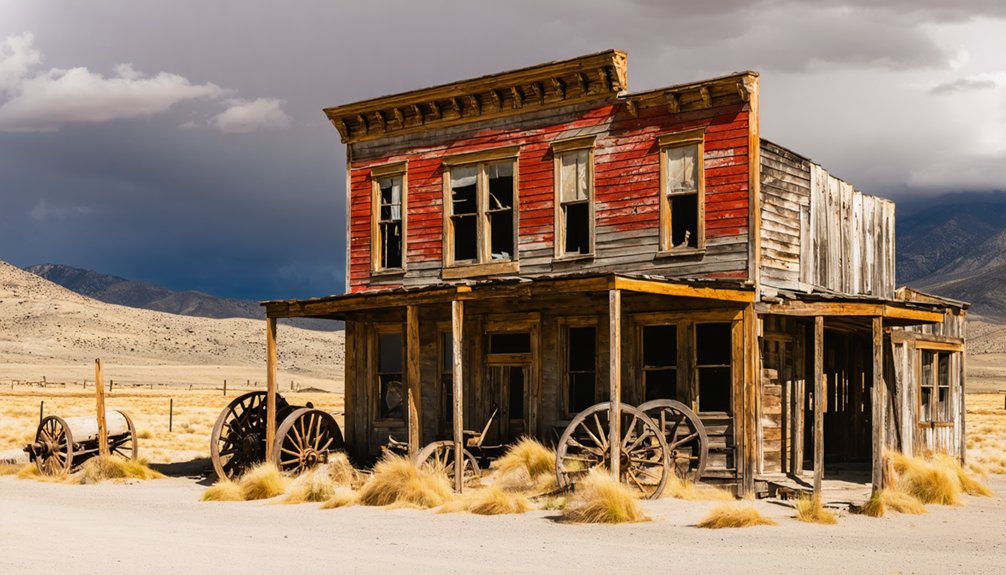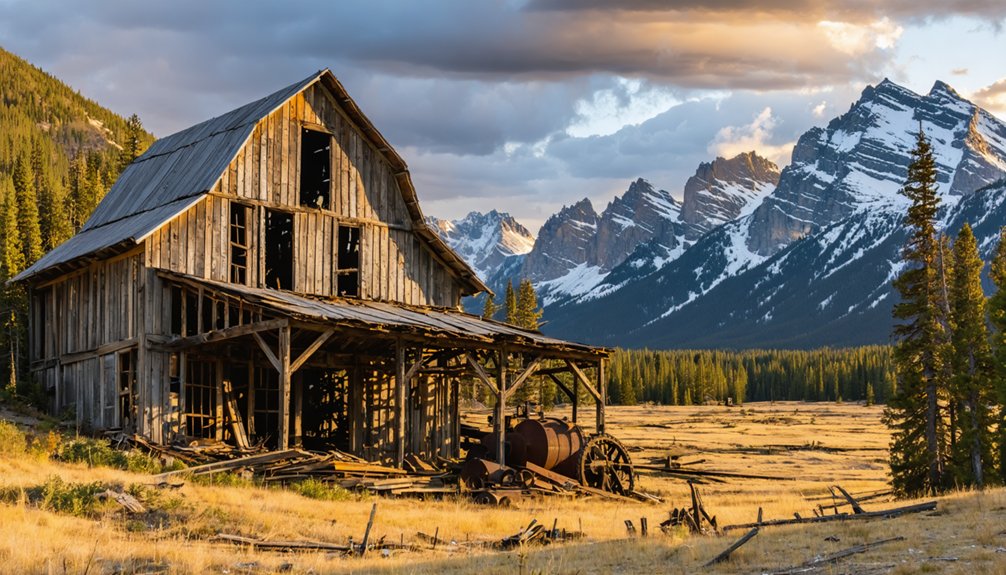
You’ll discover several fascinating ghost towns within an hour of Estes Park, each telling a unique story of Colorado’s frontier past. Homestead Meadows sits just 2.5 miles from Lion Gulch Trailhead in Roosevelt National Forest, while Lulu City requires a 3.7-mile hike through Rocky Mountain National Park. Caribou, twenty miles west of Boulder, once housed 3,000 silver miners during the 1870s boom. For Colorado’s best-preserved structures, St. Elmo stands as a National Historic District with original buildings intact. The sections below detail access routes, historical background, and what remains at each site.
Key Takeaways
- Homestead Meadows in Roosevelt National Forest features old ranch remnants accessible via a 2.5-mile trail from Lion Gulch Trailhead.
- Caribou, twenty miles west of Boulder, once housed 3,000 residents during the 1870s silver boom with minimal remains today.
- Lulu City requires a 3.7-mile hike in Rocky Mountain National Park, offering scattered logs and cabin foundations from its mining era.
- Independence sits at 11,000 feet on Independence Pass, showcasing high-altitude mining remnants from its 1880s gold boom peak.
- St. Elmo, twenty miles southwest of Buena Vista, is Colorado’s best-preserved ghost town with surviving structures and National Historic District status.
Homestead Meadows: A Non-Mining Settlement in Roosevelt National Forest
Unlike the silver camps and gold rush settlements that dominate Colorado’s ghost town landscape, Homestead Meadows emerged as a purely agricultural community under the Homestead Act of 1862.
You’ll find this basin within Roosevelt National Forest, where the first settler claimed land in 1889, building a homestead history rooted in farming, ranching, and lumber rather than mineral extraction.
The settlement economy thrived on arable land, reliable water sources, and abundant timber—resources that supported self-sufficient ranches scattered across the valley.
These weren’t miners chasing ore veins but families cultivating crops and raising livestock. Men often worked in nearby Lyons during the week while homesteads were maintained, creating a dispersed community that lasted until 1952 when the final residents departed.
The community never developed civic infrastructure, lacking both a post office and school that typically anchored frontier settlements.
Today, you can reach the remnants via Lion Gulch Trailhead, following a 2.5-mile trail to discover old ranch houses, some still containing original furniture and farming equipment.
Lulu City: The Ghost Town Inside Rocky Mountain National Park
Today you’ll find Lulu City at the end of a moderate 3.7-mile hike along the Colorado River Trail, starting from the park’s west side near Grand Lake.
The remote location that once promised silver riches now shows little more than scattered logs, faint cabin foundations, and subtle depressions marking old building sites. Only three cabins remain recognizable among the ruins today.
An interpretive sign helps you piece together what stood where, but don’t expect structures—nature has reclaimed almost everything from this 1880s boom town. The trail follows the old wagon road that miners once used to reach the settlement.
Accessing the Remote Site
Reaching Lulu City requires a moderate commitment of time and energy, but the route itself won’t test your backcountry skills.
You’ll start at Colorado River Trailhead, about nine miles north of Grand Lake, following the old wagon road upstream for roughly 3.5 miles through Kawuneeche Valley. The wide path climbs gradually—around 700 feet total—over packed dirt with occasional roots and rocks.
Trail conditions remain manageable for most hikers, though early-season snow and summer mud can complicate stream crossings.
Watch for wildlife sightings in the riparian meadows: moose, elk, and bighorn sheep frequent this corridor. Be especially cautious around cow elk with calves, as they can become aggressive when they feel their young are threatened.
You’ll pass abandoned mines, the Shipler cabin remains, and a Grand Ditch junction before reaching the signed spur descending steeply into Lulu’s meadow. The trail winds through mixed evergreen forests of spruce and lodgepole pine along the way.
Budget a half-day for exploration.
What Remains of Lulu
After your 3.5-mile hike into the upper Kawuneeche Valley, you’ll find that Lulu City has returned almost entirely to meadow.
The Lulu City remnants are subtle—scattered log cabin foundations, collapsed walls with corner notching, and depressions marking former building sites.
You’ll spot occasional rusted hardware and mining equipment fragments off-trail, plus mine prospects on nearby slopes where low-grade ore once fueled dreams of prosperity.
An NPS interpretive sign marks the historical significance of this 1879 boomtown that peaked at 200–1,500 residents across 100 platted blocks before abandoning by the mid-1880s.
The Colorado River flows past aspens and conifers that frame the former streets, while park regulations protect what little remains from artifact hunters seeking tangible connections to this vanished mining community.
The settlement once included sawmills and a hotel that served the mining community during its brief existence.
Along the trail, you’ll pass the Shipler cabin, a historic structure dating back to 1876 that predates the town itself.
Caribou: The Closest Ghost Town to Estes Park
If you’re looking for the most accessible ghost town near Estes Park, Caribou sits about twenty miles west of Boulder in the Front Range at roughly 10,000 feet elevation.
Exploring ghost towns near Everglades National Park can offer a unique glimpse into Florida’s history. Many of these towns were abandoned due to environmental changes and economic shifts, leaving behind intriguing remnants of their pasts. A visit to these sites not only reveals stories of resilience but also showcases the stunning natural beauty that surrounds the park.
You can drive directly to the townsite near Nederland, where you’ll find mainly one collapsed wooden cabin and two stone ruins—all that’s left of a settlement that once housed 3,000 residents during the 1870s silver boom.
The site’s location in Boulder County’s Roosevelt National Forest makes it one of the easiest Colorado ghost towns to visit, requiring far less effort than the remote trek to Lulu City.
The town once supported three saloons, a brewery, a church, and even its own newspaper called the Caribou Post during its peak years.
Samuel Conger was the first American to discover silver in this area during a hunting trip in 1869, launching the mining operations that would transform the valley into a bustling town.
Caribou’s Location and Access
Caribou sits roughly 4–5 miles northwest of Nederland in Boulder County, perched at nearly 10,000 feet on the eastern slope of the Continental Divide.
You’ll reach this remnant of Caribou history by following County Road 128 west from Nederland—a 15–25 minute drive on graded dirt road that’s typically passable in 2WD during summer and early fall.
The Caribou mining district once thrived here, though winter snowfall now closes upper sections seasonally.
Three essentials for your visit:
- Navigate to the townsite, not Caribou Ranch—mapping apps often confuse the two destinations
- Plan for summer access—snow at 10,000 feet limits winter visits
- Fuel up in Nederland—it’s your last stop for services before climbing into the foothills
You’re about 50 miles west of Denver, positioned perfectly for a Peak to Peak Byway side trip.
What Remains at Caribou
The mining legacy survives better than the town itself: waste rock piles, backfilled shafts, and terrain scars from repeated revival attempts dot the district.
Modern operations at Caribou and Cross mines continue nearby, blending old workings with active claims.
What fire didn’t destroy in 1905, nature’s reclaimed—forests now obscure former saloons, the brewery, and boarding houses documented only in archival photographs.
Independence: High-Altitude Mining Town on Independence Pass
Perched at nearly 11,000 feet on the eastern flank of Independence Pass, this ghost town earned its patriotic name from a July 4, 1879 gold strike that transformed a modest tent camp into one of Colorado’s highest mining settlements.
Independence history reached its zenith by 1882 when 1,000–1,500 residents supported over 40 businesses despite brutal alpine conditions. The mining legacy produced $190,000 in gold during 1881–1882 before crashing to $2,000 by 1883.
Three markers of Independence’s remarkable rise and fall:
- Seven major snowstorms in winter 1899 forced mass evacuation via improvised skis fashioned from cabin siding
- Three post offices, four groceries, three saloons served a town accessible only seasonally
- Complete abandonment by 1912 after railroad expansion to Aspen eliminated stage traffic
You’ll find remnants sixteen miles southeast of Aspen along Highway 82.
St. Elmo: Colorado’s Best-Preserved Ghost Town
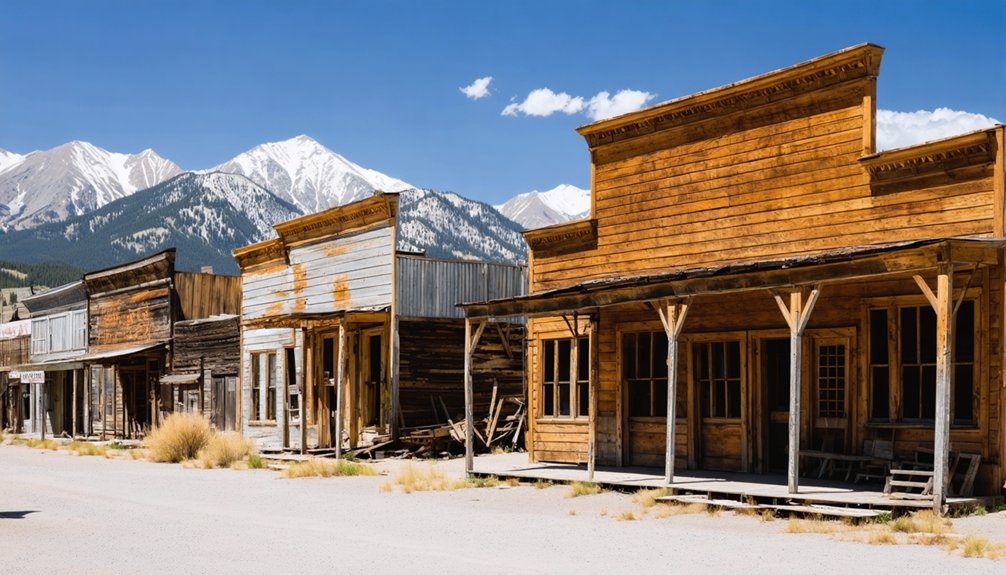
Twenty miles southwest of Buena Vista, St. Elmo stands as Colorado’s best-preserved ghost town, where you’ll discover authentic 1880s architecture frozen in time.
Originally called Forest City, the settlement was renamed after an 1866 novel and officially established in 1880. You can explore St. Elmo history through surviving structures like the Home Comfort Hotel, American House Hotel, and general store—buildings the eccentric Stark family preserved for decades after the population crashed from 2,000 to just seven by 1930.
The town’s National Historic District status protects its wooden facades and period St. Elmo architecture. Though a 2002 fire destroyed six buildings, you’ll still find authentic mining-era establishments along dirt streets where chipmunks now outnumber permanent residents.
Tin Cup: Where Lawmen Met Their Match
Unlike St. Elmo’s relative civility, Tin Cup earned its reputation through bloodshed. When gold strikes transformed this gulch into a boomtown in 1879, law enforcement couldn’t keep pace with mining culture’s brutal realities.
Two marshals—Harry Rivers and Andy Jameson—were gunned down within a year, proving lawmen truly met their match here.
You’ll find this town’s violent legacy preserved in its distinctive cemetery, divided across four knolls:
- Boot Hill for outlaws and gunfighters who died violent deaths
- Religious sections (Catholic, Protestant, Jewish) reflecting social divisions
- “Black Jack” Cameron’s grave, allegedly marked “He Held Five Aces”
After formal governance collapsed in 1918, Tin Cup transformed from incorporated municipality into the semi-ghost settlement you can explore today—where freedom meant living (and dying) by your own rules.
Planning Your Ghost Town Adventure Near Estes Park
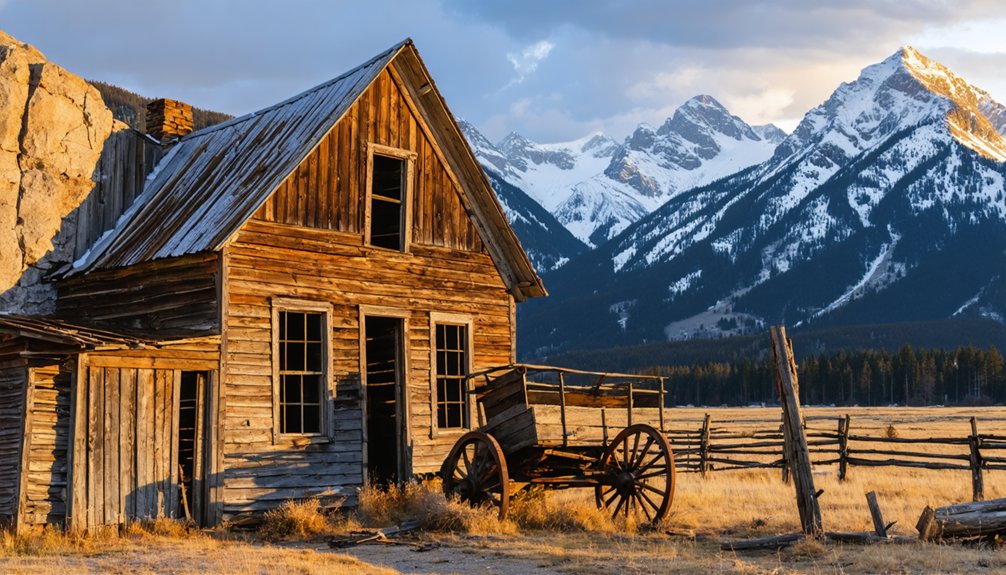
Before you load your daypack with water and trail snacks, you’ll need to understand that Estes Park’s ghost town exploration isn’t conveniently clustered along a single scenic byway.
You’re looking at multiple trailheads scattered across different elevations and access points.
Homestead Meadows requires a 2.5-mile trek through Lion Gulch, while Lulu City demands a 3.7-mile one-way hike from Colorado River Trailhead.
Mount Falcon Castle sits 1.5 miles from its eastern trailhead. Each site demands separate planning.
The historical significance varies wildly—from Homestead Act ranches with preserved furniture to Lulu City’s nine cabin ruins within Rocky Mountain National Park.
You’ll find Mount Vernon Cemetery near Morrison and Caribou’s minimal remains outside Nederland.
Pick your targets based on hiking stamina and historical interests.
Frequently Asked Questions
Are Dogs Allowed on the Hiking Trails to These Ghost Towns?
It depends on the jurisdiction. You’ll find dog-friendly trails in Roosevelt National Forest with leash rules, but Rocky Mountain National Park’s hiking regulations ban dogs on all backcountry trails—even to ghost-town ruins.
What Is the Best Time of Year to Visit Ghost Towns Near Estes Park?
Late June through early October delivers the best seasons for ghost town exploration. Clear weather conditions keep trails dry, roads open, and foundations visible—though you’ll dodge afternoon lightning and crowds by starting early on weekdays.
Can You Camp Overnight Near Any of These Ghost Town Sites?
You can’t camp at Lulu City inside Rocky Mountain National Park without designated permits, but dispersed camping’s allowed near Homestead Meadows in Roosevelt National Forest, respecting camping regulations and ghost town history preservation requirements.
Do I Need a Four-Wheel Drive Vehicle to Reach These Locations?
You won’t need four-wheel drive—these aren’t mountain fortresses. Standard vehicles handle the terrain conditions to trailheads and highways just fine. Vehicle recommendations shift to hiking boots once you park and hit those backcountry trails.
Are There Entrance Fees for Visiting Ghost Towns in the Area?
You’ll pay Rocky Mountain National Park’s standard entrance fee for Lulu City, but Roosevelt National Forest sites like Homestead Meadows typically don’t charge admission. Check current entrance regulations for accurate cost comparison before visiting.
References
- https://www.colorado.com/articles/colorado-ghost-towns
- https://www.uncovercolorado.com/ghost-towns/homestead-meadows/
- https://www.uncovercolorado.com/ghost-towns/
- https://www.mycoloradoparks.com/park/rocky-mountain-ghost-town-ruins/
- https://www.denver7.com/news/local-news/clothes-left-hanging-in-the-closet-the-story-behind-lulu-city-a-ghost-town-in-rocky-mountain-national-park
- https://www.businessinsider.com/ghost-town-homestead-meadows-estes-park-colorado-photos-2021-10
- https://www.youtube.com/watch?v=3poy7dPDdjU
- https://www.tripadvisor.com/ShowTopic-g60945-i436-k2851598-Ghost_towns_near_Estes_Park-Estes_Park_Colorado.html
- https://coloradoinfo.com/blog_post/explore-ghost-towns-in-colorado/
- https://www.fs.usda.gov/r02/arp/recreation/trails/homestead-meadows-trail