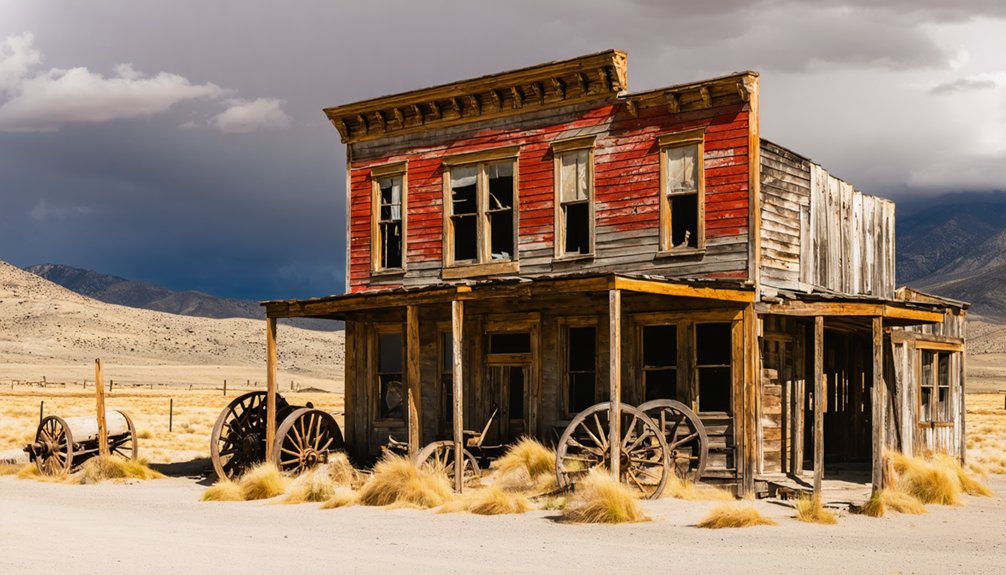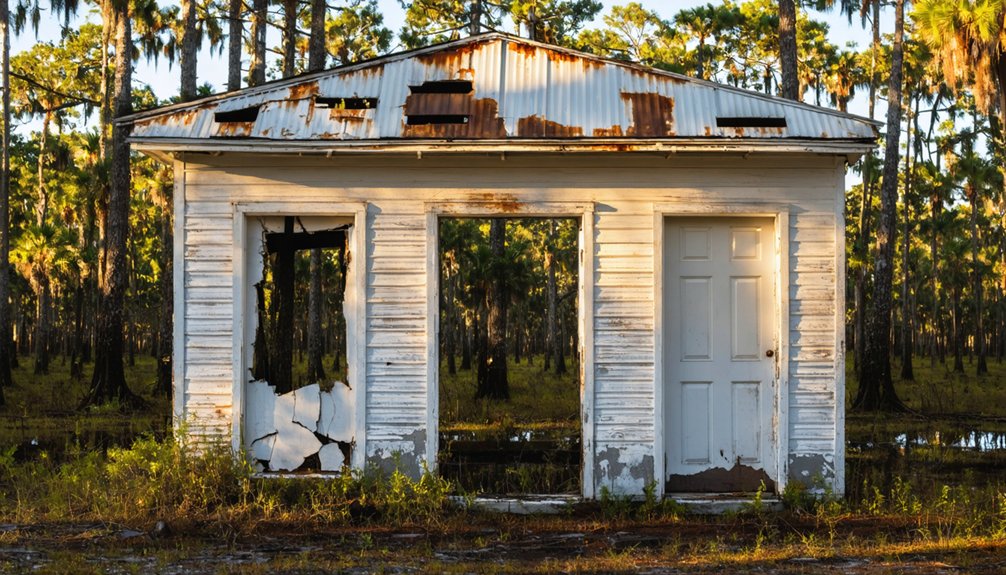
You’ll find Flamingo, the most notable ghost town near Everglades National Park, about 38 miles from the main entrance. This settlement thrived from 1893 with up to 100 residents who made their living through plume hunting, fishing, and charcoal production until the 1905 hunting ban triggered its decline. By the 1940s, when the area became parkland, only scattered remains existed. Today, you can explore the historic townsite via the 7.5-mile Coastal Prairie Trail, where Guy Bradley’s memorial commemorates the conservation movement that transformed this remote outpost.
Key Takeaways
- Flamingo, established in 1893, declined after the 1905 plume hunting ban and now serves as a ranger station within the park.
- The old Flamingo settlement site is accessible via the 7.5-mile Coastal Prairie Trail from the campground.
- Everglades City, founded in 1875, has declined from 625 residents in 1950 to 352 today but remains inhabited.
- Guy Bradley’s 1905 death near Flamingo marked a turning point from exploitation to conservation in the region.
- Hurricanes, economic decline, and park establishment in the 1940s caused Flamingo’s transformation into a ghost town.
Flamingo: From Plume Hunters’ Haven to National Park Ruins
Conservation efforts emerged from this destruction.
Audubon warden Guy Bradley patrolled these waters, enforcing new bird-protection laws until a plume hunter killed him near Flamingo in 1905. His death sparked nationwide outrage, strengthening the movement that culminated in the park’s 1947 establishment.
The earlier plume trade had caused the deaths of five million birds annually by 1886, devastating breeding colonies throughout Florida’s coastal regions.
Florida became a primary hunting ground for plume hunters, leading to significant declines in bird populations throughout the Everglades region.
Today, you’ll find Bradley’s memorial at Flamingo—a tribute to the brutal shift from exploitation to protection.
The Rise and Fall of Old Flamingo Settlement
While bird protection efforts eventually saved Flamingo’s wildlife, the settlement itself followed a trajectory common to Florida’s frontier outposts—brief promise followed by abandonment.
Flamingo’s story mirrors countless Florida settlements: a flash of frontier optimism dissolving into ghost-town silence.
You’ll find that Flamingo’s formal establishment in 1893 attracted roughly 50–100 residents who relied on fishing, charcoal making, and plume hunting along Florida Bay’s isolated shores.
When authorities banned plume hunting in 1905 following a warden’s murder, the community lost its primary cash income. Economic decline accelerated rapidly—the post office closed in 1909, and by 1912 only scattered houses remained occupied.
Hurricanes compounded the exodus, flooding low-lying farms with saltwater and destroying cisterns. When the Florida East Coast Railway bypassed the area, Flamingo’s fate was sealed, transforming from rough-hewn settlement into abandoned ruins.
The area gained new purpose in the 1940s when it became part of Everglades National Park, serving as a ranger station and visitor center rather than a traditional settlement. The settlement had been named after the abundant flamingos that once populated the region during its founding in the 1890s.
Hiking to the Ghost Town: Coastal Prairie Trail Guide
Reaching Old Flamingo’s remnants requires traversing one of South Florida’s most challenging wilderness routes—the 7.5-mile Coastal Prairie Trail that stretches from the modern Flamingo campground area to Clubhouse Beach on Florida Bay.
This historic path, once traveled by cotton pickers and fishermen, now tests your endurance and trail navigation skills through unmarked sections.
Expect these conditions:
- Extreme mosquito populations in marl prairie environments requiring full-body coverage
- Sticky marl mud creating impassable footing during wet summer months
- Wildlife encounters including biting ants along exposed routes
- Six-hour duration with unrelenting sun exposure
The National Park Service leaves this trail unmaintained and rangers recommend against hiking it—though they’ll issue backcountry permits.
Winter offers your best chance for safe passage.
The trail passes by the old town site, located approximately 4.5 miles from the campground, where you can explore what remains of the settlement that thrived over a century ago. Your destination, Clubhouse Beach, was named after a sportsman’s clubhouse built during the 1920s Florida Land Boom that fell into disuse after the economic downturn in 1925.
Everglades City and Other Faded Communities of the Region
Beyond the completely abandoned settlements lie communities that haven’t quite become ghost towns—yet.
They still retain some remnants of life, with scattered inhabitants clinging to their traditions. In contrast, the abandoned villages in Siberia stand as haunting reminders of a time gone by, overtaken by nature and silence. Once vibrant, these places now echo the stories of their former residents, inviting curiosity and reflection.
Everglades City, founded in 1875 and once a thriving boomtown of thousands during 1920s Tamiami Trail construction, now holds just 352 permanent residents.
You’ll find its census history tells a story of steady decline: from 625 in 1950 to today’s shrinking population.
The 1960s loss of county-seat status, devastating drug busts, and hurricane damage tested community resilience severely.
Today, Everglades City survives on seasonal tourism—swelling to 3,000 visitors during winter months before returning to semi-ghost status.
The town serves as the gateway to the 10,000 Islands, drawing fishing enthusiasts to explore the vast archipelago off southwest Florida’s coast.
This Everglades history reflects broader patterns: economic fragility, environmental challenges, and determination to preserve “Old Florida” character despite mounting pressures toward complete abandonment.
The region’s porous limestone geology has shaped settlement patterns throughout history, with communities built on areas of higher elevation to avoid the seasonal flooding that characterizes this marshland ecosystem.
Planning Your Visit: Safety and Conservation in the Backcountry
- Permit requirements – Reserve your wilderness camping spot and pay non-refundable fees; stays max out at 14 consecutive days.
- Navigation tools – Pack waterproof charts, compass, and backup systems for shallow, unmarked waterways.
- Safety gear – Bring ample water, insect protection, sun coverage, and Coast Guard-required equipment. High water or storm events may temporarily close backcountry areas, so verify current conditions before departure. Powerboat operators must complete the Everglades Boater Education course before heading into the wilderness.
- Leave No Trace ethics – Pack out all waste, use designated sites only, and never feed wildlife.
Frequently Asked Questions
Are There Any Documented Photographs of Original Flamingo Town Before Abandonment?
Yes, you’ll find historic images documenting pre-park Flamingo town through National Park Service archives and Florida State collections. These photographs preserve town history from the early 1900s settlement through the 1948 hurricane era.
What Happened to Residents Who Lived in Flamingo After 1910?
After Flamingo’s 1912 abandonment, residents shifted to commercial fishing through the 1940s. Flamingo residents faced forced displacement when Everglades National Park systematically purchased their properties in the late 1940s, ending their independent livelihoods and removing families from ancestral lands.
Can You Camp Overnight Near the Old Flamingo Ghost Town Site?
You’ll find absolutely zero camping allowed at the old ghost town site itself. Park camping regulations require you to use designated sites only—Flamingo Campground lies 4.5 miles away, preserving both ghost town history and fragile ecosystems.
Were There Any Schools or Churches in Historic Flamingo Settlement?
Historic Flamingo had a small school serving settlers’ children, but no dedicated church building existed. You’ll find that community gatherings for religious purposes likely occurred in homes or multi-use historic buildings instead of formal structures.
How Deep Does Water Get on Coastal Prairie Trail During Wet Season?
Water depth on Coastal Prairie Trail typically ranges ankle to knee deep during wet season, with occasional deeper crossings. Seasonal flooding from May through November makes conditions unpredictable—always check current reports before you explore.
References
- https://en.wikipedia.org/wiki/List_of_ghost_towns_in_Florida
- https://www.thetravel.com/florida-everglades-ghost-town-flamingo/
- https://floridahikes.com/indian-key-an-unusual-ghost-town/
- https://www.ghosttowns.com/states/fl/flamingo.html
- https://floridatrailblazer.com/2018/01/26/osceola-ghost-town-in-seminole-county/
- https://yanitzaninett.com/blog/2019/9/10/everglades-city-spending-1-hour-in-ghost-village
- https://www.youtube.com/watch?v=AIbbhYY_gVg
- https://www.youtube.com/shorts/zZavIo_L1DY
- https://blogs.ifas.ufl.edu/sarasotaco/2024/01/23/wild-sarasota-floridas-wading-birds-and-the-plume-trade-a-story-of-conservation/
- https://www.audubon.org/florida/news/history-audubon-florida1