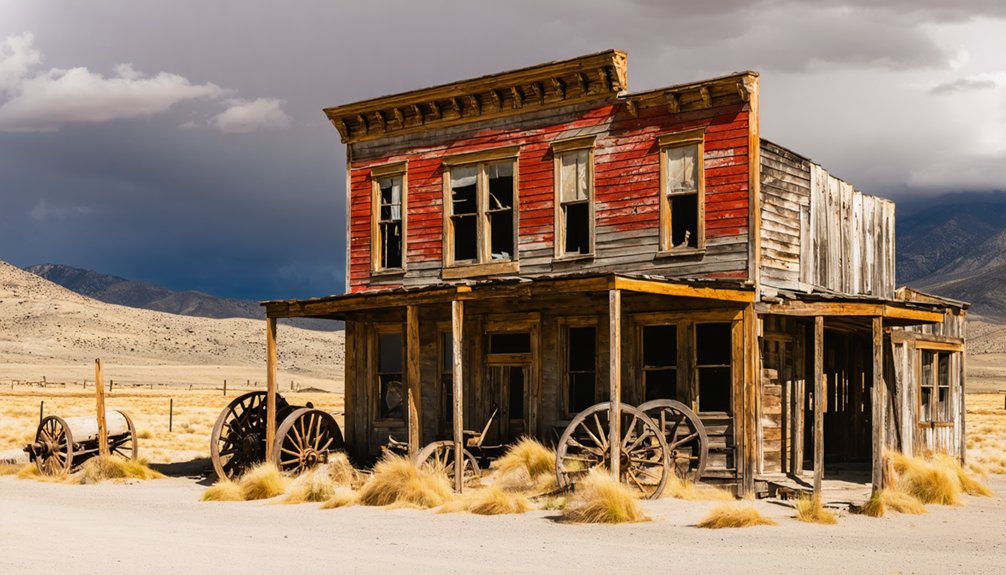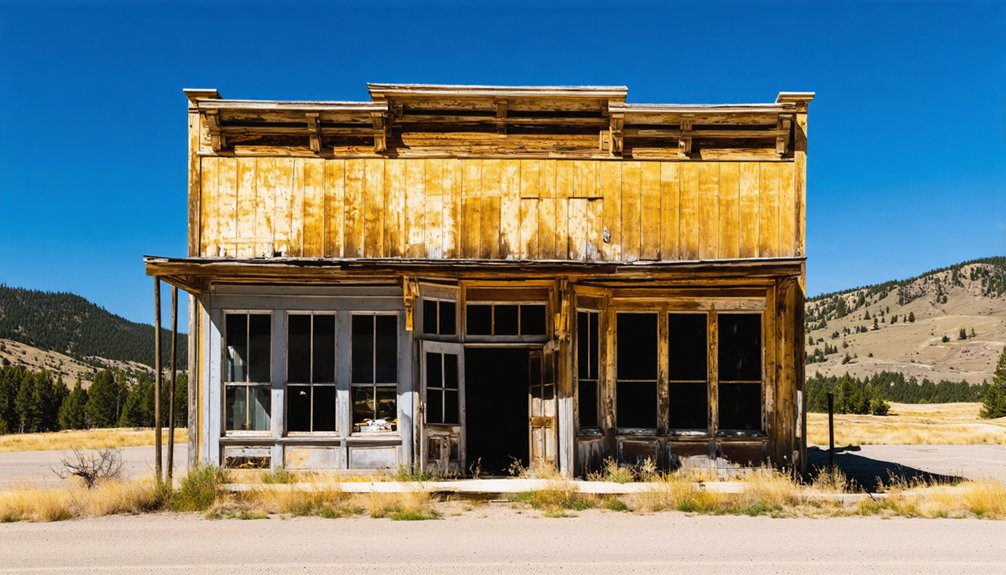
You’ll find fascinating abandoned settlements within 50 miles of Fort Collins, from Homestead Meadows in Lion Gulch—eight homesteads accessible via a 2.5-mile hike—to Dearfield, Colorado’s only all-Black agricultural colony founded in 1910. Nearby options include Caribou, which once housed 3,000 silver miners, and Gold Hill from the 1859 gold rush. Mountain sites like Homestead Meadows are best visited June through September, while plains destinations remain accessible year-round. Our extensive guide covers seasonal planning, essential safety gear, and detailed directions to help you explore these historical remnants responsibly.
Key Takeaways
- Homestead Meadows in Lion Gulch features eight homestead remnants from 1889-1923, accessible via a 2.5-mile hike on Lion Gulch Trail.
- Caribou, founded in the 1870s, once housed 3,000 silver miners and offers historic mining town exploration opportunities.
- Gold Hill, established during Colorado’s 1859 gold rush, still contains preserved buildings from the early mining era.
- Crisman and Altona are smaller mining operations with scattered remnants located along Fourmile Canyon near Boulder.
- Mountain ghost towns visit best from late June through September; bring sturdy footwear, navigation tools, and respect fragile structures.
Homestead Meadows: Mountain Settlement Remnants
Tucked into Lion Gulch east of Rocky Mountain National Park, Homestead Meadows represents a dispersed collection of former ranches rather than a traditional ghost town with a main street and storefronts.
You’ll find remnants of eight primary homesteads established between 1889 and 1923 under the Homestead Act, which granted 160-acre parcels for just $15.
The homestead lifestyle here centered on self-reliant family operations—clearing timber, grazing cattle, and running small sawmills. Agricultural practices distinguished this settlement from Colorado’s typical mining camps, with families like the Engerts and Turners maintaining year-round ranching operations.
Unlike Colorado’s gold-seeking prospectors, Homestead Meadows families built their lives through agriculture, timber, and cattle rather than mineral extraction.
Many men walked to Lyons for wage work while women managed livestock and land improvements.
The last residents departed in 1952, leaving collapsed cabins, corrals, and the Griffith ranch complex along today’s Lion Gulch Trail.
Reaching the site requires a 2.5-mile hike along the trail, offering visitors privacy and solitude amid the historic ruins.
The community never established formal infrastructure like a post office or school, reflecting its isolated agricultural character.
Dearfield: A Unique Plains Community
While Homestead Meadows exemplified isolated mountain ranching, a dramatically different settlement emerged on Colorado’s eastern plains. Founded in 1910 by Oliver Toussaint Jackson, Dearfield became Colorado’s only all-Black agricultural colony, located 25-30 miles southeast of Greeley.
You’ll discover a community that embodied agricultural ingenuity, mastering dry farming techniques to cultivate water-intensive crops like watermelons despite harsh conditions.
The Dearfield legacy peaked in 1921 with 700 residents who built:
- 44 wooden cabins alongside a concrete block factory
- Two churches, a school, and dance pavilion
- Grocery store, restaurant, and boarding house
Valued at over one million dollars, this self-sufficient community pursued economic independence until the Dust Bowl’s devastating drought forced abandonment. The community fostered remarkable racial harmony through interdependence, with Black farmers providing labor on neighboring white-owned farms and social events that broke down barriers during the Jim Crow era. Today, visitors can explore remnants including a historic diner, gas station, and Jackson’s original home along US-34 near Orchard.
Additional Ghost Towns in the Boulder Area
Beyond Fort Collins, Boulder County harbors a rich constellation of mining-era settlements that span from semi-abandoned ruins to preserved historic communities.
Caribou history began in the early 1870s when silver deposits drew 3,000 residents to this high-country camp near Nederland. After an 1879 fire, the town dwindled; today you’ll find one collapsed cabin and two stone ruins accessible via County Road 128.
Gold Hill significance stems from its 1859 founding during Colorado’s first gold rush, making it among the state’s earliest mining camps. Unlike Caribou, Gold Hill remains occupied with preserved buildings intact.
Nearby Crisman and Altona represent smaller operations—hard-rock mines and milling sites now marked by scattered remnants along Fourmile Canyon’s historic corridor. Many Colorado ghost towns were abandoned due to rural depopulation as farming communities emptied and residents moved to urban centers. Visitors should explore these sites with caution and respect, as many abandoned structures can be unsafe.
Planning Your Ghost Town Adventure
Because Colorado’s abandoned settlements sit at elevations ranging from 4,500 to 10,000 feet and span environments from prairie grasslands to alpine forests, successful ghost town exploration depends on matching your visit to seasonal conditions and site-specific access.
In particular, ghost towns in Union County offer a unique glimpse into the historical allure of the region. Visitors can discover remnants of old mining operations and the stories of those who once called these places home. Planning your trip during the off-peak seasons may ensure a quieter experience as well as improved access to some of the more remote sites.
For mountain sites like Homestead Meadows, late June through September offers clear trails and minimal snow. Plains destinations such as Dearfield remain accessible year-round but face extreme heat and thunderstorms midsummer.
Essential trip preparation includes:
- Hiking essentials: sturdy footwear, layered clothing, rain shell, sun protection, and 2–3 liters of water per person
- Navigation tools: offline topographic maps or GPS tracks for locating dispersed homestead foundations in forested areas
- Safety gear: headlamp, first-aid kit, and extra food for route-finding delays where cell coverage proves intermittent
Follow Leave No Trace principles and avoid climbing fragile ruins. Ghost towns near other Colorado cities like Buena Vista typically range from 16 to 25 miles from the main hub, providing useful distance benchmarks for trip planning. 2WD cars are suitable for reaching most ghost towns, though some remote locations require high-clearance 4×4 vehicles or hiking access.
Historical Context of Regional Settlements
Long before the 1870s agricultural colony gave Fort Collins its permanent civic identity, the Cache la Poudre River Valley served as a strategic corridor linking French-Canadian fur trappers, overland emigrants, and U.S. military forces protecting westward expansion routes.
Camp Collins, established in 1862 by the 9th Kansas Volunteer Cavalry, anchored military settlements guarding the Overland Trail until an 1864 flood forced relocation to higher ground.
When federal troops abandoned the post in 1866, squatters occupied the site until Congress opened it for homesteading in 1872. That same year, agricultural colonies arrived to purchase land and plat a planned community.
Unlike Colorado’s volatile mining camps, Fort Collins developed as a stable hub with mills, stores, and schools—a foundation that shaped regional satellite towns like Stout. By the 1880s, nearby settlements such as Stout emerged from the booming sandstone quarrying industry, taking advantage of rich deposits and strategic rail access to supply construction materials throughout the region. Among the valley’s early French-Canadian trappers was the eccentric Uncle Fossil, known for his beaver skin hat and his unusual companion, a pet skunk named Stinky.
Frequently Asked Questions
Are Pets Allowed When Visiting Ghost Towns Near Fort Collins?
Pets are generally allowed at ghost towns near Fort Collins on public lands if leashed, but you’ll need to verify ghost town regulations and follow pet safety practices, especially around fragile historic structures and wildlife habitats.
What Is the Best Season to Visit These Ghost Towns?
Golden aspen leaves and crisp air mark the best time: late August through October. You’ll find dry trails, reliable access, vibrant seasonal activities like fall photography, and fewer crowds—perfect for independent exploration.
Are There Entrance Fees for Homestead Meadows or Dearfield?
You’ll pay entrance fees for ghost town access to Homestead Meadows—either $9 at Lion Gulch Trailhead or $10 through Hermit Park. Dearfield’s fee information isn’t available in current sources, so you’ll need separate research.
Can I Camp Overnight at These Ghost Town Locations?
Overnight camping isn’t permitted at Dearfield (day-use only) or directly at Homestead Meadows ruins. However, you can camp nearby in Roosevelt National Forest following dispersed camping regulations and overnight permits where required by rangers.
Are Guided Tours Available for Fort Collins Area Ghost Towns?
Guided tours focus on Old Town Fort Collins’ haunted buildings and tunnels, not outlying ghost towns. You’ll find guided exploration of urban historical significance, but remote ruins require self-directed visits with proper permissions.
References
- https://www.uncovercolorado.com/ghost-towns-near-me-colorado/
- https://www.colorado.com/articles/colorado-ghost-towns
- https://www.uncovercolorado.com/ghost-towns/
- https://fortcollinsexperience.com/stout-ghost-town-beneath-horsetooth/
- https://history.weld.gov/County-150/Weld-County-Towns/Ghost-Towns-in-Weld-County
- https://www.visitnorthparkco.com/ghost-towns-of-jackson-county/
- https://newcountry991.com/photos-tour-the-ghost-town-of-dearfield-outside-of-greeley/
- https://929nin.com/ghost-town-estes-park-colorado/
- https://www.amli.com/blog/abandoned-mines-and-ghost-towns-near-denver
- https://coloradosghosttowns.com/Homestead Meadows CO.html