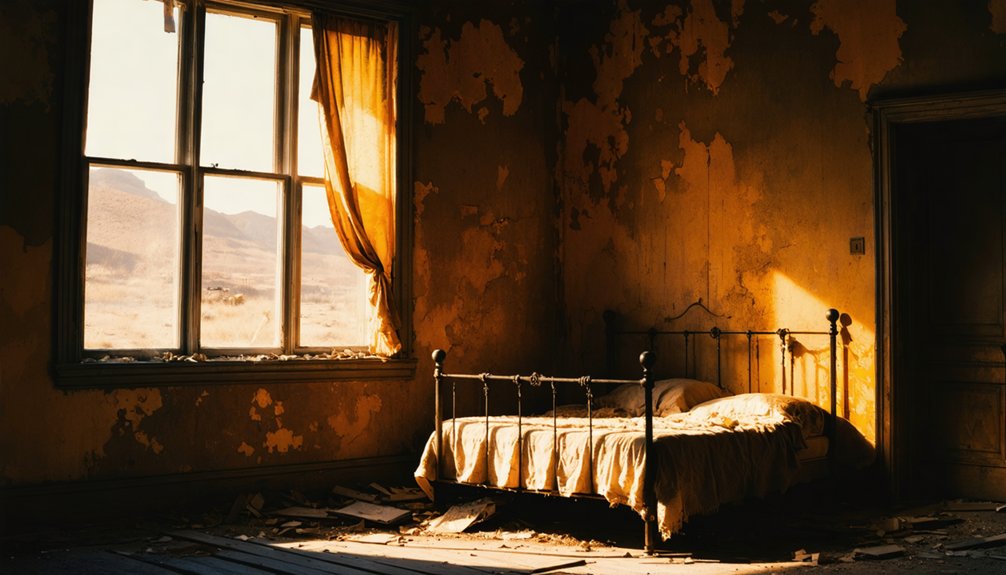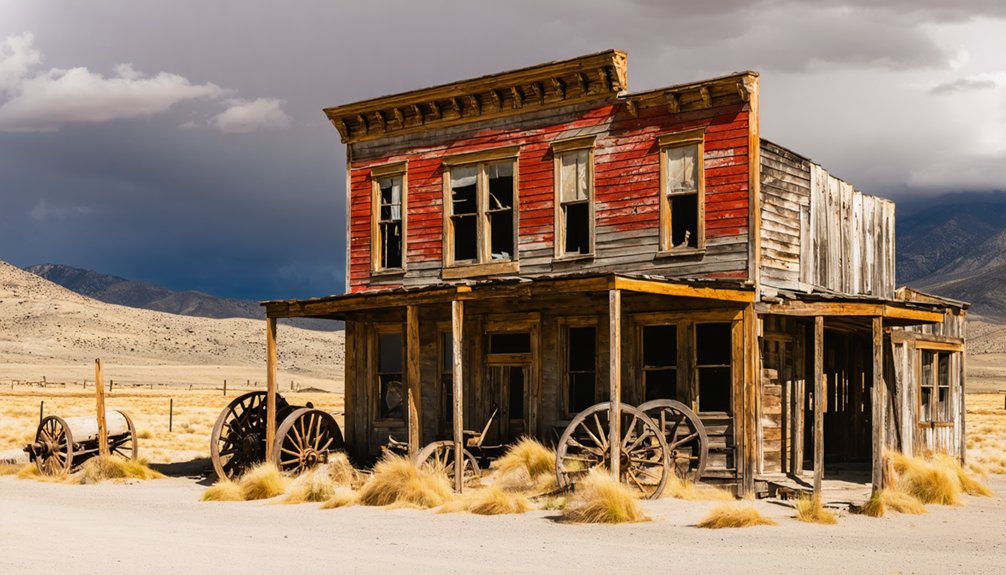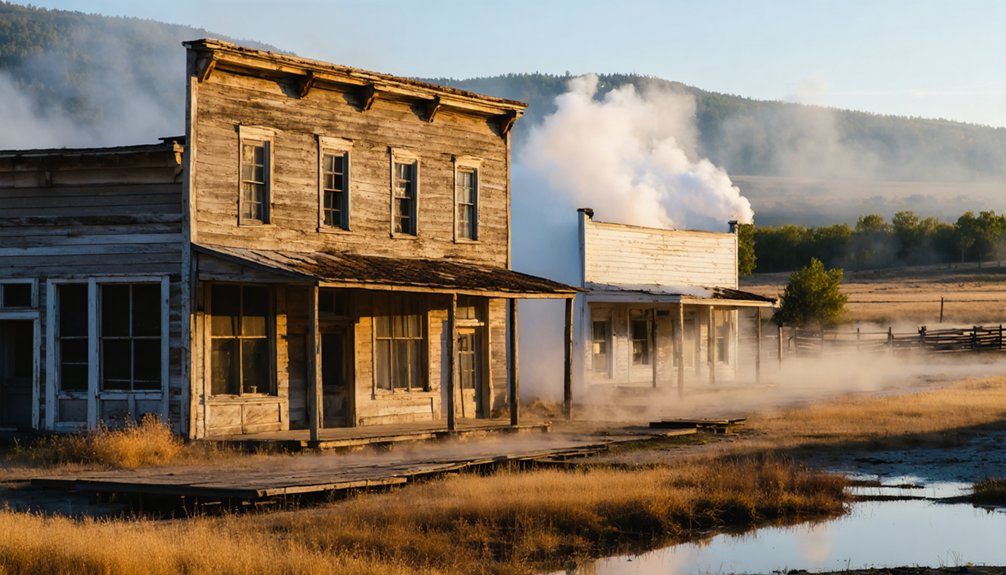
You won’t find many true hot spring ghost towns in the Midwest due to the region’s stable geology, which lacks the geothermal activity common out West. Rush, Arkansas, comes closest—this zinc mining town near thermal springs thrived until the 1920s before complete abandonment by 1972. Dozens of mineral spring resorts across the Great Plains, like Pinnacle Springs and Blue Springs, vanished with minimal trace after economic downturns. The region’s unique settlement patterns reveal distinct stories worth exploring further.
Key Takeaways
- True hot springs are rare in the Midwest due to stable continental geology lacking robust geothermal gradients.
- Rush, Arkansas, is a documented ghost town near thermal waters, abandoned by 1972 after zinc mining collapsed.
- Pinnacle Springs, Arkansas, was a mineral spring resort town with hotels and bathhouses that declined after 1890.
- Great Plains mineral spring resorts like Blue Springs, Kansas, vanished with minimal trace after economic downturns.
- Unlike Montana’s thriving ghost town-hot springs tourism, Midwest examples lack infrastructure or coordinated heritage promotion.
Rarity of Hot Springs and Ghost Town Pairings in the Midwest Region
Because the Midwest sits almost entirely on a stable continental craton with minimal recent volcanic activity, the region lacks the robust geothermal gradients that produce high-temperature hot springs across the American West.
You’ll find that documented thermal anomalies in Midwest geology remain modest—warm springs rather than true hot springs—and widely scattered across state boundaries.
Archival records show western ghost towns frequently clustered near hydrothermal resources that fueled mining booms, but Midwestern settlement patterns followed agricultural land, navigable rivers, and railroad expansion instead.
Where mineral springs did attract resort development, transportation networks typically allowed these communities to adapt rather than collapse entirely.
The structural rarity of three simultaneous conditions—geothermal activity, rapid boom-era growth, and near-total abandonment—explains why you won’t find classic hot-spring ghost towns dotting the Midwest interior.
Nevada’s mining ghost towns exemplify this western pattern, with settlements like Pine Grove and Rockland experiencing population peaks during silver rushes before declining into abandonment when ore deposits depleted and metal prices dropped in the early twentieth century.
Towns like Manhattan, Nevada demonstrated this trajectory when silver mining operations transformed Big Smoky Valley into a community of 4,000 residents before activity ceased in 1947.
Rush Ghost Town and Arkansas Spring Resort Heritage
The American South, however, presents a different geographic reality, particularly where the Ozark Plateau‘s fractured limestone terrain has allowed a handful of mineral springs to emerge alongside extractive industries.
Where limestone fractures meet economic opportunity, the Ozark Plateau’s geological complexity has shaped both natural springs and industrial settlement patterns.
Rush, Arkansas—a zinc mining settlement in Marion County that thrived during the early twentieth century—now stands as the region’s most documented example of a ghost town near thermal water resources.
Rush History traces back to the 1880s, when prospectors staked claims along Rush Creek after discovering zinc ore.
Arkansas Mining boomed during World War I, when Rush functioned as the state’s zinc industry center, hosting ten mining companies operating thirteen mines.
The Morning Star Mining Company became Arkansas’s largest zinc producer, supporting a population between 2,000 and 5,000 residents.
Post-war demand collapse triggered abandonment, leaving Rush a certified ghost town by 1972.
Southwest Montana’s Ghost Town and Hot Springs Tourism Model
While Rush demonstrates the isolated pairing of extractive industry and mineral water in the South, Southwest Montana has institutionalized a regional tourism model that clusters ghost towns and hot springs into a single marketable geography.
You’ll find over thirty ghost towns—including Bannack State Park, Virginia City, and Elkhorn—concentrated along the same mining belts that expose geothermal resources now developed as Norris Hot Springs, Broadwater Hot Springs, and Boulder Hot Springs.
This ghost town tourism corridor builds on Indigenous geothermal heritage, where hot springs served as neutral healing grounds centuries before gold‑rush economics created the settlements you explore today.
State agencies and regional marketers promote “spirits and soaking” itineraries that pair frontier history with year‑round wellness experiences, transforming boom‑and‑bust geography into a sustainable, diversified travel product. Historic mining centers like Butte, known as the richest hill on Earth, anchor these itineraries by offering visitors access to both underground heritage sites and nearby geothermal attractions. Operators like the Gold Creek Overland Stage Company provide authentic stagecoach rides to mining sites that once housed thousands but now stand as ruins, deepening the experiential connection between extraction history and natural landscape.
Vanished Mineral Spring Communities Across the Great Plains
Beyond Montana’s successful pairing of mining heritage and geothermal wellness, hundreds of Great Plains mineral spring resorts rose and vanished with almost no physical trace, leaving behind only archival photographs, promotional brochures, and overgrown foundations.
Blue Springs in Johnson County, Kansas, illustrates this pattern: a late‑19th‑century complex featuring a hotel, dance pavilion, and bathing facilities drew weekend crowds from Kansas City until changing transportation networks and competition from larger resorts shuttered operations in the early 20th century.
You’ll find similar ruins at Eagle Springs in northeastern Kansas, where a country health retreat failed when automobiles and indoor plumbing made rural resorts obsolete.
Stafford County’s speculative spa town never materialized beyond platted streets and a mineralized well.
These vanished mineral springs communities reveal how fragile spa economies proved across the isolated Plains, particularly in Kansas and Oklahoma where economic downturns accelerated abandonment during the Dust Bowl era.
The American Midwest’s industrial past left behind not only factory ruins but also these forgotten wellness destinations that once promised healing waters to a generation of health-seekers.
Pinnacle Springs: Arkansas’s Lost Health Resort Town
In 1880, cattle herder Jeff Collier tasted water from an unfamiliar spring while tending livestock on James D. Martin’s Faulkner County land. That discovery launched Pinnacle Springs history as Arkansas’s ambitious health resort.
By 1881, Martin’s company had platted 360 acres, built the 40-room Pinnacle House hotel, and marketed mineral water benefits—iron, magnesium, and chlorine—to cure chronic ailments.
Within five years you’d find two hotels, twelve bathhouses, eight stores, and fifty homes serving hundreds of annual visitors seeking malaria-free healing. The prohibitionist town even attracted Arkansas Christian College in 1889.
Yet isolation killed both institutions: the college closed in 1890, visitors dwindled, and Pinnacle Springs vanished, leaving only archaeological traces of its brief therapeutic promise. The town’s reputation for attracting immoral individuals accelerated its decline alongside doubts about the springs’ curative powers. The resort’s decline mirrored a national trend as affordable automobile travel shifted preferences away from remote health resorts in the early twentieth century.
Frequently Asked Questions
What Causes Natural Hot Springs to Form Geologically?
You’ll find hot springs form when groundwater circulates deep through fractured rock, heated by geothermal activity from Earth’s interior, then rises buoyantly along fault zones, dissolving minerals and creating distinctive mineral deposits at the surface.
How Do You Safely Visit Abandoned Ghost Town Sites?
Verify ownership through county records, respect posted boundaries, and wear sturdy footwear. Document safety precautions like sharing your itinerary, while practicing exploration etiquette: photograph from designated areas, don’t remove artifacts, and leave no trace.
Are There Any Thermal Springs Active in the Core Midwest Today?
No true thermal activity exists in today’s core Midwest springs. You’ll find only deep aquifer warmth and oil-field brines—documented sources confirm no natural hot springs match western or Appalachian temperatures in these interior states.
What Should I Pack for a Ghost Town Exploration Trip?
Your journey’s compass points to essentials: pack sturdy hiking essentials—boots, water, maps—plus camera gear for documenting forgotten structures. Historical records confirm respirators, gloves, and first-aid protect you while preserving these vanishing Midwest landmarks independently.
Can You Legally Soak in Undeveloped Hot Springs Near Ghost Towns?
Legal regulations typically prohibit soaking in undeveloped Midwest hot springs near ghost towns due to trespass laws, federal land-use codes, and cultural-resource protections. Always verify ownership, obtain permission, and follow proper soaking etiquette respecting environmental and historic preservation mandates.
References
- http://freepages.rootsweb.com/~gtusa/history/usa/ar.htm
- https://onlyinark.com/places-and-travel/rush-arkansas-ghost-town/
- https://southwestmt.com/pdfs/Southwest-Montana-Travel-Guide-2022.pdf
- https://aymag.com/arkansas-backstories-ghost-towns/
- https://www.geotab.com/ghost-towns/
- https://www.youtube.com/watch?v=DSwT-EmfJEc
- https://www.tripadvisor.com/Attractions-g28925-Activities-c47-t14-Arkansas.html
- https://www.youtube.com/watch?v=abxA6AIAbGQ
- https://visitmt.com/things-to-do/ghost-towns
- https://nvtami.com/top-10-ghost-towns-nevada-northwest/