You’ll find four compelling ghost towns within 30 miles of Hurricane, Utah. Grafton, established in 1859, features adobe ruins from Brigham Young’s Cotton Mission and appeared in “Butch Cassidy and the Sundance Kid.” Silver Reef produced $25 million in ore before its 1884 collapse, leaving stone foundations and a restored Wells Fargo building. Babylon served Silver Reef’s mining operations until 1887, while Old Irontown’s beehive kilns mark an 1868 industrial settlement. Each site offers distinct insights into Utah’s pioneer and mining heritage.
Key Takeaways
- Grafton Ghost Town, established 1859, features four historic buildings including an 1886 adobe schoolhouse and appeared in “Butch Cassidy and the Sundance Kid.”
- Silver Reef produced $25 million in silver ore before its 1884 decline; remnants include a restored Wells Fargo building and stone foundations.
- Babylon Mining Camp operated 1877-1887 to process Silver Reef ore; ruins include stone offices, tailings piles, and nearby petroglyph panels.
- Old Irontown functioned 1868-1876 producing pig iron for settlements and railroads; site features a preserved beehive charcoal kiln and interpretive trail.
- Bring offline maps and emergency water when visiting; respect property boundaries and avoid monsoon season due to flash flood risks.
Grafton Ghost Town: Hollywood’s Favorite Abandoned Settlement
Nestled along the Virgin River just outside Zion National Park’s borders, Grafton stands as Utah’s most photographed ghost town—a distinction earned not merely through age but through its remarkable ability to transport visitors back to the hardscrabble frontier of the 1800s.
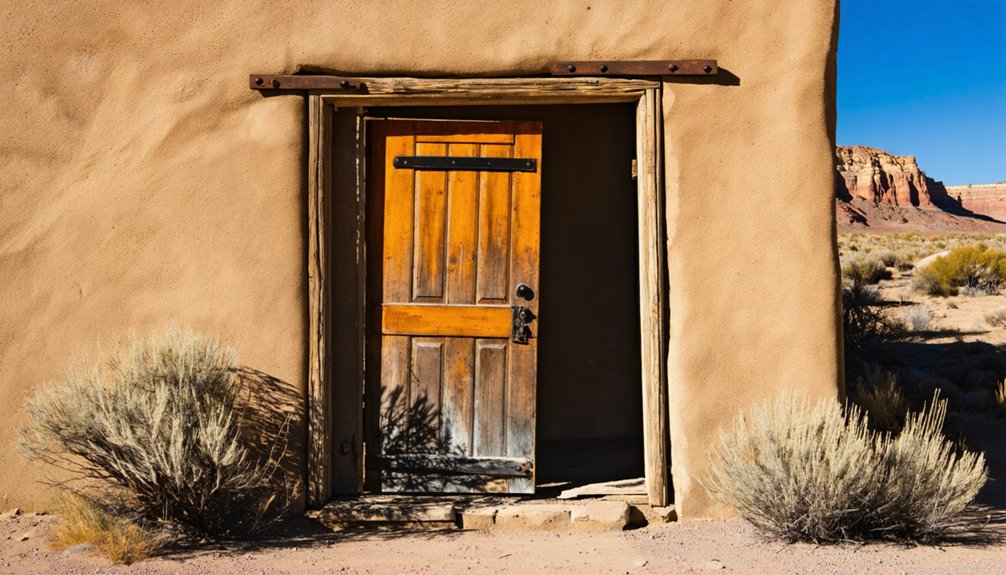
Grafton history began in 1859 as Wheeler, part of Brigham Young’s Cotton Mission, before floods forced relocation upstream in 1862. You’ll discover authentic Grafton architecture throughout the site—most significantly the 1886 adobe schoolhouse built with lumber hauled 75 miles from Mount Trumbull.
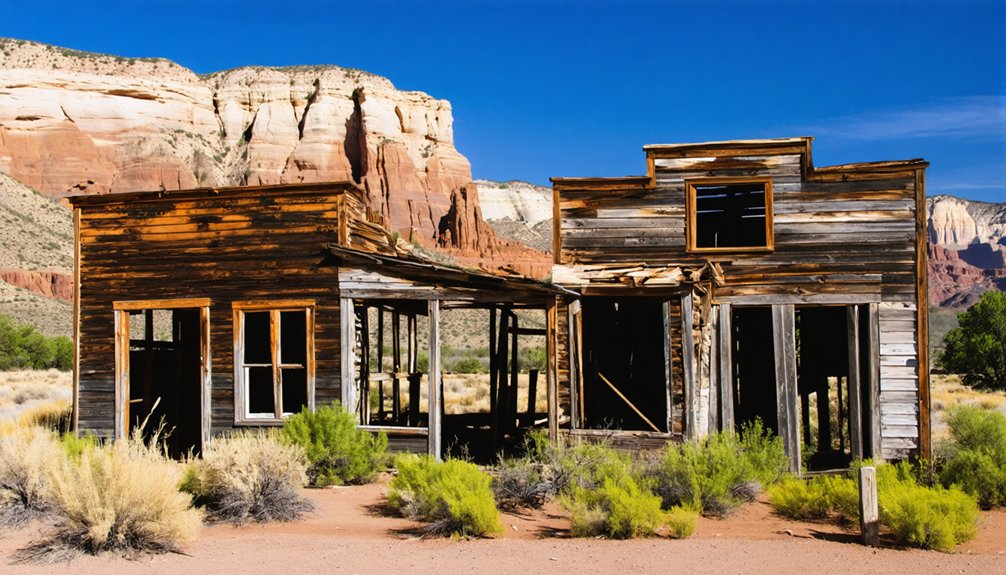
Only four historic buildings survive alongside the cemetery, where gravestones chronicle the brutal realities settlers faced: disease, conflicts during the Black Hawk War, and relentless flooding that eventually drove the last permanent residents away by 1945. The town’s cinematic appeal has made it a popular filming location, most famously for the 1969 Academy Award-winning western “Butch Cassidy and the Sundance Kid” starring Paul Newman and Robert Redford. Despite its abandonment, descendants gather annually at the site to celebrate their pioneer heritage and maintain connections to this historic settlement.
Silver Reef: Utah’s Sandstone Silver Mining Legacy
By 1878, silver mining had transformed the settlement into a genuine city—1,500 souls strong, with saloons, churches, and even a baseball team called the “Dirty Stockings.”
But falling prices and depleted ore killed the boom by 1884.
Before its decline, Silver Reef produced approximately $25 million worth of ore.
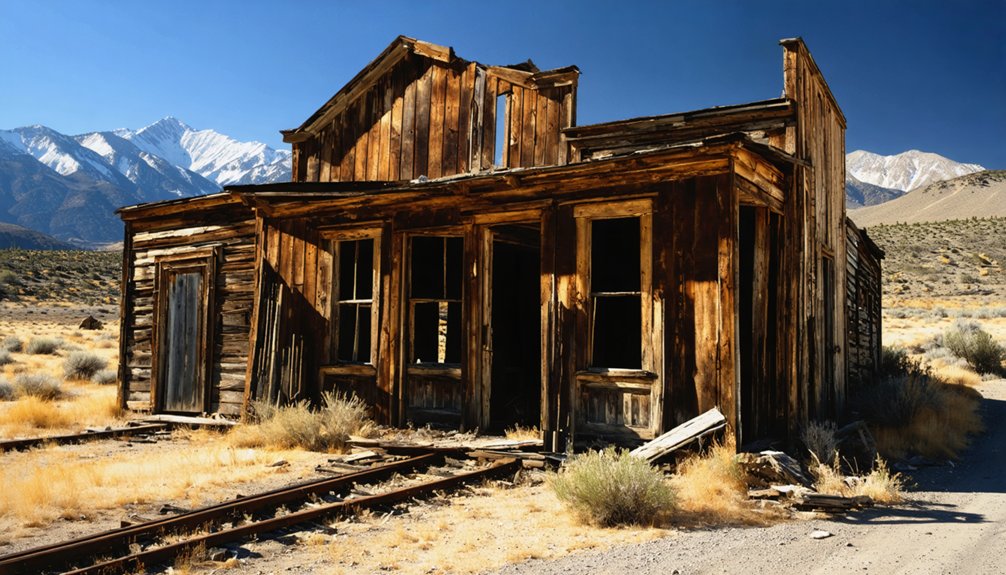
Today you’ll find stone foundations and the restored Wells Fargo building standing sentinel over Utah’s geological anomaly. Among the ruins are the arched doorway of the John H. Rice Bank building and remnants of the Harris Hotel.
Babylon and the Virgin River Mining Camps
The Virgin River’s muddy waters powered more than Mormon mills—in 1877, the Stormont Mining Company harnessed the current to crush Silver Reef’s peculiar sandstone ore at a new reduction works they called Babylon.
Gentile miners named their Virgin River mill *Babylon*—a pointed rebuke to the Mormon settlements watching from across the water.
The name wasn’t subtle: roughly 40–50 “Gentile” workers and their families lived apart from Latter-day Saint settlements, running the stone mill that processed ore until 1887.
Virgin River mining created a transient, hard-edged camp culture—boarding houses, freighting crews, saloon recreation—until falling silver prices shut the works.
Today you’ll find stone office ruins, tailings piles, and a graffiti-covered concrete shell (a 1990s house fire, not original Babylon history).
Flash-flood scars and petroglyph panels mark the benches where Babylon’s families once endured isolation, heat, and the boom-and-bust rhythm of frontier extraction. The original mill office, now a crumbling stone ruin, still shows traces of interior plaster that once covered its sandstone walls. Nearby, dinosaur tracks add another layer of deep time to this landscape of abandonment and adaptation.
Old Irontown: Industrial Ruins of Iron County
While Silver Reef‘s mining camps chased precious metals embedded in sandstone, Iron County’s industrial ambitions ran toward a heavier prize—iron ore from the red-brown slopes of Iron Mountain.
Founded in 1868 as Iron City, this company town served the Great Western Iron Company’s blast furnace operation twenty-five miles west of Cedar City. By 1871, ninety-seven residents supported infrastructure producing five to seven tons of pig iron daily for Mormon settlements and regional railroads.
The workforce mixed LDS and non-LDS laborers, introducing cultural influences like saloons to the conservative settlement—a friction typical of frontier industrial history. High shipping costs and the Panic of 1873 shuttered operations by 1876.
Today you’ll find a preserved beehive charcoal kiln and foundry ruins along a quarter-mile interpretive trail through Utah’s most intact nineteenth-century ironworks. Interpretive plaques describe the site’s kiln, furnace, foundry, and Erastra operations. The site represents Utah’s first ghost towns, established before many of the state’s better-known mining camps emerged in subsequent decades.
Exploring ghost towns near Helper Utah offers a glimpse into the rugged history of the region. These abandoned settlements, once bustling with miners and their families, tell stories of ambition and resilience. Each visit reveals remnants of a bygone era, inviting adventurers to uncover the secrets of the past.
Planning Your Southern Utah Ghost Town Adventure
Since your ghost-town explorations radiate from Hurricane’s valley floor into backcountry carved by the Virgin River and its tributaries, you’ll need more than a rental sedan and smartphone navigation to reach most historic sites safely.
Download offline maps before cellular coverage fades along UT-9, and pack emergency water—dehydration strikes fast when you’re photographing sun-bleached timbers under triple-digit summer heat.
Cell service vanishes fast in Utah’s backcountry—download maps and pack extra water before chasing ghost towns in desert heat.
Ghost town exploration demands respect for crumbling structures and private property boundaries; enter only signed-open buildings and never climb deteriorating walls.
Safety considerations intensify during monsoon season when flash floods transform dry washes into torrents within minutes, the same force that drowned Grafton repeatedly.
Fill your tank in Hurricane, carry physical directions to each turnoff, and leave early—these ruins reward the prepared, not the impulsive. Before venturing out, consult with local guidance to navigate remote roads where cell reception becomes unreliable. Utah’s over 140 ghost towns offer countless exploration opportunities beyond the sites nearest Hurricane, though many require high-clearance vehicles and backcountry navigation skills.
Frequently Asked Questions
Are Ghost Towns Near Hurricane Safe to Explore With Children?
Ghost towns near Hurricane offer family safety when you choose preserved sites like Grafton, plan child-friendly activities for cooler hours, pack plenty of water, and supervise kids around old structures—you’ll create memorable adventures while managing real desert risks.
Do I Need a 4WD Vehicle to Reach These Ghost Towns?
You won’t need a tank! Grafton and Silver Reef welcome regular cars in dry weather, but exploring remote sites demands high clearance or 4WD. Check current conditions—monsoons transform friendly roads into impassable mud instantly.
Can I Camp Overnight at Grafton or Silver Reef?
No, you can’t camp overnight at either ghost town due to camping regulations and town ordinances. Grafton prohibits all overnight stays, while Silver Reef sits on private land. You’ll need nearby BLM dispersed sites instead—no overnight permits required there.
What’s the Best Season to Visit Southern Utah Ghost Towns?
Late March through May and late September through October offer the best time for exploring these remote sites. You’ll enjoy moderate temperatures, dry roads, and uncrowded seasonal attractions without the summer’s brutal desert heat or winter’s travel restrictions.
Are There Guided Tours Available for These Historic Sites?
Guided tour options remain limited for these remote sites, though 70% of visitors prefer self-exploration anyway. You’ll find historic site accessibility varies dramatically—most ghost towns welcome independent adventurers who chart their own path through weathered ruins and untold stories.
References
- https://en.wikipedia.org/wiki/List_of_ghost_towns_in_Utah
- https://435locals.com/ghost-towns-near-zion/
- https://www.ksl.com/article/51308628/restored-utah-ghost-towns-that-should-be-on-your-summer-travel-bucket-list
- https://www.visitutah.com/things-to-do/history-culture/ghost-towns
- https://www.hannahhendersontravel.com/grafton-ghost-town-utah/
- https://www.atlasobscura.com/places/grafton-ghost-town
- https://graftonheritage.org/history-settlement/
- https://www.canyoneeringusa.com/zion/hikes/grafton
- https://en.wikipedia.org/wiki/Grafton
- https://graftonheritage.org/historic-features/