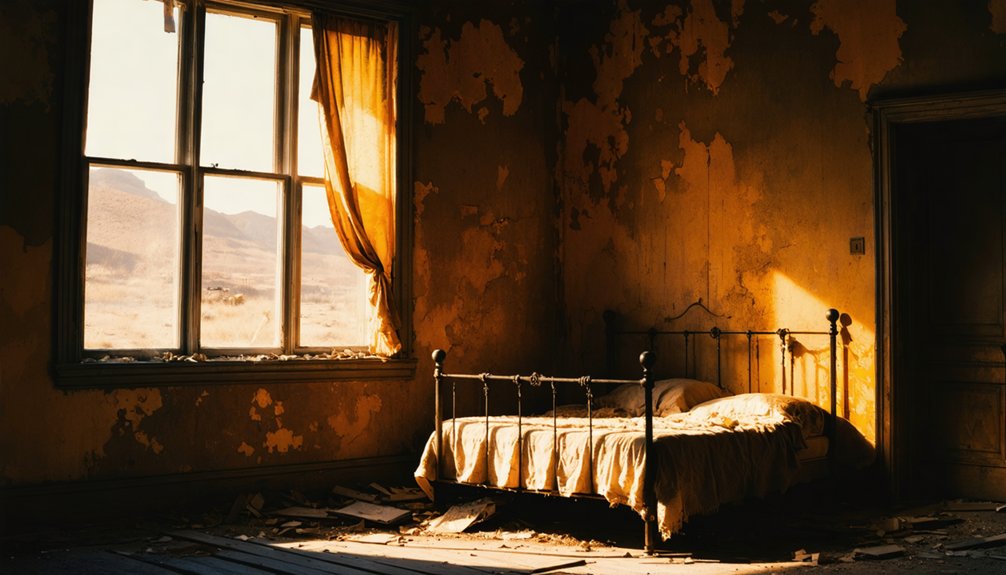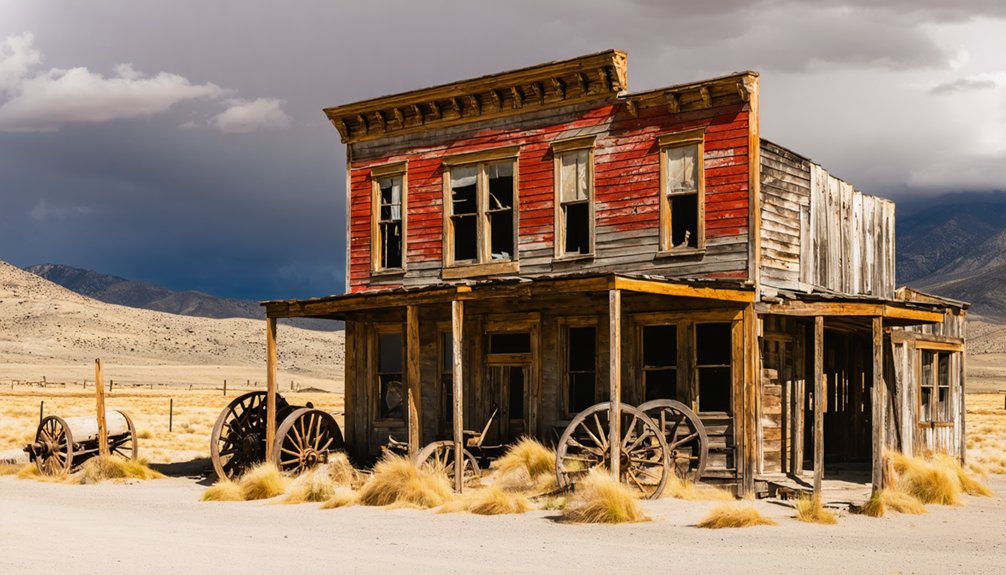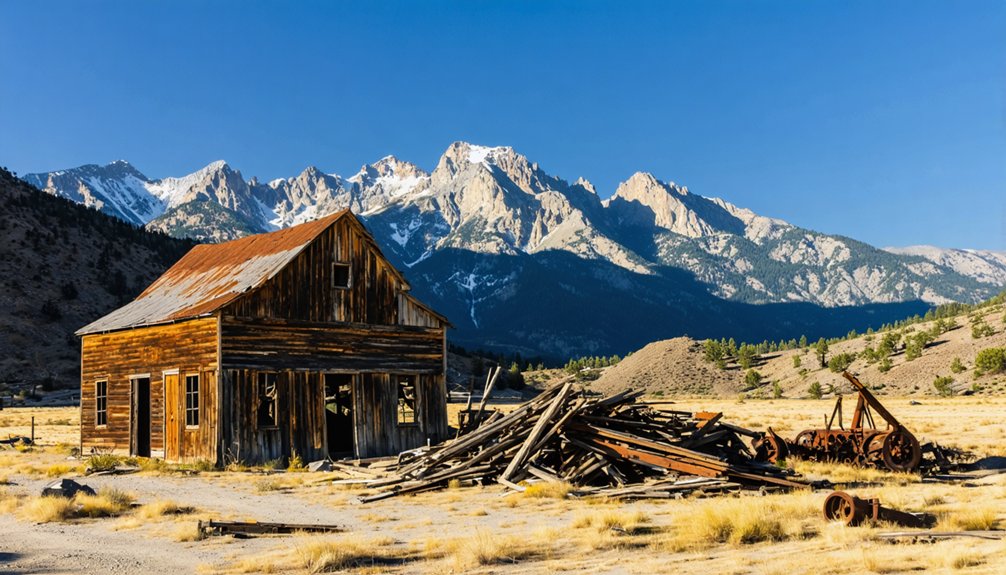
You’ll find several historic ghost towns within a few hours of Kings Canyon National Park. Silver City, located near Bodfish in the Kern River Valley foothills, showcases over 20 rescued mining structures dating to 1858. Bodie State Historic Park, at 8,375 feet elevation, preserves 170 buildings through “arrested decay” from its 1880 boom era. Calico Ghost Town, about 150 miles southwest, features restored 1881 silver mining buildings. Each site offers unique insights into California’s mining heritage, visitor activities, and preservation approaches worth exploring further.
Key Takeaways
- Calico Ghost Town, an 1881 silver mining settlement, is located approximately 150 miles southwest of Kings Canyon National Park.
- Bodie State Historic Park preserves 170 original structures at 8,375 feet elevation in the eastern Sierra Nevada mountains.
- Silver City Ghost Town near Bodfish features over 20 rescued historic structures from the Kern River Valley’s gold-mining era.
- Access to remote ghost towns like Bodie requires routing via Highway 395, with May through October offering ideal visiting conditions.
- The eastern Sierra Nevada contains numerous lesser-known mining camps including Bennettville, Dog Town, and Mokelumne Hill from the 1850s-1880s.
Silver City Ghost Town: A Preserved Collection Near Kern Valley
Tucked into the foothills near Bodfish, California, Silver City Ghost Town stands as a carefully curated museum of Kern River Valley’s gold-mining past.
Unlike typical ghost towns left to decay in their original locations, this site preserves more than 20 historic structures rescued from abandoned mining camps throughout the region.
Silver City Ghost Town rescued and relocated over 20 historic structures from abandoned mining camps before they were lost forever.
You’ll find buildings dating back to 1858, including the valley’s oldest standing structure—the Apalatea House, built with hand-hewn lumber and square nails.
The collection showcases authentic mining heritage through Wells Fargo offices, miners’ cabins, jails, and marshal’s offices relocated from settlements like Keyesville and Whiskey Flat before Lake Isabella’s waters claimed them.
The Corlew family, who acquired the property in 1990, invested over 20,000 restoration hours maintaining an “arrested decay” philosophy that preserves weathered authenticity while preventing collapse.
The town opened to public visitors in 1992 after being initially closed in 1973, making this historical collection accessible to those interested in California’s gold rush heritage.
Located off Highway 178, the ghost town sits approximately 45 minutes from Bakersfield in the scenic Kern Valley.
Bodie State Historic Park: California’s Premier Ghost Town Experience
Standing at 8,375 feet in California’s remote eastern Sierra Nevada, Bodie State Historic Park preserves the most authentic gold rush ghost town experience in the American West.
You’ll discover 170 original structures maintained through “Arrested Decay”—buildings frozen in time without restoration.
Bodie history began in 1859 when prospector William S. Bodey found gold, though he died that winter in a blizzard. The town exploded to 10,000 residents by 1880, supporting 65 saloons along Main Street.
Population collapsed from 5,417 in 1880 to complete abandonment by 1950. Today, you can explore this ghost town recognized as a National Historic Landmark.
Located 48 miles north of Mammoth Lakes, the site welcomes 200,000 annual visitors seeking authentic frontier heritage. Rangers and volunteers are available to answer questions about the town’s fascinating history. The name Bodie has been associated with multiple meanings and references, though the town itself was named after its discoverer William S. Bodey.
Historic Mining Towns of the Eastern Sierra Nevada
Beyond Bodie’s famous boardwalks, the Eastern Sierra Nevada harbors dozens of lesser-known mining camps that chronicle the region’s volatile boom-and-bust cycles from the 1850s through 1880s. Each site reveals distinct patterns of frontier enterprise and abandonment.
These forgotten camps stand as monuments to speculation and survival, their scattered ruins mapping the dramatic rise and collapse of mountain fortune-seeking.
Key historic mining settlements include:
- Bennettville history – High-altitude silver camp (9,800 feet) near Tioga Pass where speculative investment met harsh reality; surviving bunkhouse and assay office demonstrate hard-rock mining architecture.
- Dog Town significance – Mono County’s first gold settlement (1857), devastated by fire and deposit depletion, now an archetypal ghost town of stone ruins.
- Silver Mountain City – Former Alpine County seat relocated entirely to Markleeville after 1870s silver decline; Chalmers Mansion remains.
- Mokelumne Hill legacy – 1848 placering epicenter where one sixteen-square-foot claim yielded $30 million, epitomizing Gold Rush wealth and violence. These abandoned settlements preserve marks of effort through crumbling foundations and weathered structures that tell stories of ambition and loss. Nevada City, known as the “Queen of the Northern Mines”, experienced seven major fires during its development yet maintained its status as a county seat.
Calico Ghost Town: A Restored Desert Mining Settlement
You’ll find Calico Ghost Town about 150 miles southwest of Kings Canyon, preserved as a San Bernardino County park that showcases an 1881 silver mining settlement.
Walter Knott restored the site in the 1950s using historical photographs and accounts, investing $700,000 to rebuild structures that mirror the town’s 1880s appearance.
Today you can explore authentic period buildings like Lil’s Saloon, tour the Maggie Mine, and experience demonstrations that bring the silver rush era to life.
The town flourished for approximately 20 years before declining in the early 1900s when government regulations affected silver prices.
Over its productive years, Calico’s mines yielded an estimated $86 million in silver, making it a cornerstone of California’s mining economy.
History and Discovery Era
When four prospectors struck rich silver veins in the Calico Mountains during 1881, they launched what would become one of California’s most significant silver rushes.
The town’s name came from the multi-colored hills surrounding the mining camp, where claims were rapidly staked across the Calico Mining District beginning April 6, 1881. Their discovery opened the legendary Silver King Mine, establishing mining techniques that would extract millions in precious metals from volcanic ash and tuff formations.
The district’s explosive growth attracted fortune-seekers pursuing independent wealth:
- Over 500 mines operated across the surrounding district
- Silver production reached $13–$20 million between 1881 and 1907
- Population swelled to 3,500 residents at peak
- The Silver King became California’s largest silver producer by mid-1880s
The town’s prosperity ended when silver prices plummeted from $1.31 per ounce to just 63 cents in the mid-1890s, making mining operations economically unsustainable. Walter Knott purchased Calico in the 1950s and later donated it to San Bernardino County Regional Parks in 1966 to preserve its historical significance.
Restored Buildings and Attractions
Walter Knott’s vision for Calico transformed a deteriorating mining camp into California’s most authentic restored ghost town.
You’ll find one-third of the structures are original 1880s buildings, with careful reconstruction techniques applied to recreate the remaining period-accurate architecture. The restoration earned State Historical Landmark 782 designation and Governor Schwarzenegger’s 2005 proclamation as California’s official Silver Rush Ghost Town.
Your visitor experiences include exploring the Lucy Lane Museum with mining-era artifacts, touring the authentic Maggie Mine with preserved equipment, and examining the unique Bottle House construction.
You can try gold panning using historical prospecting methods, ride the Calico Odessa Railroad‘s narrow gauge train, and browse nine retail shops.
The Calico Schoolhouse, Fire Hall, and telegraph office showcase administrative structures from the town’s silver boom period.
Visitor Information and Activities
Located just off Interstate 15 near Yermo, California, Calico Ghost Town operates daily from 9 AM to 5 PM, closing only on Christmas Day.
You’ll find visitor amenities including the Old Miner’s Cafe and Calico House Restaurant serving period-appropriate refreshments. Guided tours explore the Mystery Shack and Maggie Mine’s 1,000-foot tunnel network, while the narrow-gauge railway offers eight-minute excursions through historic terrain.
Essential Activities:
- Gold panning – Extract precious metals using authentic mining techniques
- East Calico Hiking Trail – Experience desert wilderness beyond the settlement boundaries
- Seasonal festivals – Participate in Civil War re-enactments, burro races, and Halloween Ghost Haunt events
- Self-guided exploration – Navigate restored buildings and attractions at your own pace
Plan a full day to experience extensive offerings. Individual attractions require separate admission fees beyond general park entry.
Planning Your Ghost Town Adventure: Access and Seasonal Considerations
Before starting your ghost town exploration near Kings Canyon National Park, you’ll need to understand the region’s access patterns and infrastructure limitations.
Highway 180 provides your primary corridor from Fresno, while Highway 198 through Three Rivers offers alternative routing. Remote ghost town access like Bodie requires separate routing via Highway 395, with no direct eastern crossings available.
Your seasonal planning should focus on May through October for ideal conditions. Winter closures affect Highway 198, and weather changes rapidly year-round.
Highway 180’s straighter, wider design accommodates longer vehicles better than Highway 198’s restrictions (22-24 feet). The Sequoia Shuttle operates Memorial Day through Labor Day from Visalia, connecting with Amtrak services.
Always verify current road conditions before departure.
What to Explore: Museums, Buildings, and Mining Artifacts
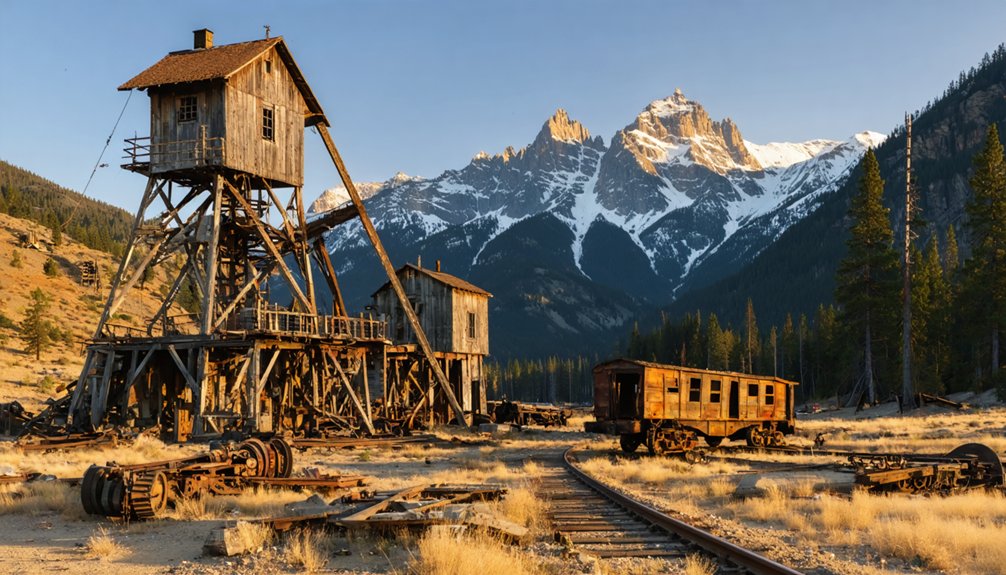
When you explore the ghost towns near Kings Canyon National Park, you’ll discover an impressive range of preserved structures that reveal California’s mining heritage and frontier life.
In Bodie, you’ll find the 1882 Methodist Church, the only religious building that survived devastating fires. The Miller House welcomes you inside to examine 19th-century furniture and photographs, while the Schoolhouse displays original desks and papers left untouched for decades.
Silver City offers the Weathered Church with its coffin, piano, and Bible, plus the Apalatea/Burlando House—Kern Valley’s oldest structure. The General Store showcases vintage merchandise and creaky original floors.
- Standard Mill Site provides guided summer tours explaining mining techniques that extracted $18 million in gold
- Museum exhibits at Miners Union Hall display authentic photographs and artifacts
- Bodie’s General Store remains locked since 1912 with original merchandise visible
- Tharp’s Log demonstrates frontier ingenuity—a cabin built inside a fallen sequoia
Preservation Approaches: Restored vs. Authentic Abandoned Towns
When you visit ghost towns near Kings Canyon, you’ll notice stark differences in preservation philosophy.
Bodie State Historic Park maintains an “arrested decay” policy that preserves buildings exactly as found, allowing you to experience authentic deterioration without restoration.
In contrast, Calico Ghost Town underwent significant architectural restoration in the 1950s, reconstructing structures to represent their original appearance rather than their current weathered state.
Bodie’s Authentic Preservation Policy
Unlike many historic sites that restore buildings to their original splendor, Bodie State Historic Park employs a distinctive “arrested decay” preservation approach that maintains structures exactly as they stand today.
This Bodie preservation philosophy protects the authentic ghost town atmosphere by stabilizing buildings without restoration or reconstruction. You’ll find interiors left with original furnishings and debris, creating a genuinely frozen-in-time experience rather than a polished museum village.
Key elements of Bodie’s preservation policy:
- Minimal intervention – only essential structural repairs to prevent collapse
- Legal protection – removal of any artifacts, even broken glass, is prohibited under state law
- No commercial development – zero gas stations, restaurants, or lodging preserve the town’s character
- Environmental authenticity – surviving structures maintained as-is, without rebuilding fire-destroyed buildings
Calico’s Architectural Restoration Approach
While Bodie’s arrested decay preserves an authentic frozen moment, Calico Ghost Town takes the opposite approach: a largely reconstructed “living” ghost town that prioritizes visual re-creation over original fabric.
You’ll find that Walter Knott’s 1950s restoration philosophy emphasized how the 1880s silver camp *looked* at its peak, not preserving untouched ruins. Only five buildings survived as authentic structures—the rest are reconstructions based on old photographs and oral histories.
This approach sacrifices architectural authenticity for themed entertainment, integrating shops, restaurants, and attractions into the historic streetscape. Knott invested $700,000 creating a heritage experience that appeals to visitors seeking Old West atmosphere rather than scholarly preservation.
California designated it State Historical Landmark 782, validating this hybrid identity as both historic site and re-created attraction.
Frequently Asked Questions
Are Ghost Town Visits Suitable for Young Children and Families?
Ghost town visits can be excellent for families when you follow basic safety tips like staying on marked paths and watching for hazards. You’ll find engaging activities such as gold panning, exploring buildings, and learning Old West history together.
Exploring abandoned sites near Voyageurs National Park can add a sense of adventure to your family outings. Along the way, you may encounter remnants of the past that inspire stories and spark curiosity in children. Emphasizing safety while uncovering these hidden gems will make for memorable experiences that blend education and fun.
Can I Bring My Dog to These Historic Ghost Town Sites?
Dog-friendly policies vary dramatically: inside Kings Canyon you’ll face strict trail bans, but nearby ghost towns like Coulterville welcome leashed pets. Always verify leash requirements beforehand, since regulations protect both wildlife and your freedom to explore.
What Photography Equipment Works Best for Ghost Town Exploration?
You’ll want a versatile camera body with strong low-light camera settings, paired with smart lens choices: a wide-angle 14–24mm for interiors, a sharp 50mm for details, and a 70–200mm telephoto for isolating architectural features.
Are Overnight Camping Options Available Near Any Ghost Towns?
Yes, you’ll find excellent campground options near Southern Sierra ghost towns like Keyesville and Bodfish. BLM dispersed sites, Lake Isabella campgrounds, and private RV parks let you explore areas of historical significance independently.
Do I Need Four-Wheel Drive to Reach These Locations?
You won’t need four-wheel drive for most ghost towns near Kings Canyon; paved highways reach primary sites. However, vehicle recommendations include high-clearance models for remote off-road trails accessing backcountry mining ruins, especially during shoulder seasons.
References
- https://en.wikipedia.org/wiki/List_of_ghost_towns_in_California
- https://www.flyingdawnmarie.com/new-blog/california-ghost-towns
- https://parks.sbcounty.gov/park/calico-ghost-town-regional-park/
- https://californiahighsierra.com/trips/explore-ghost-towns-of-the-high-sierra/
- https://www.tripadvisor.com/Attraction_Review-g32092-d1049785-Reviews-Silver_City_Ghost_Town-Bodfish_California.html
- https://www.visitcalifornia.com/now/california-ghost-towns-road-trip/
- https://www.youtube.com/watch?v=IFio9uxFcPQ
- https://www.flyingdawnmarie.com/new-blog/silver-city-ghost-town
- https://www.avoidingregret.com/2025/04/photo-essay-silver-city-ghost-town-made.html
- https://www.lakeisabella.net/silvercity/