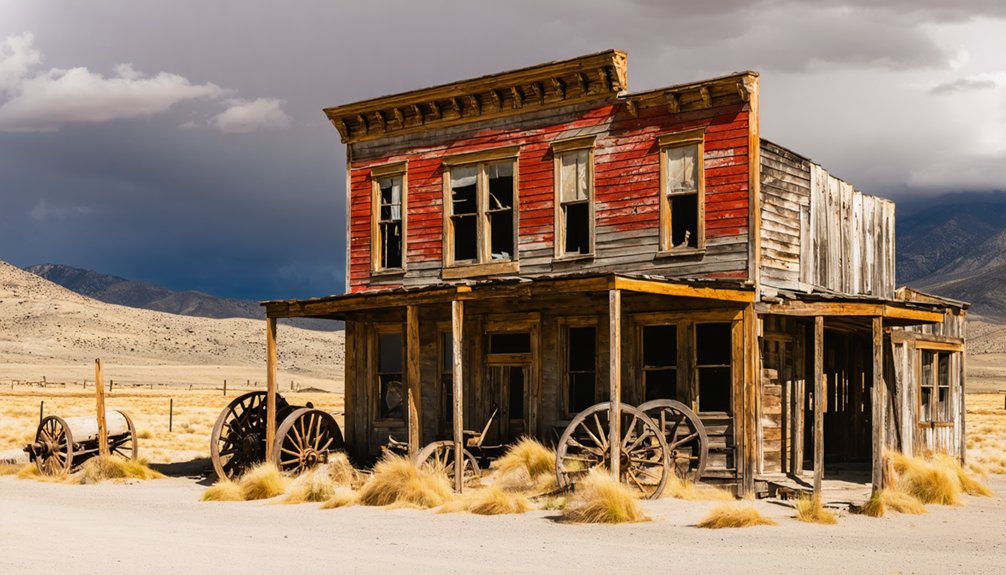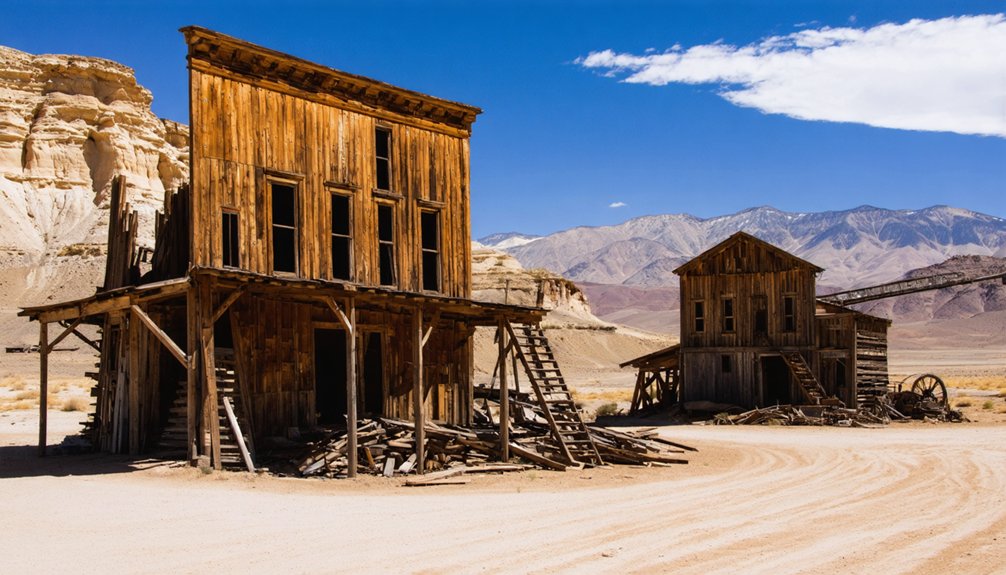
You’ll find exceptional ghost towns within 45 minutes of the Las Vegas Strip, starting with Nelson Ghost Town‘s weathered storefronts and mining relics perfect for photography. Rhyolite offers crumbling concrete ruins and outdoor art installations, while Goodsprings pairs historic buildings with a functioning saloon serving cold drinks. For family adventures, Calico features mine tours and Wild West experiences. Pack plenty of water, download offline maps, and visit during cooler months—spring and fall offer comfortable temperatures for exploring these desert remnants that reveal Nevada’s fascinating mining heritage and forgotten communities.
Key Takeaways
- Nelson, Rhyolite, Goldfield, St. Thomas, and Calico Ghost Towns offer unique mining history experiences within day-trip distance from Las Vegas.
- Activities include exploring abandoned mines, gold panning, guided underground tours, train rides, and visiting authentic Old West structures and museums.
- Visit during spring, fall, or winter to avoid extreme desert heat; early morning or sunset provides optimal lighting for photography.
- Pack essential supplies including water, snacks, fuel, offline maps, first aid, and sturdy footwear for remote desert conditions with limited services.
- Routes from Las Vegas Strip include Nelson (45 minutes southeast), Goodsprings, and Rhyolite, with options for single or combined day trips.
Nelson Ghost Town: A Photographer’s Paradise Just Outside Vegas
While Spanish explorers first pulled silver from these rugged canyon walls in the 1700s, they couldn’t have imagined Nelson would become one of Nevada’s most photogenic destinations. You’ll find this restored mining town just 45 minutes south of Vegas, where the Techatticup Mine produced millions in gold and silver from 1861 until the 1940s.
Historical preservation meets artistic freedom here—the Werly family spent five years restoring this 51-acre site, transforming abandoned buildings and mining tunnels into a photographer’s playground.
For the best photography tips: arrive early to capture golden light on weathered structures, or schedule a guided mine tour to explore underground passages. The rustic buildings and vintage machinery have starred in films like *3000 Miles to Graceland*, proving you’re walking through genuine Wild West history.
Rhyolite Ghost Town: Where Art Meets Abandoned History
How does a town of 8,000 souls vanish in less than two decades? You’ll find the answer at Rhyolite, where 1905’s promise turned to 1920’s dust.
Stand inside the three-story Cook Bank Building—Nevada’s most photographed ruin—where industrial architecture once housed $90,000 worth of frontier ambition.
The Cook Bank Building housed $90,000 in frontier dreams—now Nevada’s most photographed monument to ambition turned dust.
The real showstopper? Tom Kelly’s Bottle House, constructed from 50,000 beer and liquor bottles. It’s vintage art born from desert necessity.
Walk the abandoned train depot that became a ghost casino in 1937.
Imagine the stock exchange, hospital, and school for 250 children.
By 1910, only 675 residents remained. The post office closed in 1913.
The town’s decline accelerated after Charles Schwab’s purchase of the Montgomery Shoshone mine for $2-3 million proved disastrous when stock prices collapsed.
Located just outside Death Valley, Rhyolite’s ruins prove one truth: freedom-seekers built empires on hope alone. Just below the ghost town, the Goldwell Open Air Museum displays modern sculptures including “The Last Supper,” blending contemporary art with frontier history.
Goldfield Ghost Town: Nevada’s Former Crown Jewel of Mining
When gold fever struck Esmeralda County in 1902, nobody imagined this dusty strike would explode into Nevada’s largest city.
You’ll find yourself walking streets where 20,000 fortune-seekers once hustled, watching mining technology evolve from simple picks to the Florence Mine’s 40-stamp mill crushing 160 tons daily.
The town’s ghost town preservation efforts have saved nearly 120 buildings from the 1904-1909 boom, including the ornate Goldfield Hotel with its gilded columns and crystal chandeliers.
Tour the Florence Mine to witness history firsthand, or grab the 190-stop walking map from the Visitor Center.
You’re free to explore the 200-acre historic district at your own pace, discovering rusted vehicles and weathered epitaphs at Goldfield Cemetery—remnants of Nevada’s wildest mining days.
The boom didn’t last forever, though, as mining ceased operations by 1919, leaving behind the ghost town you can explore today.
Between 1902 and 1940, the mines yielded over $90 million in ore, a staggering sum worth approximately $1.8 billion in today’s currency.
St. Thomas Ghost Town: The Mormon Settlement Beneath Lake Mead
Beneath Lake Mead’s turquoise waters lies a ghost town with a resurrection story unlike any other in Nevada. You’ll discover St. Thomas when drought drops the lake’s levels, revealing foundations of a Mormon settlement history that began in 1865.
St. Thomas emerges from drought-stricken Lake Mead, a drowned Mormon settlement frozen in time since 1865.
Mormon pioneers established this farming community under cottonwood-lined streets, only to abandon it in 1871 when Nevada demanded back taxes—many torched their homes rather than pay.
The town revived until Hoover Dam’s construction sealed its fate. In 1938, Lake Mead submerged sites including St. Thomas under 60 feet of water. The settlement previously served as Nevada’s county seat and connected to larger cities through the railroad line from San Pedro, Los Angeles & Salt Lake beginning in 1912. The community’s economy thrived on agriculture, silica, and salt mining before the dam project forced evacuation.
Today, you can explore the exposed ruins through maintained trails in Lake Mead National Recreation Area. Walk among remnants of buildings and streets where settlers once farmed cotton, defying government boundaries in pursuit of their frontier dreams.
Goodsprings Ghost Town: Where History Comes With a Cold Beer
Unlike St. Thomas, Goodsprings isn’t underwater—it’s thriving as Nevada’s most accessible ghost town, just 45 minutes from Las Vegas. You’ll find the Pioneer Saloon, built in 1913, still pouring cold beer behind its original Brunswick cherry wood bar with pressed tin walls. This isn’t sterile historical preservation; it’s living history where local ghost stories include Paul Coski’s 1915 murder during a card game dispute.
Walk past the 1913 schoolhouse (still operating) and Campbell’s 1886 stone cabin, the town’s oldest building. The Yellow Pine Mine’s 100-ton milling plant once anchored operations that consolidated area mines and drove the town’s growth to nearly 1,000 residents by 1915.
The mining district once produced over $30 million in gold, silver, and lead. Today’s 200 residents welcome explorers seeking desert trails and Mount Potosi hiking. The town’s multiple historic uses have earned it a place among Nevada’s most significant settlements, distinguishing it from other similarly named locations. Grab a meal, hear some tales, and experience authentic Nevada freedom.
Calico Ghost Town: Family-Friendly Wild West Adventure
Unlike abandoned ruins where you’ll peer through broken windows, Calico puts you right inside a working ghost town where you can explore original buildings like Lil’s Saloon and the Lane House Museum without ropes or barriers blocking your path.
I spent an entire afternoon wandering through 30 miles of mining tunnels, watching blacksmith demonstrations, and panning for “silver” while my kids rode the Calico-Odessa Railroad around the reconstructed camp.
You’ll find this three-mile detour off Interstate 15 offers everything from guided mine tours to overnight camping, making it the only ghost town on this list where you can actually spend the night sleeping where silver miners once struck it rich.
Interactive Mining Town Experience
When you step through the weathered wooden gates of Calico Ghost Town, you’re entering California’s most accessible silver rush relic—a place where history doesn’t hide behind velvet ropes.
You’ll descend into the authentic Maggie Mine ($3.50), where UV lights illuminate mineral veins miners once chased through darkness. Historical preservation here means touching the past—examining genuine mining artifacts, feeling the cool air that warned of danger, and understanding why men risked everything for silver.
The Lucy Lane Museum displays personal belongings and photographs revealing desert survival’s brutal reality.
But the hillside cemetery delivers the most powerful punch—weathered headstones overlooking restored storefronts below.
Walter Knott’s 1950s restoration using old photographs created something rare: a ghost town you can actually explore without barriers, perfect for anyone craving unfiltered Western history.
Activities and Attractions
Beyond the mine shafts and museums, Calico transforms into a hands-on playground where families actually participate in Old West traditions rather than simply observe them. You’ll pan for gold in authentic streams, keeping fool’s gold in souvenir vials—everyone strikes “gold” here.
The Calico & Odessa Railroad‘s 8.5-minute journey reveals abandoned architecture, from miners’ cabins to the waterfall boilers that once powered operations.
Don’t miss the Mystery Shack’s gravity-defying illusions where water runs uphill and brooms stand independently during 15-20 minute tours.
October brings haunted legends to life through ghostly decorations, costume contests, and trick-or-treating among historical buildings.
Each attraction operates 9 a.m. to 5 p.m. daily with additional fees, blending education with entertainment across generations.
Planning Your Ghost Town Road Trip From Las Vegas
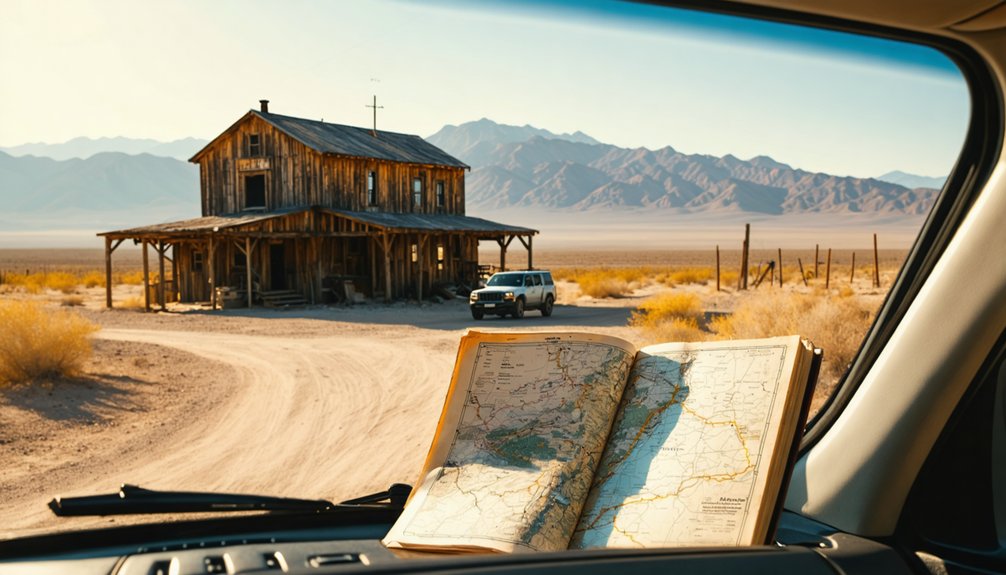
Getting from the Las Vegas Strip to Nevada’s ghost towns doesn’t require much planning, but you’ll want to map out your route before heading into the desert. I’ve found that combining multiple sites works best—start with Nelson’s 45-minute drive southeast, then loop through Goodsprings and Gold Butte for a solid day trip.
For longer adventures, tackle Goldfield midway to Reno, where you’ll discover it’s perfectly positioned for breaks between modern amenities.
Pack water and snacks since local culinary scenes are nonexistent in these abandoned settlements. Check your fuel gauge before leaving—gas stations become scarce quickly.
Download offline maps, as cell service disappears past civilization’s edge. Most sites like Rhyolite offer free access from sunrise to sunset, making spontaneous exploration easy and budget-friendly.
What to Bring for Your Ghost Town Exploration
Your ghost town adventure requires more preparation than your typical Vegas day trip—I learned this the hard way when my sedan bottomed out on a rocky wash near Nelson.
Exploring abandoned towns near Las Vegas can lead you to some breathtaking sights, including the remnants of old mining operations and relics of the past. Be sure to check your route and vehicle capabilities before heading out, as some areas require off-road capabilities to navigate the rugged terrain. Additionally, bringing plenty of water and snacks is essential, since these ghostly landscapes can be more remote than you’d expect.
When planning your trip, consider checking out familyfriendly ghost towns to visit that offer unique experiences and activities suitable for all ages. These towns often feature guided tours, interactive exhibits, and scenic picnic spots where families can enjoy the history while making lasting memories. Just be sure to research the specific attractions available, as some locations provide kid-friendly amenities that can enhance your adventure.
Pack three days’ water per person, non-perishable food, and camping essentials like shelter and extra layers.
A high-clearance 4×4 with recovery gear, spare tire, and tire repair kit isn’t optional—it’s survival equipment.
Download offline maps since cell service disappears quickly.
Bring traction boards, straps, and a shovel for self-recovery situations.
For photography tips, arrive during golden hour when abandoned buildings glow dramatically.
Pack sturdy hiking shoes, first aid supplies, and cash—many remote gas stations don’t accept cards.
Don’t forget toilet paper and hand sanitizer.
Monitor weather conditions religiously; desert storms transform dry washes into raging torrents within minutes.
Best Times to Visit Nevada’s Ghost Towns
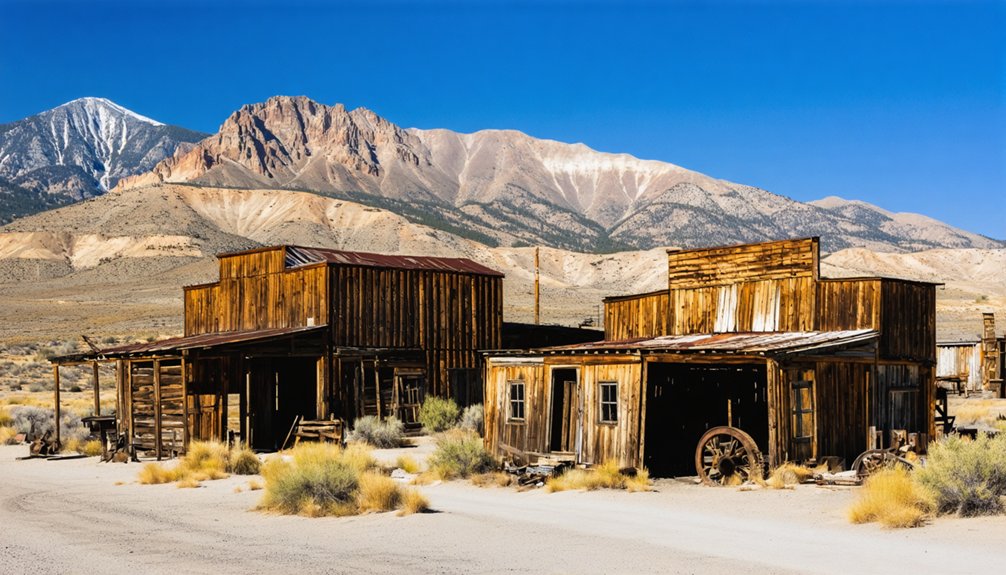
Timing your ghost town expedition makes the difference between a miserable slog and an unforgettable adventure. You’ll want to avoid Nevada’s brutal summer heat and unpredictable monsoon season—both turn exploration into survival mode.
Winter months deliver comfortable temperatures for wandering through crumbling structures without battling triple-digit extremes.
Atmospheric conditions peak during golden hour when sunrise and sunset bathe decaying wood and rusted metal in soft, cinematic light. Those orange and pink skies transform abandoned buildings into visual poetry, making empty streets pulse with history’s ghost.
Seasonal trends matter here: flash floods remain real dangers during storms, and desert temperature swings demand preparation.
Plan for spring or fall when you’ll encounter moderate weather and extraordinary photography opportunities without the extremes that make ghost town exploration genuinely hazardous.
Frequently Asked Questions
Are Pets Allowed at Nevada Ghost Towns Near Las Vegas?
You’ll find most Nevada ghost towns near Las Vegas welcome leashed pets. Visitor restrictions are minimal, though pet policies require supervision on trails and ruins. Always bring water—these desert sites lack shade for your four-legged explorer.
Can You Camp Overnight at Any of These Ghost Towns?
You can’t camp overnight at these ghost towns themselves, but you’ll find dispersed camping nearby. Check for camping permits in surrounding BLM areas. Overnight safety tips: pack extra water, share your location, and respect private property boundaries for worry-free adventure.
Do Ghost Towns Have Restroom Facilities Available for Visitors?
Don’t expect a desert oasis—restroom facilities vary wildly among ghost towns. You’ll find basic port-a-potties at Rhyolite and maintained visitor amenities at Nelson’s Eldorado Canyon, but St. Thomas and Goldfield offer virtually nothing for comfort.
Are Ghost Town Roads Accessible for RVS and Large Vehicles?
You’ll find most ghost town roads are RV-accessible, though road conditions vary considerably. Always check vehicle clearance requirements beforehand—some routes have low-hanging branches or narrow passages. Calico and Rhyolite offer spacious turnarounds, while remote sites need careful planning.
Which Ghost Towns Offer Wheelchair Accessible Paths and Facilities?
Most ghost towns near Las Vegas lack wheelchair-accessible facilities due to historical preservation priorities and rugged terrain. You’ll find better accessibility by booking local guided tours that can accommodate mobility needs and provide specialized transportation to these remote desert locations.
References
- https://www.maxtour.co/historical-ghost-towns-to-explore-around-las-vegas/
- https://www.revealedtravelguides.com/las-vegas-blog/ghost-towns-to-visit-near-las-vegas/
- https://nobackhome.com/calico-ghost-town-perfect-stop-between-las-vegas-la/
- https://www.visittheusa.com/experience/6-nevada-ghost-towns-explore-if-you-dare
- https://nvtami.com/2023/12/05/las-vegas/
- https://www.youtube.com/watch?v=mGkyVWaef30
- https://www.tripadvisor.com/Attraction_Review-g1093759-d4446411-Reviews-Nelson_Ghost_Town-Nelson_Nevada.html
- https://travelnevada.com/ghost-town/
- https://www.youtube.com/watch?v=SZnaiia63Jw
- https://nevadamining.org/nevada-ghost-towns-nelson/