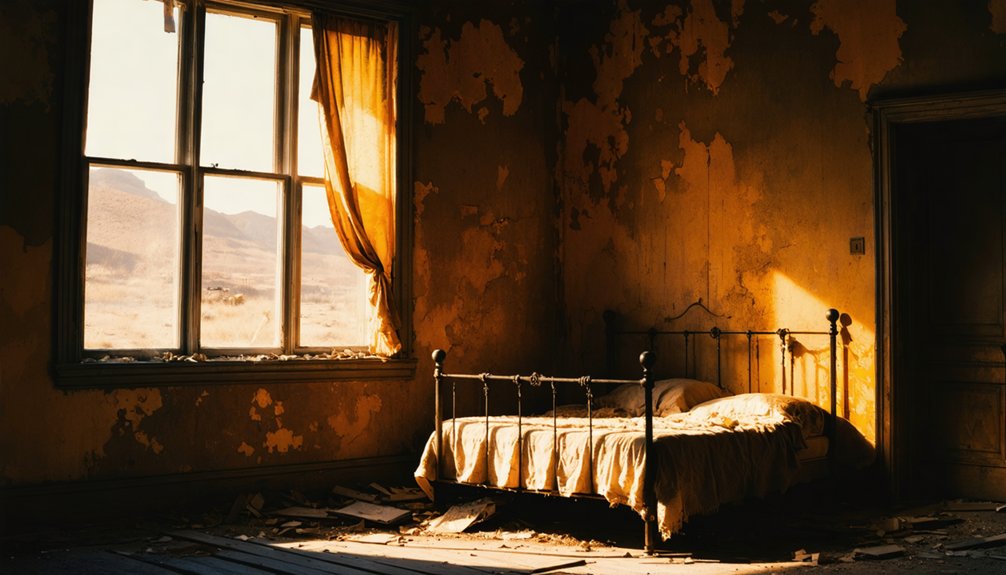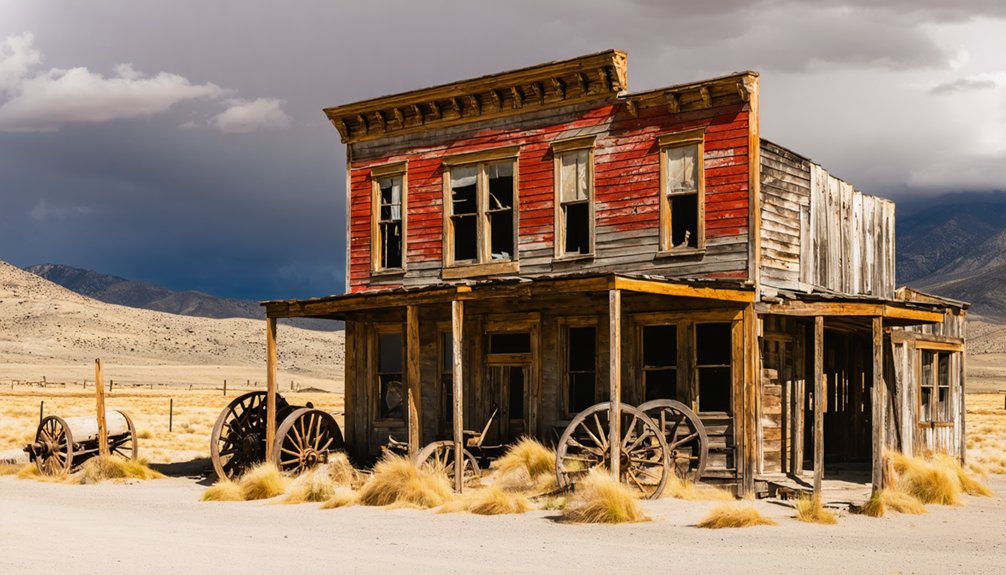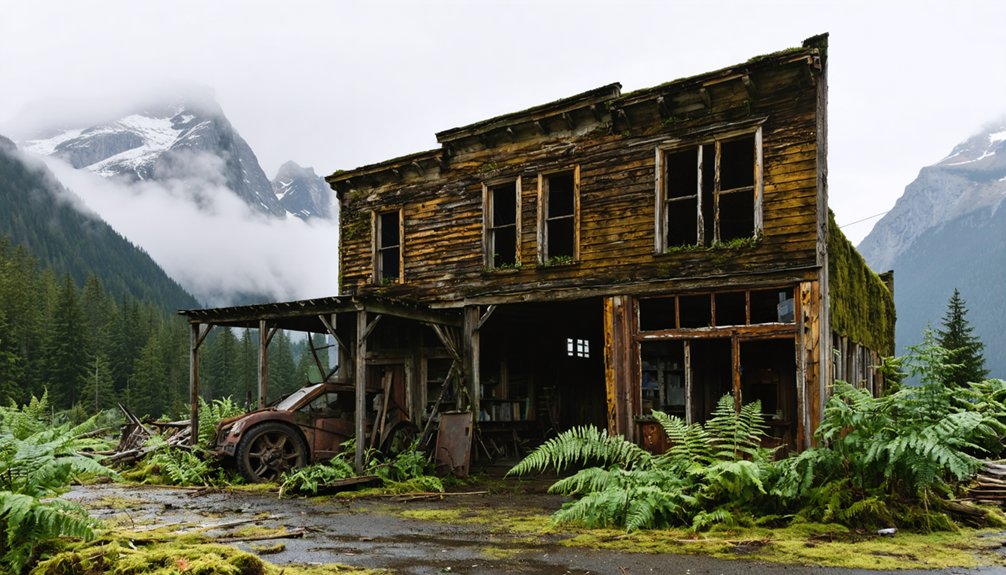
You’ll find several ghost towns near North Cascades National Park, each telling Washington’s mining and institutional history. Monte Cristo, accessible via an 8-mile hike from Barlow Pass, was a major hard-rock mining camp from 1889 to 1907. The Okanogan Country cluster includes Ruby City, Nighthawk, and Old Molson, featuring preserved buildings and mining artifacts. Northern State Ghost Town operated as a psychiatric facility until 1973. Responsible exploration requires staying on established trails and respecting fragile structures to preserve these historic sites for future visitors.
Key Takeaways
- Monte Cristo, Washington’s first major hard-rock mining camp established in 1889, requires an 8-mile roundtrip hike from Barlow Pass.
- Northern State Ghost Town operated from 1912 to 1973 as a self-sustaining facility with 2,700 patients at peak population.
- Old Molson features remarkably preserved frontier buildings from the early 1900s, operating as an outdoor museum since 1960.
- Nighthawk contains intact structures including the 1903 hotel and mining office from the Similkameen mineral belt boom era.
- Okanogan Country ghost towns include Ruby City, Loomis, Chesaw, and Bodie, reflecting regional mining and ranching history.
Northern State Ghost Town: A Self-Sufficient Psychiatric Facility Turned Recreation Area
While the Olmsted Brothers earned worldwide acclaim for designing New York’s Central Park, their 1909 commission for Northern State Mental Hospital near Sedro-Woolley represents a darker chapter in Pacific Northwest history.
You’ll discover a haunted history spanning 1912 to 1973, when 2,700 patients lived on these 1,100 acres at peak capacity. The self-sustaining facility featured farmland, dairy operations, and lumber mills where patient experiences involved forced labor alongside involuntary lobotomies and electroshock therapy.
Most weren’t mentally ill—just people struggling with depression or alcoholism. The patient population also included epileptics, immigrants, and the elderly, many who didn’t fit modern definitions of mental illness but were simply nonconformists. Governor Dan Evans vetoed funding in 1973 after experimental procedures came to light. Families often didn’t claim deceased patients’ bodies, leaving approximately 1,487 buried in a neglected cemetery on hospital grounds.
Today, you can explore remaining buildings at this recreation area, confronting uncomfortable truths about institutional treatment.
Monte Cristo: A Remote Mining Boomtown in the Mountain Loop
Tucked deep into the South Fork Sauk River headwaters at the western edge of the North Cascades, Monte Cristo emerged as Washington’s first major hard-rock mining camp after prospectors struck gold and silver in 1889.
Named after Dumas’s famous novel, the boomtown swelled to over 1,000 residents by 1894, with thirteen active mines extracting precious metals from avalanche-prone slopes.
By 1894, this literary-named boomtown housed over 1,000 souls amid thirteen perilous mines clinging to avalanche-swept mountainsides.
John D. Rockefeller’s syndicate invested heavily, financing the Everett & Monte Cristo Railroad to haul ore forty miles west.
Yet Monte Cristo’s mining legacy proved short-lived. The devastating 1897 flood destroyed critical infrastructure, while disappointing ore reserves and manipulated freight rates drove operators into bankruptcy.
Production ceased by 1907, leaving behind a weathered ghost town accessible only by trail—a stark reminder of nature’s supremacy over industrial ambition in these unforgiving mountains.
Visitors today hike five miles along the old railroad grade after bridges washed out around 2000, ending vehicular access that once reached the town site directly.
Today, the Monte Cristo Preservation Association works with the U.S. Forest Service to maintain historic cabins and trails, educating visitors about the site’s mining heritage within the protected Henry M. Jackson Wilderness Area.
Okanogan Country Ghost Town Cluster: Mining and Ranching Settlements East of the Cascades
Ruby City’s silver boom collapsed in 1893, leaving only stone foundations in reforested canyons.
Loomis evolved from J.A. Loomis’s trading post into a town supporting eight saloons before declining into today’s quiet country road.
Chesaw developed into a significant mining boomtown by 1910 in the Meyers Creek Mining District before declining as assay values failed.
Bodie sits along Toroda Creek’s east banks, established in 1884 and relocated near productive gold mines that generated over $1.3 million before World War II.
Nighthawk: Mining Center With Historic Structures and Mill Remnants
You’ll find Nighthawk’s remarkably intact built environment sets it apart from more degraded ghost town sites in the region.
The 1903 Nighthawk Hotel, early-1900s mining office, and remnants of concentration mills stand as tangible connections to the district’s boom era when six mills processed ore from the Similkameen mineral belt.
The town declined as operating costs and drops in metal values made mining operations unsustainable in the early 20th century.
The Nighthawk schoolhouse, built around 1915, served pioneer children and still stands on private land as part of the community’s historical fabric.
These surviving structures demand careful stewardship to preserve physical evidence of Washington Territory’s pioneering hard-rock mining economy.
Original Buildings Still Stand
Although most Washington mining camps vanished without a trace, Nighthawk preserves a remarkable collection of original buildings from its early 20th-century heyday.
You’ll find the Nighthawk Hotel, built by Ed McNull to house miners and later mill families like the Ewings, standing as a representation to frontier commercial architecture. The original schoolhouse reflects the community’s investment in permanent services, demonstrating this wasn’t merely a transient camp but a settlement where families built lives.
By 1903, the town featured a general store, railroad station, and saloon—structures whose remnants still define the streetscape today. The town functioned as a supply center for nearby mining operations, connecting isolated prospectors to essential goods and services.
Like other mining communities in Washington, Nighthawk’s history parallels towns such as Liberty, established in the 1870s as the oldest mining town in the state. This historic architecture offers you tangible connections to the self-reliant communities that carved freedom from wilderness, preserving a community legacy that honors those who shaped Okanogan County’s mining heritage.
Mill and Mining Office
Beyond the residential and commercial buildings that housed Nighthawk’s families, the mining office served as the operational heart of the district’s mineral extraction economy.
You’ll find this administrative hub coordinated claims, payroll, and production records for multiple lead-silver operations throughout the Northern Cascades mineral belt. The office supported at least six concentration mills processing gold, silver, lead, copper, and zinc ores from surrounding properties like Kabba and War Eagle.
During boom years following the 1886 land openings, mining operations here produced over $20,000 in silver during 1903 alone.
Today, you can explore scattered mill remnants—foundations, tailings, and collapsed structures—that mark where ore processing once drove this remote mountain community’s prosperity and connected isolated workings into a coordinated mining network.
Old Molson and the Molson School Museum: Preserved Buildings and Pioneer Equipment
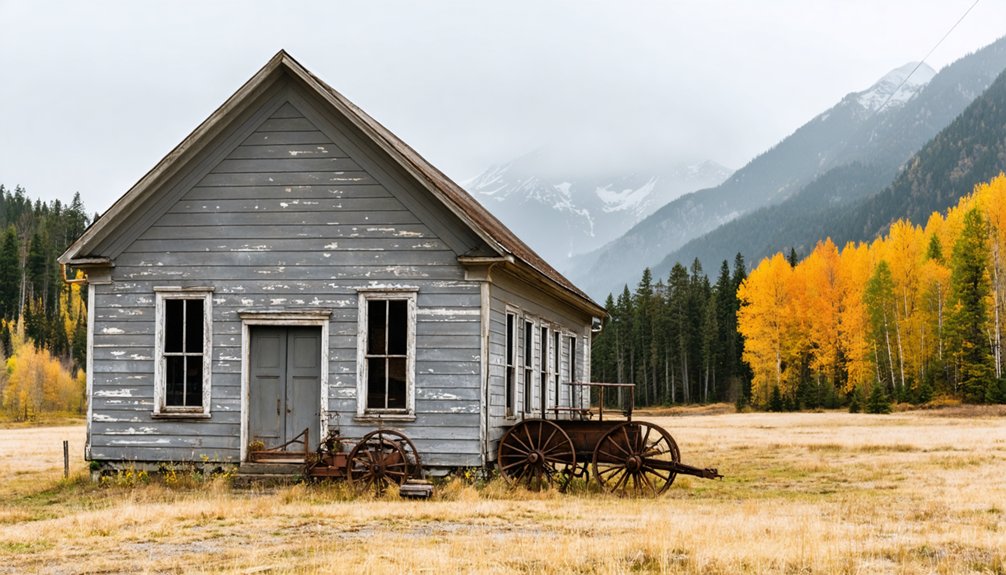
You’ll discover one of Washington’s best-preserved ghost towns at Old Molson, where authentic pioneer buildings from the early 1900s stand as evidence to the region’s boom-and-bust mining era.
The outdoor museum, established in 1960 and maintained by the Molson Historical Society, allows you to peer through windows at original frontier artifacts and explore interiors filled with period photographs and equipment.
Beyond the preserved offices, cabins, and bank, you’ll find extensive displays of farming and mining machinery that illustrate the harsh realities of daily life at Washington’s highest railroad station.
Historic Structures Tour
Since 1960, Old Molson has functioned as an outdoor ghost town museum where you can walk through a preserved cluster of frontier-era buildings arranged in their original main-street configuration.
You’ll explore the bank, jail, assay office, newspaper office, and weathered storefronts that showcase authentic historic architecture from the early 1900s mining boom.
Pioneer cabins staged with period furnishings, kitchenware, and family photographs reveal the realities of pioneer life at 3,708 feet elevation—where self-sufficiency meant survival in extreme isolation.
The Molson School Museum serves as your indoor interpretive center, operated by the Molson Historical Society since the 1970s.
Inside, archival exhibits document railroad-era commerce, border-town dynamics, and frontier education.
This dual-museum complex preserves original materials—weathered wood siding, metal roofing, stone foundations—maintaining historical integrity without modern interference.
Farming and Mining Artifacts
Authentic mining tools and agricultural equipment scattered throughout Old Molson’s outdoor museum grounds illustrate the town’s dramatic economic pivot from gold extraction to subsistence farming.
You’ll discover original implements that reveal how settlers adapted their livelihoods after the 1901 mining collapse. Period machinery demonstrates farming techniques homesteaders employed to cultivate this harsh, high-elevation terrain. Ore carts, hand drills, and extraction equipment showcase mining methods that briefly fueled the town’s economy before the gold rush ended abruptly.
Each artifact tells a story of resilience and self-determination. Pioneer cabins display tools reflecting daily survival strategies, while staged interiors preserve the rugged independence that characterized frontier life.
These tangible remnants offer you unmediated access to authentic western heritage without interpretive barriers or restrictions.
Planning Your Visit: Access Routes, Road Conditions, and Seasonal Considerations
Because most North Cascades–area ghost towns occupy remote corners of mountain valleys, reaching them demands careful route planning and realistic assessment of road conditions.
Monte Cristo requires an 8-mile roundtrip hike along a closed road from Barlow Pass, accessed via Mountain Loop Highway’s narrow, winding pavement and gravel segments. Flood damage from 2003 and 2006 left washouts and eroded banks that complicate navigation tips during high water.
You’ll encounter potholes, frost heaves, and minimal shoulders on the approach drive. Trail safety depends on recognizing unstable building floors, exposed nails, and debris at unmaintained townsites.
Northern State Ghost Town near Sedro-Woolley offers gentler alternatives with modest elevation gain. Always pack out trash, arrive early for limited trailhead parking, and prepare for self-sufficient travel in these backcountry settings.
Explorers looking for unique experiences can also seek out abandoned sites near Cuyahoga Valley, which tell their own stories of the past. These remnants of history provide a fascinating backdrop for photography and exploration. Be sure to adhere to local guidelines to preserve the integrity of these sites.
Historical Context: Mining Booms, Institutional Communities, and Economic Decline
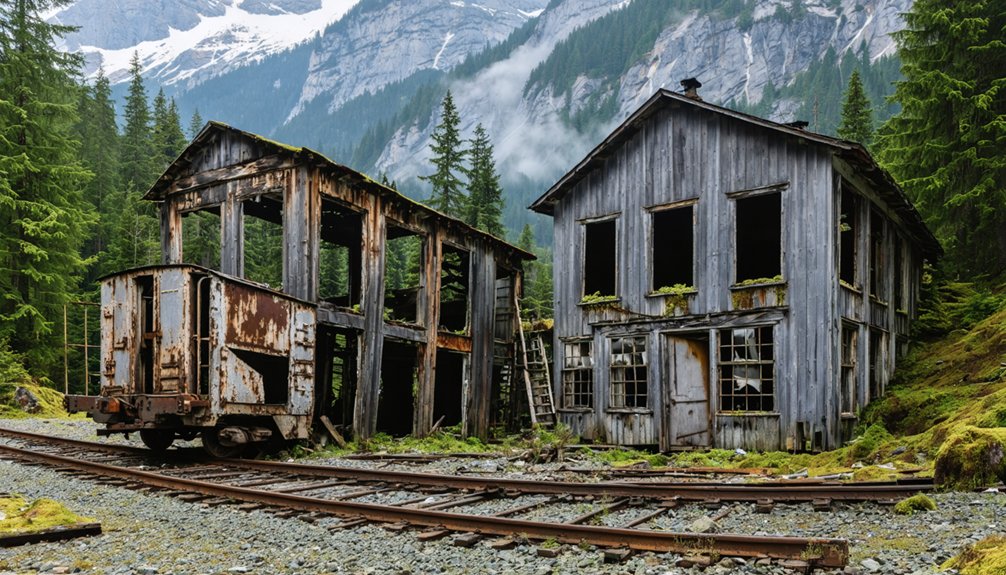
The remote valleys and mountain passes that challenge modern visitors once drew thousands of prospectors, laborers, and settlers during the late 1880s and 1890s, when gold and silver strikes transformed isolated watersheds into bustling extraction centers.
Monte Cristo recorded over 200 claims by 1893, spawning railway construction and a two-tiered townsite. You’ll find mining legacies etched across these landscapes—worker cottages, rusted machinery, and overgrown trails marking boom-and-bust cycles.
Economic shifts came swiftly: ore miscalculations, flooding that severed rail access, and market collapses emptied camps within decades. Franklin’s coal disaster killed 37 miners, exposing systemic risks.
Exploring Responsibly: Preservation Ethics and Low-Impact Ghost Town Tourism
Visiting ghost towns near North Cascades National Park demands a conservation ethic that balances curiosity with stewardship. Responsible tourism begins with staying on established routes to prevent erosion and artifact damage at sites like Monte Cristo and Melmont.
Never enter unstable structures—they pose collapse hazards and accelerate decay. Leave all artifacts undisturbed; moving bottles, machinery, or timbers destroys archaeological context and violates heritage preservation laws.
At burial grounds like Northern State’s cemetery, treat spaces as sacred. Avoid walking on graves or disturbing headstones.
Verify land ownership before visiting—many ghost towns span public, private, and tribal boundaries. Respect no-trespassing signs and closures. Pack out everything you bring in, use designated parking, and avoid geotagging sensitive locations online.
Your restraint protects these irreplaceable landscapes for future explorers.
Frequently Asked Questions
Are Any Ghost Town Sites Wheelchair Accessible or Suitable for Young Children?
Northern State Recreation Area offers wheelchair accessibility and family-friendly activities on flat, wide paths exploring abandoned hospital grounds. Monte Cristo’s washed-out road and log river crossing aren’t suitable—you’ll need backcountry legs and sure footing there.
Can Visitors Camp Overnight Near Monte Cristo or Other Ghost Town Locations?
You can’t camp overnight at Monte Cristo ghost town itself—it’s day-use only. However, you’ll find dispersed camping sites north of the area where camping regulations allow overnight stays without permits in designated locations.
What Wildlife Encounters Should I Prepare for When Visiting These Sites?
Prepare for wildlife sightings including black bears, coyotes, deer, and rodents around ghost town sites. Practice animal safety through proper food storage, making noise while hiking, and maintaining safe distances from all wildlife you encounter.
Are Dogs Allowed on Trails Leading to Ghost Towns Like Monte Cristo?
Yes, dogs are allowed on Monte Cristo trails since they’re in national forest, not the park. You’ll want to follow dog regulations by keeping yours leashed and practicing good trail etiquette throughout your visit.
Do Any Ghost Towns Offer Guided Tours or Ranger-Led Programs?
No official ranger-led programs exist for ghost towns near North Cascades. You’ll find guided exploration at Molson School Museum through volunteer docents, highlighting the historical significance of Okanogan’s mining heritage via self-directed freedom.
References
- https://stateofwatourism.com/ghost-towns-of-washington-state/
- https://www.wta.org/go-hiking/hikes/northern-state-ghost-town
- https://okanogancountry.com/ghost-towns
- https://www.cascadeloop.com/ghost-towns-and-haunted-places-in-the-washington-cascades
- https://www.islands.com/1938500/franklin-ghost-town-washington-woodlands-waterfalls-abandoned-mountain-trail/
- https://visitrainier.com/melmont-ghost-town-2/
- https://www.wta.org/go-hiking/hikes/monte-cristo-143
- https://www.tripadvisor.com/Attraction_Review-g28968-d15215289-Reviews-Northern_State_Ghost_Town-Washington.html
- https://seattleterrors.com/northern-state-mental-hospital/
- https://www.atlasobscura.com/articles/northern-state-mental-hospital-cemetery