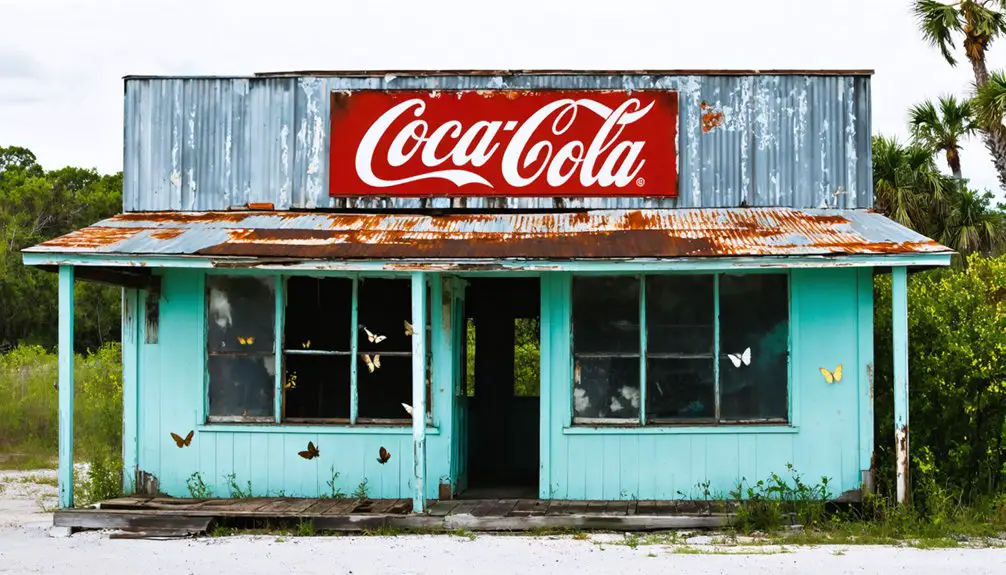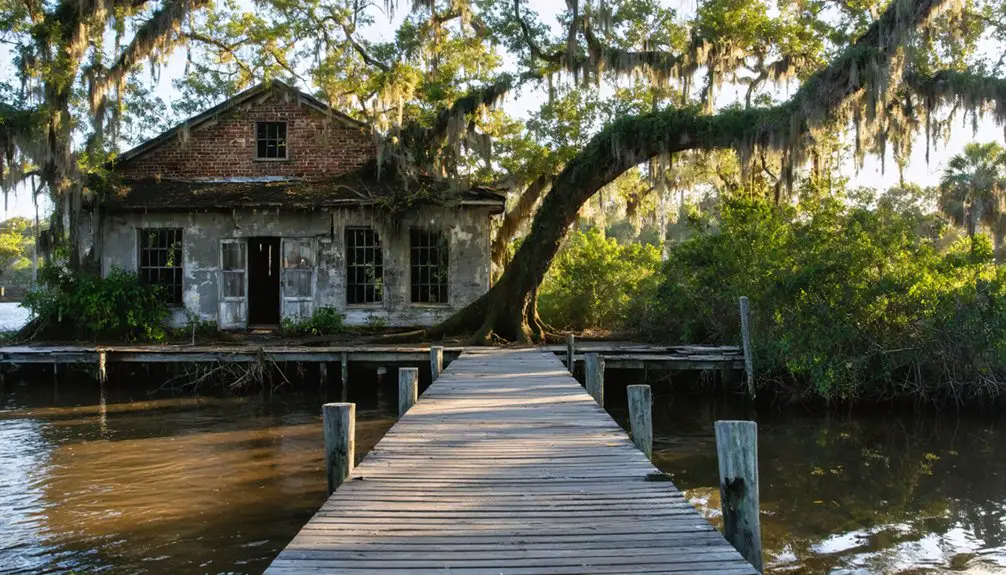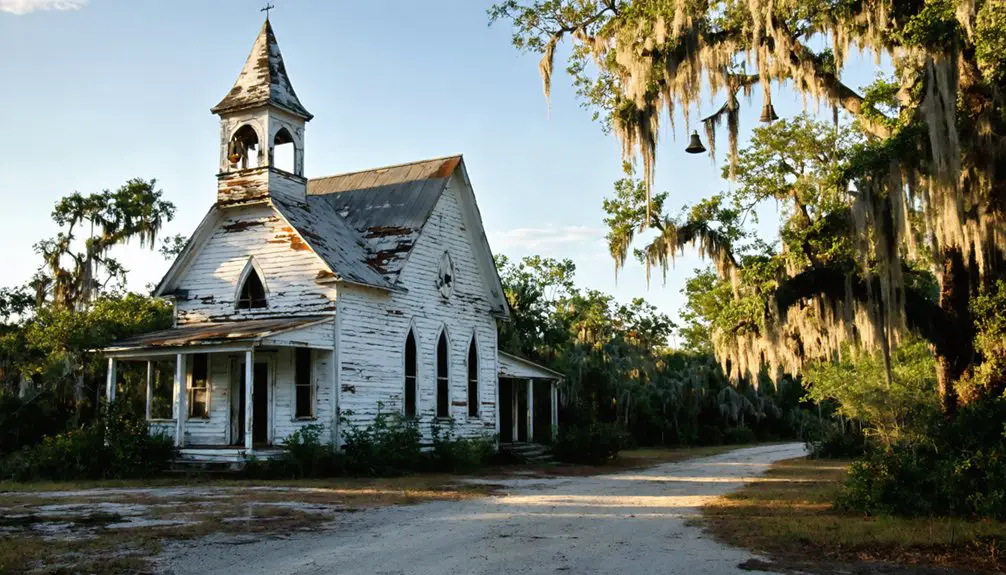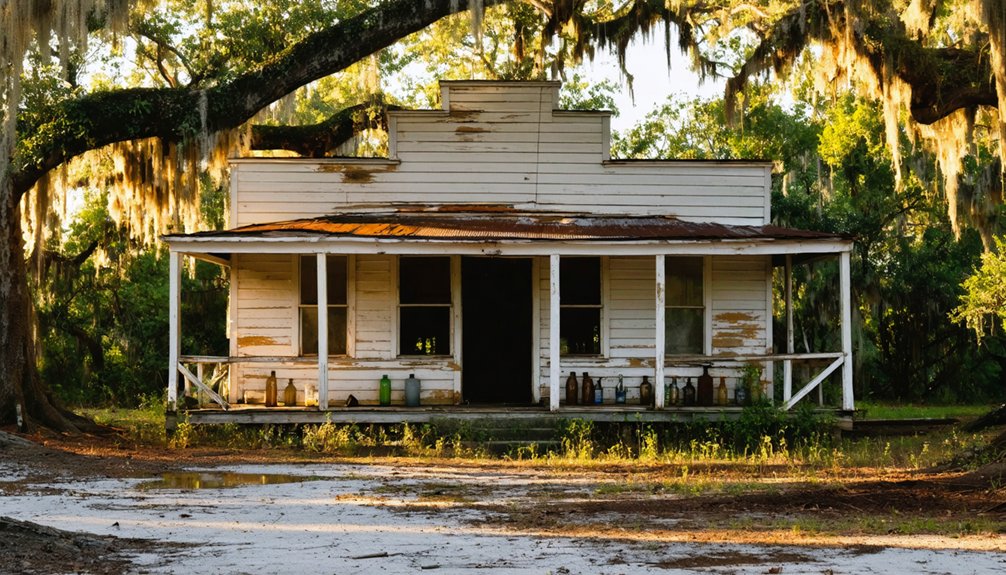
You’ll find several ghost towns hidden in the forests around Ocala, with Kerr City being the most intact—founded in 1884, it was abandoned after the catastrophic freezes of 1894-1895 destroyed its citrus economy. St. Francis, once a thriving steamboat port on the St. Johns River, met a similar fate when railroads arrived in 1886. Other vanished settlements like Zuber, Eureka, and Boardman dot Marion County’s wilderness, their weathered structures and overgrown cemeteries offering glimpses into Florida’s frontier past and the economic forces that erased these communities from the map.
Key Takeaways
- Kerr City, founded in 1884, features fourteen weathered structures including Florida’s oldest Texaco station, but is privately owned and inaccessible.
- St. Francis, an 1887 steamboat port, offers public exploration via designated trails though dense vegetation has reclaimed most structures.
- The Great Freezes of 1894-1895 devastated citrus economies, causing complete abandonment of Kerr City by 1905 and St. Francis by 1940s.
- Railroad expansion in 1886 redirected commerce from river towns, causing economic isolation and decline in steamboat-dependent communities like St. Francis.
- Ocala National Forest contains lost communities with hidden cemeteries and abandoned dock pilings marking former settlements and prosperity.
Kerr City: A Frozen Moment in Time
In 1884, George Smiley carved 205 acres of Marion County woodland into 26 neat blocks and founded Kerr City, the county’s second platted town after Ocala itself.
You’ll find this settlement six miles from the St. Johns River, where it once thrived as a stagecoach stopover within today’s Ocala National Forest.
The Kerr City history reveals a prosperous community of 100 residents who built a citrus economy supporting stores, a sawmill, hotel, and newspaper.
Then the Great Freezes of 1894–1895 destroyed everything. Groves died, families fled, and by 1905 the town stood abandoned.
Today, fourteen weathered structures remain—including Florida’s oldest Texaco station—creating an eerie snapshot of frontier ambition meeting natural catastrophe. Among the historic buildings stands the Kerr House Hotel, constructed by Junis Terry in 1885 before it burned down in 1907. The town’s remarkable preservation stems from George Smiley’s descendants, who continue to maintain stewardship of the property.
St. Francis and the Vanished River Ports
Along the St. Johns River’s west bank, you’ll find traces of St. Francis, a once-thriving river town founded in 1887. This steamboat port bustled with activity as ox-drawn wagons delivered citrus, timber, and produce to its wharves.
By 1888, steamboats regularly stopped here, exchanging household goods for agricultural products bound for Jacksonville and beyond.
The community supported a post office, hotel, general store, and even published “The Florida Facts” newspaper. Hundreds of acres of citrus groves surrounded the settlement, creating prosperity for residents who crowded near the wharf. The town also featured a sanitarium and health resort that served the growing population.
Railroad expansion in 1886 triggered St. Francis’s economic decline. Severe freezes devastated citrus groves, hurricanes flooded the lowlands, and steamboat traffic vanished. The last resident departed by the 1940s, and the federal government eventually acquired the abandoned townsite.
Lost Communities of the Ocala National Forest
You’ll find Kerr City’s story frozen in time at 1894, when the Great Freeze shattered its citrus economy and scattered most of its hundred residents into memory.
The three-story Kerr House hotel that once welcomed visitors now stands as a weathered monument to what George Smiley built and winter destroyed.
Unlike the river ports that shifted from steamboats to sawmills and found new purpose, Kerr City never recovered—it simply waited in the scrub until the national forest grew up around it.
Today, hidden cemeteries mark the final resting places of those who once called these forgotten settlements home, scattered throughout the forest like whispered secrets of pioneer life.
The forest’s dense woods and remote areas have also made it the site of multiple unsolved disappearances and cold cases that continue to perplex investigators.
Kerr City’s Frozen Legacy
Deep within the Ocala National Forest, Kerr City stands as a tribute to Florida’s fragile frontier economy—a settlement that flourished and failed within a single generation. Founded in 1884 by George Smiley, this community of 100 residents built a complete town infrastructure: hotel, general store, schoolhouse, and sawmill.
You’ll find it carved from 205 acres along strategic stagecoach routes near Lake Kerr.
The citrus collapse of 1894-1895 changed everything. Back-to-back freezes destroyed every orange grove, triggering immediate economic devastation. Residents fled, abandoning their dreams overnight. By 1905, most buildings stood abandoned, with the school and pharmacy shutting their doors for the final time.
Today, historic buildings remain frozen in time on private property, preserved by descendants of original settlers. The post office closed in 1942, marking Kerr City’s final chapter—a cautionary tale of frontier ambition. A single caretaker descended from the original townspeople maintains the site, serving as the ghost town’s only resident.
St. Francis River Port
You can still spot old dock pilings along the shoreline and raised logging tramways cutting through the floodplain forest.
Rail competition arrived in 1886, gutting steamboat profits. Then came the devastating freezes and hurricanes that finished what commerce had started.
Today, trails follow those old roadbeds through cypress and palm, where a hotel and packing house once served river travelers and farmers alike. The town operated a post office from 1888 until 1909, marking its most active years as a river settlement. These historic routes now form part of a larger network of trails within the Ocala National Forest.
Steamboats to Sawmills Transition
The Ocklawaha River coursed through what’s now Ocala National Forest as the region’s commercial lifeline, carrying steamboats past landings like Davenport where isolated families waited for mail, supplies, and the occasional passenger bound for Jacksonville or Palatka.
Hart Line vessels navigated these steamboat routes upriver, their decks stacked with turpentine and milled lumber bound for coastal markets.
By the 1880s, railroads began penetrating the forest interior, shifting lumber transportation from river landings to inland mill towns like Moss Bluff.
Steam sawmills no longer needed navigable waterways—they followed the rails deeper into virgin timber stands.
Within two decades, once-bustling landings stood silent. The economic axis had tilted from river to rail, abandoning waterfront settlements to memory and reclaiming forest.
Zuber, Eureka, and Other Forgotten Marion County Settlements
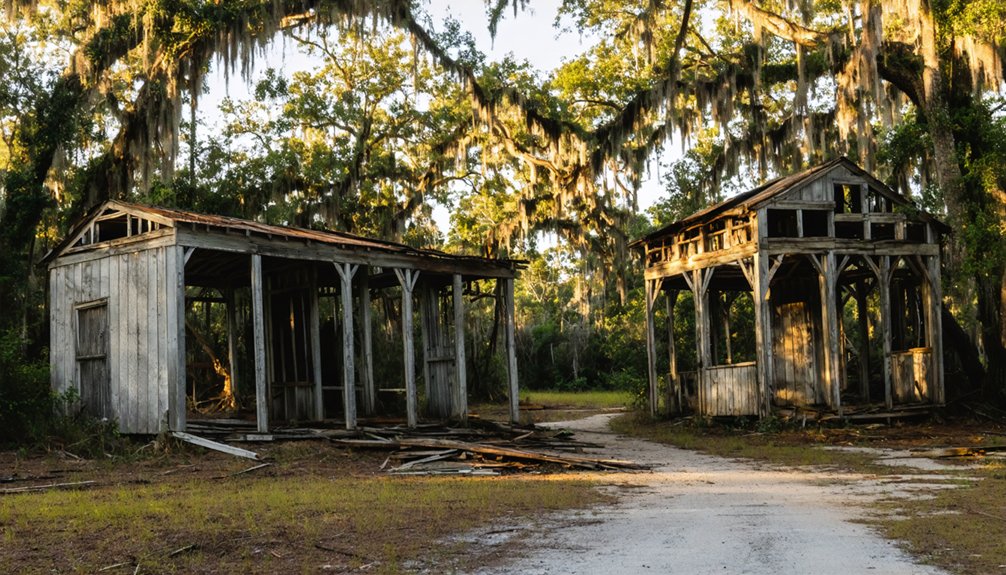
Beyond Ocala’s better-known ghost towns, Marion County harbored dozens of smaller settlements that flickered briefly during the railroad and timber boom before fading into rural obscurity.
You’ll find Zuber history preserved mainly in road signs and warehouse addresses near Ocala’s northwest edge, where agricultural shipping sidings once served surrounding farms and turpentine camps.
The Eureka economy thrived on Ocklawaha River steamboat traffic, exporting lumber and naval stores through its river landing before highways rendered waterborne commerce obsolete.
Stanton disappeared entirely, leaving only archival references and cemetery plots.
These forgotten hamlets tell Marion County’s broader story: temporary communities built around extractive industries, abandoned when timber played out or rails bypassed them, now remembered only through faded maps and descendant memories.
What Caused These Towns to Disappear?
You’ll find that most Marion County ghost towns disappeared after the catastrophic freezes of 1894-1895, which destroyed the citrus groves that formed their economic foundation.
When temperatures plummeted below 20 degrees Fahrenheit for consecutive winters, entire communities like Kerr City and Boardman watched their primary industry vanish overnight.
As residents abandoned their frozen groves, the shift from stagecoach routes to railroad networks simultaneously redirected commerce away from these struggling settlements, leaving them economically isolated and unable to recover.
Transportation and Economic Shifts
When steamboats ruled Florida’s inland waterways in the 1880s, river ports like St. Francis thrived on citrus and timber traffic.
Then everything changed. The 1886 Jacksonville rail line triggered rapid transportation evolution, draining commerce from river towns overnight. You’ll find abandoned dock pilings in Ocala National Forest marking where these settlements once prospered.
Railroad routing determined which communities survived. Towns bypassed by tracks lost mail service, freight access, and residents.
Kerr City faced economic decline when the Great Freeze of 1894–95 destroyed citrus groves, eliminating its shipping purpose. Without crops to transport, the post office closed in 1941.
Later, automobile highways carved new corridors through the forest, leaving historically-routed towns stranded off modern maps—forgotten monuments to obsolete transportation networks.
Natural Disasters and Climate
The twin blows of January and February 1895 shattered Central Florida’s citrus economy in a matter of days.
You’ll find that Kerr City and Boardman never recovered from these back-to-back freezes—groves died, investors fled, and populations plummeted to a handful of stubborn holdouts.
The climate impact wasn’t just immediate crop loss; it exposed how vulnerable these settlements were on marginal pine lands with thin, sandy soils.
Agricultural failure removed the single revenue stream keeping these communities alive.
St. Francis faced its own environmental nemesis: its location along the St. Johns River floodplain meant seasonal high water and swampy terrain constantly threatened docks and warehouses.
When freezes destroyed the economic reason to fight flooding, nature reclaimed the site completely.
Visiting Ghost Town Sites Today: Access and Preservation
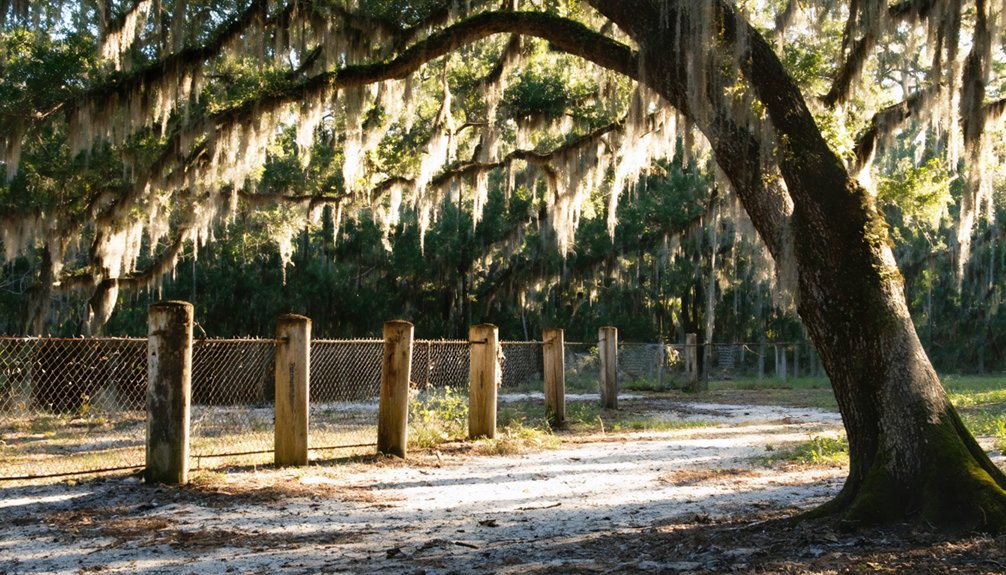
How accessible are the ghost towns scattered across Marion County’s forests and former frontier settlements? You’ll find access challenges vary dramatically.
St. Francis offers public exploration via a designated trail in Ocala National Forest, though dense vegetation has reclaimed most structures—only dock pilings remain visible.
Kerr City presents a different scenario: despite its National Register status, it’s privately owned and no longer open for tours. Preservation efforts here depend on the founding family’s descendants rather than public programs.
When you hike forest trails, you’ll encounter overgrown cemeteries and faint settlement traces rather than intact buildings. Natural reclamation accelerates continuously—humidity, storms, and vegetation erase unmaintained sites.
Your exploration typically integrates into broader heritage trail systems without formalized ghost town facilities.
Frequently Asked Questions
Are There Any Ghost Towns in Citrus County Near Ocala?
Yes, you’ll find several ghost towns in Citrus County near Ocala, including Orleans, Stage Pond, Mannfield, and Etna. Most abandoned after the 1894-95 freezes destroyed citrus crops, leaving only cemeteries and scattered ruins today.
Can I Metal Detect or Dig for Artifacts at These Sites?
No, you can’t legally dig without permission—over 90% of Florida’s ghost towns sit on protected public or private land. Metal detecting regulations and artifact preservation concerns mean you’ll face felony charges for unauthorized excavation.
What Wildlife Might I Encounter When Exploring Ghost Town Locations?
You’ll likely encounter black bears, deer, feral hogs, alligators, and venomous snakes during wildlife sightings at these remote locations. Local ecosystems also support raccoons, otters, scrub-jays, and even rhesus macaques near waterways—stay alert and prepared.
Were Any of These Towns Affected by Native American Conflicts?
Yes, you’ll find that 1835 Seminole warriors drove surveyors from Lake Kerr to Fort King, delaying settlement for years. These Native American conflicts and Historical Conflicts directly shaped when towns like Kerr City could finally establish themselves.
How Do I Obtain Permission to Visit Kerr City?
Kerr City visitation rules require you to contact the Smiley family descendants directly for permission, as it’s privately owned. Researchers and paranormal groups have historically arranged guided tours by presenting their purpose and respecting the owners’ stewardship.
References
- https://352today.com/news/257752-defunct-ocala-kerr-city-marion-countys-forgotten-ghost-town/
- https://www.ocalastyle.com/ghost-towns-of-marion-county/
- https://registrytampabay.com/secrets-of-ocala-national-forest-ghost-towns-cool-springs-mossy-oaks-and-monkeys/
- https://floridatrailblazer.com/2019/09/03/st-francis-trail-in-ocala-national-forest-st-francis-ghost-town/
- https://cccourthouse.org/wp-content/uploads/2023/12/Ghost-towns-and-Cemeteries-of-Citrus-County.pdf
- https://theforgottensouth.com/kerr-city-florida/
- https://en.wikipedia.org/wiki/Kerr_City
- http://studiohourglass.blogspot.com/2014/10/ghost-town-in-woods-kerr-city.html
- https://www.onlyinyourstate.com/experiences/florida/ghost-town-fl
- https://www.paranormalghostsociety.org/Kerr City.htm