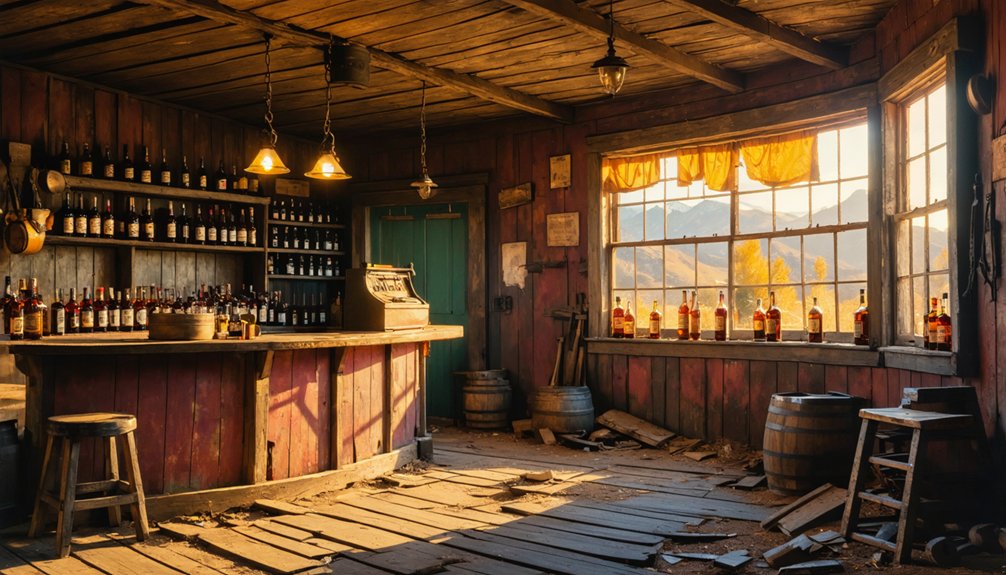
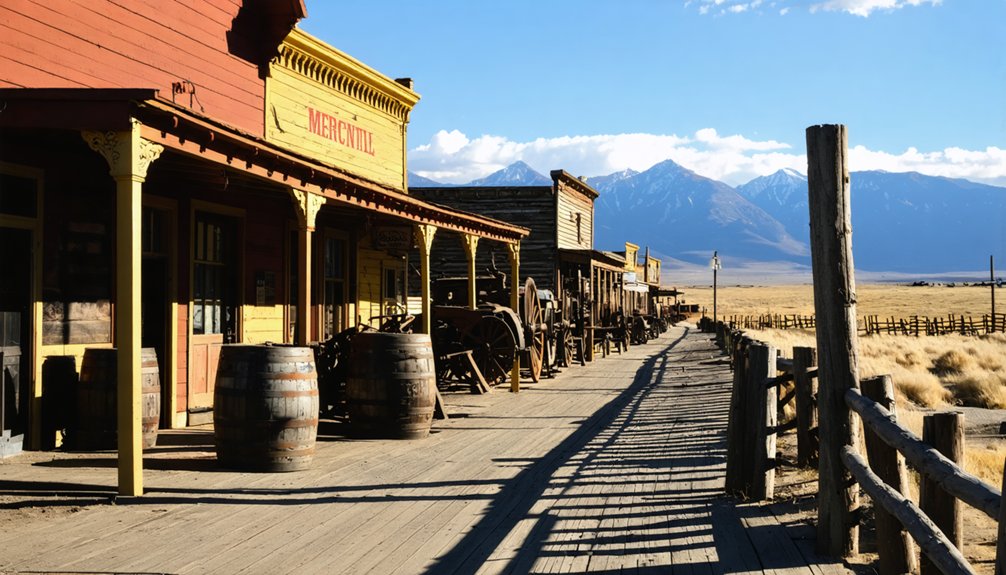
You’ll find California’s most accessible ghost towns just two to three hours from Orange County, where crumbling adobe walls and weathered mining structures stand frozen in the Mojave Desert since the silver and gold rushes ended over a century ago. Calico Ghost Town, California’s official Silver Rush destination, leads your options with one-third original buildings from its 1880s heyday when it produced 70% of the state’s silver. Bodie State Historic Park preserves 110 structures in “arrested decay,” while Randsburg maintains its 1890s character with functioning saloons and general stores that witnessed $60 million in gold extraction. The guide below reveals ideal routes and seasonal conditions for exploring these remnants of frontier California.
Key Takeaways
- Calico Ghost Town, California’s official Silver Rush town, is two hours northeast of Orange County with daily tours and original 1880s buildings.
- Bodie State Historic Park preserves 110 buildings at 8,375 feet elevation, making it California’s largest ghost town in arrested decay.
- Randsburg maintains its 1890s character with a working general store and saloon from the gold rush era that produced $60 million.
- Ballarat features crumbling adobe ruins, an original wooden morgue, and jail from its 1897-1905 boomtown period with 500 residents.
- Visit between October and April for optimal conditions, bringing water, spare tires, and a road atlas for desert exploration.
Calico Ghost Town: California’s Premier Silver Rush Destination
The desert wind still whispers stories of silver-crazed prospectors through Calico’s weathered boardwalks, where California’s mining heritage lives on just two hours northeast of Orange County.
In Calico’s dusty streets, echoes of silver-hungry prospectors still drift through California’s preserved 1880s mining past.
You’ll discover authentic Calico history among one-third original buildings standing since the 1880s Silver Rush, when fortune-seekers extracted millions from these sun-baked hills. Governor Schwarzenegger recognized this preservation by proclaiming Calico California’s official Silver Rush Ghost Town in 2005.
Step into Maggie Mine’s 1,000-foot tunnels where miners once toiled in darkness, or visit the reconstructed assay office showcasing mining techniques that transformed raw ore into wealth.
Try gold panning in authentic stream settings, explore blacklight mineral displays, and walk freely through Lucy Lane Museum’s artifacts. The park maintains daily operating hours from 9 AM to 5 PM, welcoming visitors every day except Christmas.
Walter Knott’s 1950s restoration preserved these structures, ensuring you’ll experience genuine frontier independence. Families can secure an Annual Family Pass for $50.00, valid for 12 months of unlimited visits.
The Rise and Fall of Calico’s Silver Mining Empire
Behind Calico’s weathered facades lies the dramatic story of California’s silver empire, born on April 6, 1881, when prospectors S.C. Wardan, Hues Thomas, and John C. King struck rich ore at their Silver King Mine.
Calico Mining operations exploded across the Mojave Desert, transforming barren peaks into California’s largest Silver Production center.
By 1884, the district’s dominance was undeniable:
- 70% of California’s silver originated from San Bernardino County
- 80% of that output came specifically from Calico’s 500+ mines
- $13-20 million in silver flowed from these claims between 1881-1907
The boom lasted fifteen years until profitable silver mining ended in 1896, leaving behind empty shafts and abandoned dreams. Yet freedom’s price came due when 1890s silver crashes decimated ore values from $1.31 to $0.57 per ounce. The collapse mirrored economic disruptions seen decades earlier when protective legislation in England restricted cotton imports, demonstrating how government intervention could reshape entire industries.
What to Expect When Visiting Calico Today
Today’s Calico straddles two worlds—part authentic relic, part family attraction.
You’ll explore original 1880s structures alongside recreated buildings that capture the mining era’s spirit. Historic preservation efforts maintain the town’s dusty boardwalks and weathered facades, though commercialization brings restaurants and souvenir shops to Main Street.
Calico attractions include the self-guided Maggie Mine tour through actual silver mine tunnels, a narrated railroad loop, and gold panning experiences.
The Lucy Lane Museum displays authentic photographs and artifacts from the boom years. You’ll navigate uneven terrain and dirt streets—freedom from modern smoothness comes with the authentic experience.
Visit weekdays for solitude, or catch Civil War reenactments and festivals when crowds gather. The Mystery Shack offers a disorienting experience where water runs uphill in this crooked house.
The Mojave’s high desert heat demands preparation, but those colorful hills reward photographers willing to embrace the elements. Well-behaved dogs on leashes are welcome throughout the town, making it an enjoyable destination for the whole family.
Ballarat: Remote Desert Ruins in Death Valley Country
For authentic desert exploration, you’ll find:
- Crumbling adobe ruins from the 1897-1905 boomtown era
- Original wooden morgue and jail standing sentinel over a small graveyard
- Post Office Springs still flowing 0.25 miles south
Today, perhaps one resident remains among the weathered structures, maintaining Ballarat’s stubborn refusal to vanish completely from California’s unforgiving Panamint Valley landscape. The town once housed seven saloons serving miners during its peak population of 500. The wait time to reach this remote location from Orange County can vary depending on road conditions and desert weather patterns.
Randsburg: a Living Ghost Town With 1890S Character
You’ll find Randsburg clinging to the Rand Mountains’ slopes, a weathered survivor of the 1895 gold rush that drew over 3,500 fortune-seekers to this “poor man’s camp” during the nation’s darkest economic hours.
Unlike California’s abandoned camps, this town never died—its dusty main street still hosts a general store and saloon among false-fronted buildings that’ve witnessed $60 million in gold flow from the surrounding hills.
When you walk past the old two-room jail and rusting headframes, you’re stepping through a settlement that’s maintained its 1890s character for more than a century, sustained by stubborn residents and curious travelers like yourself. The town attracts off-road and dirt bike enthusiasts who explore the surrounding desert terrain throughout the year. The Yellow Aster mine once stood as one of the largest gold operations in the Mojave Desert, cementing Randsburg’s place in California mining history.
Mining Town History
When prospectors traced placer gold to an outcropping near the summit of Rand Mountain in 1895, they stumbled upon what would become the Yellow Aster deposit—a discovery that transformed a hardscrabble tent camp into one of the Mojave Desert’s most significant gold towns.
The district’s explosive growth reflects the era’s frontier spirit:
- Population surge: From 13 buildings in December 1895 to over 3,500 residents by 1899
- Production scale: $25 million in gold extracted through amalgamation mining techniques between 1895 and 1933
- Infrastructure: 100-stamp mill and thriving businesses emerged almost overnight
Randsburg earned its reputation as a “poor man’s camp,” where desperate prospectors hand-ground ore to raise claim-filing fees.
Today’s ghost town preservation efforts honor this independent legacy.
Visiting Randsburg Today
While Randsburg’s glory days ended decades ago, this weathered settlement refuses to fade entirely into the desert sand.
You’ll find approximately 75 residents maintaining this living museum where Randsburg history breathes through every rusty shutter and sun-bleached storefront.
Drive one mile off Highway 395 onto Redrock Randsburg Road, and you’re transported to 1895.
Visitor experiences center on authentic exploration—wander the two-room jail with its weathered mannequins, browse antique shops packed with period merchandise, or grab a drink at the functional saloon.
The Desert Museum documents mining-era stories, while St. Barbara’s Church stands sentinel over collapsed structures and abandoned homes.
You’ll complete your exploration within hours, leaving time for nearby Burro Schmidt Tunnel or dirt bike adventures in surrounding territory.
Bennettville: High-Altitude Mining History Near Yosemite
- The Great Sierra Tunnel—1,784 feet driven into Tioga Hill at a cost exceeding $300,000, yet yielding no profitable ore.
- Weathered boardinghouse ruins and company buildings scattered across alpine meadows.
- The ambitious wagon road that once stretched 56 miles through wilderness.
You’ll find these high-country ruins accessible via Tioga Pass, where freedom-seekers explore California’s authentic frontier past.
Bodie State Historic Park: California’s Largest Preserved Ghost Town
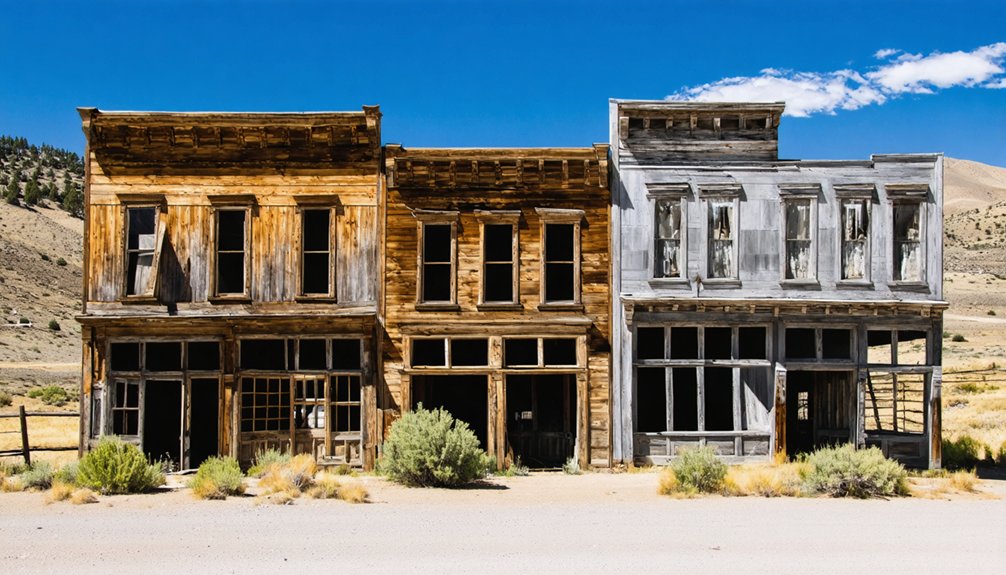
While Bennettville’s ruins scatter across remote alpine meadows, California’s most famous ghost town sprawls across 495 acres of high desert in Mono County.
Visitors seeking more eerie remnants of the past can explore ghost towns near Palm Springs, where remnants of old mining operations tell stories of a once-thriving community. These desolate locations offer a glimpse into California’s rich history and attract adventurers keen on uncovering hidden treasures. Each crumbling structure and dusty street evokes a sense of nostalgia, inviting travelers to imagine the lives once lived there.
You’ll find Bodie State Historic Park standing at 8,375 feet, where 110 weathered buildings remain frozen in “arrested decay” since mining ceased in 1942.
The Bodie architecture tells stories of wild prosperity—65 saloons once lined Main Street when 10,000 fortune-seekers crowded this boomtown in 1880.
Ghost town preservation here means stabilizing structures as they are, not restoring them. You’ll walk past banks, hotels, and the red-light district exactly where miners left them.
This National Historic Landmark earned designation as California’s official state gold-rush ghost town.
The isolation that once bred lawlessness now protects authentic Western heritage for those seeking unvarnished frontier history.
Shasta State Historic Park: Gold Rush Legacy Near Redding
Six miles west of Redding along Highway 299, the brick shells of Shasta’s former business district rise against the foothills like weathered sentinels of California’s mining fever.
This “Queen City” channeled over $2.5 million in Gold Rush wealth before catastrophic fires reshaped it in 1852–1853.
You’ll explore Shasta history through:
- The 1861 Courthouse Museum showcasing California artwork, period courtrooms, jail cells, and restored gallows
- Blumb Bakery’s working brick oven demonstrating 1870s baking techniques on select days
- Pioneer Barn exhibits displaying original stagecoaches and mining implements
When the railroad bypassed Shasta for Redding in the 1880s, decline was swift.
The county seat relocated in 1888, leaving brick ruins that now frame Highway 299—a preserved monument to boom-and-bust freedom.
Planning Your Ghost Town Road Trip From Orange County
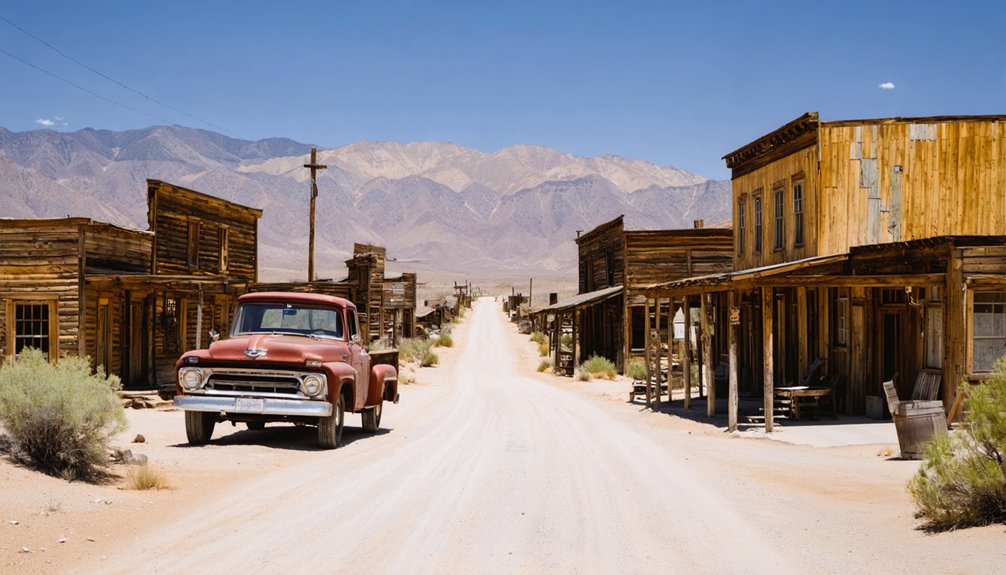
When you’re mapping your ghost town adventure from Orange County, the high desert’s unforgiving summers demand October-through-April travel windows, while mountain sites like Holcomb Valley open their rutted tracks only after spring snowmelt.
You’ll need a detailed road atlas, two gallons of water per person, and a spare tire before pointing your vehicle toward Calico’s 140-mile run up I-15 or Ballarat’s grueling 240-mile push into the Panamints.
Pack your camera, sunscreen, and a full tank—these fading boom-era settlements reward early starts and careful route planning that respects both distance and the desert’s timeless indifference.
Best Times to Visit
Timing your ghost town expedition from Orange County correctly transforms a dusty afternoon into an unforgettable journey through California’s vanished frontier. Understanding seasonal conditions and ideal timing guarantees you’ll explore comfortably while capturing the authentic atmosphere these abandoned settlements deserve.
Ideal Visit Windows:
- Fall (September–October) — Perfect temperatures across all elevations, wildflower remnants in foothills, and special events like Calico’s Halloween Ghost Haunt create exceptional exploring conditions.
- Early Morning Starts — Arrive when gates open (typically 9 AM) for cooler desert air, softer light on weathered buildings, and empty streets that echo the solitude prospectors once knew.
- Spring Wildflower Season (March–May) — Mild temperatures plus desert blooms transform barren landscapes into colorful backdrops, especially rewarding in Southern California’s Mojave locations during April.
Avoid mid-day summer heat when triple-digit temperatures dominate desert ghost towns.
Essential Supplies and Gear
Before you trace the rutted wagon paths that once carried fortune seekers to California’s abandoned mining camps, assembling the right provisions separates amateur day-trippers from true desert explorers.
Your essential gear begins with vehicle readiness—mechanical checks, offline maps, and recovery equipment for Mojave’s unforgiving terrain. Pack one gallon of water per person daily, alongside high-calorie trail foods that won’t spoil under relentless sun.
Your supply checklist must include sun protection, a thorough first-aid kit, and emergency communication devices for areas where cell towers never reached. Don’t forget sturdy boots, work gloves for handling century-old relics, and lighting equipment for exploring darkened structures.
Share your route with someone back in Orange County—the desert keeps secrets, and self-reliance demands preparation.
Recommended Route and Mileage
Though Interstate 15 now slices through the Mojave in air-conditioned comfort, the northbound climb from Orange County still traces the old prospector routes that once required days of wagon travel.
Your mileage calculations depend on which route options you choose:
- Calico Ghost Town Loop: 280–310 miles round-trip from Anaheim via I-5 N → CA-91 E → I-215 N → I-15 N, manageable as a full-day escape with fuel stops in Corona, Victorville, and Barstow.
- High Desert Triangle: 440–505 total miles linking Calico to Randsburg via CA-58 and US-395, perfect for a 2–3 day circuit through authentic mining districts.
- Southern Mojave Spur: 360–430 miles adding Berdoo Camp’s remote ruins to your Calico visit—high-clearance vehicle recommended for desert access roads.
Best Times to Visit California’s Historic Mining Towns
When California’s gold rush fever subsided in the 1880s, these Sierra Nevada settlements began their slow transformation from bustling mining centers to the preserved ghost towns you’ll explore today.
You’ll discover each season reveals different seasonal advantages that enhance your journey through these historically significant sites.
Spring brings wildflower blooms and moderate temperatures perfect for wandering Columbia’s wooden sidewalks and Bodie’s abandoned buildings.
Spring’s mild weather and blooming wildflowers create ideal conditions for exploring Columbia’s historic boardwalks and Bodie’s weathered structures.
Summer extends Bodie’s operating hours until 6pm, though heat occasionally restricts Empire Mine tours.
Fall offers freedom from crowds while maintaining comfortable exploration conditions.
Winter reduces tour schedules but preserves year-round access to these remarkable remnants of California’s mining heritage.
Plan your visit around ideal weather and operating hours to fully experience these authentic gold rush landmarks.
Frequently Asked Questions
Are Ghost Town Visits Safe for Young Children and Families?
Commercialized ghost towns offer family-friendly activities with supervised tours and maintained grounds, but you’ll need vigilance around historic structures and desert hazards. Ghost town safety depends on close supervision, proper preparation, and respecting posted boundaries throughout your exploration.
Can I Camp Overnight at These Ghost Town Locations?
You’ll find camping regulations vary widely—Calico’s vintage campground welcomes overnight permits year-round, but most historic sites prohibit camping within town limits, reserving freedom only for designated dispersed areas on surrounding public lands.
Do I Need a Four-Wheel-Drive Vehicle to Reach These Sites?
You won’t need four-wheel-drive for Calico’s main attractions, as paved roads guarantee vehicle accessibility throughout the historic district. However, if you’re exploring remote desert trails, you’ll encounter terrain challenges requiring off-road capabilities.
Are Pets Allowed at California’s Historic Ghost Towns?
You’ll find most California ghost towns welcome leashed companions, though pet regulations vary by site. Calico permits dogs outdoors, while state parks restrict them from historic buildings—honoring ghost town etiquette preserves these fragile, windswept ruins for everyone.
What Should I Bring for a Day Trip to Desert Ghost Towns?
You’ll want plenty of water, sunscreen, and sturdy boots for exploring these timeworn sites. Don’t forget your camera gear to capture fading structures and picnic supplies to enjoy lunch amid history’s remnants.
References
- https://enjoyorangecounty.com/california-ghost-towns/
- https://en.wikipedia.org/wiki/List_of_ghost_towns_in_California
- https://www.orangecountyoutdoors.com/beyond-oc/calico-ghost-town
- https://www.camp-california.com/california-ghost-towns/
- https://www.visitcalifornia.com/now/california-ghost-towns-road-trip/
- https://la-explorer.com/visiting-calico-ghost-town/
- https://jordangassner.com/everything-you-need-to-know-about-visiting-calico-ghost-town-a-day-trip-from-los-angeles/
- https://parks.sbcounty.gov/park/calico-ghost-town-regional-park/
- https://substack.com/home/post/p-158709529
- https://californiathroughmylens.com/calico-ghost-town/