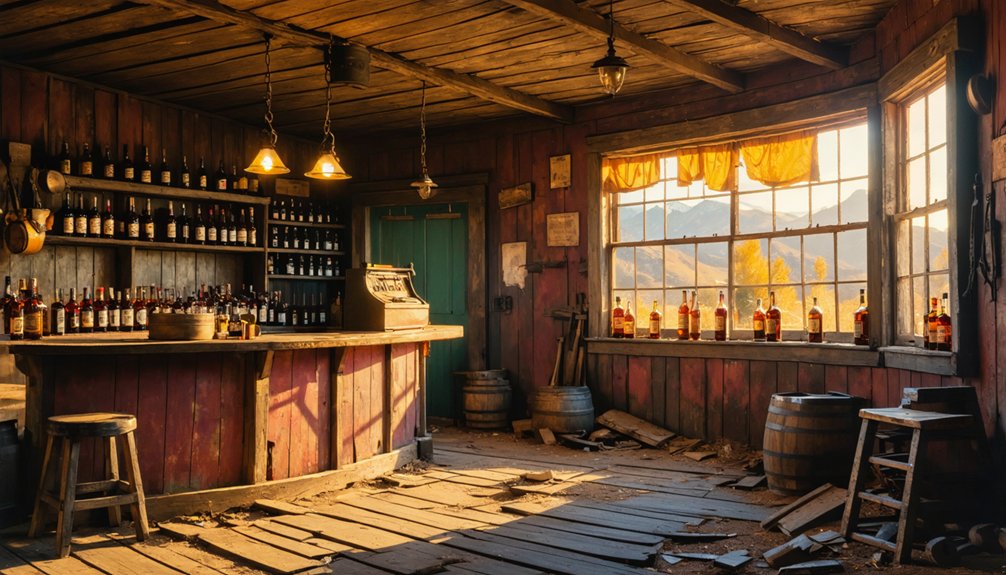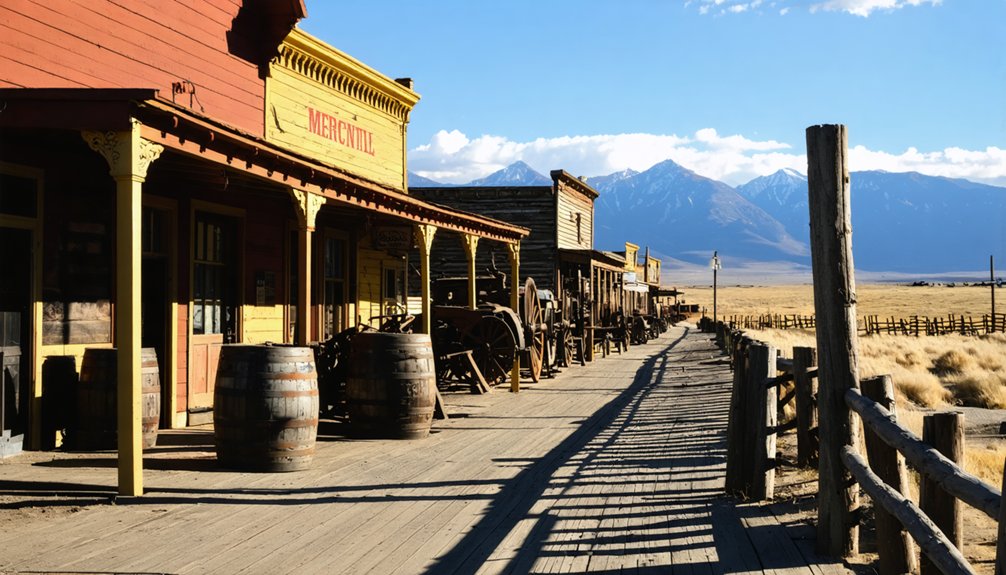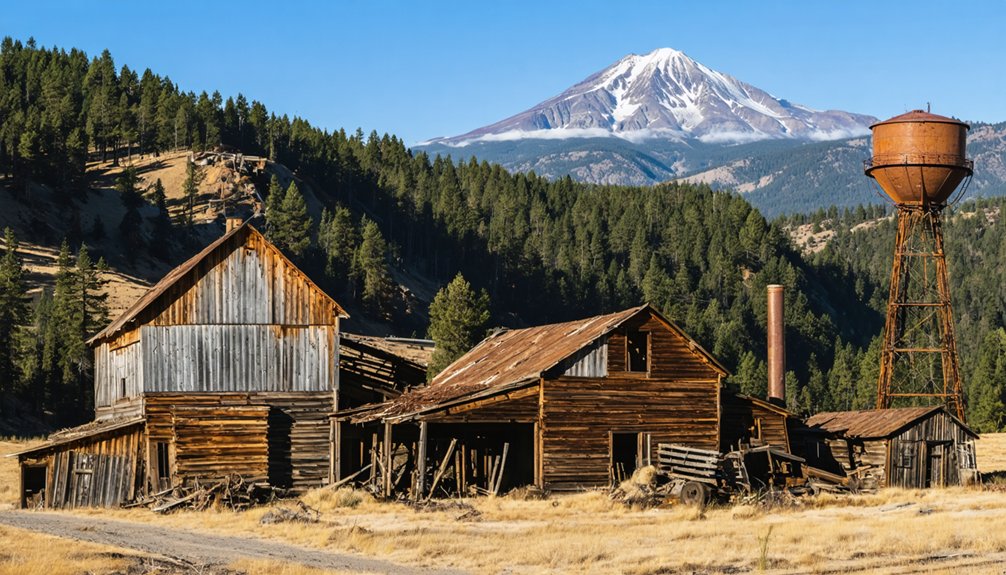
You’ll find California’s most accessible Gold Rush ghost town at Shasta State Historic Park, just six miles west of Redding on Highway 299. Known as the “Queen City of the Northern Mines,” this former supply hub peaked at several thousand residents before the railroad bypassed it in the 1880s, triggering near-total abandonment. Today you can explore California’s longest continuous brick streetscape north of Sacramento, tour the restored 1861 courthouse museum, and discover why this once-prosperous settlement became a preserved ruin.
Key Takeaways
- Shasta State Historic Park, 6 miles west of Redding, preserves California’s longest continuous brick streetscape from the Gold Rush era.
- Once the “Queen City of the Northern Mines,” Shasta declined in the 1870s–1880s when railroads bypassed it for Redding.
- The 1861 Courthouse Museum displays original courtrooms, jail cells, and gallows, open Thursday through Sunday with $3 adult admission.
- French Gulch, established by French miners around 1849–1850, retains semi-abandoned mining-era streetscapes with over $20 million historic gold production.
- Visit duration ranges from 20 minutes to 3 hours, with free parking and mid-morning or late afternoon recommended to avoid heat.
Shasta State Historic Park: The Queen City of California’s Gold Rush
When prospectors struck placer gold in the Trinity and upper Sacramento River region during the late 1840s, Shasta emerged as the essential supply and transportation hub for California’s northern mines.
You’ll find this settlement earned its title “Queen City of the Northern Mines” through strategic location along overland routes connecting Sacramento Valley to remote mining camps. During the Gold Rush peak, several thousand residents—merchants, teamsters, and miners—kept freight wagons and mule trains moving through town constantly.
The town’s fortune changed when Central Pacific rail lines reached nearby Redding in the 1870s–1880s. Transportation routes shifted, businesses relocated, and Shasta declined into near-abandonment.
The railroad’s arrival in Redding during the 1870s–1880s triggered Shasta’s rapid commercial decline and eventual near-abandonment.
Today, brick shells and preserved buildings at Shasta State Historic Park stand as tangible evidence of northern California’s mining-era commercial networks. Miners initially relied on placer mining techniques, using water to separate gold from dirt before transitioning to more intensive extraction methods. Like Catalina Island’s proposed Queen City mining settlement, Shasta’s grand metropolitan ambitions eventually faded as economic conditions shifted and populations moved elsewhere.
Exploring the Brick Ruins and Restored Courthouse
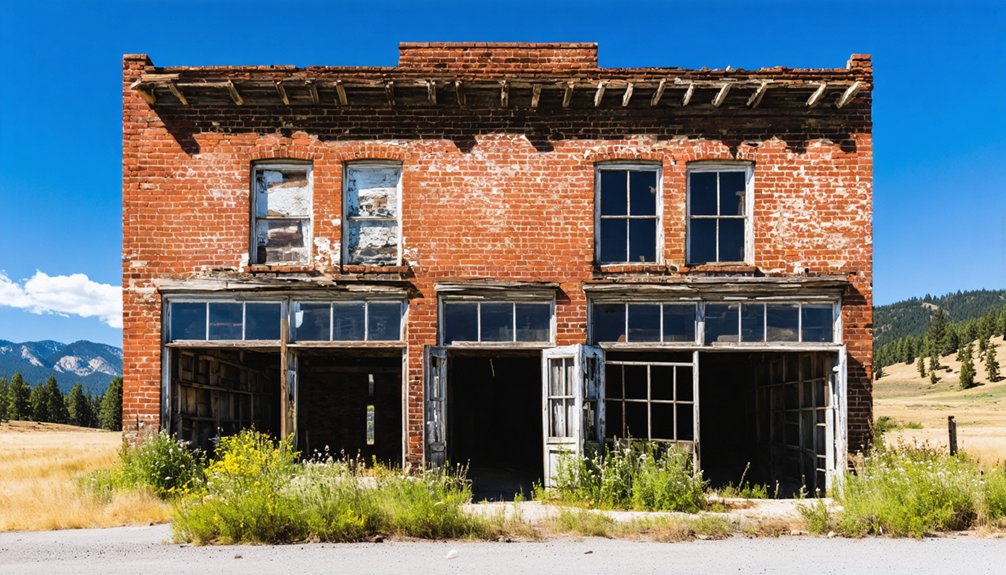
You’ll find the heart of Shasta’s history preserved along the brick commercial row lining Highway 299, where roofless shells of mid-1800s buildings stand as California’s longest continuous brick streetscape north of Sacramento.
These fire-resistant structures, built primarily after devastating blazes in 1853 and 1855, once housed wholesale companies, hotels, and outfitters serving mining camps throughout northern California and southern Oregon. The town’s blacksmith’s shop and brewery remain among the notable structures that give visitors a glimpse into daily life during the Gold Rush era.
The park’s centerpiece, the fully restored 1861 courthouse, now operates as a museum showcasing Gold Rush artifacts, legal records, and exhibits documenting Shasta County’s original seat of government. Inside, you’ll discover an art gallery with early Californian artwork donated by Mae Helene Bacon Boggs, adding another dimension to the museum’s historical collections.
Mid-1800s Brick Commercial Buildings
The heart of Old Shasta’s ghost-town character lies in its mid-1800s brick commercial core, where roofless walls and restored storefronts stand frozen along the route that once carried stage traffic to the northern goldfields.
You’ll find one- and two-story blocks built with thick bearing walls and shared party walls, their street façades featuring segmental arches and simple cornices. This brick construction replaced earlier frame buildings that repeatedly burned during the 1850s boom.
The commercial architecture reflects practical mining-town priorities: ground floors housed stores and saloons behind metal-lined doors, while raised sidewalks aligned at consistent thresholds.
Walking this strip near the courthouse, you’re tracing the supply hub that served northern California’s mining camps before the railroad bypassed Shasta for Redding in the 1870s.
1861 Courthouse Museum Exhibits
At Shasta’s restored 1861 courthouse, you’re stepping into the administrative heart of a mining county where judges once sentenced claim jumpers and gallows stood ready in the yard.
The museum’s exhibit highlights guide you through original courtrooms, jail cells, and reconstructed gallows that demonstrate frontier justice without sugarcoating its brutality.
Historical artifacts—legal documents, mining dispute records, and authentic furnishings—fill rooms restored to their 1860s appearance.
Interactive displays and interpretive films reveal how this “Queen City of the Northern Mines” handled law, order, and the chaos of Gold Rush boomtown life.
The galleries also showcase 100 years of California Art, offering a spectacular cultural contrast to the frontier justice exhibits.
Open Thursday through Sunday, 10 a.m. to 4 p.m., admission runs $3 for adults.
Plan 45–60 minutes to explore the building before wandering the surrounding brick ruins.
Friendly park staff often provide insights and guided tours that bring the museum’s exhibits to life with stories from the Gold Rush era.
How the Railroad Bypass Created a Ghost Town
The railroad impact proved devastating.
Without direct rail access, Shasta’s businesses couldn’t compete against Redding’s lower shipping costs and faster schedules.
Out-migration accelerated through the 1880s, emptying brick storefronts that had replaced wooden structures after earlier fires.
The transportation detour fundamentally altered regional commerce patterns, as merchants and suppliers shifted their operations to locations with more reliable access to critical shipping routes.
Southern Pacific Railroad’s construction of the Redding station in 1923 solidified the city’s position as the region’s primary commercial hub for decades to come.
French Gulch: A Semi-Abandoned Mining Settlement
French miners staked claims along Clear Creek around 1849–1850, establishing what would become one of California’s richest gold-producing districts.
You’ll find this settlement exceeded $20 million in historic gold production, operating as the Klamath Mountains’ most important lode-gold operation. The Washington Mine, discovered in 1852, became Shasta County’s first quartz operation, while the district averaged $300,000–$500,000 annually between 1900–1914.
French Gulch served multiple roles beyond historic mining—functioning as a major supply hub, stagecoach stop on the Sacramento–Portland route (1859–1868), and western trailhead of the California–Oregon Trail.
St. Rose Catholic Church, founded in 1856, anchored the community legacy.
Today’s quiet enclave preserves its mining-era streetscapes under California Historical Landmark No. 166, though portions retain a semi-abandoned character.
abandoned mines near Ridgecrest California hint at the rich history of the area, providing a glimpse into the bustling past that once thrived here. As explorers venture into these forgotten sites, they often uncover remnants of machinery and tools, telling stories of the miners who sought their fortunes. The juxtaposition of these decaying structures against the surrounding desert landscape creates a haunting yet captivating atmosphere for visitors.
What to See and Do at Old Shasta Today
You can start at the restored 1861 County Courthouse, which houses museum exhibits on Gold Rush law, frontier justice, and an exceptional collection of historic California artwork.
From there, walk the row of roofless 1850s brick commercial buildings lining Highway 299, where grass-filled interiors and surviving archways let you examine the original walls and layout of stores, saloons, and hotels.
The park’s interpretation extends to the historic gallows site, original jail cells, and a preserved stagecoach that illustrates Shasta’s role as a major shipping hub for northern California’s mining district.
Explore the Courthouse Museum
- Admission: $3 adults, $2 youth (6–17), free ages 5 and under
- Hours: Thursday–Sunday, 10 am–4 pm
- Art galleries showcase 100 years of California artwork alongside mining exhibits
- Interpretive displays trace frontier justice, commercial development, and daily life of merchants, miners, and families
Walk the Brick Ruins
The brick ruins at Old Shasta State Historic Park represent the longest continuous row of brick construction north of Sacramento, stretching along what was once the town’s thriving commercial district.
Following devastating fires in 1853, merchants adopted fireproof design principles, rebuilding with brick instead of wood. You’ll walk past roofless structures where iron shutters still hang on massive hinges, each building marked with informational plaques detailing its original purpose.
The historic architecture reveals a diverse commercial landscape: bakeries, saloons, hotels, banks, assayers, and barbershops competed side-by-side. Notable proprietors included Benjamin B. Young, who operated a bathhouse, and Emanuel Lewin, a watchmaker and jeweler.
Multiple trails wind through the ruins, offering different perspectives of these 170-year-old structures.
Planning Your Ghost Town Day Trip From Redding
Just six miles west of downtown Redding on CA-299, Shasta State Historic Park sits close enough for a spontaneous morning detour yet substantial enough to anchor a full day-trip itinerary when paired with nearby Whiskeytown National Recreation Area.
Smart ghost town logistics begin with timing: allocate 2–3 hours for a thorough visit or 20–40 minutes for a quick walk-through. Mid-morning or late afternoon arrivals avoid summer heat on exposed brick streets.
Essential trip planning considerations:
· Free roadside parking lines CA-299 directly adjacent to ruins
· Museum and buildings maintain limited seasonal daytime hours
· Layered clothing recommended year-round for shifting temperatures
· Closed-toe footwear necessary on unpaved paths and in roofless structures
Winter rains create slick surfaces, while late-summer wildfire season can reduce air quality and visibility along the corridor.
Frequently Asked Questions
Are There Any Other Ghost Towns Near Redding Besides Old Shasta and French Gulch?
You’ll find historic ruins scattered around Whiskeytown Lake—submerged camps, abandoned mine sites, and dispersed settlements—but they’re less intact than Old Shasta. These nearby attractions offer archeological traces rather than preserved ghost-town streetscapes you can freely explore.
Can You Camp Overnight at Shasta State Historic Park?
No, you can’t camp overnight at Shasta State Historic Park—it’s day-use only with no park facilities for camping. Check nearby Shasta-Trinity National Forest campgrounds instead, which operate under standard federal camping regulations.
Is Old Shasta Safe to Visit With Young Children?
Yes, Old Shasta’s safe with basic safety precautions—stick to marked paths, supervise kids near crumbling brick walls, and watch for Highway 299 traffic. Child friendly activities include exploring the museum, cemetery trail, and historic buildings during daylight hours.
What Are the Best Months to Visit Ghost Towns Near Redding?
The best seasons are September through October and May through June, offering ideal weather conditions—mild temperatures, lower crowds, and comfortable walking conditions—while avoiding summer’s extreme heat and winter’s cold mornings near Redding’s historic sites.
Are Guided Tours Available at Old Shasta or Must You Explore Alone?
You’ll experience both worlds at Old Shasta! The Courthouse Museum offers guided exploration through interactive exhibits revealing Gold Rush historical significance, while outdoor ruins let you roam freely—blending structured learning with independent discovery across California’s “Queen City.”
References
- https://californiathroughmylens.com/shasta-state-park-ghost-town/
- https://lafamilytravel.com/10-best-california-ghost-towns-to-visit-this-summer/
- https://www.visitcalifornia.com/road-trips/ghost-towns/
- https://www.camp-california.com/california-ghost-towns/
- https://storymaps.arcgis.com/stories/124e04142d3147078fb4519a6b9a5c64
- https://www.tripadvisor.com/Attractions-g32952-Activities-c47-t14-Redding_California.html
- https://inspiredimperfection.com/adventures/shasta-state-historic-park/
- https://www.onlyinyourstate.com/experiences/california/ghost-towns-in-northern-california
- https://thecatalinaislander.com/mysterious-island-catalinas-so-called-gold-rush/
- https://www.youtube.com/watch?v=tiavFAcV13Q