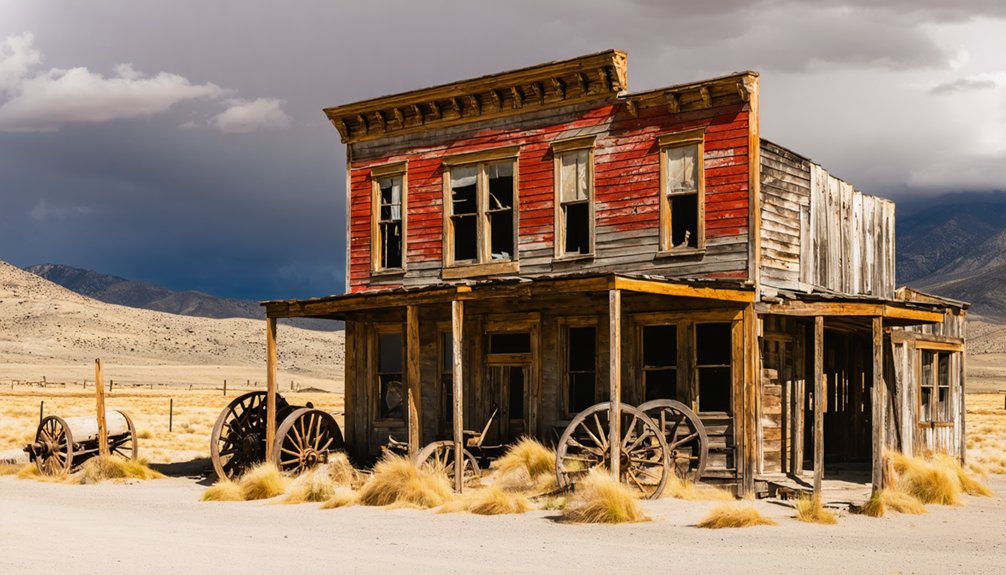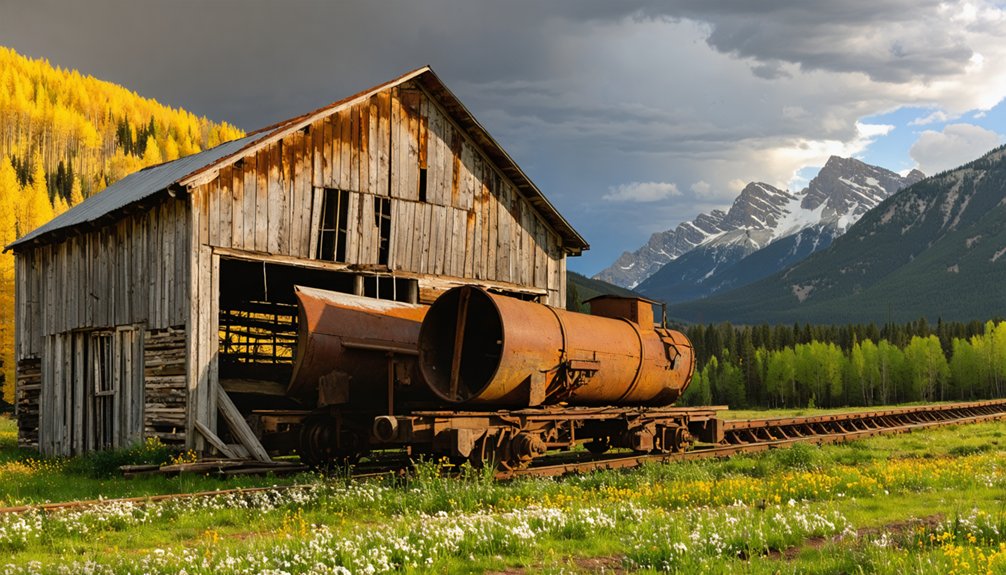
You’ll find two exceptional ghost towns near Telluride: Tomboy, located 5 miles east at 11,500 feet, was among the district’s top three gold producers before closing in 1927–1928. Alta sits at 11,800 feet along Highway 145, operational until 1948 and known for pioneering AC power transmission. Both sites preserve authentic mining-era structures, though Tomboy requires a high-clearance 4×4 while Alta offers easier access via graded dirt roads. The surrounding San Juan Mountains contain additional historic camps worth exploring.
Key Takeaways
- Tomboy Ghost Town sits at 11,500 feet, 5 miles east of Telluride, featuring remnants of a 1,000-resident mining camp.
- Alta Ghost Town, located at 11,800 feet on Highway 145, offers twenty historic structures from its 1877–1948 operational period.
- Animas Forks, established in 1873 at 11,200 feet, preserves the Gold Prince Mill and over a dozen structures.
- Access requires high-clearance 4×4 vehicles for Tomboy; Alta is reachable via graded dirt roads during dry months.
- Mid-summer (July–August) provides optimal visiting conditions, though afternoon thunderstorms are common in alpine terrain.
Tomboy Ghost Town: High-Altitude Mining Legacy Above Telluride
Perched at approximately 11,500 feet above sea level in Savage Basin, Tomboy ghost town stands as one of Colorado’s most dramatic high-altitude mining sites, located roughly 5 miles east of Telluride and 3,000 feet above the modern resort town.
Originally known as Savage Basin Camp, the settlement emerged around the Tomboy Mine after its 1880 establishment. By the 1890s, this mining community ranked among the Telluride district’s top three gold producers, eventually housing up to 1,000 residents.
You’ll find remnants of an unexpectedly sophisticated camp that featured a YMCA, bowling alley, and tennis courts alongside typical miners’ cabins and commercial buildings. The town also included a store and stable that served the mining community during its peak years.
The mine’s sale to London’s Rothschilds for $2 million in 1897 underscored its significance before ore depletion forced closure around 1927–1928. Over its 47 years of operation, the Tomboy Mine produced millions of dollars in gold, silver, copper, lead, and zinc.
Alta Ghost Town: Preserved Cabins Between Telluride and Rico
Between Telluride and Rico along Colorado Highway 145, Alta ghost town occupies a dramatic high-elevation setting at approximately 11,800 feet in San Miguel County, making it one of the highest historic settlements in the San Juan Mountains.
You’ll access this site via Alta Lakes Road, where about twenty historic cabins and structures remain scattered across private property and surrounding Forest Service land.
Established in 1877, Alta served as a company mining camp until 1948, producing over $5 million in ore. The mining heritage here includes pioneering use of Nikola Tesla-style AC transmission to power operations.
The two-story boardinghouse, rebuilt in 1939, stands as one of Colorado’s last major mining-camp structures. Preservation efforts continue balancing conservation with the site’s remote, rugged character.
The town developed around the 20-stamp Bessie mill, which anchored mining operations and provided essential ore processing capabilities for the surrounding mines.
The ghost town is located six miles south of Telluride, offering visitors a glimpse into Colorado’s mining history amid picturesque alpine landscapes.
Nearby, explorers can also discover abandoned settlements near Theodore Roosevelt National Park, where remnants of early homesteaders tell stories of resilience against the rugged terrain. This combination of natural beauty and rich history invites adventurers to wander through the relics of the past, inspiring a deeper appreciation for the region’s heritage. As hiking trails weave through these landscapes, each step leads to new discoveries, making the journey both enlightening and unforgettable.
Exploring the San Juan Mountains’ Historic Mining Districts
Alta represents just one chapter in a broader narrative of mineral extraction that transformed the San Juan Mountains into Colorado’s most prolific mining region.
The 1860 placer gold discovery at Eureka sparked decades of exploration, with the Brunot Treaty of 1873 finally opening the territory for legal operations. By 1880, you’ll find records of 7,000 mines and prospects across these districts, though few achieved lasting success.
The region’s historical significance lies in operations like the Sunnyside Mine, which dominated Eureka’s production, and the Camp Bird, which flourished from 1896 to 1916. The Animas District occupied both sides of the Animas River valley northeast of Silverton, becoming a major producer of gold and silver placers until the 1950s following the railroad’s arrival in 1882.
Advanced mining technology enabled connections between major operations through ventures like the American Tunnel, linking the Gold King, Gold Prince, and Great Mogul mines into integrated extraction networks. Silverton’s population peaked at 3,000 during the late 1800s as mining operations expanded and civic infrastructure developed.
Planning Your Visit: Routes, Seasons, and Safety Considerations
While the ghost towns scattered around Telluride promise exceptional historical encounters, reaching them demands careful preparation that accounts for remote alpine terrain, challenging access roads, and rapidly changing mountain conditions.
Alta ghost town sits 6 miles south on Highway 145, then 4 miles on graded dirt—manageable in 2WD during dry months from May through October.
Tomboy requires high-clearance 4×4 and off-highway experience, starting at Oak Street’s north end along steep shelf roads with exposed drop-offs.
Mid-summer (July–August) offers the most reliable seasonal conditions at these 11,500–11,800-foot elevations, though afternoon thunderstorms remain common.
Plan 7–8 hours for full loops, carry detailed maps for numerous route forks, and start early.
Animas Forks, founded in 1875, ranks among the most accessible ghost towns at an elevation of 11,180 feet.
Altitude sickness, lightning exposure, and narrow passing zones demand respect and flexibility. For those preferring guided experiences, Telluride Outside offers half and full day trips with customized vehicles designed for optimal viewing.
Regional Ghost Town Circuit: Animas Forks, Red Mountain, and Beyond
Beyond Telluride’s immediate orbit, the Alpine Loop Backcountry Byway and Red Mountain Pass corridor open access to a concentrated network of ghost towns that once formed the economic backbone of the San Juans’ mining frontier.
Animas Forks history begins in 1873 at 11,200 feet, where 450 residents endured 23-day blizzards and 25-foot snowdrifts while extracting gold and silver. A dozen structures still stand under BLM protection, including remnants of the Gold Prince Mill that showcased period mining techniques. The town supported more than 30 cabins at its peak, along with a hotel, saloons, a drug store, a post office, and a jail. By 1883, residents could read local news in the Animas Forks Pioneer newspaper.
Nearby Red Mountain district camps—Ironton, Guston, Red Mountain Town—boomed alongside legendary operations like the Yankee Girl before the 1893 silver crash triggered mass abandonment.
Otto Mears’ 1875 wagon road connected these sites into a functional circuit that now serves off-highway explorers seeking authentic, minimally curated ruins beyond standard tourist routes.
Frequently Asked Questions
Are There Any Guided Ghost Town Tours Available From Telluride?
Yes, you’ll find guided tours from Telluride to Tomboy and Alta ghost towns. Operators like Telluride Outside and Dave’s Mountain Tours offer half-day 4WD excursions exploring mining ruins and local history throughout summer months.
Can I Camp Overnight Near Tomboy or Alta Ghost Towns?
You can’t camp at Tomboy townsite itself—it’s private property—but nearby camping on adjacent national forest land is allowed where you’ll find dispersed sites following Forest Service camping regulations and respecting posted boundaries.
Are Dogs Allowed at the Ghost Town Sites?
Most ghost town sites near Telluride don’t have official dog-friendly policies posted, but you’ll find dogs typically welcomed on these public lands. Practice good ghost town etiquette by keeping your pup leashed and packing out waste to preserve these historic areas.
What Photography Equipment Works Best at High-Altitude Ghost Towns?
You’ll want a weather-sealed mirrorless body with extra cold-weather batteries, wide-angle zoom (16–35mm), and sturdy tripod for high altitude photography. These essentials handle ghost town landscapes’ harsh conditions, thin air, and dramatic mountain light effectively.
Are There Any Ghost Town Festivals or Events Near Telluride?
You won’t find dedicated ghost town festivals near Telluride, but you’ll discover mining heritage celebrations during summer months when historical sites become accessible, and local tours share ghost town history through guided explorations of Alta, Tomboy, and Animas Forks.
References
- https://welovetoexplore.com/the-tomboy-mine-ghost-town-in-colorado/
- https://www.uncovercolorado.com/ghost-towns/alta/
- https://www.telluride.com/discover/blog/explore-telluride-ghost-towns/
- https://www.visitouray.com/ghost-towns
- https://twinpeakslodging.com/6-ghost-towns-anyone-can-explore-around-ouray-silverton-and-telluride/
- https://www.tripadvisor.com/Attraction_Review-g33667-d11853834-Reviews-Tomboy-Telluride_Colorado.html
- https://www.telluride.com/activity/tomboy-ghost-town/
- https://silverstartelluride.com/1620658070-28/
- https://www.duntondestinations.com/hot-springs/
- https://www.uncovercolorado.com/activities/tomboy-ghost-town/