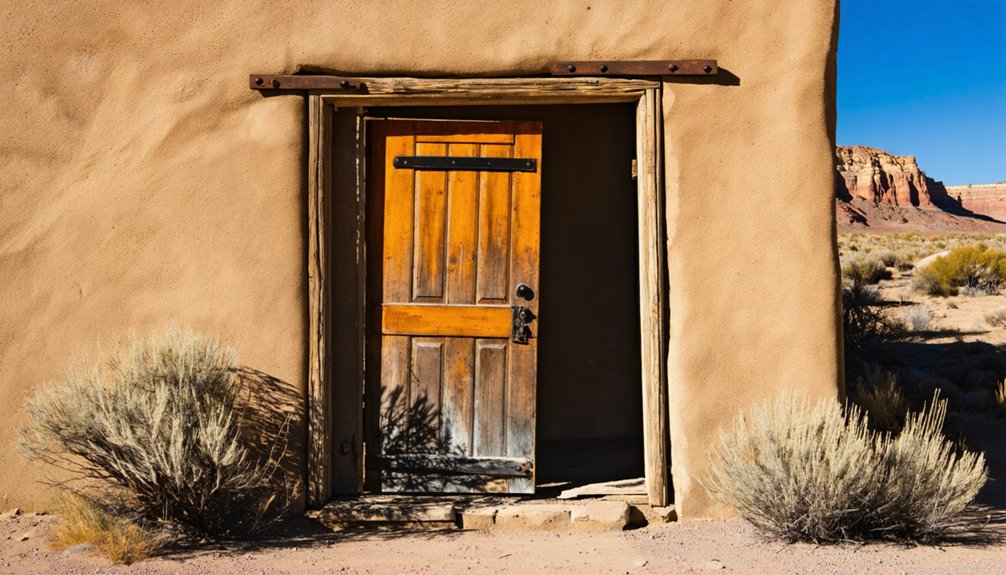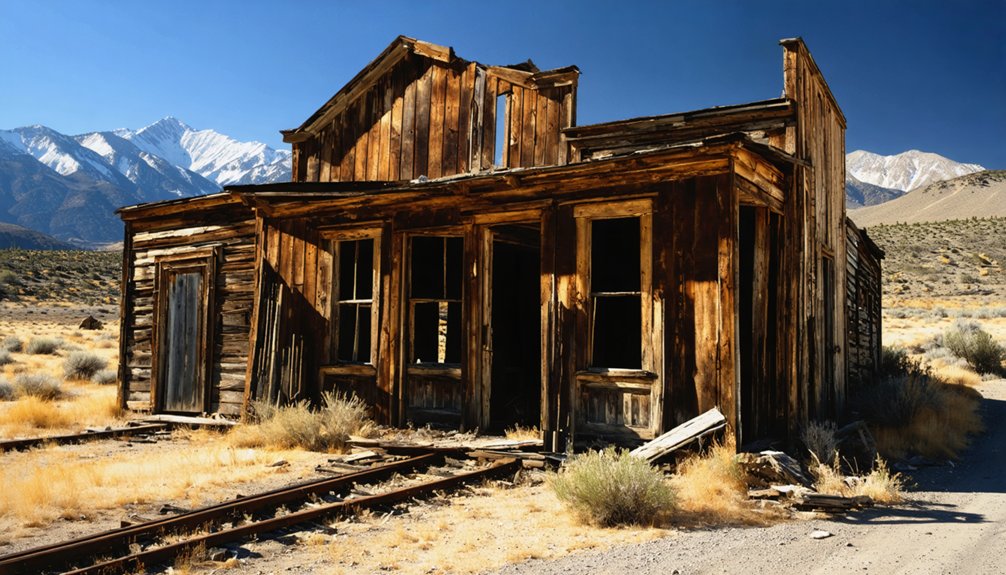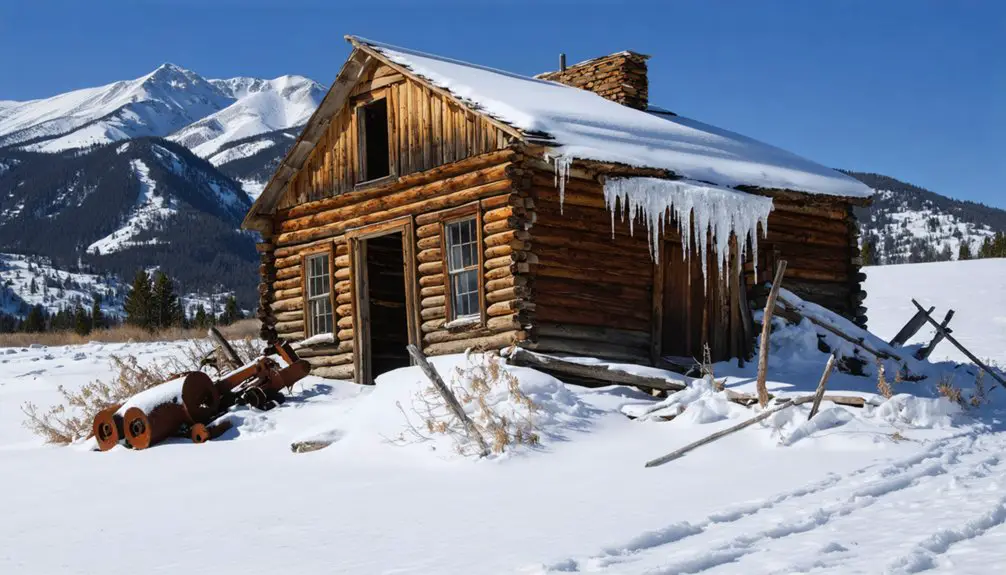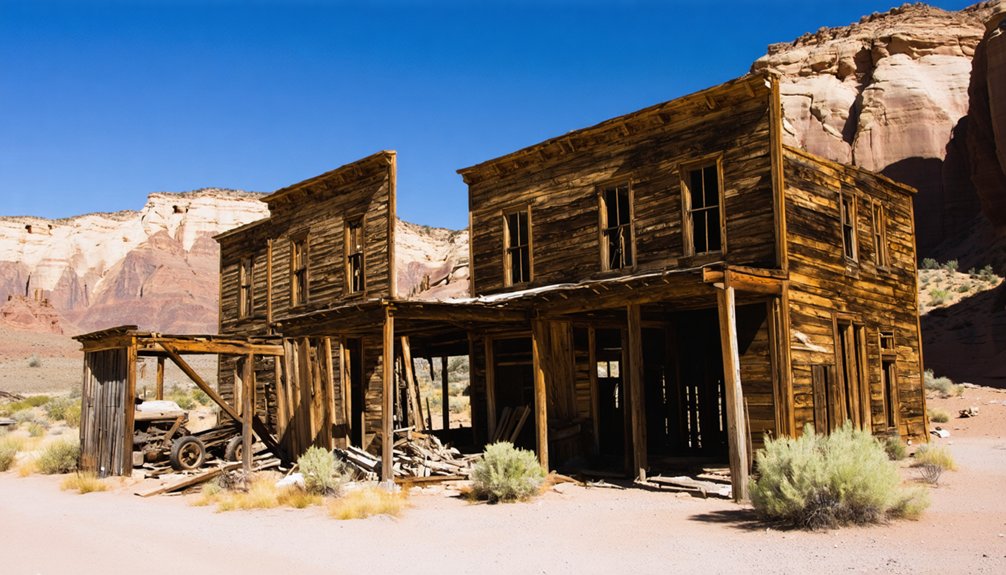
You’ll discover compelling ghost towns near Utah County that tell stories of silver rushes, railroad expansion, and pioneer determination. Forest City in American Fork Canyon once housed 150 residents before silver prices crashed in the 1870s. Colton served as a crucial railroad junction until the 1900 Scofield disaster and dieselization ended its prosperity. Thistle thrived with 600 residents until a 1983 landslide buried it beneath water. Each site preserves unique structures and cemeteries that reveal the challenges, resilience, and eventual exodus of Utah’s frontier communities.
Key Takeaways
- Notable ghost towns near Utah County include Forest City, Colton, Thistle, Grafton, and Silver Reef, each with unique historical significance.
- Economic decline, natural disasters, and single-industry dependence caused most towns to be abandoned between the 1870s and 1980s.
- Thistle was evacuated in 1983 after a catastrophic landslide created Thistle Lake, making it Utah’s most recent ghost town.
- Grafton and Silver Reef feature preserved structures like adobe schoolhouses and Wells Fargo offices maintained through community preservation efforts.
- First-time visitors should explore Grafton for its compact layout or Camp Floyd State Park for accessible amenities and viewing opportunities.
Forest City and Deer Creek: Silver Mining Communities of Dutchman Flat
Just over the mountain from the bustling silver camp of Alta, Forest City sprang to life in American Fork Canyon during the early 1870s, its founders drawn by the same veins of silver-lead ore that had triggered Utah’s Wasatch mining rush.
You’ll find its remnants near Dutchman Flat, where the massive Sultana Smelting Works once employed 250–300 men using advanced mining techniques to process ore from the Miller Hill Mine and surrounding claims.
At its 1871 peak, around 150 permanent residents built community life around the smelter, with thousands more passing through seeking fortune and work.
The Aspinwall Steamship Company invested heavily here, purchasing Miller Hill for $120,000 and constructing a 17.5-mile narrow-gauge railroad to haul bullion down-canyon, though Forest City’s independence lasted barely a decade.
The community supported essential infrastructure including two general stores, at least one hotel, sawmills, and a school for the children of mining families.
Like other Wasatch silver towns, Forest City faced economic hardship when silver value declined during the 1870s, contributing to its eventual abandonment.
The Rise and Fall of Colton Along the Railroad Route
If you’d traveled through Price Canyon in 1883, you’d have found Pleasant Valley Junction—a bustling railroad siding where the Denver & Rio Grande Western‘s iron rails met the coal wealth of Pleasant Valley mines.
Renamed Colton in 1898 after railroad officer William F. Colton, the town thrived as a critical railhead complete with roundhouse, turntable, two large hotels, and five saloons serving miners, ranchers, and railroad crews. A stone school was built to serve the growing community’s families.
The 1900 Scofield mining disaster, which killed over 200 men, devastated the community as many Colton residents had ties to the nearby mines.
Yet by the mid-20th century, dieselization eliminated the need for canyon helper engines, and Highway 6 diverted travelers away from the rails that had given Colton its very reason to exist.
Railroad Construction and Growth
The railroad arrived at what would become Colton in 1882, when the Denver & Rio Grande’s construction crews pushed their line through Price Canyon toward Carbon County’s coal fields.
You’d have witnessed railroad impacts transforming a simple siding into Pleasant Valley Junction by 1883, named for its connection to the coal-rich Pleasant Valley Branch. The 1890 standard-gauge expansion through Scofield to Winter Quarters amplified traffic, with extensions reaching Clear Creek in 1899. This junction became essential for moving coal from multiple camps onto the main line.
Town evolution followed infrastructure—roundhouse, turntable, depot, and bunkhouses spawned two grand hotels, a stone school, and thriving businesses. The settlement prospered as a division terminal, its springs providing locomotives and residents the clear water necessary for sustained growth. The junction featured an eleven-stall brick roundhouse that served as the operational heart of the facility until its abandonment around 1891-1892. The community also developed a thriving ice industry that contributed to the local economy.
Decline Through Economic Shifts
Colton’s prosperity proved as fragile as the steel rails that created it. By 1950, diesel locomotives eliminated the need for helper engines and frequent maintenance stops, gutting the town’s railroad-dependent economy.
You’d have watched 327 residents serve a single industry—hotels, saloons, and stores catering exclusively to rail workers. When technological progress bypassed this mountain junction, economic shifts struck hard.
The ozokerite mine, once the world’s largest, couldn’t compensate for lost railroad revenue. Commodity market volatility and limited diversification left no safety net.
Multiple fires forced costly rebuilding while capital fled to larger hubs. The Hilltop General Store, built in 1880 and relocated to highway UT 6-50 in 1937, stands as one of the few remaining structures that witnessed the town’s entire arc from boom to abandonment. Colton decline accelerated as diesel efficiency rendered the town obsolete—a cautionary tale of putting all your economic eggs in one technological basket. As a railroad town, Colton exemplified the varying permanence of settlements created during Transcontinental Railroad construction, where dependence on a single transportation technology determined survival.
Thistle and Mill Fork: Railroad Towns in Spanish Fork Canyon
Spanish Fork Canyon’s two railroad settlements—Thistle and Mill Fork—once thrived as essential support towns for trains conquering the steep grades between Salt Lake City and Denver.
Thistle’s history began in 1878 when narrow-gauge tracks first reached the canyon, evolving into a critical junction after the Denver & Rio Grande Western rebuilt the line to standard gauge by 1890.
At its 1917 peak, roughly 600 residents supported railroad significance through a five-stall roundhouse, depot, and machine shop. Helper engines based here pushed eastbound trains up Soldier Summit’s formidable grades.
Diesel locomotives ended that era by the 1950s. The catastrophic 1983 landslide buried tracks and created Thistle Lake, flooding what remained and forcing evacuation of the final fifty residents who’d refused to abandon their mountain home. The landslide moved at 3.5 feet per hour, measuring 1000 feet wide and 200 feet thick, making it the largest and most expensive landslide in U.S. history. Engineers completed tunnels in fall 1983 to redirect water back to the Spanish Fork River, allowing the waters to eventually recede.
Pelican Point: Mining and Fishing on Utah Lake
While railroad towns shaped the mountain canyons east of Utah Valley, settlements along Utah Lake’s shoreline drew their lifeblood from entirely different resources.
At Pelican Point, you’ll find remnants of a community that thrived on calcite mining and abundant fish harvests. This geologic cape on the lake’s west side once supported operations at Pelican Point Quarry, extracting valuable mineral specimens.
The fishing industry here flourished alongside commercial operations that began during the 1880s livestock crisis, when settlers recovered an estimated 96,000 pounds of fish.
You can still spot the old rock house standing as a testament to frontier ingenuity. Though transportation costs eventually made mining unprofitable, Pelican Point’s legacy endures—a place where determined pioneers carved freedom from stone and water.
Grafton: A Pioneer Settlement Near Zion National Park
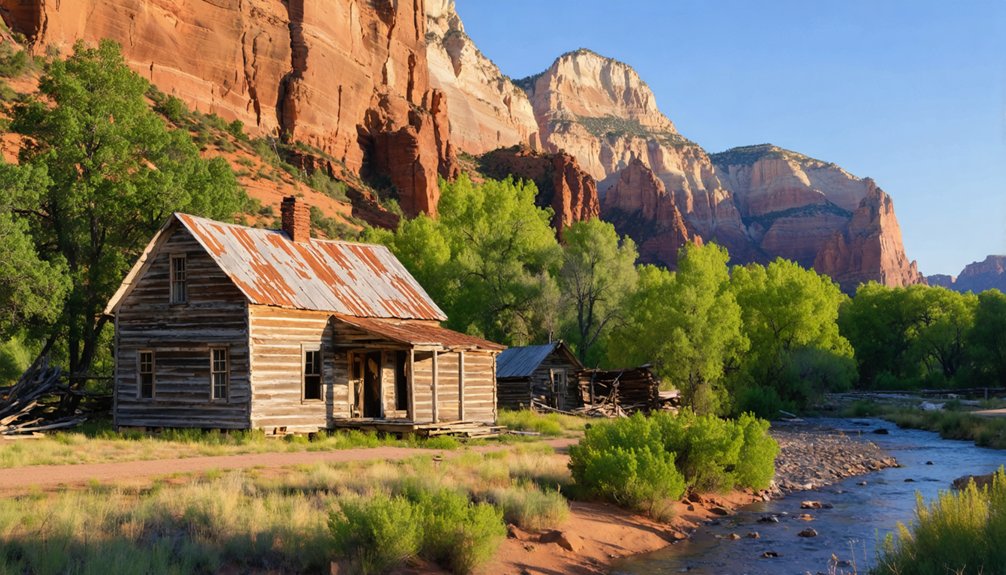
If you’re drawn to the most photographed ghost town in the American West, Grafton’s weathered adobe schoolhouse and pioneer homes still stand against the dramatic backdrop of Zion’s red cliffs.
Founded in 1859 as part of Brigham Young’s Cotton Mission, this settlement endured devastating floods, Native conflicts, and crushing hardships before its gradual abandonment in the late 1800s.
Today, you’ll find remarkably preserved structures that tell the story of Mormon pioneers who battled the Virgin River’s floods to carve out farms in Utah’s unforgiving Dixie.
Mormon Settlement and Abandonment
Nestled in the shadow of what would become Zion National Park, Grafton emerged in 1859 when Nathan Tenney led five families—the Barneys, Davies, McFates, Platts, and Shirts—from nearby Virgin to establish a new settlement along the Virgin River.
You’d find pioneer resilience tested immediately as the 1862 Great Flood obliterated their original townsite, forcing relocation upstream. Despite environmental challenges including annual floods, Native American conflicts, and the 1866 Black Hawk War evacuation, Grafton grew to 168 residents by the late 1860s.
Cotton cultivation and fruit orchards sustained the community until the Hurricane Canal diverted their water supply around 1906. Families gradually departed for better opportunities, with the LDS Church closing in 1921 and the final residents leaving in 1944.
Historic Structures Still Standing
Today’s visitor to Grafton encounters a remarkably preserved assemblage of frontier-era structures that transport you straight into the daily rhythms of 1880s Mormon pioneer life.
The 1886 adobe schoolhouse stands as the crown jewel—its two-story construction served classrooms below and community dances above, embodying the multipurpose ingenuity that kept isolated settlements functioning.
You’ll find wood-frame and adobe residences still standing along former lanes, their hall-and-parlor designs reflecting practical vernacular architecture built from local materials: adobe brick, stone, and milled lumber.
Historic preservation efforts through the Grafton Heritage Partnership Project maintain these structures using period-appropriate methods, ensuring their architectural significance endures.
The nearby cemetery’s 1860s headstones document the harsh realities early settlers faced, while irrigation ditches and orchard remnants reveal their determined attempts at self-sufficiency.
Visiting Grafton Today
Located approximately 40 miles northeast of St. George, you’ll find Grafton’s weathered remains standing as silent testimony to pioneer determination.
The town’s dramatic Grafton history unfolds before you—founded in 1859, destroyed by Grafton floods in 1862, rebuilt upstream, then abandoned twice before 1944.
When you visit today, you’ll experience:
- The iconic 1886 adobe schoolhouse, its sun-bleached walls framing Zion’s towering cliffs
- Crumbling stone foundations where families once battled the Virgin River’s relentless floods
- Ancient cottonwoods shading pioneer graves in the hillside cemetery
You’re free to wander these grounds where Nathan Tenney’s five families pursued self-sufficiency under Brigham Young’s Cotton Mission.
The site’s preserved structures and surrounding wilderness offer an authentic connection to Utah’s untamed frontier past.
Silver Reef: Discovering Riches in Sandstone
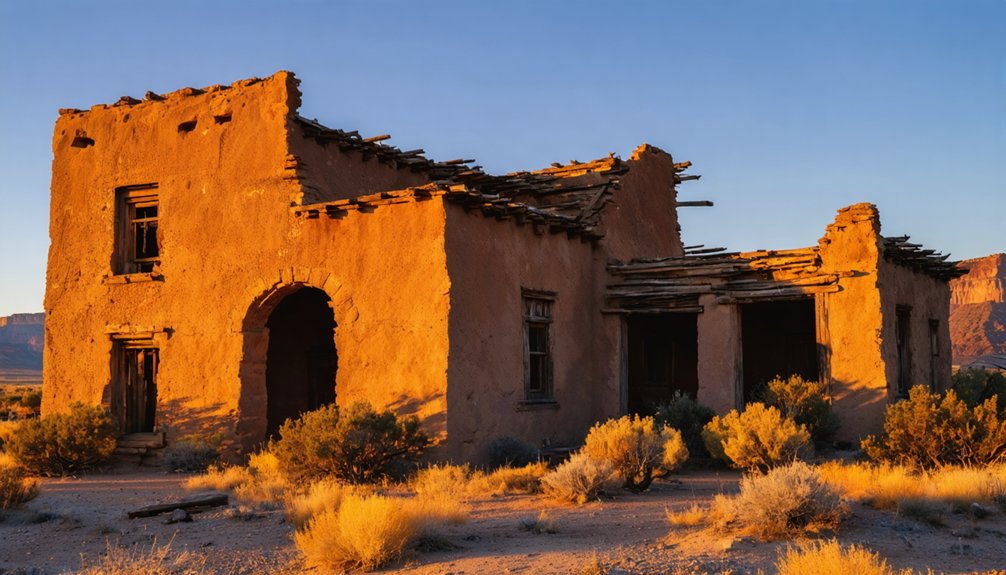
The geological oddity that made Silver Reef famous began with skepticism and disbelief. When prospector John Kemple discovered silver in sandstone around 1866, mining experts scoffed—precious metals didn’t occur in such formations.
Yet William Tecumseh Barbee’s 1875 discovery along White Reef proved them wrong, triggering a rush that transformed empty desert into one of Utah’s most prosperous ghost towns.
You’ll find this silver mining district’s story remarkable. The Walker Brothers’ financial backing launched Bonanza City in late 1875, soon renamed Silver Reef City.
Within three years, 1,500 to 2,000 souls inhabited a mile-long Main Street boasting 100 businesses. The district’s three dozen mines ultimately yielded $25 million in ore before flooding, fire, and plummeting silver prices ended the dream by 1891.
What Caused These Towns to Become Abandoned?
While Silver Reef’s remarkable geology drew fortune-seekers to an unlikely place, the forces that eventually emptied these settlements reveal a harsher pattern across Utah County’s abandoned communities.
You’ll find economic vulnerabilities everywhere—Mosida’s orchards withered in mineralized soil while grasshoppers devoured what remained, and Forest City’s mines closed when transportation costs outweighed profits.
Geographic isolation sealed their fates:
- Thistle’s 1983 landslide swallowed entire streets beneath an artificial lake
- Mill Fork’s cemetery holds scarlet fever victims and railroad accident casualties
- Mosida’s burned transport boat left farmers stranded from markets in 1913
Single-industry dependence meant no second chances. When rails rerouted, mines shuttered, or irrigation failed, these towns couldn’t adapt—their residents simply left.
Visiting Ghost Towns: What to Expect at the Sites
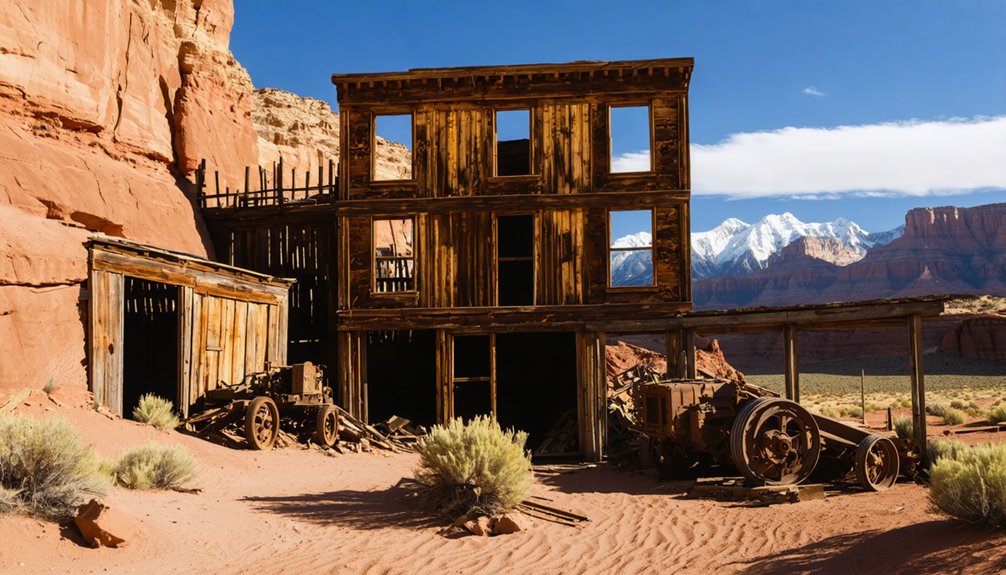
How will you know what awaits when you finally turn down that dusty access road toward a long-silent settlement?
Expect minimal infrastructure—crumbling walls, weathered foundations, perhaps an intact schoolhouse or beehive kiln. Amenities are scarce: vault toilets at best, no water or fuel, and unreliable cell service.
Walls crumble, foundations fade—expect vault toilets, no water, no fuel, and cell service that vanishes with the wind.
Ghost town etiquette demands respect for private land, “No Trespassing” signs, and cemetery grounds; never collect artifacts or disturb structures already fragile from time and vandalism.
Visitor safety starts before you arrive—download maps, pack extra water, wear sturdy boots, and prepare for remote conditions where help isn’t close.
Gravel roads turn treacherous after storms; unstable floors and open mine shafts lurk around forgotten corners.
Plan for solitude, self-reliance, and the raw beauty of abandonment.
Best Ghost Towns for First-Time Explorers
If you’re new to ghost town exploration, you’ll find Grafton and Silver Reef offer the most rewarding first experiences with their well-preserved structures and easy access from major highways.
Grafton’s renovated schoolhouse and original graveyard south of Zion National Park provide tangible connections to Mormon pioneer life from 1859, while Silver Reef’s park designation 15 miles northeast of St. George guarantees maintained pathways and interpretive features.
Before setting out, you’ll want to pack plenty of water, wear sturdy footwear for uneven terrain, and check seasonal road conditions since even accessible sites can become challenging during winter months or summer monsoons.
Grafton’s Accessible Historic Remains
Grafton stands as one of southern Utah’s most intact and approachable ghost towns, offering first-time explorers a remarkably preserved glimpse into 19th-century frontier life without the rugged access challenges of more remote abandoned settlements.
For those interested in further exploration, there are several other ghost towns near St George Utah that provide unique insights into the area’s history. Each site offers its own character, showcasing the remnants of bygone eras against a stunning desert backdrop. Whether you’re a history buff or just seeking adventure, these locations are well worth the visit.
Founded in 1859 as part of the “Cotton Mission,” Grafton history unfolds through five restored buildings including the 1886 church-schoolhouse and several pioneer homes.
You’ll find Grafton architecture distributed across a compact, walkable core south of the Virgin River, where cottonwood trees shade iron farm equipment scattered through former fields.
The site’s accessibility sets it apart:
- Short drive from Zion National Park on generally passable roads
- Ground-level viewing of all structures without technical hiking
- Year-round visits possible in desert climate conditions
The nearby cemetery, with graves from the 1860s, completes this atmospheric window into frontier perseverance.
Silver Reef’s Preserved Structures
While Grafton captures the agricultural soul of frontier settlement, Silver Reef tells a different story—one written in sandstone silver veins and Victorian-era commerce.
You’ll find the 1871 Wells Fargo Express office standing as Utah’s most intact boomtown structure, now housing interpretive exhibits. The Silver Reef Foundation champions historic preservation, maintaining the Harrison House Hotel, Clancy Market, and McCormick Store alongside stabilized stone ruins.
Mining heritage comes alive through visible adits, mill foundations, and the preserved powder house. Three cemeteries—Catholic, Protestant, and Chinese—reveal the camp’s diverse workforce, with recent restoration honoring immigrant laborers.
Operated under BLM and trust land agreements, this site demonstrates how thoughtful conservation transforms industrial relics into accessible touchstones of Utah’s extractive past.
Planning Your First Visit
Where should you plant your boots for that inaugural ghost town exploration? Start with Grafton near Zion—its refurbished schoolhouse, church, and homes offer clear visuals of 1800s pioneer life, plus extensive interpretive signage guides you through Virgin River flood history.
Camp Floyd State Park provides beginner-friendly infrastructure with museums, restored buildings, and organized programs that clarify frontier military life.
For visitor tips, Ophir delivers structured Saturday tours May through September, letting you explore mining-era cabins and assay offices with staffed interpretation.
Your first ventures reward preparation:
- Grafton’s compact layout lets you photograph red-rock backdrops and Western film sets within one hour
- Camp Floyd’s state park amenities provide reliable access, parking, and reenactment schedules
- Ophir’s predictable hours guarantee you’ll find open buildings, not locked doors
These sites respect your time while delivering authentic frontier encounters.
Preserving History: Remaining Structures and Landmarks
Though the passage of decades has claimed most structures in Utah County’s ghost towns, scattered landmarks still anchor these abandoned settlements to the landscape.
The stories of those who once inhabited the ghost towns in Uintah County linger in the air, waiting to be discovered by adventurous explorers. Each crumbling wall and rusted relic serves as a silent witness to a vibrant past that now seems like a distant memory. Visitors often find themselves captivated by the haunting beauty and the rich history that these forgotten places convey.
As they venture deeper into the rugged terrain, exploring ghost towns in Emery County leads them to discover the remnants of mining operations and homesteads that once bustled with life. Each turn unveils stories etched into the very earth, inviting them to imagine the laughter of families and the toil of miners who shaped the landscape. The echoes of history resonate in these desolate places, urging explorers to connect with the past and understand the resilience of those who once called these towns home.
You’ll find Mill Fork’s hillside cemetery near US-6, where railroad workers and mining camp children rest beneath weathered headstones—virtually all that marks the former town.
Colton offers foundations and rail-related ruins six miles south of Soldier Summit, while Thistle ruins stand partially submerged from the catastrophic 1983 landslide, their water-damaged shells and rusting automobiles serving as accidental monuments.
Beyond the county, Grafton preservation efforts have stabilized five adobe structures through the Heritage Partnership Project, and Old Iron Town’s beehive kiln receives mortar reinforcement every decade, demonstrating how deliberate stewardship preserves these vanishing remnants.
Frequently Asked Questions
Are Ghost Towns in Utah County Safe to Visit Alone?
Solo exploration carries real risks—unstable structures, unmarked mine shafts, remote locations with no cell service, and uncertain legal access. You’ll need thorough safety precautions, self-reliance skills, and respect for both hazards and property boundaries before venturing alone.
Do You Need Permits to Explore Abandoned Towns in Utah?
Ironically, “abandoned” doesn’t mean lawless—you’ll need permits for federal lands like Cedar Mesa, and ghost town regulations vary by ownership. Always respect exploration etiquette: check land status, honor postings, and preserve these nostalgic remnants for fellow wanderers.
What Should I Bring When Visiting Ghost Towns in Utah County?
Bring water, sturdy boots, navigation tools, sun protection, and a first-aid kit. You’ll want photography tips for capturing crumbling structures, and researching local legends beforehand enriches your adventure through Utah’s atmospheric ruins.
Can You Camp Overnight Near These Ghost Town Locations?
Though it feels restrictive, you usually can’t camp overnight directly at ghost-town sites due to camping regulations on private land, cultural-resource buffers, and overnight safety concerns around unstable structures—but nearby dispersed areas often welcome adventurous sleepers.
Are There Guided Tours Available for Utah County Ghost Towns?
You’ll find guided tour options at Camp Floyd State Park with paranormal investigations and reenactments that showcase historical significance, plus the Original Provo Utah Ghost Tour explores downtown folklore—perfect for independent spirits seeking authentic local stories.
References
- https://www.valleyjournals.com/2024/10/02/507818/exploring-utah-s-ghost-towns-seven-abandoned-settlements-with-fascinating-histories
- https://kasbyrealestate.com/2022/11/22/7-utah-county-ghost-towns-and-the-fascinating-stories-behind-them/
- https://en.wikipedia.org/wiki/List_of_ghost_towns_in_Utah
- https://www.visitutah.com/things-to-do/history-culture/ghost-towns
- https://www.ksl.com/article/51308628/restored-utah-ghost-towns-that-should-be-on-your-summer-travel-bucket-list
- https://film.utah.gov/spooky-rural/
- https://www.grandcountyutah.net/388/Ghost-Towns-Communities
- https://www.youtube.com/watch?v=AoiIha-3iNo
- https://www.utahvalley.com/plan/day-trips-itineraries/history-buff/ghost-towns-and-haunted-places/
- https://saltlakeexpress.com/7-utah-ghost-towns-close-15/