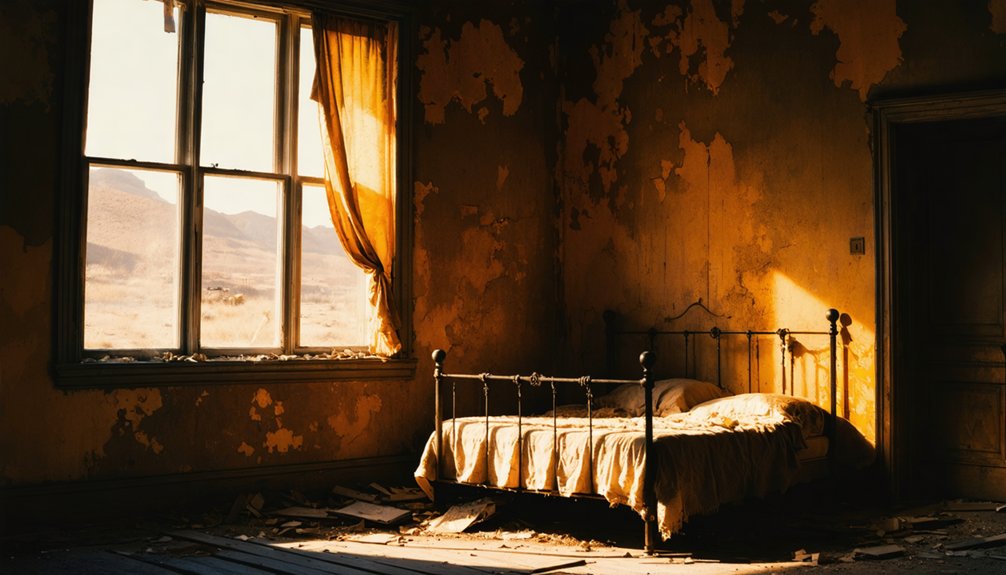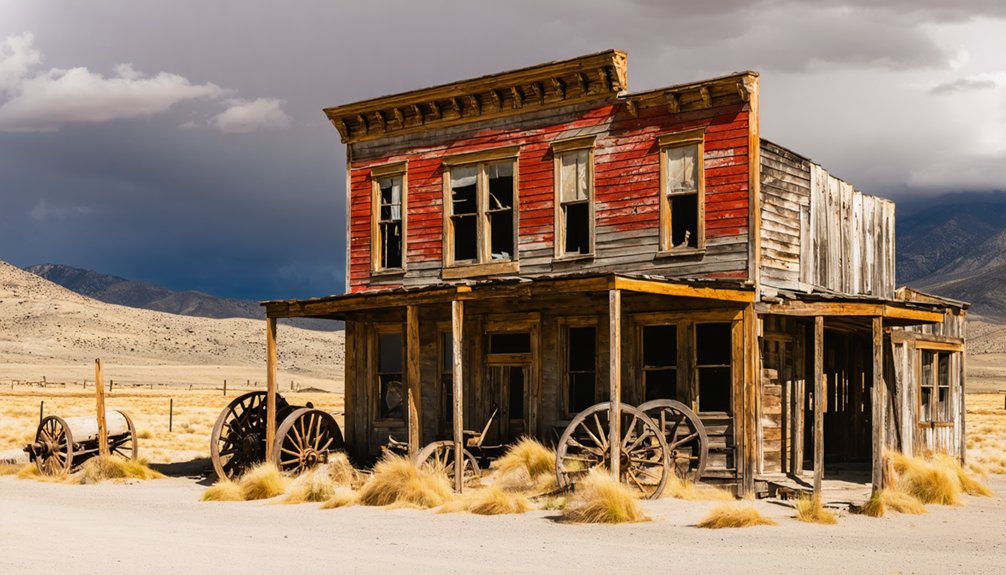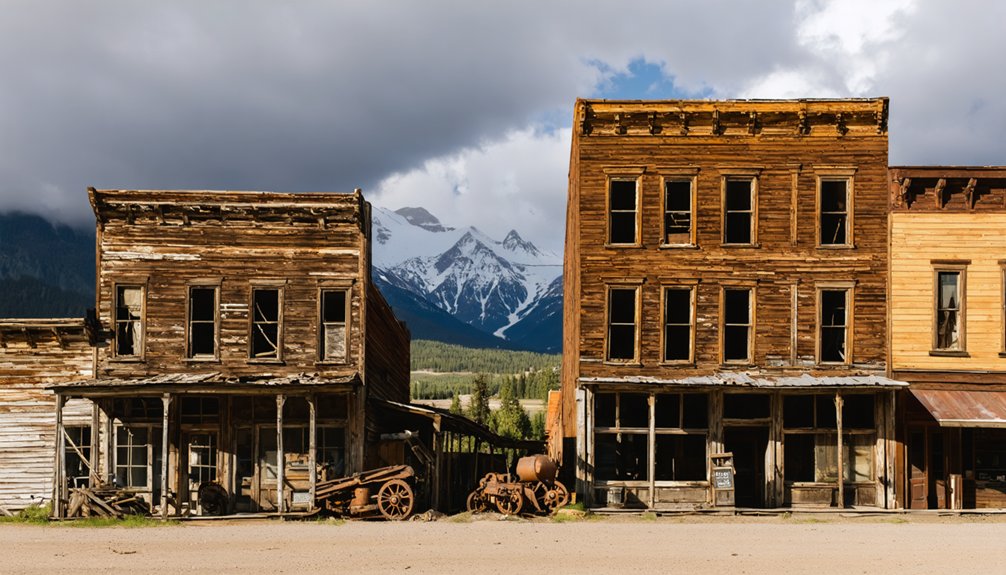
You can tour privately-owned ghost towns like Cerro Gordo, California, where you’ll stay overnight in historic mining buildings at 8,500 feet elevation, or visit St. Elmo, Colorado’s 43 preserved structures at nearly 10,000 feet. Hard Luck Castle in Nevada offers luxury Airbnb rentals inside an 8,000-square-foot Gothic castle built atop a century-old gold mine. Montana’s Garnet features walk-through buildings from the 1890s gold rush, while Pioneertown blends Hollywood Western history with live music venues—each destination providing unique access to America’s frontier past with varying amenities and accessibility.
Key Takeaways
- Cerro Gordo, California offers overnight stays in preserved historic buildings like Belshaw House, accessible via a 4-mile dirt road.
- St. Elmo, Colorado contains 43 original buildings open for exploration, with amenities including cabins, general store, and ghost town guest house.
- Garnet, Montana features genuine walk-through buildings maintained by BLM, providing immersive frontier history experiences without roped-off barriers.
- Hard Luck Castle, Nevada is a privately-owned Gothic castle atop a gold mine, offering luxury Airbnb rentals with 22 rooms.
- Pioneertown, California transitions from Hollywood backlot to tourism destination, with original structures hosting concerts, reenactments, and cultural events.
Cerro Gordo: California’s Silver Mining Legacy Available for Overnight Stays
Perched at 8,500 feet in California’s Inyo Mountains, Cerro Gordo—Spanish for “fat hill”—earned its name from the vast silver veins that once made it one of the state’s most productive mining towns.
From 1866 to 1957, miners extracted nearly $500 million worth of silver, lead, zinc, gold, and copper through 30 miles of tunnels.
Over nine decades, 30 miles of mountain tunnels yielded half a billion dollars in precious metals and minerals.
The 1871 Union Mine cave-in, which buried up to 30 miners whose bodies were never recovered, stands as a stark reminder of mine safety challenges faced during the frontier era.
Today’s preservation efforts allow you to explore this authentic ghost town through overnight stays.
Current owners offer rentals in the historic Belshaw House and Bunkhouse, letting you experience the raw atmosphere of California’s mining legacy firsthand—complete with original buildings, equipment, and reported paranormal activity.
The Union mine itself features a 270-meter vertical shaft with 48 km of tunnels, representing one of the site’s most extensive underground networks.
Access to Cerro Gordo requires a steep 4-mile climb up a packed dirt road from Highway 136 at Keeler, taking approximately 30 minutes from Lone Pine.
Swansea: Arizona Desert Ghost Town Reimagined for Education
Unlike many ghost towns that crumbled into dust, Swansea stands remarkably intact in Arizona’s Eastern Sonoran Desert, 25 miles from Parker.
Yet, just a short drive away, visitors can discover abandoned sites near Lake Mead, where remnants of past settlements offer a glimpse into the history of the region. These locations, often shrouded in mystery, attract adventurers and history enthusiasts alike. Exploring these eerie landscapes provides an unforgettable experience, contrasting the vibrancy of nearby natural wonders.
This 1909 copper mining settlement thrived with 500 residents, five mine shafts, and a 350-ton furnace before market crashes forced its abandonment by the 1930s.
You’ll find the Bureau of Land Management‘s preservation efforts have maintained dozens of adobe structures, creating one of Arizona’s best-preserved ghost towns.
Educational tours follow an interpretive loop trail with signage explaining each building’s purpose and the town’s boom-and-bust history.
The town was named after Swansea, Wales and grew rapidly during the copper mining boom that swept through La Paz County in the early 20th century.
The ruins include a massive smelter, adobe walls, and rusted equipment scattered throughout the site.
Access requires traversing 17 miles of dirt road—bring a high-clearance vehicle and plenty of water.
There’s no entrance fee, and you can explore 24/7.
Five BLM campsites let you experience this desert remnant on your own terms.
Hard Luck Castle and Mine: Northern Nevada’s Airbnb Mining Experience
If you’re willing to venture 187 miles north of Las Vegas into Esmeralda County’s permit-free desert, you’ll discover how one entrepreneur transformed a century-old gold mine into an 8,000-square-foot Gothic castle that generates vacation rental income.
Richard Socher’s $550,000 investment in this remote property leverages Airbnb to make an isolated mining site accessible to ghost town enthusiasts and stargazers seeking luxury accommodations. The three-hour drive and extreme isolation present significant challenges.
But the castle’s four-story structure, Hard Luck Mine tours, and 360-degree desert views create a unique hospitality experience where infrastructure limitations become part of the off-grid appeal. The castle features 22 rooms built with fortified steel and 16-inch concrete walls that provide both durability and security in the harsh desert environment. The property accommodates 8-10 guests across luxuriously appointed bedrooms with amenities including a hot tub, fully stocked kitchen, and optional private chef service.
Remote Nevada Ghost Town
Deep in Nevada’s Esmeralda County, a four-story Gothic castle rises from the desert floor at 6,000 feet elevation, built atop a century-old gold mine shaft. You’ll find this 8,000-square-foot fortress off State Route 267, where permit-free building allowed Randy Johnston’s decade-long vision to unfold without restriction.
The Hard Luck Castle embodies historical preservation through its connection to the 100-year-old abandoned mine, honoring the cultural significance of Nevada’s gold rush legacy while creating something entirely new. The property includes 40 acres of private land surrounded by rocky views and Joshua Trees.
Your journey requires paper maps and desert preparation—no cell service exists here. The castle sits about a 3-hour drive from the Las Vegas Strip, near Death Valley National Park in a remote desert setting. Inside, you’ll discover 22 rooms, rooftop solariums, and 1920s pipe organs within 16-inch-thick walls.
Now available as an Airbnb, this off-grid retreat welcomes ghost towners and adventure seekers willing to embrace authentic isolation near Goldfield’s mining heritage.
Vacation Rental Investment Strategy
When Richard Socher purchased the Hard Luck Castle for $550,000 in 2020, he transformed Randy Johnston’s decade-long passion project into one of Nevada’s most distinctive vacation rental investments.
The former Salesforce executive recognized the property’s potential during the pandemic’s rural exodus, launching it as an Airbnb by June. You’ll find this 8,000-square-foot fortress positioned as America’s most remote castle rental, commanding premium rates for its 22-room layout that accommodates 10+ guests.
Socher’s strategy leverages the property’s built-in luxury upgrades—rooftop solarium, theater, wine cellar, and organ-equipped great room—while adding infrastructure improvements for consistent remote access. The property sits atop a 100-year-old gold and silver mine with two mine shafts still descending into the mineral-rich deposits below. The property’s thick cinderblock walls and steel-reinforced concrete construction provide durability in the harsh desert environment while maintaining comfortable interior temperatures year-round.
The combination of off-grid authenticity, Death Valley proximity, and mine tour opportunities creates a revenue-generating experience that capitalizes on travelers seeking unconventional desert escapes.
Infrastructure and Access Challenges
Operating a vacation rental 187 miles from Las Vegas requires confronting infrastructure realities that most property owners never face. You’ll need robust solar integration with wind power and diesel backup to maintain electricity at 6,000 feet elevation.
The property’s 16-inch-thick concrete walls and steel construction withstand brutal desert conditions, but water management demands constant attention.
Your 4,000-gallon storage tank relies on rain catchment and hauling supplies via trailer from an hour away.
The nearest hospital sits 150 miles distant, while Beatty—the closest town—requires significant travel time.
No building permits govern construction in Esmeralda County, offering unprecedented autonomy. Yet this freedom means personally managing every system, from the 3,000-gallon propane tank to multiple outbuildings, all accessible only through remote dirt roads in unforgiving terrain.
Pионeer Town: How Music Venues Revitalized a Western Movie Set
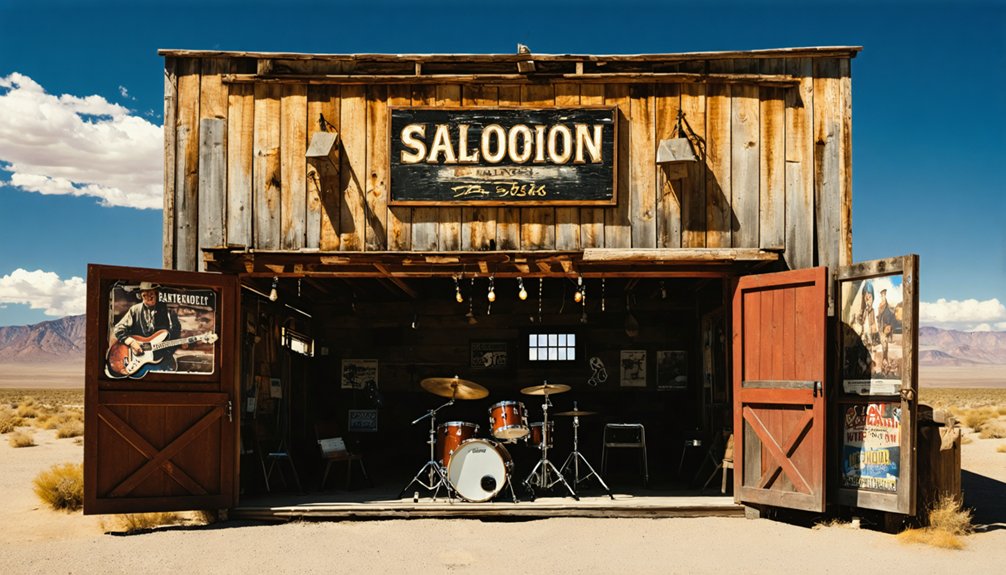
In 1946, Hollywood investors including Roy Rogers, Gene Autry, and the Sons of the Pioneers pooled $500 each to build something unprecedented: a fully functional Western town that doubled as both movie set and residential community.
Pioneertown’s 32,000-acre spread became a backdrop for over 50 films and TV shows through the 1950s before Western productions declined.
Today, you’ll find music revitalization has breathed new life into these weathered facades:
- Pappy and Harriet’s transformed the former movie set into a desert music mecca
- Live performances now draw more visitors than film production ever did
- Original structures like stables and saloons host concerts alongside reenactments
- Film preservation continues through occasional independent productions
The town’s shift from Hollywood backlot to performance venue proves adaptive reuse can save historic sites while honoring their heritage.
Garnet, Montana: Preserved 1890s Mining Camp Open to the Public
While Pioneertown found salvation through music, Montana’s Garnet ghost town took a different preservation path—frozen in time rather than repurposed. You’ll discover authentic 1890s structures at 6,000 feet elevation, where the Bureau of Land Management and Garnet Preservation Association maintain this remarkable mining camp.
Unlike Pioneertown’s musical rebirth, Garnet remains authentically frozen—a preserved 1890s mining camp where history stands still at 6,000 feet.
The mine history began with the 1896 Nancy Hanks Mine strike, producing $690,000 and drawing nearly 1,000 residents. They built 13 saloons, seven hotels, and a school serving 41 students.
When gold scarcity hit post-1900, the population plummeted. A devastating 1912 fire destroyed half the commercial district.
Today’s preservation efforts let you explore where fortune-seekers once roamed freely. You’re not confined to roped-off exhibits—you can walk through genuine cabins and buildings, experiencing the unvarnished reality of frontier mining life.
St. Elmo, Colorado: High-Altitude Silver Town Welcoming Summer Visitors
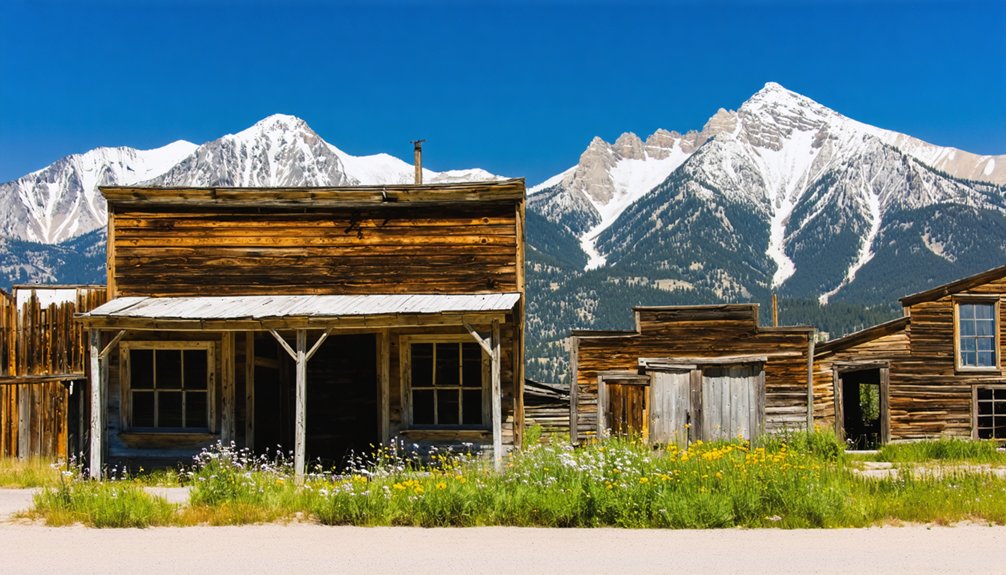
You’ll find St. Elmo nestled high in Colorado’s Sawatch Range at nearly 10,000 feet elevation.
There are 43 original buildings still standing from its 1880s silver mining heyday. This remarkably preserved ghost town once housed 2,000 residents during its boom years and featured everything from hotels to a newspaper office, all connected by the historic Alpine Tunnel railroad that crossed the Continental Divide.
Today, you can walk the wooden boardwalks freely, explore museums in the old schoolhouse and town hall, and even rent historic cabins for an overnight stay in this National Register site that welcomes summer visitors.
Historic Mining Boom Era
Nestled at 10,000 feet in Colorado’s Sawtooth Range, St. Elmo exploded from wilderness to thriving mining hub after 1875. When prospectors Abner Wright and John Royal struck silver at the Mary Murphy Mine, fortune-seekers flooded Chalk Creek Canyon. You’ll discover mining archaeology throughout this district, where over 150 patented claims once operated.
The boom transformed St. Elmo into a powerhouse:
- Peak population reached 2,000 residents by the 1890s
- Mary Murphy Mine shipped 50-75 tons of ore daily
- Mines produced $60 million in gold from 1870-1925
- Alpine Tunnel construction crews fueled Saturday night revelry
Heritage preservation efforts now protect what remains of this era.
Preserved Buildings and Structures
Standing along Main Street today, you’re surrounded by 43 original structures that transport you directly into the 1880s and 1890s. These wood-frame buildings comprise the St. Elmo Historic District, earning National Register of Historic Places designation in 1979.
Unlike urban preservation projects, this privately-owned ghost town maintains remarkable architectural authenticity through citizen-funded efforts.
You’ll explore telegraph offices, five hotels, saloons, and dancing halls that remain walkable despite harsh mountain weather.
The 1892 Miner Exchange building, Pat Hurley’s Hall, and the 1885 Home Comfort Hotel showcase period construction techniques.
The Stark family’s dedication proved instrumental—they donated numerous structures to Historic St. Elmo, Inc., ensuring future generations could experience this silver mining settlement firsthand.
Federal funding supplements private ownership, maintaining these 40-plus structures without government control.
Summer Tourism Access Today
Access to St. Elmo becomes remarkably straightforward once summer arrives and County Road 162 reopens in May or June.
You’ll find the 19-mile drive from Highway 24 manageable in nearly any vehicle, with improved roads eliminating the need for high-clearance 4WDs. During peak season, up to 2,000 visitors per day explore this 9,961-foot elevation ghost town.
Summer amenities include:
- General Store operating as mercantile and gift shop
- Cabin and ATV rentals for extended stays
- Ghost Town Guest House lodging in preserved buildings
- Chipmunk Crossing offering wildlife feeding experiences
The local community maintains this National Register site while supporting eco friendly practices.
You’re just three hours from Denver, with Mt. Princeton Hot Springs Resort 30 minutes downhill for post-exploration relaxation.
Frequently Asked Questions
What Permits Are Required to Operate a Ghost Town as a Tourist Destination?
You’ll need a business license, operational permits, and liability insurance—yet 70% of ghost town operators face rezoning battles. Local regulations demand safety inspections for structural hazards, while historical accuracy requirements may limit your commercial freedom and authentic restoration plans.
How Much Does It Typically Cost to Restore a Ghost Town Property?
Restoration costs vary wildly based on your vision—you’ll spend $25,000-$100,000 for small Italian properties or millions for entire American ghost towns. Historical authenticity demands skilled artisans, potentially doubling expenses, but you’re preserving irreplaceable freedom and heritage.
Are Ghost Town Properties Eligible for Historical Preservation Tax Credits?
You’ll potentially qualify for 20% federal tax credits if your ghost town demonstrates historical significance and meets National Register standards. However, preservation challenges include proving income-producing use and managing complex state requirements that vary widely.
What Utilities and Infrastructure Must Be Installed Before Welcoming Guests?
Your infrastructure planning must prioritize utility installation: working wells and water systems, electricity access, and functioning sewage systems. You’ll need structural repairs, hazard removal, and safety compliance before guests can explore your ghost town attraction.
Can Ghost Town Owners Restrict Public Access to Private Property Areas?
Yes, you’ll find ghost town owners can absolutely restrict access to private areas through property rights. They control entry with fences, signs, and designated tours, ensuring you explore only approved zones while protecting sensitive locations.
References
- https://pinintheatlas.com/travel-blogs/cerro-gordo/
- https://www.realtor.com/news/trends/would-you-buy-a-ghost-town/
- https://www.youtube.com/watch?v=u1KkAEZYqZY
- https://www.geotab.com/ghost-towns/
- https://en.wikipedia.org/wiki/Ghost_town
- https://theadventureportal.com/death-valley-cerro-gordo-ghost-town/
- https://www.youtube.com/watch?v=GvO7nvTweFA
- https://westernmininghistory.com/towns/california/cerro-gordo/
- https://en.wikipedia.org/wiki/Cerro_Gordo_Mines
- https://nathanbarry.com/cerro-gordo/