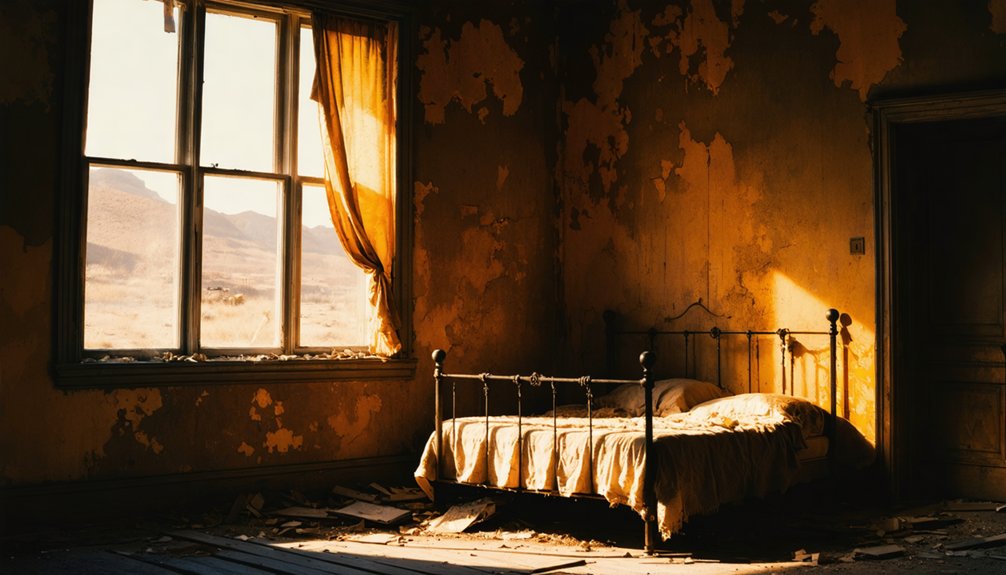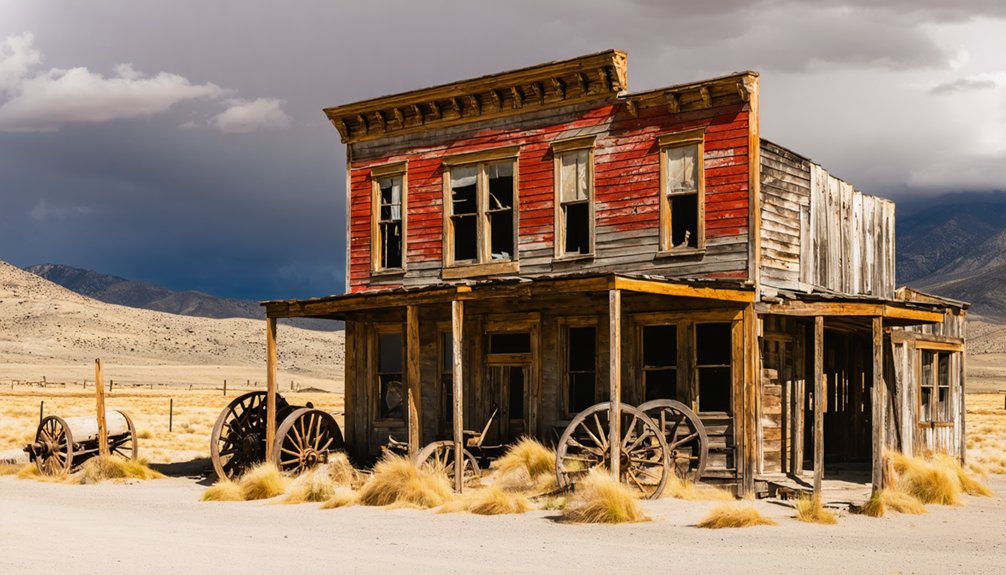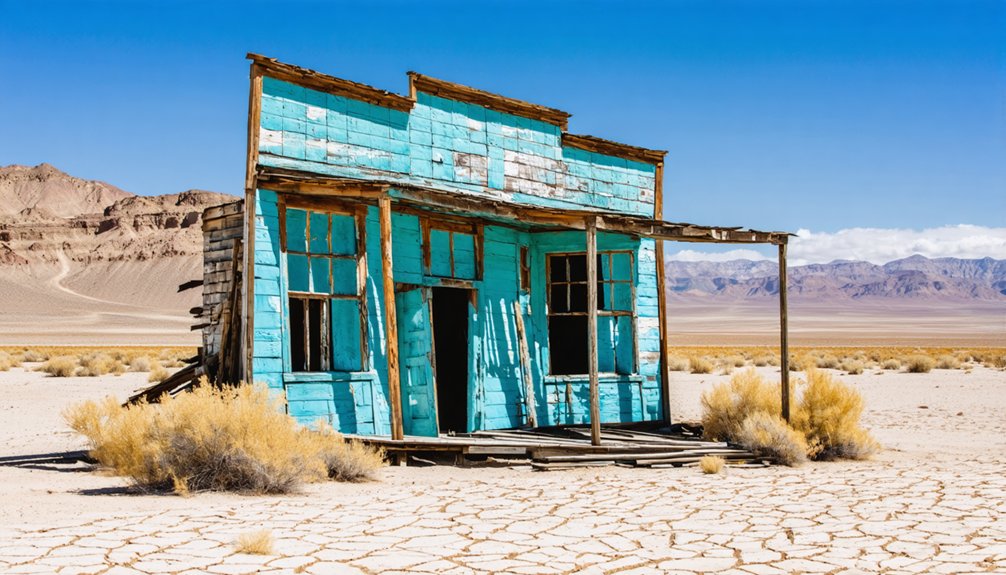
You’ll discover extraordinary ghost towns where decay becomes art—from Namibia’s Kolmanskop, where sand dunes flow through diamond-era mansions, to Bolivia’s Great Train Cemetery at 3,700 meters, where rusted locomotives frame star-filled skies. California’s Bodie preserves 110 structures with bottles still on saloon shelves, while Oregon’s Shaniko offers weathered storefronts against desert plateaus. The Salton Sea’s abandoned yacht clubs and salt-crusted shores provide haunting night photography opportunities. Each location below reveals specific techniques for capturing these atmospheric landscapes at their most dramatic moments.
Key Takeaways
- Kolmanskop, Namibia offers German architecture with sand-filled interiors and guided tours showcasing surreal desert landscapes overtaking diamond-era buildings.
- Bodie, California preserves 110 authentic structures with untouched interiors, capturing 1880s gold rush atmosphere through weathered wood and vintage details.
- Great Train Cemetery, Bolivia features over 100 rusted locomotives at high altitude, ideal for Belt of Venus sunsets and astrophotography.
- Shaniko, Oregon showcases weathered storefronts, historic wool warehouse, 1902 hotel, and vintage vehicles against high desert plateau textures.
- Salton Sea’s abandoned developments offer graffitied structures, palm-lined ghost streets, and dramatic night photography with salt-crusted moonlit shorelines.
Kolmanskop, Namibia: Desert Sands Reclaim a Diamond Mining Town
When railway worker Zacharia Lewala spotted a glimmering stone along the tracks between Lüderitz and Keetmanshoop in April 1908, he couldn’t have imagined the transformation ahead. His diamond discovery sparked a boom that created one of Africa’s wealthiest towns—complete with German-style architecture, a concert hall, and southern hemisphere’s first x-ray station.
You’ll find Kolmanskop 10 kilometers inland from Lüderitz, where sand invasion now reclaims what prosperity built. The Namib Desert’s reconstruction swallows luxurious homes room by room, creating surreal scenes of dunes flowing through doorways and carpeting once-grand interiors. The town sits in the Namib Desert, the world’s oldest desert at 55 million years.
After diamond reserves shifted to Oranjemund in 1928 and mining ceased in 1950, nature began its patient takeover. Rare brown hyenas now shelter within the deteriorating buildings, taking advantage of the abandoned infrastructure. Today, you’re free to explore this atmospheric ghost town through guided tours.
Great Train Cemetery, Bolivia: Rusty Relics Under Pink Skies
At 3,660 meters above sea level, you’ll find the Great Train Cemetery where over 100 rusted locomotives emerge from Bolivia’s Altiplano like metal skeletons against impossible skies.
Time your shoot for the Belt of Venus—that pink atmospheric band appearing just after sunset—when the corroded British steam engines glow crimson beneath the twilight arch. These trains once served mining companies before being abandoned in the 1940s when mineral depletion devastated the industry.
Once darkness falls, the unpolluted high-altitude air transforms this graveyard into an astrophotographer’s paradise, where the Milky Way arcs over hollowed train carriages still haunted by Bolivia’s mining empire collapse. The site sits 3 km from Uyuni’s train station, easily reached by a short walk or inexpensive cab ride for under two dollars.
Belt of Venus Timing
The Belt of Venus transforms Bolivia’s Great Train Cemetery into a photographer’s paradise during those fleeting minutes when the sun slips below the Andean horizon and the atmosphere ignites with soft pink light.
You’ll find your shooting window opens during civil twilight—roughly 20-40 minutes depending on season—when there’s enough ambient light to capture detail without extended exposures.
At 3,000 meters elevation, atmospheric conditions work in your favor. The thin air and minimal water vapor let those pink gradations pop with unusual intensity.
Desert winds keep the sky crystal clear, while salt plain geography eliminates competing light pollution.
Time your arrival for when the sun sits just below the horizon, positioning those corroded locomotives as silhouettes against the luminous band stretching across the eastern sky. Among the approximately 100 rusted train cars scattered across the site, you’ll discover endless compositional possibilities as the pink glow reflects off weathered metal surfaces.
The majority of these locomotives are early 20th century British models, their industrial heritage still visible beneath layers of salt-wind corrosion.
Astrophotography After Dark
Once that pink glow fades from the eastern sky, stick around as darkness reveals the Great Train Cemetery‘s most spectacular show. You’re standing 3,700 meters high on Bolivia’s Andean plain—far from light pollution that plagues most populated areas.
The rusted locomotives transform into silhouettes against brilliant star fields stretching overhead. Position your camera inside hollowed-out train cars, framing the Milky Way through skeletal metal frames.
Long exposures capture star trails circling above corroded smokestacks, creating otherworldly compositions impossible to replicate elsewhere. Some tours include starlit dinners at the site, combining celestial photography opportunities with an immersive dining experience among the abandoned trains.
While this latitude won’t offer aurora viewing like northern destinations, the high-altitude clarity rivals dedicated observatories. Climb atop freight cars for unobstructed 360-degree shots of the cosmos.
The desolate setting means you’ll photograph undisturbed, with only desert silence and celestial wonders surrounding these abandoned relics. These trains imported from Britain were left to decay after the mining industry collapsed in the 1940s, creating the haunting landscape you see today.
Industrial Decay Composition
Scattered across windswept Altiplano terrain just three kilometers from Uyuni’s center, over 100 locomotive carcasses create Bolivia’s most surreal industrial graveyard. You’ll find British-built steam engines from the 1880s mining boom, their steel bones corroded by salt winds into abstract sculptures of industrial tension.
Climb freely through hollowed carriages and across rusted boilers—no fences restrict your exploration of this 24-hour accessible site.
Afternoon light transforms the decay into photographic gold. Pink Altiplano skies illuminate rust textures at over 3,000 meters elevation, while corroded metal creates layered compositions against Bolivia’s vast emptiness. The nearby Salar de Uyuni’s salt accelerates the corrosion, gradually hollowing these industrial monuments into skeletal frameworks.
You’re standing where Butch Cassidy once robbed trains, where mining ambitions collapsed alongside the 1940s economy.
Reach this unguarded relic field by taxi or thirty-minute walk from town.
Shaniko, Oregon: The Wool Capital Frozen in Time
Rising from the high desert plateau two hours east of Mount Hood, Shaniko wears its abandonment like a badge of honor. You’ll find weathered storefronts with false fronts framing endless sky, their peeling paint and cracked windows creating vintage ambiance that’s utterly authentic. The massive brick wool warehouse still stands—eighteen-inch walls holding memories of $5 million annual shipments when this was the Wool Capital of the World.
Your lens will capture timeless charm in every direction: the 1902 Shaniko Hotel’s historic facade, sheep sheds dissolving into sagebrush, Old West boardwalks leading nowhere. A weathered jailhouse and barns punctuate the landscape alongside rusting abandoned vehicles, offering raw textures that transport viewers back a century.
Twenty residents keep this ghost breathing, opening seasonal shops along Shaniko Row. The 1911 railroad bypass sentenced this terminus to beautiful decay, leaving you perfect compositions where civilization surrendered to high desert winds.
Salton Sea Beach, California: Collapsed Dreams in the Desert
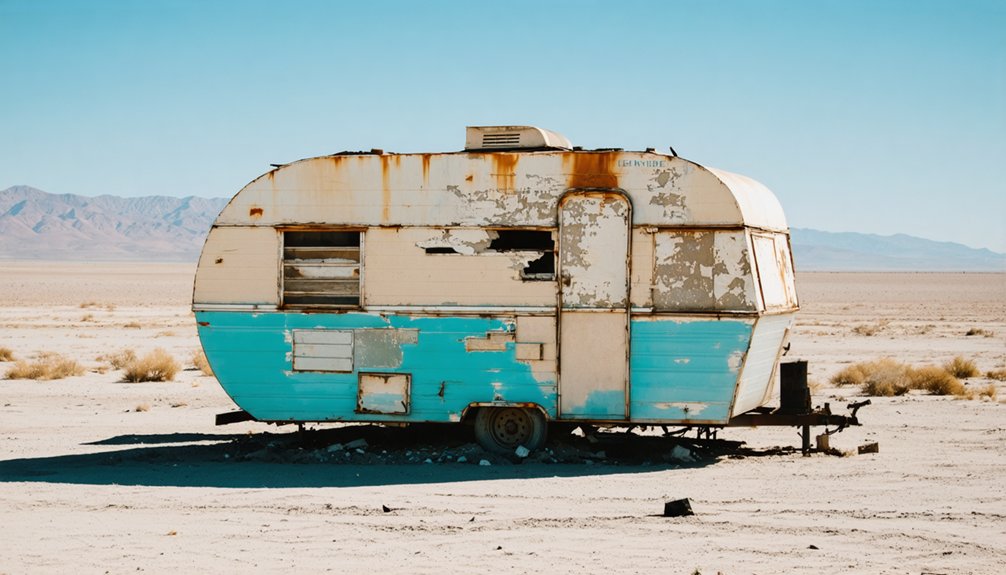
Two hours south of Palm Springs, California’s most spectacular failure sprawls across poisoned shores where million-dollar dreams dissolved into toxic dust.
The Salton Sea once rivaled Yosemite with 1.5 million annual visitors flooding resorts that hosted the Beach Boys and Marx Brothers.
Now you’ll photograph Desert Decay’s finest specimens—abandoned yacht clubs, graffitied motels, and palm-lined streets leading nowhere.
Salton City’s $20 million development collapsed when agricultural runoff turned paradise toxic.
You’ll frame empty marina docks against shrinking waters, rusting cars half-buried in alkaline sand, and hundreds of vacant lots stretching toward mountains.
Wind-blown pesticide dust coats everything.
This isn’t preservation—it’s documentation of ambition’s corpse.
Your camera captures what developers abandoned: broken beach homes, flooded ruins, and contaminated mudflats exposing humanity’s shortsighted hubris.
Desert Shores, California: Night Photography by the Salton Sea
Just north of Desert Shores’ crumbling boat launches, darkness transforms the Salton Sea’s apocalyptic landscape into photography gold. You’ll find abandoned marinas silhouetted against star-filled skies, their rusted frames creating haunting compositions without competing light pollution.
Darkness unveils the Salton Sea’s haunting beauty—rusted relics against starlight, where abandonment meets celestial photography perfection.
The salt-crusted shoreline reflects moonlight like fractured glass, while vacant homes stand as eerie sentinels along Highway 86.
Set up your tripod where Desert flora pushes through cracked pavement—these resilient plants add foreground interest to your Milky Way shots.
The night sounds here are minimal: lapping water, distant bird calls from the wildlife refuge, wind whistling through hollow structures.
Long exposures capture the atmospheric haze rising from evaporating brine, creating otherworldly glows.
This semi-ghost town offers unrestricted access to photograph abandonment’s raw beauty.
Bodie, California: Perfectly Preserved Gold Rush History
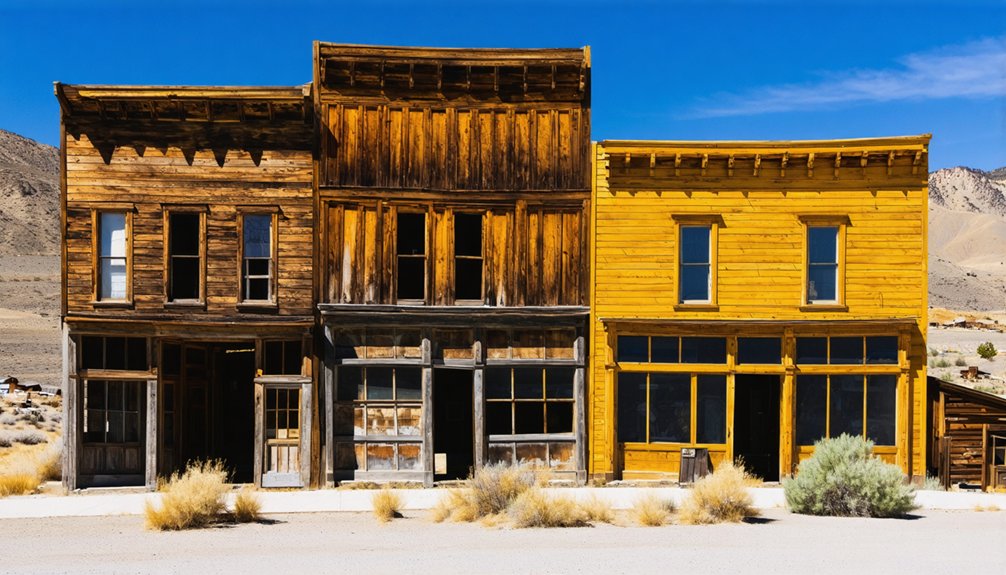
Frozen in 1942 when the last mine closed under wartime orders, Bodie stands 8,500 feet up in California’s eastern Sierra Nevada as authenticity incarnate—no reconstructions, no gift shops wedged into historic buildings, just 110 weathered structures exactly where prospectors left them.
You’ll find cookware still on stoves, beds unmade, bottles lined on saloon shelves—198,000 annual visitors chase this gold rush ghost town’s unfiltered decay.
Frame These Shots:
- Morning light through broken windows of 65 saloons where “bad men from Bodie” once brawled.
- Weathered storefronts along empty dirt streets that once housed 10,000 fortune-seekers during 1880’s $38 million bonanza.
- Abandoned interiors preserved in arrested decay—California State Parks’ philosophy since 1962.
Your camera captures what isolation protected: the West’s most authentic mining town, unvarnished and magnificent.
St. Elmo, Colorado: Rocky Mountain Mining Town
While Bodie captured California’s gold rush glory, Colorado’s high country tells a different mining story. You’ll find St. Elmo perched at 9,961 feet in the Sawatch Range, where weathered boardwalks and false-fronted buildings stand against alpine peaks. This mining history powerhouse once housed 2,000 souls chasing gold and silver through 150 patented claims.
The railroad’s 1926 departure froze St. Elmo in time, creating Colorado’s best-preserved ghost town. You can photograph the Commercial Hotel, general store, and reconstructed structures that survived devastating 1890s fires. Unlike stripped-down ruins elsewhere, preservation efforts have maintained authentic interiors and mining equipment.
The National Register-listed district offers endless compositions: rusted mining gear against mountain backdrops, pioneer-era storefronts, and mountain light that transforms every frame.
North Shore Beach & Yacht Club: Restored Community Spaces
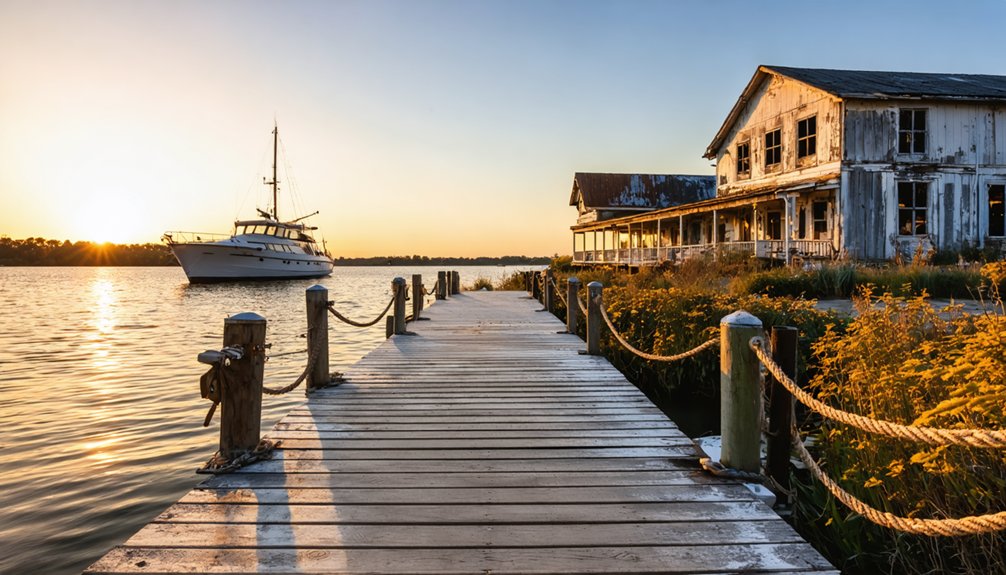
Against the stark backdrop of California’s dying inland sea, Albert Frey’s 1959 masterpiece rises like a mirage—the North Shore Beach & Yacht Club, a mid-century modern jewel that once welcomed more visitors than Yosemite.
You’ll find a monument to community revitalization here. After floods destroyed the jetty and vandals gutted the interior, Riverside County breathed new life into this skeleton in 2009.
The marina restoration project continues, fighting against dropping water levels that’ve severed the inlet.
Capture these contrasts:
- Pristine modernist lines against ghost town desolation
- Celebrity street signs from the failed Beach Estates development
- Dry marina basin where Beach Boys once partied
The restored building now serves desert communities, while photographers document its defiant survival against ecological collapse.
Slab City & East Jesus: Off-Grid Art in the California Desert
Sixty miles inland from the Salton Sea’s crumbling resorts, concrete slabs bake under 120-degree summers where a U.S. Marine Corps base once trained artillery units. You’ll find Slab City thriving on abandoned 1940s foundations—640 acres of state land where nobody pays rent, taxes, or utility bills. Salvation Mountain rises like a fever dream in neon pinks and yellows, Leonard Knight’s 26-year testament to faith that earned Congressional recognition in 2002.
Desert resilience defines the 4,000 winter residents who transform military ruins into canvas. East Jesus sprawls nearby—an evolving sculpture garden where discarded technology becomes artistic expression. Your camera captures peeling paint on vintage trailers, sun-bleached installations against endless sand, and the raw authenticity of off-grid existence under unforgiving skies.
Frequently Asked Questions
What Camera Equipment Works Best in Extreme Desert Heat and Cold?
You’ll need mirrorless cameras with proven weather sealing for camera durability—Nikon Z8, Sony A1, or Canon R5 excel here. Pair them with versatile lenses, rugged battery packs, and insulated bags to capture ghost towns’ haunting beauty through temperature extremes.
Do I Need Special Permits to Photograph Abandoned Buildings Legally?
You’ll need owner permission to avoid trespassing fines, even for forgotten structures. Scout locations respecting privacy concerns, secure written access, and check drone regulations—they’re stricter near populated areas. Document responsibly; freedom means honoring boundaries while capturing haunting, atmospheric scenes.
Are These Ghost Towns Safe to Explore Alone or at Night?
No, exploring ghost towns alone or at night risks serious injury. Coincidentally, darkness obscures collapsing floors and sinkholes while isolation eliminates rescue options. For nighttime safety and solo exploration tips, you’ll need daylight hours, companions, explicit permission, and professional guidance before venturing into abandoned structures.
What’s the Best Season to Photograph Ghost Towns for Ideal Lighting?
Fall’s your prime season—Halloween vibes amplify eerie atmospheres while shadows deepen. You’ll catch golden hour glow painting weathered buildings magnificently, plus sunset reflections create dramatic establishing shots. Spring works too, combining ghost town visits with nearby park adventures effortlessly.
How Do I Protect My Gear From Sand and Dust Damage?
You’ll need dust-proof gear like sealed camera bags and UV filters as your first defense. When sandstorms threaten, wrap your camera in microfiber cloths, seal openings with gaffer tape, and store everything in airtight cases between shots.
References
- https://focus.picfair.com/articles/6-ghost-towns-around-the-world-and-how-to-photograph-them
- https://www.katherinebelarmino.com/2016/07/photographing-salton-sea-ghost-towns.html
- https://www.artsy.net/article/artsy-editorial-photographers-capture-haunting-beauty-ghost-towns
- https://www.christywanders.com/2024/08/top-ghost-towns-for-history-buffs.html
- https://www.losethemap.com/scariest-ghost-towns-in-the-world/
- https://www.geotab.com/ghost-towns/
- https://www.atlasobscura.com/lists/americas-best-preserved-ghost-towns
- https://greatbigstory.com/kolmanskop-namibia-ghost-town/
- https://en.wikipedia.org/wiki/Kolmanskop
- https://www.muchbetteradventures.com/magazine/the-dark-history-of-kolmanskop-namibias-abandoned-diamond-town/