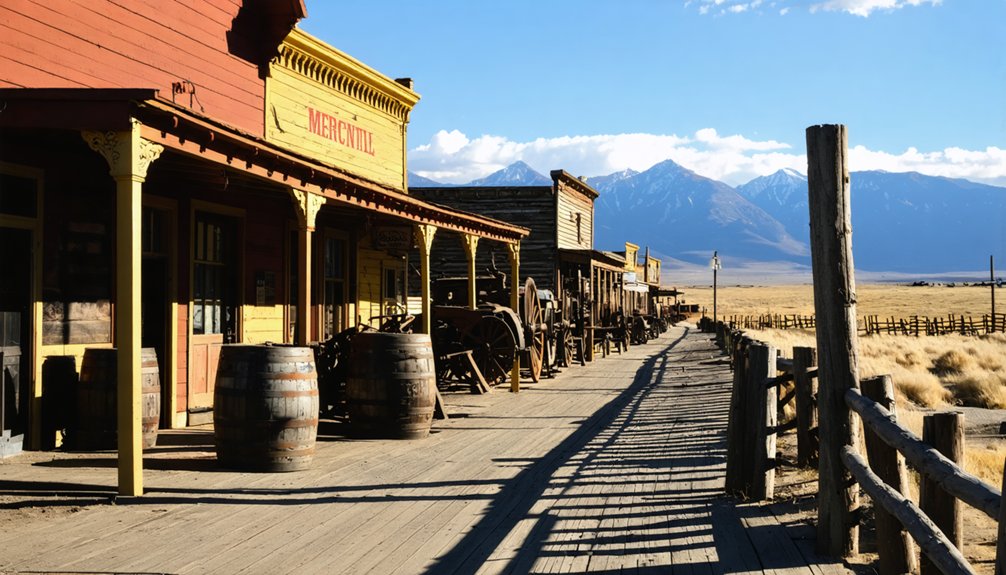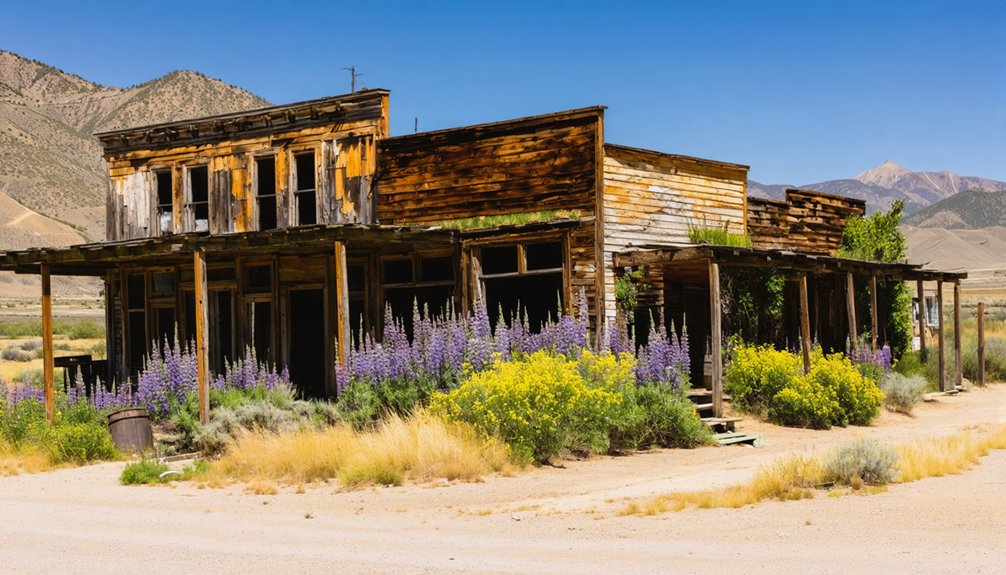
California’s ghost towns are vanishing beneath aggressive forest regrowth, with Sierra Nevada settlements disappearing as tree density has quintupled from 60 to 300 per acre since abandonment. You’re witnessing nature’s fastest reclamation at Headwaters Forest Reserve, where 7,472 acres of former logging operations now support returning Coho salmon populations. The “arrested decay” preservation philosophy can’t compete with ecological forces transforming these 47,000 abandoned mining sites into impenetrable thickets, though this natural erasure obscures the violent displacement and environmental contamination that created these landscapes in the first place.
Key Takeaways
- Tree density in Sierra Nevada ghost towns increased from 60 to 300 trees per acre, creating impenetrable thickets over abandoned settlements.
- Bureau of Land Management restored 7,472 acres at Headwaters Forest Reserve, dismantling logging infrastructure and allowing Coho salmon populations to return.
- Nature’s reclamation created hazardous fuel loads and wildfire risks, with drought accelerating changes in lower elevation blue oak forests.
- Hands-off preservation policies at ghost towns led to unmanaged overgrowth, showcasing nature’s rapid takeover of abandoned mining communities.
- Recovery efforts manage over 100,000 acres of young forest ecosystems where abandoned towns once stood throughout California.
The Gold Rush Legacy: California’s Abandoned Boomtowns
When gold veins pierced California’s mountains in the mid-1800s, they didn’t just extract precious metals—they conjured entire civilizations from dust and desperation.
You’ll find mining legacies scattered across the Sierra Nevada, where towns like Dog Town exploded into existence in 1857, only to vanish after an 1859 fire and gold depletion.
North Bloomfield’s hydraulic operations carved environmental devastation so severe that an 1884 ban ended all extraction efforts, abandoning the settlement overnight.
These ghostly remnants tell stories of unfettered ambition—Bodie’s 10,000 residents sustained 60 saloons before 1942’s final shutdown, while Old Shasta’s brick ruins near Redding mark the Queen City’s fall.
Chinese laborers made significant contributions to these early California settlements, establishing communities that would later evolve into landmarks like Locke, now recognized as a National Historic Landmark.
Calico’s silver ore discovery in 1881 sparked a rush that produced over $20 million within twelve years before the metal’s devaluation triggered mass exodus.
Nature reclaims what human greed temporarily dominated, leaving stone foundations as monuments to boom-and-bust freedom.
How Remote Timber Towns Like Falk Disappeared Into the Forest
While California’s metal-mining camps collapsed from exhausted veins and speculative fever, the state’s timber town decline followed an entirely different mechanism—one where the very resource that created them swallowed the evidence whole.
Unlike mining camps that left skeletal remains, timber towns disappeared completely—consumed by the very forests that had sustained them.
You’ll find virtually nothing of Falk today, though 400 people once lived in this complete company town Noah Falk built in 1884 on Humboldt’s isolated South Fork.
The mill processed virgin redwoods from 9,000 acres for fifty years, supporting families with schools, stores, and churches connected to Humboldt Bay by private railroad.
When automobiles freed workers to reach Eureka in the 1920s and Depression hit, they simply left.
Workers had relied on steam donkeys to haul massive logs from the forest, technological marvels that now rust silently beneath new growth.
The site now offers visitors opportunities for photography among the forest growth that consumed the abandoned structures.
Nature reclamation was swift—the surrounding forest reclaimed what logging had temporarily cleared, erasing all infrastructure within decades.
When Resources Run Dry: The Economics of Abandonment
Unlike Falk’s timber exhaustion, modern California communities face abandonment through a cascade of financial pressures that strip away economic viability before physical resources disappear.
You’ll find economic abandonment accelerating across Riverside, where retail vacancies jumped 14% and unemployment hit 5.9%, creating feedback loops that hollow out neighborhoods.
Resource scarcity isn’t about depleted forests anymore—it’s labor shortages threatening 16% construction contraction and 14% agricultural decline if workers flee enforcement actions.
When Tustin’s commercial vacancies surged 22% and population dropped 2.4%, it mirrored historical mining town collapses, just slower.
Tourism revenue vanishing by 40% in some cities proves communities can become ghost towns while buildings still stand, abandoned by capital and people rather than nature.
In San Clemente, downtown shops experienced a 16% drop in sales year-over-year while boutique hotels struggle with occupancy, transforming a coastal destination into an economic shadow of its former self.
San Francisco exemplifies this pattern, where over 123,000 residents left in just two years as Union Square transformed from a vibrant retail center into a landscape of closed stores and urban decay.
Redwoods Reclaiming Their Territory at Headwaters Forest Reserve
Deep in Humboldt County’s mountains, the Bureau of Land Management now shepherds 7,472 acres where chainsaws once dictated the landscape’s future.
You’ll find nature reversing industrial scars through deliberate ecological restoration—thinned stands doubling their growth rates while invasive pampas grass yields to native redwoods on compacted log landings.
This redwood resurgence isn’t accidental. Since 2014, targeted interventions have dismantled the logging infrastructure that suffocated these forests.
Repaired roads stopped sediment from choking spawning beds, bringing coho salmon back within twelve months.
The 3,000-acre Headwaters Grove harbors millennia-old redwoods that survived when 95% of their kin fell.
What you’re witnessing isn’t preservation—it’s active liberation.
Trees reclaim territory through increased sunlight penetration and restored hydrological systems, sequestering carbon while 105,000 annual visitors witness industrial surrender. Former loggers now apply their expertise to delicate decommissioning tasks, wielding heavy equipment to undo the damage their industry created. Across Northern California’s redwood forests, recovery efforts now manage over 100,000 acres of young forest, transforming the scars of industrial logging into carbon-capturing ecosystems.
Bodie: A Frozen Moment in California’s Mining History
Waterman S. Bodey discovered gold east of the Sierra Nevada in 1859, but he’d never witness what his find released. After dying in that year’s snowstorm, his name lived on—misspelled by a sign painter as “Bodie.”
The camp languished with just twenty miners until 1876, when prospectors struck a profitable vein. By 1879, eight thousand fortune-seekers swarmed two thousand structures, extracting $38 million in precious metals before the boom collapsed.
Today’s Bodie preservation policy embraces “arrested decay,” maintaining this mining legacy exactly as abandonment left it. The ghost town shares its name with various other places and people throughout history.
You’ll find cursive still visible on schoolhouse chalkboards, goods stocking Boone’s Store, and beds waiting in silent homes. Unlike nature’s complete reclamation, Bodie remains suspended—170 wooden buildings defying time’s erasure, honoring those who chased autonomy through gold-flecked rock. Perched at 8,375 feet elevation, the site demands visitors prepare for high-altitude conditions with water, layers, and sunscreen.
The Slow March of Vegetation Over Human Settlement
When California’s fortune-seekers abandoned their camps, they left behind more than empty structures—they surrendered territory to a patient opponent that reclaims land by increments.
You’ll find nature’s urban reclamation operates through methodical conquest. In the Sierra Nevada, tree density has surged from historical levels of 60 trees per acre to 300, transforming abandoned settlements into impenetrable thickets.
This natural restoration isn’t the romantic rewilding you might imagine—it’s created hazardous fuel loads that’ve scorched millions of acres. Meanwhile, drought accelerates woodland changes in lower elevations, where blue oak forests decline under climate stress.
The irony cuts deep: hands-off preservation policies meant to protect wilderness instead turned mountain communities into actual ghost towns, suffocated beneath unmanaged overgrowth that serves neither human liberty nor ecological health.
From 10,000 Residents to Zero: The Rise and Fall of Mining Communities
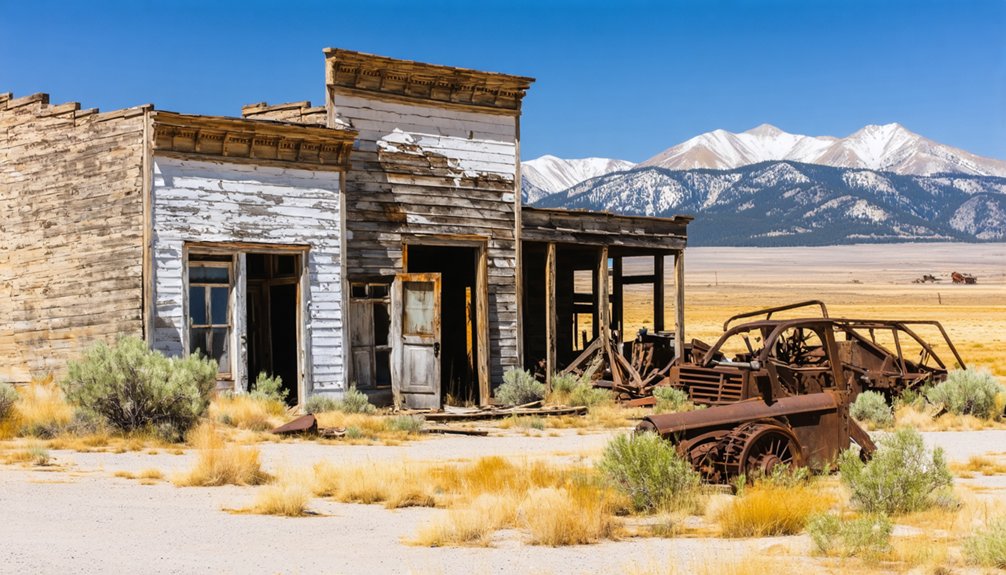
You’ll find few historical patterns as dramatic as Bodie’s trajectory from a population of several thousand in the 1870s to absolute zero by 1942.
The town’s boom-and-bust cycle reflects a fundamental equation: when gold deposits ran deeper than miners’ capital could reach, the human settlements vanished as quickly as they’d appeared.
This abandonment pattern, repeated across California’s mining districts, reveals how completely nineteenth-century communities depended on continuous resource extraction rather than sustainable economic foundations.
Bodie’s Explosive Population Growth
Around September 1860, prospectors discovered gold and silver quartz deposits in what would become one of California’s most notorious boomtowns, though the camp’s transformation wouldn’t arrive for another sixteen years.
You’ll witness extraordinary Population Dynamics when the Standard Company’s 1876 strike catalyzed Bodie’s metamorphosis from twenty isolated miners to nearly 10,000 residents by 1879.
This Economic Transformation spawned over 2,000 buildings, 400 businesses, and monthly ore outputs reaching $230,000.
You’re observing humanity’s relentless pursuit of wealth—seventy saloons and gambling halls serving fortune-seekers who’d abandoned stability for speculation.
Yet this freedom came with consequences: when richer strikes emerged elsewhere in 1880, these same autonomous souls departed as quickly as they’d arrived, leaving families and depleted mines behind.
Resource Depletion Drives Exodus
Beneath Bodie’s gleaming surface prosperity lay an inevitable truth that miners understood but rarely acknowledged—the ore wouldn’t last forever.
Resource scarcity transformed these thriving settlements into monuments of urban abandonment with predictable brutality.
The pattern repeated across California’s mining frontier:
- Placer deposits vanished within months, forcing thousands to chase new strikes across unforgiving terrain.
- Underground lode operations extracted remaining veins until ore quality plummeted beyond profitable extraction.
- Empty storefronts and silent stamp mills marked the final exodus as families loaded wagons and departed.
Environmental and Economic Collapse
When mining operations reached their peak extraction rates, California’s boomtowns harbored populations exceeding 10,000 residents—bustling commercial centers where stamp mills thundered day and night, merchant districts stretched across multiple blocks, and newcomers arrived weekly seeking fortune.
Yet single-industry dependence made these communities tragically vulnerable. When veins played out or markets shifted, economic collapse followed swiftly—businesses shuttered, populations scattered, and infrastructure crumbled into ruin.
The environmental justice crisis emerged decades later. You’ll find approximately 11,000 abandoned mines contaminating California soil with arsenic and lead, their toxic legacy persisting generations beyond profit-taking.
Community resilience proved impossible when both livelihoods and land became poisoned. Remediation costs soar into billions while former residents’ descendants inherit contaminated watersheds—freedom sacrificed for extraction’s temporary wealth.
Darwin City and Hornitos: Ghost Towns Still Clinging to Life
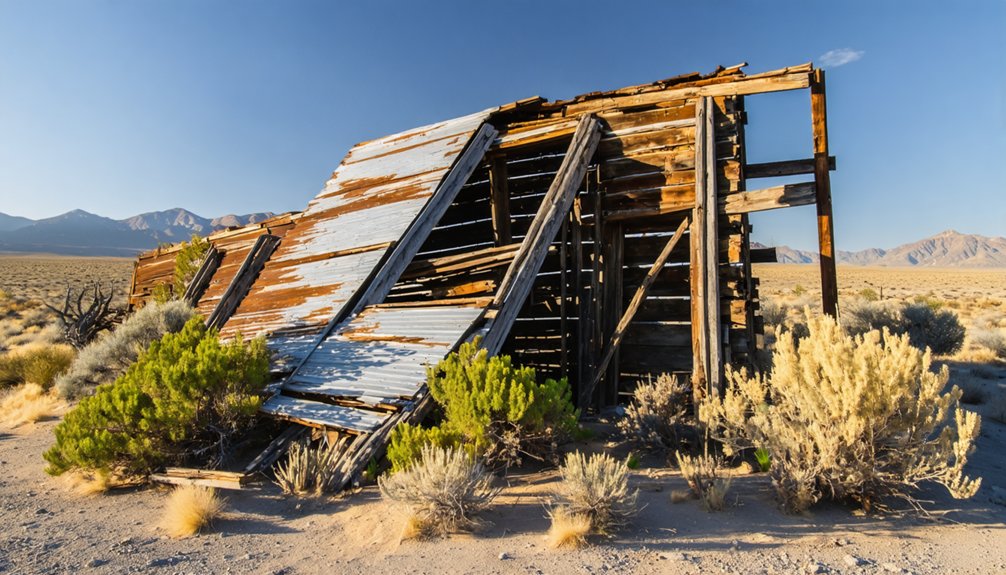
Deep in California’s Inyo County, Darwin clings to existence with roughly 45 residents occupying what was once the region’s largest city.
From 3,500 souls in 1877 to near-abandonment, Darwin’s decline followed smallpox, economic collapse, and devastating fires that stripped away prosperity.
Modern day relics scatter the streets, telling stories of boom and bust:
- Original 1875 buildings stand on Main Street, their weathered facades frozen in time.
- Broken-down vehicles and mining equipment rust among cattle skulls and abandoned saloon chairs.
- The Anaconda Mine’s barracks loom at the entrance, monuments to extraction and departure.
You’ll find Darwin thirty minutes west of Lone Pine, stubbornly refusing total abandonment.
Its persistence challenges nature’s reclamation—a tribute to those who chose isolation over surrender in one of the West’s most violent territories.
Preserving Decay: The Challenge of Protecting Disappearing History
Preservation becomes paradox when the goal is maintaining ruin itself. California’s arrested decay philosophy, adopted at Bodie in 1962, rejects restoration in favor of stabilizing structures exactly as abandonment left them. You’ll find furniture still positioned where residents departed, untouched by improvement or alteration.
Yet preservation challenges mount relentlessly. The 1932 fire destroyed ninety percent of Bodie’s buildings, while harsh desert winters and summer heat accelerate deterioration.
Remote locations demand expensive maintenance crews traversing closed mountain passes. The Bodie Foundation’s “Save Bodie” campaign pursues funding for at-risk structures, while year-round rangers oversee 170 remaining buildings.
This historical significance compels intervention, though weather, fire, and budget constraints threaten what remains. Protecting disappearing history means accepting impermanence while fighting decay’s inevitable victory.
The Untold Stories Hidden Beneath Picturesque Ruins
When you stand among California’s ghost town ruins, you’re often seeing a curated narrative that erases the displacement of Indigenous communities, the exploitation of Chinese laborers, and the racial violence that marked these settlements.
The environmental destruction at sites like Malakoff Diggins reveals how extraction economies poisoned waterways and destabilized entire ecosystems—legacies that persist in current Superfund designations at places like Bodie.
These picturesque remnants function as monuments that obscure as much as they preserve, requiring you to read beyond the interpretive panels into land records, miners’ diaries, and ecological surveys to understand what actually transpired.
Sanitized History Vs Reality
Beneath the photogenic weathered boards and tumbleweeds lies a calculated omission. California’s “arrested decay” policy presents sanitized history—you’re seeing five percent of Bodie’s original structures, carefully curated to freeze a moment that never actually existed.
The preserved decay masks a roaring reality: 10,000 souls crammed into dance halls, tent-cabins, and shanties that vanished before bureaucrats arrived with stabilization plans.
What’s missing tells the real story:
- Bodie’s Main Street chaos—gambling dens and makeshift shelters housing thousands, now reduced to tidy rows of photogenic buildings
- Silver Mountain City’s 3,000 residents—an entire county seat compressed into one abandoned lodge
- Moke Hill’s $30 million claim—cutthroat competition erased, leaving sanitized traces
You’re experiencing authenticity through selective amnesia, where controlled ruin replaces uncomfortable truth.
Violence and Forced Displacement
The picturesque ruins concealing selective history also bury systematic violence.
You’ll find California’s ghost towns stand on foundations of genocide—settlers murdered 9,000-16,000 Native Californians between 1846 and 1873, while governments paid bounties for scalps.
The violence legacy extends beyond massacres: authorities forcibly separated Indigenous children, worked captives to death, and weaponized starvation as policy.
Even mid-century displacement history reveals brutality, as Chavez Ravine families were dragged screaming from homes in 1959 after eminent domain seizures broke community bonds.
Meanwhile, towns like Bodie normalized lethal force—70 fatal shootings yielded one conviction.
These abandoned landscapes weren’t simply economic failures. They’re monuments to systematic erasure, where armed settlers and government militias transformed thriving communities into graveyards through calculated extermination and forced removal.
Environmental Degradation Records
While ghost town tourists snap photos of weathered storefronts and crumbling saloons, they’re often standing on contaminated ground that tells a more persistent story than architectural decay.
California’s 47,000 abandoned mine sites harbor environmental contamination that your freedom to explore doesn’t advertise. Mining pollution from the Gold Rush persists as the state’s oldest environmental justice issue, with toxic heavy metals leaching into watersheds you might drink from downstream.
The invisible threats beneath picturesque ruins include:
- Mercury and arsenic contaminating trails where you hike, bike, and breathe dust
- Acid mine drainage poisoning aquatic ecosystems in streams flowing through ghost towns
- Asbestos concentrations reaching 40% at recreational sites near abandoned mines
With only 150 contaminated sites officially recorded despite 5,000 estimates, these landscapes conceal risks that remediation efforts can’t match.
Frequently Asked Questions
Can Visitors Legally Explore California’s Ghost Towns or Is Trespassing Prohibited?
You can’t legally explore most California ghost towns without permission, as they’re typically private property. Trespassing’s prohibited regardless of abandonment. Seek legal access through ownership research and written consent, following proper visitor guidelines to avoid prosecution.
Finding abandoned towns across California can be a thrilling adventure, but it requires careful planning and respect for the law. With many sites steeped in history, researching their past and obtaining necessary permissions is crucial for a responsible visit. These forgotten places often hold fascinating stories waiting to be uncovered by those willing to proceed with caution.
What Wildlife Species Now Inhabit Abandoned Ghost Town Buildings and Structures?
You’ll discover burros, waterfowl, raptors, reptiles, and small mammals have mastered wildlife adaptations in these ruins. Urban exploration reveals nature’s reclamation: birds nest in Bodie’s buildings while Drawbridge’s marshes host diverse species thriving in human absence.
Are There Health Hazards From Old Mining Operations at Ghost Towns?
Yes, you’ll face serious environmental risks at ghost town sites. Mining toxins like arsenic, mercury, and cadmium contaminate soil, dust, and water—causing cancers and neurological damage even today without proper precautions.
How Do Locals Feel About Tourists Visiting Nearby Ghost Town Sites?
Local sentiments remain unrecorded in available evidence. You’ll find documented tourist impact shows economic declines and preservation efforts, but archival sources don’t capture nearby residents’ feelings about ghost town visitors—revealing gaps in understanding human-nature relationships at these sites.
What Personal Items or Artifacts Are Still Found in Abandoned Buildings?
You’ll find newspapers insulating walls, mining equipment, period furnishings, and mercantile goods throughout these sites. These personal artifacts hold tremendous historical significance, revealing how settlers adapted to harsh landscapes before nature eventually reclaimed their abandoned communities.
References
- https://www.savetheredwoods.org/blog/spooky-redwoods-ghost-town-remains-a-presence/
- https://dornsife.usc.edu/magazine/echoes-in-the-dust/
- https://www.californist.com/articles/interesting-california-ghost-towns
- https://www.bbcearth.com/news/abandoned-places-reclaimed-by-nature
- https://www.altaonline.com/dispatches/a61999061/ghost-towns-whitewashed-lauren-markham/
- https://en.wikipedia.org/wiki/List_of_ghost_towns_in_California
- https://www.lovemoney.com/gallerylist/86648/americas-empty-ghost-towns-and-why-theyre-abandoned-today
- https://www.conservation.ca.gov/dmr/abandoned_mine_lands/AML_Report/Documents/volume1textonly.pdf
- https://patch.com/california/banning-beaumont/13-ghost-towns-explore-california
- https://www.camp-california.com/california-ghost-towns/