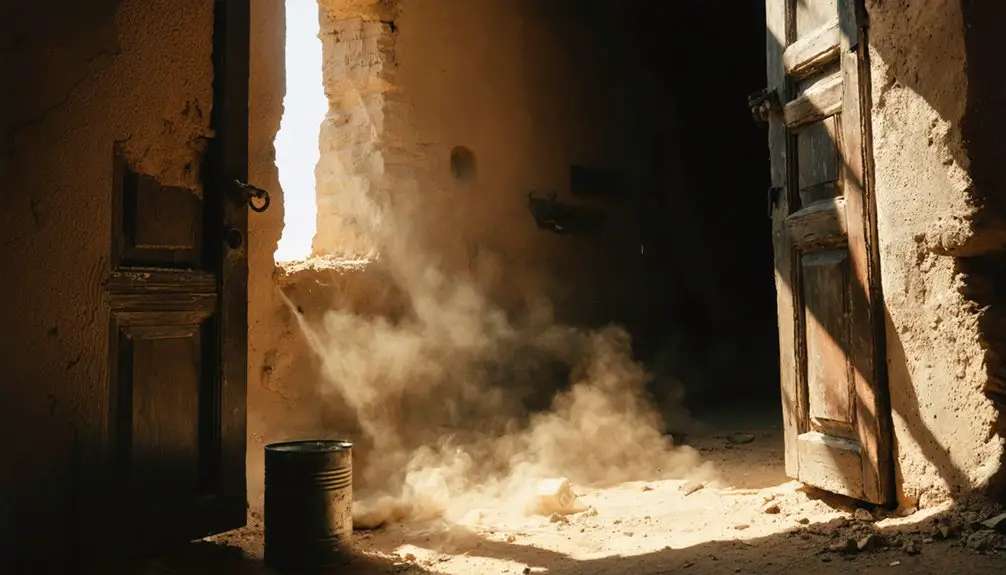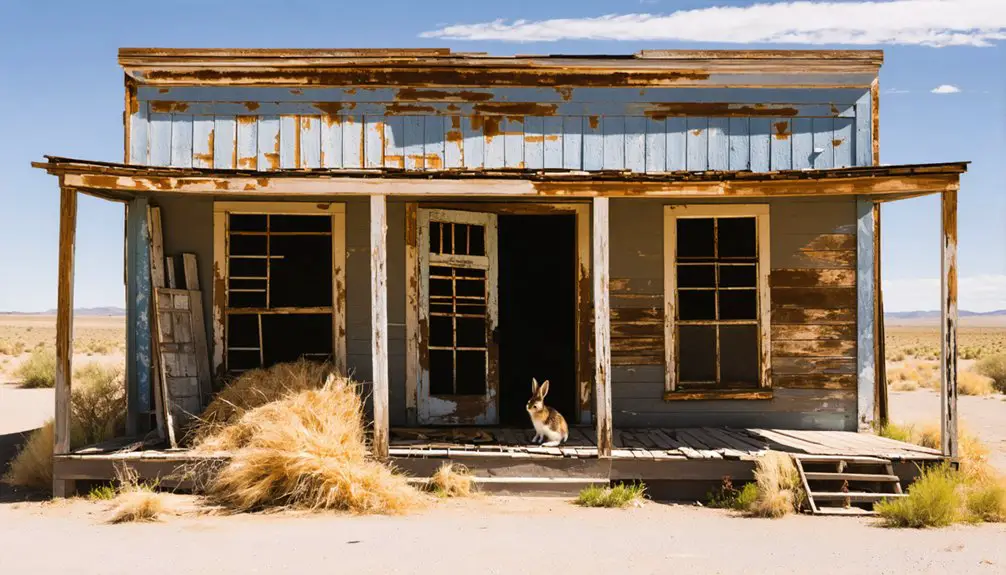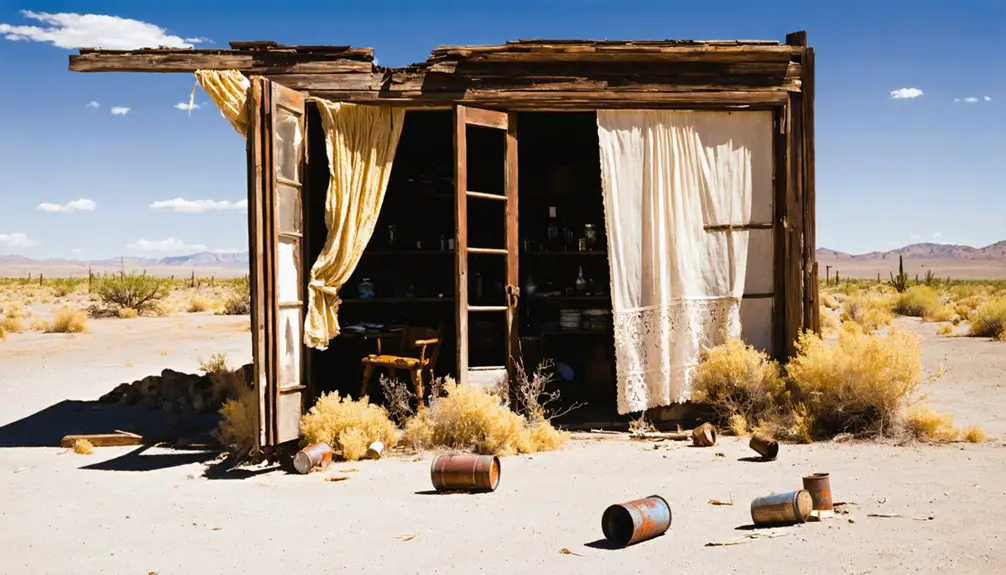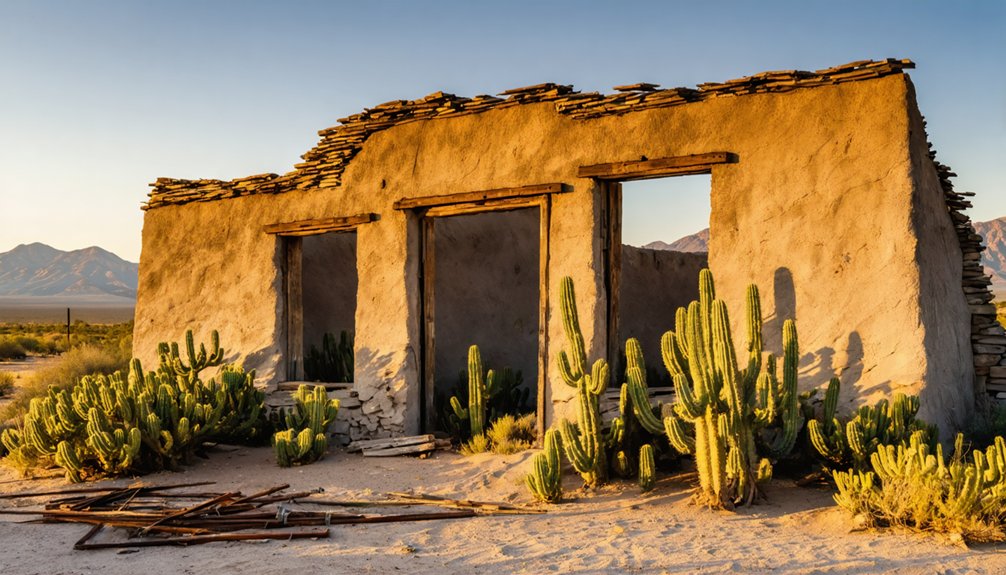
New Mexico’s ghost towns showcase nature’s patient reclamation work. You’ll find Dust Bowl-era settlements on the Eastern Plains crumbling to dust as wind and temperature extremes grind away at wooden structures, while the state’s extreme aridity paradoxically preserves what wetter climates would’ve destroyed decades ago. Ancient Puebloan sites like those in the Gila Wilderness have withstood 700 years of elemental assault, their stone foundations resisting decay far better than mining towns like Lake Valley, where desert winds and pinyon pines steadily erase silver boom history—though some communities now defy abandonment entirely.
Key Takeaways
- New Mexico’s aridity preserves ghost towns by preventing moisture-dependent decay, wood rot, and rust that would occur in wetter climates.
- Mining towns like Lake Valley collapsed in the 1890s, with desert winds and pinyon pines steadily reclaiming abandoned structures.
- Dust Bowl-era settlements are being dismantled through wind erosion, grinding wood into dust and metal into rust over time.
- Ancestral Puebloan stone ruins have endured nearly 700 years, resisting reclamation more effectively than wooden frontier towns.
- Some ghost towns are finding new life as artists and remote workers repopulate former mining settlements like Madrid.
The Harsh Beauty of Desert Reclamation on the Eastern Plains
When homesteaders abandoned their settlements across New Mexico’s Eastern Plains during the Dust Bowl era and subsequent droughts, they left behind wooden structures and dreams that the high desert has been methodically dismantling ever since.
You’ll find nature’s resilience on full display here, where wind-sculpted foundations emerge from shifting sands and native grasses pierce through collapsed rooflines.
Desert ecology follows its own timeline—mesquite and yucca advance slowly but deliberately, their root systems breaking apart what human hands built.
Nature operates on geological time, indifferent to human ambition, reclaiming each settlement with patient, destructive precision.
The process isn’t gentle; it’s a grinding erosion of wood into dust, metal into rust.
Yet there’s freedom in witnessing this reclamation, watching the land restore itself without permission or apology, proving that no human claim on wilderness remains permanent.
These abandoned sites exist in transition zones where fragile ecosystems shift between desert and less arid conditions, making the land particularly vulnerable to degradation from past overuse.
Ancient Puebloan Sites Swallowed by Time
Unlike the century-old homesteads crumbling on the Eastern Plains, New Mexico’s ancestral Puebloan ruins have endured nearly 700 years of elemental assault since their communities dispersed around 1300 AD.
You’ll discover remarkable sites where ancient migrations left behind an extraordinary architectural legacy:
- Pot Creek Pueblo: 400 ground-floor rooms gradually eroding into high desert soil
- Chimney Rock: Ceremonial great house aligned with Major Lunar Standstill events
- Salmon Ruins: Bloomfield great house preserving original construction techniques
- Una Vida: Unexcavated structure within Chaco Canyon awaiting discovery
- Pueblo de los Jumanos: 480-room complex destroyed by Apache, walls still standing
Drought, resource depletion, and social unrest triggered widespread abandonment.
Yet these stone structures resist nature’s reclamation more stubbornly than any wooden frontier town, their kivas and walls testifying to communities who chose departure over destruction. Sites like Pueblo Bonito exemplify the stone and adobe construction that has weathered centuries of exposure. Archaeological surveys conducted since around 1915 have uncovered metal axes, gun parts, and trade beads at defensive sites throughout the Dintah region.
Mining Boom Towns Surrendering to the Wilderness
While ancestral pueblos resisted abandonment through stone permanence, New Mexico’s mining towns collapsed with startling rapidity once the ore ran out. Lake Valley’s 4,000 residents vanished by the 1890s when silver prices crashed. Dawson’s coal empire ended in the 1950s, leaving nearly 400 miners’ graves marked by iron crosses.
Old Hachita surrendered to Chihuahuan Desert heat and water scarcity. Elizabethtown’s gold rush faded completely by 1931.
You’ll find nature’s reclamation accelerating across these mining legacies. Desert winds dismantle Lake Valley’s schoolhouse while pinyon pines reclaim Elizabethtown’s slopes.
Hillsboro and Chloride structures scatter through creek beds as wilderness erases human intrusion. Kingston retains historic architecture from its silver mining days, though nature steadily encroaches on these weathered remnants. Around Gallup, over a dozen coal camps have been consumed by sand and sagebrush, leaving only tailings and broken glass. These sites prove that extractive ambitions, however bold, can’t withstand ecological forces once economic purpose expires.
How New Mexico’s Climate Slows Nature’s Takeover
New Mexico’s relentless aridity acts as an accidental curator, preserving ghost towns that would’ve vanished decades ago in wetter climates.
In the desert, dryness becomes preservation—ghost towns stand intact where rain and humidity would have erased them completely.
The desert’s climate effects create natural preservation methods that resist nature’s typical reclamation process.
You’ll find structures standing through mechanisms that wouldn’t work elsewhere:
- Single-digit humidity levels halt moisture-dependent decay, preventing wood rot and rust formation
- Temperature extremes exceeding 100°F eliminate most plant and fungal species that consume abandoned buildings
- Annual precipitation deficits maintain foundation integrity while flash floods remain too infrequent for sustained damage
- Sparse vegetation patterns prevent root systems from destabilizing walls and structures
- Minimal freeze-thaw cycles reduce mechanical weathering of masonry
These arid conditions leave towns like Chloride’s 27 buildings remarkably intact, frozen in abandonment without active intervention.
The dry climate’s preservation extends beyond buildings to artifacts like old mining equipment, which remains visible at sites like Mogollon decades after operations ceased in the 1970s.
While many New Mexican ghost towns crumble silently, places like Ghost Ranch demonstrate how restoration and preservation efforts can transform abandoned historical sites into educational museums that showcase centuries of cultural heritage.
The Gila Wilderness and Its Hidden Cliff Dwellings
When you venture into America’s first designated wilderness area, established in 1924 in the Gila National Forest, you’ll discover that ghost towns aren’t always made of wood and iron—sometimes they’re carved into canyon walls 200 feet above ancient riverbeds.
The Mogollon people built their cliff dwellings between 1276-1287 AD, constructing 42 rooms with T-shaped doorways in five natural alcoves, only to abandon them completely by 1300 AD after barely one generation.
The evidence of their sudden departure—wooden beams still supporting earthen roofs, pottery shards scattered across rock shelters, and entire communities left behind—reveals a civilization that thrived in these 5,700 to 7,300-foot elevations before vanishing into the archaeological record. The Mogollon culture itself had flourished for over a millennium, developing from the earlier Cochise culture between 300 B.C.E. and 1300 C.E. throughout the southwestern region. The remote, rugged canyons and forested areas have protected these structures for centuries, preserving them in a way that more accessible sites could never achieve, with the Gila River’s wild waters flowing through the region uninterrupted by any dams.
America’s First Wilderness Area
Deep in southwestern New Mexico’s mountains, a revolutionary conservation decision reshaped how humanity would protect wild places forever.
On June 3, 1924, the Gila Wilderness became Earth’s first officially designated wilderness area, thanks to Forest Service supervisor Aldo Leopold‘s visionary 1922 proposal. He understood that preserving 755,000 acres meant denying development permits and excluding roads—radical ideas for that era.
Leopold’s framework established principles that echo through modern conservation:
- Administrative protection through permit denial and road exclusion
- Recognition that wild places deserve legal safeguards
- Acknowledgment of indigenous peoples as original stewards
- Integration of ecological diversity with human restraint
- Precedent for the 1964 Wilderness Act affecting millions of acres
The region encompasses over three million acres of diverse ecosystems, harboring 574 species including endangered Gila Trout and Gila Chub. Today’s 558,014-acre sanctuary proves that protecting nature from human interference creates enduring freedom—for both wilderness and those who cherish it.
Ancient Mogollon Cave Homes
Seven centuries before Leopold’s conservation vision, the Tularosa Mogollon people demonstrated their own profound understanding of living within Gila’s landscape. Between 1276 and 1300 CE, they constructed 42 rooms across five south-facing alcoves in Cliff Dweller Canyon, creating what’s now preserved as Gila Cliff Dwellings National Monument.
Their Mogollon architecture utilized local Gila Conglomerate slabs and wooden beams from surrounding forests—Ponderosa Pine, Douglas Fir, Juniper—to build dwellings that naturally regulated temperature.
You’ll find these caves perfectly positioned: winter sun penetrated deep inside while summer shade kept interiors cool.
Eight to ten families cultivated corn, beans, and squash in the canyon below while crafting distinctive ancient pottery—brown bowls with black interiors and black-on-white vessels.
After just one generation, they departed, leaving behind intact roof beams and pottery shards protected by stone alcoves.
Hasty Abandonment Evidence Found
Around 1300 CE, the Mogollon families living in these cliff alcoves left behind a puzzle that archaeologists still debate today.
Evidence of their hasty departure scattered throughout the dwellings tells a story of unexpected evacuation after just one generation of occupation.
Signs of Rapid Exit:
- Pottery fragments littering floors, abandoned mid-use
- Fields left unplanted despite suitable growing season
- 227 rooms, three Great Kivas, and four pit structures vacated simultaneously
- Personal belongings discarded rather than packed for journey
- No signs of violence or destruction forcing departure
You’ll find walls standing remarkably intact, preserved by the sheltering alcoves.
Whether drought, resource depletion, or simply wanderlust drove them away remains unknown. The wilderness keeps their secrets.
Ghost Towns Finding New Life Against the Odds
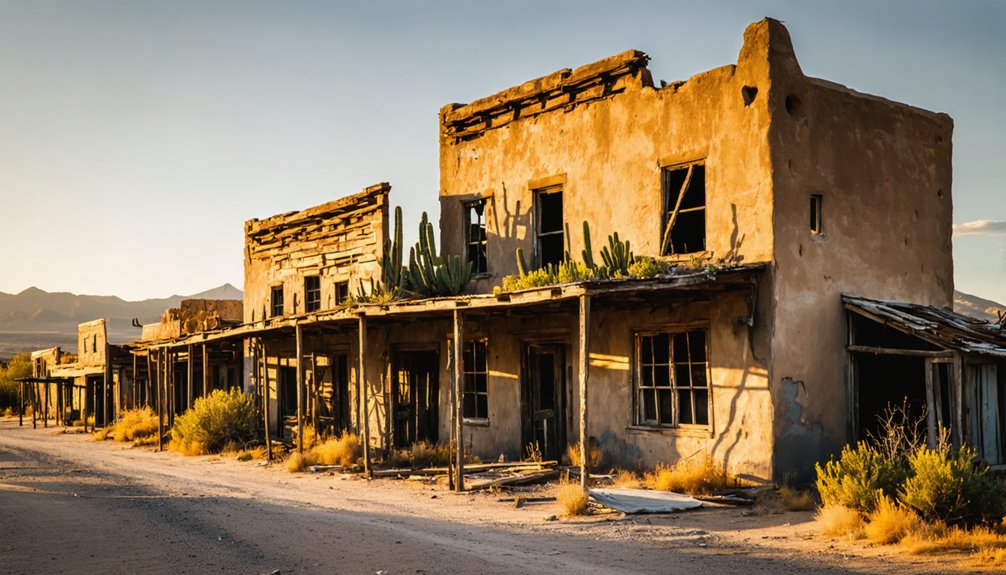
You’ll find that New Mexico’s abandoned mining settlements, born from 19th-century extraction booms, now face an unexpected second life as artists and remote workers resettle these once-depleted landscapes.
This demographic shift mirrors ecological succession—where Madrid’s creative community has recolonized deteriorated infrastructure much as pioneer species reclaim disturbed ground.
The preserved mining structures that once signaled environmental degradation now anchor heritage tourism, transforming sites of resource depletion into nodes of economic resilience.
Madrid’s Artist Community Rebirth
When coal demand plummeted after World War II and mines shuttered throughout the 1950s, Madrid’s population hemorrhaged from nearly 3,000 residents to virtual abandonment, leaving rows of identical company houses standing forlorn against the New Mexican landscape.
By 1970, tumbleweeds rolled across the ballpark infield where steam trains sat rusting.
The artist revival began when Joe Huber sold company houses for $250 down and $35 monthly payments. This sparked an extraordinary community transformation:
- 54 pioneers purchased the town in the 1970s
- Hammers echoed as New Mexicans renovated homes
- Population grew to 300 residents
- 40+ shops and galleries now line Main Street
- Mining culture shifted to artisan creativity
You’ll find Madrid thriving along Highway 14’s Turquoise Trail, welcoming global visitors seeking authentic creative refuge.
Remote Work Enables Resettlement
Madrid’s artistic renaissance proved that abandoned settlements could reinvent themselves through creative communities. Yet today’s ghost town revival follows a different catalyst: fiber optic cables replacing railroad tracks as lifelines to prosperity.
You’re witnessing remote migration transform New Mexico’s forgotten villages as professionals escape urban density for affordable real estate in isolated landscapes. Digital nomadism targets these ghost towns strategically—low living costs meet dramatic natural settings where ecological recovery frames your workspace.
New Mexico gained 1,253 households between 2021-2022, with Santa Fe and Sandoval counties absorbing professionals seeking freedom from coastal markets.
While Kansas towns offer $15,000 incentives, New Mexico’s ghost towns rely on authentic wilderness appeal. You’ll find the state’s 194,000 immigrants already demonstrate resettlement potential, filling positions from restaurants to academia across communities rebuilding without government intervention.
Preserved Structures Attract Visitors
While nature typically reclaims abandoned settlements within decades, New Mexico’s arid climate preserves ghost town structures that now anchor a tourism economy worth millions annually.
You’ll find historic preservation efforts transforming these ruins into accessible destinations:
- Shakespeare Ghost Town offers guided tours through eight buildings daily, with descendants sharing frontier stories at the saloon and Grant House.
- Lake Valley Historic Townsite provides self-guided exploration Thursday-Monday, featuring a restored schoolhouse from the 5.8-million-ounce silver boom.
- Chloride’s Old Pioneer Store Museum displays artifacts from the 1881 silver rush when 2,000 residents populated the area.
- Mogollon maintains preserved buildings housing seasonal art galleries within Gila National Forest.
- Cerrillos Turquoise Mining Museum showcases 1,000 years of extraction history.
The Hill family’s stewardship since the 1930s demonstrates how private initiative protects cultural heritage.
Frequently Asked Questions
Can You Legally Explore and Take Artifacts From Ghost Town Sites?
You can’t legally explore without permission or take artifacts from ghost town sites. Legal implications include trespassing charges and penalties, while artifact preservation laws protect historical items. You’ll need written consent from property owners before visiting.
Which Ghost Towns Are Safest to Visit Without a Guide?
The safest ghost towns for self-guided exploration include Madrid, Cerrillos, and Lake Valley—three communities where nature’s reclamation pauses near Santa Fe. You’ll find maintained infrastructure, active businesses, and restored buildings offering freedom without isolation’s risks.
Exploring the ghost towns of New Mexico provides a glimpse into the past while highlighting the resilience of these unique landscapes. Each site tells a story of what once was, drawing visitors with their rich histories and stunning surroundings. As you wander through these towns, you may also discover vibrant art scenes and local crafts that breathe new life into these forgotten places.
What Dangerous Animals or Hazards Should Visitors Watch For?
You’ll face snake encounters from rattlesnakes and hazardous terrain including unstable structures, abandoned mine shafts, and overgrown paths. Black widows, bark scorpions, mountain lions, and extreme weather further challenge those exploring nature’s reclamation zones independently.
Are Any Ghost Towns Accessible by Standard Vehicles Year-Round?
Yes, you’ll find accessible routes to Cerrillos and Chloride year-round without vehicle restrictions. These towns balance nature’s reclamation with maintained roads, letting you explore independently where civilization and wilderness coexist along preserved historic corridors.
Do Local Residents Mind Tourists Visiting Partially Inhabited Ghost Towns?
Tourism impact creates tensions you’ll navigate carefully. Local sentiments vary—Chloride’s 2,000-person peak shrank drastically, leaving residents balancing authenticity with accessibility. You’ll find communities wrestling between economic revival and preserving their fragile, nature-reclaimed heritage.
References
- https://www.newmexicomagazine.org/blog/post/abandoned-ghost-towns-new-mexico/
- https://www.vice.com/en/article/inside-the-abandoned-ghost-towns-of-new-mexico/
- https://www.youtube.com/watch?v=BBUqG66PwFo
- https://santafe.com/new-mexico-road-trip-ghost-towns/
- https://www.newmexico.org/places-to-visit/ghost-towns/
- https://edac.unm.edu/new-mexicos-ghost-towns-landscape/
- https://rgis.unm.edu/nm_ghosttowns/
- https://www.lovemoney.com/gallerylist/86648/americas-empty-ghost-towns-and-why-theyre-abandoned-today
- https://nmwrri.nmsu.edu/footer_pages/nm-wrri-library-database-files/wrri-library-pdfs/wrrilibrary4/004830.pdf
- https://pubs.usgs.gov/gip/deserts/desertification/