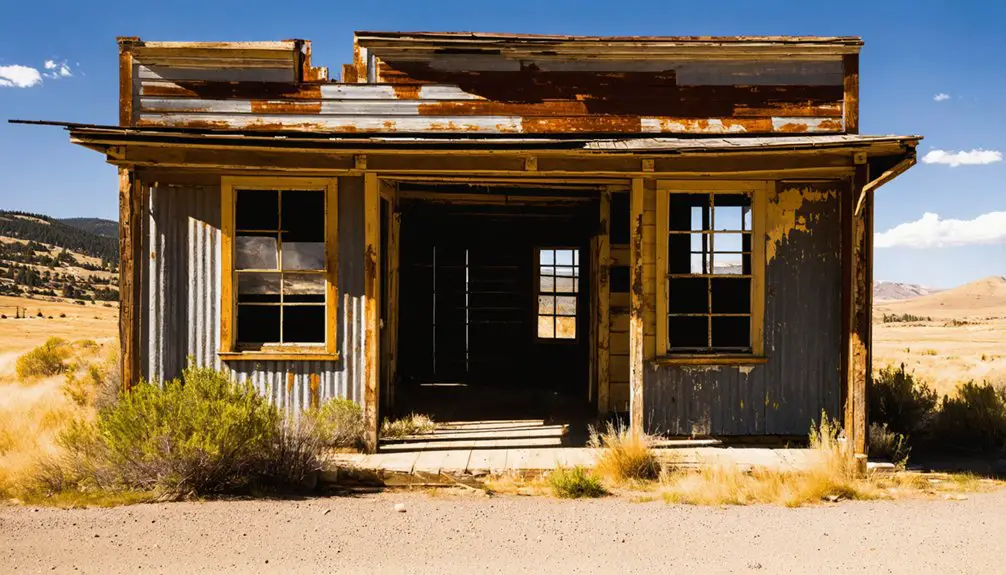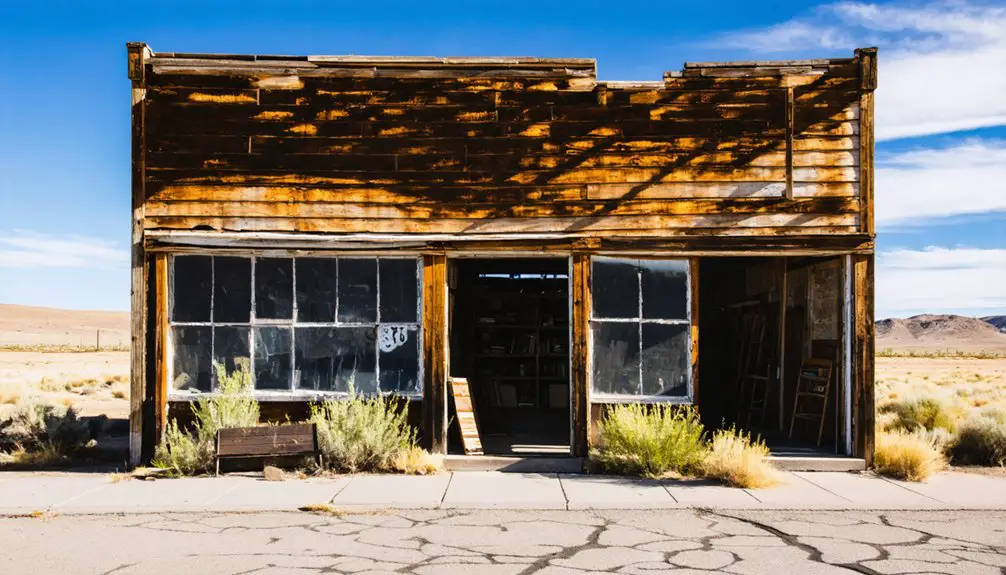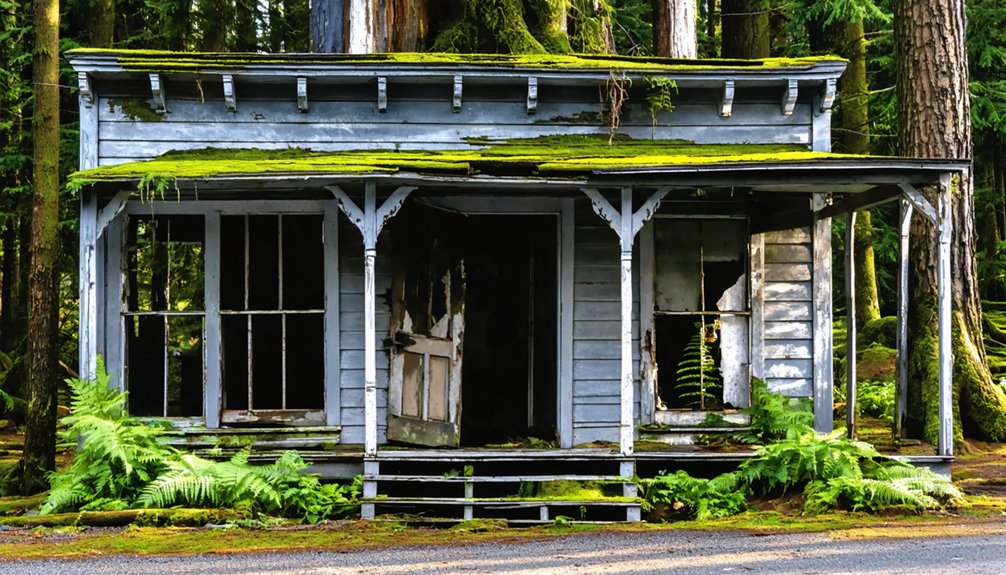
Oregon’s ghost towns like Bourne, Kent, and Greenhorn show you nature’s systematic erasure of 19th-century settlements once sustained by gold mining and timber. You’ll find pine forests consuming Bourne’s structures along Cracker Creek, while sagebrush reclaims Kent’s former rail hub. Economic collapse from resource exhaustion, transportation bypasses, and the Great Depression triggered these abandonments, allowing wildlife to establish new habitats where commerce once thrived. Winter snows now obscure what human ambition built, though preservation efforts at sites like Maxville and Golden work against this reclamation, offering insights into civilization’s temporal markers.
Key Takeaways
- Bayocean vanished due to ocean erosion, now managed by Tillamook County with trails marking the settlement’s absence.
- Mining towns like Bourne, Golden, and Greenhorn declined after resource exhaustion and wartime federal regulations halted operations.
- Shaniko collapsed when transportation routes bypassed the town, ending its once-thriving wool industry and economic relevance.
- Winter snow and creek waters obscure abandoned settlements, with wildlife thriving in former human habitats across Oregon.
- Accessible ghost towns include Bayocean’s 7.5-mile trail, valley-floor Buncom, and Granite’s Blue Mountains photography opportunities.
The Silent Return of Oregon’s Wilderness to Abandoned Settlements
This reclamation extends beyond flora.
Wildlife adaptation thrives where settlements failed—mist-shrouded Greenhorn creates habitats at 6,300 feet, while high desert landscapes conceal dozens of abandoned communities.
Winter snow buries evidence entirely, accessible only seasonally. Water completes nature’s erasure: Cracker Creek rushes through Bourne’s remnants, Bayocean disappeared beneath waves, and Champoeg vanished in 1861’s flood.
Nature’s forces—snow, water, time—methodically erase human ambition, reclaiming abandoned settlements and burying evidence beneath seasonal rhythms.
The land remembers what humans built—then quietly reclaims its sovereignty. Mining booms spawned most settlements, but exhausted veins and collapsing lumber operations left structures to decompose into Oregon’s soil. Automated scripts once monitored these remote locations for preservation purposes, but modern security measures now protect historical documentation from unauthorized digital access.
How Economic Shifts and Natural Disasters Created Forgotten Towns
When Oregon’s economic foundations crumbled, entire communities vanished within decades.
You’ll find these forgotten settlements where economic decline met nature’s fury, leaving behind only whispers of their former liveliness.
Four Forces That Erased Oregon’s Towns:
- Resource Exhaustion – Golden and Sumpter collapsed when gold deposits ran dry, their single-industry economies offering no fallback.
- Transportation Bypasses – Shaniko’s wool-shipping empire crumbled after new railways redirected commerce elsewhere, strangling crossroads-dependent businesses.
- The Great Depression – The 1933 Bowman-Hicks Lumber Company closure ended Maxville’s operations, while Waldport West’s depleted timber reserves combined with economic hardship forced mass exodus. Maxville once housed 400 residents during its peak years between 1924 and 1933.
- Natural Disasters – Storm-driven ocean erosion destroyed Bayocean’s natatorium and swept cabins seaward, accelerating natural reclamation. Bayocean, once marketed as the “Atlantic City of the West”, featured a hotel, bowling alley, and small railroad before succumbing to the sea.
Federal regulations and wartime resource redirection delivered final blows, transforming once-thriving settlements into wilderness.
Bourne and Kent: Forests Swallowing Oregon’s Mining Heritage
Seven miles north of Sumpter, where Cracker Creek winds through the Blue Mountains, Bourne represents Oregon’s quintessential pattern of extraction-based settlement and abandonment.
The early 1900s gold camp, once sustained by the Cracker Oregon Mine’s wealth, now surrenders to ecological forces. Trees thrust through collapsed roofs while vines grip porch railings—Bourne decay manifests in peeling paint, sagging beams, and scattered building remains along its main road. Several cabins in various states of decay still stand throughout the forest.
Kent’s transformation follows different geography but identical inevitability. This high desert rail hub, once busy with steam trains and grain storage, succumbs to Kent wilderness as sagebrush and juniper reclaim former human territory. Founded in 1887, the railway community peaked at 250 residents in 1905 before its inevitable decline into abandonment.
Both sites demonstrate nature’s patient supremacy: forests and desert equally efficient at erasing infrastructure once deemed permanent, leaving only weathered structures as proof of temporary human ambition.
Greenhorn’s High-Altitude Remnants Beneath Snow and Pine
At Oregon’s highest incorporated elevation, Greenhorn clings to existence at 6,306 feet where pine forestation blankets the Blue Mountain ridge between Baker and Grant counties.
You’ll find only two habitable structures remaining where 500 miners once sought fortune during the boom years of 1900-1915. Greenhorn history reveals a community that died when Federal Public Law 208 criminalized gold mining in 1942, though the post office had already shuttered in 1919.
Two weathered cabins stand sentinel where five hundred prospectors once carved wealth from stone, abandoned when wartime law ended the gold rush forever.
What remains of this mountain settlement:
- Zero permanent residents despite maintaining incorporated status
- No electrical or sewer infrastructure, forcing off-grid existence
- Seasonal access via Highway 7 when snow permits passage
- Remote buildings deteriorating beneath advancing pine forests
- The original bank building still stands among lodgepole pines and grassy underbrush
The wilderness reclaims what civilization briefly interrupted, swallowing wooden remnants into high-altitude obscurity. Most remarkably, the city jail was stolen overnight in June 1963 and transported to Canyon City, where it now resides at the Grant County Historical Museum.
Preservation Efforts Fighting Against Nature’s Patient Reclamation
While Greenhorn surrenders to wilderness without resistance, scattered advocates across Oregon deploy strategic interventions to arrest decay.
At Maxville, the Cultural Advocacy Coalition secured $750,000 from state coffers, enabling heritage easements that shield logging remnants from obliteration.
You’ll find bipartisan federal sponsors facilitating land transfers, transforming decaying railroad trestles into interpretive opportunities.
Tillamook County’s management of Bayocean demonstrates alternative preservation—memorializing absence itself through 7.5 miles of trails where ocean consumed the final structures decades ago. The site’s interpretive signs now mark where Potter’s ambitious development once promised luxury amenities including paved streets and a private railroad to eager investors.
Golden’s four buildings survive under heritage designation, protected from their surroundings’ patient encroachment.
These efforts channel community engagement into permanent safeguards: exhibits touring schools, graduate researchers documenting sites, traveling displays converting fragmented memories into cultural heritage before nature’s inexorable reclamation erases physical evidence entirely. The Oregon Historical Society contributes artifacts on loan to strengthen these preservation narratives across the state.
Visiting Oregon’s Most Accessible Nature-Claimed Ghost Towns
- Bayocean Peninsula – 7.5-mile Spit Loop with coastal exposure, reached via Tillamook gravel roads year-round.
- Buncom – Valley-floor site near Medford preserving three 1850s structures amid creek-shaded grounds.
- Granite – Blue Mountains location at 5,000 feet offering ghost town photography opportunities with summer general store access.
- Bourne – Pine canyon remnants along Cracker Creek requiring capable vehicles through forest roads.
Each destination presents documentation opportunities where human infrastructure yields to vegetative succession, creating temporal markers of civilization’s impermanence across Oregon’s diverse terrain.
Frequently Asked Questions
What Wildlife Species Have Moved Into Oregon’s Abandoned Ghost Towns?
Northern spotted owls, coyotes, and riparian bird species demonstrate wildlife adaptation as they colonize Oregon’s ghost towns. You’ll observe urban ecology principles transforming these sites into biodiversity corridors, where forests reclaim mining infrastructure across centuries.
Can Ghost Town Structures Be Legally Salvaged or Removed by Visitors?
Though abandoned structures might seem ownerless, you can’t legally salvage ghost town materials. Salvage laws require property owner consent, and visitor permissions don’t exist for historical sites. Unauthorized removal violates trespass statutes and preservation ordinances protecting Oregon’s heritage.
Are There Seasonal Differences in Nature’s Reclamation Speed Across Oregon?
Yes, you’ll observe distinct seasonal changes dramatically affect reclamation patterns—spring’s moisture accelerates growth, summer peaks vegetation expansion, fall disperses seeds, while winter’s freeze temporarily halts nature’s persistent advance across Oregon’s diverse elevations and climates.
Which Ghost Towns Pose the Greatest Safety Risks From Structural Decay?
Waldport West’s decaying timber structures pose extreme structural hazards from prolonged exposure and collapse risks. You’ll face deadly abandoned mine shafts, toxic contamination, and unstable buildings demanding strict safety precautions. Remote isolation compounds dangers across Oregon’s unmonitored ghost town sites.
How Do Property Rights Work in Partially Inhabited Ghost Towns?
Property ownership remains legally binding regardless of ghost town status. You’ll face legal implications if trespassing on private parcels. Historic abandonment doesn’t void deeds—original boundaries persist, protecting owners’ rights even in depopulated areas.
References
- https://traveloregon.com/things-to-do/culture-history/ghost-towns/secrets-oregons-ghost-towns/
- https://en.wikipedia.org/wiki/List_of_ghost_towns_in_Oregon
- https://corvallisadvocate.com/exploring-oregons-ghost-towns/
- https://everafterinthewoods.com/forgotten-ghost-towns-in-oregon-that-are-surprisingly-beautiful/
- https://www.visitoregon.com/oregon-ghost-towns/
- https://www.bbcearth.com/news/abandoned-places-reclaimed-by-nature
- https://www.pdxmonthly.com/travel-and-outdoors/2025/10/oregon-ghost-towns-history
- https://www.onlyinyourstate.com/trip-ideas/oregon/abandoned-and-reclaimed-by-nature-or
- https://www.youtube.com/watch?v=Ywx9DBDDLEM
- https://www.youtube.com/watch?v=GaS3xjrQ-_I