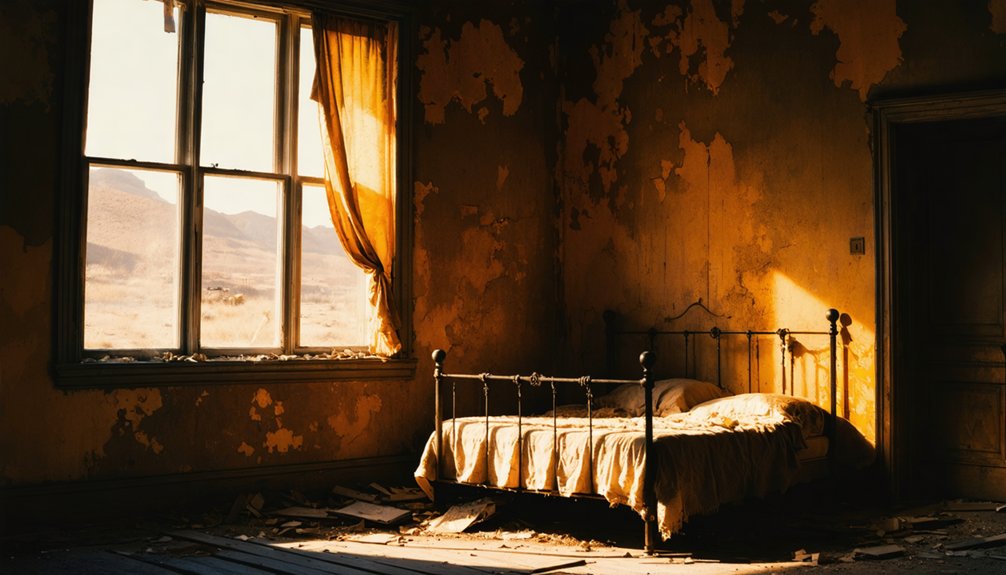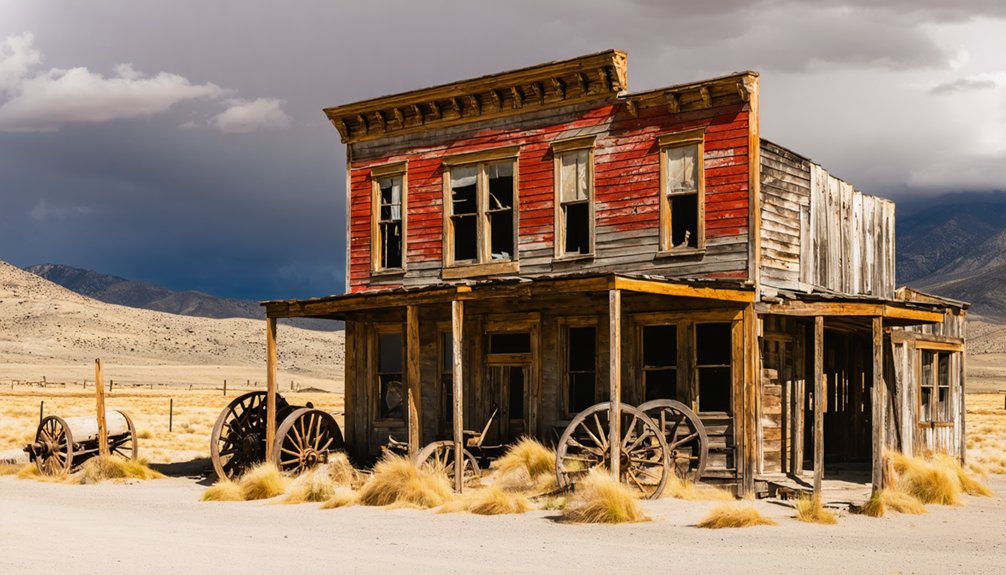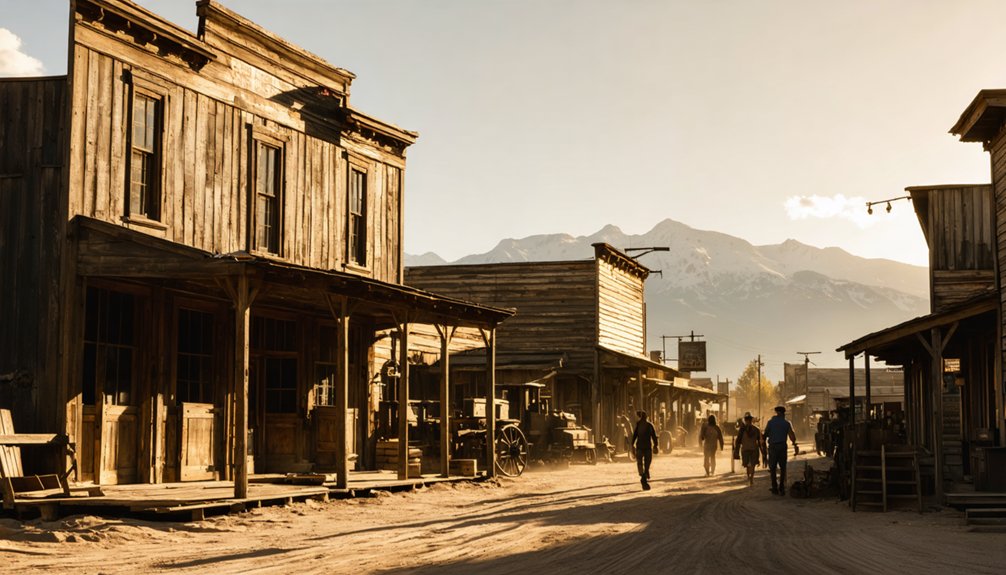
You’ll discover ghost towns like Bodie, California, where 200 wooden buildings freeze a gold rush era that produced $70 million, and Kolmanskop, Namibia, where desert sands swallow a diamond town complete with Africa’s first X-ray station. Calico Ghost Town welcomes families to explore 30 miles of silver mine tunnels, while Empire Mine’s 367 miles of shafts plunge 11,000 feet beneath California soil. Montana’s Bannack lets you walk barrier-free through 60 original structures, and there’s considerably more to each fascinating site.
Key Takeaways
- Bodie State Historic Park preserves nearly 200 wooden buildings from California’s 1859 gold rush, with intact relics and mining complexes.
- Kolmanskop’s abandoned diamond town features sand-filled buildings, offering visitors scenic desert erosion and historic German colonial architecture.
- Calico Ghost Town operates as a 480-acre park with restored silver mines, authentic shafts, and Old West experiences.
- Empire Mine State Historic Park showcases 367 miles of gold tunnels, preserved structures, and hosts 100,000 annual visitors.
- Bannack provides unrestricted access to 60 original structures, gold panning, and seasonal Ghost Walks along Montana’s backcountry route.
Bodie, California: A Preserved Gold Rush Mining Town
In 1859, a group of prospectors led by W.S. Bodey struck gold in California’s harsh Mono Basin, 8,379 feet above sea level. You’ll find their legacy preserved at Bodie State Historic Park, where nearly 200 wooden buildings stand frozen in time.
The town exploded from under 20 structures to over 2,000 by 1879, producing $38–$70 million in precious metals before the last mine closed in 1942. Between 1876 and 1882, the population exceeded 10,000, making it one of California’s most bustling mining communities.
Today, you’re free to explore authentic mining relics scattered throughout abandoned buildings—bottles, desks, and equipment left untouched. Historic preservation efforts maintain these structures in “arrested decay,” offering you an unvarnished glimpse into Gold Rush life. The town’s name serves as a disambiguation reference on Wiktionary, highlighting its significance as both a historical place and a surname.
Walk Main Street’s mile-long stretch, peer through saloon windows, and witness the Standard Mine complex that once yielded $15 million in gold.
Kolmanskop, Namibia: Where Desert Sands Reclaim Diamond Riches
When railway worker Zacharia Lewala spotted a glimmering stone along the tracks between Lüderitz and Keetmanshoop in April 1908, he couldn’t have imagined the frenzy he’d provoke. His superior August Stauch recognized the diamond, triggering a rush that transformed this remote Namib Desert location into Kolmanskop—one of Africa’s richest towns by 1911.
A chance discovery along desert railway tracks in 1908 sparked a diamond rush that built Africa’s wealthiest town within three years.
You’ll discover a settlement that once boasted electricity, a hospital, theatre, and even the southern hemisphere’s first X-ray station. The town’s residents enjoyed imported Viennese sausages and other luxuries that reflected the wealth pouring from the mines. A 1.5 MW power station in Lüderitz supplied electricity to support the extensive diamond mining operations.
After 5 million carats were extracted, larger reserves at Oranjemund sealed its fate. Mining ceased in 1950, residents departed by 1956, and sand erosion began its relentless takeover.
Today, Namdeb manages this ghost town where desert restoration displays nature’s power. You’ll wander freely through half-buried buildings, experiencing the surreal collision of German architecture and advancing dunes.
Calico Ghost Town: From Silver Strike to Family Theme Park
After a prospector’s pick struck lucky in the Calico Mountains in 1881, this barren stretch of California desert exploded into one of the West’s most prosperous silver camps. You’d have found over 3,000 fortune-seekers crowding twenty saloons, while 500 mines pulled $20 million in silver from thirty miles of tunnels beneath your boots.
When silver prices crashed from $1.31 to 63 cents by 1899, everyone vanished. The mining history nearly disappeared with them until Walter Knott—whose uncle grubstaked those original prospectors—bought the ruins in the 1950s. His preservation efforts restored the town to its 1880s glory before donating it as a regional park. The site now spans a 480-acre County Regional Park that welcomes visitors year-round.
Today you’ll explore authentic mine shafts and weathered storefronts at California’s official Silver Rush Ghost Town, where freedom-loving wanderers still chase Old West adventures. The town draws visitors from nationwide and globally who come to experience its preserved mining heritage and desert surroundings.
Empire Mine State Historic Park: California’s Golden Underground Legacy
While Calico’s silver veins ran dry within decades, another California mining operation dug deeper and lasted longer than almost any other. You’ll find Empire Mine’s incredible story at Grass Valley, where 367 miles of tunnels snake beneath your feet—some plunging nearly 11,000 feet down.
From 1850 to 1956, miners extracted 5.8 million ounces of gold here.
Today’s historic preservation efforts let you explore this mining heritage firsthand. Walk through the stunning Bourn Cottage, built from mine waste rock, or tour remaining underground passages. The operation relied on Pelton water wheels and steam-powered Cornish engines to extract ore from the depths.
The 853-acre park attracts 100,000 annual visitors who discover what real prospecting looked like—no sanitized theme park version. The workforce was predominantly Cornish miners, accounting for about 90% of employees who brought specialized expertise from their homeland. California State Parks purchased the property in 1974, ensuring these tunnels and buildings remain accessible rather than locked away.
Bannack, Montana: A Well-Preserved Western Ghost Town Experience
Unlike California’s polished historic parks, Bannack presents Montana’s mining past exactly as time left it—weathered, windswept, and wonderfully authentic.
When Montana’s first territorial capital was donated to the state in 1954, donors insisted on authentic preservation over restoration challenges that might create a tourist caricature.
You’ll discover freedom roaming 60 original structures along wooden sidewalks, no ropes blocking your exploration.
Hotel Meade, the old courthouse where vigilantes once dispensed frontier justice, stands open for investigation.
The Methodist Church, built in 1877, remains the only church standing in Bannack.
Make Your Visit Count:
- Try gold panning where prospectors sparked Montana’s 1862 rush
- Tour Hendricks Mill to understand mining operations
- Join October’s Ghost Walk for haunting tales after dark
The park welcomes visitors year-round with seasonal hours, from extended summer days lasting until 9 p.m. to winter’s cozier 5 p.m. closing time.
Access requires traversing Big Sheep Backcountry Byway‘s 50-mile dirt road—fitting preparation for experiencing history unvarnished.
Frequently Asked Questions
What Safety Precautions Should Visitors Take When Exploring Abandoned Ghost Town Structures?
When urban exploration calls, you’ll need sturdy boots, respirator masks, and a buddy system. Test floors before entering, watch for structural hazards like weakened beams, and always keep exit routes clear—your freedom depends on smart preparation.
Are Ghost Towns Accessible for Visitors With Mobility Limitations or Disabilities?
Accessibility varies widely—some ghost towns offer accessible pathways and disability accommodations, while others remain challenging with stairs and rough terrain. You’ll find BLM sites and Louisville tours prioritizing wheelchair access, though many remote locations still lack proper facilities.
Exploring abandoned sites in California can lead to fascinating discoveries, but it’s essential to plan ahead for accessibility. Many locations may feature remnants of history that are not easily navigable for those with mobility challenges. Considering the varying conditions, researching ahead can enhance your experience and ensure safety while uncovering the past.
What Is the Best Time of Year to Visit Ghost Towns?
You’ll find February’s 70°F sunshine at Calico perfect for capturing photography opportunities without crowds. For historical significance and wildflowers, visit Death Valley’s ghost towns late March through April. Fall’s golden October light enhances every abandoned structure beautifully.
Can Visitors Stay Overnight or Camp Near Ghost Town Locations?
You’ll find overnight options ranging from rustic cabins to RV hookups at many ghost towns. Some require camping permits, while others offer guided tours with lodging packages. Check individual sites beforehand, as availability and amenities vary widely across locations.
How Do Preservation Efforts Prevent Further Deterioration of Ghost Town Buildings?
Like archaeologists preserving Pompeii’s frozen moment, you’ll find restoration techniques stabilize ghost town structures through arrested decay—maintaining historical significance by preventing collapse while keeping authentic weathering, original artifacts, and time-worn character intact for your exploration.
Exploring abandoned places with historical significance offers a unique glimpse into the past, allowing visitors to connect deeply with stories etched into their walls. Each site reveals layers of history and culture that have been left behind, inviting curious minds to uncover the narratives that shaped them. As you wander through these remnants, the silence speaks volumes, echoing tales of lives once lived and dreams once dreamed.
References
- https://stephentravels.com/top5/ghost-towns/
- https://www.losethemap.com/scariest-ghost-towns-in-the-world/
- https://www.visitcalifornia.com/road-trips/ghost-towns/
- https://www.youtube.com/watch?v=3AkK0gKGmmg
- https://californiahighsierra.com/trips/explore-ghost-towns-of-the-high-sierra/
- https://blog.batchgeo.com/ghost-towns/
- https://capitolmuseum.ca.gov/state-symbols/gold-rush-ghost-town-bodie/
- https://en.wikipedia.org/wiki/Bodie
- https://www.monocounty.org/places-to-go/bodie/
- https://www.nps.gov/places/bodie-historic-district.htm?inline-read-more