You’ll find California’s most enthralling ghost towns scattered across 500 miles of desert and mountain terrain, from Bodie’s arrested-decay buildings frozen at 8,300 feet in the Sierra Nevada to Calico’s restored silver mining camp in the Mojave. Randsburg still hosts about 60 residents among its weathered storefronts, while Shasta’s 1861 courthouse stands sentinel over Gold Rush history. Each site offers authentic Western ruins, abandoned mine shafts, and that eerie silence where thousands once sought fortune—and there’s considerable strategy in timing your visits.
Key Takeaways
- Bodie State Historic Park features 110 preserved buildings in arrested decay, recognized as America’s best-preserved Gold Rush town and National Historic Landmark.
- Calico Ghost Town in Mojave Desert offers mine tours, gold panning, and seasonal festivals at California’s official Silver Rush site.
- Randsburg remains a living ghost town with 60 residents, preserved structures, and active prospecting opportunities without modern infrastructure.
- Shasta State Historic Park showcases Gold Rush history with an 1861 courthouse, jail cells, and authentic brick buildings from 1849.
- Malakoff Diggins displays dramatic hydraulic mining scars and geological cliffs, while Ballarat offers desert solitude with 1890s mining remnants.
Calico Ghost Town: Silver Mining Heritage Meets Family Entertainment
Nestled in the kaleidoscope-colored Calico Mountains of California’s Mojave Desert, this silver mining boomtown rose from the dust in 1881 when prospectors struck the state’s richest vein.
From barren desert to silver empire overnight—Calico’s 1881 boom birthed California’s richest mining legacy in the rainbow-hued Mojave wilderness.
You’ll walk through 500 mines that yielded $20 million in silver before the crash of ’96. Walter Knott’s 1950s historical preservation transformed this authentic ghost town into California’s official Silver Rush site—you’ll find restored 1880s buildings at 36600 Ghost Town Road, Yermo.
Descend 1,000 feet into Maggie Mine‘s illuminated drifts for $3.50, where blacklight minerals glow and mannequins demonstrate miners’ grueling conditions. The mine walkthrough culminates at the legendary “glory hole” where miners extracted $65,000 worth of silver from a single excavation point.
Your kids can pan for fool’s gold while you explore the Mystery Shack‘s gravitational oddities. Now part of the San Bernardino County Regional Parks system, the town draws visitors from across the nation and around the globe who come to experience its authentic Old West atmosphere. These family-friendly attractions run daily from 9 AM to 5 PM, blending authentic Western heritage with hands-on adventure.
Bodie State Historic Park: California’s Most Authentic Gold Rush Relic
High in California’s eastern Sierra Nevada, where winter winds howl across the sage-covered Mono Basin, Bodie State Historic Park stands frozen in 1942—the year its last residents abandoned their homes mid-task.
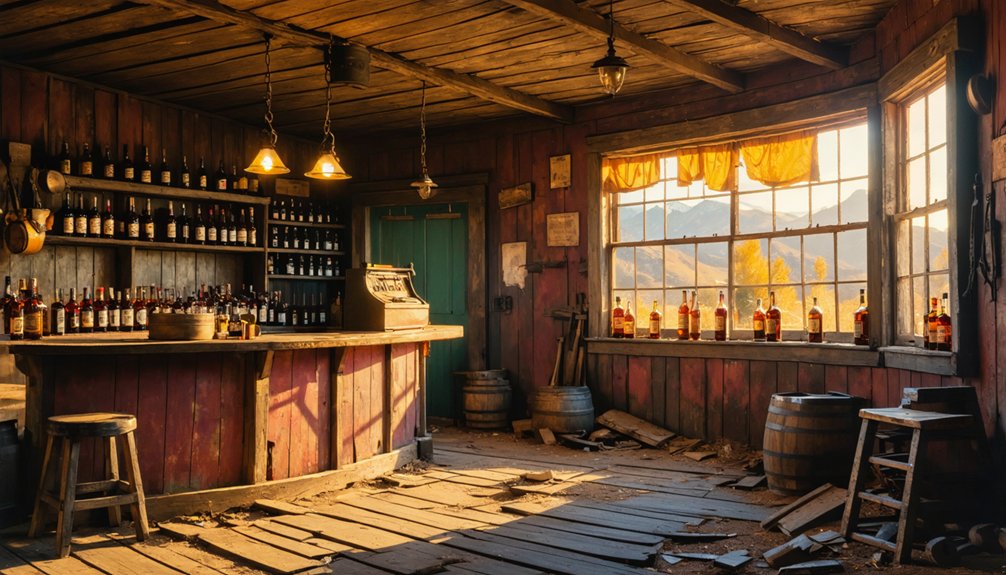
You’ll find 110 buildings preserved in “arrested decay”—dust-covered mercantile shelves still stocked, curtains hanging in empty parlors.
This mining history spans 1859 to 1942, when prospectors extracted $15 million from the Standard Mine alone.
At its 1879 peak, 10,000 fortune-seekers crowded 2,000 structures along Main Street’s 65 saloons.
The town’s notorious reputation for violence included frequent shootings, brawls, and dangerous lifestyles that earned it infamy throughout the American West.
Preservation efforts since 1962 maintain authenticity without restoration.
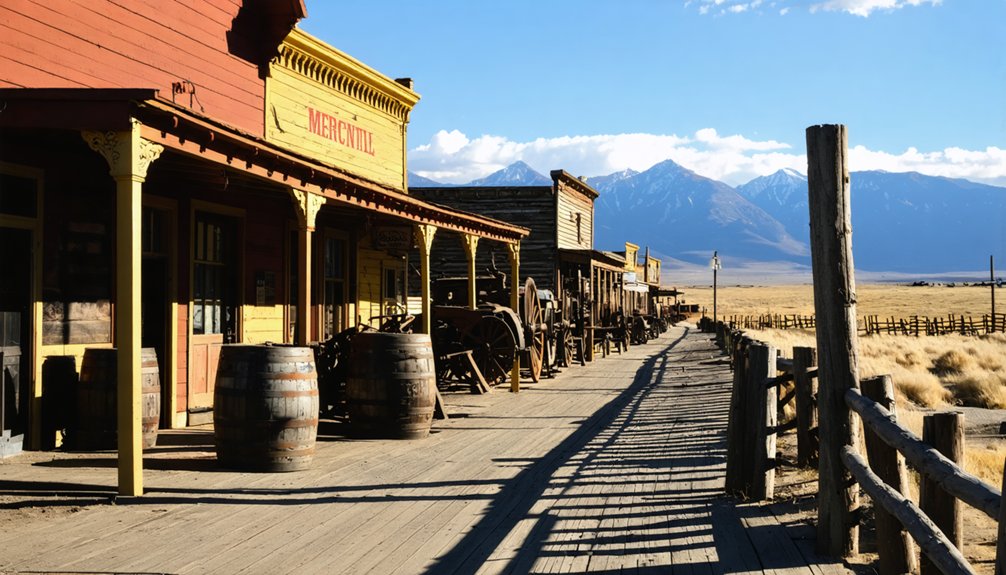
You’ll walk wooden sidewalks past the original Miners’ Union Hall (now the museum), peer through wavy glass into abandoned homes, and experience America’s best-preserved gold rush town.
The town traces its origins to prospector Waterman S. Body, who discovered gold in the hills north of Mono Lake.
About 200,000 annual visitors discover this National Historic Landmark’s raw, unvarnished reality.
Randsburg: A Living Ghost Town Still Breathing in the Mojave
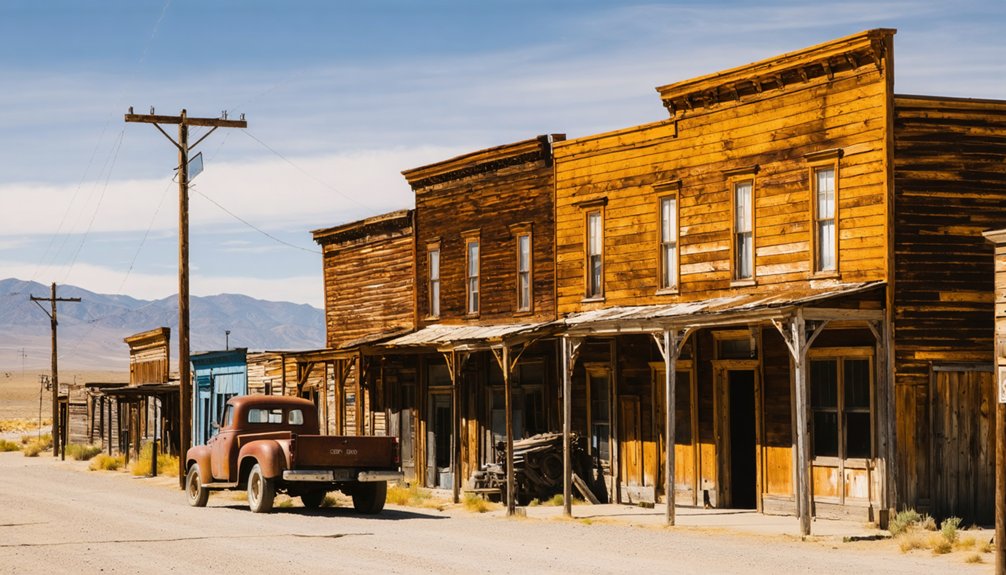
Unlike Bodie’s eerie silence, Randsburg pulses with stubborn life—a ghost town that refused to die. You’ll find around 60 souls clinging to this Mojave outpost at 3,523 feet, where mining history still echoes through dusty streets.
The Yellow Aster Mine pulled $25 million in gold from these hills between 1895 and 1933, fueling a boom that swelled the population to 3,500. The town spreads across several gulches, mainly Rand and Fiddler’s gulches, with its main section halfway up Rand Gulch.
Today’s preservation efforts maintain the weathered jail, the 1904 General Store slinging malts from its original soda fountain, and the White House Saloon drawing off-roaders seeking cold beer in authentic surroundings. The two-room jail structure features mannequins and historical papers that bring the mining era to life.
No stoplights. No gas stations. Just bottle trees standing sentinel and small-scale prospectors still working claims.
You can explore freely—hike, camp, maybe strike it rich yourself in this desert holdout.
Shasta State Historic Park: Where the Gold Country Journey Begins
When gold fever gripped California in 1849, fortune-seekers streaming up the Siskiyou Trail found their first real haven in Shasta—a canvas tent settlement that would transform into the “Queen City” of the northern mines.
You’ll discover this preserved architecture just six miles west of Redding, where brick buildings still stand defiant after fires consumed their wooden neighbors twice over.
Walk through the 1861 courthouse, where miners once faced frontier justice. Peer into cells that held outlaws, and explore the gallows that enforced quick verdicts.
The Blumb Bakery‘s brick oven demonstrates 1870s baking techniques, while the Ruins Trail reveals how the 1880s railroad bypass transformed 3,500 residents into whispers.
Local history comes alive here—grab Filipino-American fare at Shorty’s Eatery before exploring cemetery paths and stagecoach displays beneath ancient oaks. The Shasta Historical Society played a key role in restoring and dedicating this landmark, helping preserve its authentic Gold Rush character for future generations. Best of all, entrance is free, making this worthwhile stop along Highway 299 accessible to anyone seeking authentic Gold Rush history.
Malakoff Diggins State Historic Park: Hydraulic Mining’s Dramatic Legacy
Twenty-six miles northeast of Nevada City, you’ll stand at the edge of California’s most dramatic environmental crime scene—a carved-out mountain where water cannons once blasted away entire hillsides in humanity’s hunger for gold.
The North Bloomfield Gravel Mining Company’s hydraulic mining technology tore through rock at pressures strong enough to carve a pit 7,000 feet long and 600 feet deep between 1876 and 1884.
Their debris flows buried Marysville under 25 feet of mud, triggering America’s first federal environmental protection law.
Today’s environmental restoration efforts have softened the scars. You’ll hike past towering cliffs that expose the mountain’s geological layers, explore preserved North Bloomfield’s weathered buildings, and witness nature’s slow reclamation of this 3,143-acre monument to both human ambition and consequence. The park’s elevation ranges from 2,500 to 4,000 feet in the Sierra Nevada foothills, where pines, cedars, and oaks frame the dramatic mining landscape. The park’s 7,847-foot bedrock tunnel serves as both a historic drainage system and an accessible exhibit site where visitors can witness the scale of 19th-century engineering.
Ballarat Ghost Town: Desert Solitude Near Death Valley
At the base of the Panamint Mountains, where silence wraps around you like a physical presence, Ballarat’s sun-bleached buildings emerge from the desert floor as evidences to 1890s mining fever.
You’ll find vintage signage pointing to what once thrived—seven saloons serving 500 miners who pulled 15,000 tons of gold from Pleasant Canyon’s Radcliffe Mine between 1898 and 1903.
Today’s Ballarat exists as raw desert freedom. You can explore Shorty Harris’s cabin ruins, camp among tumbleweeds where winter gatherings draw 300 four-wheelers, or simply absorb the vastness.
The cinder-block general store stands as civilization’s last outpost, operated by a single resident. No crowds, no fees, no restrictions—just you, the abandoned railroad grades leading nowhere, and Post Office Springs still flowing after 170 years.
Planning Your California Ghost Town Road Trip
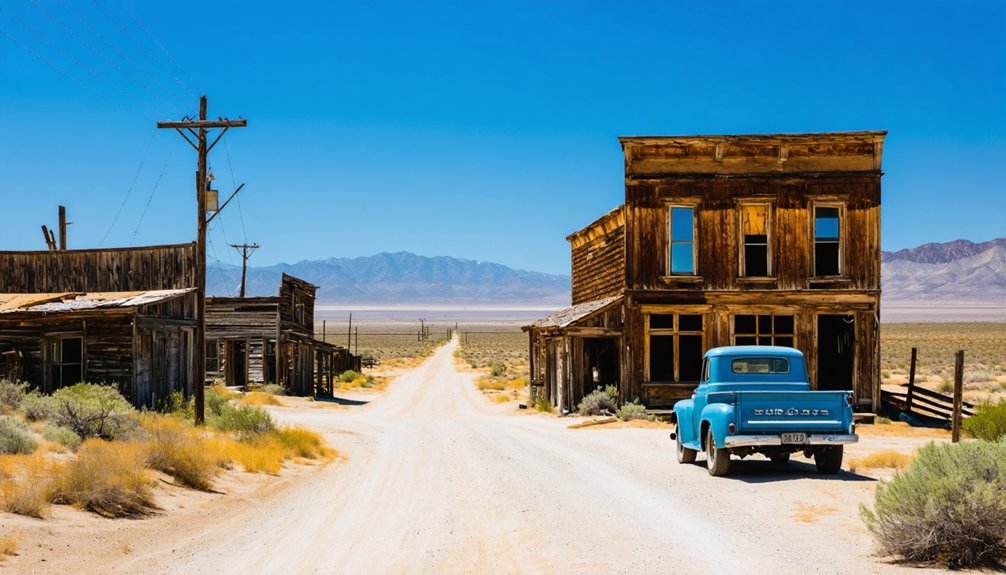
California’s ghost town circuit unfolds across 500 miles of dramatic elevation changes—from Shasta’s oak-studded foothills at 1,000 feet to Bodie’s wind-scoured plateau at 8,300 feet, then down through Yosemite’s alpine gateway at Bennettville before plunging into Mojave’s scorched basin where Calico bakes at sea level.
From mountain heights to desert depths—California’s ghost towns span 7,300 vertical feet of untamed frontier history.
You’ll need three to five days to explore the official nine-stop route properly. Start at Shasta State Historic Park, drive 20 miles to Weaverville, then push 196 miles to Bodie.
Pack your own provisions—Bodie offers potable water but no food concessions. In Randsburg, refuel at the General Store’s 1904 soda fountain. Bridgeport and Grass Valley provide overnight accommodations and local cuisine between remote sites.
Calico sits three hours from Los Angeles, making it an accessible entry point for desert exploration.
Best Times to Visit California’s Historic Ghost Towns
You’ll find California’s ghost towns transform dramatically with each season, from spring’s wildflower-dotted trails to fall’s Halloween-themed festivities at Calico.
As you explore these historical sites, be sure to check the california ghost town events schedule for unique experiences like guided tours and special reenactments. Each event offers a chance to delve deeper into the rich history and lore of the region. With activities for all ages, it’s the perfect opportunity to create lasting memories with family and friends.
I’ve learned the hard way that summer’s extended hours at Bodie come with scorching desert heat and bumper-to-bumper RVs, while winter’s peaceful solitude often means gambling on snow-blocked roads and 4 PM closures.
Your timing shapes everything—whether you’re steering through shoulder-to-shoulder crowds during peak season or enjoying a windswept, near-private tour of weather-beaten structures when most visitors stay home.
Seasonal Weather and Accessibility
When planning your ghost town adventure, timing can mean the difference between an easy drive and an impassable snow-blocked road at 8,375 feet elevation. Weather variations transform Bodie dramatically—summer brings the easiest access with mild days (though nights still dip to the 30s), while winter dumps 10 feet of snow and plunges to -29°F.
You’ll find fall offers stunning aspen colors and fewer crowds, perfect for exploring Old West ruins without summer’s tourist surge. Access challenges peak during spring’s treacherous mud season, where even four-wheel-drive rigs get stuck.
Winter limits you to skis, snowshoes, or snowmobiles on designated routes. No facilities exist year-round—pack everything you’ll need and check road conditions online before venturing out to this remote basin.
Special Events and Crowds
Beyond weather considerations, the human element shapes your ghost town experience just as dramatically. Calico transforms during festival weekends—Presidents Day brings Civil War reenactments, while Mother’s Day weekend fills with bluegrass music and cloggers.
October’s Ghost Haunt draws massive crowds seeking haunted attractions ($15 adults), with costume contests and carved pumpkins lining the streets.
You’ll find freedom in the quiet moments. Visit weekdays outside festival calendars, when ghost town legends whisper through empty buildings without competing gunfighter shows. Early mornings reveal Calico’s authentic character before tour buses arrive.
Skip the last October weekends if you’re avoiding Ghost Haunt throngs.
California Days in February pulls 4,300 visitors, transforming the desert into a living history lesson.
Choose your crowd level—festivals offer energy, but solitude reveals these towns’ true spirits.
What to Bring When Exploring Abandoned Mining Communities
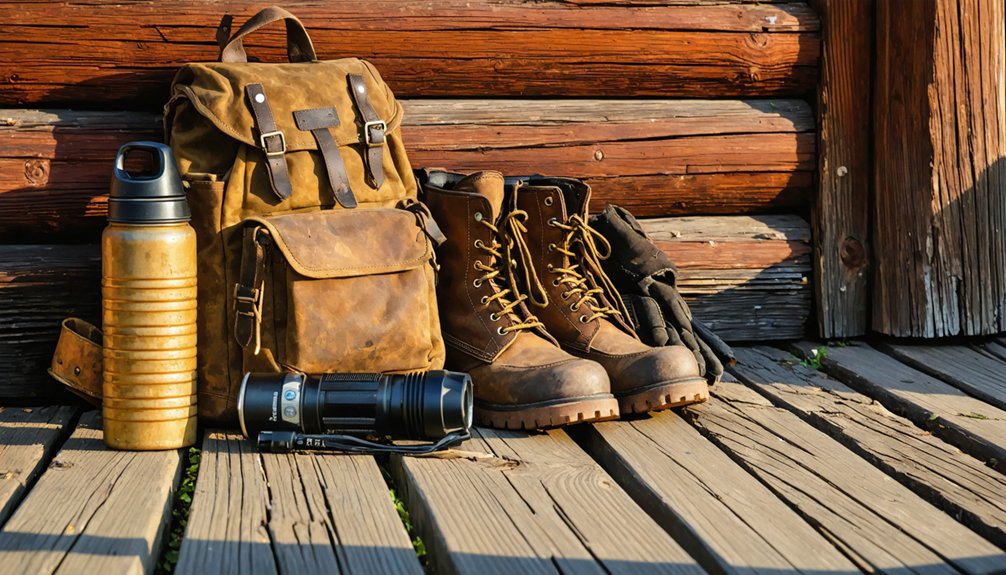
The high desert sun beats down mercilessly as you step from your vehicle onto the cracked earth surrounding a weathered mining camp. Within minutes, you’ll understand why preparation separates memorable adventures from dangerous ordeals.
Pack sturdy closed-toe boots for traversing rocky terrain and a headlamp for peering into dark adits where mining safety demands caution. Bring at least one gallon of water per person—dehydration strikes fast in Calico’s exposed landscape.
Your first-aid kit and dust mask aren’t optional luxuries; they’re essential mining safety gear for handling rusty artifacts and avoiding silica dust. High-visibility clothing and a personal locator beacon matter when cell signals vanish.
Remember preservation tips: pack out all trash and leave structures untouched. These ghost towns survived a century—your respect ensures they’ll endure another.
Photography Tips for Capturing Ghost Town Atmospheres
Focus your lens on interior details that tell stories: broken chairs frozen mid-collapse, medicine bottles gathering dust, rusted door handles that countless hands once touched. Wide-angle shots capture entire main streets.
While close-ups of peeling paint and fractured windows evoke sudden abandonment. Bring your tripod for those moody long exposures at dusk, when purple skies frame silhouetted structures.
Black-and-white conversions amplify the haunting atmosphere you’re chasing.
Frequently Asked Questions
Are Dogs Allowed at California Ghost Town Sites?
Like a prospector staking your claim, you’ll find freedom at California’s ghost towns with your furry partner. Dog policies welcome leashed pups at Calico and Bodie, though pet regulations restrict museum access. Clean up required, but trails stay open for exploration together.
Do Any Ghost Towns Offer Overnight Camping or Lodging Options?
You’ll find historic accommodations at Calico Ghost Town, where camping regulations allow RVs from $35-50/night and cabins at $75/night. Nearby options include Silva Ranch and Mountain Shadow Hideaway, offering tent sites with full hookups for your adventures.
Are Ghost Town Roads Accessible for RVS and Large Vehicles?
Road conditions vary dramatically—you’ll find everything from smooth graded routes perfect for your rig to severely washboarded tracks with vehicle restrictions. Always scout ahead; flash floods reshape access roads, turning yesterday’s easy drive into today’s impassable adventure.
Do I Need to Pay Entrance Fees at These Ghost Towns?
Like finding hidden treasure, most California ghost towns let you roam free without entrance fees. However, Calico and Bodie require tickets—adults pay $8, youth $5. Their entrance fee policies and ticket purchase process are straightforward at entry kiosks.
Are Guided Tours Available or Is Exploration Self-Guided Only?
You’ll find both guided tours and self exploration options at California’s ghost towns. Bodie offers staff-led walks through weathered buildings, while Calico features mine tours. Randsburg lets you roam freely, discovering rusty relics at your own pace.
References
- https://whimsysoul.com/must-see-california-ghost-towns-explore-forgotten-histories/
- https://www.visitcalifornia.com/road-trips/ghost-towns/
- https://www.tripadvisor.com/Attractions-g28926-Activities-c47-t14-California.html
- https://californiahighsierra.com/trips/explore-ghost-towns-of-the-high-sierra/
- https://tisqui.github.io
- https://www.geotab.com/ghost-towns/
- https://events.thehistorylist.com/organizations/calico-ghost-town-yermo-california
- https://californiathroughmylens.com/calico-ghost-town/
- https://en.wikipedia.org/wiki/Calico
- https://parks.sbcounty.gov/opinion-beyers-byways-a-brief-history-of-calico-ghost-town/