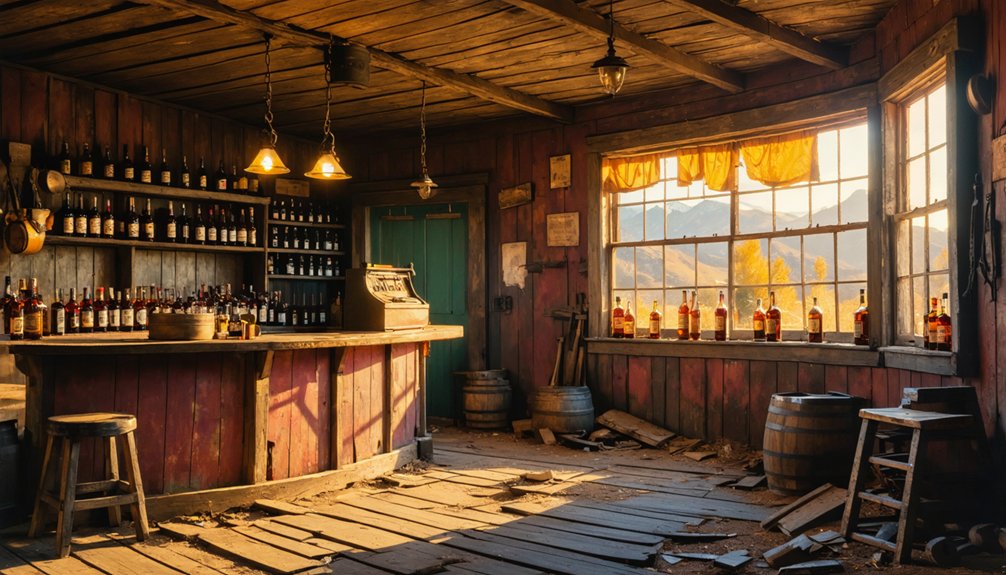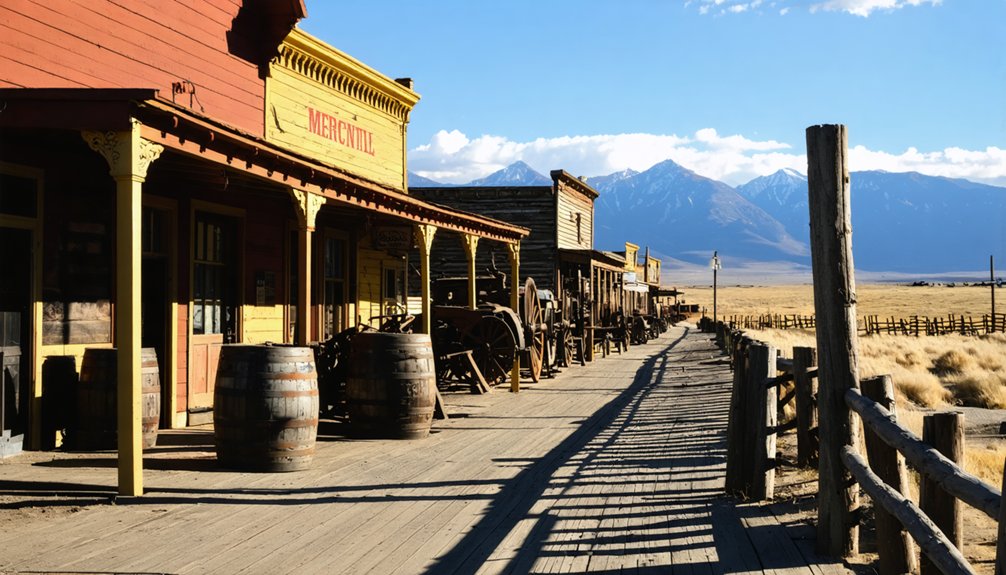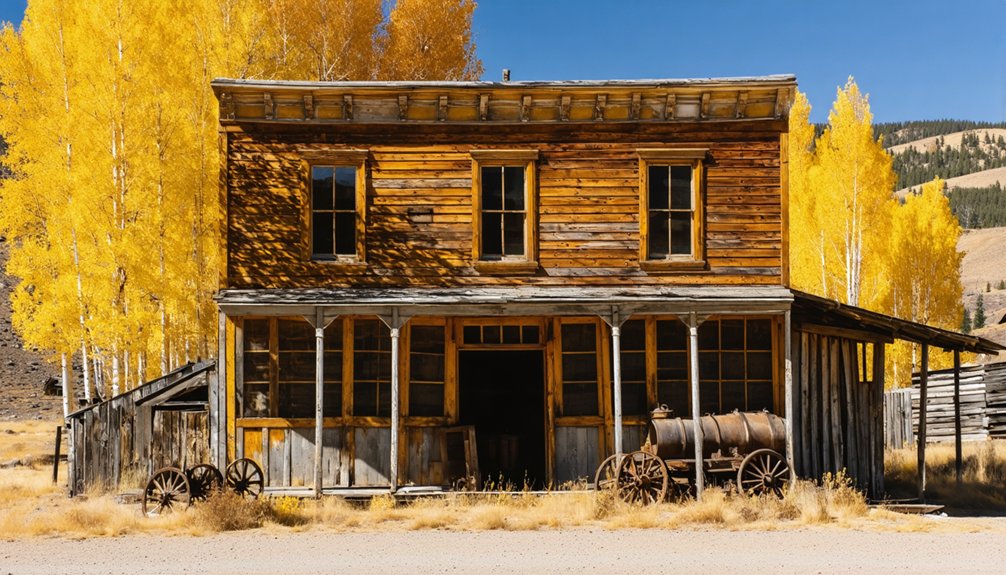
You’ll find California’s best ghost towns come alive in fall’s golden light, when October’s crisp air enhances the eerie atmosphere of abandoned structures. Bodie State Historic Park, perched at 8,400 feet with 110 weathered buildings, offers the most authentic experience through its “arrested decay” preservation. Calico Ghost Town transforms into a Wild West Halloween setting in the Mojave Desert, while Shasta State Historic Park showcases impressive brick architecture from the 1850s gold rush. Pack warm layers and sturdy boots—temperatures dip into the 30s at night, and you’ll discover why these sites reveal their secrets best before winter closes mountain passes.
Key Takeaways
- Bodie State Historic Park features 110 preserved buildings at 8,400 feet elevation with fall hours from 9 AM to 6 PM.
- Calico Ghost Town offers restored mining structures, fool’s gold panning, and Wild West Halloween atmosphere throughout October.
- Shasta State Historic Park showcases historic brick buildings, a restored 1861 courthouse, and bakery demonstrations near Redding.
- Fall provides ideal visiting conditions with golden light, comfortable temperatures, and accessible roads before winter snow closes mountain sites.
- Pack sturdy boots, warm layers, GPS navigation, and photography gear for remote locations with limited cell service and amenities.
Calico Ghost Town: California’s Silver Mining Legacy
The rusted remnants of California’s largest silver strike rise from the Mojave Desert floor like a monument to fortune and failure. You’ll find Calico perched at 2,283 feet in the San Bernardino County wilderness, where four prospectors sparked an 1881 rush that extracted $20 million in silver over twelve years. The town exploded to 3,000 souls before silver prices crashed in the mid-1890s, leaving it empty by 1907.
Today’s preservation efforts began when Walter Knott restored the site in the 1950s, saving five original structures. You can explore mining relics firsthand—descend 1,000 feet into Maggie Mine, pan for fool’s gold, or examine blacklight mineral displays. The site draws visitors from nationwide and globally, who come to experience the rich history and natural desert beauty of this authentic mining town. Plan your visit during 9 AM to 5 PM hours when the town is open, with adult admission at $8 and youth tickets at $5.
Governor Schwarzenegger proclaimed it California’s official Silver Rush Ghost Town in 2005.
Bodie State Historic Park: Frozen in Time
You’ll find California’s most authentic ghost town at 8,400 feet in the Eastern Sierra, where 110 weathered buildings stand exactly as their last residents left them in 1942. Walk through the Boone Store with canned goods still lining dusty shelves, peer into the bank vault that once held millions in gold, and explore the Miners’ Union Hall where fortune-seekers planned their futures.
As you venture further into the surrounding wilderness, you’ll stumble upon numerous abandoned towns in California, each with its own unique story of dreams deferred. These remnants of the past invite you to imagine the lives once filled with hope and ambition, now standing silent against the test of time. From crumbling storefronts to dilapidated homes, every structure serves as a poignant reminder of a bygone era, waiting for curious explorers to uncover their secrets.
Fall’s crisp mountain air and golden aspens create an otherworldly backdrop as you wander streets where 10,000 people once lived, worked, and chased dreams during the 1870s gold rush. The town’s preservation follows an “arrested decay” philosophy, maintaining structures and interiors in their abandoned state rather than restoring them to their original condition. Don’t miss the well-preserved church, where original pews remain accessible and the structure stands as one of the town’s most photographed landmarks.
Preserved Gold Rush Structures
When you round the final bend on the dusty road from Highway 395, Bodie materializes like a sepia-toned photograph come to life—weathered wooden buildings leaning slightly against the high desert wind, their paint long since stripped to bare gray planks.
You’ll wander among 110 authentic structures frozen in “arrested decay,” where preservation efforts resist restoration in favor of authenticity.
This isn’t manicured urban decay—it’s raw history. Peer through dusty windows at bottles still sitting on bars, ledgers open on desks, tools abandoned mid-project.
The Standard Stamp Mill, which churned $14 million in precious metals, dominates the skyline. Walk Main Street’s mile-long stretch past the barbershop, saloon, and Methodist church.
Fall visits offer comfortable temperatures and thinner crowds, with the park open daily from 9am to 6pm during this shoulder season before winter snows close the access road.
Rangers protect these relics fiercely; take only photographs of this 8,375-foot elevation time capsule. Plan to spend approximately 2 hours exploring the grounds to fully appreciate the site’s historical offerings.
Eastern Yosemite High Sierra
Perched at 8,375 feet on Bodie Bluff, thirteen miles east of Highway 395, this former boomtown endures where others crumbled—preserved not by restoration but by the very isolation that killed it.
You’ll navigate unpaved roads through Mono Basin’s high desert landscapes, where howling winds scour the plateau. The remote exploration rewards: 110 buildings frozen mid-abandonment, merchandise still stacked on shelves, furniture gathering dust exactly where residents left it in 1942.
Fall transforms this harsh environment. Summer’s crowds thin to nothing. The air sharpens. You’ll walk dirt streets where 10,000 souls once gambled, mined, and brawled. Main Street once stretched over a mile, densely packed with saloons, stores, and gambling dens that fueled Bodie’s reputation as the West’s toughest town.
The Standard Mine’s skeletal remains overlook sagebrush valleys stretching toward Mono Lake. No guided tours dictate your pace—just you, the wind, and 200,000 annual visitors who’ve discovered California’s most authentic ghost town. The name Bodie itself has multiple associations, from place names to surnames, reflecting the town’s enduring presence in California’s historical landscape.
Fall’s Eerie Atmosphere
As October’s first frost glazes the weathered boardwalks, Bodie sheds any pretense of being merely a historic site and becomes genuinely unsettling. You’ll feel the high desert’s howling winds cutting through abandoned streets where over 100 structures stand frozen mid-collapse.
The Boone Store’s shelves still hold century-old goods, dust-covered and untouched. Haunting legends swirl through the Miners’ Union Hall, now a museum echoing with ghosts of past gatherings.
Autumn atmospheric conditions—that crisp, thin air at 8,375 feet—intensify the eerie isolation. Occasional visitors report shadowy figures in doorways and unexplained sounds from empty buildings.
With 200,000 annual visitors, you won’t be completely alone, but Bodie’s “arrested decay” preservation means nothing’s sanitized for comfort. This former boomtown once housed nearly 10,000 residents during its 1876 gold rush peak before fire and decline left it abandoned. This is the Wild West exactly as it died.
Silver City Ghost Town: A Gold Rush Relic Near Lake Isabella
Tucked away in the small town of Bodfish near Lake Isabella’s southern shore, Silver City Ghost Town resurrects California’s gold rush legacy through a remarkable collection of salvaged buildings. You’ll explore over 20 historic preserved structures dating to 1858, relocated from seven abandoned mining camps including Keyesville and Whiskey Flat.
The Apalatea House stands as the Kern River Valley’s oldest surviving structure, while the original Isabella jail still displays shackles that once restrained gunslinger Newt Walker.
Mining relics surround you—ore carts, stamp mill equipment, and dusty artifacts maintained in “arrested decay.” You’ll wander through a Wells Fargo office, miners’ cabins, and weathered saloons without modern intrusions. The ghost town’s authentic structures and historic mining camps have made it a favorite destination for adventurers and documentarians seeking California’s hidden Old West history.
Open year-round for self-guided exploration, this roadside attraction lets you experience authentic frontier life where paranormal reports add spine-tingling intrigue to your fall adventure.
Shasta State Historic Park: Gateway to Mining History
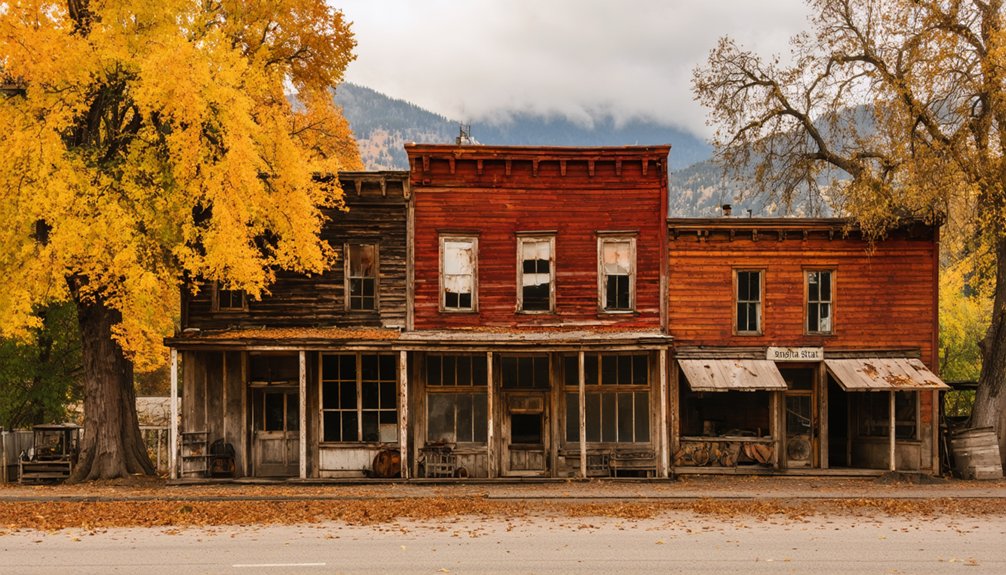
Six miles west of Redding along Highway 299, Shasta State Historic Park stands frozen in time. Over $2.5 million in gold once flowed through its streets during 1852 alone.
You’ll wander through half-ruined brick buildings with iron shutters still hanging on their hinges—fireproof fortresses built after devastating fires destroyed the town twice in 1852.
Fall’s cooler temperatures make exploring the ruins ideal. Your route includes:
- Mining relics at Pioneer Barn showcasing original stagecoaches and 1800s implements
- Historic architecture featuring California’s longest brick row north of San Francisco
Restored 1861 courthouse with gallows and working 1870s bakery oven.
Trails wind through cottage ruins toward the Catholic Cemetery, where gold rush pioneers rest beneath ancient oaks. Weekend bakery demonstrations at Blumb Bakery bring 1918 operations back to life.
Vallecito and Moaning Cavern: Where History Meets Mystery
While the Calaveras County town of Vallecito shares its name with a San Diego desert outpost, this Gold Country settlement carved its own legacy when the Murphy brothers struck gold along Coyote Creek in 1849. You’ll discover historical legends around every corner—from the 1859 fire that leveled the town to mining operations that made it the county’s second-largest producer by 1880.
Just down the road, Moaning Cavern beckons with California’s largest underground chamber. The Miwok once used it as sacred burial ground, adding layers to the area’s haunted legends. Fall’s crisp air makes exploring these sites ideal—you’ll escape summer’s heat while wandering through coyoteing pits and hydraulic mining remnants.
The freedom to roam both surface history and underground mysteries creates an unforgettable adventure.
Glen Alpine Springs: Tahoe’s Abandoned Resort
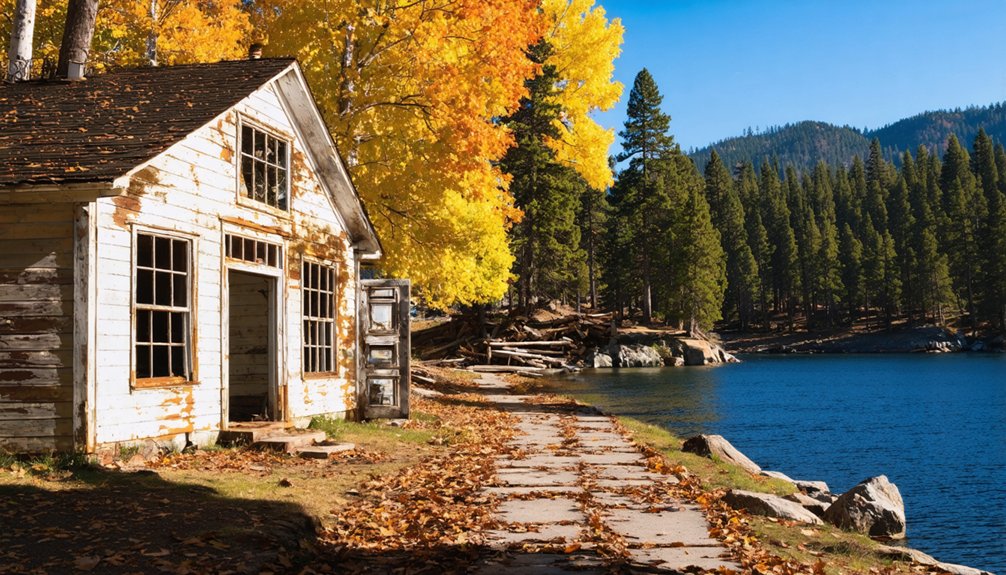
High in the Sierra Nevada, where pine-scented trails wind past crystal-clear Fallen Leaf Lake, the crumbling stone buildings of Glen Alpine Springs emerge like remnants of a forgotten dream.
This once-thriving health resort, where John Muir found inspiration in 1890, closed in 1966 after nearly a century of welcoming travelers seeking mountain solitude.
Your 2-mile hike reveals Bernard Maybeck’s 1920s architectural handiwork—six surviving structures that whisper stories of bottled spring water and grand alpine hospitality.
Historic preservation efforts maintain this authenticity, though vandalism scars remind you that some explorers don’t respect the past.
What You’ll Discover:
- Original soda springs still bubbling from the earth
- Educational programs during summer months
- Hiking experiences leading into Desolation Wilderness
Fall’s crisp air makes exploration ideal, rewarding your independent spirit with California’s last intact mountain resort.
Best Time to Explore California’s Ghost Towns in Fall
California’s ghost towns reveal their most dramatic character when October’s golden light slants across weathered boardwalks and autumn winds whistle through abandoned mine shafts. You’ll find daytime temperatures perfect for exploration—warm sunshine in the High Sierra and comfortable conditions in desert sites like Calico, where reduced heat lets you wander freely without summer’s scorching discomfort.
Early fall delivers the sweet spot: Bodie’s rusted machinery stands against brilliant seasonal foliage, while Calico’s Ghost Haunt transforms the mining town into a Wild West Halloween wonderland with costumed characters bringing local legends to life.
Crisp nights dip into the 30s, enhancing the spooky atmosphere without winter’s brutal freezes. Roads remain accessible before snow arrives, though you’ll want warm layers, sturdy boots, and provisions—these remote sites don’t offer modern conveniences.
What to Bring on Your Ghost Town Adventure
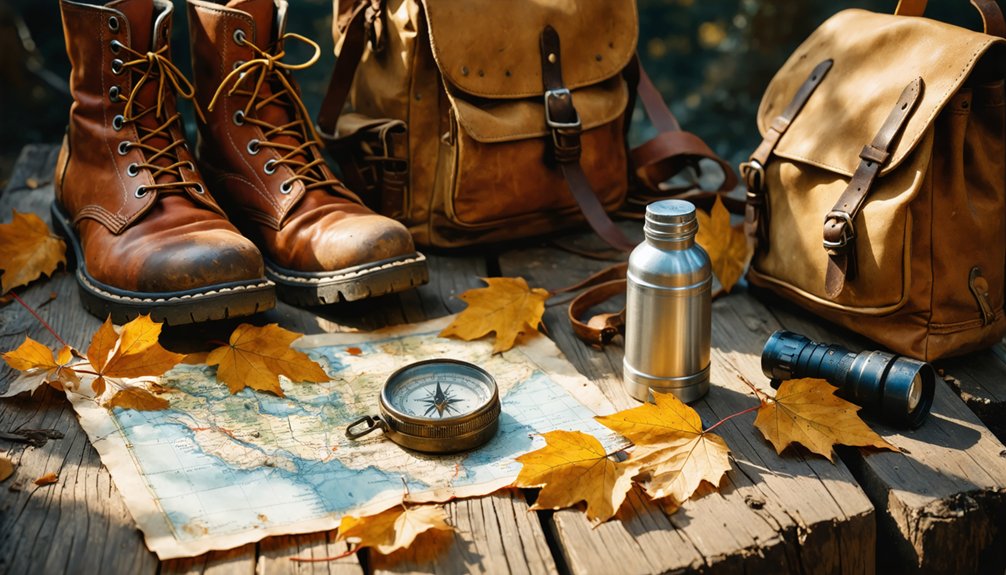
Since California’s ghost towns sit far from civilization, your survival kit matters as much as your camera. Pack sturdy hiking boots with ankle support—you’ll navigate crumbling foundations where historical preservation meets adventure.
In California’s ghost towns, your survival gear proves as critical as your camera when exploring abandoned ruins miles from help.
Temperatures at Bodie plunge to the 30s, demanding warm layers, gloves, and a wind-resistant jacket for white-out conditions.
Essential gear includes:
- Navigation tools: GPS devices and offline maps guide you through unmarked trails where cell service vanishes
- Hydration supplies: Carry 2+ liters per person—no services exist at remote sites
- Safety essentials: First-aid kit, flashlight for dim buildings, and emergency whistle
Bring photography techniques to life with proper lighting equipment for shadowy interiors.
Remember: no food or gas sold means planning ahead. Your freedom depends on self-reliance in these weathered landscapes.
Photography Tips for Capturing Abandoned Sites
When your boots crunch across Bodie’s weathered boardwalks, you’ll notice how morning light transforms rusted tin roofs into copper masterpieces—this interplay between decay and beauty demands technical precision from your camera. Pack a wide-angle lens for capturing entire saloons and weathered storefronts, then switch to prime glass for intimate shots of vintage textures—peeling paint, door handles, abandoned shoes.
Golden hour becomes your artistic partner; shadows cast by crumbling structures tell stories color photography can’t. Try long exposures as clouds drift over silent streets, or experiment with light painting to make darkened interiors glow mysteriously.
Black and white photography amplifies the eerie atmosphere of urban decay. Your tripod isn’t optional—it’s essential for stability when documenting these fragile remnants of California’s untamed past.
Planning Your California Ghost Town Road Trip
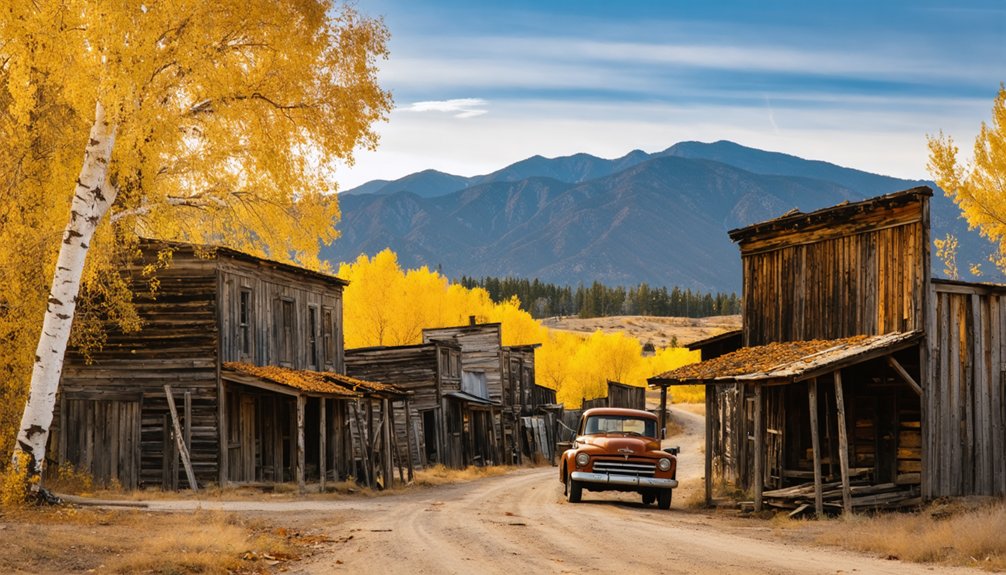
Your California ghost town adventure deserves more than spontaneous wandering—it requires strategic plotting across desert basins and mountain passes where cell service vanishes and gas stations become scarce.
Rent a car or RV to tackle multi-stop routes like the Visit California itinerary stretching from Shasta State Historic Park to Calico Ghost Town.
Highway 395 serves as your lifeline through Eastern Sierra territories, connecting Bodie’s haunted tales with Death Valley’s forgotten mining camps.
Essential route considerations:
- Stock provisions before remote sites—Bodie offers no concessions, only potable water
- Time your drives strategically—Ebbetts Pass Byway to Silver Mountain City takes 45 minutes from South Lake Tahoe
- Plot fuel stops carefully—desert stretches between Ballarat and Randsburg leave you vulnerable
Check road conditions for October Sierra passes, and prepare for urban legends whispered around crumbling saloons and abandoned mine shafts.
Frequently Asked Questions
Are Dogs Allowed at California Ghost Towns Besides Calico Railroad?
Yes, you’ll find dog-friendly policies at Bodie State Historic Park and Death Valley ghost towns. Keep your pup leashed on those dusty streets, and follow pet safety tips like bringing water for desert explorations together.
Which Ghost Towns Are Wheelchair Accessible for Visitors With Mobility Issues?
Calico’s main street offers the best wheelchair access with accessibility improvements underway, though mine tours remain challenging. Bodie has adaptive amenities like accessible parking and restrooms, but trails pose significant obstacles. You’ll find fewer barriers at Calico overall.
Can You Camp Overnight Near Any of These Ghost Town Locations?
You’ll find over 100 camping spots at Calico alone! Yes, you can camp overnight at multiple ghost town locations. Just secure camping permits beforehand and take safety precautions against flash floods, especially when boondocking on BLM land near Ballarat.
Are Guided Tours Available or Are All Ghost Towns Self-Guided Only?
You’ll find both guided tour options and self-guided exploration available. Bodie offers structured walking tours with knowledgeable guides, while places like Calico blend both experiences. Some remote towns let you wander freely, discovering history at your own pace.
Do Any Ghost Towns Offer Discounts for Seniors or Military Personnel?
Calico Ghost Town offers military discount availability on tours and attractions, plus senior discount policies for weekday RV camping. You’ll save $10 nightly Sunday-Thursday with valid ID—perfect for extending your off-grid adventures without breaking the bank.
References
- https://jjandthebug.com/california-in-fall/
- https://nvtami.com/2022/10/18/top-10-ghost-towns-to-visit-this-fall/
- https://www.visitcalifornia.com/road-trips/ghost-towns/
- https://www.youtube.com/watch?v=3AkK0gKGmmg
- https://californiathroughmylens.com/calico-ghost-town/
- https://calicoattractions.com
- https://californiahighsierra.com/trips/explore-ghost-towns-of-the-high-sierra/
- https://www.tripadvisor.com/Attractions-g28926-Activities-c47-t14-California.html
- https://events.thehistorylist.com/organizations/calico-ghost-town-yermo-california
- https://capitolmuseum.ca.gov/state-symbols/silver-rush-ghost-town-calico/