You’ll find Florida’s most intriguing ghost towns—Fort Dade on Egmont Key, Eldora within Canaveral National Seashore, and Ellaville along the Suwannee River—become genuinely accessible during fall when September through November temperatures drop and humidity finally relents. These abandoned settlements, ranging from military outposts to failed agricultural communities like hurricane-destroyed Okeelanta, offer atmospheric exploration without summer’s brutal heat. Fall’s cooler mornings provide ideal conditions for traversing overgrown ruins, crumbling foundations, and forgotten cemeteries while minimizing wildlife encounters that plague warmer months, and there’s essential preparation you’ll need before venturing into these remote locations.
Key Takeaways
- Fort Dade on Egmont Key features brick roads, hospital ruins, and Tampa Bay’s oldest lighthouse from its WWI-era peak population.
- Eldora in Canaveral National Seashore preserves historic structures including Eldora House, schoolhouse, and Mystery Well from its citrus-era past.
- Ellaville along Suwannee River contains Drew’s mansion foundations, mill equipment, and the 1925 Hillman Bridge from its lumber empire days.
- Fall offers cooler temperatures, lower humidity, optimal lighting for photography, and fewer crowds at Florida’s ghost town sites.
- Essential gear includes sturdy boots, GPS devices, insect repellent, first aid kits, and water for safe exploration of remote locations.
Fort Dade: A Military Outpost Frozen in Time on Egmont Key
When did Florida’s coastal defenses shift from bustling military installations to haunting ruins reclaimed by salt air and sea grapes? You’ll find the answer at Fort Dade on Egmont Key, where military strategy once dictated Tampa Bay’s protection during the Spanish-American War.
Built in 1898 and completed in 1906, this coastal defense outpost swelled to 600 residents during WWI. It featured brick roads, a hospital, and even a bowling alley.
At its peak, Fort Dade housed 600 souls complete with brick streets, medical facilities, and recreational amenities befitting a self-contained military community.
The fort’s strategic minefield stretched to Mullet Key, guarding against naval threats. But by 1923, advancing battleship technology rendered these fortifications obsolete.
A devastating 1921 hurricane sealed its fate. Before its military era, the island served as a prison camp for Seminole prisoners in the late 1850s, who were transported to Oklahoma following the Indian Removal Act. A 1848 lighthouse stands as the oldest structure still in use for its original purpose in Tampa Bay, maintained by the U.S. Coast Guard at the island’s north end. Today, you’ll walk among crumbling barracks and artillery batteries—accessible only by boat—where autumn’s cooler temperatures make exploration comfortable.
Eldora: The Citrus Town That Couldn’t Survive the Big Freeze
While military fortifications crumbled on Florida’s Gulf Coast, a different kind of defeat was unfolding along the state’s eastern shores. You’ll find Eldora’s story within Canaveral National Seashore, where historical architecture tells of prosperity turned to abandonment. Named for George Pitzer’s daughters, this citrus hub thrived until nature struck mercilessly.
The town’s downfall came swiftly:
- The Great Freeze of 1894-1895 destroyed citrus groves that anchored the economy.
- Railroad bypassed Eldora for Edgewater, severing crucial trade connections.
- Hurricane followed frost, devastating already-struggling settlers.
Before roads and rail lines dominated transportation, shallow draft steamboats carried goods and people through the waterways to serve Florida’s interior development. You can explore the 1877 Eldora House and schoolhouse today, where community stories echo through restored rooms. The audio tour reveals how treasure hunters, beekeepers, and farmers built dreams here—only to watch them freeze solid in Florida’s unforgiving winter. Near the Eldora House sits the enigmatic Mystery Well, which puzzles visitors with its impractical depth far below the regional water table.
Ellaville: North Florida’s Forgotten Company Town
You’ll find Ellaville’s story tucked along the Suwannee River in Madison County, where George Franklin Drew’s lumber empire once employed 500 workers and powered eleven mills through the 1870s boom.
The company town’s prosperity vanished when yellow pine reserves dried up, followed by devastating floods and the 1898 sawmill fire that sealed its fate.
Today, fall’s cooler temperatures make it easier to explore the overgrown ruins where Drew’s two-story mansion foundations and scattered mill equipment still mark North Florida’s most ambitious industrial ghost town. Drew had earned the nickname “Millionaire Drew” within just 15 years of establishing his sawmill operation. The abandoned Hillman Bridge, once a vital crossing point, has stood unused since 1986, offering visitors scenic overlooks of the river’s limestone banks.
Industrial Rise and Fall
Deep in the pine forests along the Suwannee River’s western banks, George Franklin Drew established Ellaville in 1861, naming the settlement after his devoted servant Ella.
The Drew-Bucki Lumber Company transformed this wilderness outpost into Florida’s largest sawmill operation, employing 500 workers and controlling 90,000 acres of timberlands.
Industrial heritage milestones:
- Peak prosperity (1870s) – 1,000 residents, Florida Railroad access, lumberyards in New York City
- Drew’s economic legacy – $35,000 cotton settlement funded expansion; became Florida’s wealthiest post-Civil War businessman
- Inevitable collapse – 1898 mill fire, exhausted timber resources, devastating floods, Depression-era closure
You’ll discover how Drew parlayed timber wealth into Florida’s governorship before watching his empire crumble. Drew’s magnificent mansion featured oak floors, a mahogany staircase, and marble fireplaces, standing as one of Florida’s first homes with electricity and indoor plumbing. Construction of the estate began in 1868, complete with formal gardens that reflected the governor’s aristocratic ambitions. The post office’s 1942 closure marked Ellaville’s transformation from industrial powerhouse to forgotten wilderness.
Exploring the Ruins Today
Today’s Ellaville exists as scattered foundations and rusted steel where lumber barons once ruled North Florida’s timber empire. You’ll find the Hillman Bridge standing as your gateway to this riverside ghost town, its 1925 structure spanning the Suwannee near the Withlacoochee confluence.
Trek through overgrown paths to discover crumbled building shells stripped bare by vandals—windows, hardware, and fireplaces long gone. The Drew Mansion’s site reveals only charred remnants after flames consumed it in the 1970s, despite state preservation attempts. Among the ruins, you’ll encounter a large brick cistern that once provided water storage for the settlement, its deep interior still showcasing the detailed brickwork construction from over a century ago.
Local legends speak of the town’s rapid decline and rumored mineral deposits that never materialized. Founded in 1861 by George Franklin Drew, who later became Florida’s governor, the settlement once thrived as a company town where his sawmill employed hundreds of workers. Fall’s mild weather and vibrant foliage create ideal conditions for wandering these ruins on foot.
Where railroad remnants and river views frame your exploration of Madison County‘s most atmospheric abandoned settlement.
Okeelanta: Where the Everglades Reclaimed a Failed Settlement
Between South Bay and the vast Everglades, the ghost town of Okeelanta tells a cautionary tale of ambition meeting unforgiving nature. Founded in 1913 by Thomas Will, this planned agricultural community once housed 200 residents before the 1928 Okeechobee Hurricane sent a ten-foot wall of water through town, ending its rustic history forever.
Today’s explorers discover abandoned landscapes where sugarcane has replaced failed dreams:
- Junction Discovery: Find the site at US Route 27 and County Route 827, marked only by endless cane fields.
- Memorial Recognition: Follow the Thomas E. Will Memorial Highway south from South Bay.
- Industrial Echo: Spot the nearby Okeelanta sugar refinery, still bearing the town’s name.
You’ll roam 2WD-accessible roads through agricultural vastness, where the Everglades ultimately reclaimed what settlers couldn’t hold.
Hopewell: Hillsborough County’s Eerie Reminder of Boom and Bust
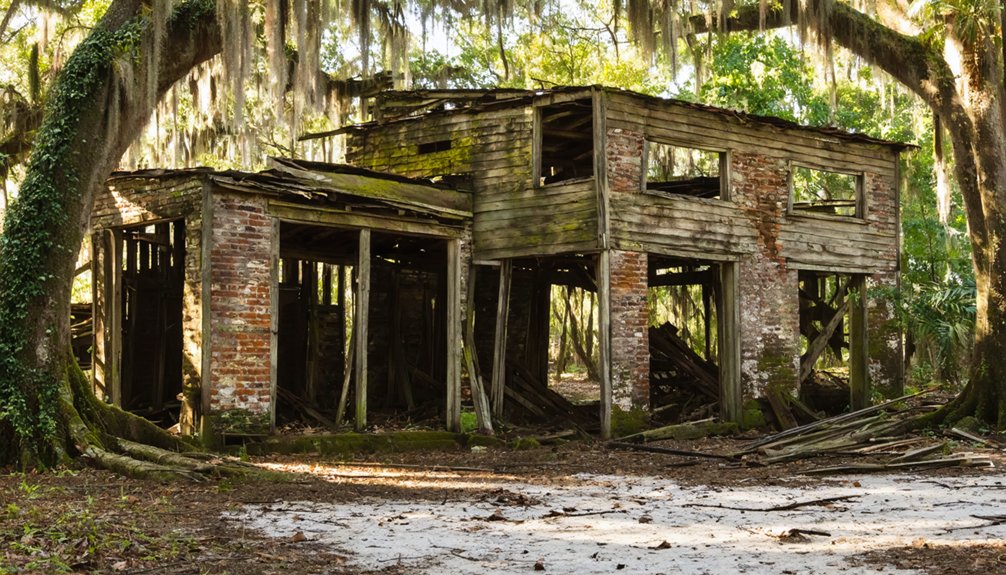
You’ll find Hopewell just south of State Road 60 in Hillsborough County, where phosphate mining and citrus groves once promised prosperity before economic collapse left behind scattered cracker homesteads and an 1897 Baptist church.
Fall’s cooler temperatures make exploring this ghost town ideal—summer heat would make trudging between the surviving McDonald House, Hull House, and historic cemetery uncomfortable.
The abandoned phosphate pits and orange grove remnants tell a familiar Florida story of boom-and-bust cycles that transformed a thriving agricultural community into one of the state’s most accessible ghost towns.
Economic Rise and Fall
Before the phosphate pits flooded and the railroad tracks disappeared into palmetto scrub, Hopewell thrived as one of Hillsborough County’s most promising settlements. The 1890s railroad transformed this former plantation into an industrial hub, hauling timber that eventually gave way to citrus groves stretching beneath those gigantic oaks.
Hopewell’s economic trajectory followed three distinct phases:
- Timber dominance (1890s-1900s) – Warnell Lumber’s railroad brought prosperity and demographic shifts as workers flooded in.
- Agricultural shift (1900s-1930s) – Land reclamation converted clearcuts into profitable citrus operations.
- Mining boom (1940s) – Coronet’s phosphate extraction promised renewal before operations moved to Polk County.
What Remains Today
Today’s Hopewell looks nothing like the bustling industrial center that once shipped timber and phosphate across Florida. You’ll find orange groves stretching where rail lines once carried lumber and mining equipment.
At the heart of this quiet settlement stands Hopewell Baptist Church, its 1955 steeple visible from State Road 39, marking the community’s spiritual center since 1876.
Historical preservation efforts have maintained the McDonald House and Hull House, while the church cemetery tells stories through weathered markers bearing pioneer surnames—McDonald, Hull, Wiggin, and Cassels.
Descendants still call this place home, protecting their community heritage beneath those same spreading oaks.
Abandoned phosphate pits scar the landscape, eerie reminders of extraction’s temporary prosperity.
It’s accessible history without crowds, perfect for fall exploration.
Best Visiting Times
Fall transforms Hopewell into an ideal ghost town destination, delivering comfortable temperatures and clear skies that make exploring this phantom settlement far more pleasant than enduring Central Florida’s sweltering summers.
You’ll appreciate accessing this historical preservation site year-round via 2WD roads from Tampa, though autumn’s mild weather creates the perfect backdrop for seasonal photography among the cemetery headstones and church grounds.
Optimal visiting conditions include:
- Cooler fall temperatures that eliminate oppressive heat while you explore the Baptist church and surrounding citrus groves
- Reduced humidity and mosquito activity during Florida’s dry season, making cemetery walks comfortable
- Enhanced atmospheric lighting through oak canopies that captures Hopewell’s eerie character without summer thunderstorms
Winter and spring offer similar advantages, but fall’s harvest timing adds contextual depth to understanding this boom-and-bust settlement.
Kerr City: A Haunting Portal to Florida’s Abandoned Past
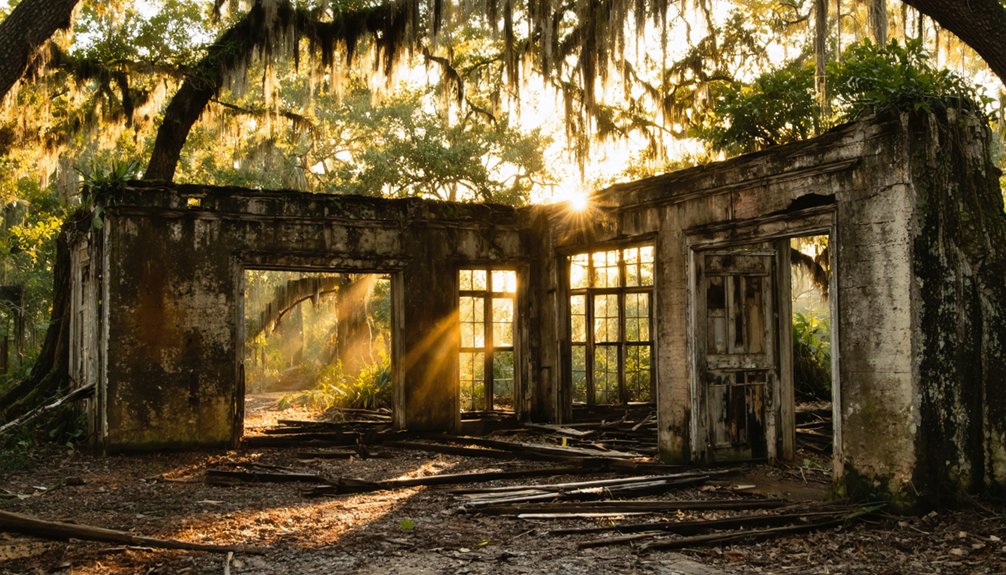
Deep in Marion County’s backwoods, where Spanish moss drapes from ancient oaks and morning fog clings to forgotten pathways, Kerr City stands as Florida’s most intact ghost town—a complete 19th-century settlement frozen at the moment of its collapse.
Founded in 1884 along a stagecoach route, this privately-owned settlement preserves fourteen original structures showcasing authentic historical architecture from the citrus boom era.
You’ll discover double-pen Florida Cracker cabins with central dogtrot designs, rusting bed frames, and weathered porches that transported goods between the St. Johns River and Ocala.
The 1894-1895 Great Freeze devastated citrus crops overnight, abandoning this once-thriving community of 100 residents.
Today, cemetery stories echo through remaining buildings, while volunteer caretakers battle forest overgrowth.
Remember: you’ll need landowner permission before exploring this National Register site.
Best Times to Visit Florida Ghost Towns During Fall Season
When September arrives in the Sunshine State, ghost town exploration transforms from a sweltering endurance test to an atmospheric adventure. You’ll find mildest temperatures between September and early November, perfect for wandering historic ruin preservation sites without battling Florida’s notorious summer heat.
The cooling trend across the Forgotten Coast creates ideal conditions for ghost town ghost stories to come alive.
Optimal visiting windows:
- Midweek late September – shortest lines at attractions, fewer crowds at remote sites, and monarch butterflies filling Franklin County skies.
- Mid-October weekends – catch Cedar Key Seafood Festival (October 18-19) while exploring nearby abandoned settlements.
- Early November mornings – low-angle sunlight dramatically illuminates weathered structures, plus McIntosh 1890s Festival first weekend.
Post-hurricane season means uncrowded beaches and lodging throughout the Forgotten Coast, giving you unrestricted access to Florida’s most atmospheric ruins.
What to Bring When Exploring Florida’s Abandoned Settlements
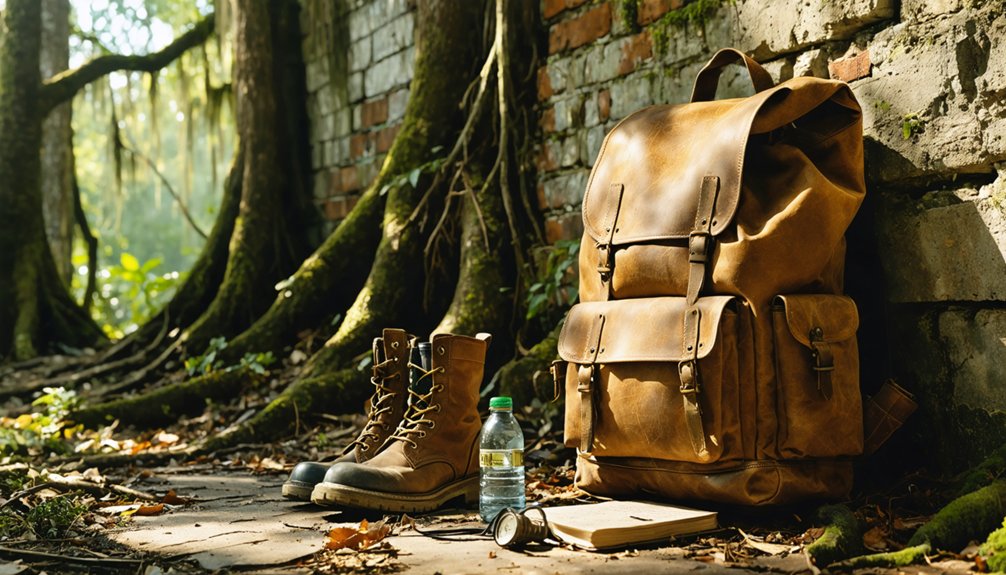
Before you step into Florida’s crumbling settlements this fall, you’ll need specialized gear that differs drastically from typical beach vacation packing. Long pants, sturdy boots, and thick gloves protect against thorns and rusted metal at sites with archaeological significance.
Pack a GPS device with offline maps plus a compass—cell signals fail in remote Everglades ruins.
Your first aid kit should include snake bite supplies and DEET repellent for mosquito-heavy wetlands.
Bring a camera and notebook to document structures without disturbing their historical preservation.
A headlamp illuminates dark interiors at abandoned mills and forts.
Always carry water, sunscreen, and emergency supplies for isolated locations.
Include property permission letters and park passes—respecting access rules protects these vulnerable sites while maintaining your freedom to explore responsibly.
Safety Tips for Ghost Town Adventures in the Wilderness
Florida’s wilderness ghost towns present unique hazards that demand thorough preparation beyond standard hiking precautions. Fall’s cooler temperatures make exploration more comfortable, but wildlife remains active throughout the season.
Wildlife safety essentials for Florida’s backcountry:
- Make noise consistently – Talk loudly or use a bear bell to alert wildlife, especially around blind corners and dense palmetto thickets
- Travel with companions – using the buddy system for immediate assistance if encounters occur
- Research local activity beforehand through ranger stations to identify recent sightings of alligators, wild hogs, or venomous snakes
Your gear recommendations include sturdy boots for uneven terrain, long sleeves for protection against saw palmettos, GPS devices since cell signals fade, and emergency supplies including extra water and signaling equipment for unexpected situations.
Frequently Asked Questions
Do I Need Permits to Explore Florida’s Ghost Towns?
You won’t need permits for most public ghost towns, but you’ll respect property boundaries and stick to designated trails. Fall offers excellent photography opportunities while historical preservation rules protect these sites—always verify land status before exploring freely.
Are Florida Ghost Towns Accessible for People With Mobility Limitations?
accessibility challenges plague most Florida ghost towns. You’ll face trail difficulty on overgrown paths and crumbling structures. Request accommodations at state-managed sites, but privately-owned ruins rarely offer mobility assistance or paved access routes.
Can I Camp Overnight Near These Abandoned Settlements?
Overnight camping’s mostly prohibited at Florida’s ghost towns due to historical preservation rules, but you’ll find permitted sites nearby. Arrive early for photography tips during golden hour, then relocate to designated campgrounds within minutes of these atmospheric ruins.
Are There Guided Tours Available for Florida Ghost Towns?
You’ll find guided ghost tours aren’t typically offered at actual abandoned settlements, but several Florida cities provide haunted historical tours. These experiences offer photography tips and historical preservation insights while exploring authentic paranormal locations across the state.
What Wildlife Should I Watch Out for When Visiting?
Wildlife encounters include venomous snakes like cottonmouths and rattlesnakes in abandoned structures, plus marine hazards like stingrays in coastal locations. Safety precautions mean watching where you step, avoiding dark spaces, and consulting local experts before exploring remote sites.
References
- https://www.ghosttowns.com/states/fl/fl.html
- https://www.youtube.com/watch?v=-vPPooDMJ5U
- https://www.timeout.com/florida/florida-ghost-towns
- https://patchproflorida.com/blog/the-fascinating-history-of-floridas-ghost-towns/
- https://floridatrailblazer.com/tag/ghost-towns/
- https://www.freakyfoottours.com/us/florida/
- https://floridaseminoletourism.com/a-dark-history-at-egmont-key/
- https://www.legendsofamerica.com/fort-dade-egmont-key/
- https://www.floridastateparks.org/parks-and-trails/egmont-key-state-park/history
- https://www.floridastateparks.org/learn/history-egmont-key