You’ll find Idaho’s best ghost town experiences in fall at Silver City, where 70 historic structures sit at 6,200 feet amid golden aspens, and Custer, the state’s most preserved mining camp with accessible stamp mills and aerial trams. Bayhorse’s towering red mill and beehive kilns frame spectacular autumn colors, while Idaho City celebrates frontier heritage during peak foliage season. These high-elevation sites—ranging from 5,800 to 6,500 feet—offer vibrant photography opportunities before winter closures, with guided tours revealing mining legacies worth exploring further.
Key Takeaways
- Silver City features 70 historic structures from the 1860s at 6,200 feet, with accessible mine shafts and seasonal Idaho Hotel tours.
- Idaho City offers the Boise Basin Museum, Boot Hill Cemetery, and authentic frontier atmosphere enhanced by autumn scenery and annual events.
- Custer provides guided tours Memorial Day through Labor Day, showcasing seven preserved buildings, mines, and a 3,200-foot aerial tram.
- Bayhorse displays a red 1880s mill, six beehive kilns, and Wells Fargo building at 5,800 feet amid vibrant fall foliage.
- Late September offers peak aspen colors, increased wildlife sightings, and ideal conditions for exploring ghost towns along scenic mountain routes.
Silver City: a Mountain Mining Marvel With Autumn Splendor
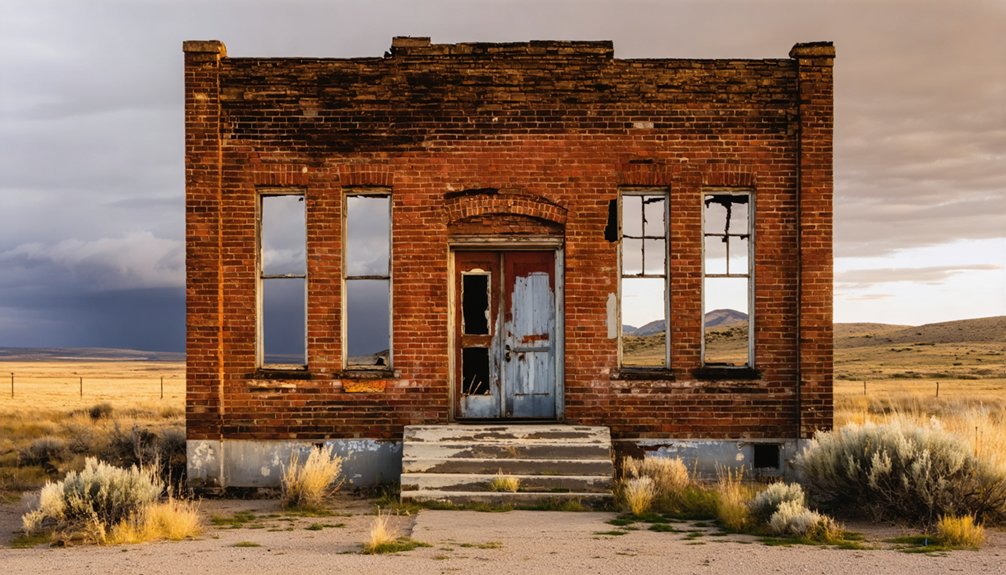
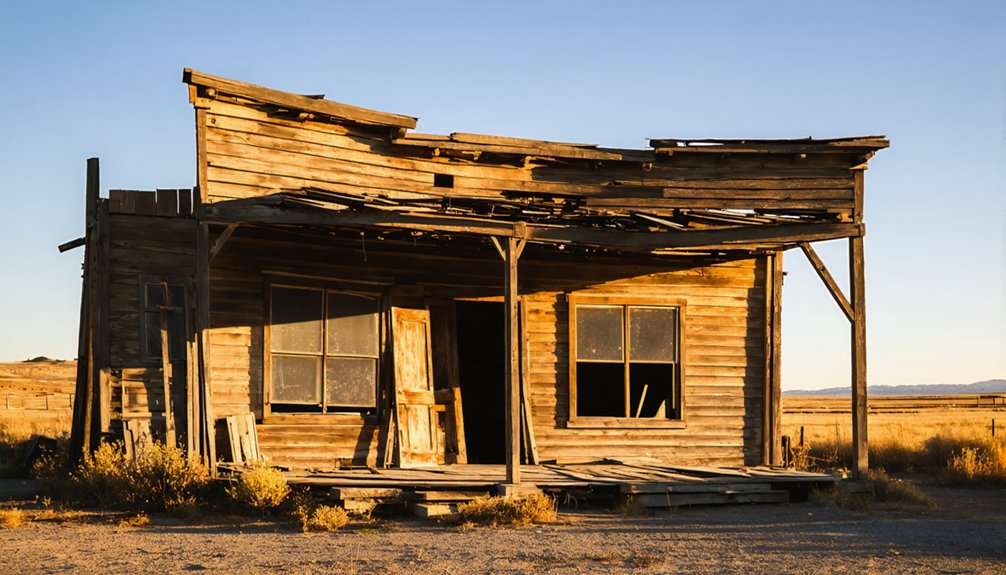
Perched at 6,200 feet in the rugged Owyhee Mountains, Silver City clings to the very veins of gold and silver that birthed it on March 10, 1863. You’ll discover one of America’s best-preserved ghost towns, where 70 structures from the 1860s still stand, their weathered frames slouching on hills above Jordan Creek.
This remote outpost once housed 2,500 souls and 75 businesses, producing over $60 million in precious metals before the mines depleted in 1912.
The town’s archaeological significance earned it National Register status in 1972, yet preservation challenges mount as nature reclaims two dozen mining camps. Silver City’s most celebrated treasure, a 500-pound silver crystal from the Poorman Mine, earned a gold medal at the 1867 Paris Exposition and brought the town worldwide recognition.
You’ll find the historic Idaho Hotel offering seasonal tours, nearly a dozen cemeteries with elaborate headstones, and mine shafts honeycombing the mountains—accessible only via dusty, off-grid roads that keep commercial exploitation at bay. Fall visitors should note the town operates seasonally from May to October, with services and access limited outside these months.
Bayhorse: Idaho’s Best-Preserved Mill Town Amid Fall Foliage
While Silver City commanded the heights at 6,200 feet, Bayhorse carved its legacy into a more forgiving canyon at 5,800 feet, where its massive red mill still dominates the hillside like a sentinel from 1880.
Bayhorse’s towering red mill stands watch over the canyon at 5,800 feet, a weathered monument to 1880s silver mining glory.
You’ll discover six deteriorating beehive charcoal kilns scattered beyond the main street, alongside the stone Wells Fargo building and authentic Bayhorse Saloon.
The site peaked in 1882, producing $300,000 in silver before closure in 1915.
Since Idaho’s 2006 acquisition, modern preservation techniques have stabilized structures and installed interpretative signage throughout this Land of the Yankee Fork State Park component.
You’re free to explore old mining artifacts dotting the dirt thoroughfare, photograph cabin ruins against autumn aspens, and wander the adjacent cemetery year-round.
The town’s establishment traces back to 1879 silver ore discovery by prospectors exploring the remote mountainous terrain.
Fall’s golden backdrop enhances every weathered timber and rusted gear.
The visitor center operates as a museum displaying mining industry relics and historical equipment from the camp’s productive era.
Bonanza: Silver Boom Legacy in the Custer County Wilderness
Just fifteen miles north through the Yankee Fork canyon, Bonanza sprawls across a high wilderness basin at 6,375 feet, where seven skeletal structures mark Idaho’s first mining camp in this silver-rich drainage. You’ll discover a settlement that exploded from nothing in 1877 to over 600 souls by 1881, fueled by the Charles Dickens mine‘s glittering veins.
Two devastating fires and Custer’s rise sealed Bonanza’s fate, yet the mining technology legacy persists. That hulking gold dredge visible from the access road extracted eleven million dollars between 1939 and 1952. The 988-ton behemoth required 11 feet of water to operate, cutting through gravel deposits up to 35 feet deep with 72 buckets.
Ghost town preservation efforts remain minimal here—you’ll find authentic decay on private land, with the 1934 CCC Guard Station overlooking the ruins. Despite the frontier setting, Bonanza once provided city services including a grid of streets, community wells, and an early underground water system for drinking and fire safety.
The Bonanza Cemetery shelters pioneers beneath wind-twisted pines, one mile west.
Custer: Top-Rated Ghost Town With Scenic Mountain Views
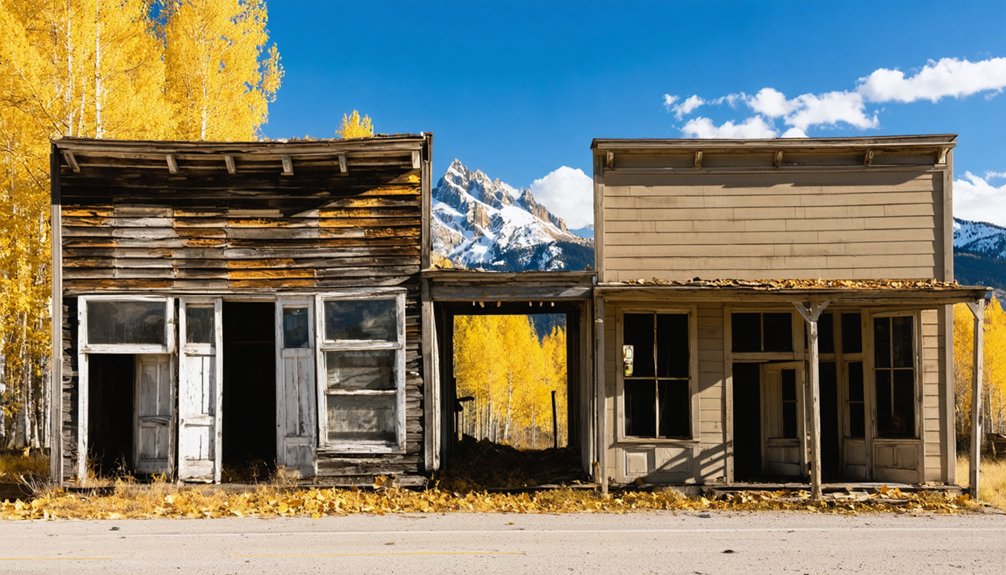
Just nine miles from Highway 75, Custer rises from the Yankee Fork valley as Idaho’s most accessible and well-preserved mining ghost town. You’ll find seven restored historic buildings spread across 29 acres, including a schoolhouse museum, the Empire Saloon, and a weathered jail—all framed by the golden aspens and towering peaks of Challis National Forest.
Free guided tours from Memorial Day through Labor Day let you explore the blacksmith shop’s vintage auto parts, wander cemetery plots, and trace pathways to nearby mines where 600 fortune-seekers once worked the Lucky Boy and Black claims. Founded by early 1879 speculators near the General Custer mill site, the settlement once stretched half a mile and ranked as the district’s second most important town during the 1880s. The general store serves homemade ice cream alongside gifts and snacks, providing a refreshing stop during your exploration.
Historic Mining Site Features
Nestled below the remnants of the General Custer mill site, this legendary mining camp sprawls across 29 acres of preserved history in the Challis National Forest.
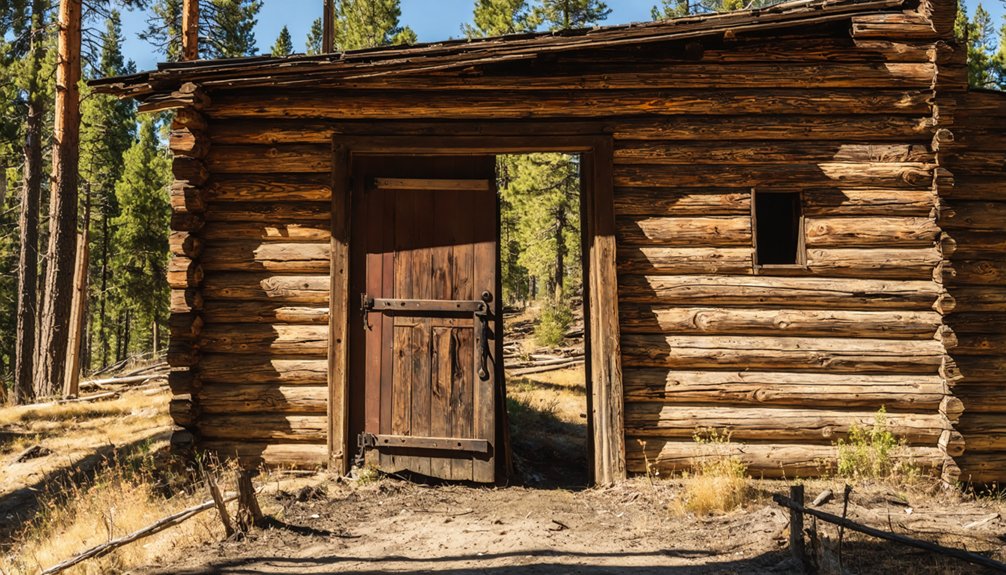
You’ll discover seven contributing buildings that showcase authentic frontier life, including a weathered saloon, original jail, and stone cabin ruins that tell stories of boom and bust.
The General Custer Mine’s impressive mining technology stands as a testament to 1880s innovation—a 3,200-foot aerial tram once transported ore to a 20-stamp steam-powered mill.
Preservation efforts since the site’s 1981 National Register listing have protected structures from the Lucky Boy and Black Mines era, when 130 men extracted gold, silver, copper, and lead.
The Land of the Yankee Fork Historic Area’s stewardship ensures these artifacts remain accessible for exploration.
Walking through the large, sunny schoolhouse, you’ll glimpse where children and community members once gathered for education and social events in this remote mining settlement.
The town’s peak prosperity arrived in 1890 with 300 residents, when the community supported families, miners, and diverse businesses that created a vibrant frontier society.
Outdoor Recreation Opportunities
Perched at 6,500 feet in Idaho’s Yankee Fork valley, Custer delivers outdoor experiences that rival its historic mining legacy. You’ll discover hiking trails threading through Salmon-Challis National Forest, where wildflower blooms paint meadows in spring and bird migration patterns shift with autumn’s arrival.
The surrounding Lemhi and Sawtooth Mountains invite rock climbing adventures, while the Salmon River Scenic Byway offers premier fly fishing and rafting opportunities.
Your basecamp options include primitive camping throughout the valley or lodging 21 miles away in Stanley. Don’t miss side trips to Yankee Fork Gold Dredge or Sunbeam hot springs.
When darkness falls, head to nearby City of Rocks for stargazing under Idaho’s renowned dark skies—where countless stars illuminate the frontier spirit that drew miners here generations ago.
Idaho City: Gold Rush Heritage Meets Fall Festivities
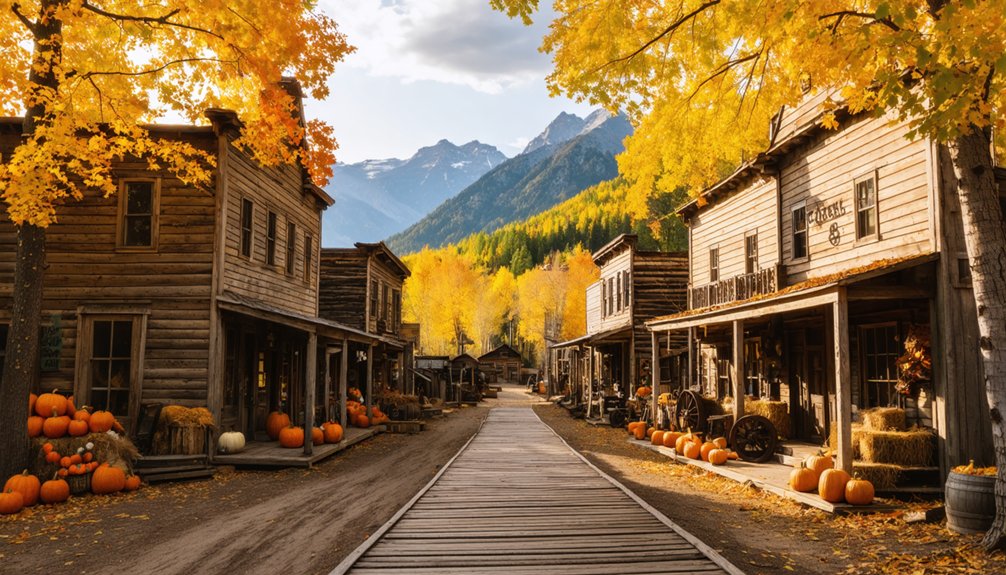
When prospectors struck gold along Grimes Creek in 1862, they triggered one of the West’s most explosive booms, transforming a wilderness basin into what would become the Pacific Northwest’s largest city. Idaho City swelled to 40,000 souls, surpassing Portland with 250 bustling businesses extracting more gold than California’s entire rush.
Today, you’ll discover this freedom through brick buildings that survived repeated fires, the 1867 post office housing Boise Basin Museum, and Boot Hill Cemetery where 172 of the first 200 graves tell violent frontier tales. Unlike urban development with modern amenities, Idaho City remains authentically raw—a near-ghost town where autumn colors frame St. Joseph’s Catholic Church and the Exchange Saloon.
The annual Gold Dust Rodeo celebrates this untamed heritage.
Mackay Mine Hill: Exploring Twin Ghost Towns and Mining Ruins
Where else can you explore twin ghost towns connected by a historic aerial tramway against a backdrop of snow-capped peaks? Mackay Mine Hill delivers authentic mining history without barriers—you’ll drive your own vehicle up the steep hillside where miners once lived in crude dugouts and shanties.
The 1918 tram headhouse still stands, a tribute to the nearly one million tons of ore extracted from these mountains.
White Knob and Cliff City, established in the late 1800s, represent boom-and-bust cycles frozen in time. Ghost town preservation here means accessible ruins, not ropes and restrictions.
The mayor-led tours reveal stories of copper, silver, and resilience in Idaho’s Lost River Range.
This isn’t sanitized history—it’s raw, unfiltered exploration of the frontier spirit that built the West.
Planning Your Idaho Ghost Town Adventure This Fall Season
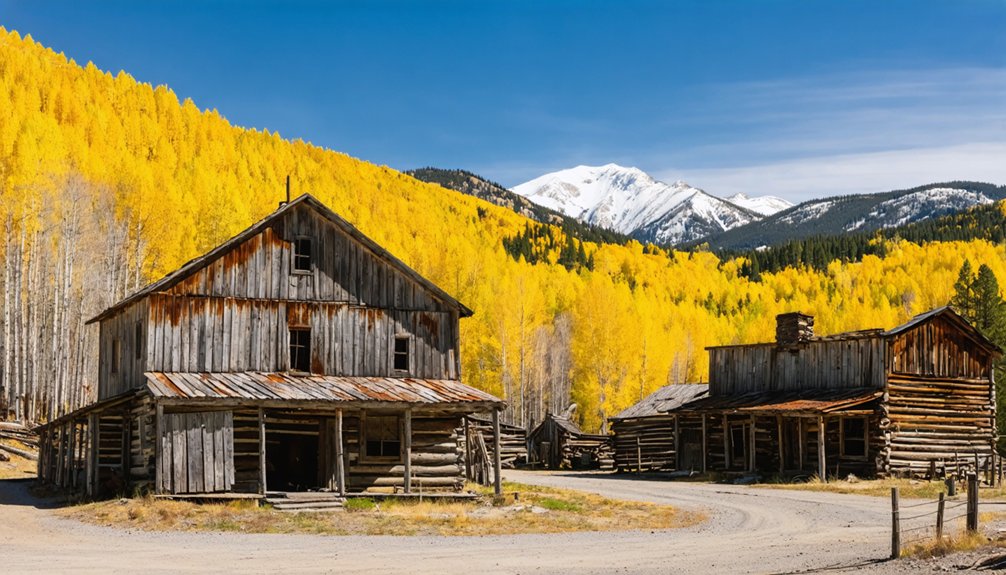
Fall transforms Idaho’s ghost towns into a photographer’s paradise, but successful exploration demands thorough preparation. Late September delivers peak aspen colors along mountain routes, while seasonal wildlife sightings increase as animals prepare for winter. Your fall foliage photography opportunities multiply across the Owyhee Desert hills and Sawtooth byways.
Exploring scenic ghost towns in Idaho offers a unique glimpse into the past, surrounded by stunning autumn landscapes. Each deserted building and weathered sign tells a story, inviting photographers to capture the beauty of decay amidst vibrant fall colors. As the days grow shorter, these towns become even more atmospheric, especially under the glow of sunset.
Essential preparation checklist:
- Vehicle readiness – High-clearance vehicles handle challenging gravel roads to Gilmore, Bonanza, and Bayhorse.
- Timing strategy – Visit before winter closures; check Sawtooth area road conditions post-summer.
- Weather monitoring – Silver City’s dirt roads become treacherous in adverse conditions.
- Remote area supplies – Pack emergency gear, food, and water for isolated locations.
Combine ghost town explorations with nearby hot springs and the historic Yankee Fork Gold Dredge for exhaustive adventures through Idaho’s mining heritage.
Frequently Asked Questions
Are Pets Allowed at Idaho Ghost Town Sites?
Yes, you’ll find leashed dogs welcome at Idaho’s ghost towns like Garnet. Pet policies require cleanup after your furry explorers, while wildlife considerations demand leashes in backcountry areas—keeping both critters and history preserved for your adventurous spirit.
What Photography Equipment Works Best for Ghost Town Fall Visits?
You’ll want a DSLR or mirrorless camera with fast lenses, plus essential camera accessories like sturdy tripods for long exposures. Master lighting techniques using flashlights and LED devices to paint atmospheric scenes in Idaho’s hauntingly beautiful abandoned structures.
Can Visitors Enter the Historic Buildings at These Ghost Towns?
At Silver City’s Idaho Hotel, you’ll discover accessible interiors where haunted stories echo through original furnishings. Preservation efforts vary by location—some towns offer guided building tours, while others permit only exterior exploration to protect these historic treasures.
Are There Guided Tours Available at Idaho Ghost Towns?
You’ll find guided tour options at several Idaho ghost towns during summer months. Custer offers free walking tours with historical preservation insights, while Yankee Fork provides 3-hour experiences with historian guides sharing authentic stories and photography opportunities.
For those seeking a deeper connection to the past, idaho’s historic ghost towns to explore reveal tales of the state’s gold mining era and the pioneers who shaped its development. Each site presents a unique glimpse into life during the Wild West, where visitors can immerse themselves in the haunting beauty of abandoned buildings and landscapes. Don’t miss the chance to capture stunning photographs that tell the story of Idaho’s rich history.
What Camping Facilities Are Near These Ghost Town Locations?
You’ll find Camp Badger’s $8 sites near Gilmore, rustic cabins at Burgdorf’s hot springs, and dispersed camping around Bayhorse. These historical preservation areas blend local legends with wilderness freedom, though facilities remain minimal and authentically rugged.
References
- https://www.visitsouthwestidaho.org/fall-in-southwest-idaho/
- https://idahosmammothcave.com/unique-things-to-do-in-idaho-ghost-town-hunting-in-silver-city/
- https://www.thegoldminehotel.com/ghost-towns-and-haunted-places-in-idaho
- https://idaho-forged.com/idahos-ghost-towns-eerie-yet-approachable/
- https://www.tripadvisor.com/Attractions-g28933-Activities-c47-t14-Idaho.html
- https://www.youtube.com/watch?v=rTSZSlxTmbs
- https://thesmartrver.com/visit-silver-city-idaho/
- https://www.britannica.com/place/Silver-City-ghost-Idaho
- https://www.youtube.com/watch?v=W347SjpcWF0
- https://www.historicsilvercityidaho.com