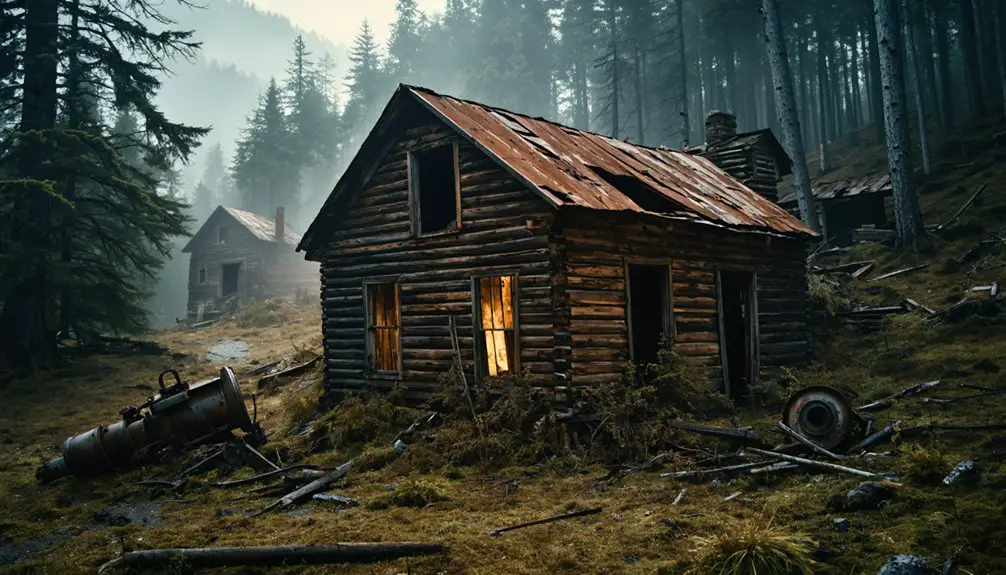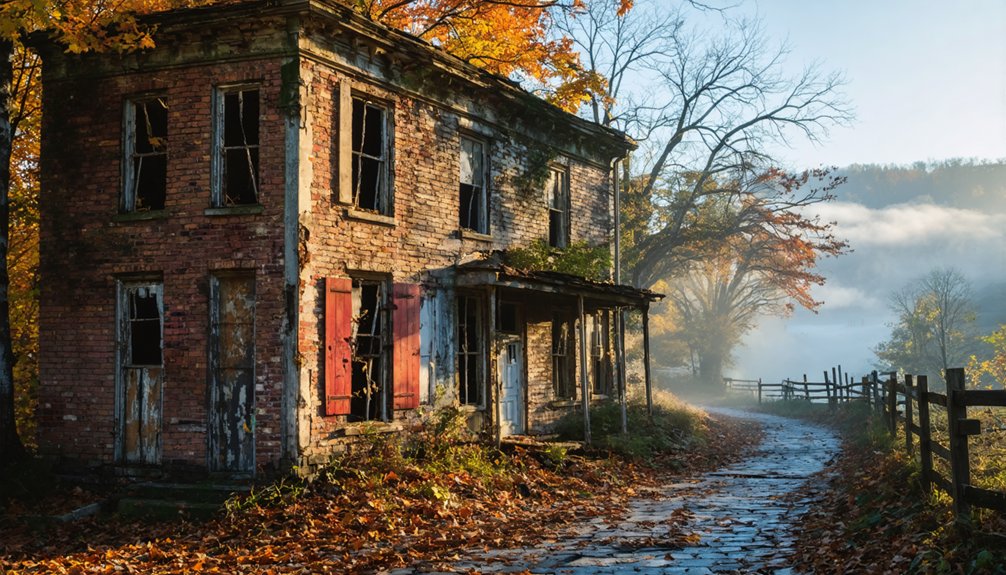
You’ll find Maryland’s best ghost town adventures at Daniels along the Patapsco River, where crumbling mill foundations and abandoned cars create an eerie 3-mile hiking experience, especially atmospheric during October. Don’t miss Clopper Mill’s weathered 1834 brick walls in Seneca Creek State Park, connected to Lincoln’s assassination conspirator George Atzerodt. For coastal exploration, Fort Armistead’s graffiti-covered 1897 structures and Fort Foote’s massive Civil War Rodman guns offer haunting military history. Each location transforms with fall’s golden light, revealing deeper stories of Maryland’s forgotten industrial and military past.
Key Takeaways
- Daniel’s Ghost Town offers a 3-mile trail featuring crumbling stone foundations, abandoned structures, historic train bridge, and weathered graveyard along Patapsco River.
- Clopper Mill Ruins in Seneca Creek State Park display 1834 brick walls, ideal for autumn visits with atmospheric lighting and industrial history.
- Ellicott City runs 90-minute haunted evening tours April through November, exploring historic streets with period-costumed guides and Civil War legends.
- Savage Mill hosts Friday and Saturday ghost tours from September to October, featuring child spirit encounters in 1822 manufacturing buildings.
- Marshall Hall preserves 1725 colonial mansion ruins with Civil War history, accessible for exploration of fire-damaged remains and boundary dispute heritage.
Daniels Ghost Town: A Riverside Journey Through Mill Town Ruins
Nestled along the Patapsco River between Baltimore and Howard counties, Daniels stands as one of Maryland’s most accessible and hauntingly beautiful ghost towns. You’ll discover crumbling stone foundations and weathered mill workers’ homes reclaimed by nature—classic industrial decay that photographers and history buffs crave.
The 3-mile out-and-back trail from 8106 Alberton Rd offers prime riverside exploration, following the old Alberton Road to a historic train bridge and dam. Arrive early on fall weekends; the small parking lot fills fast.
You’ll wander past abandoned cars, graffiti-tagged ruins, and the peaceful Patapsco flowing through it all. The town’s decline accelerated after Tropical Storm Agnes in 1972, when devastating floods forced the last residents to evacuate. Behind the church ruins, you’ll find an old graveyard with damaged headstones adding to the town’s eerie atmosphere. The only active remnant? Gary Memorial Church. Everything else belongs to the wilderness now—exactly what makes this former mill town so entrancing for adventurous souls seeking untamed history.
Ellicott City’s Haunted Walking Tours and Historic Spirits
You’ll encounter Rebecca’s sorrowful spirit where she fell to her death, while a playful child ghost at Savage Mill might tug at your shoelaces on the stairs.
Friday and Saturday evening tours from April through November guide you through 90 minutes of authenticated hauntings at locations like the old Howard County jail and Mount Ida mansion, where a cleaning ghost still tends to her eternal chores. Paranormal experts explain how electricity and water act as energy attractors for the supernatural activity throughout the town.
Your period-costumed guide carries a lantern while leading groups through the charming, picturesque streets lined with preserved historic buildings and local lore.
Book your $20 spot with Maryland History Tours at the Museum of Howard County History, but guides warn you should check your rearview mirror when driving home—just in case something followed you.
Notable Ghosts and Legends
The Presbyterian Church on Court Avenue hums with otherworldly energy, earning its reputation as home to Ellicott City’s most persistent spirit. You’ll hear this eerie phenomenon during Mount Misery Ghost Walk tours, which launch from the church’s current incarnation as the Howard County Historical Society Museum before venturing up the haunted hilltop.
Beyond the humming ghost, you’ll encounter legends of haunted kitchens at Oaklawn, where cooking apparitions rattle pots and pans.
Mount Ida’s ghostly housekeeping activity keeps staff wondering who’s tidying up after hours.
At Savage Mill, a mischievous girl trips visitors on staircases and whispers their names, while Rebecca eternally haunts the spot where she fell to her death—both featured on 90-minute guided tours (reservations required, ages 16+). The town’s supernatural reputation stems from its deep Civil War history, when it hosted Union troops and Confederate prisoners, with some Confederate remains still buried in the Friends Quaker Cemetery. These evening tours explore eerie legends from the hills north of town, featuring stories of spirits and unexplained happenings from decades past.
Tour Details and Logistics
Before booking your ghostly adventure, know that Maryland History Tours, LLC orchestrates most of Ellicott City’s supernatural expeditions from their headquarters at the Museum of Howard County History on 8328 Court Avenue.
You’ll need reservations—no walk-ups allowed—and tours run Friday and Saturday evenings in 90-minute segments exploring urban legends that’ve haunted these streets for centuries.
The monthly Spirits pub crawl ($20, 21+ only) happens second Thursdays, while Mt. Misery Ghost Walk ventures into darker territory at $20 per ticket.
Groups cap around 14 people, giving you genuine ghost hunting techniques rather than overcrowded chaos.
They’ll refund within 24 hours or cancel for weather.
Pro tip: seniors and military save $18 on pub crawls.
These walking tours through historic and haunted locations incorporate ghost stories and local legends that have terrified visitors for generations.
The town’s granite bedrock foundation is believed to attract spiritual energy, making Ellicott City one of Maryland’s most actively haunted destinations.
One warning—check your rearview mirror leaving; spirits reportedly follow adventurers home.
Savage Mill: Where Child Ghosts Roam Among 19th Century Buildings
You’ll find one of Maryland’s most haunted manufacturing sites at Savage Mill, where cotton mill buildings dating to 1822 still stand along the Little Patuxent River. The most active spirit is a playful child who’s been known to trip unsuspecting visitors as they explore the complex—just one of many young ghosts from an era when children worked brutal 10-hour shifts six days a week.
Exploring other abandoned places in Maryland history reveals even more chilling tales. From derelict asylums to forgotten battlefields, each site has its own unique story filled with echoes of the past. Visitors often report strange occurrences, making these locations a haven for ghost hunters and history enthusiasts alike.
Join weekend evening ghost tours starting at 8pm in the courtyard, where a historian will guide you through 1.5 hours of tragic stories from the mill’s 127-year operation. The complex originally produced cotton duck sailcloth, the sturdy fabric that powered ships across the seas before the mill ceased operations. Ghost Tours at Savage Mill are marketed as a key visitor experience at this historic site.
Historic Complex Since 1822
You’ll discover this sprawling complex evolved beyond textiles:
- 1832 expansion – grist mill, foundry, blacksmith shop, and company store created a self-sustaining village
- Baldwin family era (1859-1911) – built housing and facilities for hundreds of workers who lived on-site
- 1947 transformation – became America’s largest Christmas ornament factory under “Santa Heim”
Today, 70+ businesses occupy these haunted halls where child laborers once toiled.
Playful Child Spirit Activity
The haunting laughter of children echoes through Savage Mill’s corridors, where young spirits from the 1800s still seek attention from the living. You’ll encounter Frances Reeley, the superintendent’s mischievous daughter, who trips visitors on staircases and peers through windows with playful intent.
Shopkeepers report seeing two little girls entering stores together, only to vanish when approached. These child hauntings manifest through moved pictures, turned-off coffeemakers, and mysteriously relocated items.
Mill spirits include a 12-year-old who seeks companionship and Rebecca King, who fell to her death carrying cotton spools. Shop tenants now leave toys on window ledges—tiny carved oxen and smooth stones—to appease these restless young souls.
Greet them with “Good morning” to prevent pranks during your visit.
Weekend Evening Ghost Tours
Every Friday and Saturday evening from September 4th through October 24th, Savage Mill’s historian leads you through 1.5 hours of documented hauntings and tragic history beginning at 8:00 pm sharp. You’ll meet by the Big Chair at the courtyard entrance—arrive 10-15 minutes early for check-in and park in Little Lot.
Your spectral encounters begin with 19th-century cotton mill tragedies:
- Fatal machinery accidents where cotton dust claimed workers’ lives in buildings dating from 1822
- Rebecca’s restless spirit appearing at her fatal stairway fall location
- Paranormal artifacts including whispers of names and mysteriously relocated items overnight
The wheelchair-accessible tour covers 125+ years of mill operations through Maryland History Tours partnership.
Purchase tickets online, tip your guide generously, and check your mirrors when leaving—lingering spirits might follow you home.
Baltimore’s Premier Ghost Tours and Haunted Attractions
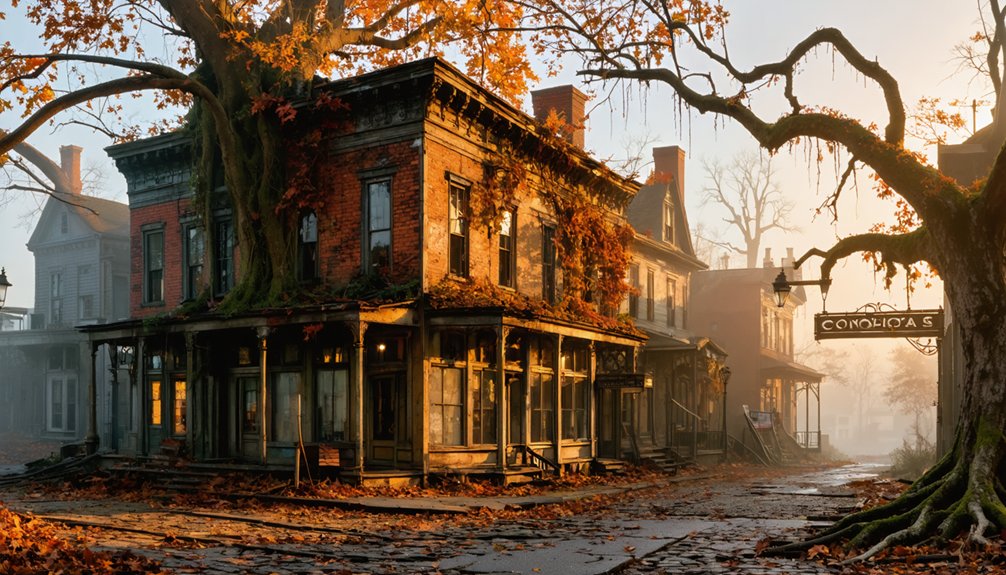
Since 2001, Baltimore Ghost Tours has transformed Fells Point into the city’s most haunted destination, where cobblestone streets echo with tales of pirates, plagues, and Edgar Allan Poe’s darkest inspirations.
You’ll find award-winning tours departing from Broadway Square at $20, certified authentic by Baltimore’s tourism bureau. The ghostly folklore weaves through Max’s Taphouse—once a slaughterhouse and brothel—where paranormal investigations have documented unexplained phenomena.
For adult adventures, book the Boos and Booze Pub Crawl ($29), rated 4.9 on Tripadvisor. You’ll visit historic bars while hearing tales of Prohibition-era hauntings and nautical disasters.
Tours run nightly March through December, rain or shine.
US Ghost Adventures offers free cancellation within 24 hours, giving you flexibility to explore Baltimore’s supernatural side without commitment.
Frederick: Maryland’s Most Haunted City
Founded in 1745 as a “Dreary and Desolate Place”—English General Edward Braddock’s own words—Frederick has earned its reputation as Maryland’s most haunted city through centuries of war, public executions, and pestilence.
Francis Scott Key’s hometown pulses with residual energy you’ll feel wandering its darkened streets.
Essential haunted stops:
- National Museum of Civil War Medicine – Staff report strange sounds echoing through rooms where undertakers once worked
- Mount Olivet Cemetery – Maryland’s largest cemetery draws paranormal investigators to its influential historical gravesites
- Barbara Fritchie House – The Civil War heroine’s residence harbors unexplained occurrences
Ghost tours led by costumed storytellers navigate you through haunted libraries and sites where ghostly legends materialize.
Tour operators have documented former building owners appearing in windows, then vanishing before entire groups.
Clopper Mill Ruins and the Dark History of Germantown
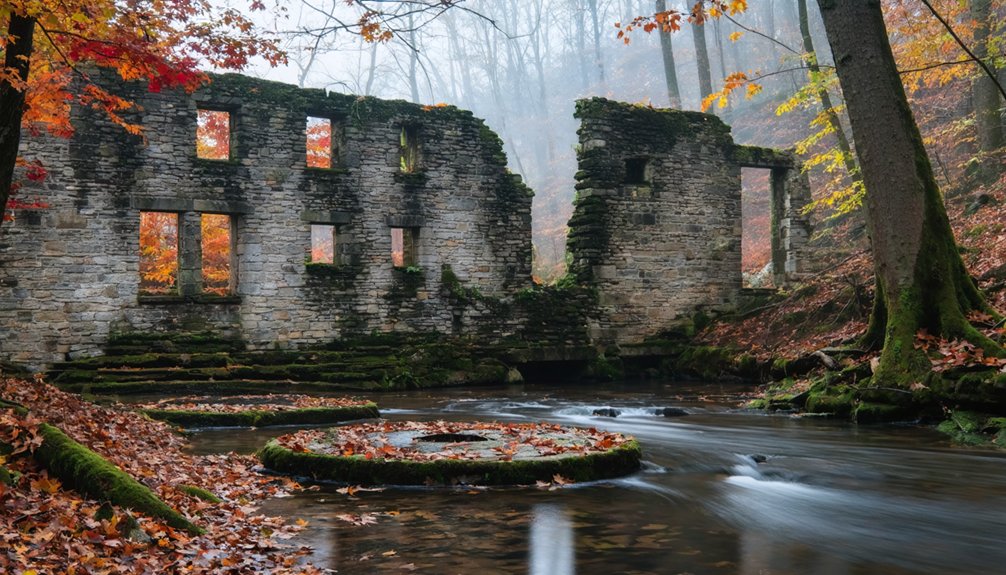
Hidden within Seneca Creek State Park’s dense woodland, the crumbling brick walls of Clopper Mill stand three stories high—a skeletal monument to Germantown’s industrial past and its brush with America’s darkest hour.
On April 15, 1865, Lincoln assassination conspirator George Atzerodt sheltered here while fleeing Washington after failing to kill Vice President Andrew Johnson. These haunted ruins still bear Francis Clopper’s initials and 1834 date stamp on their weathered facade.
You’ll find the structure off Clopper Road at Waring Station intersection, accessible via unmarked trails.
The mill operated until 1900 before a suspicious 1947 fire left only stone walls and spooky legends.
Autumn’s golden light filtering through empty window frames creates an otherworldly atmosphere—perfect for those seeking Maryland’s most atmospheric abandoned sites without restrictions.
Marshall Hall: The 18th Century Mansion Known as “Mistake”
Beyond the rusted chain-link fence at Piscataway Park, charred brick walls rise from the forest floor—all that remains of Maryland’s grandest colonial mansion, ironically christened “Mistake.” When surveyor Thomas Marshall completed his 1725 masterpiece, he discovered a devastating error: the boundary lines placed his magnificent Flemish-bond brick home squarely in the Potomac River’s tidewater zone.
What Made Marshall Hall Extraordinary:
- Historical architecture showcased Maryland’s earliest documented double-ogee window heads and bolection molding—craftsmanship worthy of the county’s third-wealthiest family.
- Period furnishings once filled rooms where George Washington’s associate Thomas Hanson Marshall entertained Revolutionary War patriots.
- Post-Civil War transformation into a raucous amusement park with gambling, roller coasters, and steamboat excursions before fire consumed everything in 1981.
You’ll find haunting beauty in these stabilized ruins protecting Mount Vernon’s viewshed.
Fort Armistead: From Military Stronghold to Graffiti-Covered Park
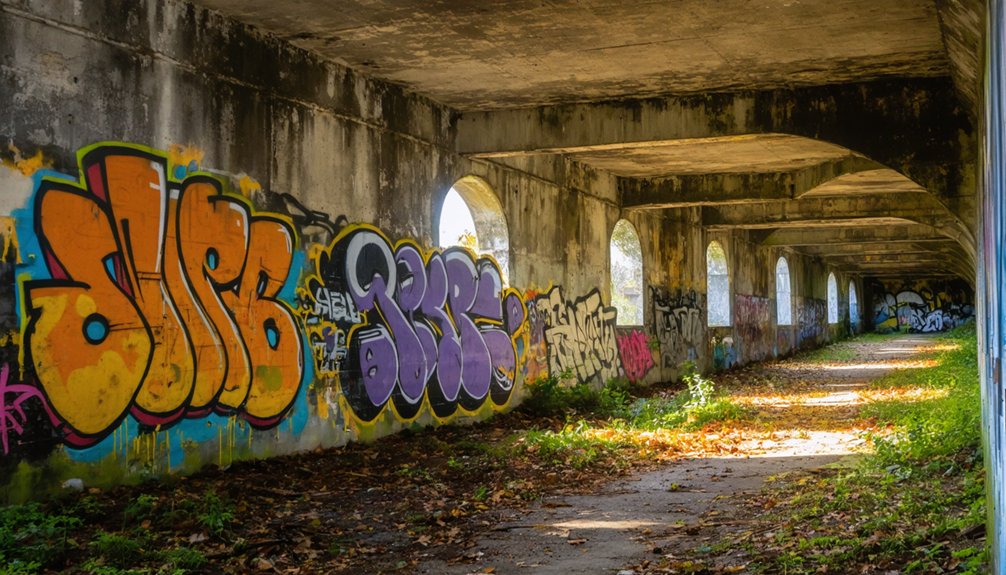
Perched on Hawkins Point where Baltimore’s Inner Harbor meets the Patapsco River, Fort Armistead’s concrete gun batteries still aim seaward—though they haven’t held weapons since 1918.
You’ll explore military architecture from the 1897 Endicott Program, where 12-inch disappearing guns once formed Baltimore’s coastal defenses alongside neighboring forts.
Today’s reality? Baltimore claimed this abandoned stronghold in 1928, and nature’s reclaimed what city maintenance neglects.
You’ll find graffiti-covered walls, overgrown forests, and explorable tunnels littered with debris. The batteries—Irons, Winchester, McFarland, and Mudge—stand as concrete ghosts of wars past.
Park your car in the lot and follow trails directly to the structures.
Bring a flashlight for tunnel exploration, and watch your footing on crumbling concrete.
It’s unmonitored territory where history meets urban decay.
Fort Foote and the Giant Civil War Rodman Guns
While Baltimore’s Fort Armistead crumbles under spray paint and neglect, its downstream cousin Fort Foote stands preserved as living history—complete with two massive 15-inch Rodman guns that still stare down the Potomac River after 160 years.
You’ll discover why Washington’s defenders built this fortress on a 100-foot bluff in 1863. Confederate defenses downriver and threats from Civil War armor like the CSS Virginia demanded heavy firepower. Fort Foote delivered with ten massive cannons that never fired a shot in anger.
What makes your visit worthwhile:
- Two original 15-inch Rodmans remain mounted—each capable of hurling 450-pound projectiles
- Earthworks and 20-foot-thick walls you can explore freely
- Cemetery holding twenty Civil War soldiers
The fort’s ruins offer unobstructed Potomac views and tangible connection to America’s defining conflict.
Frequently Asked Questions
What Should I Bring on a Ghost Town Hiking Trip in Maryland?
You’ll need waterproof boots, layered clothing, and navigation tools. Pack a flashlight for exploring dark ruins and historical artifacts. Bring trail safety essentials like a first-aid kit, whistle, water, and snacks for your adventurous Maryland ghost town expedition.
As you traverse the dusty streets, don’t forget to capture the stunning fall colors in ghost towns that contrast beautifully with the aged architecture. Each turn may reveal a hidden gem, from crumbling storefronts to vibrant foliage that tells a story of the past. Be sure to take your time and absorb the serene beauty surrounding these forgotten places.
Are Pets Allowed at Maryland’s Abandoned Sites and Ghost Tours?
Pet policies vary by location, so you’ll need to check each site’s animal restrictions beforehand. For pet safety, keep your furry companion leashed on uneven terrain, watch for hazards like rusty metal, and bring plenty of water.
Is Photography Permitted Inside Haunted Buildings and on Ghost Tours?
You’ll find haunted house photography welcomed outside buildings, though ghost tour camera rules prohibit videos everywhere. Tours don’t enter interiors, so you’re capturing exterior shots only. Snap freely at each stop, respecting the no-recording policy for guide narratives.
Do I Need Reservations to Visit Maryland Ghost Towns During Fall?
You don’t need reservations for Daniels Ghost Town’s historical preservation sites—just hike right in. However, guided tours exploring local folklore at Ellicott City and Savage Mill require advance booking. Commercial haunted attractions sell out fast, so reserve early.
What Are the Best Months to Visit Maryland Ghost Towns in Fall?
September through October offers you the best ghost town exploration, combining historical preservation efforts with peak local legends tours. You’ll enjoy comfortable weather, vibrant fall foliage, and weekend evening ghost walks that bring abandoned sites’ stories alive through vivid storytelling.
References
- https://itravelforthestars.com/fun-things-maryland-fall/
- https://www.marylandhauntedhouses.com/fall-attractions/
- https://www.tripadvisor.com/Attraction_Review-g41131-d10035193-Reviews-Daniels_Ghost_Town-Ellicott_City_Maryland.html
- https://www.visithowardcounty.com/things-to-do/tours/ghost-tours/
- https://aishaurbanescapist.com/autumn-events-guide-dc-maryland/
- https://www.atlasobscura.com/things-to-do/maryland/abandoned
- https://www.markoffshauntedforest.com
- https://www.visitmaryland.org/list/ghost-tours-haunted-attractions
- https://midatlanticdaytrips.com/2015/10/visiting-marylands-ghost-town-daniels/
- https://www.youtube.com/watch?v=FoTBXomVN4k