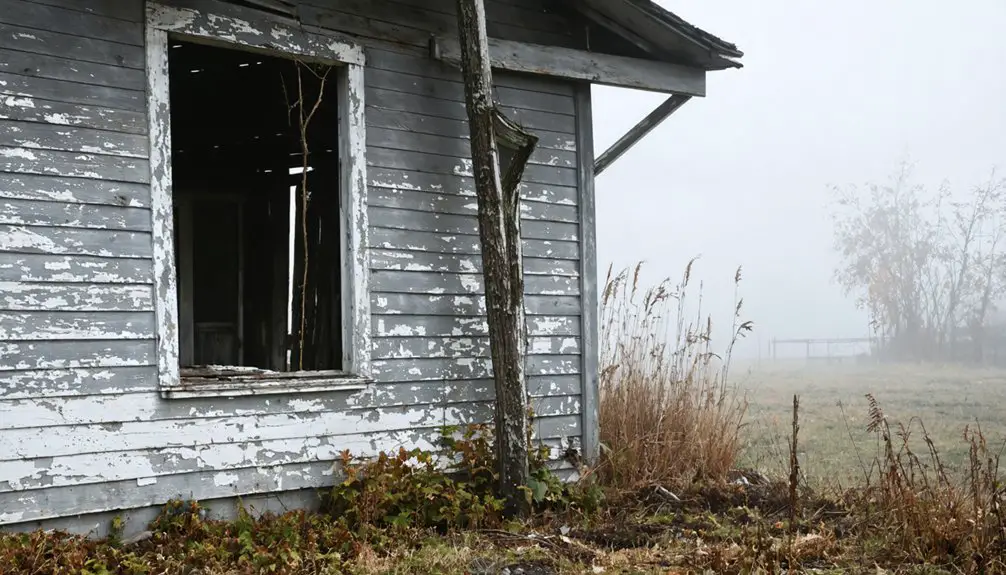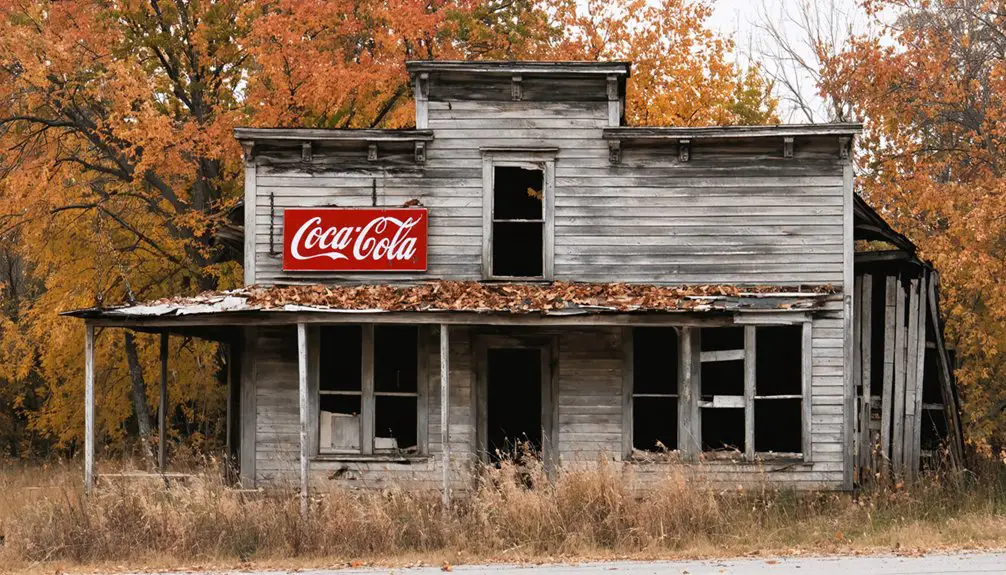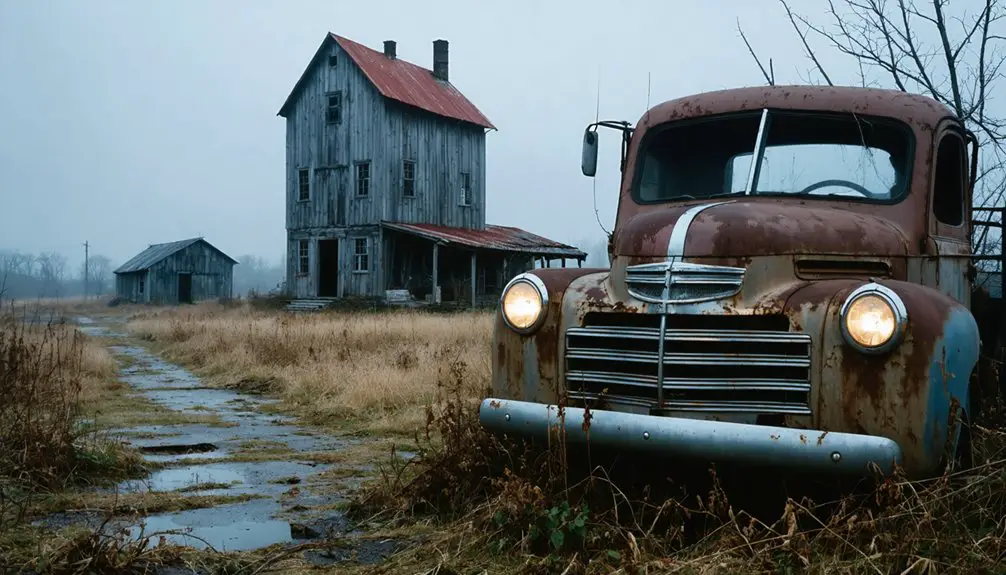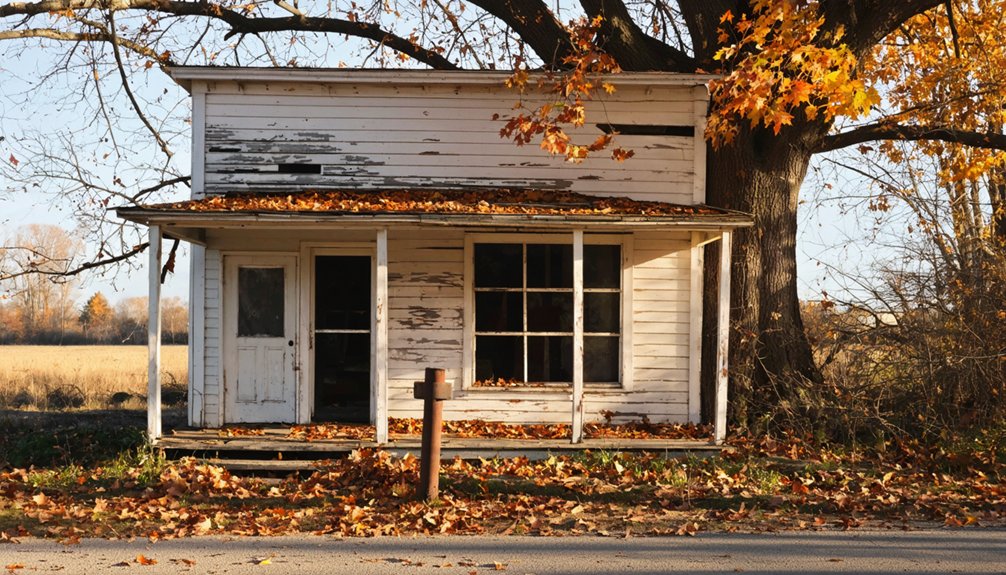
Michigan’s best fall ghost towns await your exploration at Fayette Historic Townsite, where 20 original buildings frame Snail Shell Harbor’s turquoise waters, and the Keweenaw Peninsula’s copper mining settlements, where rusted machinery dots landscapes that once outproduced California’s Gold Rush. You’ll find family-friendly Freda along Lake Superior, featuring a 253-foot smokestack landmark, while Sleeping Bear Dunes conceals forgotten logging camps beneath autumn’s brilliant canopy. The Upper Peninsula’s nearly 100 abandoned settlements transform into particularly haunting destinations when October’s vibrant foliage ignites the surrounding forests.
Key Takeaways
- Fayette Historic Townsite features 20 original buildings, stone furnaces, and limestone cliffs along Snail Shell Harbor’s blue waters.
- Keweenaw Peninsula offers multiple copper mining ghost towns including Central Mine, Cliff Mine, and Delaware with rusted machinery.
- Freda, 17 miles west of Hancock, showcases Champion Mill ruins and a 253-foot smokestack near Lake Superior beaches.
- Upper Peninsula’s vibrant fall foliage peaks in early October, enhancing ghost town atmospheres with spectacular red and gold colors.
- Michigan’s $14 Recreation Passport grants access to 103 state parks featuring hidden settlements and historic ghost town sites.
Fayette Historic Townsite: A Cinematic Journey Through Time
As you round the bend toward Snail Shell Harbor, the limestone cliffs rise like ancient sentinels above impossibly blue water. And there—framed against the Garden Peninsula’s autumn blaze—stand the skeletal remains of Fayette’s massive stone furnaces.
Limestone sentinels guard Snail Shell Harbor where autumn flames frame the ghost furnaces of forgotten industry.
This isn’t your typical ghost town experience. You’ll wander through 20 original buildings where 500 immigrant workers once forged Michigan’s industrial history. Their blast furnaces glowed against October nights until forest depletion shuttered operations in 1891.
Michigan’s preservation efforts transformed the abandoned ironworks into Fayette Historic State Park in 1959. They left authentic period furniture and charcoal kilns untouched. The town’s three-story warehouse, built in 1870 adjacent to the company store, once dominated the waterfront before fire claimed it in the 1900s.
Walk the superintendent’s house. Touch the machine shop’s rusted gears. Visitors report hearing mysterious footsteps and conversations echoing through the empty structures. Here, you’re not behind velvet ropes—you’re inside living memory.
Keweenaw Peninsula’s Copper Mining Ghost Towns
The copper beneath Michigan’s Keweenaw Peninsula created fortunes that dwarfed the California Gold Rush—ten times the wealth, they say—yet today you’ll find only silence where 1,200 souls once hammered through bedrock at Central Mine. These Keweenaw landmarks whisper tales of mining history through rusted machinery and crumbling foundations.
Essential stops on your ghost town exploration:
- Central Mine – 52 million pounds of copper extracted before 1898’s closure
- Cliff Mine – Massive 100-ton copper chunks hauled from darkness by 840 miners
- Gay – Stamp mill ruins where lake waters once swallowed mining waste
- Phoenix & Delaware – Skeletal remains of boom-and-bust dreams
You’ll taste autumn’s metallic edge wandering these abandoned shafts. Freedom means threading through history without guardrails, discovering what men sacrificed chasing red metal through endless stone. Walk among the iron grave markers at Cliff Cemetery, established in 1846 on a windswept hillside. The Keweenaw National Historical Park offers additional educational resources for understanding the region’s copper mining legacy.
Freda: A Family-Friendly Ghost Town Adventure
Unlike most Keweenaw ghost towns where danger signs block your path, Freda welcomes families to explore its Champion Mill ruins sprawling along Lake Superior‘s edge. You’ll park at the small cafe and descend a steep trail where massive concrete foundations and a towering smoke stack emerge like ancient monuments.
The paced hiking lets you absorb every detail—rusted machinery fragments glinting in black stamp sand, a seven-foot waterfall cascading through concrete channels to the beach below.
Your kids will hunt beach glass and colorful pebbles while you capture photography opportunities of red sandstone cliffs reflecting in Superior’s waves. The ruins whisper stories of 500 residents who once lived here, their footsteps echoing in foundations where barber shops and saloons thrived before the 1967 closure scattered them. The 253-foot stack once served as a vital landmark for boats navigating Lake Superior’s waters.
Located 17 miles west of Hancock, this settlement was named after Freda, the daughter of Copper Range Company manager William Paine, who established the mill here in 1899.
Sleeping Bear Dunes: Forgotten Logging Communities
From the Keweenaw’s copper-rich cliffs, your Michigan ghost town journey shifts south to where massive sand dunes bury the remnants of once-thriving lumber camps. Sleeping Bear Dunes’ logging history whispers through foundations and weathered dock pilings dotting Lake Michigan’s shoreline.
You’ll discover communities like Aral, where 150 winter workers once fed lumber onto flatcars bound for Chicago, and Empire, connected to vast forests by railroad tracks now vanished beneath shifting sands.
Explore these forgotten settlements:
- Glen Haven’s preserved buildings showcase authentic logging village life
- Port Oneida’s Rural Historic District reveals the farming transformation after timber depletion
- South Bar Lake’s man-made channel demonstrates engineering ingenuity
- Scattered foundations mark where sawmills thundered before 1920
Community preservation efforts let you walk where loggers once worked, their stories etched in sandy soil. These lumber towns housed boarding houses, general stores, blacksmith shops, and schools functioning as social hubs until communities dispersed after resource depletion. The lakeshore’s transportation role connected these settlements to Chicago markets, where lumber and cordwood fueled the city’s growth before operations ceased in the 1920s.
Upper Peninsula’s Vast Network of Abandoned Mining Settlements
Copper fever gripped Michigan’s Keweenaw Peninsula in 1840, spawning nearly 100 settlements that clung to rocky shores and forest clearings where miners chased red-metal veins deep into Lake Superior’s bedrock.
You’ll find Central Mine’s crumbling shafts hidden among wild apple trees, while Cliff Mine’s trails wind past rock piles still glinting with pure copper chunks.
The mining history speaks through hand-hewn log cabins and forgotten cemeteries swallowed by forest.
At Delaware, you can descend an actual mine shaft for fourteen bucks, touching the same walls miners knew.
Freda’s abandoned structures stand as silent witnesses to communities of 1,000+ souls who vanished after the 1913 strike and Depression crushed their copper dreams.
Watch for concealed mineshafts—some drop 25 feet.
Though these ghost towns offer haunting glimpses into Michigan’s past, over 100 years of mining left environmental contamination that continues to affect sites like Torch Lake today.
Fayette’s iron smelting operation alone produced 230,000 tons before shuttering in 1891, leaving behind a townsite that the state transformed into a historic park with over 20 preserved buildings.
Enhancing Your Ghost Town Experience With Fall Attractions
You’ll magnify your ghost town adventure by timing your visit with Michigan’s spectacular autumn palette—crimson maples framing weathered mine structures at Fayette create photographs that blend natural beauty with haunting decay.
The crisp October air carries more than the scent of fallen leaves; it brings spine-tingling opportunities at attractions like Quincy Mine’s haunted tours, where you’ll descend into shadowy tunnels that blur the line between historical exploration and supernatural encounter.
Don’t forget your Michigan Recreational Passport—it grants access to state parks like Tahquamenon Falls, where thundering water and golden birch complement your eerie backcountry discoveries.
Haunted Tours and Attractions
As twilight descends over Michigan’s abandoned settlements, the crisp autumn air carries more than just the scent of decaying leaves—it whispers tales of restless spirits still tethering themselves to these forgotten places.
You’ll find Michigan’s spooky legends come alive through guided paranormal adventures that’ll send shivers down your spine.
Explore these haunted hotspots:
- Traverse City’s Historical Ghost Lantern Tour – 90-minute walks through Olde Towne’s ghostly encounters
- Grand Rapids’ Wraiths and Witches Tour – one-hour journeys through the Amway Grand Plaza Hotel’s spectral guests
- Ghost Hunting Experiences – interactive investigations with paranormal experts Friday and Saturday nights
- Whitney Mansion in Detroit – Victorian-era spirits haunt this 1894 architectural masterpiece
These tours operate spring through October, perfectly timing your exploration of Michigan’s supernatural side.
Peak Foliage Viewing Spots
When the temperature drops and Michigan’s forests ignite with scarlet maples and golden birches, your ghost town explorations transform into something extraordinary. You’ll find the Upper Peninsula ablaze by early October, while northern regions like Gaylord and Cedar peak mid-month.
The Tunnel of Trees along M-119 delivers 22 miles of uninterrupted color—perfect for scenic drives between abandoned settlements.
Autumn wildlife emerges at forest edges where sunlight triggers the first chlorophyll breakdown, painting highway borders in vivid oranges and reds.
Southwest Michigan’s lakeshore holds its jewel-toned display into early November, giving you extended freedom to wander.
Track real-time progression on explorefall.com’s color-coded maps, timing your visits when ghost towns stand silhouetted against nature’s most dramatic backdrop.
State Park Passport Access
Beyond the camera-worthy vistas of crimson and gold, Michigan’s Recreation Passport becomes your skeleton key to forgotten settlements hidden within state-managed lands.
For just $14 annually (check “yes” during license renewal), you’ll open 103 state parks harboring abandoned homesteads and ghost towns perfect for historical preservation and photography opportunities.
Your pass grants unrestricted access to:
- 140-plus state forest campgrounds near remote settlement ruins
- Thousands of trail miles connecting forgotten communities
- Nearly 1,000 boating access sites reaching water-locked ghost towns
- Self-registration kiosks at Belle Isle and Tahquamenon Falls for spontaneous exploration
Purchase yours at expresssos.com or any state park entrance.
You’re exploring on foot or bicycle? Entry’s free—though motorized access requires the passport, separate from camping fees.
Frequently Asked Questions
Are Michigan Ghost Towns Safe to Explore With Children During Fall?
You’ll find most Michigan ghost towns reasonably safe with proper safety precautions and constant parental guidance. Watch for unstable structures, rusty nails, and uneven terrain. That crisp autumn air makes exploration magical, but you’re responsible for keeping your adventurers protected.
If you’re looking for a thrill, consider visiting some haunted locations in Michigan. These eerie sites often have rich histories that add to their spooky allure, making them perfect for those seeking ghostly encounters. Just remember to explore these places with caution, as the excitement can be intensified by their mysterious pasts.
As you roam through the ghost towns in Michigan’s autumn colors, you’ll be greeted by stunning foliage that contrasts with the weathered buildings. The vibrant reds and oranges of the leaves create a picturesque backdrop, making your adventure even more enchanting. Don’t forget to capture the beauty of these hauntingly serene landscapes on camera, as every corner tells a story of the past.
What Photography Equipment Works Best for Capturing Abandoned Buildings in Autumn?
Picture autumn lighting exploding through shattered windows like liquid gold. You’ll need a sturdy tripod for those long exposures, a wide-angle lens to capture sweeping decay, and flashlights as camera accessories to paint shadows dancing across forgotten rooms.
Do Any Ghost Towns Offer Guided Tours or Require Advance Reservations?
You’ll find guided tours at Fayette Historic Townsite showcasing historic landmarks, while Traverse City’s haunted walks weave local ghost stories through moonlit streets. Book Grand Rapids’ paranormal tours ahead—they’re filling fast with freedom-seekers craving spine-tingling autumn adventures.
Where Can Visitors Find Nearby Lodging When Touring Multiple Ghost Towns?
You’ll discover diverse lodging options ranging from rustic campsites at Fayette to cozy lakeside rooms at Birch Lodge. Nearby accommodations include historic inns like Nahma and restored miners’ cottages, letting you freely explore multiple ghost towns at your own pace.
Are Pets Allowed at Michigan’s Ghost Town Historical Sites?
Pet policies vary widely across Michigan’s ghost town sites—you’ll need to check each location individually. However, service animals are typically welcomed everywhere. Contact sites directly before your adventure to avoid disappointment at the rusty gates.
References
- https://northernnailpolish.com/blog/best-michigan-fall-stops-color-drives-orchards-and-haunted-fun-up-north
- https://www.theinnatstonecliffe.com/blog/fayette-historic-townsite-a-ghost-town-frozen-in-1891
- https://www.visitkeweenaw.com/things-to-do/museums-history/ghost-towns/
- https://www.uptravel.com/blog/post/top-free-things-to-do-fall/
- https://www.youtube.com/watch?v=7-vjuqiGWJU
- https://www.nps.gov/slbe/learn/historyculture/ghosttowns.htm
- https://www.legendsofamerica.com/mi-fayette/
- https://www.michigan.org/property/fayette-historic-townsite
- https://www.michigan.gov/mhc/museums/fayette
- https://www.uptravel.com/things-to-do/attractions/fayette-historic-state-park-townsite/