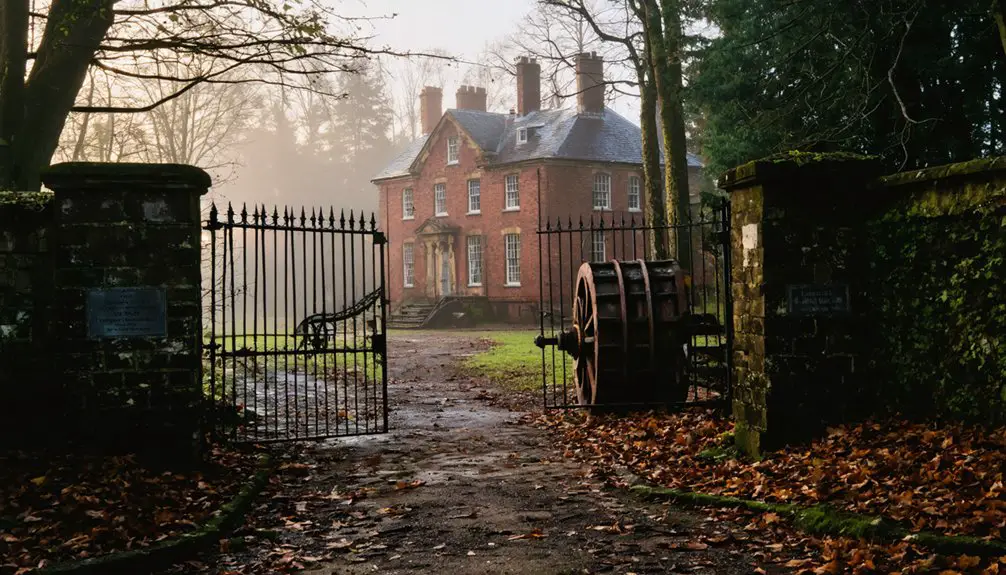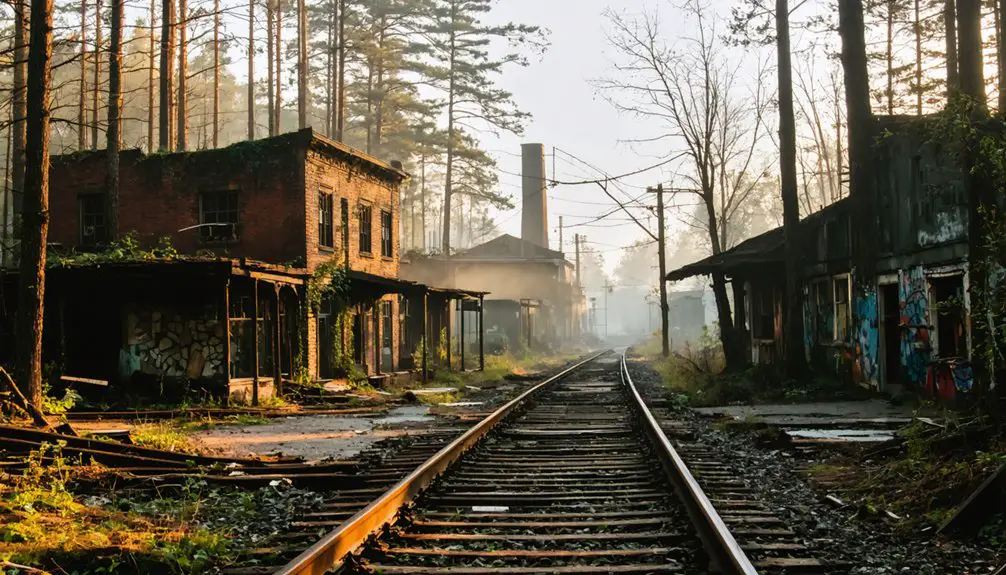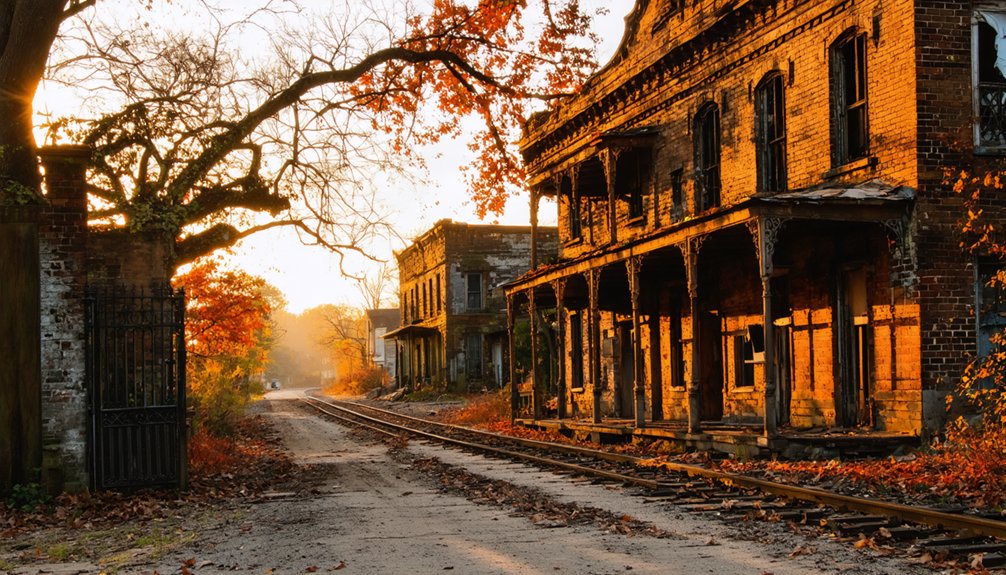
You’ll find New Jersey’s most haunting autumn destinations at Batsto Village, where Revolutionary War-era ironworks hide among pine barrens blazing with fall color, and Feltville’s Greek Revival cottages stand frozen since their 1840s mill town days. Walpack Center remains exactly as residents left it during the 1960s dam project—peeling paint, sagging porches, Methodist church pews untouched. October brings peak foliage to Waterloo Village’s canal museums and Whitesbog’s cranberry bogs, while Amatol’s concrete WWI ruins emerge from wilderness shadows. The following sections reveal when to visit, what to pack, and which structures you can explore inside.
Key Takeaways
- Batsto Village hosts the Country Living Fair on the third Sunday of October, featuring historic structures and accessible trails.
- Feltville offers October House Tours since 1980, allowing interior exploration of Greek Revival cottages and three-phase architecture through fall holidays.
- Walpack Center preserves 19th-century farmhouses and an 1872 church, with seasonal access showcasing authentic interiors and artifacts.
- Waterloo Village provides fall foliage viewing along the Musconetcong River with canal exhibits and hikes through Allamuchy Mountain State Park.
- Whitesbog Village features cranberry harvest tours in fall, with preserved worker housing and hiking trails within Brendan T. Byrne State Forest.
Batsto Village: A Preserved Pine Barrens Treasure
October’s perfect for exploring the gristmill, blacksmith shop, and towering mansion without summer’s crowds. The preservation challenges facing these weathered buildings become apparent up close—yet that’s precisely what makes them authentic.
New Jersey’s Division of Parks & Forestry maintains open access, so you’re free to roam trails threading between structures and riverbanks. The village’s iron-making heritage dates back to 1766 when Charles Read established the ironworks that would supply the Continental Army during the Revolutionary War.
The Batsto Citizens Committee sponsors the Country Living Fair annually on October’s third Sunday. Visitors can also explore educational publications like *Heart of the Pines* and *A Visit To Batsto Village* available in the Museum Shop.
Deserted Village of Feltville: The Town That Refuses to Stay Dead
You’ll find Feltville’s story woven through three distinct lives: a 1840s mill town, a failed industrial ghost village, and a Victorian summer resort that ultimately surrendered to silence.
Each October, the Union County Park Commission opens several historic houses for tours, letting you step inside the double workers’ cottages where families once lived amid David Felt’s utopian experiment.
The gravel walkways connecting the eight remaining structures still guide your footsteps past the old Union Church and general store, where archaeological digs have unearthed layers of broken crockery and discarded housewares—material whispers from residents who called this place home across different centuries. The site earned its place on the National Register of Historic Places in 1980, formally recognizing its significance as a window into three centuries of American industrial and social history.
Beyond the architectural remnants, interpretive programs with knowledgeable guides bring context to the settlement’s rise and fall, helping visitors imagine the rhythms of daily life that once animated these now-quiet streets.
Three Lives, One Village
Hidden within the Watchung Reservation’s 2,000 acres, the Deserted Village of Feltville has lived three distinct lives across three centuries—and each chapter ended in abandonment.
First, David Felt’s 1840s utopian mill town housed 175 workers in Greek Revival cottages until the 1857 financial panic shuttered operations. The empty buildings earned their ghostly reputation during decades of decay.
Then Warren Ackerman transformed the workers’ housing into Glenside Park resort in 1882, adding Adirondack porches for city dwellers seeking mountain air. That venture collapsed by 1916.
The village experienced a brief third act when Edward Grassman purchased properties and operated them as a club, commissioning artist Robert de la Selva to paint murals in the Mexican Cottage during the late 1920s—the only known works by de la Selva in the United States.
Today, you’ll find ten surviving structures protected through historical preservation efforts since 1980. The abandoned architecture tells stories of American industry, failed dreams, and resilience. The site now attracts around 90,000 visitors annually as part of the Union County Park System.
You’re free to explore the grounds dawn to dusk—no admission, no crowds, just history.
October’s Historic House Tour
Every year since 1980, the ghosts of Feltville come alive during a single weekend when those ten weathered structures swing open their doors. You’ll wander through Greek Revival workers’ cottages from the 1840s, their Adirondack-style porches added during resort days still creaking underfoot.
The historic architecture reveals three distinct lives—mill town, mountain resort, modern preservation—layered within identical facades.
October transforms the experience. While haunted legends swirl around abandoned villages, Feltville’s real specter is abandonment itself: twice deserted, twice resurrected.
You’ll explore the Union Church where mill workers once prayed, the general store that served both laborers and vacationers, and homes where three families still reside among the ruins. Just off the main trail, the Wilcox Badgley Cemetery holds members of the area’s founding families, with only a single original headstone—John Wilcox’s from 1776—surviving among the memorial markers.
Visit Saturdays through holidays, noon to five. The grounds welcome you dawn to dusk—perfect for those who prefer solitary exploration over guided constraint.
Walking Among Empty Homes
The ten white clapboard cottages stand in two facing rows along a dirt path, their shutters hanging at odd angles, their porches sagging under the weight of 180 years. You’re free to wander between these structures—David Felt’s worker housing from 1845—without ropes or admission fees.
The abandoned architecture tells its story through peeling paint and warped floorboards. Each empty doorway frames views into rooms where 175 millworkers once lived under “King David’s” strict rule. Children once attended classes in the small schoolhouse, learning their lessons while their parents worked in Felt’s mill on Blue Brook.
The house at the path’s end draws the most visitors, fueled by haunted legends about three sisters who vanished while camping here in 1912. Inside the Mexican Cottage, murals painted by Roberto de la Selva depict native Mexicans and the Virgin Mary, remnants of Edward Grassmann’s 1916 decorative vision. Whether you believe the stories or not, there’s something unsettling about standing alone among these hollow buildings as October wind whistles through broken windows.
Walpack Center: A Community Frozen in Time
You’ll find Walpack Center nestled in Sussex County, where 19th-century farmhouses and a white Victorian church still line the quarter-mile stretch of Main Street—silent witnesses to the 8,000 residents forcibly displaced when the federal government condemned their land for the ill-fated Tocks Island Dam in the 1960s.
I remember my first autumn visit here, walking past the 1850 Rosenkrans House with its windows dark and leaves collecting on the porch. I realized this wasn’t abandoned through natural decline but frozen mid-century by government decree.
The National Park Service now maintains these structures as part of the Delaware Water Gap National Recreation Area, and the Walpack Historical Society opens select buildings seasonally, giving you rare access to a community preserved exactly as families left it decades ago. The Walpack Methodist Episcopal Church, built in 1872, features simple rural architecture with an interior that remains completely unaltered and occasionally hosts seasonal events.
Historic Farming Community Origins
The rural architecture tells stories of resilience—from the 1872 Methodist Episcopal Church to the colonial Van Campen Inn. Originally designated as a “Yaugh” house, the Inn served as a refuge for weary travelers.
Walk Main Street, where ten buildings from 1850-1950 still stand, including the Rosenkrans House and a weathered schoolhouse. Each structure represents an era when small family farms defined freedom itself.
Tocks Island Dam Impact
When federal bulldozers rolled toward Walpack Center in 1955, they carried promises of progress that would drown an entire valley beneath a massive reservoir. The Tocks Island Dam project seized 72,000 acres through eminent domain, displacing 8,000 residents and spending $100 million on forced acquisitions. You’ll find churches, homes, and stores standing empty—monuments to governmental overreach.
But nature had other plans. Faulty soil conditions, skyrocketing costs, and the Vietnam War‘s budget drain stalled construction.
Then environmental conservation movements gained momentum, culminating in Congress protecting the Delaware River in 1978. The dam died, but Walpack remained frozen—a preserved ghost town now part of Delaware Water Gap National Recreation Area. Land reclamation never happened.
Instead, you’ll discover authentic 19th-century buildings exactly as residents left them.
Visiting Today’s Ghost Town
Driving along Old Mine Road today, you’ll pass weathered buildings that appear suspended in 1960—porches sagging slightly, paint peeling in artistic patterns, windows still reflecting the Kittatinny Ridge.
The National Park Service’s preservation efforts maintain these structures without restoration, creating an authentic time capsule that spawns urban legends among hikers discovering the abandoned settlement.
The Walpack Historical Society opens select buildings seasonally, revealing:
- Methodist Church – Original pews and hymnals remain where congregants left them
- Rosenkrans Museum – Checkered tile floors and antique telephones frozen mid-century
- One-room schoolhouse – Desks still arranged for phantom students
You’re free to explore surrounding trails independently, though building interiors require scheduled access.
Dense forests and minimal cellular service enhance the isolated atmosphere—bring navigation tools and respect posted boundaries.
Waterloo Village: Canal Town Museum Along Historic Waterways
Nestled along the Musconetcong River in Sussex County, Waterloo Village stands as a remarkably preserved snapshot of 19th-century canal life. You’ll discover the cultural significance of this Morris Canal halfway point, where mule teams once rested and coal boats serviced their way between the Delaware and Hudson Rivers.
Step back in time where mule-drawn canal boats once connected two mighty rivers through New Jersey’s industrial heartland.
The historic preservation efforts since 1967 have transformed abandoned buildings into an authentic open-air museum you can explore from sunrise to sunset.
Visit the Canal Museum on Saturdays to see interactive exhibits on lock construction, then wander past the working gristmill and blacksmith shop.
Fall’s your ideal time—the towpath offers stunning foliage hikes through Allamuchy Mountain State Park.
Entry’s free at 525 Waterloo Road in Stanhope, letting you experience canal-era freedom on your own schedule.
Whitesbog Village: Industrial Remnants in the State Forest
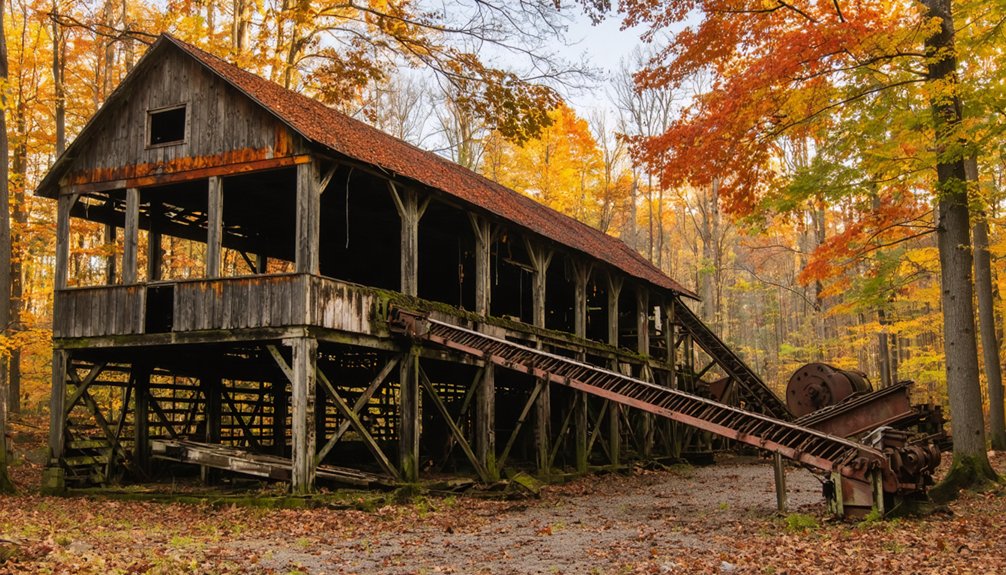
Deep in the Brendan T. Byrne State Forest, you’ll discover Whitesbog Village—a 3,000-acre time capsule where cranberry bogs and blueberry fields whisper tales of early 1900s agricultural innovation.
Elizabeth White pioneered commercial blueberry cultivation here in 1916, transforming this wildlife habitat into America’s berry capital. Today, preservation efforts maintain the ghost town’s authenticity while welcoming wanderers.
Experience Whitesbog’s autumn magic:
- October cranberry harvest tours through misty Pine Barrens bogs every weekend
- Monthly village tours exploring worker housing, the general store, and Elizabeth White’s Sunigive residence
- Dawn-to-dusk hiking trails weaving through sugar sand roads and reclaimed wilderness
The Whitesbog Preservation Trust keeps this registered historic site accessible year-round. Call (609) 893-4646 to arrange special visits, or simply roam the grounds where Italian immigrants once harvested America’s first cultivated blueberries.
Amatol: Hidden WWI Munitions Town Ruins
Beneath the Pine Barrens canopy, crumbling concrete structures emerge like ancient ruins—yet they’re barely a century old. You’ll discover Amatol’s military history scattered across Mullica Township—a WWI munitions town hastily built in 1918 to produce grenades and artillery shells.
These industrial ruins tell stories of 10,000-20,000 workers, chiefly Irish and Polish laborers from Philadelphia, who vanished after the 1918 Armistice.
The boomtown emptied overnight—thousands of munitions workers simply walked away when peace returned, leaving their wartime city to the pines.
Trek deep into the Pinelands National Reserve to find beveled pouring rooms designed to redirect explosions, their curved walls now vegetation-choked. Concrete foundations and bunker-like buildings dot the forest floor.
You’re standing where America’s war effort once thundered—now reclaimed by wilderness. Only the State Police barracks on White Horse Pike remains intact. Respect the site’s fragility while exploring this forgotten wartime settlement.
Best Times to Explore New Jersey’s Ghost Towns This Fall
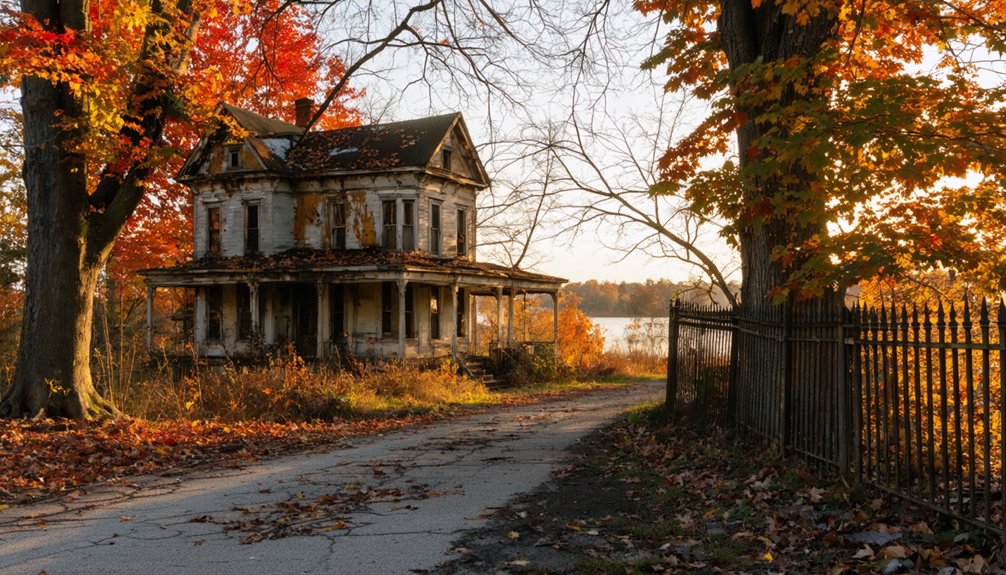
While summer crowds have thinned and autumn foliage paints the Pinelands in amber and crimson, New Jersey’s ghost towns reveal themselves most dramatically.
Exploring these scenic ghost towns in New Jersey allows visitors to step back in time and discover the stories etched into their ruins. Each abandoned structure and winding path holds a unique history, inviting a sense of mystery and adventure. As you wander through these remnants, the blend of natural beauty and historical intrigue captivates the imagination.
You’ll find ideal conditions throughout fall’s progression:
Timing Your Ghost Town Adventures:
- Early September through early October – Self-guided exploration at Batsto Village and Deserted Village of Feltville offers solitude before haunted events begin. Dawn-to-dusk access lets you wander freely amid urban legends without theatrical distractions.
- Mid-October weekends – Special haunted programming transforms historic sites. Allaire’s Night of Frights (October 10-26) and Cold Spring’s Ghoul Village (October 17-18, 24-25) blend haunted folklore with live entertainment.
- Late October through early November – Post-Halloween visits return sites to peaceful contemplation while foliage peaks in southern regions, perfect for photographing abandoned structures against autumn’s canvas.
What to Bring for Your Ghost Town Adventures
Since New Jersey’s ghost towns sprawl across terrain ranging from sandy Pinelands paths to rocky Skylands ridges, your pack needs to match the specific site you’re exploring. Your packing essentials start with sturdy hiking boots—those Van Slyke Castle ruins won’t navigate themselves—plus a waterproof map and reliable compass for Ramapo Mountain’s twisting trails.
Layer a moisture-wicking base with an insulated puffy jacket and waterproof shell, since autumn weather shifts fast in these abandoned places.
Safety precautions matter when you’re poking around old mine shafts and crumbling foundations. Toss in a compact first aid kit, multi-tool knife, and headlamp with extra batteries for those times you lose track of sunset. A camera captures Ghost Lake’s fall foliage, while your emergency blanket handles unexpected cold snaps on exposed ridges.
Frequently Asked Questions
Are Pets Allowed at New Jersey’s Ghost Town Sites?
Pet policies aren’t explicitly stated at New Jersey’s ghost towns, so you’ll need to contact each site directly. If allowed, keep your companion leashed to prevent wildlife interactions and guarantee everyone’s freedom to explore these haunting historic trails safely.
Exploring ghost towns in New Jersey can reveal fascinating stories of the past, with remnants of old buildings and forgotten roads inviting you to imagine what life once was like. Visitors often enjoy taking photographs, capturing the eerie beauty of these abandoned places, while being mindful of their surroundings. It’s a unique opportunity to connect with history among the natural landscape of the Garden State.
In addition to the haunting allure of the past, these ghost towns with unique festivities often celebrate their heritage with seasonal events that attract visitors from far and wide. From re-enactments of historical events to craft fairs showcasing local artisans, these gatherings breathe life into the abandoned streets. It’s a chance to experience the rich culture and community spirit that once thrived in these now-silent locales.
Can You Camp Overnight Near Any of These Ghost Towns?
Under stars where history whispers, you’ll find overnight camping only near Batsto Village in Wharton State Forest’s primitive sites. These historical preservation areas become photography hotspots at dawn, though other ghost towns permit daytime exploration alone.
Are Guided Tours Available at These Locations Year-Round?
You’ll find guided tours year-round at Batsto, Waterloo, and Allaire villages, where preservation efforts reveal hidden histories through restored buildings. Walpack Center’s re-enactor tours run only in October, though you’re free to explore landmarks independently anytime.
Which Ghost Towns Are Wheelchair Accessible for Visitors?
Feltville offers the most accessibility, with wheelchair-friendly buildings and restrooms throughout. Historical preservation meets modern accessibility improvements here, letting you freely explore authentic structures. Whitesbog’s barn features a handicap ramp, though site-wide access remains limited.
Do Any Sites Charge Admission Fees or Parking Costs?
Most sites offer free access without admission fees or parking costs, but you’ll pay $35-$50 at Nightmare at Gravity Hill. Batsto’s state forest location might charge nominal parking, though it’s not specifically mentioned in available information.
References
- https://en.wikipedia.org/wiki/List_of_ghost_towns_in_New_Jersey
- https://www.jerseysbest.com/community/take-a-road-trip-through-n-j-s-spooky-ghost-towns-to-see-peculiar-pieces-of-history/
- https://southjerseytrails.org/2017/03/16/six-pine-barrens-ghost-towns-to-explore/
- https://www.youtube.com/watch?v=ZIp3AYb0ulw
- https://www.atlasobscura.com/things-to-do/new-jersey/abandoned
- https://www.youtube.com/watch?v=P0aFAgcr79E
- https://pinelandsalliance.org/learn-about-the-pinelands/pinelands-history-and-culture/ghost-towns-of-the-pine-barrens/
- https://ucnj.org/parks-recreation/deserted-village/
- https://batstovillage.org/history/
- https://batstovillage.org/batsto-committee/