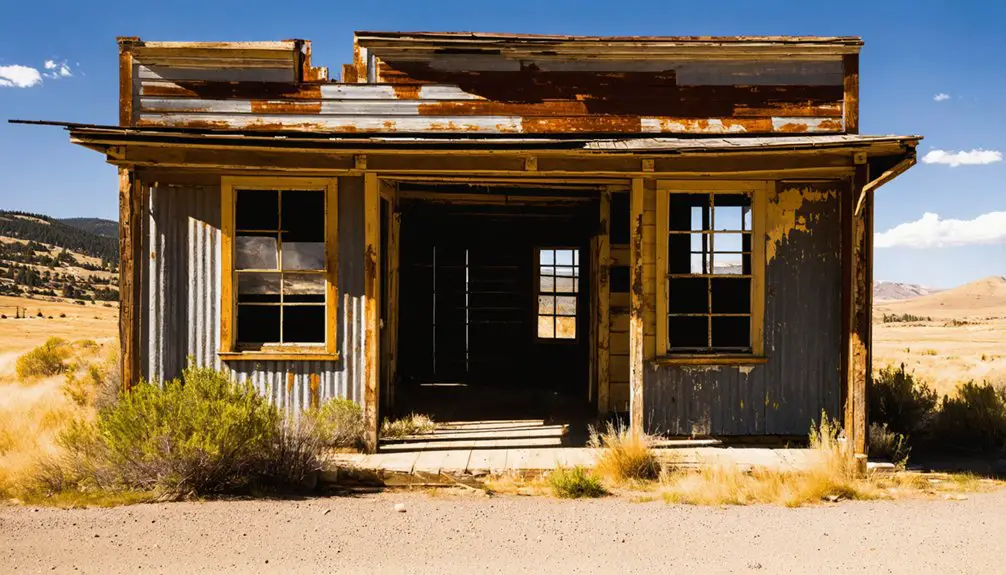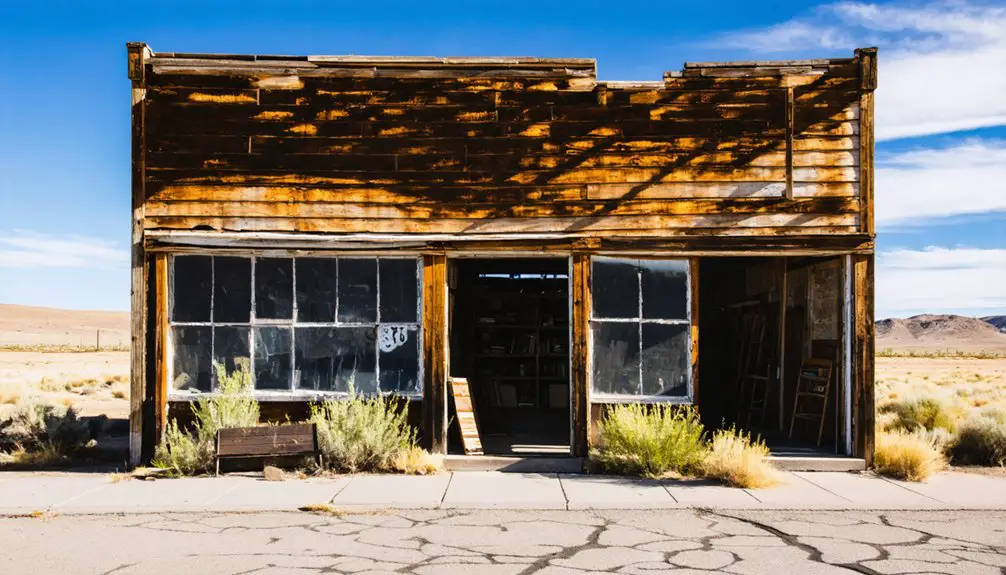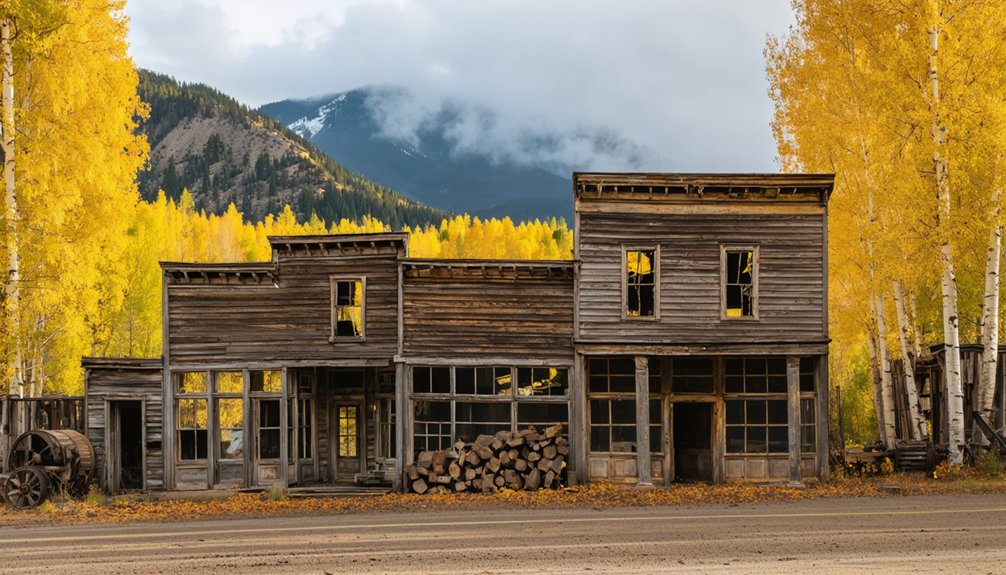
You’ll find Oregon’s best ghost town experiences in fall when golden aspens frame the Elkhorn Mountains’ mining relics at Granite and Buncom. Start with Shaniko’s brick warehouses in the high desert, then head to Sumpter where the massive rust-colored dredge tells stories of 1930s gold extraction. Bridal Veil near Portland offers misty waterfall views alongside lumber town remnants, while weathered storefronts throughout these settlements become particularly photogenic under autumn’s softer light. The seasonal timing means comfortable temperatures for exploring abandoned buildings and historic trails that reveal the complete picture of Oregon’s frontier past.
Key Takeaways
- Granite offers Oregon’s most authentic ghost town experience with weathered storefronts and golden aspens framing the Elkhorn Mountains in autumn.
- Buncom celebrates annual Buncom Day each May, featuring Southern Oregon’s best-preserved mining structures including an 1892 church and historic post office.
- Sumpter’s massive rust-colored Gold Dredge with 72 buckets provides guided tours and trails through wetlands showcasing ecological recovery.
- The 106-mile Elkhorn Drive Scenic Byway connects historic sites with mountain vistas, ideal for fall leaf peeping and photography.
- Shaniko features the reopened Shaniko Hotel and hosts annual “Shaniko Days” each August, with antique shops and a 1900 water tower.
Bridal Veil: A Lumber Town Near Portland’s Waterfalls
Just thirty minutes east of Portland, tucked between the misty cliffs of the Columbia River Gorge, you’ll find what’s left of Bridal Veil—a lumber town that once buzzed with sawmill workers, their families, and the constant shriek of blade meeting timber. Founded in 1886, this lumber industry hub supported hundreds through the 1960s before environmental concerns and dwindling forests forced its closure.
Today, you can explore the cemetery’s weathered headstones, trace the outline of the original mill near the river, and visit the iconic 10×10-foot post office—still stamping wedding invitations with its romantic postmark. The town’s name comes from a passenger’s description of a nearby waterfall as resembling a “delicate, misty bride’s veil” while traveling on the sternwheeler Baily Gatzert. Collectors prize vintage boxes from Bridal Veil’s craft food packaging operations that ran from the 1950s through the 1960s.
Though historical preservation efforts lost a decade-long legal battle in 2001, resulting in most demolitions, enough remains to glimpse Oregon’s company-town past. The Bridal Veil Lodge stands sentinel over this mountain-shadowed ghost.
Shaniko: Desert Ghost Town With Annual Events
Where the Columbia River Gorge’s evergreen mists give way to high desert silence, Shaniko rises from the sagebrush like a sepia photograph come to life. You’ll wander streets that once shipped millions of pounds of wool annually, when this Wild West outpost claimed the title “Wool Capital of the World.”
That brick warehouse still stands—eighteen-inch walls built to last centuries.
The Preservation Efforts here aren’t just about maintaining buildings; they’re resurrections. The Shaniko Hotel, reopened August 2023, welcomes you with frontier-thick walls and National Register authenticity. Through second-story windows, you’ll overlook the town much as travelers did over a century ago, when this hotel served wool merchants and ranchers driving their herds from the Cascades.
Time your visit for Shaniko Days each August, when 400 souls breathe temporary life into this desert outpost. Between April and September, antique shops and ice cream parlors along Shaniko Row offer provisions for modern-day explorers seeking untamed spaces. The old water tower, a 10,000-gallon wooden structure constructed in 1900, still stands as a testament to the infrastructure that once sustained this thriving community.
Sumpter: Mining Heritage and Outdoor Adventures
You’ll find the massive Sumpter Valley Gold Dredge rising from the valley floor like a rust-colored cathedral, its 72 buckets frozen mid-dig after extracting over $4 million in gold between 1935 and 1954.
Summer tours let you climb through the three-story floating beast while guides explain how it chewed through 9 cubic feet of earth per minute, leaving those serpentine gravel piles you’ll spot throughout the valley.
When you’re done exploring mining history, the surrounding Elkhorn Mountains offer trails that wind past abandoned shafts and ghost towns like Granite and Cornucopia, where another 300,000 ounces of gold once emerged from the rock. The town’s origins trace back to 1862 when five prospectors discovered gold while panning in Cracker Creek, leading them to abandon their California plans and build Fort Sumter on the spot. Northern sympathizer miners later arrived during the mining boom and prompted the name change from Fort Sumter to Sumpter.
Historic Gold Dredge Tours
Rising five stories above the Powder River like a rust-colored cathedral to Oregon’s mining past, the Sumpter Valley Dredge stands as one of the largest gold dredges still intact in the United States.
You’ll walk through the belly of this 1,250-ton beast where 72 buckets once devoured seven cubic yards of earth per minute, extracting $4.5 million in gold during its 1935-1954 run.
The dredge restoration lets you explore where miners worked 24/7 shifts, their stories preserved through video interviews and photographs.
From May through October, you’ll discover the mining history through guided tours of the operational machinery, or grab free gold panning lessons on weekends—you can even purchase your finds.
The massive tailings piles stretching across Sumpter Valley tell their own story of transformation and relentless ambition.
The dredge could dig up to 16 feet deep, reaching bedrock or hardpan to access gold-bearing material from the river bottom.
The operation used mercury to separate fine gold particles from sediment, a common but hazardous practice in early 20th-century mining.
Nearby Hiking and Recreation
Beyond the mechanical marvels of gold extraction, Sumpter’s surrounding wilderness offers trails that wind through the same mountains those prospectors once scoured for fortune.
You’ll find the Elkhorn Crest National Recreation Trail stretching from Marble Pass to Anthony Lake, perfect for autumn leaf peeping when mid-October transforms maples into blazing yellows and reds.
The Sumpter Valley Dredge State Heritage Area’s 1.5-mile wetland trails showcase nature’s remarkable reclamation over five decades—where wildflower blooms once carpeted the disturbed earth.
Viewing platforms along the trails provide insights into how the landscape has naturally recovered since the dredge’s final operations in 1954.
For extended adventures, Anthony Lake Campground provides access to multi-season routes, while nearby ghost towns like Bourne and Granite await exploration.
When winter arrives, Blue Spring Summit Sno-Park transforms the landscape into snowmobile terrain, while late spring through fall brings off-highway vehicle enthusiasts to the Blue Mountain OHV trail.
The 106-mile Elkhorn Drive Scenic Byway connects these historic sites, offering mountain vistas that echo the freedom those early miners desperately sought.
Golden: Josephine County’s Completely Abandoned Settlement
Tucked three miles from Interstate 5 along Coyote Creek, Golden stands as Oregon’s most remarkably preserved ghost town—a place where weathered church pews still face an altar and the schoolhouse desks remain arranged in tidy rows.
The mining history began with 1840s gold strikes, though it was Rev. William Ruble who transformed this rough camp into civilization’s unlikely frontier outpost in 1890.
His moral vision created something extraordinary: two churches, zero saloons, and 150 God-fearing residents extracting wealth from unwilling earth.
Golden’s abandoned architecture tells compelling stories:
- The 1892 Campbellite church anchors the settlement
- Ruble’s family residence stands sentinel beside it
- The 1904 general store preserves merchant quarters
- Whitewashed schoolhouse evokes childhood voices
Oregon State Parks maintains this heritage site where free-ranging chickens now outnumber people, and interpretive signs decode vanished lives along dusty pathways.
Buncom: Southern Oregon’s Best-Preserved Mining Town
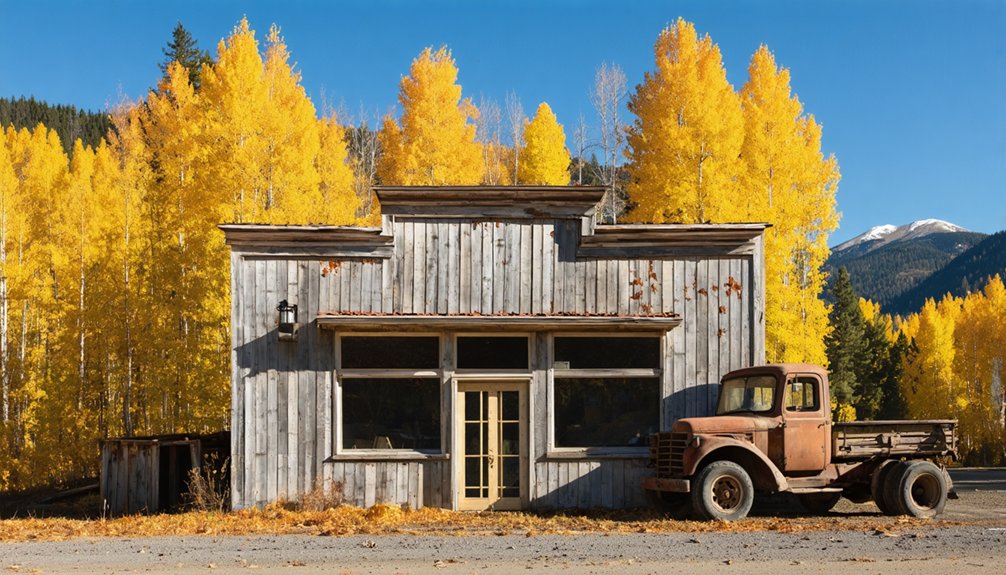
Twenty miles southwest of Medford, where Sterling Creek Road meets Little Applegate, three weathered structures hold court over Southern Oregon’s most photographed ghost town.
Three weathered buildings stand sentinel where Sterling Creek Road meets Little Applegate, guarding Southern Oregon’s most photographed ghost town.
You’ll find Buncom’s 1910 post office, bunkhouse, and cookhouse standing since Chinese miners struck gold here in 1851. The Buncom Historical Society‘s historic preservation efforts saved these buildings from collapse, replacing roofs and restoring porches after decades of neglect.
Peek inside the post office windows, where local storytelling brings the mining camp’s past alive—including tales of that peculiar highwayman who kissed ladies instead of robbing them.
The settlement thrived until 1918, supplying Little Applegate Valley’s miners and ranchers.
Now wildflowers blanket the green hills each spring, and Buncom Day’s last-Saturday-in-May celebration draws crowds seeking connection to Oregon’s untamed past.
Granite: Oregon’s Most Authentic Ghost Town in the Elkhorns
Deep in the Elkhorn Mountains, where gold fever once gripped nearly 5,000 fortune-seekers, Granite stands as Oregon’s most authentic ghost town—a place where abandoned buildings still outnumber living souls by a considerable margin.
You’ll find genuine ghost town preservation here, with only 30 residents maintaining this 1862 settlement. The mining history reveals itself through weathered storefronts and the Grand Hotel’s foundation, where Chinese miners once worked “worthless” tailings into fortunes.
What makes Granite exceptional:
- Accessible via Elkhorn Drive Scenic Byway
- Zero commercialization—just raw authenticity
- Walk freely through abandoned structures
- Explore without tourist crowds
The town hasn’t been truly populated since mid-century. You’re not visiting a restored attraction; you’re witnessing time suspended.
Autumn’s golden aspens frame these relics perfectly, offering photographers and history enthusiasts unfiltered access to Oregon’s wild past.
Frequently Asked Questions
What Should I Bring When Visiting Oregon Ghost Towns in Fall?
Pack essential travel gear like sturdy boots, layered autumn attire, and emergency supplies. You’ll need water, snacks, and navigation tools since services disappear beyond Baker City. Don’t forget your camera—these weathered ruins against fall foliage create unforgettable moments.
Are Oregon Ghost Towns Safe to Explore With Children?
Oregon ghost towns aren’t universally safe for children—crumbling structures and biological hazards pose real risks. Stick to historical preservation sites with maintained paths, avoiding derelict interiors. Haunted legends add mystique, but you’ll need constant supervision and caution exploring freely.
Exploring the best ghost towns in Oregon can provide a fascinating glimpse into the past, showcasing the remnants of once-thriving communities. Each site offers a unique story, often steeped in the lore of the Wild West era. Be prepared for rugged terrain and unexpected surprises as you delve into these enchanting, albeit cautionary, remnants of history.
ghost towns in oregon’s landscape reveal not only the architectural decline but also the stories of those who once called these places home. With each ghost town, visitors might discover artifacts that tell tales of resilience and adaptation in the face of changing times. As you wander through these historic sites, allow yourself to imagine the lives that unfolded there, adding a layer of depth to your exploration.
Do I Need Special Permits to Visit Abandoned Ghost Towns?
You’ll rarely require permits for publicly-owned ghost towns, but permission requirements demand you verify land ownership first. Trespassing troubles can terminate your adventure quickly. Historical preservation laws protect artifacts—admire everything, take only photographs, leave only footprints behind.
What Are the Best Photography Tips for Ghost Town Visits?
Pack essential photography gear like wide-angle lenses and a sturdy tripod for your urban exploration adventure. Shoot during golden hours, experiment with unusual angles, and focus on weathered details that tell each abandoned structure’s haunting story through your lens.
Can I Camp Near Oregon Ghost Towns During Fall?
You’ll find excellent camping near Oregon’s ghost towns during fall, with seasonal accessibility through October at Sumpter Valley Heritage Area. Historical preservation efforts keep roads open, letting you explore Granite and Bourne while embracing autumn’s golden freedom.
References
- https://www.pdxmonthly.com/travel-and-outdoors/oregon-ghost-towns
- https://thatoregonlife.com/2025/09/elkhorn-scenic-byway-ghost-town-fall-road-trip/
- https://www.travelmedford.org/fall-bucket-list
- https://www.tripadvisor.com/Attractions-g28958-Activities-c47-t14-Oregon.html
- https://indigocreekoutfitters.com/news/2022/05/05/exploring-southern-oregons-ghost-towns/
- https://www.youtube.com/watch?v=GaS3xjrQ-_I
- https://traveloregon.com/things-to-do/culture-history/ghost-towns/
- https://www.abandonedspaces.com/towns/bridal-veil-oregon.html
- https://sites.google.com/view/recreatingthecrh/historic-columbia-river-highway/bridal-veil/bridal-veil-oregon
- https://www.youtube.com/watch?v=4rhmW_0iT8A