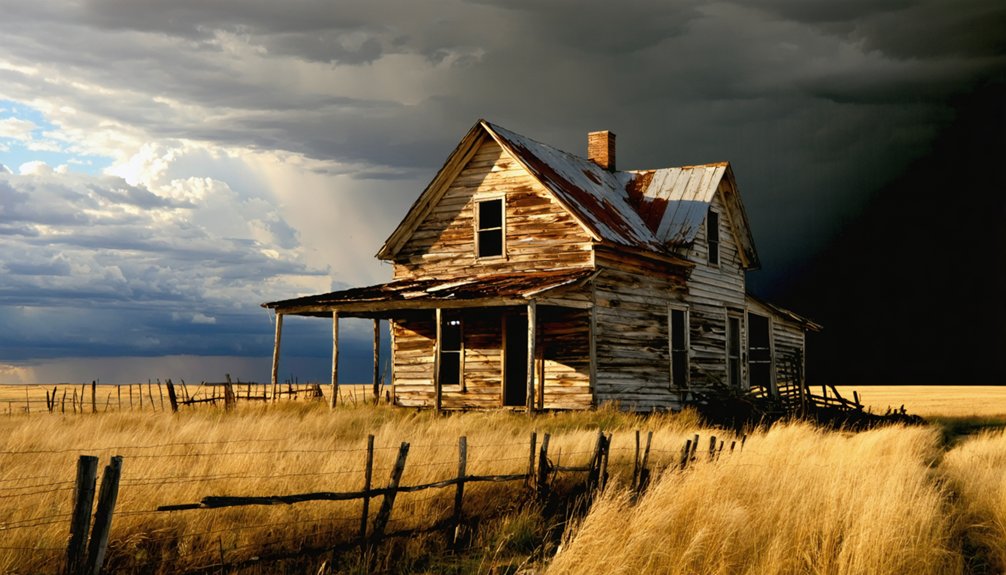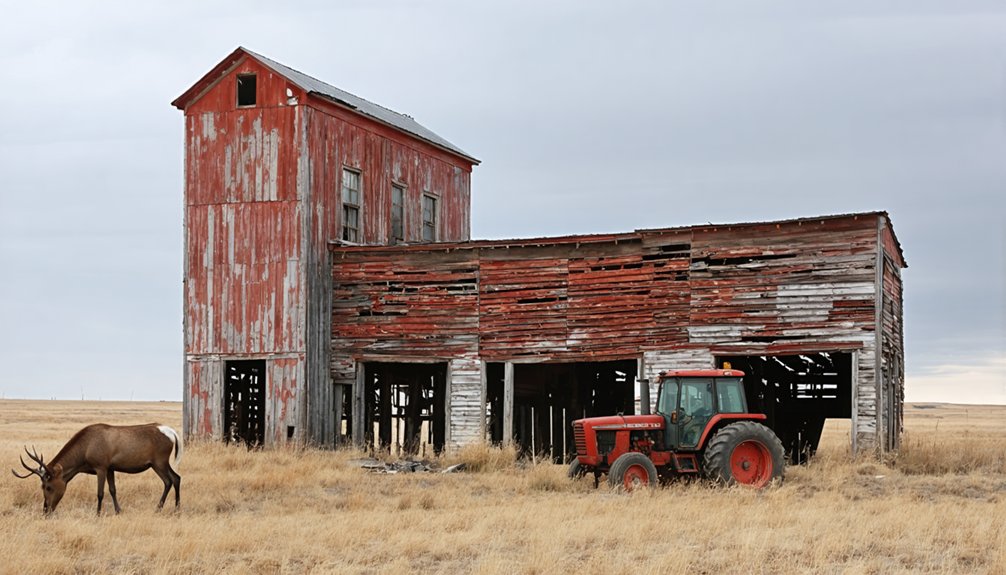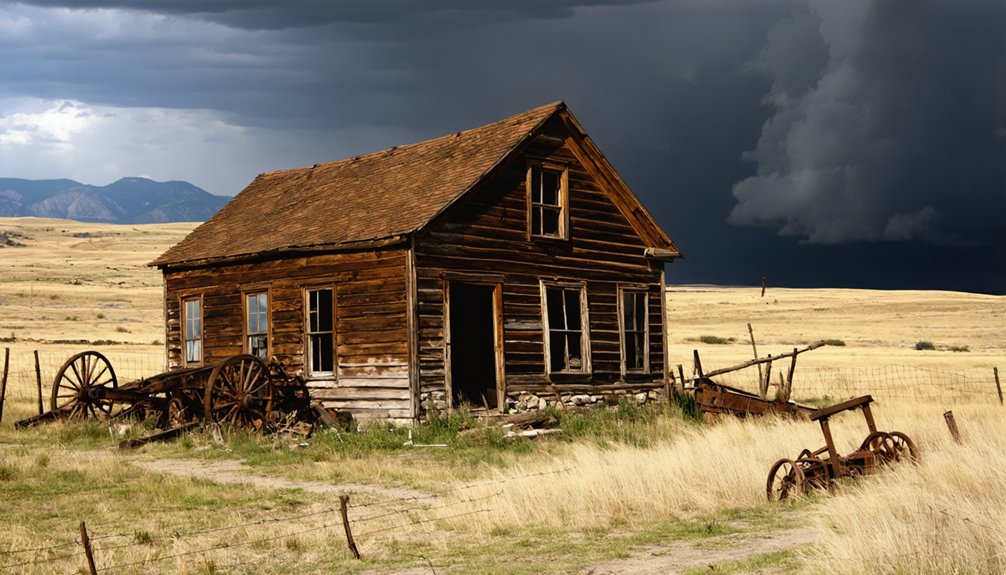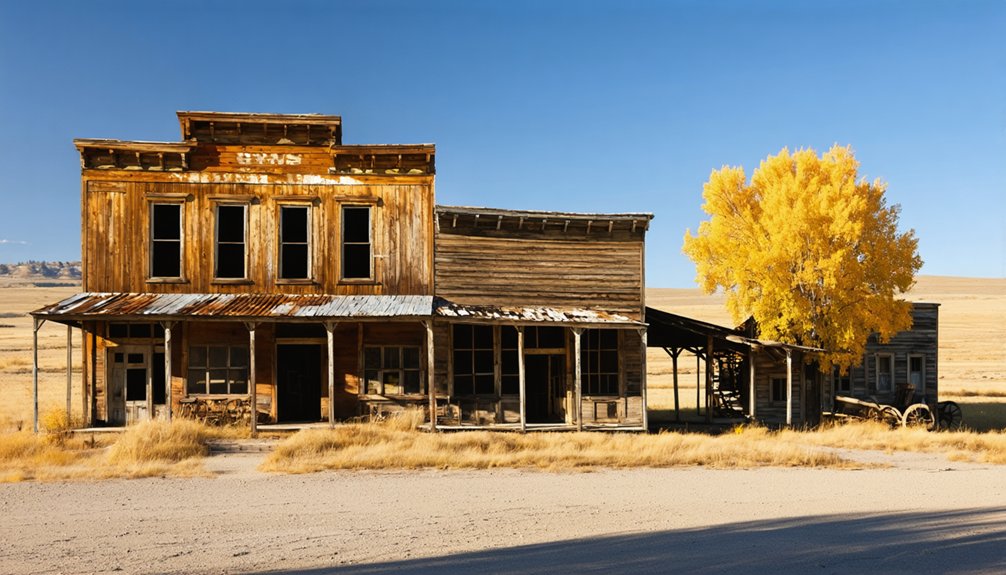
You’ll find South Dakota’s best fall ghost town experiences in places like Mystic along the Mickelson Trail, where weathered railroad structures stand against golden aspens, and Okaton off I-90, with its collapsing grain elevator casting dramatic shadows in late afternoon light. Ardmore’s iconic white barn overlooks prairie grasses turned amber, while Spokane Ghost Town offers horseback trails through fog-kissed Black Hills terrain. Visit September through early October when frost transforms ponderosa pines and abandoned storefronts glow in pre-sunset warmth—perfect conditions for capturing haunting photographs and discovering the stories behind these atmospheric ruins.
Key Takeaways
- Mystic features preserved structures like a schoolhouse and sawmill along the Mickelson Trail, with nearby Fairview Mine highlighting mining history.
- Okaton at Exit 170 offers deteriorating storefronts and a grain elevator, best photographed during autumn’s golden light hours.
- Spokane Ghost Town provides horseback trails through Black Hills terrain with scattered mining relics from its 1940 closure.
- Capa showcases fourteen skeletal structures on windswept prairie, recognized by Atlas Obscura for atmospheric abandonment photography.
- Fall offers peak conditions: September-October foliage, dramatic fog effects, and ideal late afternoon lighting for haunting visuals.
Mystic: Historic Railroad Town on the Mickelson Trail
Walk the Mickelson Trail where locomotives once hauled fortunes in ore and timber.
Historic preservation efforts have saved the schoolhouse and original structures since Mystic’s 1986 National Register designation.
The sawmill shuttered in 1952, the rails went silent in 1983, yet railroad history pulses through every weathered plank.
George Frink, an immigrant sawmill owner, served 25 years as postmaster and became a cornerstone of the community.
The Fairview Mine, located a mile from town, stands as a reminder of Mystic’s notably successful mining operations.
This ghost town doesn’t demand your time—it rewards your curiosity.
Ardmore: Prairie Relic With Iconic White Barn
Rising from the windswept prairie one mile north of Nebraska, Ardmore’s iconic white barn pierces the horizon—a skeletal monument to agriculture’s broken promises. You’ll discover this 1889 railroad town frozen since diesel locomotives ended its water-stop lifeline, leaving fifteen to twenty-five abandoned homes scattered along Highway 71.
A windswept ghost town where prairie meets abandoned dreams, fifteen forsaken homes marking where the railroad’s promise died.
The white barn crowns the hillside where government dry farming experiments failed spectacularly—President Coolidge himself attended their doomed 1927 picnic.
Community legends speak of residents who survived the Depression without welfare, trading acidic Hat Creek water for railroad-supplied fresh supplies until the very end. By 1980, the U.S. Census recorded only sixteen residents clinging to this fading community.
Today’s eerie atmosphere attracts photographers seeking historical preservation through documentation. You’ll find brick dwellings weathering time without graffiti, classic car graveyards, and occasional reunion gatherings at the old fire station—freedom seekers exploring civilization’s ephemeral nature. Steam trains once stopped here to refill water from the local creek before continuing their journeys across the frontier.
Okaton: Slowly Collapsing Railroad Settlement
Crumbling along Exit 170 of Interstate 90, Okaton’s weathered storefronts and collapsing grain elevator tell the story of a 1906 railroad settlement that couldn’t outlast the steel tracks beneath it.
You’ll discover authentic urban decay here—no Hollywood sets, just rusted relics surrendering to South Dakota’s brutal winters. The Westlakes once tried transforming this abandonment into “Westlake’s Ghost Town,” complete with billboards luring interstate travelers to their rock shop and petting zoo. That venture’s gone now, leaving you free to photograph tumbling shacks, overgrown railroad ties, and farm equipment slowly dissolving into prairie soil.
Twenty-three souls still call nearby farms home, but the town proper stands empty. The distinctive grain elevator still bears the painted “Bingo Grain Co.” name—a false label from an unreleased movie rather than its original Okaton Grain Co. identity. When the tracks ceased operation in the 1980s, the town lost its economic lifeline and any hope of recovery. Respect the private property as you wander these five streets, where autumn light transforms desolation into haunting beauty.
Spokane Ghost Town: Perfect for Horseback Exploration
The trails leading to Spokane ghost town wind through Black Hills terrain that’s tailor-made for horseback exploration, especially when fall storms roll across the ridgelines.
You’ll find the moderate terrain near Forest Service Road 330 accessible enough for riders of varying experience, with the added drama of autumn weather transforming the abandoned mining site into something straight out of a Western.
As thunder rumbles over decaying buildings and wind whistles through the old watchman’s house, you’ll understand why this particular ghost town feels most alive when experienced from the saddle during storm season. The landscape reveals rusted metal and bottles scattered among the forest floor, remnants of the mining operations that once thrived here.
The town’s peak came in 1927, with shipments of lead, zinc, and gold that defined its prosperity before the inevitable decline that followed.
Accessible Trail Riding Routes
Nestled sixteen miles northeast of Custer in the Black Hills, Spokane Ghost Town offers horseback riders one of South Dakota’s most accessible abandoned mining sites. You’ll find convenient parking at Spokane Creek Campground or along Forest Service Road 330, where a short ride leads directly to the ruins.
The terrain’s moderate difficulty suits experienced trail riders seeking mining heritage exploration beyond marked paths.
From your saddle, you’ll navigate surrounding glory holes and forgotten mining roads while discovering the watchman’s house, crumbling schoolhouse, and rusting vehicle remains.
Historic preservation efforts remain minimal here, giving you authentic freedom to explore this 1890s silver-lead operation at your own pace. The Spokane Mine once produced gold, silver, and lead alongside copper, mica, and zinc before closing in 1940.
The site’s proximity to Custer State Park’s northern border provides additional horse-friendly routes through untamed Black Hills country where miners once struck ore. Among the scattered remnants, you’ll encounter old cars in the woods that serve as haunting reminders of the town’s prosperous past.
Fall Storm Atmosphere
Autumn storms transform Spokane Ghost Town into something far more haunting than summer sunshine ever reveals. You’ll experience the Black Hills’ raw power as winds howl through weathered structures, creating an atmosphere that connects you viscerally to the miners who once carved their fortunes from these mountains.
The haunted ambiance intensifies when autumn weather rolls through:
- Winds whistle through pine trees and empty mine structures, echoing the ghostly clinks of long-silent pickaxes
- Storm-driven shadows animate the landscape, transforming stillness into flickering silhouettes of fortune hunters and hard rock miners
- Overcast skies deepen the desolation around rusting machinery and crumbling foundations
You’ll find the watchman’s house and decrepit schoolhouse standing defiant against autumn gales—weathered sentinels bearing witness to Spokane’s transformation from bustling mining camp to abandoned memorial.
Capa Ghost Town: Atlas Obscura’s Prairie Gem
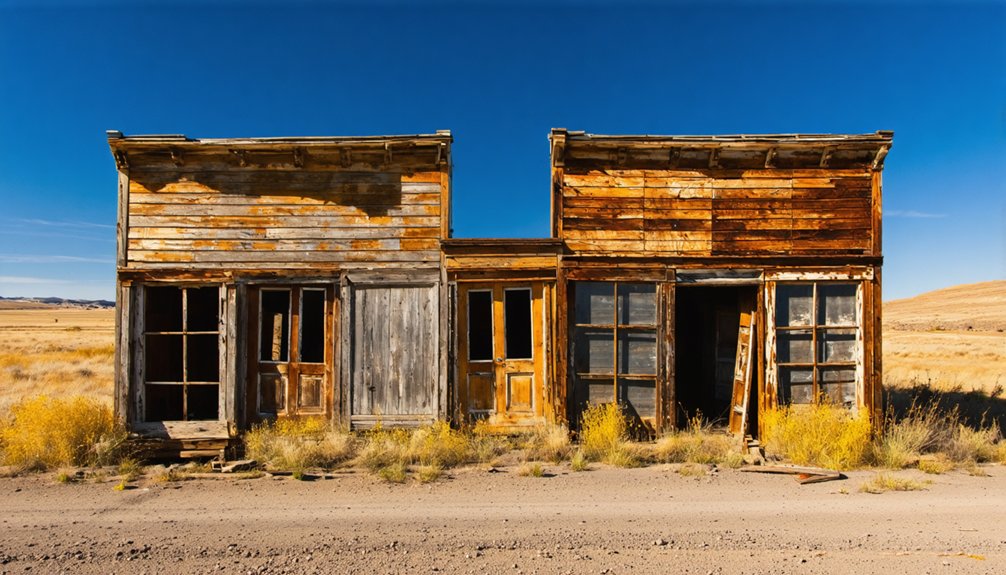
Wind whispers through fourteen skeletal buildings on the South Dakota prairie, where Capa Ghost Town stands as a haunting proof of early 20th-century ambition gone silent.
You’ll discover tattered furnishings in abandoned houses and the rubble heap of what was once an arched-window Catholic church. Philip O’Connor, sole resident and descendant of town founders, welcomes photographers to explore his property—just ask permission first.
Local legends include the “Scandal of Capa,” where a resident named Young absconded with sanatorium funds.
The artesian well still feeds Capa Lake, once famous for mineral baths that drew health-seekers. Historical preservation here means leaving decay untouched—three outhouses stand sentinel on windswept grassland.
You’ll find more bison than people along the nine-mile gravel road from Midland, offering freedom-seekers authentic prairie solitude.
1880 Town: Living History Museum in Midland
Step through the fourteen-sided barn at 1880 Town and you’ll find yourself surrounded by over 30 authentically furnished buildings that transport you to the vanishing prairie era.
You can explore genuine homesteads complete with windmills and corrals, run your fingers along cowboy spur scars etched into the Dakota Hotel’s 1910 staircase, and encounter artifacts ranging from Custer battlefield relics to Casey Tibbs’ championship rodeo gear.
This isn’t a static museum—it’s a living snapshot of frontier life where you’ll walk the same wooden floors and peer into the same horse stalls that defined the American West.
Authentic 1880s Era Buildings
Tucked away near Exit 170 off I-90, the 1880 Town Living History Museum preserves South Dakota’s frontier era through more than thirty authentic buildings that Richard Hullinger painstakingly relocated to this Midland property.
Each structure showcases genuine architectural styles from 1880-1920, transported from their original South Dakota locations using careful restoration techniques.
You’ll discover remarkable pieces of the past:
- A fourteen-sided barn from 1919, hauled forty-five miles from Draper
- The Dakota Hotel with cowboy spur scars still visible on its 1910 floors
- An 1886 C&NW Railroad Depot captured in photographs from 1913
The homestead quarter-mile east features a windmill, corrals, and barn that recreate authentic prairie life.
Every building stands as testimony to frontier ingenuity, furnished with thousands of period relics that transport you beyond modern constraints.
Interactive Cowboy Story Experience
Beyond viewing historic structures, you’ll immerse yourself in authentic cowboy culture through hands-on experiences that bring the Old West to life. The Children’s Cowboy Corral lets you handle real saddles, spurs, and lariats while learning ranch influence on Western settlement.
You’ll discover how cowboy storytelling evolved through the Rodeo Legends exhibits, featuring championship buckles and memorabilia from icons like Bill Pickett and Ty Murray. Interactive simulations put you on bucking broncs and bulls, testing your mettle against rodeo challenges.
The fully-equipped blacksmith shop, saloon, and general store invite you to step into authentic frontier roles. Staff interactions and costume rentals transform your visit into genuine cowboy adventure, where you’re free to explore Western heritage at your own pace.
Best Time to Photograph Fall Colors at Abandoned Sites
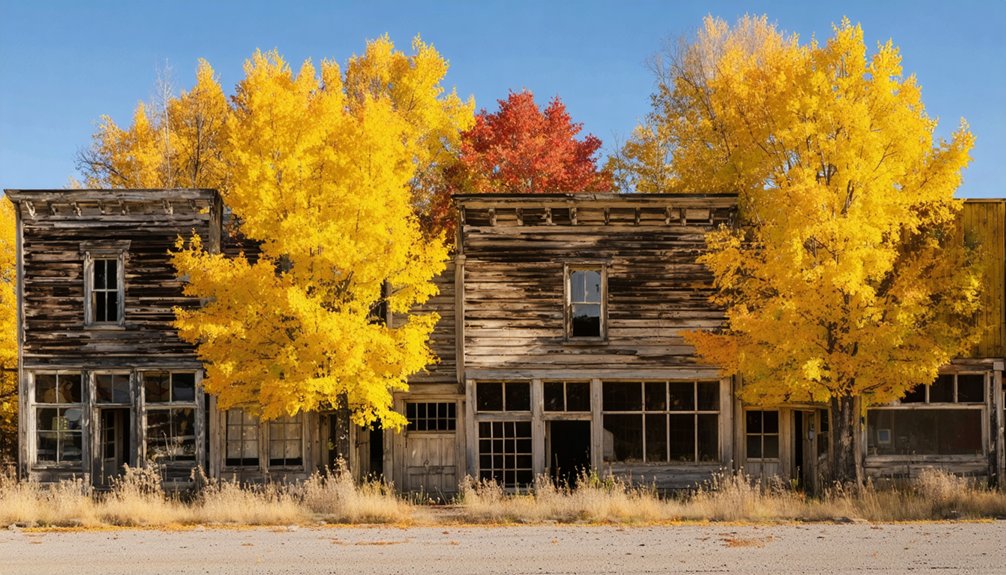
When golden light spills across South Dakota’s prairie grasslands in late afternoon, abandoned structures transform into haunting silhouettes that beg to be photographed.
Late afternoon transforms forgotten buildings into dramatic silhouettes against prairie skies, creating compelling compositions that tell stories of abandonment and time.
You’ll capture the most dramatic shots during that pre-sunset window when warm tones illuminate weathered wood and crumbling facades—a storytelling technique that reveals layers of historic preservation through light and shadow.
Target these ideal conditions for your fall ghost town photography:
- Mid-September to early October for peak fall foliage in Black Hills locations like Spokane, where aspens frame abandoned mines.
- Late afternoon positioning 13 miles south of small towns where gravel roads lead to fog-kissed hilltop houses.
- Morning light at Okaton’s Exit 183 for railroad remnants bathed in golden hues.
Cold fronts introduce atmospheric fog layers, amplifying the eerie magnificence of prairie decay.
What to Bring on Your Ghost Town Adventure
Your ghost town adventure demands thoughtful preparation. Pack layered clothing for South Dakota’s unpredictable fall temperatures that swing from the high 50s during the day to freezing at night.
You’ll need sturdy waterproof hiking boots with high-traction soles to navigate muddy trails and overgrown ruins. Plus, a reliable GPS device or detailed maps since cell service vanishes in remote areas.
Don’t forget your camera with extra batteries, a flashlight for exploring dim interiors, and a first-aid kit to handle the scrapes and surprises that come with wandering through decaying structures.
Essential Photography and Safety Gear
As autumn light slants through broken windowpanes and weathered boardwalks, you’ll need the right camera gear to capture South Dakota’s ghost towns in their most atmospheric season. Pack a wide-angle lens for sweeping prairie vistas and a sturdy tripod for those golden-hour long exposures when shadows stretch across abandoned main streets.
Essential gear includes:
- Manual camera body with backup battery for remote locations where power’s unavailable
- Off-camera flash and LED lights for illuminating dark interiors and light painting crumbling facades
- Protective equipment like sensor cleaning kits and rain sleeves against relentless dust
Drone techniques reveal overhead perspectives of isolated settlements, though you’ll want wildlife safety precautions—rattlesnakes inhabit ruins. Research property boundaries beforehand and carry your equipment in weather-resistant bags for unrestricted exploration.
Weather-Appropriate Clothing Layers
South Dakota’s ghost towns in fall demand a strategic layering system that adapts to temperature swings of 40 degrees or more between sunrise and sunset.
Start with moisture-wicking merino wool base layers against your skin, avoiding synthetics that trap sweat during 9-10 mile daily explorations.
Add insulated fleece or down mid-layers you’ll shed as temperatures climb toward noon.
Your waterproof, windproof parka becomes essential by 5 p.m. when rapid cooling hits exposed ridgelines and abandoned streets.
Layering versatility means shifting from hoodie to T-shirt to winter coat throughout your adventure.
Weather adaptability requires sturdy hiking boots for ghost town trails, plus packable layers you’ll adjust at every bus stop and overlook.
Long pants protect against morning brush, while hats and scarves shield you from persistent fall winds that whip through skeletal building frames.
Before venturing into South Dakota’s remote ghost towns, download the detailed GPX file containing 1428 state landmarks directly to your GPS device or smartphone. ExpertGPS software
Safety Tips for Exploring Abandoned Buildings
Exploring South Dakota’s weathered ghost towns demands respect for the dangers lurking within their crumbling walls. Before you embrace urban exploration, suit up with safety equipment: sturdy boots, gloves, FFP3 masks for mold-ridden bunkers, and hard hats where ceilings sag ominously. Check structures from outside first—cracked walls and leaning frames telegraph imminent collapse.
Crumbling walls and sagging ceilings demand caution—gear up properly before stepping into South Dakota’s decaying frontier relics.
Never venture alone; bring a partner who’ll watch your back when floorboards groan underfoot. Test every surface before committing your weight. Watch for asbestos in pipes and roofing, standing water concealing sharp debris, and vermin nests in dark corners.
Inform someone of your whereabouts and return time. If walls shift or gut instinct screams danger, trust it—exit immediately.
These skeletal remnants of frontier ambition deserve exploration, but they’ll claim the careless without hesitation.
Planning Your Black Hills Ghost Town Route
When autumn frost silvers the ponderosa pines, the Black Hills transforms into a 125-mile sprawl of mining history waiting to be traced through winding forest roads and canyon passages.
You’ll navigate a region where mineral extraction birthed over 600 ghost towns, each representing different chapters of historical preservation efforts.
Your most efficient route follows I-90 West to Exit 30, then winds through:
- Deadwood for Wild West reenactments and Mount Moriah Cemetery’s legendary graves
- Galena via Vanocker Canyon, where the intact schoolhouse anchors scattered mining remnants
- Spokane Ghost Town accessed through Forest Service Road 330 (coordinates N43.840657, W103.376041)
Between major sites, Mystic and Rochford mark the original railroad line where miners once restocked supplies.
Gaping shafts and waste piles at Hornblend, Blue Lead, and Bald Mountain punctuate your journey through Boulder Canyon’s crimson foliage.
Frequently Asked Questions
Are Ghost Town Visits in South Dakota Free or Do They Charge Admission?
Admission fees vary widely—you’ll find free access at Scenic Ghost Town, while 1880 Town charges $8-$14 depending on age. Tour costs at working sites like Broken Boot Gold Mine run around $12, giving you authentic exploration options.
Can You Camp Overnight Near South Dakota Ghost Towns During Fall?
You’ll find campgrounds perfectly positioned near South Dakota’s ghost towns, almost as if fate planned your autumn adventure. Check camping regulations beforehand—most sites welcome fall visitors, though some face seasonal closures. You’re free to explore and stay overnight.
As you venture through ghost towns in South Dakota, you’ll discover remnants of history that tell stories of past lives and lost dreams. Each town offers unique scenery and a chance to connect with the spirit of the Old West. Don’t forget your camera, as these mysterious landscapes create the perfect backdrop for unforgettable memories.
Are South Dakota Ghost Towns Accessible for Visitors With Mobility Issues?
Most South Dakota ghost towns lack documented accessibility features or paved paths for wheelchairs. You’ll find better transportation options and mobility support at maintained attractions like Badlands National Park, though ghost towns remain largely unimproved for accessible exploration.
Exploring abandoned towns in South Dakota can still be an intriguing experience for those who enjoy venturing off the beaten path. Unique stories and remnants of the past await discovery, although it’s essential to prepare for rough terrain. As you wander through these ghost towns, you’ll encounter fascinating architecture and the remnants of history that tell the tales of those who once called these places home.
Do Any Ghost Towns Offer Guided Tours During Fall Season?
Deadwood’s ghost tours run year-round through fall, led by tour operator options like Lizzie Borden Ghost Tours. They’ll guide you through historical preservation sites where outlaws and prohibition-era spirits still linger, offering evening adventures six days weekly.
What Wildlife Might You Encounter While Visiting Prairie Ghost Towns?
You’ll encounter *endless* prairie animals during wildlife encounters at ghost towns! Prairie dogs swarm abundantly across Conata’s grasslands, while rattlesnakes hide in foundations, hawks patrol overhead, and meadowlarks sing freely through wind-swept ruins you’re exploring.
References
- https://www.powderhouselodge.com/black-hills-attractions/fun-attractions/ghost-towns-of-western-south-dakota/
- https://www.blackhillsbadlands.com/plan/itineraries/autumn-adventure-awaits-your-guide-to-fall-in-the-black-hills-badlands/
- https://www.tripadvisor.com/Attractions-g28962-Activities-c47-t14-South_Dakota.html
- https://www.lewisandclark.travel/listing/buffalo-ridge-ghost-town/
- https://www.youtube.com/watch?v=_0WNYsFLSLA
- https://www.atlasobscura.com/things-to-do/south-dakota/ghost-towns
- https://www.travelsouthdakota.com/trip-ideas/abandoned-beauty-ghost-towns-structures-south-dakota
- https://blackhillsatvdestinations.com/ghost-towns/
- https://www.1880town.com
- https://www.historynet.com/ghost-towns-mystic-south-dakota/