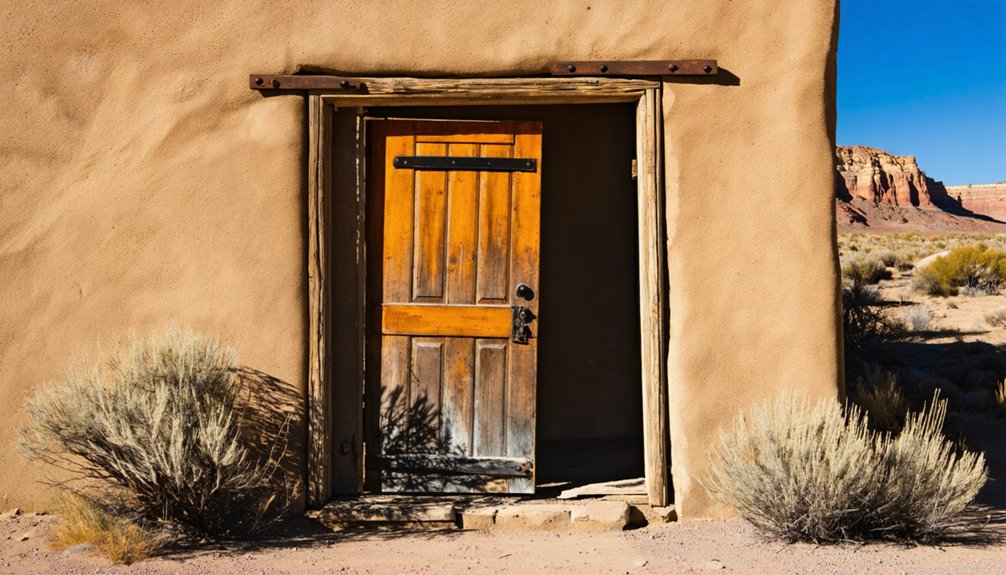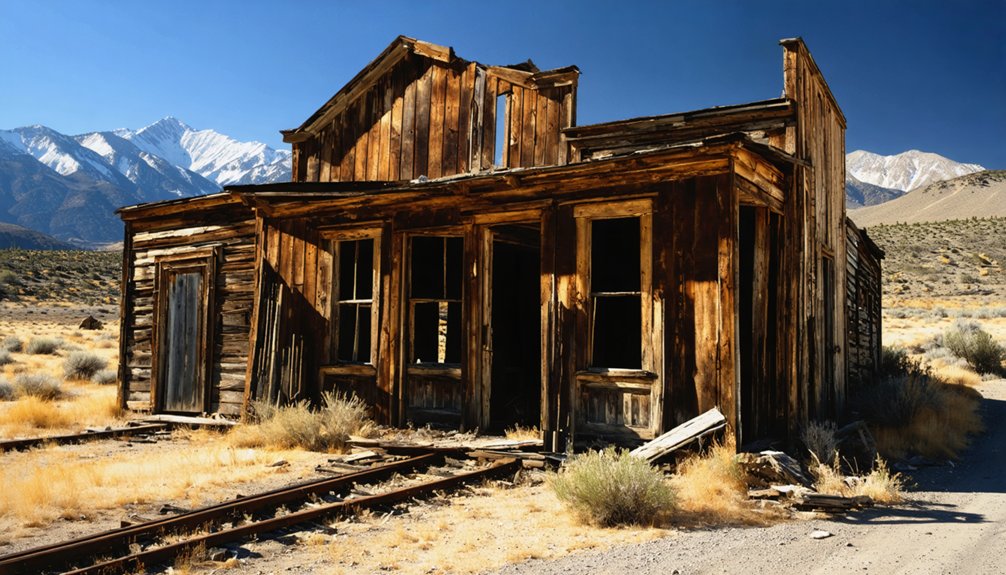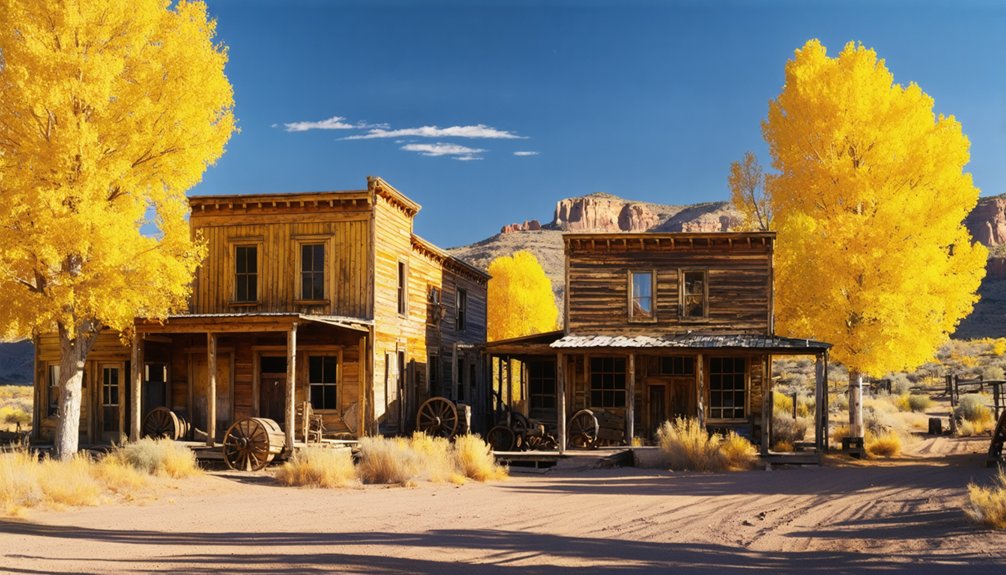
You’ll find Utah’s ghost towns at their most photogenic in fall, when golden cottonwoods frame crumbling adobe walls and temperatures hover between 40-70°F—perfect for exploration. Grafton, nine miles from Zion, offers Hollywood-famous ruins and pioneer schoolhouses, while Sego showcases 8,000 years of petroglyphs beside mining relics. Don’t miss Frisco’s beehive kilns or Iosepa’s unexpected Hawaiian heritage. Pack layers, download offline maps, and bring a high-clearance vehicle for remote sites—weekday visits mean you’ll have these atmospheric ruins practically to yourself, with plenty more haunting locations waiting beyond these highlights.
Key Takeaways
- Grafton Ghost Town: 9 miles from Zion, features 1862 schoolhouse and adobe structures; best photographed during fall’s golden hour.
- Sego Ghost Town: Showcases 8,000 years of history with Native petroglyphs and mining ruins; autumn foliage contrasts red rock canyon walls.
- Frisco Ghost Town: Former silver boom town with beehive kilns and historic cemetery; surrounded by Tushar Mountains’ fall colors.
- Fall Benefits: Temperatures range 40-70°F with golden cottonwoods enhancing photography; weekday visits reduce crowds at popular sites.
- Preparation Tips: Bring layers for temperature fluctuations, use high-clearance vehicles, download offline maps, and ensure adequate fuel supplies.
Grafton Ghost Town: A Photographer’s Paradise Near Zion
Just nine miles from Zion National Park’s entrance, Grafton Ghost Town emerges from the Virgin River valley like a weathered photograph come to life. You’ll find adobe walls and weathered timber that’ve stood since 1886, making this the most photographed ghost town in the West—and for good reason.
Bring your camera during fall’s golden hour when amber light transforms the 1862 schoolhouse into pure magic. The historical preservation here’s remarkably authentic; no modern buildings interrupt your shots. You’re walking the same dusty paths where Mormon pioneers battled floods and conflicts before abandoning their dreams in 1944. The site gained Hollywood fame when it hosted Butch Cassidy and the Sundance Kid, the 1969 classic starring Paul Newman and Robert Redford that won four Academy Awards. Descendants gather annually at Grafton to celebrate their heritage and share pioneer stories.
Master your photography techniques by framing the chapel against Zion’s red cliffs. The Grafton Heritage Partnership maintains this rare survivor, letting you capture untouched Western history without crowds or restrictions.
Sego Ghost Town: Ancient Petroglyphs Meet Mining History
Where ancient handprints meet abandoned coal chutes, Sego Ghost Town delivers a collision of human history spanning 8,000 years.
Eight millennia of human stories converge here—from Barrier Canyon artists to immigrant coal miners—compressed into one haunting canyon.
You’ll drive through Sego Canyon first, where Native rock art—Barrier Canyon pictographs, Fremont figures, and Ute petroglyphs—covers the sandstone walls.
Then comes the mining relics: the stone company store still standing, crumbling foundations, and dozens of dugout homes carved into hillsides.
This coal town thrived from 1910-1955, housing 500 souls from six continents who mined anthracite for western railroads.
Fall’s your best window—narrow canyon walls frame autumn gold against red rock, and you’ll avoid summer’s scorching heat.
A level dirt road from Thompson Springs gets you there.
The mine once shipped 600 tons daily to Colorado and Green River via a dramatic rail spur that crossed the stream thirteen times in just five miles.
Underground coal fires still smolder, sending ghostly smoke through abandoned shafts. The name “Sego” appears in multiple contexts, originally referring to the sego lily that early settlers relied on for food in the region.
Old Irontown: Desert Ruins and Beehive Kilns
From ancient rock art to Mormon iron dreams, Southern Utah’s ghost towns tell wildly different stories. Old Irontown’s industrial archaeology showcases what happens when ambition meets reality—you’ll find beehive-shaped charcoal kilns rising from the desert like stone monuments to failed enterprise.
Drive 22 miles east of Cedar City, then three miles on Iron Town Road to explore ruins that once produced 800 pounds of iron every eight hours. The archaeological preservation here reveals:
- Massive beehive kiln where juniper and pinyon smoldered without oxygen
- Arastra furnace for preparing fine sand molds
- Foundry remnants including chimney structures
This National Register site operated from 1868-1876 before railroad competition killed it. Walk freely through crumbling walls where 97 residents once forged Mormon self-sufficiency—then watched eastern iron prices crush their desert dreams. The settlement included a schoolhouse, along with a boarding house, general store, butcher shop, and post office that served the small community. The Sons of the Utah Pioneers now manage this historic site within Dixie National Forest boundaries.
Cisco Ghost Town: Hollywood’s Favorite Eerie Location
Half a century after Thelma and Louise immortalized its crumbling facades, Cisco still delivers that end-of-the-world atmosphere directors crave.
You’ll recognize this film location from Vanishing Point and Don’t Come Knocking—its abandoned architecture practically begs for cinematic drama.
Take exit 204 off I-70, fifty miles east of Green River, and you’re free to explore everything.
Wander through structures dating from the early 1900s, photograph rusting cars amid oilfield relics, and feel the weight of a town that once sheared 100,000 sheep annually.
The town even inspired Johnny Cash’s song about a local gas station owner, cementing its place in American cultural memory.
The railroad water station that birthed Cisco became irrelevant when diesel engines arrived, then Interstate 70 delivered the final blow by bypassing it entirely.
Though Cisco became Utah’s largest oil and gas producer at its peak, the 1924 discovery couldn’t save it from eventual abandonment.
Fall’s cooler temperatures make scrambling through these ruins infinitely more bearable than summer’s scorching heat.
Frisco Ghost Town: Southern Utah’s Wild West Remnants
When silver fever struck the San Francisco Mountains in 1875, prospectors unleashed what would become Utah’s most notorious boomtown. Frisco’s 6,000 residents fueled their mining nostalgia through 23 saloons while murders averaged one daily—earning its reputation as the Great Basin’s wildest settlement.
The 1885 Horn Silver Mine collapse ended the chaos, leaving behind haunting reminders for your desert exploration:
- Beehive kilns on the National Register, standing sentinel in juniper-covered hills
- Cemetery tombstones chronicling Old West hardships and violent deaths
- 900-foot open pit where $60 million in precious metals once emerged
Sheriff William Pearson, hired from Pio, Nevada, declared no jail would be built and restored order by shooting six outlaws in a single night—establishing the iron fist control that finally tamed the lawless town.
From Milford, you’ll drive 15 miles north on UT-257 N, then 20 miles on UT-21 E. The Tushar Mountains and Fishlake National Forest surrounding the area offer scenic hiking trails for those wanting to extend their ghost town visit with outdoor adventure. Pack water—this remote Beaver County location demands self-sufficiency, just like those original fortune-seekers who carved freedom from unforgiving terrain.
Iosepa Ghost Town: A Hawaiian Settlement in Skull Valley
The Hawaiian chants echoing across Skull Valley’s sagebrush flats in 1889 marked one of the American West’s most improbable settlements. You’ll find Iosepa’s cemetery where 80 graves tell stories of Mormon converts who traded tropical warmth for Utah’s brutal extremes. Rock piles crowned with Hawaiian flower wreaths honor their Hawaiian heritage against impossibly harsh conditions—whooping cough claimed children that first winter, while men worked distant mines when crops failed.
Story Rock’s limestone petroglyphs preserve cultural preservation through carved palm trees, canoes, and sea turtles—a defiant reminder of home. The settlement thrived until 1917 when Hawaii’s temple construction beckoned residents back.
You can drive here year-round, wandering scattered foundations where grid streets once bore Hawaiian names, imagining that extraordinary collision of Pacific and desert cultures.
Planning Your Utah Ghost Town Adventure This Fall
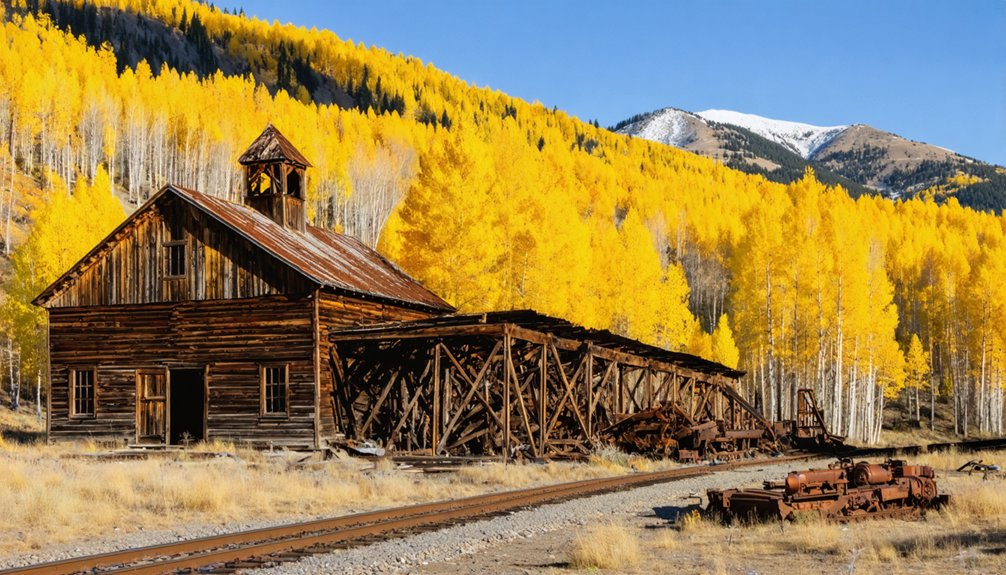
Although Utah’s ghost towns stand frozen year-round, fall transforms these ruins into photographer’s paradises where golden cottonwoods frame weathered structures. Crisp air sharpens every detail.
As the leaves turn vibrant shades of amber and crimson, ghost towns in Utah’s fall colors reveal their haunting beauty. Each deserted street tells a story of the past, inviting exploration and reflection. Photographers and travelers alike are drawn to capture the stunning contrast of vivid foliage against the rustic charm of decaying buildings.
Seasonal weather brings 40-70°F days perfect for exploration, though nights plummet to freezing—pack layers accordingly.
Essential preparations for your adventure:
- Vehicle readiness: High-clearance rigs handle Grafton’s dirt roads; fuel up before remote Skull Valley sites
- Wildlife safety: Watch for rattlesnakes near foundations and scorpions in cemeteries—closed-toe boots essential
- Navigation tools: Download offline maps for signal-dead zones like Thistle; carry flashlights for cave explorations
October’s paranormal events at Camp Floyd draw crowds, so weekday visits guarantee solitude.
You’ll find freedom in these forgotten places where Utah’s rebellious spirit still whispers through crumbling walls.
Frequently Asked Questions
Are Utah Ghost Towns Safe to Visit With Children During Fall?
Utah ghost towns can be safe for children if you choose accessible sites like Grafton, where you’ll discover ghost town history and photography opportunities on level ground. However, avoid remote locations and monitor fall weather closely—storms develop quickly.
In addition to Grafton, there are numerous other ghost towns in Utah to explore, each offering a unique glimpse into the past. Visiting places like Bodie and Goldfield can provide families with educational experiences about mining history while ensuring safety. Always remember to pack plenty of water and snacks, as amenities are often scarce in these remote areas.
Do I Need a 4WD Vehicle to Reach These Ghost Towns?
No, you won’t need 4WD for most accessible ghost towns like Grafton or Spring Canyon. Standard vehicle rental options work fine, though checking off road trail conditions beforehand helps you avoid unexpectedly rough terrain and maximize your adventure freedom.
Can I Camp Overnight at Any of These Ghost Town Locations?
You can camp near most ghost towns on BLM or trust lands following 14-15 day limits. Check if camping permits are needed locally. Consider travel insurance for remote adventures, and always practice Leave No Trace principles.
Are There Entrance Fees Required to Visit Utah’s Ghost Towns?
Most Utah ghost towns welcome you free, though Silver Reef charges just $3 for historical preservation. Tourist infrastructure remains minimal—donation boxes at Grafton, self-guided trails at Old Irontown—keeping your exploration budget-friendly and spontaneous.
What Wildlife Dangers Should I Watch for at Ghost Towns?
You’ll encounter mountain lions, black bears, and moose in remote ghost towns, so stay alert. Watch for raccoons in abandoned buildings—they carry rabies. Practice rabies prevention by avoiding desert wildlife contact, and always maintain safe distances from unpredictable animals.
References
- https://www.ksl.com/article/51391890/most-haunted-places-in-utah
- https://www.tripadvisor.com/Attractions-g28965-Activities-c47-t14-Utah.html
- https://www.visitutah.com/things-to-do/history-culture/ghost-towns
- https://www.tripadvisor.com/Attraction_Review-g56952-d7037904-Reviews-or30-Cisco_Ghosttown-Cisco_Utah.html
- https://www.atlasobscura.com/things-to-do/utah/ghost-towns
- https://www.onlyinyourstate.com/experiences/utah/things-to-do-in-2025-ut
- https://airial.travel/attractions/united-states/sego-ghost-town-I3NVgSEZ
- https://www.getyourguide.com/grafton-ghost-town-l176364/
- https://graftonheritage.org/history-settlement/
- https://www.hannahhendersontravel.com/grafton-ghost-town-utah/