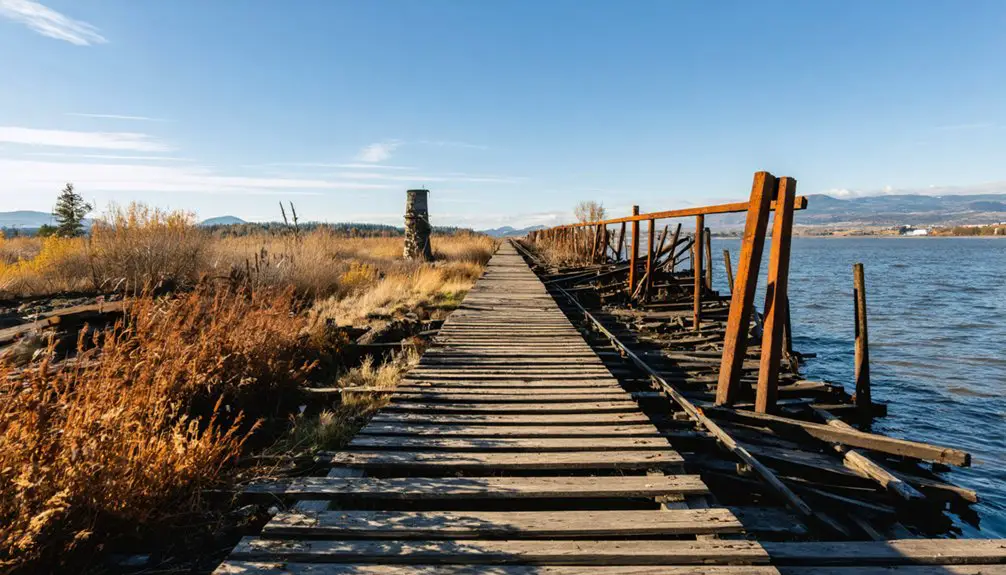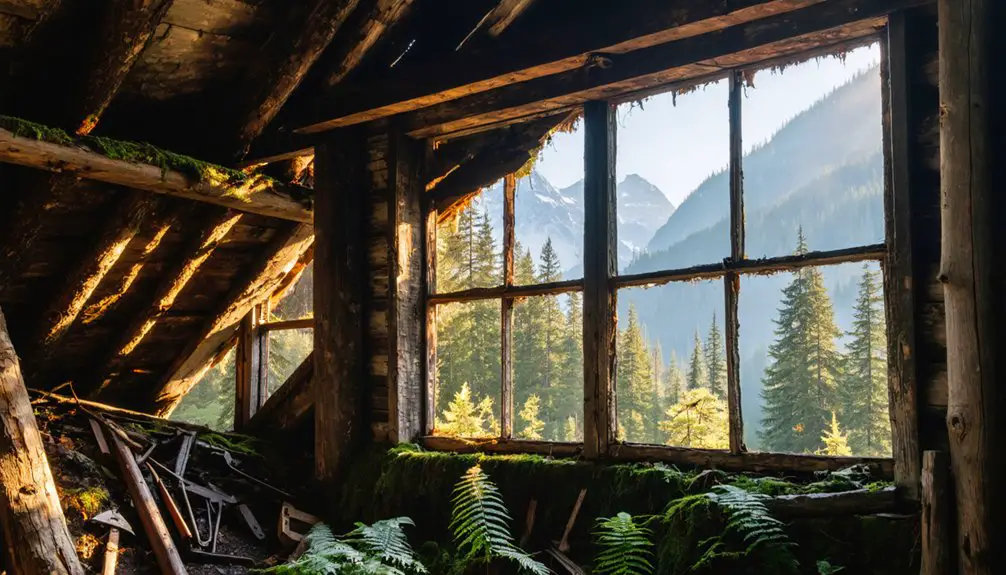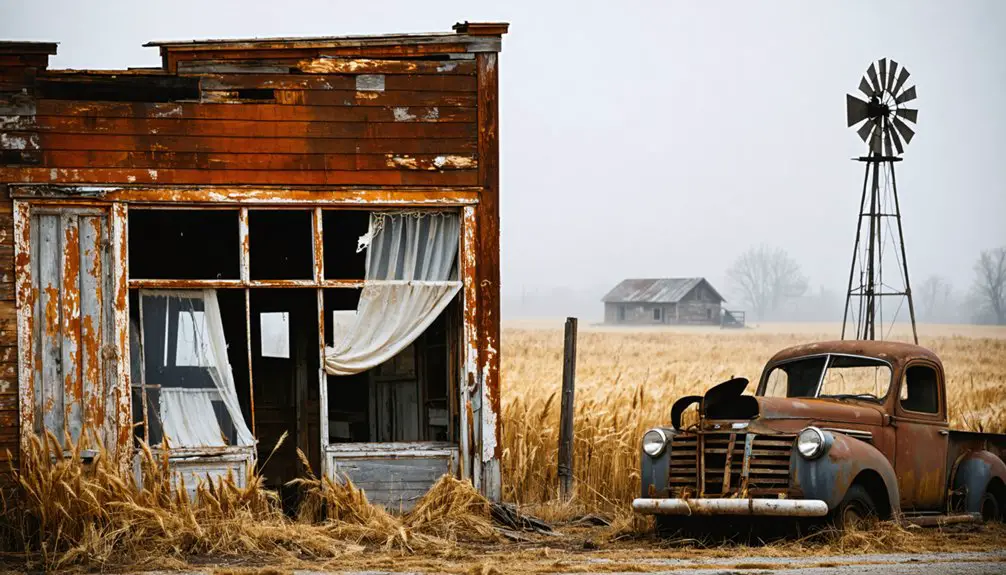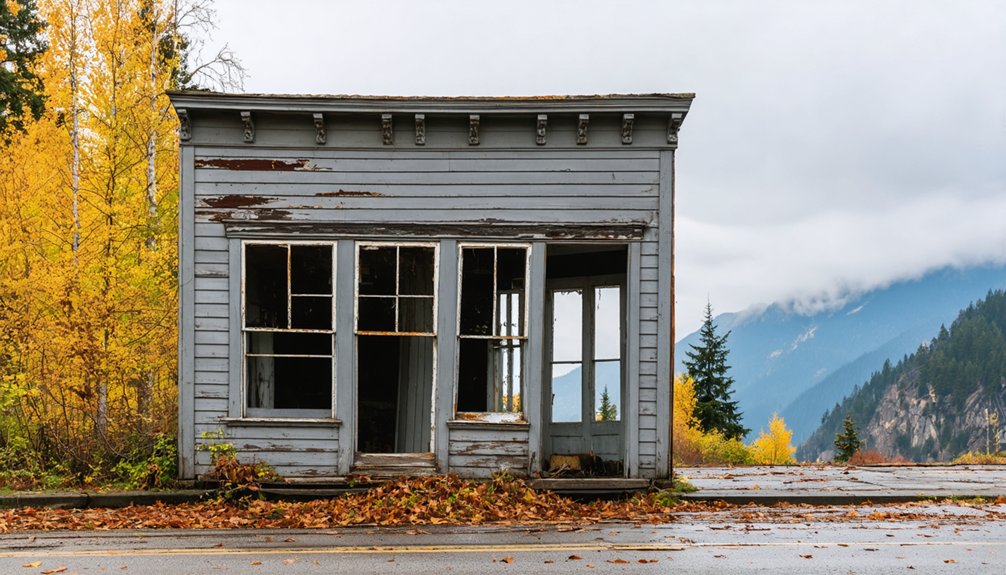
You’ll find Washington’s best fall ghost towns in Old Molson and Nighthawk near the Canadian border, where abandoned mining buildings and weathered artifacts glow under October’s golden light. The crisp mountain air, ranging from 40-60°F, reveals foundations and rusted equipment typically hidden by summer foliage. With fewer visitors during autumn, you’ll experience haunting solitude among blacksmith shops, assay offices, and century-old structures. These relics of 1870s-era mining booms offer extraordinary photography opportunities and atmospheric exploration when you’re properly prepared with layered clothing and navigation essentials.
Key Takeaways
- Old Molson features mining relics, abandoned buildings, and outdoor museum collections from the early 1900s extraction economy.
- Nighthawk offers historic structures including the 1903 hotel, 1915 schoolhouse, and remnants along Prospect Avenue near the Canadian border.
- Enloe Dam, a decommissioned concrete structure downstream from Nighthawk, showcases unused turbines and salmon ladders on the National Register.
- October provides golden light, crisp air, and barer landscapes that reveal foundations and rusted equipment hidden during summer.
- Pack layered clothing, waterproof maps, headlamps, bear spray, and sufficient water for fall’s variable weather and remote exploration.
Franklin Ghost Town Near Mount Rainier
When you descend into the Green River Gorge near Black Diamond, the forest floor still holds the bones of Franklin—a coal mining town that once hummed with over 1,000 souls before disaster and decline swallowed it whole.
You’ll hike two miles along the original railroad grade where coal cars once rumbled toward San Francisco, past the sealed No. 2 shaft that plunges 1,300 feet into darkness.
The 1894 fire that suffocated 37 miners 700 feet underground marked the beginning of Franklin’s end.
Today, you’ll find abandoned structures emerging through salal and sword ferns—powerhouse foundations, a rusted coal cart, cemetery headstones tilting in the undergrowth.
This mining history demands exploration, though the trail rewards those who wear long pants against the encroaching wilderness reclaiming what humans abandoned.
The Oregon Improvement Company established Franklin in the 1880s, and operations continued for nearly four decades until the town’s residents finally departed around 1919.
The final underground mine was dramatically sealed in 1971 when workers detonated 900 pounds of experimental dynamite in a televised blast that closed the Franklin No. 10 portal forever.
Liberty Ghost Town in the Central Cascades
You’ll discover Washington’s oldest mining town tucked into the Central Cascades near Blewett Pass, where weathered log cabins and 1890s wooden structures line a one-third-mile stretch of authentic gold rush history.
As autumn transforms the surrounding mountains into brilliant copper and gold, you can explore working mining equipment and interpretive signs that bring the 1870s Swauk Creek gold discovery to life. The gold found here is distinctive crystalline wire gold, easily collected by hand rather than the large nuggets typical of California’s gold fields.
This living ghost town—Washington’s only one—offers you a rare glimpse into frontier resilience, where a handful of residents still maintain buildings that survived century-old legal battles to preserve their historic home. Originally called Meaghersville, Liberty earned its place on the National Register of Historic Places in 1974, cementing its significance as a testament to the state’s mining heritage.
Historic Mining Town Features
Hidden off Blewett Pass along U.S. Highway 97, Liberty reveals authentic 1890s log structures that have survived through determined preservation techniques.
You’ll discover a townsite stretching one-third mile through the Cascades, where residents fought two decades of federal eviction attempts to maintain this living ghost town.
Walk among buildings that whisper urban legends of Washington’s 1870s Gold Rush:
- Thomas Meagher’s near-collapsed cabin marking the original entry point
- Working replica arrastra featuring America’s possibly only functional horizontal undershot water wheel
- Restored firehouse and pioneer cabins open for exploration
Mining equipment dots the landscape where prospectors once extracted coarse placer gold and massive nuggets. The town hosts an annual 4th of July parade that brings together locals and visitors for community festivities starting at 11 A.M.
The Bureau of Land Management now manages this National Register site, letting you roam freely through crystalline gold history without modern constraints. Visitors from Europe and beyond have signed the guest book at this remote mountain destination located about 80 miles east of Seattle.
Fall Visiting Tips
As October transforms Liberty’s landscape into a tapestry of golden larches against weathered log cabins, you’ll find the ghost town at its most atmospheric. Pack layers for temperatures swinging between 40-60°F during daylight and plunging to 25-35°F after dark. The crisp mountain air carries pine scent and haunted legends whispered through eerie stillness—perfect for Halloween-themed exploration.
Your 20-minute walk down the main street offers prime seasonal photography opportunities. Capture weathered structures framed by autumn foliage, but respect living residents’ private property boundaries. Bring a thermos of hot cider to warm you while reading interpretive signs about Gold Rush miners. Informational signs share stories of miners and local history throughout the open areas. Liberty earned its place on the National Register of Historic Places in 1974, recognizing its significance as the state’s oldest mining town.
The muddy trails after rain add authentic frontier character. Check out The Raven and the Rooster nearby for refueling before continuing your Central Cascades adventure.
Monte Cristo Ghost Town East of Granite Falls
Deep in the Northern Cascade Mountains, where autumn mist clings to evergreen slopes and the South Fork Sauk River carves through wilderness, Monte Cristo stands as Washington’s most dramatic ghost town. You’ll discover this 1890s silver mining camp after an 8-mile round-trip hike from Barlow Pass, following hidden trails along the old railroad grade.
Frederick Trump once operated his hotel here during the boom years.
What You’ll Find:
- Stone walls and rusted mining equipment scattered among interpretive signs
- Red train station houses marking the entrance to the original townsite
- Access to Gothic and Glacier Basins beyond for experienced explorers
Pack your photography tips knowledge—autumn light transforms the ruins into pure gold. The trail follows remnants of the historic railroad grade, with exposed rails and ties still visible after decades of washouts. You’ll need a Washington Forest Pass to park at the trailhead before beginning your journey into this abandoned mining settlement. The Monte Cristo Preservation Association maintains this remote site, surrounded by the Henry M. Jackson Wilderness Area protecting your gateway to untamed Cascade history.
Melmont Ghost Town Along the Rail Grade
Where mossy retaining walls embrace an abandoned rail grade and powder-soaked earth still whispers of dynamite blasts, Melmont emerges from Pierce County’s rainforest like a half-remembered dream.
Between moss-draped walls and dynamite-scarred soil, Melmont materializes from Pacific Northwest shadow—a coal town dissolved into forest memory.
You’ll hike four miles along abandoned railroads where coal once fueled Northern Pacific’s appetite, discovering ghost town architecture reduced to crumbling foundations and a roofless powder house standing sentinel among the ferns.
The trail splits near where Jack Wilson’s home absorbed that 1905 dynamite blast—fork right toward the main townsite where miners’ cottages once lined nationality-segregated rows, or left to the schoolhouse ruins.
Fall transforms this boom-and-bust relic into copper-toned cathedral, each footstep on the muddy grade connecting you to the 1900s extraction economy that built, then abandoned, this Carbon River settlement.
Old Molson Ghost Town in Okanogan Country
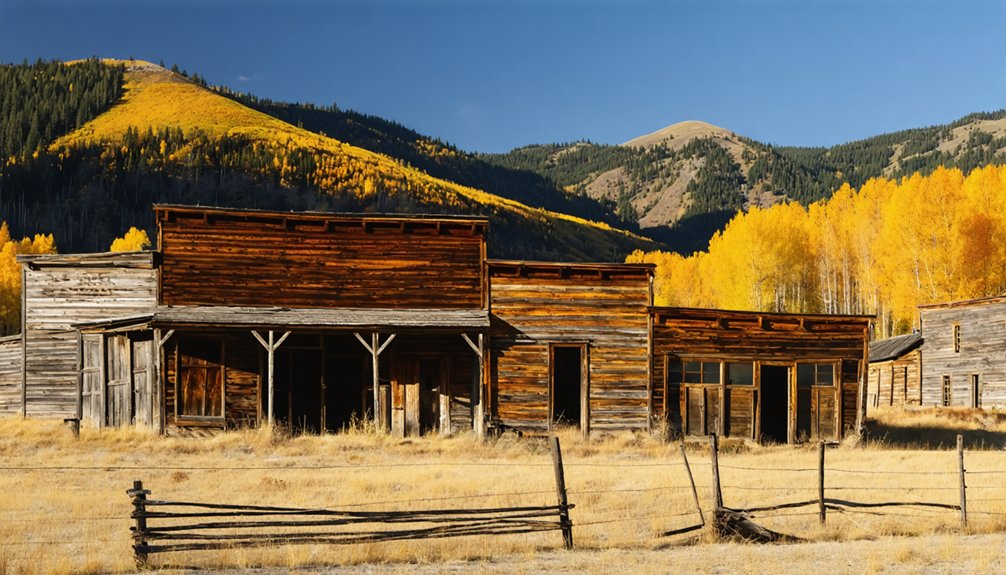
Half a mile separates Old Molson from its usurper, New Molson, but that dusty strip of Okanogan Highlands sagebrush contains two decades of territorial feuding, a $170,000 mining collapse, and the stubborn architecture of frontier capitalism.
You’ll wander abandoned buildings where local legends of boom-and-bust whisper through weathered walls—the State Bank’s exposed vault, pioneer cabins staged with artifacts, and the ghostly footprint of Hotel Tonasket’s 34 rooms.
Your self-guided exploration reveals:
- Original structures: Livery barn, blacksmith shop, and assay office frozen in 1900s authenticity
- Museum artifacts: Mining equipment and household relics scattered across Harry Sherling’s outdoor collection
- Railroad remnants: Washington’s highest station at 3,708 feet, marking where 700 residents once thrived
No gates, no fees, no schedules—just October light painting gold across sagebrush and vacancy.
Nighthawk Ghost Town and Historic Structures
You’ll find Nighthawk clinging to the Similkameen River banks near the Canadian border. It is a registered ghost town where ore dumps and weathered buildings stand frozen since the mines went silent in 1950.
The original schoolhouse from 1915 still watches over Prospect Avenue‘s dusty Main Street, joined by the rebuilt Nighthawk Hotel, a mining office, and an old livery stable that whisper stories of the 3,000 prospectors who once crowded this remote valley.
Just downstream, the concrete ruins of Enloe Dam create an eerie complement to your exploration, another monument to abandoned ambitions in Washington’s forgotten corners.
Registered Mining Town History
Deep in Washington’s Okanogan Highlands, Nighthawk stands as a confirmation to the territory’s earliest hard rock mining ambitions. You’ll discover Washington Territory‘s first registered hard rock mining claims from April 1873, where prospectors staked their futures around Little Chopaka Mountain‘s gleaming quartz veins.
The town’s transformation unfolded rapidly:
- 1899-1902: Post office established, Ruby Silver Mine located and sold
- 1903-1906: Official platting approved, railroad connected, depot constructed
- 1950: Mining operations ceased, population dispersed
Mining artifacts and town remnants reveal Nighthawk’s prosperity—the Ruby Mine produced over $20,000 in its first year alone. Six concentration mills once processed ore here, fed by a railroad that carried fortune-seekers’ dreams northward.
Notable Buildings Still Standing
The legacy of Nighthawk’s mining prosperity survives in weathered wood and crumbling stone along Prospect Avenue, where five significant structures anchor your journey through time. You’ll discover J.M. Hagerty’s 1903 Nighthawk Hotel, rebuilt after its 1910 fire, standing defiant against urban development pressures. Nearby, the house of ill repute recalls boom town vitality, while Doc. Andrus’s livery stable hides behind, testament to frontier transportation needs.
South of town, the 1915 schoolhouse marks where pioneer children learned their lessons.
The crown jewel for modern tourism remains the Kaaba Texas Mine complex—Okanogan County’s best-preserved mining site. Its 1939 wedge-shaped mill and office buildings sit on the original 1879 “State of Main” claim, offering you tangible connection to Washington’s mineral-rich past without interpretive centers dulling the experience.
Nearby Enloe Dam Site
Just downstream from Nighthawk’s weathered storefronts, Enloe Dam rises 54 feet above the Similkameen River—a concrete monument to unfulfilled ambition. This decommissioned structure, listed on the National Register, tells a story parallel to the Nighthawk Mine significance—both represent boom-era dreams that never reached fruition.
You’ll discover Enloe Dam history through three compelling features:
- The powerless turbines that never generated commercial electricity despite the dam’s 1920s construction.
- Salmon ladders designed but rendered obsolete when the project failed.
- Graffiti-covered concrete walls where nature slowly reclaims human engineering.
The dam’s abandonment mirrors the mining decline that emptied Nighthawk by 1950.
Today, you’re free to explore this industrial relic, where rushing water still cascades over concrete that proved more permanent than the prosperity it promised.
Best Times to Explore Washington Ghost Towns in Autumn
When autumn’s golden light spills across Washington’s Cascade Mountains, ghost towns emerge from their wooded settings with a haunting clarity that no other season can match.
Exploring ghost towns in Washington reveals stories of a bygone era, where remnants of old structures stand as silent witnesses to history. Each visit uncovers the unique charm and eerie beauty of these abandoned places, inviting adventurers and history enthusiasts alike to ponder the lives once lived. With every step, the whispers of the past come alive, compelling you to delve deeper into the mysteries that these towns hold.
You’ll find October delivers the perfect blend of crisp mountain air and accessible trails, with vegetation dying back to reveal foundations and rusted mining equipment that summer’s growth conceals.
The season’s bare landscapes let you navigate freely through sites like Liberty and Melmont without formal paths restricting your exploration.
Pleasant temperatures mean you can wander for hours without summer’s oppressive heat or winter landscapes’ harsh conditions.
While seasonal festivals draw crowds elsewhere, these forgotten settlements offer solitude—just you, the whisper of falling leaves, and the ghosts of Washington’s mining past.
What to Bring for Your Ghost Town Adventures
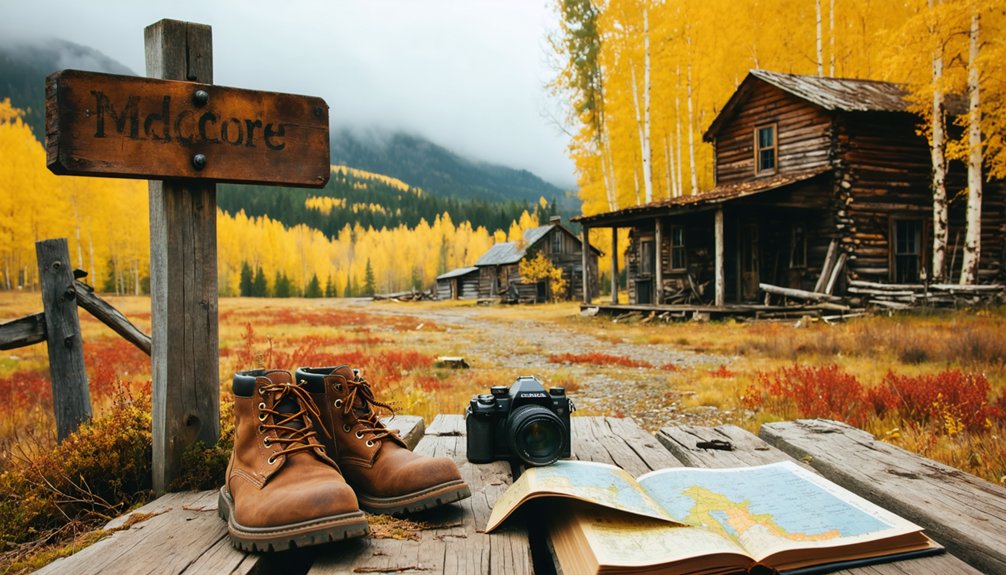
Successful ghost town exploration hinges on what you pack into your backpack before the trailhead fades behind you. Washington’s abandoned settlements demand practical preparation without overthinking the adventure ahead.
Your Essential Three:
- Layered clothing system — Base layers of merino wool, fleece insulation, and waterproof rain jacket with hood combat Pacific Northwest’s unpredictable fall weather.
- Navigation and safety tools — Waterproof map, headlamp with extra batteries, first-aid kit, and emergency whistle keep you self-reliant on unmarked paths.
- Sustenance supplies — Pack two to three liters of water plus high-energy snacks, since resupply points don’t exist in ghost towns.
Add basic camping gear if you’re pushing deeper into backcountry sites. Wildlife safety essentials include bear spray for remote locations.
Trekking poles stabilize your footing across deteriorating structures while waterproof boots handle autumn’s muddy reality.
Frequently Asked Questions
Are Dogs Allowed on Ghost Town Hiking Trails in Washington?
You’ll find dog friendly trails throughout Washington’s ghost towns, where your leashed companion can explore abandoned settlements beside you. Following pet safety guidelines keeps everyone secure while you’re discovering these historical destinations together on muddy, atmospheric paths.
Do I Need a Permit to Visit Washington Ghost Towns?
You won’t need permits for visiting Washington’s ghost towns—just show up and explore freely. Visitor regulations focus on historical preservation, meaning you can wander trails, photograph weathered structures, and experience authentic mining history without bureaucratic barriers.
Among the most fascinating ghost towns in Washington state is Bodie, where you can still see remnants of the gold rush era. Wandering through these abandoned streets offers a unique glimpse into the past, bringing to life stories of the people who once thrived there. As you delve into the state’s history, you’ll uncover secrets that each ghost town holds, enriching your understanding of Washington’s mining heritage.
Are Washington Ghost Towns Safe to Explore With Children?
Many Washington ghost towns offer safe family adventures when you follow precautions. You’ll discover historical preservation efforts and local legends on maintained trails like Coal Creek and Northern State, where accessible paths let kids experience authentic mining history firsthand.
Can You Camp Overnight Near These Ghost Town Locations?
Starlit freedom awaits beyond the ruins—you’ll find dispersed camping on nearby public lands. Camping permits vary by location, so check regulations beforehand. Wildlife encounters add thrilling authenticity to your ghost town adventure, making overnight stays unforgettable expeditions into Washington’s forgotten past.
Which Ghost Towns Are Wheelchair or Stroller Accessible?
You’ll find accessible trails at Monte Cristo’s flat roadbed and Northern State’s maintained paths, while Molson offers stroller-friendly sites with disability parking. These ghost towns welcome wheeled exploration, letting you roam historic grounds with ease and independence.
References
- https://myfamilytravels.com/spooky-small-towns-in-washington-worth-visiting-in-october/
- https://explorewashingtonstate.com/black-diamond-franklin-ghost-town/
- https://www.wta.org/go-outside/seasonal-hikes/fall-destinations/hidden-history-ghost-town-hikes
- https://stateofwatourism.com/ghost-towns-of-washington-state/
- https://okanogancountry.com/ghost-towns
- https://www.tripadvisor.com/Attractions-g28968-Activities-c47-t14-Washington.html
- https://visitrainier.com/fairfax-ghost-town-2/
- https://www.cascadeloop.com/ghost-towns-and-haunted-places-in-the-washington-cascades
- https://www.wta.org/go-hiking/hikes/franklin-ghost-town
- https://www.historylink.org/File/22479