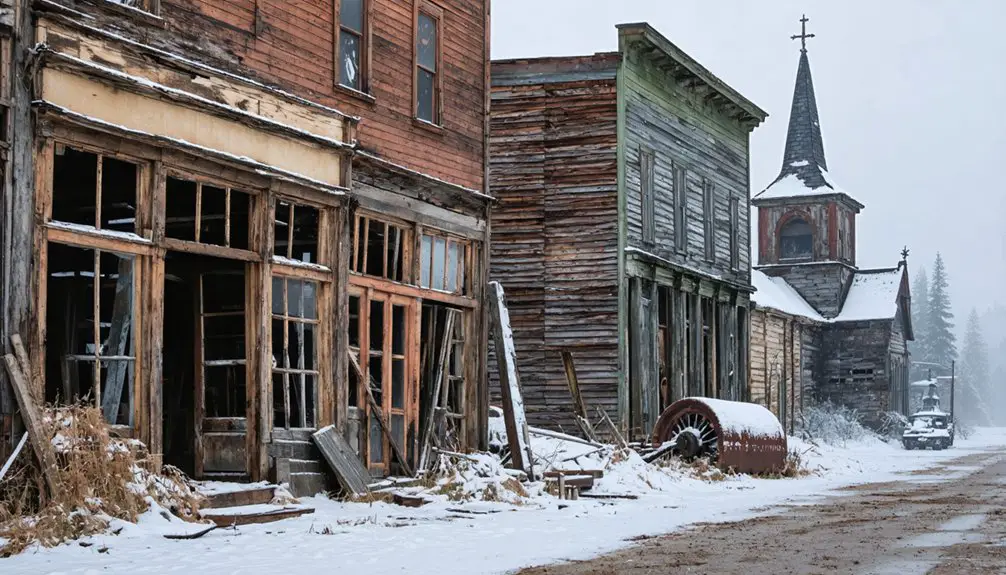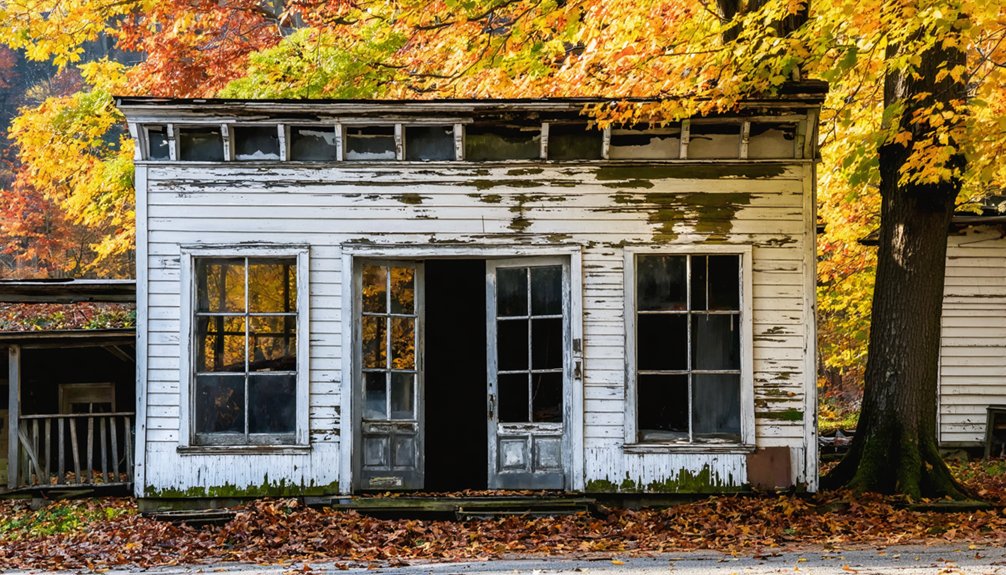
You’ll find West Virginia’s most atmospheric ghost towns in the New River Gorge, where fall foliage frames abandoned coal mining ruins. Kaymoor offers an 821-step descent to coke ovens carved into cliffside, while Nuttallburg provides easier road-level access to intact industrial remains. Thurmond’s preserved 1920s buildings sit alongside active train tracks, and remote Dun Glen perches 700 feet above the river with panoramic valley views. Each site reveals different aspects of coal country’s vanished communities and the stories behind their abandonment.
Key Takeaways
- Thurmond offers preserved 1920s buildings accessible by Amtrak, with seasonal visitor centers and walking tours ideal for fall exploration.
- Kaymoor features 821 steps descending through fall foliage to historic coke ovens and mine ruins carved 560 feet above the river.
- Nuttallburg provides road-level access to well-preserved brick coke ovens and foundations, perfect for easy autumn visits without strenuous hiking.
- Dun Glen sits 700 feet above New River, offering secluded ruins and panoramic fall valley views with minimal crowds.
- Winona and Sewell feature maintained trails through authentic coal camp ruins, including tipples and ovens stabilized by the Park Service.
Kaymoor: A Challenging Hike Through Mining History
Deep in the New River Gorge, the rusted remnants of Kaymoor cling to a near-vertical cliff face like fossils pressed into stone. You’ll earn your exploration here—821 steps descend through autumn-blazed forest to reach the Bottom’s coke ovens and processing ruins.
The abandoned coal town operated sixty-two years, producing sixteen million tons before closing in 1962.
Start at Kaymoor Miners Trailhead for the one-mile trek to the upper level, where gated mine openings and crumbling foundations await. The town’s inclined plane system transported coal, workers, and slag between the riverside operations and facilities perched on the gorge wall above. Low Moor Iron Co. opened the mine around 1899 to supply coal to Virginia iron furnaces, building two complete camps at opposite ends of the gorge.
Historical preservation efforts have made the site accessible, though underground tours aren’t available. Fall’s cooler temperatures make the strenuous climb manageable, and you’ll discover why this split-level operation—carved into rock 560 feet above the river—outlasted most coal towns by decades.
Vegetation reclaims everything slowly, naturally.
Nuttallburg: Drive-In Access to Coal Town Ruins
Unlike Kaymoor’s grueling descent, Nuttallburg welcomes you at road level—park your car within yards of crumbling coke ovens and the skeletal remains of what was once the world’s largest incline tipple.
Park right beside history—no steep hikes required to explore these haunting industrial ruins perched at convenient road level.
This coal mining ghost town, founded in 1870, sprawled with nearly 100 houses before production ceased in 1958. Today, the National Park Service maintains these industrial ruins as one of West Virginia’s most intact mining complexes.
You’ll wander among foundations where 300 residents once lived, their settlement powered by smokeless bituminous coal from seams hundreds of feet above the New River. The brick-lined coke ovens purified coal into highly marketable coke for iron furnaces, though some have collapsed while others remain remarkably preserved.
Henry Ford himself leased these operations in the 1920s, installing four continuous mining machines to replace traditional pick mining methods.
Visit during fall when autumn colors frame the hollow’s abandoned ovens and machinery—nature reclaiming what industry built, reminding you that nothing lasts forever.
Thurmond: Railroad Relics Reclaimed by Nature
Where else can you step off an Amtrak train directly into a 1920s ghost town frozen in time? Thurmond’s depot doubles as a seasonal visitor center where you’ll discover railroad history that once moved more coal than Cincinnati.
The town’s original buildings—banks, hotels, and commercial structures—stand preserved along the tracks, while nature slowly reclaims what remains. You can explore independently using walking tour signs that detail coal camp life and coke ovens. The Thurmond Union Church, built in 1927, still stands among other historic structures that once served this thriving railroad community. Captain William D. Thurmond established the town in the 1880s to serve coal miners and their families.
Or join ghost hunts investigating haunted legends at the infamous Dun Glen Hotel site, where a 14-year poker game once made national headlines. Just respect the boundaries: stick to public areas and avoid trespassing behind the commercial row where private property begins.
Dun Glen: Remote Views From 700 Feet Above the River
Perched 700 feet above the New River, Dun Glen offers what Thurmond’s trackside location can’t—complete isolation and sweeping views across the gorge’s autumn canopy.
You’ll hike through dense forest to reach this forgotten mining settlement where twenty families once lived serving the coal seams below.
The ruins are sparse—standing chimneys, scattered metal wash bins, stone piles—but the intact powder house with its fortress-thick walls rewards your trek.
The settlement included a company store and post-office that once anchored this community extracting coal from the Sewell and Fire Creek seams.
What truly captivates are the scenic autumn vistas stretching endlessly across the river valley, transforming this secluded mountain retreat into something beyond mere ghost town exploration.
You’ll likely encounter only hunters here. The remoteness filters out casual visitors, leaving you free to absorb Fayette County’s wild beauty from a vantage point few people discover. Unlike Dun Glen’s mountain perch, nearby Thurmond was accessible solely by rail for thirty-five years during its peak as a railroad hub.
Winona and Sewell: Accessible Exploration of Mining Heritage
While most ghost towns demand bushwhacking or precarious scrambles, Nuttallburg’s mining complex welcomes you with maintained trails and interpretive context. You’ll descend the 0.7-mile Headhouse Trail from Beauty Mountain Road—steep but manageable—to reach West Virginia’s most intact coal camps.
Founded in 1870, this operation shipped “smokeless” coal and even caught Henry Ford’s attention in the 1920s.
The ruins sprawl dramatically: a wooden tipple, quarter-mile of coke ovens, and houses perched on columns clinging to gorge walls. Railroad relics include innovative conveyors and cylindrical “monitors” for unloading.
You’ll often explore alone, encountering fewer than three visitors hourly.
The National Park Service stabilized but didn’t restore these structures, preserving their haunting authenticity. Even the segregated schools remain—uncomfortable reminders of mining-town realities. The Nuttall family donated the site to the National Park Service in 1998, ensuring its preservation as part of the New River Gorge National River. The site has earned recognition with TripAdvisor’s Travelers’ Choice award, placing it among the top 10% of attractions.
Frequently Asked Questions
What Is the Best Time in Fall to See Peak Foliage Colors?
Picture yourself chasing leaves like they’re escaping criminals—you’ll find peak colors from late September through October. Higher elevations offer spectacular fall foliage hikes first, while southern scenic photography spots ignite later, giving you weeks of freedom.
Are Guided Tours Available at These Ghost Town Sites?
Yes, you’ll find guided tours at several historic sites! Historical preservation groups offer candlelit walks through Shepherdstown, Harpers Ferry, and Charles Town. You’ll explore haunted streets independently or book expert-led adventures year-round at genuine ghost towns.
Do I Need Special Permits to Visit These Locations?
You won’t need special permits for most ghost towns—they’re on National Park Service or state park land with standard access. However, always respect private property boundaries and get permission needed before exploring unmarked sites.
Exploring abandoned towns in West Virginia can be a fascinating way to connect with history. These locations often provide glimpses into the past, showcasing unique architecture and remnants of former communities. Additionally, local folklore surrounding some of these ghost towns adds an intriguing layer to the experience, making each visit feel like stepping into another era.
If you’re fortunate enough to visit during the autumn months, you’ll be treated to ghost towns with stunning fall colors that enhance the beauty of the landscape. The vibrant hues of red, orange, and yellow contrast beautifully with the remnants of the past, creating a picturesque setting for photography enthusiasts. Each location offers a unique backdrop for capturing the essence of both nature and history.
What Safety Precautions Should I Take When Exploring Abandoned Mining Structures?
Abandoned mines are deathtraps waiting to spring. You’ll need hard hats, flashlights, and backup communication. Avoid shafts entirely—structural integrity fails without warning. Mining hazards include unstable floors, toxic gases, and collapsing walls. Don’t explore alone; freedom isn’t worth your life.
Are There Nearby Accommodations or Camping Facilities for Overnight Stays?
You’ll find campgrounds, rustic cabins, and historic inns near most ghost towns, offering freedom to explore at your pace. Historical preservation areas provide authentic stays, while fall’s manageable tourist crowds mean you’ll secure spots easier than summer.
References
- https://www.jqdsalt.com/west-virginia-fall-bucket-list/
- https://www.westvirginiahauntedhouses.com/fall-attractions/
- https://krismariawanders.com/best-places-for-fall-colors-in-west-virginia-what-to-do-there/
- https://wvexplorer.com/2025/10/19/ghost-towns-in-southern-west-virginia/
- https://matadornetwork.com/read/west-virginia-paranormal-trail/
- https://wvtourism.com/5-wv-ghost-towns/
- https://www.youtube.com/watch?v=KXYZn7ePzQc
- https://www.wvnews.com/from-spooky-sights-to-fall-foliage-west-virginia-in-autumn-offers-something-for-everyone/article_72ca26a8-39b2-11ed-96a3-c392bdefef53.html
- https://www.youtube.com/watch?v=Yyz6eJxCjbw
- https://officialbridgeday.com/bridge-blog/history-of-kaymoor