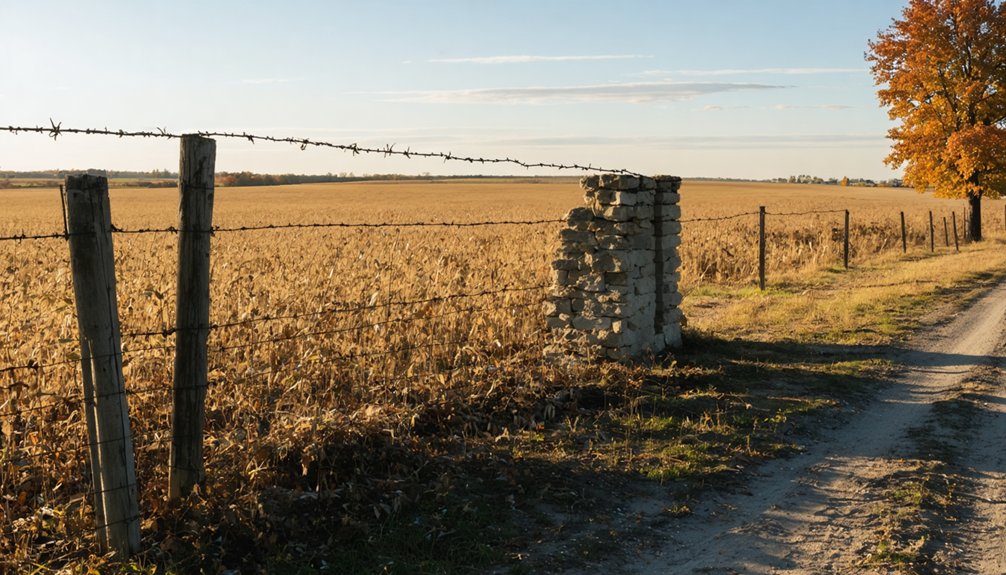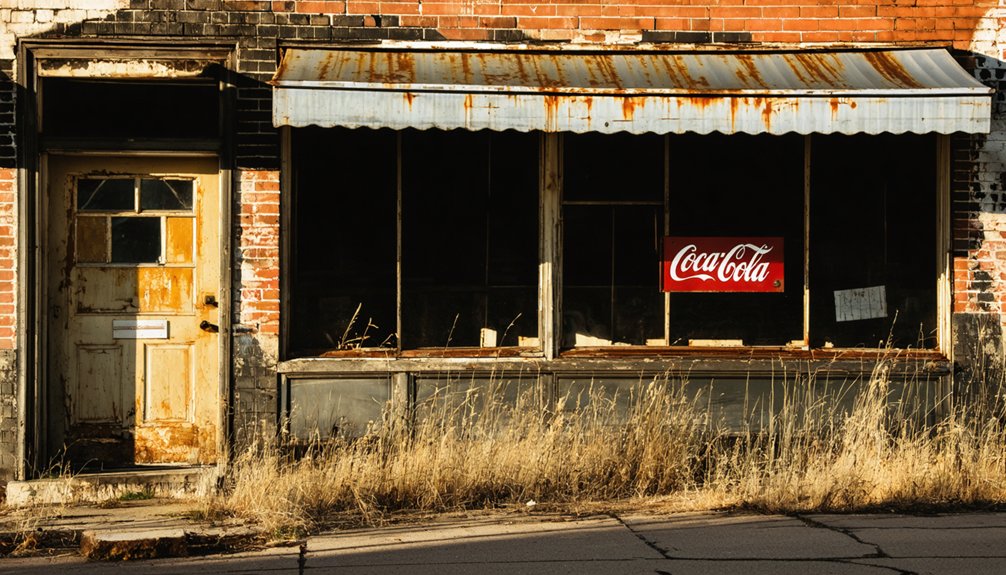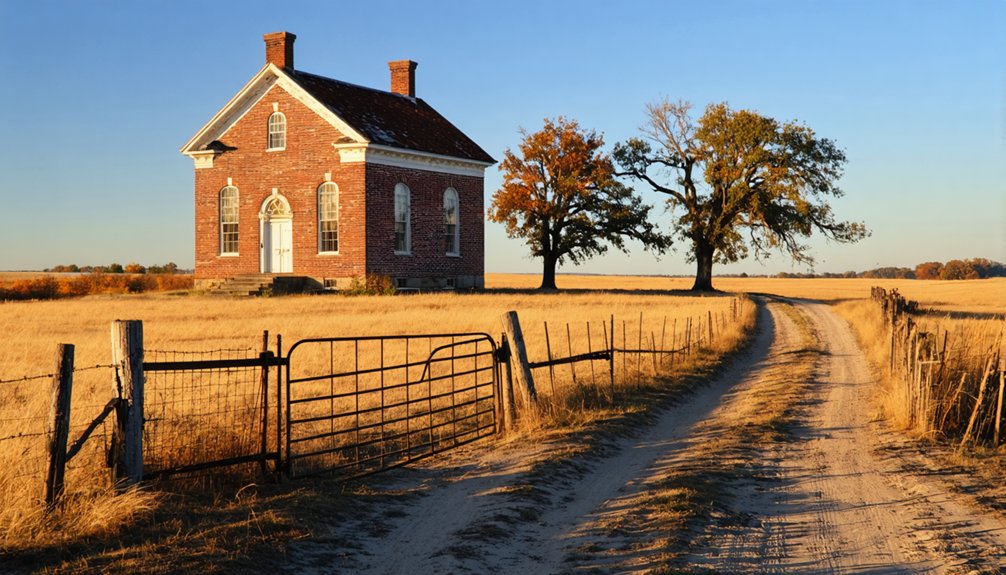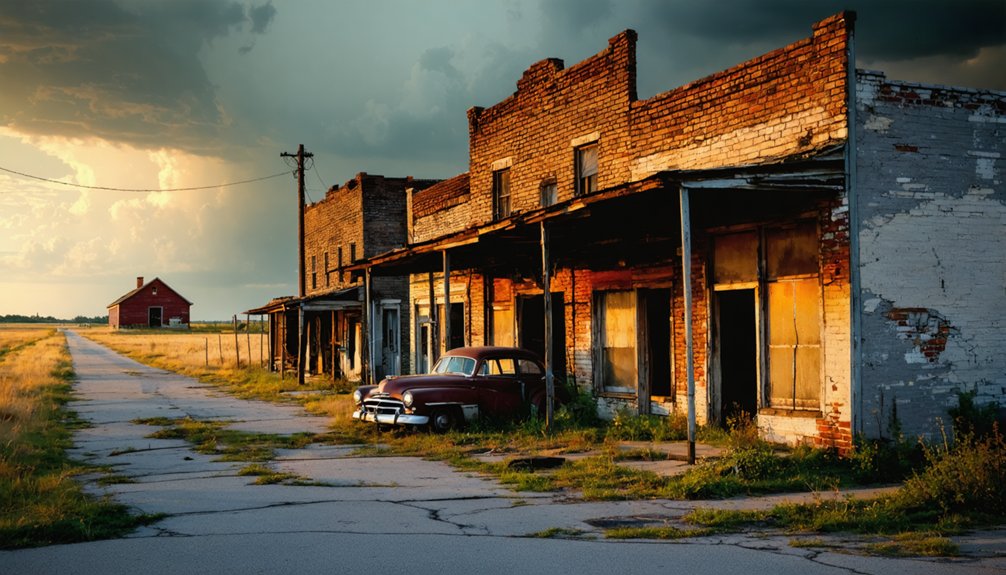
You’ll find Illinois’ most haunting ghost towns along its rivers, where nature reclaimed what floods destroyed. Cairo sits frozen at the Mississippi-Ohio confluence with 2,000 souls rattling in a city built for 15,000. Kaskaskia, the state’s first capital, became an island you can only reach through Missouri after the river carved a new path in 1881. Old Shawneetown showcases Greek Revival columns and an 1839 bank standing sentinel over streets the Ohio River claimed in 1937. The stories behind these abandoned settlements reveal how waterways shaped—and shattered—Illinois’ frontier dreams.
Key Takeaways
- Cairo offers historic tunnels, abandoned buildings, and a strategic riverside location where the Ohio and Mississippi Rivers meet.
- Old Shawneetown features Greek Revival architecture, Illinois’s oldest bank building from 1839-1840, and preserved ruins as a ghost town.
- Kaskaskia, Illinois’ first capital, became a river island after 1881 floods and requires passing through Missouri to visit.
- Original Valmeyer along Route 156 remains a ghost town after the entire community relocated to higher ground following 1993 floods.
- Vishnu Springs preserves remnants of an 1840s mineral resort with a history of tragedy, scandal, and Prohibition-era gangster activity.
Cairo: Where the Rivers Meet and Time Stands Still
Where the muddy waters of the Ohio and Mississippi Rivers collide, Cairo rises from the floodplain like a ghost clinging to its past. You’ll find yourself walking streets where river legends were born—where steamboats once docked and Civil War soldiers marched from Grant’s Fort Defiance.
At the confluence of two rivers, Cairo emerges from floodwaters like a specter haunting its own history.
The town’s isolation, surrounded entirely by water, creates an eerie stillness that’ll make you understand why fewer than 2,000 souls remain from its 15,000-person peak.
Historic landmarks tell stories you won’t find in textbooks: tunnels beneath downtown that sheltered fugitives escaping slavery, abandoned buildings that witnessed both prosperity and violence. Seven rail lines once converged here when the population swelled to 6,300 by 1890, making Cairo a contender for the nation’s capital.
The Nile Delta comparison that inspired its 1817 naming feels prophetic now—Cairo’s become America’s own ancient ruin, frozen between two mighty rivers. Ships once transported cotton, wool, and molasses through this bustling port by 1859, when Cairo’s strategic position made it a commercial powerhouse.
Kaskaskia: Illinois’ Lost Capital on an Island
You’ll find Illinois’ most improbable ghost town on an island that technically belongs to the state, yet you can only reach it by driving through Missouri.
This isolated village was once the thriving capital of Illinois Territory and the state’s first capital after statehood in 1818, with 7,000 residents conducting business in its 150 houses along the Mississippi’s banks.
But in 1881, the river literally changed its mind, carving a new channel that swallowed the original settlement and marooned what remained on the wrong side of the water.
Archaeological research suggests that approximately 60% of the original town site survives beneath the current ground surface, buried but largely intact.
Today, only nine residents remain in what is Illinois’ least populous incorporated community, a stark contrast to its days as a vibrant political and trading center.
French Settlement to Capital
Long before Illinois became a state, French missionaries and traders carved out a settlement along the Mississippi River in 1703 that would evolve into one of the region’s most significant colonial outposts. You’ll find Kaskaskia’s Native heritage woven through archaeological sites that reveal centuries of cultural exchange along these riverbanks. The community’s prominence grew with its first church built in 1713, establishing it as a major religious center in the Mississippi Valley.
The settlement’s remarkable journey took it through multiple sovereigns:
- From French capital of Upper Louisiana to British territory in 1763
- Liberated by George Rogers Clark in 1778, becoming Virginia’s westernmost county seat
- Rising as Illinois Territory’s capital in 1809
- Hosting the state’s first constitutional convention in 1818
When Illinois achieved statehood on December 3, 1818, Kaskaskia stood proudly as its capital—a 7,000-strong community representing frontier democracy‘s bold promise. The town divided in 1719 into French Kaskaskia and Indian Kaskaskia, reflecting the coexistence of European settlers and Native Americans in this strategic river settlement.
Mississippi River Changed Course
Though Kaskaskia thrived as Illinois’ first capital, nature had other plans for this Mississippi River settlement. The catastrophic 1844 flood destroyed buildings and triggered an epidemic, marking the beginning of the end.
By the 1870s, the river steadily eroded the land, and in spring 1881, the Mississippi broke through completely—transforming your former capital into an island. The town’s population, which had peaked at 7,200 during its years as state capital, plummeted dramatically after the geographic isolation.
Today, you’ll find fewer than 25 residents amid striking urban decay. Buildings crumbled into the river, though determined townspeople saved what they could through historical preservation, relocating Immaculate Conception Church and the old courthouse to higher ground. The church still houses a large cast bell gifted by King Louis XV in 1741, a testament to the town’s French colonial heritage.
You can’t reach this isolated community from Illinois directly—no bridges connect it. Instead, you’ll drive through Missouri, spending twenty minutes to access this ghostly reminder of nature’s power.
Shawneetown: Abandoned by Floods, Preserved by History
You’ll find Shawneetown clinging to the banks where the Wabash meets the Ohio, once so prosperous it dwarfed Chicago and even loaned its younger rival money.
The 1937 flood changed everything—water surged fifteen feet over the town, leaving only twenty of four hundred homes standing while residents camped in tents among the ruins.
Today, you can walk the deserted streets where Greek Revival columns rise from the decay, tracing the ghostly outline of Illinois’ oldest incorporated town through its abandoned bank buildings and crumbling homes. The First State Bank, built in 1839-1840 with its ornate limestone facade and Greek-style portico, stands as a testament to when this was Illinois’ most important commercial hub. The town’s strategic river location once brought prosperity through trade and commerce, attracting prominent visitors like Lewis and Clark in its heyday.
Once-Thriving River Port
Standing on the banks of the Ohio River at mile marker 858, you’ll find remnants of what once ranked as one of Illinois’ two most important settlements—a town that predated Chicago’s rise and served as the gateway to the Northwest Territories.
This river port history reveals Shawneetown’s remarkable transformation from frontier powerhouse to preserved relic:
- 1814-1840s: Population exploded 550%, fueled by land sales, salt springs, and coal commerce
- 1816: Territorial legislature chartered the Bank of Illinois with $300,000 capital
- 1825: Chicago businessmen traveled here begging for loans
- 1841: Illinois’ oldest bank building opened, now central to ghost town preservation efforts
Ancient burial mounds anchor the northern section, where federal administrators governed Northwest Territory operations.
You’ll discover freedom in exploring this unvarnished record of America’s westward expansion.
Devastating Floods Forced Relocation
For over a century, the Ohio River waged war against Shawneetown—and the river always won. You’ll discover a community that rebuilt levees repeatedly, only to watch 60-foot barriers crumble against nature’s force.
The 1937 flood proved catastrophic—eighteen days of rain sent fifteen feet of water through streets, leaving just twenty habitable homes from four hundred.
That flood memory ultimately sparked an unprecedented decision: complete retreat. Rather than rebuild again, residents chose freedom from their watery oppressor, relocating three miles inland to higher ground.
This wasn’t defeat—it was community resilience reimagined. The original settlement became “Old Shawneetown,” a ghost town preserved as testament to those who finally escaped the river’s relentless grip.
Exploring the Abandoned Ruins
When you arrive at Old Shawneetown’s abandoned downtown, the Greek Revival bank building commands attention like a monument to defiance. Built between 1839-1841, this limestone-faced structure stands as Illinois’s oldest purpose-built bank, though its roof leaks and water damage now accelerate its decline.
You’ll find urban decay intertwined with architectural preservation attempts—1970s renovations sit abandoned mid-completion.
As you explore freely, you’ll discover:
- A pristine white Texaco station frozen in time across from the crumbling bank
- Church ruins with stained glass windows still catching sunlight through broken walls
- Ramshackle houses lining ghostly gridded streets where commerce once thrived
- Native American burial mounds marking the Shawnee village that preceded European settlement
The bank closed to visitors in 2009, but the town’s scattered ruins remain accessible for those seeking history’s honest remains.
Valmeyer: A Town That Moved to Survive
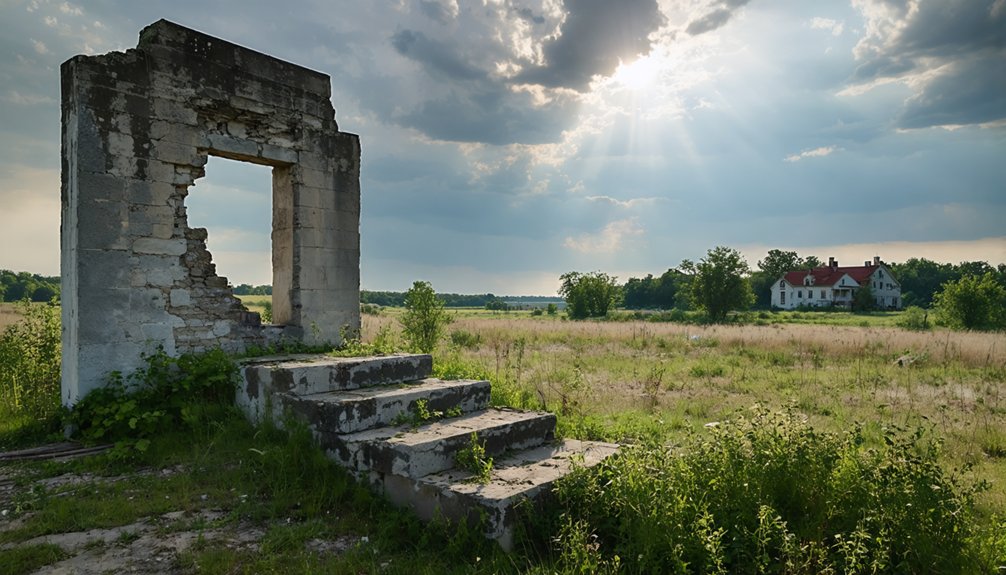
Unlike most ghost towns that simply withered away, Valmeyer made the extraordinary choice to pick up and move.
When disaster struck, Valmeyer refused to fade into history—the town chose survival by relocating to higher ground.
After the devastating 1993 flood submerged their Mississippi River floodplain home, residents didn’t surrender—they relocated two miles east to higher ground, climbing nearly 400 feet in elevation. You’ll find the original townsite along Illinois Route 156, now a genuine ghost town with scattered remnants of what once thrived.
This wasn’t typical urban renewal or historic preservation; it was survival through complete reinvention. Within weeks of disaster, citizen committees mobilized, negotiating with 25 agencies to secure funding for a 500-acre farm tract.
Their bold relocation became a model for communities worldwide facing climate threats, proving that sometimes moving forward means literally moving.
Vishnu Springs: The Dream That Faded Into Prairie
While Valmeyer’s residents chose relocation as their salvation, another Illinois community watched its dreams dissolve into the prairie grass through tragedy and scandal.
You’ll find Vishnu Springs tucked in McDonough County’s river valley, where mineral waters once promised miraculous cures. Named for a Hindu deity, this 1840s resort attracted thousands seeking healing from its celebrated spring.
But darkness crept in:
- A carousel operator crushed to death in 1903, gears silencing laughter forever
- Maud Hicks dying in childbirth at the Capitol Hotel
- Her widowed husband marrying his stepdaughter, then taking his own life
- Prohibition-era gangsters transforming healing grounds into criminal hideaways
Brownsville: Coal Boom Turned Silent Memory
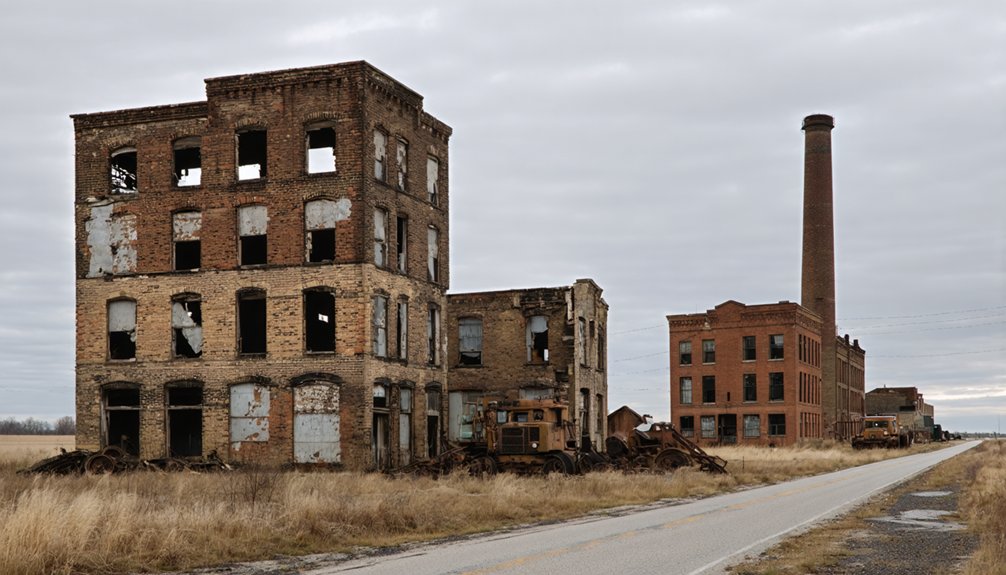
Long before coal dust would blacken the region’s lungs, Brownsville claimed its throne as Jackson County’s seat of power through an altogether different treasure: salt.
You’ll find nothing but scattered stones where 500 souls once gathered near Dr. Conrad Will’s salt works along the Big Muddy River. By 1827, this was Illinois’s third-largest town, bustling with taverns, militia musters, and the state’s first free school.
Then fortune turned cruel. The river changed course, railroads bypassed the settlement, and catastrophic fire consumed the courthouse on January 10, 1843.
Historical artifacts vanished in flames—only a rusted jail key survives. Locals whisper ghost stories about that midnight inferno, calling it Brownsville’s funeral pyre.
Four days later, residents abandoned their crumbling dreams for higher ground at Murphysboro.
Best Times to Visit Illinois Ghost Towns
October’s crisp air transforms Illinois ghost towns into theatrical stages where history and hauntings collide. You’ll find peak experiences when Halloween approaches, though summer nights offer their own rewards through gas-lit streets and extended daylight for exploration.
Spring brings comfortable temperatures perfect for exploring steep hillsides without October’s crowds.
Consider these seasonal advantages:
- Fall’s theatrical atmosphere awakens spirits alongside vibrant foliage and crisp evening air
- Summer’s endless twilight extends your paranormal investigations into warm, lingering nights
- Spring’s uncrowded paths let you connect intimately with abandoned spaces
- Year-round access means spontaneous adventures aren’t bound by seasons
Book ahead for October’s sold-out tours, or claim weekday slots when you’ll walk historic streets unrushed. Haunted hotels welcome overnight stays, while weather-proof indoor experiences ensure no storm disrupts your supernatural pursuits.
What to Bring When Exploring Abandoned Sites

Your boots crunch through broken glass as moonlight pierces the skeletal rafters above—this is when preparation separates memorable exploration from hazardous mistakes.
Moonlight through abandoned rafters reveals a stark truth: proper preparation transforms urban exploration from reckless gamble into calculated adventure.
Your gear essentials start with sturdy footwear, cut-resistant gloves, and respiratory protection—N95 masks shield you from asbestos and mold lurking in forgotten corridors.
Pack dual lighting: a powerful headlamp for hands-free navigation and backup flashlight with extra batteries.
Safety precautions demand an all-inclusive first aid kit, while GPS with offline maps prevents disorientation when cell towers fade behind abandoned horizons.
Don’t forget route markers to track your path through twisted hallways.
Long sleeves, knee pads, and a helmet complete your armor against Illinois’s crumbling structures.
Pack light, but pack smart—freedom means taking calculated risks, not reckless ones.
Frequently Asked Questions
Are Illinois Ghost Towns Safe to Explore Alone or at Night?
You shouldn’t explore Illinois ghost towns alone or at night—Cairo’s violent crime rate and East St. Louis’s dangers demand safety precautions. Legal considerations matter too, since trespassing risks arrest. Daytime group visits offer freedom without compromising your security.
Do I Need Permission to Enter Abandoned Buildings in These Towns?
You’ll absolutely need permission before entering abandoned buildings. Legal considerations protect property owners’ rights, and trespassing laws carry real consequences—fines, arrests, criminal charges. Most Illinois ghost towns remain private property, requiring explicit owner consent despite appearing deserted.
Can I Take Souvenirs or Artifacts From Illinois Ghost Towns?
Hands off—taking artifacts is illegal treasure hunting. Legal considerations include trespassing laws and archaeological protection statutes, while preservation ethics demand you leave history untouched. You’ll face fines or prosecution. Instead, capture memories through photos and respectful exploration of these haunting remnants.
Are There Guided Tours Available for Any of These Locations?
Yes, you’ll find guided ghost tours throughout Illinois that reveal each location’s historical significance. They’re perfect for capturing atmospheric shots—guides often share photography tips for getting those spine-tingling images while exploring haunted landmarks and abandoned spaces.
These tours delve into the haunting history of Illinois towns, where tales of restless spirits intertwine with the fabric of the past. As you walk through these eerie settings, you can almost hear the echoes of stories that shaped the communities. Each stop offers a unique glimpse into the lives of those who once called these places home, making every visit an adventure steeped in mystery and intrigue.
Historic ghost towns in Illinois provide a captivating backdrop for those interested in the eerie and forgotten tales of the past. As you wander through the decaying structures and shadowy streets, you might uncover stories of prosperity followed by abandonment. Whether you’re a history buff or a paranormal enthusiast, these towns beckon you to explore their rich narratives waiting to be unearthed.
Which Ghost Town Is Closest to Chicago for a Day Trip?
Buda’s your closest escape at 130 miles west—a two-hour drive to freedom. You’ll find ghost town safety with 538 residents still around, though abandoned building permissions remain unclear. Explore empty streets where Capone once rolled through on rails.
References
- https://www.ghosttowns.com/states/il/il.html
- https://www.youtube.com/watch?v=93k0qtvzkn4&vl=en-US
- https://freepages.rootsweb.com/~gtusa/history/usa/il.htm
- https://everafterinthewoods.com/8-forgotten-ghost-towns-in-illinois-that-are-quietly-fascinating/
- https://www.atlasobscura.com/things-to-do/illinois/abandoned
- https://www.freakyfoottours.com/us/illinois/
- https://en.wikipedia.org/wiki/List_of_ghost_towns_in_Illinois
- https://drloihjournal.blogspot.com/p/lost-towns-of-illinois-series.html
- https://www.onlyinyourstate.com/experiences/illinois/abandoned-town-il
- https://allthatsinteresting.com/cairo-illinois