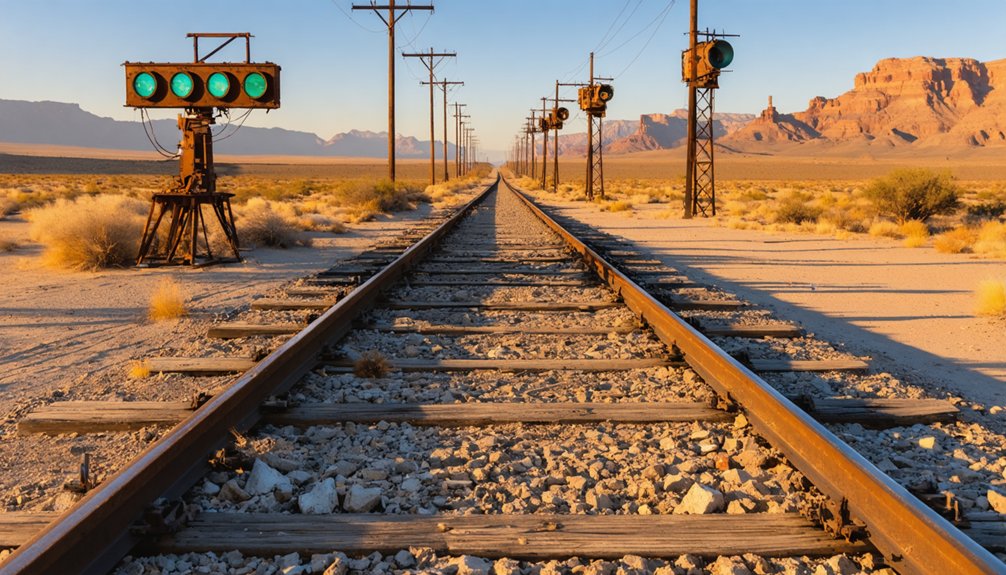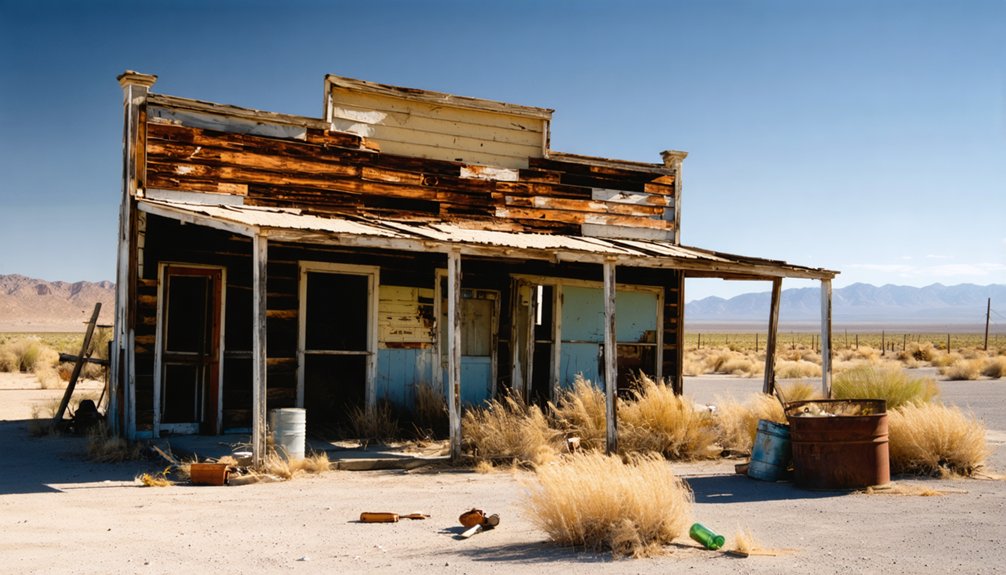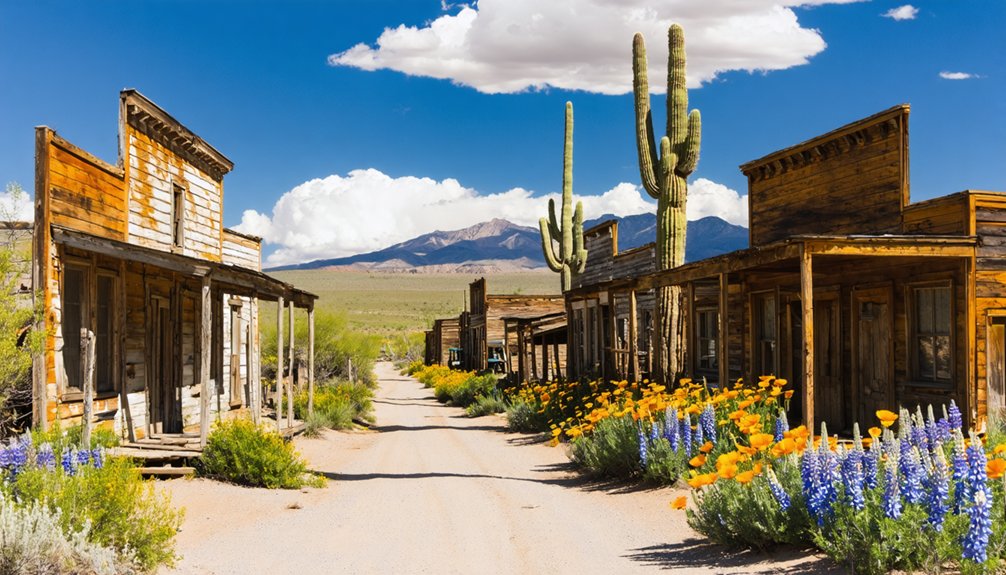
You’ll find Arizona’s ghost towns most rewarding in spring, when wildflowers bloom through crumbling adobe and temperatures hover in the perfect range for exploration. Jerome clings to Cleopatra Hill with its gravity-defying buildings, while Ruby’s preserved structures sit just miles from the Mexican border. Swansea’s residents literally left mid-meal when copper prices crashed, and Vulture City’s 366,000 ounces of gold built an entire community. Each site tells its own story of boom, bust, and the desert’s slow reclamation.
Key Takeaways
- Jerome offers preserved mining structures, artist galleries, and scenic mountain views on Cleopatra Hill, accessible during mild spring temperatures.
- Ruby, Arizona’s best-preserved ghost town with 12 adobe structures, permanently closes after June 3, 2024, making spring visits urgent.
- Swansea features abandoned adobe dwellings and mine remnants, best explored in spring before extreme summer heat on unpaved desert roads.
- Vulture City provides guided tours of Arizona’s most productive gold mine, including the Hanging Tree and assay office, ideal in spring.
- Hackberry combines 1874 mining history with Route 66 nostalgia, featuring a general store museum and vintage cars in temperate spring weather.
Swansea: A Well-Preserved Mining Town Near the California Border
When copper prices collapsed after World War I, Swansea’s residents didn’t just leave—they vanished into the desert, abandoning their homes mid-meal, their tools mid-swing. Today, you’ll find their adobe dwellings still standing in this remote corner near the California border, protected by isolation and the Bureau of Land Management’s preservation efforts.
Spring’s your supreme window to explore Swansea’s mining history—before summer’s brutal heat makes the twenty-five-mile unpaved trek from Bouse unbearable. Walk freely among 1917 workers’ cottages, peer through gated mine shafts, and trace the brick walls of the old smelter’s dust chamber. The town once bustled with approximately 750 residents at its 1910 peak, supporting saloons, restaurants, and even a car dealership.
The interpretive trail guides you past two cemeteries, crumbling foundations, and scattered automotive relics. For those wanting to extend their visit, five designated camping sites let you spend the night among the ruins, though you’ll need to bring plenty of water. No crowds, no restrictions—just you and Arizona’s best-preserved ghost town stretching across the Sonoran plains.
Agua Caliente: Historic Hot Springs and Stagecoach Stop
Long before Arizona’s settlers paved highways across the Sonoran Desert, Apache warriors and Spanish missionaries alike sought healing in the steaming pools of Agua Caliente—”hot water” that bubbled from the earth at temperatures reaching 125 degrees.
For centuries, Apache and Spanish alike traveled through desert heat to reach these sacred healing waters that steamed at 125 degrees.
The historical significance runs deep here. That 22-room adobe hotel, built in 1897, once hosted miners, cowboys, and Arizona’s first governor.
Today, crumbling stone buildings and an empty swimming pool mark where those healing waters flowed before irrigation and dynamite destroyed them. The springs contained sodium bicarbonates and salts reputed to cure everything from dyspepsia to alcoholism.
You’ll find the ruins twelve miles north of Sentinel off Agua Caliente Road. The site is accessible via 2WD roads, making it an easy drive for most vehicles. Here’s your essential visitor tips: spring offers perfect weather for exploring. The hotel sits on private property—admire it from the road.
But you’re free to wander the Pioneer Cemetery and photograph those haunting rock cabins.
Hackberry: Route 66 Nostalgia and Silver Mining Heritage
While Apache warriors soaked in Agua Caliente’s thermal springs, prospectors were striking silver in the Peacock Mountains—and Hackberry was born. You’ll discover this 1874 mining camp transformed into a Route 66 icon, where abandoned structures whisper tales of fortune seekers and highway dreamers.
The Hackberry Silver Mine produced riches from a 40-foot vein until 1919, leaving behind haunted legends of boom-and-bust dreams. When Route 66 arrived in 1926, the town reinvented itself as a highway oasis. The town relocated four miles in 1882 when the Atlantic & Pacific Railroad brought steel rails through northern Arizona.
Today, you’ll find the legendary Hackberry General Store—a museum packed with vintage gas pumps, classic cars, and road-trip relics. It’s raw Americana without corporate polish, where freedom-seekers photograph rusted Chevys against desert skies and imagine endless horizons stretching westward. The store’s namesake Hackberry tree thrives near water sources throughout the region, providing vital nourishment to local wildlife in this semi-arid landscape.
Vulture City: Arizona’s Most Productive Gold Mine
You’ll walk through weathered buildings where miners once slept and schemed, their original walls still standing after 160 years of desert winds.
Spring brings the best visiting conditions—mild temperatures transform your exploration from March through May, when summer’s brutal heat hasn’t yet made the exposed trails unbearable.
The site operates seasonally with guided tours that lead you past the infamous Hanging Tree and into authentic structures where $200 million in gold and silver once changed hands. Henry Wickenburg discovered the site in 1863 when he found a quartz outcrop containing gold, naming it Vulture Mine after the numerous vultures circling overhead. The town flourished to nearly 5,000 residents by the late 1800s, complete with saloons, a schoolhouse, and boarding houses that served the thriving mining community.
Original 1800s Building Tours
Standing before the rock-walled mine office, you’ll find yourself transported to the 1880s, when Central Arizona Mining Company workers hauled massive stones from the earth to construct this two-story fortress. These abandoned buildings tell raw stories of fortune and desperation—each stone potentially holding traces of the $600,000 in gold and silver embedded within the assay office walls built in 1884.
You’ll explore the tin-sided blacksmith shop, where tools forged rebellion and survival.
Walk past the remains of the 80-stamp mill, boarding houses, and cookhouse that once sustained 5,000 souls chasing $200 million in treasure. The district’s legacy runs deep, with approximately 366,000 ounces of gold extracted through 1959, cementing Vulture Mine’s dominance in Arizona’s mining history. Over a dozen original structures have been preserved since restoration efforts began in 2017.
The Hanging Tree stands sentinel, marking where 18 accused thieves met frontier justice. This mining history isn’t sanitized—it’s authentic, unvarnished freedom carved from Arizona’s unforgiving landscape.
Seasonal Operations and Accessibility
From October through May, Vulture City’s gates swing open to reveal Arizona’s most legendary gold mine, though you’ll need to mark Wednesdays off your calendar.
Spring weather transforms your exploration into pure desert magic—temperatures hover in that perfect range where you can wander freely without the summer’s punishing heat bearing down on your shoulders.
The 2017 restoration efforts mean you’re walking through stabilized buildings rather than crumbling ruins, letting you venture deeper into the ghost town’s story.
Access restrictions stay minimal during operating months, giving you genuine freedom to roam where 5,000 souls once struck it rich.
Just remember: the desert doesn’t forgive unpreparedness. Pack water, respect the Wednesday closures, and let this 340,000-ounce gold producer work its weathered magic on you.
Jerome: America’s Largest Ghost Town With Copper Mining Legacy
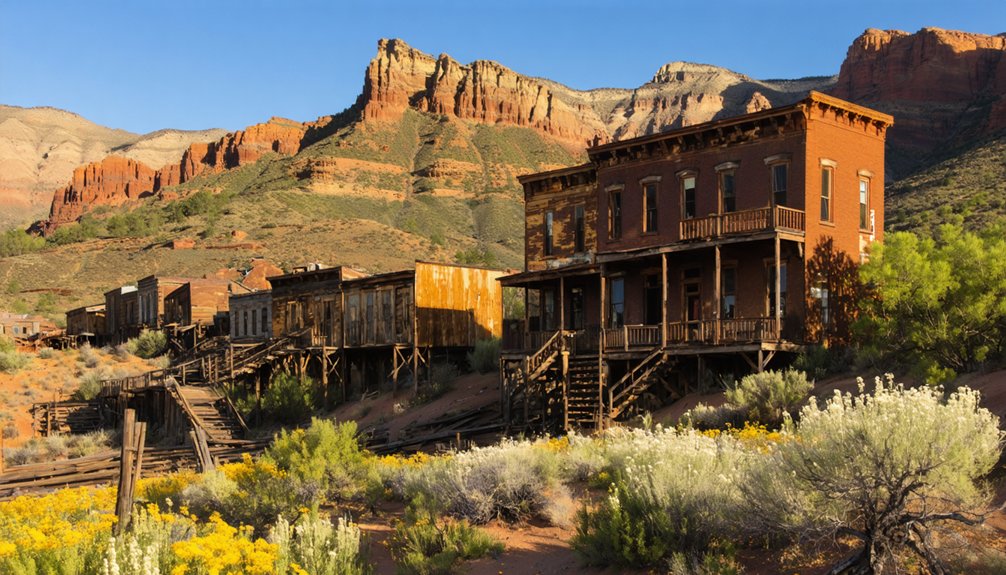
Perched on Cleopatra Hill’s steep slopes, Jerome clings to existence where $1 billion worth of copper, gold, and silver once emerged from the earth’s depths.
Jerome defies gravity and economics alike—a billion-dollar mineral empire carved into impossible mountainside real estate.
You’ll witness buildings that literally slid downhill from underground blasting—the infamous Sliding Jail rests hundreds of feet from its foundation.
This town’s economic history reads like a fever dream: from 1882’s first claims through boom-era peaks employing 300+ miners to 1953’s devastating closure when Phelps Dodge shuttered operations forever.
Spring’s perfect for exploring preservation efforts that saved Jerome from complete abandonment.
Wander through galleries housed in former bordellos, dine in converted opium dens.
Artists and rebels transformed what nearly became America’s largest ghost town into a living museum.
The post office has operated continuously since 1883—proof that some spirits refuse extinction.
Ruby: Remote Border Town in Coronado National Forest
Four miles from Mexico’s border, Ruby sits abandoned in the Pajarito Mountains—Arizona’s best-preserved ghost town now counting its final days as a public destination.
You’ll navigate Ruby Road’s final six dirt miles to reach this 1877 mining camp at 4,186 feet, where stone buildings stand sentinel among 700,000 tons of tailings.
The ghost stories run deep here: the 1920s Ruby Murders sparked the Southwest’s largest manhunt, and 190,000 Mexican free-tailed bats still haunt the old mine shafts at dusk.
Spring brings gold Mexican poppies blazing across hillsides where Native heritage meets outlaw legend.
Since 1975, this National Register site has opened its twelve adobe structures to wanderers seeking authentic frontier remnants.
After June 3, 2024, these 362 acres close forever to public access.
Planning Your Spring Ghost Town Adventure
Arizona’s ghost towns demand more than curiosity—they require preparation that matches the unforgiving terrain. You’ll need water—lots of it—since natural sources don’t exist in these abandoned settlements.
Check road conditions before venturing onto dirt paths leading to Swansea or Agua Caliente; your vehicle’s clearance matters when gravel turns treacherous.
Spring’s mild mornings offer perfect exploration windows before afternoon heat strikes.
Pack sunscreen, sturdy boots, and respect historical preservation efforts by leaving artifacts untouched. The BLM-protected structures in these ghost towns survive because visitors take only photographs.
Wildlife encounters add unpredictability—burros wander Oatman’s streets while desert creatures inhabit crumbling foundations.
Arrive early, combine sites efficiently along Route 66, and embrace the isolation.
These forgotten places reward those who venture prepared into Arizona’s haunting backcountry.
What to Bring for Your Ghost Town Exploration
Before you venture into Arizona’s abandoned settlements, your survival depends on what’s packed in your vehicle. Packing essentials start with gallons of water—these ghost towns offer zero services.
Throw in a wide-brimmed hat, high-SPF sunscreen, and sturdy boots for traversing crumbling structures and hidden mine shafts. Your camera captures history, but your first aid kit handles reality when weathered wood splinters under curious hands.
Safety precautions aren’t suggestions—they’re necessities. Pack extra fuel, spare tires, and tools since civilization sits hours away.
GPS devices trump cell phones where towers don’t exist. Don’t skip work gloves, flashlights, or that emergency whistle.
Spring’s desert heat demands electrolyte drinks alongside your lunch cooler. Remember: respecting BLM fencing around hazardous zones keeps your adventure memorable for the right reasons.
Frequently Asked Questions
Are Pets Allowed at Arizona Ghost Town Sites?
Pet policies vary across Arizona’s ghost towns. You’ll find pet-friendly zones at Goldfield, Vulture City, and Gold King Mine where leashed companions roam freely. However, Oatman’s dangerous for dogs—wild donkeys attack them viciously, so leave yours home.
Can Visitors Camp Overnight at These Ghost Town Locations?
You’ll find camping choices cherished at certain ghost towns. Goldfield grants overnight stays with hookups, while Fairbank offers primitive backcountry permits. Historical preservation and visitor safety guide these options, letting you experience Arizona’s wild frontier freedom beneath starlit desert skies.
Do Any Ghost Towns Offer Guided Tours Year-Round?
You’ll find Flagstaff’s haunted tour runs nightly year-round, letting you chase spectral encounters across one mile of historical preservation. While exploring, you might experience unexpected wildlife encounters under starlit skies, embracing complete freedom in Arizona’s mysterious ghost town landscape.
summer trips to Arizona ghost towns offer an exhilarating way to delve deeper into the state’s rich, eerie history. Each deserted building tells a story, with remnants of the past whispering secrets to those who dare to listen. As you wander through these historic sites, the haunting beauty of the landscape surrounds you, inviting exploration and adventure at every turn.
What Photography Restrictions Exist at Arizona Ghost Towns?
You’ll find 25% of Arizona ghost towns require photography permits for commercial work. Historical preservation drives these rules—you can’t use drones, climb displays, or shoot commercial content without permission, though personal snapshots remain wonderfully unrestricted.
Are Ghost Town Roads Accessible for RVS and Trailers?
Road conditions vary dramatically—you’ll find RV-friendly routes like Ghost Town Road’s graded surface near Congress, but challenging terrain at Swansea requires high-clearance vehicles. Vehicle accessibility depends on your rig’s capabilities and your adventurous spirit.
References
- https://www.visitarizona.com/like-a-local/4-arizona-ghost-towns-you-may-have-never-heard-of
- https://justsimplywander.com/ghost-towns-in-arizona/
- https://www.visittucson.org/blog/post/8-ghost-towns-of-southern-arizona/
- https://vulturecityghosttown.com
- https://www.travelbackland.com/post/jerome-arizona-spend-a-day-in-america-s-largest-ghost-town
- https://www.tripadvisor.com/Attractions-g28924-Activities-c47-t14-Arizona.html
- https://www.hipcamp.com/journal/camping/arizona-ghost-towns/
- https://southernarizonaguide.com/a-trip-to-the-ghost-town-of-ruby-az/
- https://goldfieldghosttown.com/attractions/
- https://www.atlasobscura.com/places/swansea-ghost-town