You’ll find California’s best ghost town experiences in spring when desert temperatures hover in the comfortable 70s and wildflowers transform abandoned mining settlements into colorful landscapes. Visit Bodie’s 110 preserved structures at 8,379 feet, explore Calico’s 500 mining shafts with affordable admission, or wander Randsburg’s authentic ruins among its 69 residents. Spring’s mild weather, blooming poppies, and clear skies create ideal conditions for photographing crumbling saloons and touring historic mine shafts—and there’s plenty more to discover about planning your perfect ghost town adventure.
Key Takeaways
- Bodie State Historic Park and Calico Ghost Town offer well-preserved structures, mine tours, and daily access with affordable admission fees.
- Spring brings mild 70°F temperatures, wildflower blooms peaking March through April, and cleared snow at higher-elevation sites like Bodie.
- Randsburg, Cerro Gordo, and Silver City provide authentic, uncommercialized exploration with original buildings, cemeteries, and mining relics.
- Essential gear includes layered clothing, sturdy boots, water, GPS, maps, and first-aid supplies for remote terrain and abandoned mine hazards.
- Family activities include mine tours, gold panning at Calico, historic train rides, and educational exhibits at preserved schoolhouses and museums.
Calico Ghost Town: A Colorful Desert Adventure Near Barstow
When you crest the hill off Interstate 15 and spot those giant white letters spelling “CALICO” against rust-colored peaks, you’ll understand immediately how this town got its name. The calico-patterned mountains that drew four treasure hunters in 1881 still dominate these desert landscapes, now honeycombed with over 500 abandoned mining shafts.
You’ll walk the same dusty streets where 1,200 fortune-seekers once extracted $20 million in silver ore during the town’s twelve-year boom. The mining history here’s authentic—five original buildings still stand among the carefully restored structures. Walter Knott purchased and restored the town in the 1950s, preserving its historic character for future generations. The restoration efforts used old photographs and memories of former residents to recreate the town’s silver rush appearance.
Spring’s your sweet spot for visiting: mild temperatures make exploring the canyons comfortable, and the park’s open daily 9 AM to 5 PM. Park admission’s cheap, and you’re just three miles from modern amenities in Barstow.
Bodie State Historic Park: California’s Best-Preserved Mining Town
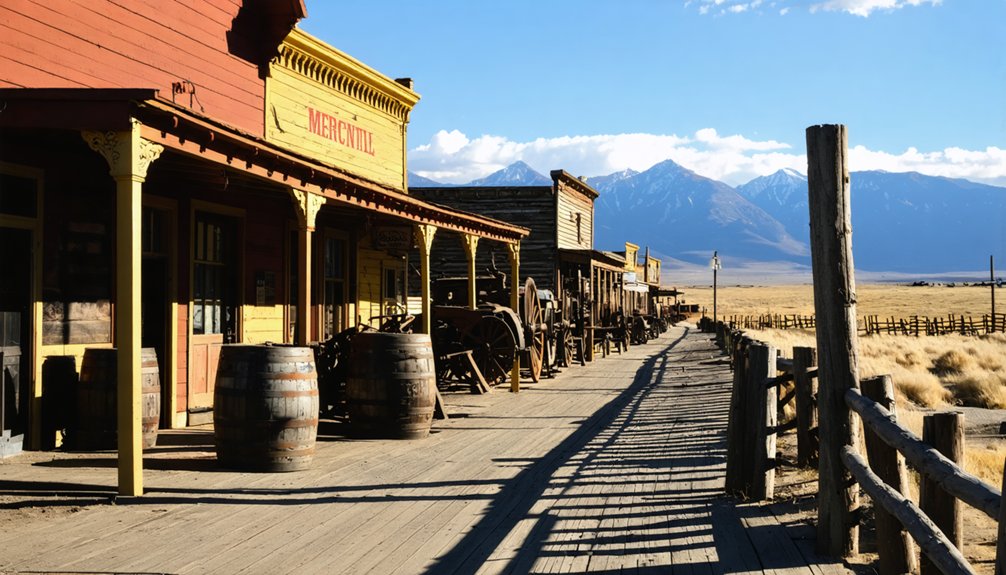
The weathered wooden buildings of Bodie stand frozen in time at 8,379 feet, their paint-stripped facades testimony to more than a century of Sierra Nevada winters. You’ll explore 110 structures maintained in “arrested decay”—exactly as miners left them in 1942.
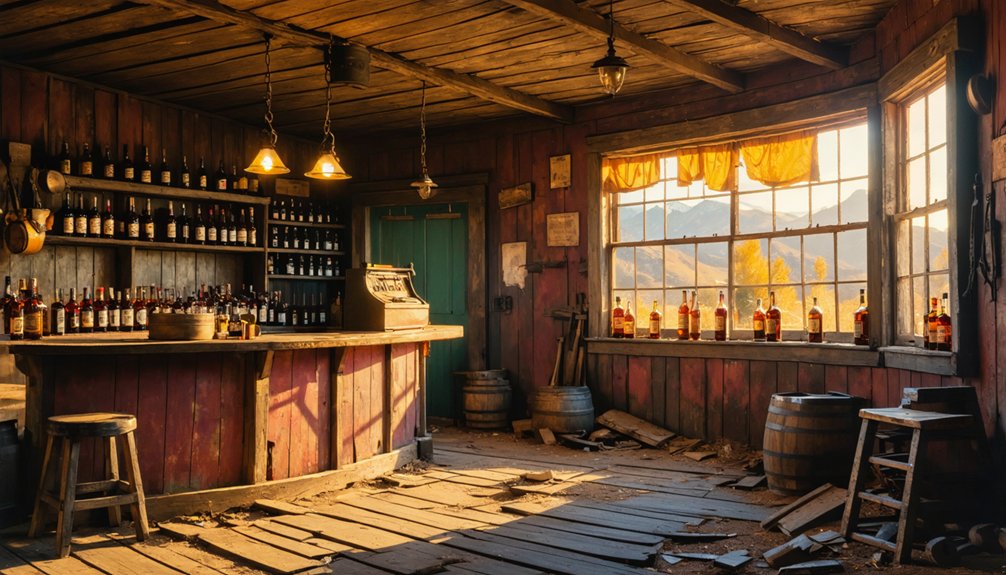
Peer through dusty windows at mining equipment still scattered across floors, newspapers stuffed in walls for insulation, and goods lining store shelves.
Spring offers ideal conditions after winter’s closure. You’ll discover:
- 65 saloons once lined Main Street serving 10,000 rowdy prospectors
- Historical landmarks include a weathered church, period gas pumps, and an operating gold mill
- Rangers provide fact-packed walking guides through America’s best-preserved mining town
- No food available—pack provisions for your high-altitude exploration
This National Historic Landmark produced $70 million in gold between 1876-1941. The town was named after W. S. Bodey, a prospector who discovered gold in 1859 but died in a blizzard shortly after his discovery. The place name Bodie refers to this remarkable ghost town that now serves as one of California’s most significant historic sites.
Silver City Ghost Town: An Open-Air Museum in Kern Valley
Unlike Bodie’s remote mountain perch, Silver City brings Kern Valley’s gold rush history to you at roadside level. You’ll find over 20 rescued structures dating to 1858, pulled from seven abandoned camps before Lake Isabella’s waters swallowed them forever. The Mills family started this salvage mission in the late 1960s, and the Corlews’ 20,000-hour restoration transformed it into something extraordinary.
Walk through buildings where miners actually lived—the Apalatea House with hand-forged nails, the jailhouse that held gunslinger Newt Walker, authentic Wells Fargo offices. These preservation efforts follow Bodie’s “arrested decay” philosophy, keeping structures weathered and real. The town’s unique cemetery and casket site attracts ghost hunters, particularly during evening visits.
Owner J. Paul Corlew offers guided tours revealing mining history most tourists miss. Spring’s mild weather makes exploring this non-commercial museum ideal—no crowds, just raw frontier atmosphere. Admission fees help fund ongoing restoration, with adults paying $7 and children $4.50.
Cerro Gordo: High-Altitude Silver Mining History Above Owens Lake
Perched at 8,500 feet above the ghostly expanse of Owens Lake, Cerro Gordo clings to the Inyo Mountains like a silver-hungry barnacle that refuses to let go.
A silver-hungry ghost town clinging to California’s peaks, refusing to release its grip on the past.
You’ll discover where Pablo Flores’s adobe ovens once transformed raw ore into Los Angeles’s silver lifeblood, fueling the city’s 1860s boom.
What awaits your spring exploration:
- Mining technology remnants including a 300-foot vertical shaft and aerial tram suspended precariously above the access road
- Bullet-scarred saloon walls telling tales of lawless nights
- Historical preservation efforts at the 1871 general store, now museum
- Belshaw House and Bunkhouse offering overnight stays among 336 acres of authenticity
Access requires special permission from current owners who’ve championed restoration since 2018, despite 2020’s devastating American Hotel fire.
The journey from Keeler on Highway 136 involves a steep four-mile climb up packed dirt roads, rewarding visitors with remarkable summit views after approximately 30 minutes of careful driving.
Mortimer Belshaw’s arrival in April 1868 proved pivotal, as he supervised construction of the wagon road and completed a smelter that launched the first ore exports by December of that year.
Randsburg: A Living Ghost Town on the Yellow Aster Trail
Where Rand Mountain’s golden slopes once lured three prospectors into California history, Randsburg sprawls as a time capsule that hasn’t quite decided whether it’s alive or deceased.
You’ll find 69 souls inhabiting what pumped out $25 million in Yellow Aster gold before the boom collapsed.
Spring’s your window to explore this “living ghost town” when Mojave heat won’t roast you. Wander freely through abandoned buildings—the two-room jail, barber shop ruins with its 1906 calendar still hanging, and mine tailings you can scramble across without permits or fees.
The saloon still pours drinks among desert museum artifacts and ancient ruins of stamp mills. At its peak, the town swelled to over 3,500 residents during the frenzied boom years of the late 1890s.
Unlike sanitized tourist traps, Randsburg lets you touch history. The town originated as Rand Camp in 1895, named after a South African mining region during the height of the gold rush era. Just off Highway 395, it’s raw, dusty, and unapologetically authentic—exactly what freedom-seekers crave.
Benton Hot Springs: Soak in History Along the Eastern Sierra
Since 1852, Benton Hot Springs has straddled the line between ghost town and living settlement, refusing to die even after silver prices collapsed and nearly 5,000 prospectors abandoned Mono County’s oldest town.
Today, you’ll discover authentic Wild West remnants alongside therapeutic waters that showcase both Native American history and geothermal significance.
What Makes Benton Worth Your Spring Adventure:
- Soak where Paiutes bathed for millennia – 135°F springs still flow with the same purity that sustained bathhouses since the 1860s.
- Explore genuine ghost town infrastructure – Wells Fargo station, crumbling saloons, and windswept cemetery tell mining-era stories.
- Escape the crowds – Just 190 residents means you’ll have Highway 120’s historic corridors practically to yourself.
- Score insider knowledge – Grab $5 walking tour maps from the Inn at Benton Hot Springs.
Why Spring Is the Perfect Season for Ghost Town Exploring
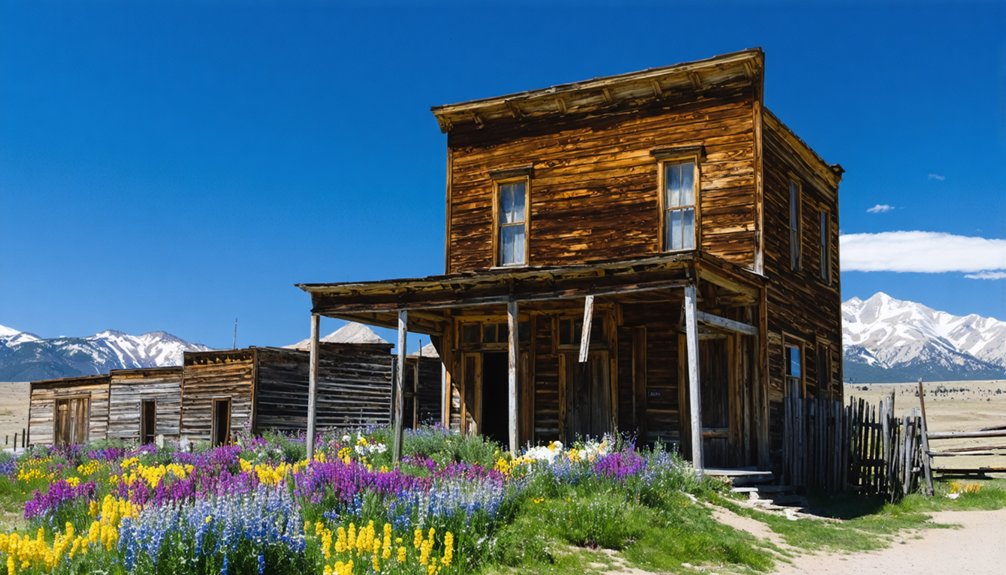
You’ll find spring transforms California’s ghost towns into surprisingly comfortable destinations, with desert temperatures hovering in the pleasant 70s instead of the scorching 100+ degrees of summer.
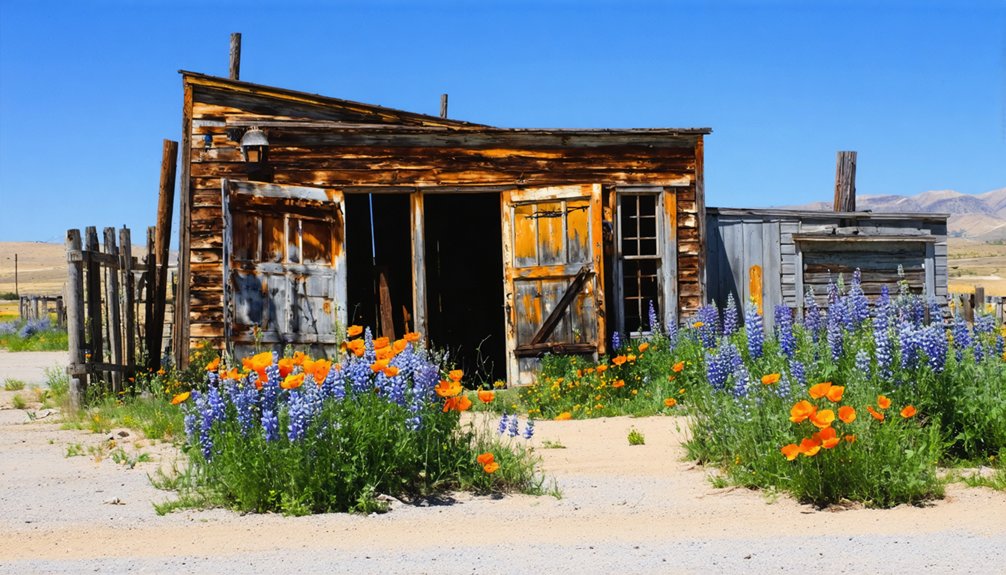
The timing couldn’t be better—just as winter snow clears from remote Sierra sites like Bodie, the Mojave Desert explodes with wildflower superblooms that paint brilliant orange and purple carpets around weathered mining structures.
I’ve watched photographers scramble at Calico as golden poppies frame rusted equipment against clear blue skies, creating shots impossible during any other season.
Mild Desert Weather Conditions
When desert temperatures hover between 80–88°F during midday and drop to a pleasant 56°F at dawn, you’ll discover why spring transforms California’s ghost towns from scorching no-go zones into explorer’s paradise.
You’ll explore abandoned mining camps and weathered structures without the brutal summer heat that makes daytime sightseeing dangerous.
The desert scenery comes alive under bright sunshine—nearly every day offers clear skies and minimal rainfall (just 0.08 inches in April).
Spring’s ideal conditions include:
- Low humidity (16–21%) keeps you comfortable during long hikes through ruins
- Minimal precipitation means dry paths and accessible remote locations
- Cool evenings (65–72°F) perfect for camping near ghost towns
- Moderate winds (10–20 mph) provide natural cooling without dust storms
Pack light layers and embrace unrestricted exploration across California’s forgotten desert settlements.
Wildflower Blooms and Scenery
While ghost towns hold their haunting beauty year-round, spring carpets these forgotten settlements in California’s most spectacular wildflower displays. You’ll witness wildflower ecology at its finest from mid-March through late April, when blooming cycles peak across desert elevations.
California poppies blanket Antelope Valley’s abandoned structures, while Death Valley’s ghost town routes explode with desert blooms along Badwater Road and Furnace Wash. The contrast is stunning—vibrant fiesta flowers and monkey flowers pushing through decaying foundations.
Time your visit right, and you might catch a superbloom (occurring every 10-15 years). Lower elevations start blooming mid-February, progressing upward through June as snowmelt feeds higher terrain.
You’re not just exploring ruins; you’re witnessing nature’s reclamation, where forgotten human ambitions meet unstoppable seasonal renewal.
What to Bring When Visiting California’s Ghost Towns
Packing for California’s ghost towns demands strategic thinking, since you’ll encounter everything from scorching desert floors to windswept High Sierra elevations within a single day trip.
Historical preservation policies mean you’re venturing into authentic, unmaintained sites where self-sufficiency isn’t optional—it’s survival.
Your essential gear checklist:
- Layered clothing and sturdy boots – Desert heat transforms into High Sierra chill within hours.
- Uneven terrain and spring mud test your footwear.
- Water and emergency supplies – Parched Eastern Sierra locations offer zero services.
- Pack first-aid kits and communication devices.
- Navigation tools – GPS or detailed maps guide you through off-road access points.
- Documentation gear – Cameras capture decaying structures, while trash bags help you follow leave-no-trace ethics.
Travel safety here means preparing for isolation, variable weather, and abandoned hazards like mine shafts.
Family-Friendly Ghost Town Activities and Attractions
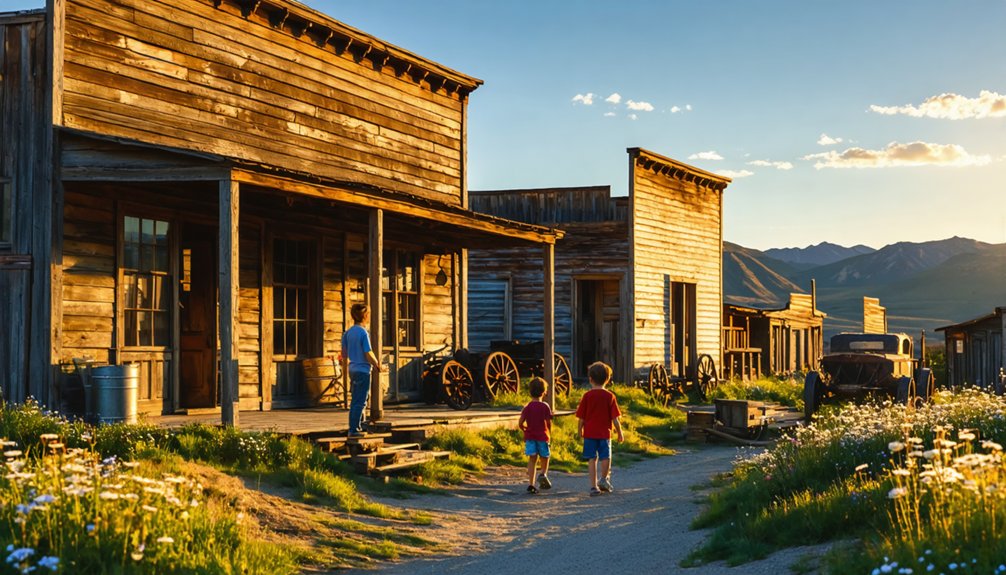
Your kids will step into real mine shafts at Calico’s Maggie Mine Tours, where they’ll touch century-old rock walls and hear stories of miners who carved these tunnels by hand.
At Bodie State Historic Park, the $6 stamp mill tour transforms rusty machinery into a thunderous gold-crushing operation through your guide’s vivid demonstration of how ore became fortune.
You’ll find gold panning at Calico lets even young children experience the authentic thrill of swirling sediment until something shiny catches the light.
Interactive Mining Tours Available
Beyond simply wandering through weathered buildings, California’s ghost towns let you step directly into the miner’s world through hands-on underground adventures.
Underground exploration opportunities include:
– Maggie Mine at Calico – You’ll navigate a 1,000-foot self-guided tour through an authentic 1880s silver mine.
Complete with blacklight mineral displays and audio narratives explaining mining history as you walk the original drifts where miners once worked.
– Eagle Mining Company in Julian – Experience old-fashioned guided adventures through genuine 1870s gold mine tunnels.
Here, you’ll discover California’s gold rush techniques firsthand.
– Gold Panning Adventures – Try your hand at authentic panning techniques in running streams.
You’re guaranteed to uncover Iron Pyrite keepsakes you’ll take home in souvenir vials.
– Bodie Mining District Tours – Access normally off-limits areas through specialized guided excursions.
These explorations allow you to explore boom-and-bust fortunes firsthand.
Kid-Friendly Educational Experiences
When spring sunshine warms California’s high desert, ghost towns transform into outdoor classrooms where your children won’t even realize they’re learning history. At Calico, you’ll find hands-on gold panning where everyone leaves with fool’s gold treasures. Meanwhile, the Mystery Shack’s physics-defying illusions spark curious minds.
The eight-minute railroad ride narrates silver mining tales as vintage equipment rolls past your window. Unlike medieval festivals with staged performances, this is authentic urban exploration tailored for families—weathered buildings at Bodie stand exactly as miners abandoned them.
Your kids can photograph the hillside schoolhouse, then discuss one-room education over lunch. With general admission covering most activities ($8 adults, $5 youth), you’re investing in tangible history lessons that beat any textbook description of pioneer life.
Planning Your California Ghost Town Road Trip
Mapping out a California ghost town adventure requires balancing ambition with reality, since these abandoned settlements scatter across vastly different terrains—from the scorching Panamint Valley floor to Bodie’s windswept plateau at 8,400 feet.
California’s ghost towns demand respect for distance and elevation—prepare for desert heat and mountain cold within the same journey.
Transportation challenges define your route. Bodie’s final three miles are unpaved, while Ballarat sits deep in Death Valley’s backcountry.
Historical preservation efforts keep these sites authentic but minimal—don’t expect amenities.
Spring Planning Essentials:
- Start north at Shasta State Historic Park on Highway 299, then work southward through the Eastern Sierra.
- Reserve accommodations early near popular stops like Bodie and High Sierra hot springs.
- Check seasonal road conditions for Ebbetts Pass Byway and alpine access routes.
- Stop at Barstow’s Welcome Center for free maps and current site conditions before tackling desert destinations.
Trust reliable vehicle rentals for remote exploration.
Frequently Asked Questions
Are Pets Allowed at California’s Ghost Towns?
Pet policies vary wildly at California’s ghost towns. You’ll find Calico welcomes your leashed pup for just $1, while Bodie allows dogs outdoors only. Unfortunately, Castle Dome bans pets entirely—plan accordingly for your adventure.
Do Ghost Towns Have Cell Phone Service?
Ghost towns blend Old West solitude with modern reality—digital connectivity varies wildly. You’ll find signal availability depends on location: Cerro Gordo has limited Wi-Fi, Calico lacks Verizon coverage, while Ballarat offers complete disconnection from today’s hyperconnected world.
Can You Camp Overnight at These Ghost Town Locations?
You can camp near most California ghost towns on BLM land, but not at Bodie due to historical preservation rules. Pack bear-proof containers for wildlife considerations, respect 14-day limits, and always use established sites to protect fragile desert ecosystems.
Are Guided Tours Available or Only Self-Guided Exploration?
You’ll find both guided tours and self-exploration options at California’s ghost towns. Bodie offers ranger-led walks, Calico features mine tours, while Randsburg and Shasta let you roam freely. Choose your adventure style—structured or spontaneous exploration awaits.
If you’re feeling adventurous, you might want to explore California’s abandoned ghost towns, where each location tells a fascinating story of the past. Don’t miss the chance to capture unique photographs of the decaying structures and haunting landscapes. With so much history waiting to be uncovered, every visit promises an unforgettable experience.
What Are the Entrance Fees for Each Ghost Town?
Pricing’s pretty consistent: you’ll pay $7-8 for adults and $4.50-5 for youth at most sites. Your entrance fees fund historical preservation and restoration efforts, keeping these freedom-filled frontier towns accessible for adventurers seeking authentic Old West experiences.
References
- https://www.flyingdawnmarie.com/new-blog/california-ghost-towns
- https://en.wikipedia.org/wiki/List_of_ghost_towns_in_California
- https://www.visitgreaterpalmsprings.com/blog/post/ghost-towns-of-the-california-desert/
- https://californiahighsierra.com/trips/explore-ghost-towns-of-the-high-sierra/
- https://www.atlasobscura.com/itineraries/the-wildest-west
- https://www.tripadvisor.com/Attractions-g659472-Activities-c47-t14-California_Desert_California.html
- https://www.youtube.com/watch?v=dQxSH3XBdXY
- https://www.weekendsherpa.com/issues/explore-ca-ghost-towns-gold-towns-and-an-underground-garden/
- https://www.exploratography.com/blog-cal/category/Ghost+Town
- https://www.nps.gov/deva/learn/historyculture/death-valley-ghost-towns.htm