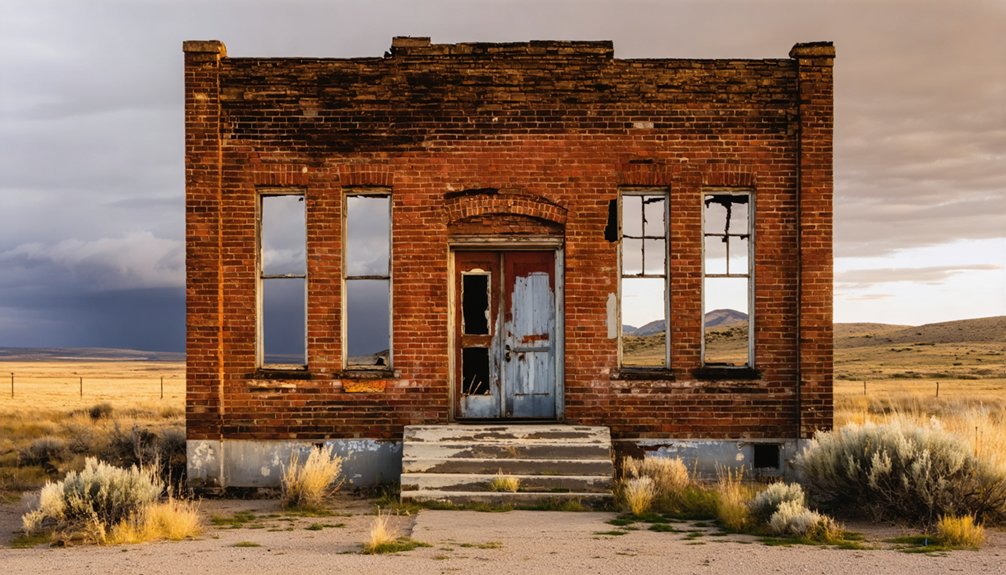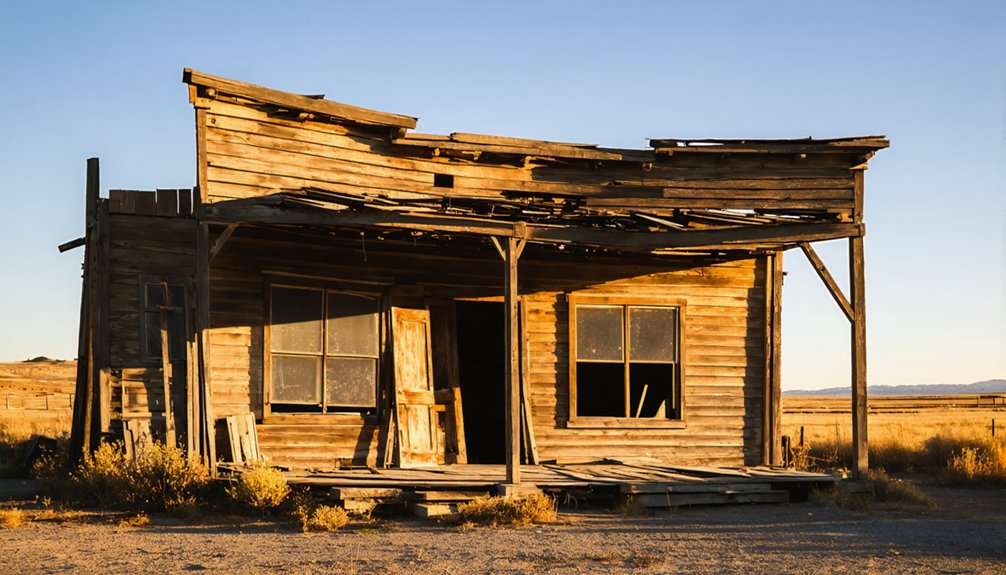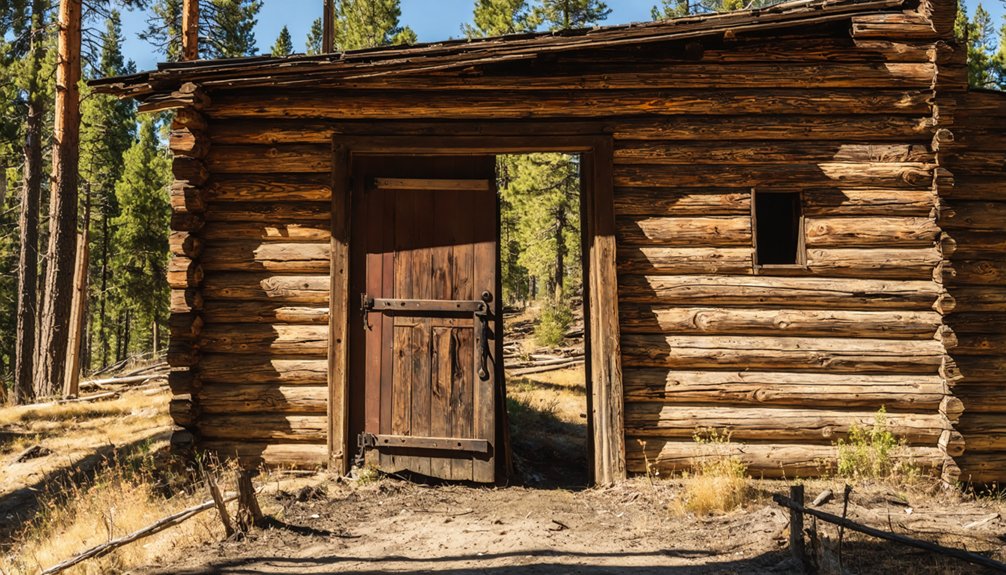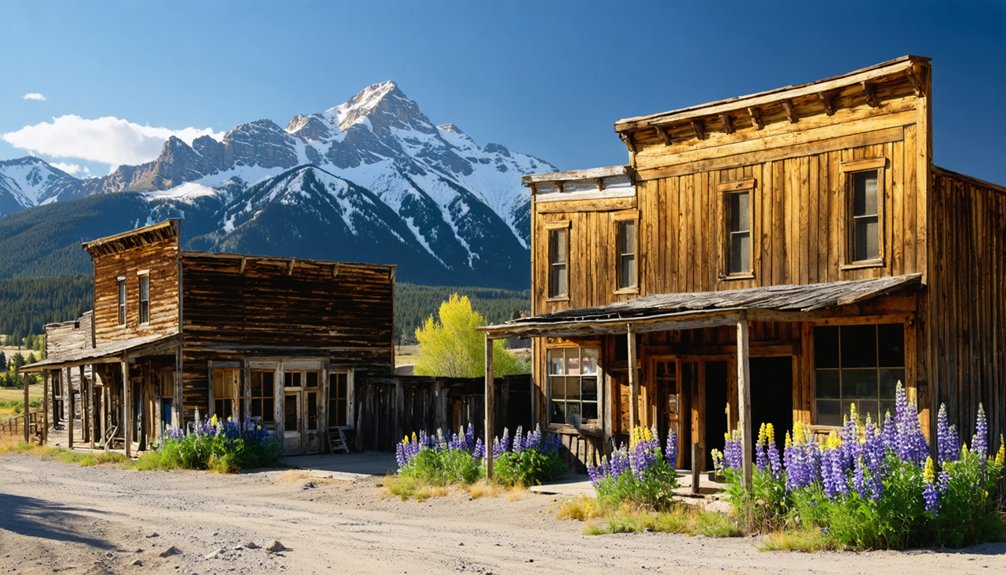
You’ll find Idaho’s best spring ghost town experiences at Gilmore, where 8 stabilized structures from the 1910s overlook sweeping mountain vistas, and Bayhorse, featuring 14 buildings including a Wells Fargo office accessible via maintained trails. Plan for mid-May through early June when roads become passable and wildflowers bloom. Bring high-clearance vehicles for remote sites like Custer at 6,470 feet elevation, where avalanche remnants tell haunting tales. Pack layers for 40-60°F days, bear spray, and offline maps—the backcountry rewards prepared explorers with authentic mining-era landscapes few others discover.
Key Takeaways
- Best spring travel time is mid-May through early June when roads are accessible and wildflowers bloom across Idaho’s ghost town regions.
- Bayhorse offers 14 preserved structures, gravel roads, hiking trails, and ideal spring conditions for biking and ATV adventures.
- Gilmore features 8 stabilized buildings from the 1910s-1920s with interpretive signage, located 65 miles south of Salmon near Meadow Lake Campground.
- Bonanza showcases tree-lined streets, historic architecture, and Boot Hill Cemetery with visible mining equipment from its 1877 gold rush origins.
- Shoup provides remote river access along the Salmon River with an operating general store serving its 25 current residents.
Gilmore: A Depression-Era Town Frozen in Time
High in Idaho’s Lemhi County mountains, Gilmore stands as a haunting reminder of boom-and-bust mining culture. You’ll find eight stabilized structures from its 1910s-1920s heyday, when 600 residents worked the silver and lead mines.
Eight weathered buildings stand sentinel in Lemhi County’s peaks, where 600 miners once chased silver and lead through Idaho’s unforgiving mountain terrain.
The town’s dramatic end came swiftly—a 1927 power plant explosion sparked catastrophic fires, driving residents away. Mining ceased by 1930, and the Great Depression’s economic decline finished what the disaster started.
Today, preservation efforts have stabilized the remaining log and frame buildings, with four untouched structures featuring interpretive signage on the hillside. You can explore freely across BLM-managed land, hiking the original townsite high above the valley. Just west of Gilmore, you’ll discover Ragtown, a crude settlement known as “Tent Town” where itinerant miners lived in makeshift shelters constructed from platform tents and scrap materials.
Located 65 miles south of Salmon off Highway 28, spring’s mountain breezes make this remote ghost town perfect for solitary exploration among sweeping vistas. The nearby Meadow Lake Campground offers alpine camping and fishing opportunities at the base of the Lemhi Range.
Leesburg: High-Altitude Mining Camp in the Mountains
You’ll discover the remarkable resilience of Leesburg’s early settlers when you learn how 500-600 miners endured the brutal winter of 1866-1867. They shoveled a twelve-man trail through deep snow just to bring in supplies by mid-March.
Their collective survival depended on teamwork and determination, transforming what could have been a lawless camp into an industrious community. By late April, the population had surged to 2,000, with over 130 houses constructed by summer as the mining season began in earnest.
The camp’s origins trace back to Frank Barney Sharkey’s discovery party, which found gold along Napias Creek on July 16, 1866. The historic cemetery that remains today holds the stories of those who didn’t survive the harsh conditions, marking the high price paid for gold in these unforgiving mountains.
Winter Survival and Teamwork
When over 500 miners decided to winter at Leesburg in 1866, they faced a brutal test of endurance in the high Salmon River mountain basin. Deep snows buried the camp, cutting off supply routes until a twelve-man crew shoveled through drifts in February and March. By then, food had run out. The first pack train didn’t arrive until mid-March.
Yet this crisis forged something remarkable: winter resilience through genuine community bonds. Unlike rowdy camps elsewhere, Leesburg remained unusually quiet. You’d have found miners building cabins together, sharing dwindling supplies, helping neighbors survive rather than drinking or brawling. The camp’s cooperative spirit meant minimal fights and drinking, distinguishing it from the violent chaos typical of other mining settlements.
When prospecting became impossible, they focused on what mattered—shelter, survival, and solidarity. This brotherhood carried them through months of isolation, proving that freedom sometimes means choosing interdependence over individualism. Today, visitors can still see weathered cabins and scattered mining equipment that stand as testament to the miners’ determination and craftsmanship during those harsh winter months.
Historic Cemetery and Burials
Among the weathered log cabins and scattered mining debris, Leesburg’s cemetery holds seventeen known graves—silent markers of lives that ended in this remote Salmon River mountain basin. You’ll find mostly unrecognizable, unmarked burial sites where ancient legends and haunting tales now outnumber the living.
What’s remarkable: this camp of 2,000-7,000 souls remained unusually peaceful, avoiding the violence plaguing other gold rush settlements.
The cemetery tells three distinct stories:
- Chinese miners’ burials were later exhumed and repatriated to their homeland.
- Peak-era interments from 1866-1867 when 500 miners weathered brutal winters.
- Post-1870 decline graves as the camp faded into mountain wilderness.
Deep snow and harsh conditions preserved this National Register site since 1975, offering you unfiltered access to Idaho’s unvarnished mining heritage.
Shoup: Living History Along the Salmon River
Unlike most ghost towns frozen in time, Shoup clings to life with just two residents maintaining this 1881 gold rush settlement deep in the Salmon River canyon.
You’ll discover a town born from The Grunter lode discovery, where hundreds once worked the Clipper-Bullion and Gold Hill mines that fueled Idaho’s mining boom.
Reaching this remote outpost demands traversing steep mountain roads or floating down the legendary “River of No Return,” the same treacherous route that once brought supplies via 30-foot wooden boats.
The Shoup store still operates today as a general store and gathering point, serving history enthusiasts, fishermen, and adventurers seeking solitude in this scenic canyon wilderness.
Gold veins formed near the top of the Idaho batholith, the massive granite intrusion visible throughout the canyon walls surrounding Shoup.
Remote Outpost’s Current Population
Deep in the Idaho backcountry where the Salmon River carves through Lemhi County‘s rugged terrain, Shoup clings to existence with just 25 residents—a population so sparse it translates to 0.1 people per square mile across the settlement’s 465-square-mile expanse.
Population trends reveal dramatic demographic changes since 1990, when 42 people called this outpost home. You’ll notice striking characteristics among those who remain:
- Male residents outnumber females nearly 3-to-1 (72.7% versus 27.3%)
- Median age of 39.5 years suggests working-age adults choosing remote living
- Recent growth from 15 residents in 2000 shows renewed interest before declining again
The community maintains connection through organizations like the Shoup Volunteer Fire Department, serving residents scattered across this vast territory. Despite minimal infrastructure—just a general store and post office—Shoup endures where countless settlements vanished, proving freedom-seekers still value isolation over convenience. This extreme isolation contrasts sharply with Idaho’s statewide population density of 22.4 people per square mile.
Gold Mining Town History
Before Shoup earned its name and permanent place on Idaho’s map, independent prospectors from the Leesburg camps worked the Salmon River bars in 1868 and 1869, panning for placer gold in the frigid waters with little more than determination and basic tools.
Mining techniques evolved dramatically when Samuel James and Pat O’Hara discovered The Grunter lode in 1881, shifting operations from simple sluiceboxes to hard-rock tunneling.
By the 1890s, over 300 claims dotted the landscape, and the Clipper-Bullion Mine’s stamp mill echoed through the canyon as 600 residents built a thriving community.
Today, town preservation efforts maintain this authentic piece of frontier history, where weathered structures stand as [testament / proof / evidence] to those who carved prosperity from unforgiving wilderness, accessible only by jet boat through Idaho’s deepest canyon.
Accessing the River Canyon
The canyon’s treacherous geography shaped every aspect of life in Shoup, dictating how supplies arrived, residents traveled, and the community survived in isolation.
You’ll discover three distinct ways to reach this ghost town during spring’s wildflower blooms:
- Canyon Road Access – Navigate the narrow dirt road hugging steep cliffs for 50+ miles west of North Fork, where you’ll encounter more bighorn sheep than vehicles.
- Seasonal boat trips – Float downstream on jet boats or rafts, following routes where flat-bottomed vessels once transported mining equipment.
- Hiking trails – Trek along packhorses’ original paths through rugged terrain.
Today’s adventurers face the same challenges early settlers did: no power lines, limited services, and months of isolation.
The “River of No Return” nickname still rings true.
Bonanza: Exploring 1870s Mining Artifacts and Boot Hill
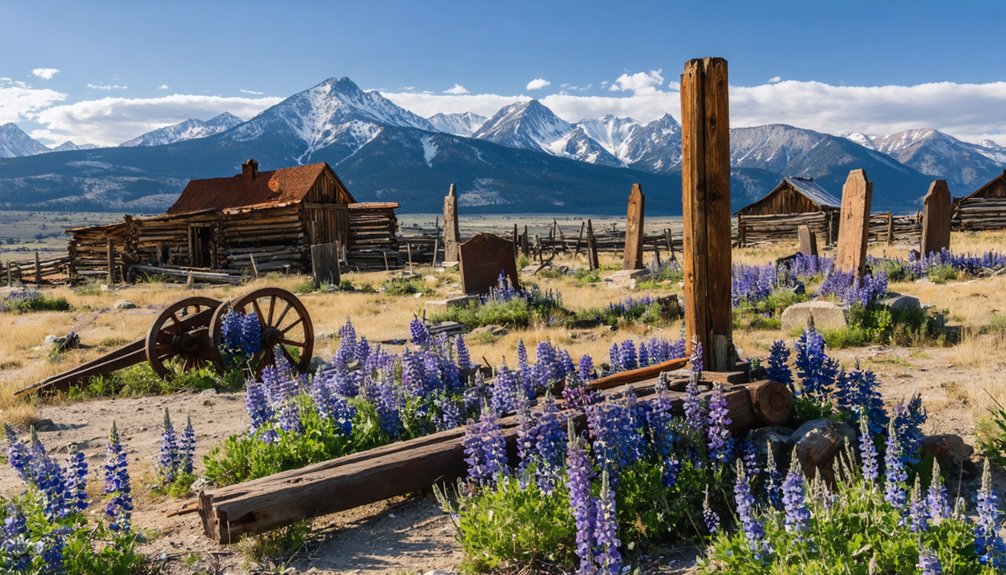
Nestled along the Yankee Fork River in eastern Idaho, Bonanza emerged as one of the region’s most sophisticated mining communities when Charles Franklin established it in 1877 after leaving the raucous camps of Bodie, California.
Born from California gold rush chaos, Bonanza transformed into an unexpectedly civilized outpost where refinement replaced the lawlessness of Bodie’s mining camps.
You’ll discover a town that defied typical mining camp chaos—tree-lined streets, a public water system, and carefully spaced buildings created an unexpectedly refined atmosphere.
Historic architecture remains scattered throughout, though devastating fires in 1889 and 1897 claimed much of the original settlement.
The real intrigue lies at Boot Hill Cemetery, where three graves tell a mysterious story.
Lizzie King, a golden-haired entrepreneur who ran the Arcade Billiard Saloon and Yankee Fork Dance Hall, rests here alongside her two husbands—forever separated from the main cemetery for reasons lost to history.
Mining equipment still dots the landscape.
Custer: Where Avalanches Shaped a Town’s Fate
Just two miles from Bonanza’s refined streets, Custer sprang to life in 1879 as gold fever pushed the Yankee Fork district beyond capacity.
This mountain valley settlement at 6,470 feet quickly developed the town architecture of a proper mining hub—boarding houses, supply stores, and even a Chinatown established by railroad workers chasing fortune.
Yet avalanches defined Custer’s story.
Idaho’s brutal winters released deadly snowslides that claimed:
- Three young girls buried alive in their home (1890)
- Three children killed while sleeping
- A mailman traveling by snowshoes
The Custer Mill’s 8pm steam whistle warned residents of incoming slides.
Despite advanced mining technology extracting gold, silver, copper, and lead from nearby veins, nature proved insurmountable.
Bayhorse: Top-Rated Ghost Town With Accessible Trails
While avalanches drove settlers from Custer’s slopes, a different mining settlement three miles north thrived until economic forces—not nature—sealed its fate.
Bayhorse exploded from discovery in 1877 to house 500 residents, generating $10 million in silver-lead wealth before an 1889 fire and government ruling emptied the town within two weeks.
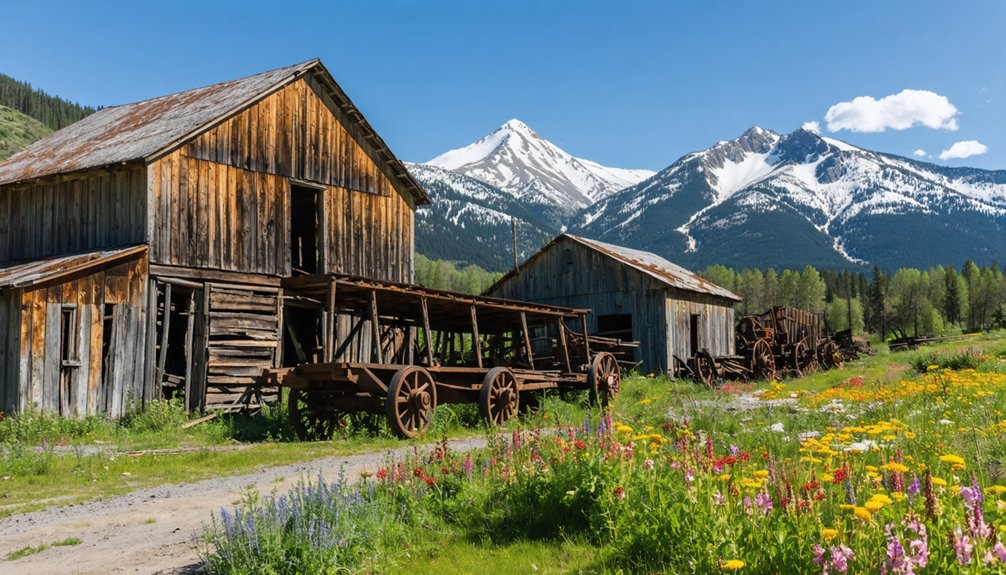
Today, you’ll find exceptional historical preservation across 14 standing structures, including the stone Wells Fargo building and Bayhorse Saloon.
Trail accessibility sets this BLM-managed site apart—well-maintained gravel roads lead you into the canyon where multiple hiking paths connect miners’ cabins with beehive charcoal kilns.
Information plaques explain each building’s purpose without restricting your exploration.
Spring’s moderate weather makes this National Register site ideal for hiking, biking, or ATV adventures through authentic frontier history.
Planning Your Spring Ghost Town Adventure in Idaho
Before you load your vehicle with gear and point it toward Idaho’s backcountry, understanding spring’s unique challenges transforms wishful planning into successful exploration. Mid-May through early June offers prime conditions—you’ll navigate muddy gravel roads while enjoying spring wildflowers carpeting abandoned mining camps.
Spring’s muddy roads and blooming wildflowers create Idaho’s sweet spot for backcountry exploration between mid-May and early June.
Pack strategically for these remote destinations:
- Weather resilience: Layer clothing for 40-60°F days and freezing nights, essential when photographing historic architecture at dawn.
- Navigation independence: Download offline maps since cell service vanishes near Owyhee Mountains and Burgdorf.
- Safety fundamentals: Bear spray, emergency supplies, and your detailed itinerary shared with contacts back home.
Verify road conditions through Idaho DOT before departing. High-clearance or 4WD vehicles prove necessary for Silver City’s 20-mile approach and Burgdorf’s forest routes after snowmelt.
Frequently Asked Questions
Are Pets Allowed When Visiting Idaho Ghost Towns in Spring?
Yes, you’ll find pets welcome at Idaho ghost towns like Bayhorse and Silver City during spring visits. You’ll need to follow leash requirements for pet safety, keeping your furry companion secured while exploring these historic, freedom-filled landscapes together.
As you wander through these historic sites in Idaho’s wilderness, you’ll encounter breathtaking views and wildlife that showcases the beauty of the area. The rugged terrain invites both adventure and discovery, allowing you to immerse yourself in the untamed spirit of the outdoors. Make sure to capture these memorable moments with your pet by your side, creating lasting memories of your journey together.
What Camping Facilities Exist Near These Lemhi County Ghost Towns?
You’ll find Meadow Lake Campground, BLM’s Agency Creek site, and dispersed camping areas near historic structures. These preserved ghost towns offer exceptional photography opportunities while you’re exploring charcoal kilns, mining cabins, and scenic canyon campsites throughout Lemhi County.
Do Any Ghost Towns Charge Entrance or Parking Fees?
Bayhorse Ghost Town requires a $7 motor vehicle entrance fee, while Bonanza and Custer offer free access. You’ll find no parking fee requirements at most sites, giving you affordable freedom to explore Idaho’s historic mining remnants.
Which Ghost Towns Offer Guided Tours During Spring Months?
Unfortunately, no ghost towns offer guided tours during spring months. Custer and Yankee Fork Gold Dredge provide guided experiences only Memorial Day through Labor Day. However, you’ll find excellent photography opportunities and historical preservation at self-guided locations year-round.
Are These Locations Accessible for Visitors With Mobility Limitations?
Unfortunately, you’ll find limited accessibility at these remote ghost towns. None offer accessible pathways or wheelchair friendly facilities due to rugged gravel roads and uneven terrain. Vehicle-dependent visits work best, though exploration remains challenging for mobility-impaired adventurers.
References
- https://www.visitsalmonvalley.com/historic-adventures/ghost-towns/
- https://www.youtube.com/watch?v=AQMyV46_T1I
- https://www.hayhurstbnb.com/hotsprings-ghosttowns.html
- https://history.idaho.gov/wp-content/uploads/2018/08/0064.pdf
- https://www.tripadvisor.com/Attractions-g28933-Activities-c47-t14-Idaho.html
- https://pinintheatlas.com/travel-blogs/ghost-towns-of-idaho/
- https://en.wikipedia.org/wiki/List_of_ghost_towns_in_Idaho
- https://visitidaho.org/things-to-do/ghost-towns-mining-history/
- https://westernlivingjournal.com/ghost-town-ragtown-idaho-gilmores-itinerant-community/
- https://www.explore.com/1762330/gilmore-settled-rolling-hills-idaho-abandoned-gold-rush-ghost-town-gorgeous-hiking-views/