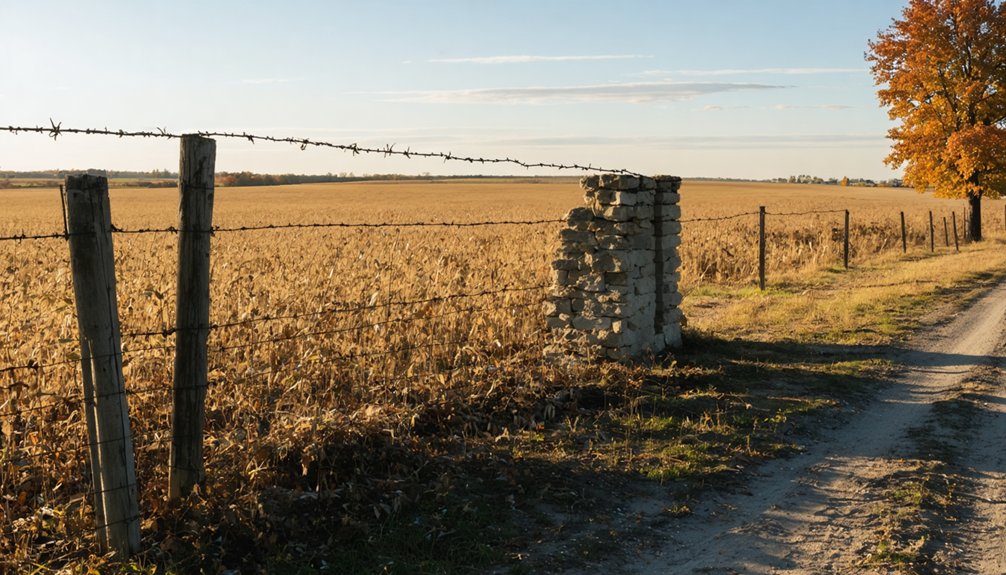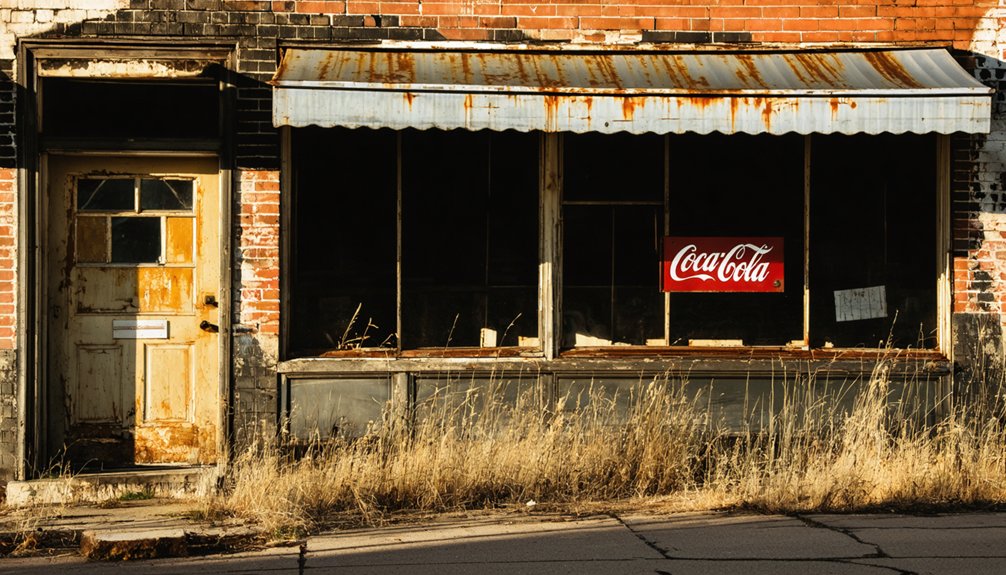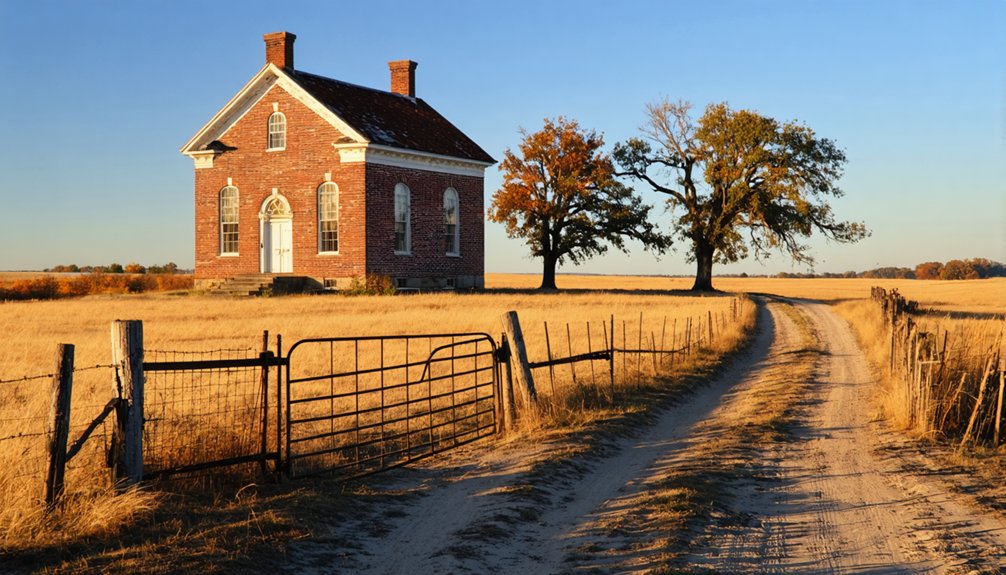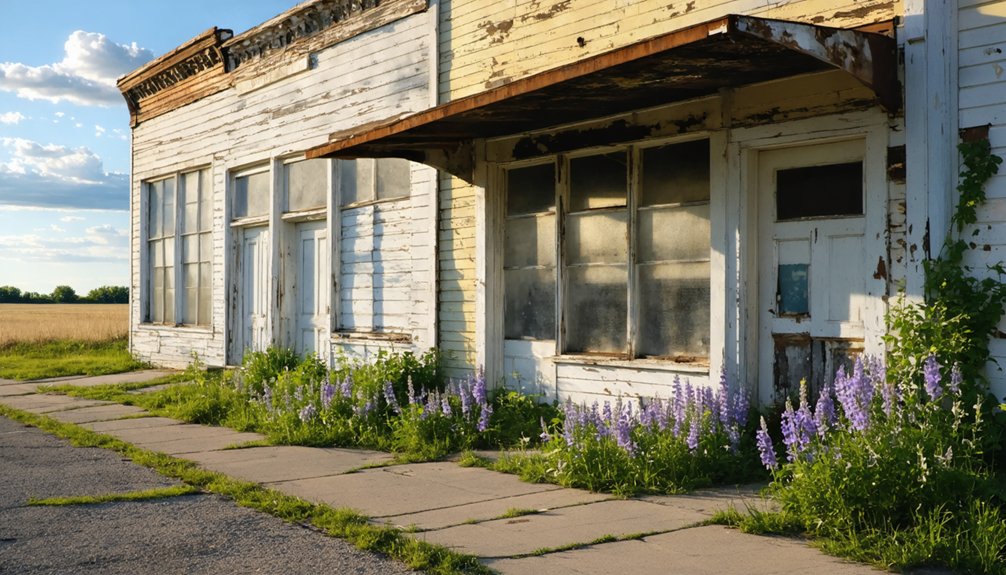
You’ll discover Illinois’ most atmospheric ghost towns in spring, when wildflowers bloom through cracked sidewalks and dogwoods frame abandoned Victorian mansions. Cairo’s crumbling Millionaires’ Row offers haunting urban decay, while submerged Kaskaskia preserves Illinois’ first capital beneath floodwaters. Old Shawneetown’s 1839 stone bank stands defiant against the Ohio River, and New Philadelphia reveals America’s first Black-founded town through ongoing archaeological digs. Spring’s mild weather and migrating warblers make exploring these riverside ruins ideal, though you’ll want waterproof boots and proper safety gear to fully experience what each historic site reveals.
Key Takeaways
- Cairo offers spring birding with warblers and waterfowl at the Mississippi-Ohio confluence, plus preserved museums and decaying Victorian architecture.
- Kaskaskia features the reconstructed Church housing the Liberty Bell of the West and remnants of Illinois’ submerged first capital.
- Old Shawneetown showcases the 1839 stone bank, reconstructed John Marshall House, and Native American burial mounds along the Ohio River.
- Vishnu Springs presents prairie wildflowers, mineral springs, Lake Vishnu, and the 1890s Capital Hotel amid ongoing preservation efforts.
- New Philadelphia, America’s first Black-founded town (1836), is now a National Historic Site with active archaeological digs revealing its integrated community.
Kaskaskia: Illinois’ Submerged Former Capital
Where else can you stand on Illinois soil only by crossing into Missouri? Kaskaskia’s haunting landscape tells that improbable story. Once Illinois’ proud first capital in 1818, this settlement vanished beneath the Mississippi’s relentless waters.
Illinois’ first capital now sits stranded on Missouri’s banks—a geographic paradox born from the Mississippi’s vengeful flood waters.
The catastrophic 1881 flood changed the river course permanently, stranding the town on Missouri’s side while technically remaining Illinois territory. You’ll find twelve blocks of vacant lots where 150 houses once stood. The reconstructed Church of the Immaculate Conception, built in 1893, still shelters the Liberty Bell of the West as a testament to the community’s persistence.
The flood impact eroded more than land—it dissolved a community. Deforestation by steamboat crews destabilized riverbanks, triggering the Mississippi to reclaim its domain. By 1993, waters submerged everything nine feet deep, leaving only church steeples visible. A 1970 Supreme Court ruling confirmed Illinois’ sovereignty over the island, establishing that the state’s claim relies on the centerline of the Old Mississippi River despite the dramatic geographic changes.
Today, nine residents remain in America’s smallest incorporated town, accessible only by bridge from Missouri—Illinois’ isolated ghost of ambition.
Cairo: A Fading River Commerce Hub
You’ll find Cairo’s crumbling Italianate buildings and ornate facades standing as weathered monuments to a river empire that once commanded the confluence of the Ohio and Mississippi Rivers.
Spring brings migrating warblers and herons to these strategic riverbanks where Lewis and Clark once camped, transforming the desolate landscape into an unexpected birding paradise.
Walk down the shuttered Main Street where 90% of storefronts sit empty, their dusty windows reflecting both the town’s 15,000-person glory days and its stark descent into near-abandonment. The Civil War transformed this strategic junction into Fort Defiance under General Ulysses S. Grant, swelling the population to 12,000 Union troops who made it a vital naval base and supply depot.
Historic Architecture in Decay
At the confluence where the Ohio and Mississippi Rivers merge, Cairo’s crumbling architecture tells the story of a once-thriving commerce hub that rivaled St. Louis and Cincinnati. You’ll discover ornate Victorian mansions along Millionaires’ Row, their elaborate details slowly surrendering to time.
The historic Custom House stands transformed into a museum, while Commercial Avenue’s storefronts reveal mosaic floors through broken windows—silent witnesses to prosperity past.
Urban decay dominates downtown, where most buildings are boarded up or demolished. Yet architectural preservation efforts saved select state-owned manors and the Cairo Public Library.
You’ll find the old gym theater’s marquee still hanging, a monument to entertainment that ended in 1978. The town’s significance extends back to its role as a Union stronghold during the Civil War, when it controlled vital southern rivers and served as a launching pad for campaigns.
The Riverlore Mansion, built in 1865, now undergoes conversion into a bed and breakfast, offering hope amid the decay. This haunting juxtaposition—Dollar General operating beside Gothic ruins—creates an explorer’s paradise for those seeking unfiltered authenticity.
Spring Birding Along Rivers
- Spring warblers arrive in waves through historic riverine habitats.
- Herons stalk seasonal floodwaters along protected levees.
- Waterfowl congregate at the confluence during migration peaks.
- Diverse species thrive in maintained wetland observation areas.
You’ll find solitude here—no crowds restrict your movements.
The same strategic waterways that once powered Cairo’s commerce now facilitate nature’s ancient rhythms.
Bring binoculars and wander the levees where steamboats once docked, watching spring’s renewal reclaim this forgotten river crossroads.
Like Egypt’s capital positioned near the Nile Delta, this Illinois namesake owes its founding to its commanding position at the meeting of two great rivers.
The Cairo Customs House Museum preserves artifacts from when this confluence served as a vital Civil War strategic point.
Exploring Abandoned Main Street
The birdsong fades as you turn inland from the levees, and Cairo’s Commercial Avenue stretches before you like a museum of abandonment. Plywood-covered windows mark where Florsheim Shoes and Khourie Brothers once thrived.
You’ll walk past crumbling brick facades—the Alexander County National Bank building recently demolished, the Weber Building collapsed in 2013 after brief stints housing luggage and pharmaceutical companies.
Urban decay tells stories through peeling paint and empty doorframes. Spring vines creep through broken windows, reclaiming what prosperity abandoned. This flood-prone confluence of the Mississippi and Ohio rivers once supported a population exceeding 15,000 during the 1920s.
Despite preservation efforts maintaining a few Victorian manors and the public library, most structures surrendered to time and demolition crews. The 1865 courthouse once anchored this district before its replacement in the 1960s, its former grandeur now erased from the landscape.
Route 51 brings you here, past bulldozed lots where the Elmwood and McBride projects stood until 2019.
You’re witnessing freedom’s darker side—what remains when people choose escape over endurance.
Shawneetown: Preserved Ruins Along the Ohio River
You’ll find Shawneetown’s haunting stone bank building standing defiant against the Ohio River, a monument to a town that once rivaled Chicago before floodwaters forced an entire community to abandon their homes in 1937.
The preserved ruins bloom most beautifully in spring, when stabilized river levels let you walk among the historic structures that witnessed twenty-five deaths in 1898 and fifteen feet of water swallowing the town four decades later.
Red Cross tent cities once dotted these grounds where only 160 souls now remain, their story etched in commemorative markers you can trace without summer’s oppressive heat.
Flood History and Relocation
The catastrophic timeline tells the story:
- 1898: Levee collapse killed 25 residents, stranding hundreds.
- 1913: Over 1,000 fled to hillside tent cities, prompting levee elevation.
- 1937: Waters crested at 65.4 feet, submerging the entire town.
- Relocation: Survivors finally abandoned their riverside home, moving 3 miles inland.
You’ll find Old Shawneetown’s gridded streets and ramshackle 19th-century buildings where they were left—a preserved symbol to nature’s unstoppable force. The Red Cross tent cities are long gone, but the town’s ghost remains, forever watermarked by defeat.
Spring Exploration Opportunities
Spring breathes new life into Old Shawneetown’s skeletal remains, transforming the abandoned riverside settlement into an explorer’s paradise. You’ll discover the 1839 stone bank building standing defiant against decades of flood damage, its crumbling facade a affirmation to urban decay meeting preservation.
Restoration efforts have recreated the John Marshall House using original architectural surveys, letting you step into Illinois’ banking past. Wander freely among pre-1937 structures where vegetation reclaims forgotten foundations.
The Ohio River’s banks reveal Native American burial mounds and Shawnee village traces—history layered beneath your feet. Spring’s mild weather makes exploring these open-air ruins ideal, with commemorative monuments telling stories of economic rivalries and resilience.
You’re witnessing Illinois’ oldest settlement frozen between abandonment and remembrance.
Vishnu Springs: Prairie Remnants of a Mineral Resort
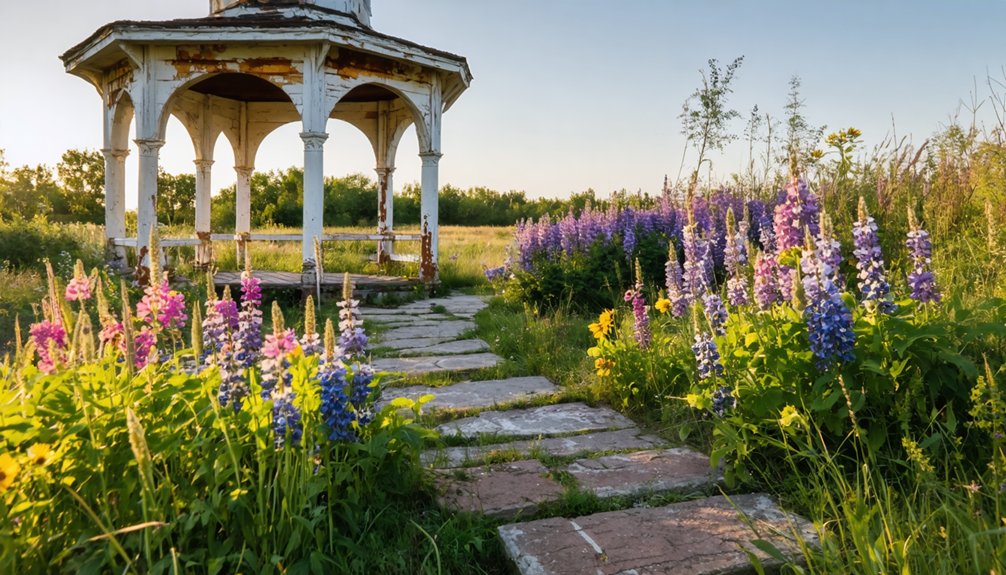
Nestled in a secluded McDonough County valley east of Macomb, Vishnu Springs rises from the prairie like a fever dream of Victorian ambition gone to seed. You’ll find the Capital Hotel standing defiant since the 1890s, its weathered walls carved with names of long-dead visitors.
Victorian dreams crumble into prairie grass where mineral springs once promised healing and carved names outlast the hopeful living.
Historical preservation efforts have saved this mineral springs resort from demolition, though nature’s reclaiming what Darius Hicks built before his 1908 suicide.
Spring reveals the site’s best secrets:
- Prairie wildflowers exploding through foundations where 30 homes once stood
- The original mineral springs bubbling near the LaMoine River
- Race track and carousel remnants hidden in tall grass
- Lake Vishnu’s goldfish pond, now a wildlife haven
You’ll walk among ghosts here, breathing freedom in every crumbling brick.
New Philadelphia: America’s First Black-Founded Town
Where Pike County’s prairie meets the sky, Free Frank McWorter carved impossible dreams into Illinois soil.
Born enslaved in 1777, he purchased freedom for sixteen family members through sheer determination, then platted America’s first legally registered Black-founded town in 1836.
His 144-lot grid hummed with integrated life—Black and White neighbors defying Illinois’ racist codes together.
You’ll find open fields where streets once crossed, where an abolitionist community flourished despite kidnapping threats from nearby slave traders.
The railroad’s 1869 bypass strangled this beacon of possibility, depopulating it by 1885.
Today, historical preservation breathes new life here. Designated a National Historic Site in 2022, archaeological digs continue unearthing stories of community revitalization that began when one man refused to accept chains as destiny.
Wanborough: The Vanished British Colony
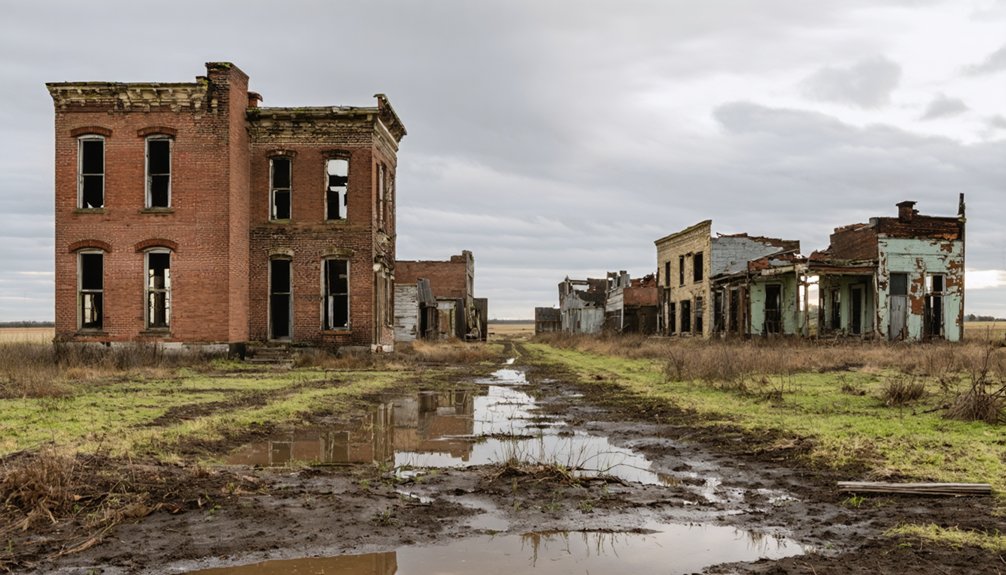
When Morris Birkbeck stepped onto Edwards County prairie in 1818, he imagined Surrey transplanted to Illinois—a British colony built on American soil. This old settlement materialized rapidly with English heritage flowing through every establishment: two taverns dispensing hospitality, Illinois’s first breweries fermenting ambition, and blacksmith forges ringing with determination.
By 1819, 1,100 souls carved their freedom from wilderness. Yet Albion’s establishment two miles east proved fatal—especially after securing the county seat in 1821.
Eleven hundred pioneers claimed their stake by 1819, but neighboring Albion’s rise as county seat doomed Wanborough’s fragile existence.
Today, Wanborough exists only in memory:
- Two taverns served traveling dreamers
- Pioneer breweries crafted independence in liquid form
- Grist mills ground settlers’ harvests into sustenance
- Pottery shops shaped clay into new beginnings
Birkbeck’s 1825 death sealed the town’s fate. By 1840, prairie reclaimed everything.
Planning Your Spring Ghost Town Adventure
The ghosts of Wanborough whisper through Edwards County grass, but your boots need solid ground—and a plan—before chasing Illinois’s vanished dreams. Spring flora explodes across abandoned sites—dogwoods blooming through Vishnu Springs’ crumbling hotel walls, wildflowers carpeting Sangamo Town’s forgotten streets. Pack accordingly: waterproof boots for mud-slicked access roads, antihistamines for pollen-heavy air, tick repellent for overgrown trails.
Wildlife safety demands respect. Bears emerge hungry; raccoons raid unguarded packs. Secure your provisions. Check McDonough County storm forecasts before departure—spring thunderheads build fast over these exposed prairies. Download offline maps; cell towers don’t reach these deliberately forgotten places. Respect No Trespassing signs—freedom means honoring boundaries, not ignoring them. Obtain landowner permission, carry physical maps, and remember: these ruins survived a century. Your careful footsteps ensure they’ll survive another.
What to Bring for Exploring Abandoned Sites

Before you cross into Illinois’s erased landscapes, your survival depends on what fills your pack. Spring’s unpredictable weather and crumbling structures demand preparation that respects both wildlife safety and cultural preservation.
Essential gear includes:
- Sturdy boots with thick soles navigate broken glass and rusted nails scattered across weathered floorboards.
- Dust masks or respirators shield your lungs from decades of accumulated mold and asbestos particles.
- Primary flashlight and headlamp illuminate pitch-black corridors where windows have long since collapsed.
- First aid supplies with antiseptic wipes treat inevitable scrapes from jagged doorframes and splintered wood.
Pack cut-resistant gloves, extra batteries, and emergency blankets. You’re documenting history’s remnants—protecting yourself means preserving these fragile monuments for others who’ll follow your footsteps.
Frequently Asked Questions
Are Guided Tours Available at Illinois Ghost Towns?
Yes, you’ll find guided tours exploring Illinois’s haunted legends at historic locations like Aurora, Naperville, and Alton. These preservation efforts bring chilling stories alive through expert storytellers who’ll lead you past ghostly landmarks with EMF meters in hand.
Another way to delve into the eerie history of the region is to explore ghost towns in Illinois. These abandoned places often hold remnants of the past, blending history with the supernatural. As you wander through these forgotten sites, you might encounter tales of long-gone residents who once called these towns home, adding another layer of mystery to your adventure.
Which Ghost Towns Allow Overnight Camping Nearby?
You’ll find overnight camping near Fort Kaskaskia’s historical preservation sites and Lincoln’s New Salem, where local legends whisper through electrified campgrounds. Ghost Camp Alton offers adventurous stays on haunted Smith property, while Rend Lake’s abandoned grounds beckon explorers seeking eerie freedom.
Do Any Sites Charge Entrance or Parking Fees?
You’ll find most Illinois ghost sites don’t charge parking fees, though tour admissions vary. Naperville offers free parking, while Galena’s walk costs $26. Historical preservation efforts support these sites—you’re free to explore, though photography permits may apply.
Are Illinois Ghost Towns Accessible for Wheelchair Users?
Accessibility varies like a winding trail—some ghost towns offer wheelchair-friendly paths while others remain wild. You’ll find accessibility improvements at preserved sites, though historic preservation often clashes with modern mobility needs. Always call ahead.
Can I Metal Detect at Abandoned Town Sites?
Metal detecting at abandoned Illinois towns requires maneuvering strict regulations. You’ll need written landowner permission for private sites, while historical preservation laws typically ban detecting at protected locations. Research ownership first—freedom comes through respecting legal boundaries and proper permits.
References
- https://kids.kiddle.co/List_of_ghost_towns_in_Illinois
- https://www.ghosttowns.com/states/il/il.html
- https://www.youtube.com/watch?v=93k0qtvzkn4&vl=en-US
- https://freepages.rootsweb.com/~gtusa/history/usa/il.htm
- https://www.geotab.com/ghost-towns/
- https://www.atlasobscura.com/things-to-do/illinois/abandoned
- https://drloihjournal.blogspot.com/p/lost-towns-of-illinois-series.html
- https://memoriesoftheprairie.com/blog-1/2023/07/07/history-of-kaskaskia-the-first-illinois-capital/
- https://www.thecaucusblog.com/2017/11/the-fate-of-kaskaskia.html
- https://www.latimes.com/archives/la-xpm-1993-07-23-mn-16019-story.html